By Ivy Tejano

This might not be the typical expat blog, written by a German expat, living in the Philippines since 1999. It's different. In English and in German. Check it out! Enjoy reading! Dies mag' nun wirklich nicht der typische Auswandererblog eines Deutschen auf den Philippinen sein. Er soll etwas anders sein. In Englisch und in Deutsch! Viel Spass beim Lesen!


By Ivy Tejano
Published Mar 19, 2026 10:34 pm
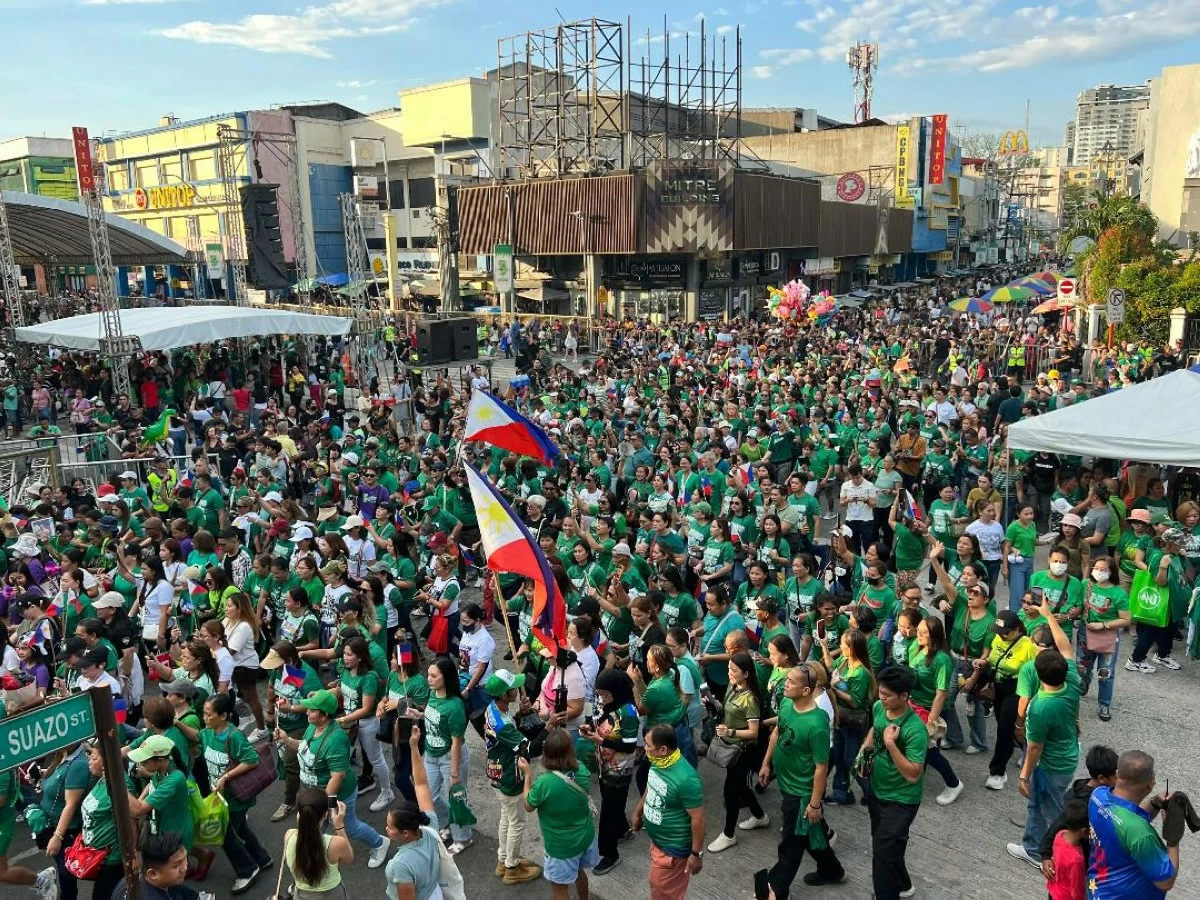
DAVAO CITY – The Davao City Council passed a resolution on Thursday, March 19, urging all participants in the 2026 Araw ng Dabaw Civic Parade to join the event on foot and refrain from using fuel-powered and electric vehicles.
Committee on Government-Owned Properties chairperson Councilor J. Melchor Quitain Jr. called on all participants to avoid deploying gasoline, diesel, oil-powered, and even electric vehicles in the parade on March 28.
Quitain said the initiative aims to underscore the importance of conserving energy resources amid ongoing global supply concerns stemming from the conflict in the Middle East.
According to the resolution, the Araw ng Dabaw celebration, observed annually in March, will culminate in a civic parade that traditionally draws hundreds of participants and often features motorized floats and displays.
The councilor cited the impact of the ongoing conflict in the Middle East, which he said has disrupted petroleum product supplies and contributed to rising fuel prices in the Philippines.
Quitain added that the resulting increase in transportation and production costs has also driven up the prices of basic commodities and utilities, including electricity.
The resolution emphasized that limiting fuel consumption, even during large public events, could help mitigate the economic strain brought about by these global developments.
It also noted that the situation remains uncertain, with no immediate signs of stabilization in fuel supply and pricing, amid continuing geopolitical tensions and volatile global oil market conditions.
Quitain appealed to Davaoeños to contribute in their own way by conserving fuel and resources, stressing that collective action can help cushion the broader economic impact.
Under the resolution, participants are strongly encouraged to take part in the parade without vehicles to promote awareness of energy conservation and responsible resource use.
OLAN Emboscado, tour guide and researcher of the Davao City Tourism Operations Office’s Tourism Circuit Development Project, leads the Furusato Davao Tourism Circuit Familiarization Tour on Friday, March 13. (Photo via Ivy Tejano)
By Ivy Tejano
Published Mar 15, 2026 05:13 pm
DAVAO CITY – The city government of Davao is deepening its tourism offerings with the new Furusato Davao Tourism Circuit, giving stakeholders, locals, and visitors a closer look at the city's Japanese heritage and historical landmarks during the 89th Araw ng Dabaw celebration.
A familiarization tour on March 13 allowed tourism stakeholders, cultural advocates, and media practitioners to revisit Barangay Mintal, once known as "Little Tokyo," home to one of the largest Japanese communities in the Philippines before World War II.
Organized by the Davao City Tourism Operations Office, the tour showed the history of Davao's Japanese community, the impact of the war, and their lasting contributions to the city, making the site a tourist spot and an important cultural landmark.
According to Olan Emboscado, tour guide and researcher of the Tourism Circuit Development Project of the CTOO, Japanese migration to Davao City started in 1903, when American abaca planters brought workers from Japan.
Suda Ryosuke led the first group from Kagoshima Prefecture. "They came to the city in search of a better life," Emboscado said. "Japanese later worked as abaca farmers and managed plantations across the area."
History said that some of the Japanese married Filipinas and started families in the city, where they found opportunities that improved their lives compared to what they had in Japan. The Japanese community in Davao grew and prospered.
Many settlers became successful abaca farmers and plantation owners. One of them was Ohta Kyosaburo, who established an abaca plantation in Mintal and is often called the "Father of Abaca Development."
Before World War II, many Japanese settlers lived in the Mintal–Calinan–Toril area, where fertile land supported large abaca plantations. The circuit development project team is still studying the history of the settlers in the Calinan and Toril areas.
At its peak, Davao had about 20,000 Japanese migrants, the largest Japanese community in Southeast Asia at the time. The area had Japanese schools, offices, stores, hospitals, photo studios, and more. They become influential in the city.
The abaca became one of the world's most in-demand export products. The Japanese introduced a machine called hagutan, which helped strip abaca fibers faster and produce more for export, especially for ropes used by merchant and naval ships.
Davao City was later created, in part, to limit Japanese influence in the area. In 1937, the Municipality of Davao and the Municipal District of Guianga—where many Japanese plantations were located—were merged to form the city.
According to history, early city mayors were appointed rather than elected because the government feared that the large and influential Japanese community might gain control of local elections.
However, the community's prosperity ended during World War II. After Japan's defeat and the liberation of the Philippines, many Japanese immigrants were sent back to Japan, except for their Filipino spouses and children.
With strong anti-Japanese sentiment after the war, several families hid in remote areas. They tried to conceal their Japanese identity to avoid discrimination and possible persecution, leaving remnants of the past.
Relations between the Philippines and Japan later improved, especially after the 1962 visit of Emperor Akihito and Empress Michiko to the Philippines. In 1968, 80 former Japanese immigrants returned to Davao for an emotional visit to the place they once called home.
Every August, groups of Japanese visitors travel to Davao City and visit the Mintal Public Cemetery to pay respects to their ancestors. Mintal, a barangay near Calinan, was once home to a large Japanese community and was often called Little Tokyo.
In 1980, second-generation Japanese descendants, known as Nikkei Jin, formed the Philippine Nikkei Jin Kai Inc. The organization aims to restore the identity and history of Japanese descendants in the Philippines who were affected by the war.
One of its strong supporters is Uchida Tatsuo, a Davao-born Japanese businessman who later found success in Japan. In 1994, he helped establish the Imin Museum inside the Philippine Nikkei Jin Kai School in Calinan District.
The museum was renovated in 2019 through funding from the Japanese government's cultural assistance program, along with support from PNJK and the Philippine Nikkei Jin Kai International School.
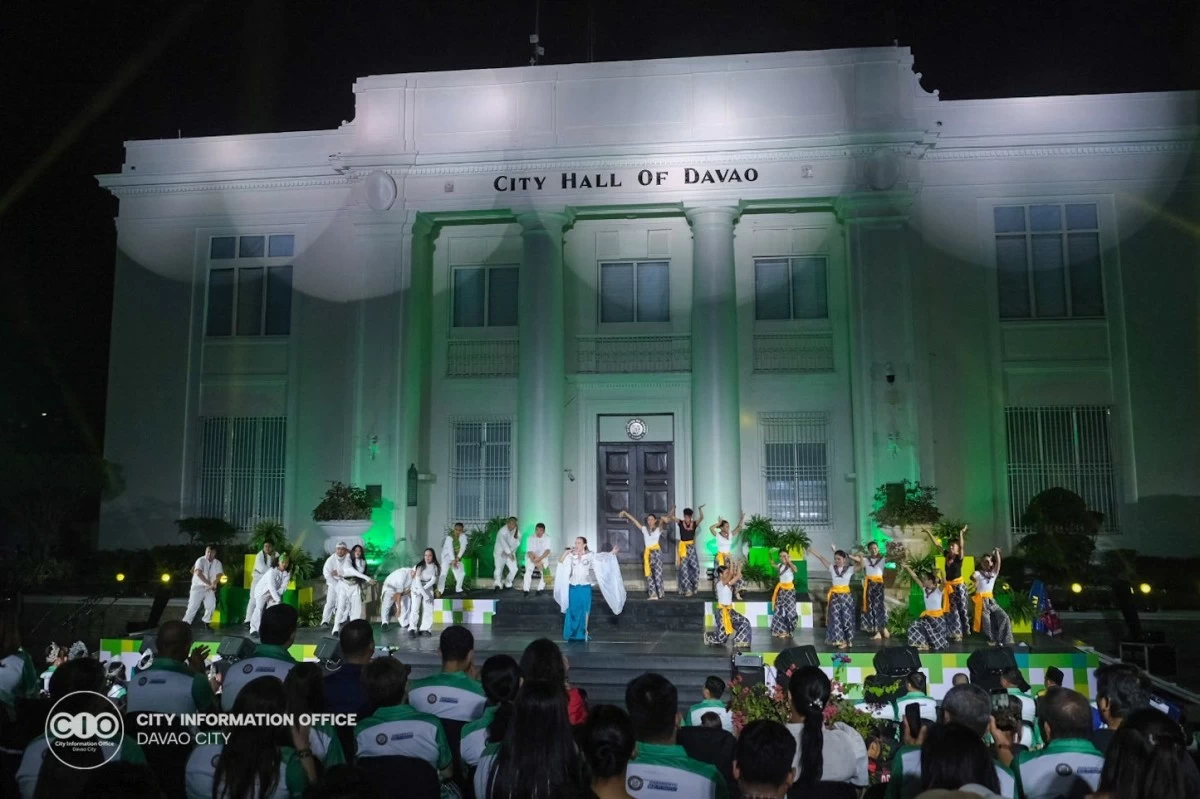
The tour also highlighted the former Santa Ana Port on Ramon Magsaysay Ave., Davao City Hall on San Pedro St., originally built in 1926, which, along with the Kyosaburo Monument in Mintal, celebrates its 100th anniversary this year.
Emboscado said the three landmarks, which bear historical markers installed by the National Historical Commission of the Philippines (NHCP), are recognized for their significance in Davao City's history.
"These sites remind the people of Davao and visitors, as well, of the people, events, and partnerships that shaped modern Davao," Emboscado said, also acknowledging Ohta Development Co.'s contribution to the city's early development.
Grace Plata, tourism relations specialist of the CTOO and focal person for the Tourism Circuit Development Project, said this familiarization tour is the first of three they are conducting for the newly launched tourism circuits in the city.
"It allows our partners, stakeholders, and visitors to experience the routes while we further enhance storytelling based on fact research and visitor experience," Plata said, adding that CTOO continues to refine such experience through ongoing research.
Plata said the upcoming circuits will feature other historical chapters, including the Furukawa and Toril communities, with key sites such as the Memorial to Datu Bangcas in Alambre, Toril, honoring one of the area's early local leaders.
The launch of Furusato Davao is part of the city government's broader effort to diversify tourism experiences, strengthen Davao City's position as a key destination in Mindanao, and honor its rich multicultural history.

By Ivy Tejano
Published Mar 11, 2026 11:04 pm
A Davao City councilor proposed on Tuesday, March 10, a combination of national and local legislative actions to cushion consumers and key sectors from rising fuel and commodity costs.
Councilor Danilo Dayanghirang, chairman of the Committee on Finance, Ways and Means, made the call during the regular session of the 21st Davao City Council at the Sangguniang Panlungsod.
Dayanghirang said a fuel price increase leads to higher costs in transportation, agriculture, manufacturing, and food distribution, affecting households, transport operators, farmers, and small businesses.
He attributed current inflationary pressures to global fuel price volatility, geopolitical tensions, supply chain disruptions, and the existing tax regime under the Tax Reform for Acceleration and Inclusion (TRAIN) Law.
Dayanghirang said that these inflationary pressures impose excise taxes of around P10 per liter on gasoline, P6 on diesel, and P5 on kerosene, in addition to a 12 percent Value-Added Tax on petroleum products.
In his policy paper titled “Legislative Mitigating Measures to Address the Economic Impact of Rising Fuel and Commodity Prices in the Philippines,” he proposed temporarily reducing fuel excise taxes when prices rise high.
Dayanghirang suggested mechanisms such as progressive taxation tied to fuel price thresholds, which could lower pump prices by P3 to P10 per liter, easing transportation and logistics costs.
The proposal recommended targeted fuel subsidies for vulnerable sectors, including Public Utility Vehicle drivers, farmers, fishermen, and logistics operators.
He proposed a strategic fuel rationing program during emergencies, prioritizing public transport, food supply, and government fleets to prevent hoarding and price spikes.
Dayanghirang highlighted stricter price monitoring and anti-profiteering efforts, including regular inspection of fuel stations and coordination with the Department of Trade and Industry and the Department of Energy.
On the local level, Dayanghirang suggested programs to stabilize public transport, such as fuel vouchers for jeepney drivers, fare stabilization initiatives, and support for transport cooperatives.
The councilor cited Davao City’s past measures during fuel spikes, including consultations with transport groups and support programs for farmers and fisherfolk, as best practices.
He encouraged local renewable energy projects, urban agriculture and food security initiatives, and improvements to logistics and supply chain efficiency, including farm-to-market roads and cold storage facilities.
“The rising cost of fuel and commodities requires coordinated action,” Dayanghirang said, urging proactive legislative measures to protect consumers and stabilize local economies.
Speaking at the Pulong-Pulong sa Dabawenyos on Tuesday, Councilor J. Melchor Quitain Jr., chairman of the Committee on City-Owned Real Properties, noted that the city is feeling the impact of rising global prices.
“The situation will likely continue while the conflict between the US and Iran persists,” Quitain said. “I’m just hoping that the situation will soon be under control and that there will be no escalation of the conflict.”
While the national and local governments are closely monitoring the situation, the councilor encouraged everyone to keep the faith, trust in the Lord, and pray that everything goes well.
Quitain assured that the city is implementing programs and preparing measures to ensure supply, prevent hoarding, and conserve energy, including evaluating reduced work schedules to offset fuel consumption.
Councilor Radge Ibuyan, chairman of the Committee on Government Enterprises and Privatization, added that the city is tracking the availability of basic goods in public markets.
Ibuyan said he has received information on recent prices at the city’s public markets, noting that the price of chicken might reach nearly P180 per kilo from P165 per kilo.
He said the city could strengthen its collaboration with vendors and market administrators to help manage any possible price increases, expressing hope that prices would remain stable.
“If necessary, we will coordinate with the City Economic Enterprises Office, and if they suggest any relevant resolution, we will study it carefully and take the appropriate action,” Ibuyan said.
Davao City Information Officer Harvey Lanticse said that gasoline stations are under strict supervision to prevent premature price hikes, hoarding, and overpricing.
Lanticse said the Business Bureau has been tasked with regular inspections, while residents are encouraged to report irregularities through the Davao City Reports platform.
City officials assured that the city government remains committed to protecting consumers, maintaining service delivery, and ensuring transparency in pricing amid ongoing global volatility.


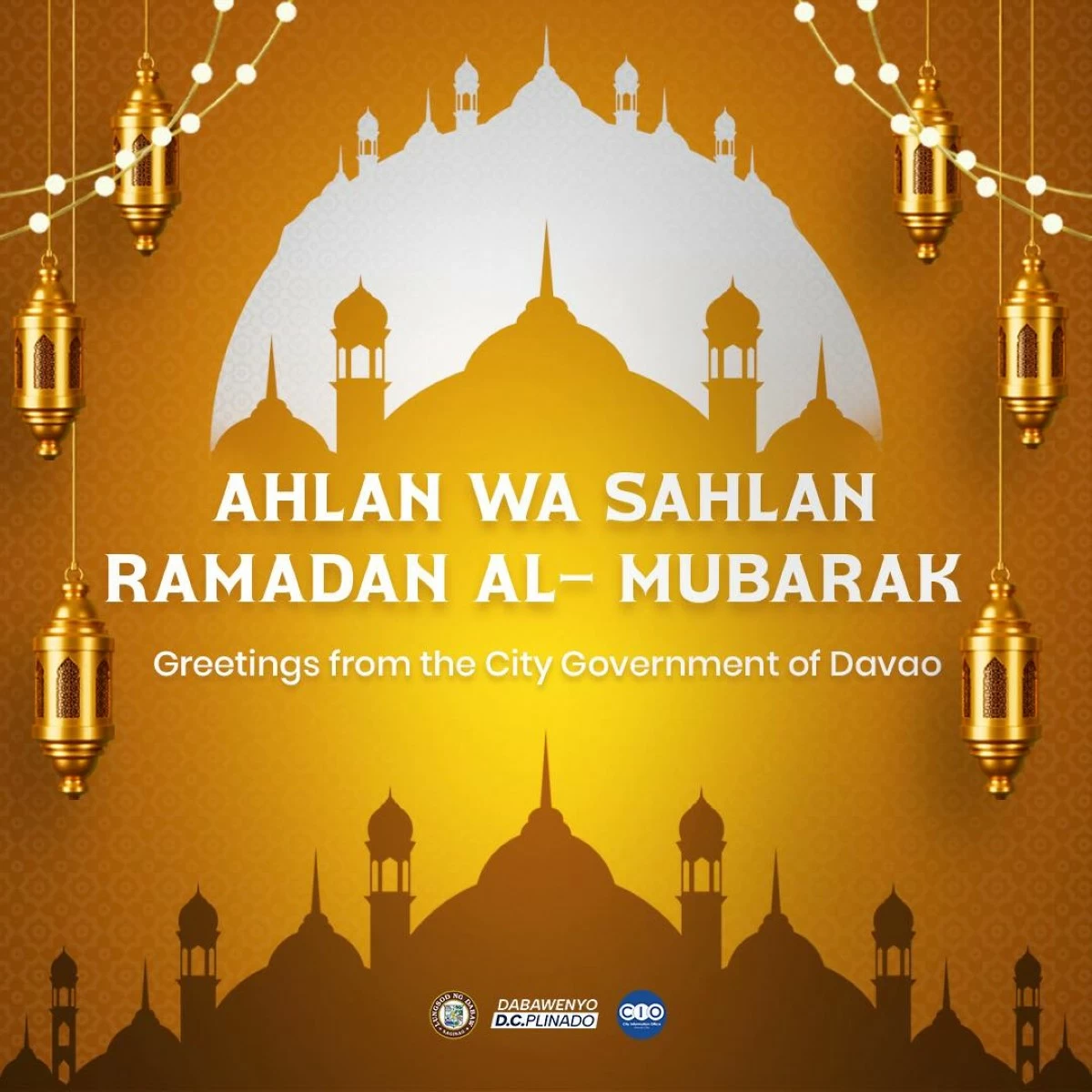
DAVAO CITY – The Davao City government wished Muslim residents peace, reflection, and abundant blessings as they began observing the holy month of Ramadan.
Rep. Paolo Duterte greeted the Muslim community Assalamu Alaikum wa Rahmatullahi wa Barakatuh (May the peace, mercy, and blessings of Allah (God) be upon you) and emphasized the month as a time for fasting, prayer, and reflection.
Duterte highlighted the values of faith, compassion, discipline, and care for one another and called on Filipinos to renew their commitment to justice, humility, and service while strengthening unity across communities.
“May this holy month bring peace to our hearts, clarity of purpose, and strength to face our shared challenges,” Duterte said. “May it inspire us to lead with integrity, serve with sincerity, and act with mercy.”
“Ramadan Mubarak (Have a blessed Ramadan). May Allah accept our fasting, prayers, and good deeds,” the Davao lawmaker added and wished for a peaceful holy month.
Davao City Police Office acting director Police Col. Mannan Muarip joined the Muslim community in the first night of Ramadan at the Davao City Islamic Center on Trading Boulevard.
Muarip donated a sack of rice to support the congregation’s daily iftar, highlighting DCPO’s “Oplan: Amanah,” which seeks to strengthen partnerships, unity, and community service.


By Ivy Tejano
Published Jan 11, 2026 10:25 pm
DAVAO CITY – A Davao City councilor is set to file an ordinance seeking to protect delivery riders from abuse and unfair treatment.
Councilor Danny Dayanghirang, chairman of the Committee on Finance, Ways and Means, stated that the proposed measure will encompass two categories of delivery workers – food delivery riders and those transporting goods and parcels.
He noted that food delivery riders often encounter problems caused by traffic delays, which sometimes lead to customers refusing to pay for orders or verbally abusing riders for late deliveries.
Dayanghirang also cited scam incidents where customers place orders but become unresponsive or difficult to locate upon delivery, leaving riders to shoulder the cost of the items.
Under the proposed ordinance, such abusive practices and fraudulent transactions will be penalized, with accountability placed on those responsible, he said.
For riders delivering goods, Dayanghirang cited situations where recipients open packages, express dissatisfaction with the items, and then blame or berate the riders despite the issue being beyond their control.
The councilor stated that the measure will also address concerns related to deductions and taxes imposed on delivery riders, to safeguard their rights and welfare.
Dayanghirang said this ordinance intends to protect delivery riders from scams, abuse, and unjust treatment, while promoting fairness in the delivery system.
By Ivy Tejano
Published Dec 13, 2025 02:02 pm
MORE than 900 senior citizens and Persons with Disability participate in one of the Pulong Pulong ni Pulong Movement’s most inclusive events of the year—the PPP Seniors and PWD Fun Run 2025—on Saturday morning, Dec. 13, at the Talomo Coastal Road in Davao City. (Photo via Ivy Tejano)
DAVAO CITY – Nine-hundred eighteen senior citizens and Persons with Disabilities took part in one of the most inclusive community sporting events of the year, the PPP Seniors and PWD Fun Run 2025, organized by the Pulong Pulong ni Pulong Movement on Saturday morning, Dec. 13, at Davao City Coastal Road.
With the theme “Padayon Ta (Let’s Keep Moving Forward),” the activity promoted active aging, wellness, and social inclusion by providing senior citizens and PWDs a safe, accessible, and enjoyable running experience tailored to varying mobility levels.
Jay Villarica, chief of staff of Rep. Paolo Duterte, said the fun run reflects the office’s continued commitment to initiatives that prioritize health, dignity, and community solidarity.
“This event is about encouraging movement, confidence, and togetherness among our seniors and PWDs. Everyone deserves opportunities to stay active and feel included,” Villarica said.
Participants 73-year-old Merlyn Palabrica and 78-year-old Ligaya Petero, both residents of Barangay Duterte in Agdao, expressed joy and gratitude for being part of the event.
“This isn’t about winning,” Petero said in the local dialect. “What matters is enjoying an event meant for senior citizens and PWDs like us. We’re grateful and hopeful there will be more activities like this in Davao City.”
The race started at 5 a.m., with runners flagging off from several points, including Bago Aplaya Park, Talomo Junction, and Talomo Bridge.
Medical teams, ambulances, and wheelchairs were strategically deployed on the route to ensure participant safety and well-being.
All runners received free registration, race singlets, meals, souvenirs, and timing chip-enabled race bibs.
Participants were required to submit medical certificates and clearances from their doctors before joining.
Families, friends, and supporters lined the route to cheer on the runners, while non-runners participated in photo-and reel-making contests to document the event's highlights.
A visible message during the run, “Bring Rody, A True Dabawenyo, Home,” reflected continued public support for former President Rodrigo Duterte, whom Villarica said remains deeply connected to Davao City’s identity.
Davao City second district Rep. Omar Duterte, who attended the event, thanked participants for the strong turnout.
“Thank you for joining. Many more wanted to participate, and we will continue organizing activities that strengthen health and unity in our community,” Omar said.
Rep. Paolo Duterte said the initiative underscores the importance of uplifting vulnerable and often underserved sectors by giving them visibility, meaningful participation, and sustained support.
He expressed appreciation for the continued public support for the Duterte family, noting that former President Duterte regularly asks for updates about the people and the city of Davao.
The fun run featured multiple categories designed to accommodate different ages and mobility levels, including the Super Seniors 5K Run, the Super PWD 5K Wheelchair Division, the Seniors 3K, the PWD Able-to-Run 3K, and a 2K Assisted PWD/Senior category.
By Ivy Tejano
Published Dec 8, 2025 10:17 pm
THE Davao Travel Agencies Association unveiled travel events for 2026 during their year-end gathering dubbed ‘Class of 2025’ on Dec. 6 in Davao City. (Photo via Ivy Tejano)
DAVAO CITY – The Davao Travel Agencies Association has unveiled a packed lineup of travel events for 2026, offering Mindanao travelers greater access to international destinations and major airfare and tour discounts.
The first event on the calendar is the Davao Mega Travel Sale, as announced by DTAA President Gian Carlo Caguiat, from Feb. 27 to March 1.
Long known for slashing prices on travel packages, Caguiat said the DMTS is expected to draw strong interest with its selection of high-demand “bucket list” destinations, including Turkey, Africa, Georgia, Brazil, Antarctica, and Morocco.
In June, Davao will host a travel milestone, as the Travel Tour Expo VisMin Edition, jointly organized by the DTAA and the Philippine Travel Agencies Association, will be held in the city for the first time.
Scheduled for June 5 to 7 at the SMX Convention Center in SM Lanang, Caguiat said the expo is expected to gather travel agents, operators, and airlines from across the Visayas and Mindanao.
The DTAA president said the two major events will showcase Mindanao’s position as a fast-growing tourism hub and strengthen Davao City’s role as a premier gateway for both leisure and business travel.
He added that the activities are poised to boost local tourism, stimulate business activity, and draw in thousands of visitors from outside the region.
“These are significant milestones for the industry,” Caguiat said, noting that the travel sale will expand next year with more partners and airlines on board.
“We are expecting 2026 to be a breakthrough year not only for Davao’s travel market but for the entire Mindanao region,” he added.
Caguiat urged DTAA members to give their 100 percent full support, emphasizing that the organization is preparing for its biggest year yet.
He said the TTE VisMin Edition could even rival its Manila counterpart, as it will directly cater to the concentrated market of the Visayas and Mindanao.
The announcements were made during the DTAA’s year-end gathering with the theme “Class of 2025” on Saturday evening, Dec. 6, at Lanang Business Park in Davao City.
Caguiat shared a reflective message for fellow travel agents. He likened their profession to multiple roles rolled into one, from caretakers to memory-makers.
“Travel agents are on-call memory makers,” Caguiat said. “We monitor our passengers around the clock." He emphasized that being a travel agent is more than a job, it’s a calling.