You plan to move to the Philippines? Wollen Sie auf den Philippinen leben?

There are REALLY TONS of websites telling us how, why, maybe why not and when you'll be able to move to the Philippines. I only love to tell and explain some things "between the lines". Enjoy reading, be informed, have fun and be entertained too!

Ja, es gibt tonnenweise Webseiten, die Ihnen sagen wie, warum, vielleicht warum nicht und wann Sie am besten auf die Philippinen auswandern könnten. Ich möchte Ihnen in Zukunft "zwischen den Zeilen" einige zusätzlichen Dinge berichten und erzählen. Viel Spass beim Lesen und Gute Unterhaltung!


Visitors of germanexpatinthephilippines/Besucher dieser Webseite.Ich liebe meine Flaggensammlung!

free counters

Total Pageviews

Showing posts with label Philippine Daily Inquirer. Show all posts

Wednesday, April 1, 2026

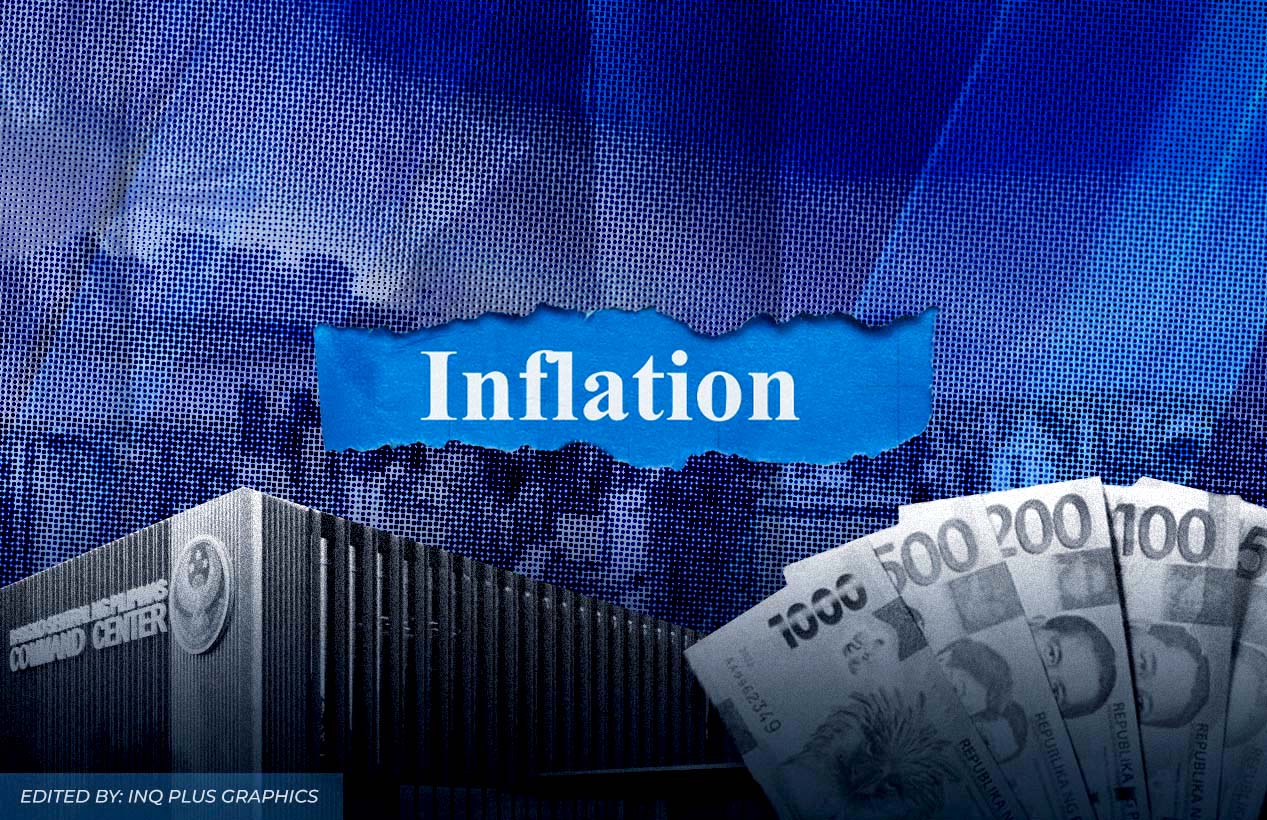
March inflation seen accelerating to 3.9%


Ian Nicolas P. Cigaral

Inflation likely accelerated in March and may have nearly overshot the upper end of the official target range, the Bangko Sentral ng Pilipinas (BSP) said, citing a surge in energy costs and the pass-through effects of a weakening currency that has fallen to record lows amid tensions in the Middle East.

In a statement on Tuesday, the central bank said it expected consumer prices to have risen between 3.1 percent and 3.9 percent last month.

If the forecast holds, the figure to be released by the Philippine Statistics Authority on April 7 would mark a pickup from the 2.4-percent pace in February and signal that inflation came close to breaching the central bank’s 2-percent to 4-percent target band.

“Inflation risks have intensified with upward price pressures arising from the significant increase in domestic petroleum prices, higher rice prices, increased electricity charges in Meralco-serviced areas, and depreciation of the peso,” the BSP said.

“The anticipated lower prices of vegetables, fish, and meat may help temper inflation, but upside pressures continue to warrant close monitoring,” it added.

The war, which has entered its fifth week, broke out after the United States and Israel launched joint attacks against Iran. The conflict has disrupted traffic in the Strait of Hormuz, a narrow shipping lane where 20 percent of global oil supply passes.

The turmoil has ignited fears for oil-importing countries like the Philippines, which became the first nation to declare a state of national energy emergency. Data from the Department of Energy show local gasoline prices have risen a net P45.30 per liter so far this year, while diesel has climbed P76.05 and kerosene P75.60.

This, as global crude prices have soared to $100 per barrel while fears of a drawn-out regional upheaval have boosted the US dollar, wreaking havoc on Asian currencies like the Philippine peso, which has weakened past the 60-per-dollar level.

SEE ALSO

The oil shock has already shaped the central bank’s policy stance ahead of its scheduled April 23 meeting. Officials opted for an off-cycle decision last week to keep the policy rate unchanged at 4.25 percent, even as they raised their average inflation forecast for 2026 to 5.1 percent—with price gains likely to hit as high as 5 percent in April and breach the official target band.

Governor Eli Remolona Jr. has said that raising borrowing costs to fight inflation could delay the economy’s rebound from a confidence shock triggered by a major corruption scandal. He added that higher interest rates—typically used to curb demand-driven inflation—would do little to counter supply-side price pressures stemming from the Iran conflict.

Overall, Remolona said policymakers do not expect a buildup in demand-side inflation, pointing instead to weak growth that could temper consumer spending.

“The BSP will remain vigilant and guided by incoming data, specifically on inflation and growth prospects,” the central bank said. “We will continue to monitor recent developments in the Middle East for their implications on inflation and economic activity.”

Monday, March 30, 2026

‘Outlier’ PH logs Asia’s sharpest confidence drop


Ian Nicolas P. Cigaral

HONG KONG—Filipino consumers recorded the sharpest drop in confidence in Asia in 2025, as persistent inflation worries, stagnant wages and the fallout from a recent graft scandal weighed on sentiment, a new survey found.

And with the ongoing war in the Middle East stoking local pump prices, effective government intervention is needed to shore up household confidence.

The Philippines stood out as an outlier in the Asia Consumer Study 2026 by Germany-based consultancy Roland Berger. The survey found that 35 percent of Filipino respondents expressed a positive outlook on the future, down from 53 percent in 2024—the steepest decline among 11 Asian markets surveyed.

Roland Berger polled more than 3,500 respondents across the region to track the forces shaping consumer behavior in 2025 and this year.

Hugo Texier, the study’s author and a partner at the firm, said the gloomier outlook largely reflected domestic developments. “Typically, this is driven by a political or economic event,” he said in an interview. “I think there is fear of inflation. I think there is wage stagnation.”

“It doesn’t mean they will not spend, but it means they are more cautious,” he added.

The findings echo the Bangko Sentral ng Pilipinas’ own consumer survey, which showed confidence deteriorating to a pandemic-era low of -22.2 percent in the fourth quarter of 2025.

A negative reading indicates pessimists outnumber optimists. Among the factors that dragged down household sentiment, the central bank said, was a sweeping corruption scandal that has implicated high-ranking government officials.

Roland Berger said the erosion in confidence was making Filipinos more price-conscious. About 22 percent of respondents said they were highly sensitive to prices when making purchases, relying on promotions, bundles and installment schemes to maximize value.

Even so, a larger share—49 percent—still placed the highest priority on product quality in their buying decisions.

Notably, that emphasis on quality is boosting interest in luxury goods. The proportion of Filipino respondents intending to shift toward premium purchases rose to 22 percent in 2025 from a year earlier, with the strongest demand for high-end clothing and footwear (61 percent), jewelry (59 percent) and cosmetics and fragrances (55 percent).

SEE ALSO

Looking ahead, Texier said the ongoing war in the Middle East could trigger a “fundamental” shift in consumption patterns in the Philippines, with households likely to turn more price sensitive.

This, Texier said, should prompt businesses to rethink their strategy.

“Use promotions, bundles, installment options and loyalty programs to appeal to price-conscious consumers,” he said.

Saturday, March 28, 2026

Monitoring ‘happiness’


Mahar MangahasMarch 21, 2026 12:09 am

March 20th was the United Nations’ annual International Day of Happiness, which stemmed from a 2012 UN Resolution initiated by Bhutan, the famed originator of the Gross National Happiness (GNH) concept. It explains the timing of the release of: (a) the Social Weather Stations (SWS) report, “Fourth Quarter 2025 Social Weather Survey: 33% of Pinoys are ‘very happy’ with life; 23% are ‘very satisfied’ with life” (www.sws.org.ph, 3/19/26), and (b) the 2026 World Happiness Report (WHR), published by the Wellbeing Research Group of the University of Oxford in partnership with Gallup, the UN Sustainable Development Solutions Network, and the WHR’s editorial board.

Happiness of Filipinos according to SWS. The SWS report discloses its two survey questions for monitoring happiness, one with the adjective “happy” (masaya) and another with the adjective “satisfied” (nasisiyahan), and both describing the respondent’s present life as a whole. Each option has a four-point scale: Very Happy/Fairly Happy/Not Very Happy/Not At All Happy and Very Satisfied/Fairly Satisfied/Not Very Satisfied/Not At All Satisfied. SWS has asked the “happy-life” question 49 times since 1991, and the satisfied-life question 57 times since 2002; see the report’s charts and tables.

Personally, I think the happy-life option goes straight to the point; I also like to focus more on downside rather than the upside. In 2025, SWS used both options in two surveys, with these average results (in percentages): 32 Very Happy, 52 Fairly Happy, 14 Not Very Happy, and 2 Not At All Happy; and 29 Very Satisfied, 51 Fairly Satisfied, 14 Not Very Satisfied, and 6 Not At All Satisfied. For me, these may be simplified into 16 percent “unhappy” and 20 percent “dissatisfied.”

Back in 2021, when SWS did four surveys, the average unhappy was 17 percent and the average dissatisfied was 21 percent, i.e., 2025 showed a tiny improvement in subjective well-being. (I cite 2021 at this point, for comparability with the WHR which uses a three-year rolling average—last year’s WHR involves data as far back as 2022.)

Happiness according to the World Happiness Report. The WHR’s data are from the annual Gallup World Poll, which asks about life-satisfaction, by likening it to being somewhere on a 10-step ladder (from the ground numbered 0 to the top numbered 10, thus 11 points in all), where 10 is the best life, and 0 is the worst life that the respondent thinks could possibly happen to him/her. This is asked with regard to one’s present life, and also with regard to one’s expected life in five years’ time, and then the two are averaged. The WHR uses rolling averages: its 2026 figure combines 2023 to 2025, and its 2025 figure combines 2022 to 2024.

Personally, I prefer questions answerable by choosing words rather than by choosing a number. The only thing definite about a 0-10 scale is that five is the middle, and therefore, all steps of six upward are satisfactory, while all steps of four downward are unsatisfactory.

In the WHR of 2026, Finland at 7.76 is No. 1 again, while Afghanistan at 1.45 is No. 147 and last (the published figures have three decimal places but here I round to two places). At just over 5.00 is South Africa, No. 101; therefore 101/147 or 68.7 percent of the “peoples” (not identical to “countries”) are, on average, satisfied with their lives to some extent, while 31.3 percent of them are not.

The Philippine score is 6.21, up a little bit from 6.11 in WHR 2025. Its rank is 56th versus 57th last year. Here are the current WHR scores and ranks of our Asean neighbors: 36th Singapore, 6.58; 45th Vietnam, 6.43; 52nd Thailand, 6.30; 71st Malaysia, 6.00; 87th Indonesia, 5.62; 92nd Laos, 5.52; 121st Cambodia, 4.46; and 129th Myanmar, 4.29. I see no figures for Brunei and Timor Leste.

We should not envy any other peoples that have higher scores, nor feel superior to those with lower ones. Happiness is not an international sport; it is no basis for national pride or shame. Other peoples’ achievements do not lessen us; their failings do not enhance us. What happens abroad can teach us what to imitate and what to avoid.

And Bhutan? There’s no WHR data for the country that officially eschews the gross national product. As of a decade ago, its GNH had only two data points (see “Gross National Happiness,” 11/28/15). In 2022, its GNH index was reportedly at .781, with 9.5 percent “deeply happy,” 38.6 percent “extensively happy,” 45.5 percent “narrowly happy,” and 6.4 percent “unhappy.” (investopedia.com)

—————-

mahar.mangahas@sws.org.ph

Tuesday, March 24, 2026

Transport strikes disrupt travel in regions amid protests


DAGUPAN CITY—Transport protests opposing rising fuel prices and calling for government aid and fare adjustments disrupted operations in parts of Luzon and the Visayas on Monday, while some areas reported normal transport activity.

In Pangasinan, some drivers joined the strike despite no official transport holiday declaration from Auto Pro Pangasinan.

At least 50 percent of public utility vehicles (PUVs) did not ply their routes, with only about 20 percent of jeepneys operating along the Calasiao-Dagupan route, according to Auto Pro president Bernard Tuliao.


Saturday, March 21, 2026

Monitoring ‘happiness’


Mahar Mangahas

March 20th was the United Nations’ annual International Day of Happiness, which stemmed from a 2012 UN Resolution initiated by Bhutan, the famed originator of the Gross National Happiness (GNH) concept. It explains the timing of the release of: (a) the Social Weather Stations (SWS) report, “Fourth Quarter 2025 Social Weather Survey: 33% of Pinoys are ‘very happy’ with life; 23% are ‘very satisfied’ with life” (www.sws.org.ph, 3/19/26), and (b) the 2026 World Happiness Report (WHR), published by the Wellbeing Research Group of the University of Oxford in partnership with Gallup, the UN Sustainable Development Solutions Network, and the WHR’s editorial board.

Happiness of Filipinos according to SWS. The SWS report discloses its two survey questions for monitoring happiness, one with the adjective “happy” (masaya) and another with the adjective “satisfied” (nasisiyahan), and both describing the respondent’s present life as a whole. Each option has a four-point scale: Very Happy/Fairly Happy/Not Very Happy/Not At All Happy and Very Satisfied/Fairly Satisfied/Not Very Satisfied/Not At All Satisfied. SWS has asked the “happy-life” question 49 times since 1991, and the satisfied-life question 57 times since 2002; see the report’s charts and tables.

Personally, I think the happy-life option goes straight to the point; I also like to focus more on downside rather than the upside. In 2025, SWS used both options in two surveys, with these average results (in percentages): 32 Very Happy, 52 Fairly Happy, 14 Not Very Happy, and 2 Not At All Happy; and 29 Very Satisfied, 51 Fairly Satisfied, 14 Not Very Satisfied, and 6 Not At All Satisfied. For me, these may be simplified into 16 percent “unhappy” and 20 percent “dissatisfied.”


Saturday, February 7, 2026

The orchard called work


They say landing your first job is one of life’s sweetest fruits—a mark of independence, proof that you’ve finally “made it.” For many, it’s the beginning of a dream. But for others, like me, it’s simply what’s available.


As a fresh graduate, I thought finding a job would be easy. Everyone says that once you graduate, opportunities come pouring in. That’s what our parents always tell us—“Mag-aral ka nang mabuti para may magandang trabaho ka balang araw” (Study well so you’d land a good job someday).


But truth be told, it’s not that simple. There are countless interviews, exams, and callbacks before you land even one offer.


So when I finally did, even before graduation, people were quick to say, “Wow, sana all!” I smiled, but deep down, I knew this wasn’t the job I had imagined for myself. I didn’t wake up one morning thinking, This is what I want to do for the rest of my life. But when bills start knocking and opportunities are scarce, practicality often wins over passion. So, I took the offer. I told myself that maybe, with time, I’d learn to love it.


At first, everything felt new and exciting—my first company ID, my own desk, my first paycheck. I thought this was the sweetness everyone talked about, the taste of adulthood. There was pride in being able to say, “I’m employed.” My parents were proud. My friends congratulated me. I convinced myself this was a beginning worth celebrating.


But as the months rolled in, the sweetness began to fade.


The daily routine became monotonous: wake up early, sit for eight hours staring at the same screen, then drag myself home only to repeat it the next day. What once felt like an opportunity started to feel like an obligation. The fruit still looked ripe from the outside—but it no longer tasted as good.


My tasks were manageable, and I was lucky to have kind coworkers who made the workload lighter. But the problem wasn’t the work itself—it was the environment. I couldn’t move freely because every action had to be monitored. A single misunderstanding could spark my boss’ anger, sometimes over the smallest things.


One coworker even advised me not to do my best because it could lead to abuse or more tasks.


As a fresh graduate eager to prove myself, that hit me hard. I wanted to contribute, to grow, to do well. But slowly, I learned that excellence here wasn’t rewarded—it was punished.


I later found out that I wasn’t alone. The AXA Mind Health Report (2024) revealed that work-related stress is at its highest among millennials and Gen Zs in the Philippines, with many reporting feelings of burnout, anxiety, and mental exhaustion. The report found that younger employees are increasingly prioritizing work-life balance, yet still find themselves in rigid, high-pressure environments that compromise their well-being. Many stay in their jobs not out of fulfillment, but out of fear of unemployment. After all, even with an official unemployment rate of just 3.7 percent in mid-2025, the quality and stability of available jobs remain uncertain.


I thought of resigning. I felt stuck, stagnant. Yet the phrase kept echoing in my head: “Be grateful you have a job.” A sentence meant to silence rather than comfort.


So, I stayed. I smiled through it all and clung to the illusion of stability. But behind that façade, I realized I was losing more than I was gaining—time, motivation, and, sometimes, even myself.


The sweetness had turned bland. Then the blandness became toxic.


There were days I caught myself staring at the clock, counting down the hours like a prisoner waiting for release. Work became a fruit I had to chew on, even when every bite drained the joy from my day. I told myself it was temporary, that maybe this was just how adulthood worked. You don’t have to love your job; you just have to survive it.


But then I started to wonder: When did survival become the standard? When did we start equating endurance with success?


Excellence shouldn’t be measured by how long we can tolerate monotony, but by how we continue to learn, adapt, and grow despite it. Yet here I am, trapped in an orchard that once promised sweetness, now filled with fruits that look ripe but taste hollow.


Maybe the job isn’t entirely to blame. Maybe it’s me—expecting fulfillment where only stability was promised. Still, I can’t help but hope that one day, I’ll find a fruit that nourishes rather than drains.


Until then, I keep chewing. Because for now, it’s the only fruit I’ve got.