Pies occupy a beloved place in kitchens across the world. They are comforting, portable, and infinitely adaptable—appearing on holiday tables, roadside stalls, and bakery shelves in nearly every region. Yet their story is far older and more complex than the golden, flaky pastries we enjoy today.
The history of pies stretches back thousands of years, shaped by necessity, empire, colonization, and creativity. Their evolution reveals not only how people cooked, but how they migrated, traded, and built identity through food.
A piece of history
The earliest versions of pies emerged—not from a desire for dessert, but from practicality. As far back as 6000 to 4000 BCE, ancient peoples discovered that wrapping food in a layer of dough protected the filling during cooking and made food easier to store and transport. Ancient Egyptians wrapped meat, fruits, and honey in thick barley dough. This early “crust” was hard and inedible, functioning like a sealed cooking vessel.
Back then, the focus wasn’t on the pastry but on safeguarding the filling from smoke, fire, and contamination.
Although these dishes were primitive, they introduced the essential pie idea: food enclosed in dough. The Greeks made significant advances by creating doughs thinner and more refined than the Egyptians’ coarse barley mixture. They developed early forms of phyllo, layering thin sheets over savory or sweet fillings. These light, delicate pastries started shifting the idea of pie from pure practicality to a craft of texture and taste.
Meanwhile, the Romans embraced and expanded Greek pastry-making. They developed the “coffyn”—a dough case made from flour, oil, and water. Sometimes edible and sometimes simply a container, it was an early ancestor of the modern crust.
Roman pies carried the flavors of an empire:
• fish and shellfish
• game meats
• dates, figs, nuts
• honey and spices
Their pie recipes appear in “Apicius,” one of the oldest cookbooks. As Roman influence spread across Europe, so did the practice of enclosing food in pastry.
By the Middle Ages, pies had become firmly established in European food culture—but with a different purpose than today. In medieval England and France, thick, sturdy pie shells were essential for food preservation. These crusts could be several centimeters thick and almost rock-hard. They stored meat for days, even weeks, and allowed food to be transported long distances. In fact, most diners discarded the crust and ate only the filling.
At the same time, pies became the centerpieces of grand banquets. Wealthy households created large pies filled with layers of meats, spices, and sometimes theatrical surprises—live birds or small animals that would fly or scurry out when the pie was cut. This tradition inspired the nursery rhyme “Sing a Song of Sixpence.”
By the 1500s and 1600s, the pie underwent a transformation. European bakers began using butter and lard, creating tender, flaky crusts meant to be enjoyed rather than discarded. Fruit pies became increasingly popular, especially in England, where apples, berries, and stone fruits were abundant.
The first printed recipe resembling modern apple pie appeared in 1545, signaling the arrival of pies as comfort food. Pies traveled to the Americas with European settlers, who relied on them as an efficient, portable, and economical way to feed families.
Must-have for Thanksgiving
When colonists arrived, they encountered ingredients unfamiliar in Europe but perfectly suited to pies. These included pumpkins, cranberries, wild berries, maple sugar, and sweet potatoes.
And this is where our story of the kamote, or sweet potato pie, begins, on the Thanksgiving menu.
Thanksgiving has slowly started to be celebrated in many Filipino households in the last 15 years or so. Growing up, I viewed Thanksgiving as something distant, celebrated only in America. In the advent of globalization, social media, and a generation of middle-aged Filipinos who spent time in America—either as students or balikbayans—now rooted in the Philippines, Thanksgiving is now recognized in many places.
In fact, hotels, restaurants, and private caterers now offer ready-to-serve turkeys for the occasion.
I, for one, started celebrating Thanksgiving at home when I got married. My husband lived in the U.S for a long time, having moved there at 11 years old. Thanksgiving was a big holiday that he had been used to celebrating. It is not part of our family’s tradition to celebrate it in November.
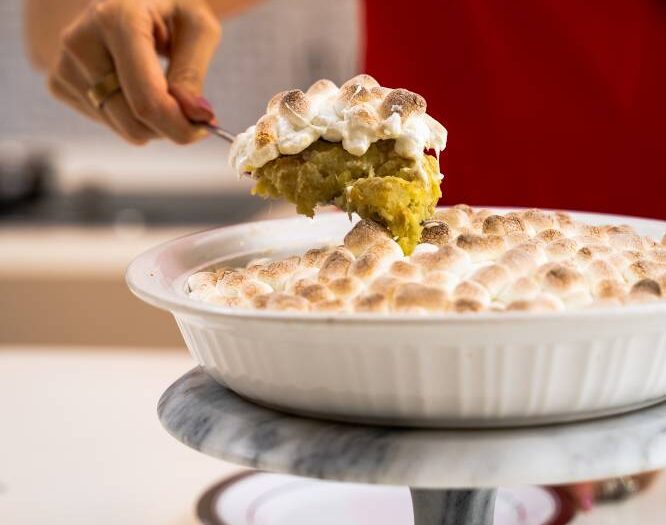
Since I was raised here in the Philippines, I had to learn how to make a turkey with all its sides. In my research, I came across a “yam pie,” which sounded interesting. I first made this kamote pie topped with marshmallows after spending Thanksgiving with my American friends, where they made something similar. This pie is much easier than a regular pie dish, as it involves no pie crust.
The recipe I created is so easy and delicious that I now serve it at other times of the year. However, its presence at our Thanksgiving table completes this family tradition that has now become our own.
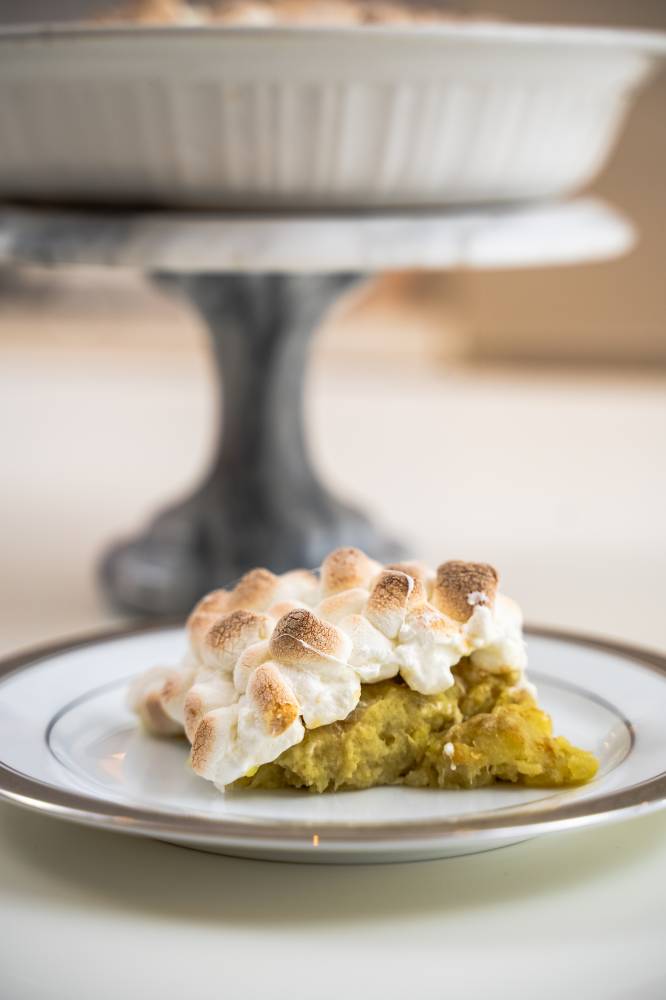
Kamote marshmallow pie
Ingredients

6 whole kamote—preferably orange, boiled, and peeled
¼ cup room temperature butter
¼ cup brown sugar
1 cup almond milk
1 bag or 5 cups marshmallows
Procedure
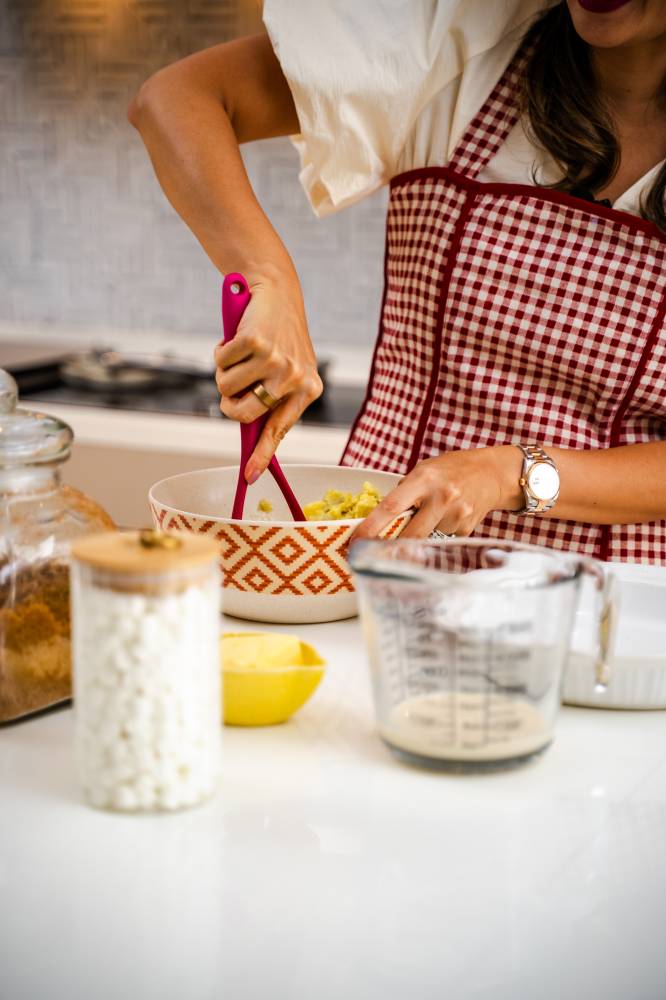
1. Peel and boil the kamote.
2. Dice them into small pieces and place them in a bowl.
3. Add butter and sugar, and mash until smooth.
4. Add almond milk to bring it to a smoother consistency.
5. Pour the mixture into a pie or baking dish.
6. Arrange the marshmallows on top.
7. Bake for 3 to 5 minutes at 250 degrees Celsius, making sure the top is slightly browned.