You plan to move to the Philippines? Wollen Sie auf den Philippinen leben?

There are REALLY TONS of websites telling us how, why, maybe why not and when you'll be able to move to the Philippines. I only love to tell and explain some things "between the lines". Enjoy reading, be informed, have fun and be entertained too!

Ja, es gibt tonnenweise Webseiten, die Ihnen sagen wie, warum, vielleicht warum nicht und wann Sie am besten auf die Philippinen auswandern könnten. Ich möchte Ihnen in Zukunft "zwischen den Zeilen" einige zusätzlichen Dinge berichten und erzählen. Viel Spass beim Lesen und Gute Unterhaltung!


Visitors of germanexpatinthephilippines/Besucher dieser Webseite.Ich liebe meine Flaggensammlung!

free counters

Total Pageviews

Showing posts with label Rey Ilagan. Show all posts

Wednesday, January 7, 2026

From south to shore: A taste of Mindanao in Boracay


Exploring Southern Mindanao's flavors at Crimson Resort

 and Spa Boracay with Chef Miguel Cabel Moreno

Published Jan 6, 2026 04:19 pm    
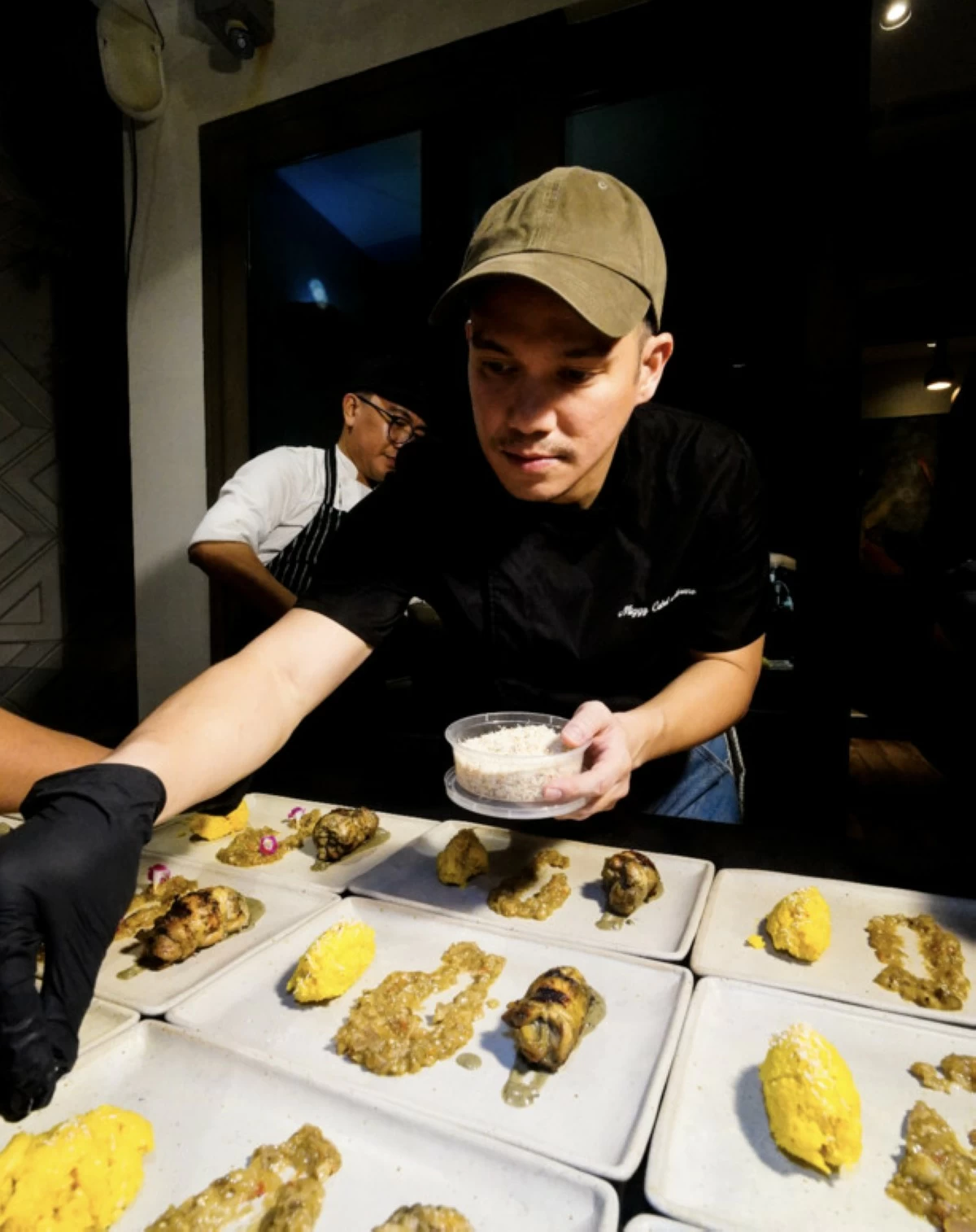
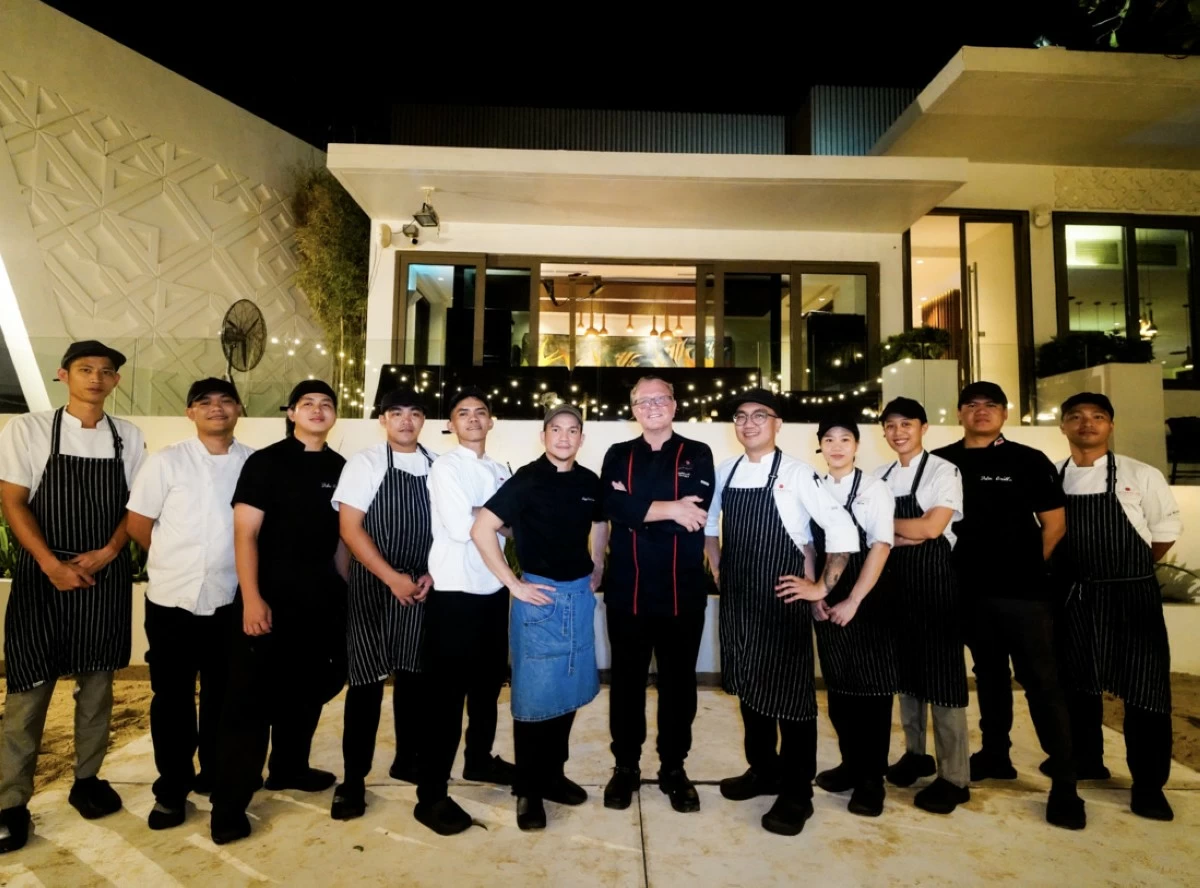
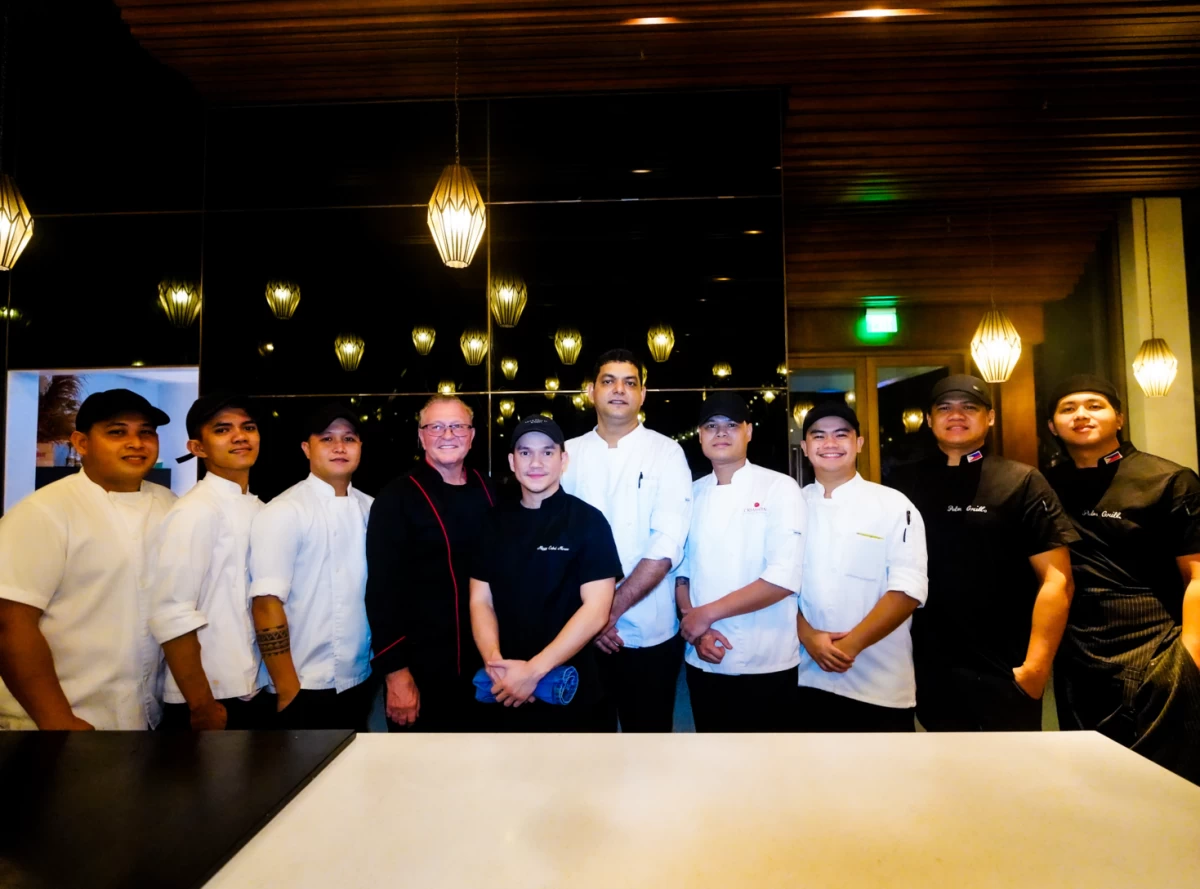
Chef Miguel’s presence is quite unmistakable: quietly commanding, thoughtful, and deeply rooted in where he comes from. Born in Sulu and shaped by life in Zamboanga, Chef Miguel has made it his life’s mission to bring Mindanaoan cuisine into conversations it has long been excluded from. Watching him move through the kitchens of Crimson Boracay, you sense that this isn’t simply about food. It’s about representation and about pride of telling a story to many Filipinos–and even foreigners–have yet to fully taste.
Chef Miguel Moreno
Chef Miguel Moreno
For those unfamiliar with his work, Chef Miguel is the man behind Palm Grill, with branches in Tomas Morato, Quezon City (opened in 2017) and Araneta City, Cubao (2023), both championing cuisines from ZamBaSulTa or Zamboanga, Basilan, Sulu, and Tawi Tawi. He is also the force behind Cabel Filipino Heritage Restaurant inside the Malanacanang Compound in Manila City.
With the entry of the Michelin Guide to the Philippines last October, both of his restaurants earned Bib Gourmand distinctions. Palm Grill was cited for its “warm hospitality and classic Southern Mindanao cuisine” defined by spices, acidity, and roasted coconut, while Cabel was praised for reflecting “the length and breadth of the Philippines, albeit with a penchant for Southern Mindanao.”
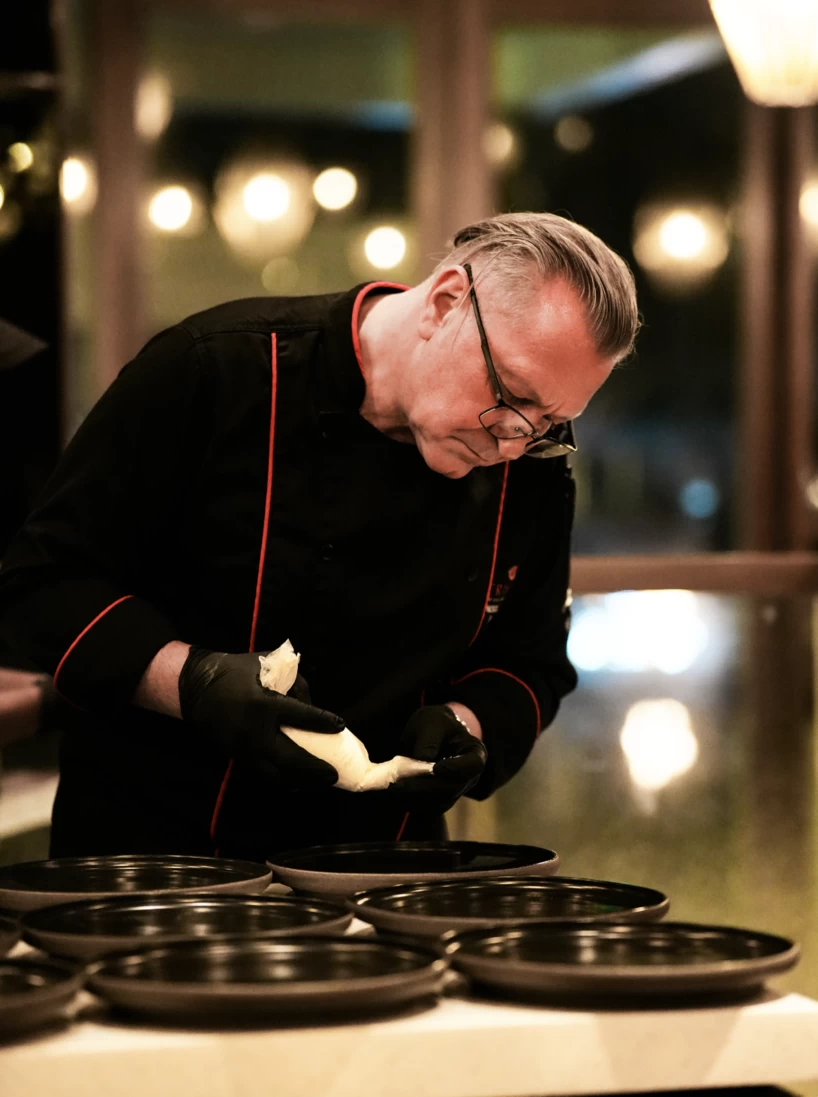
Chef Nickolai Stoyanov
Recognition, yes but for Chef Miguel this is not the end goal.
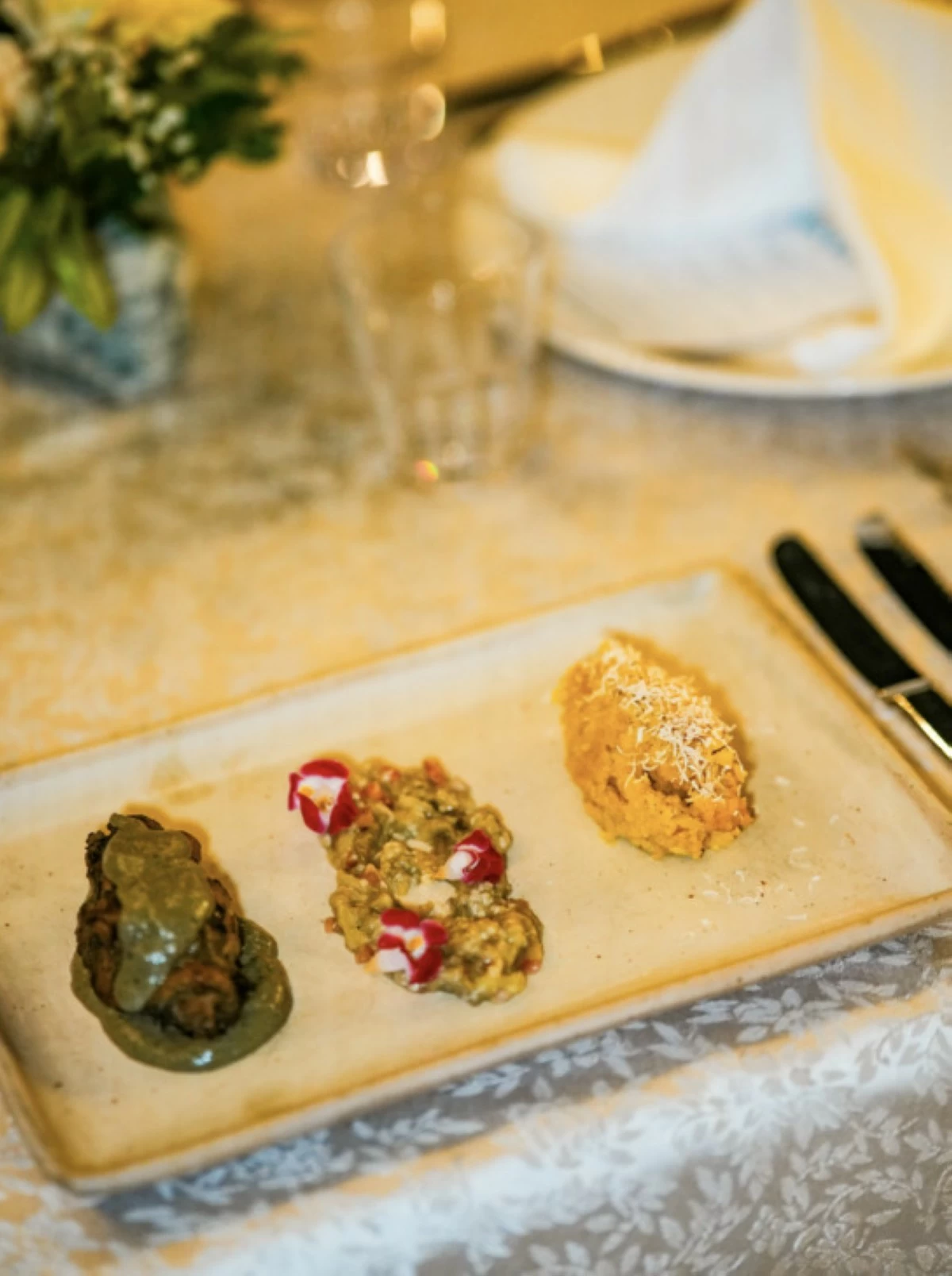
What struck me during our conversation was how often he returned to the idea of home. Every dish he served during “From South to Shore” felt like an ode to home, like an edible memory designed to transport diners from Boracay’s shores to his kitchen in Mindanao.
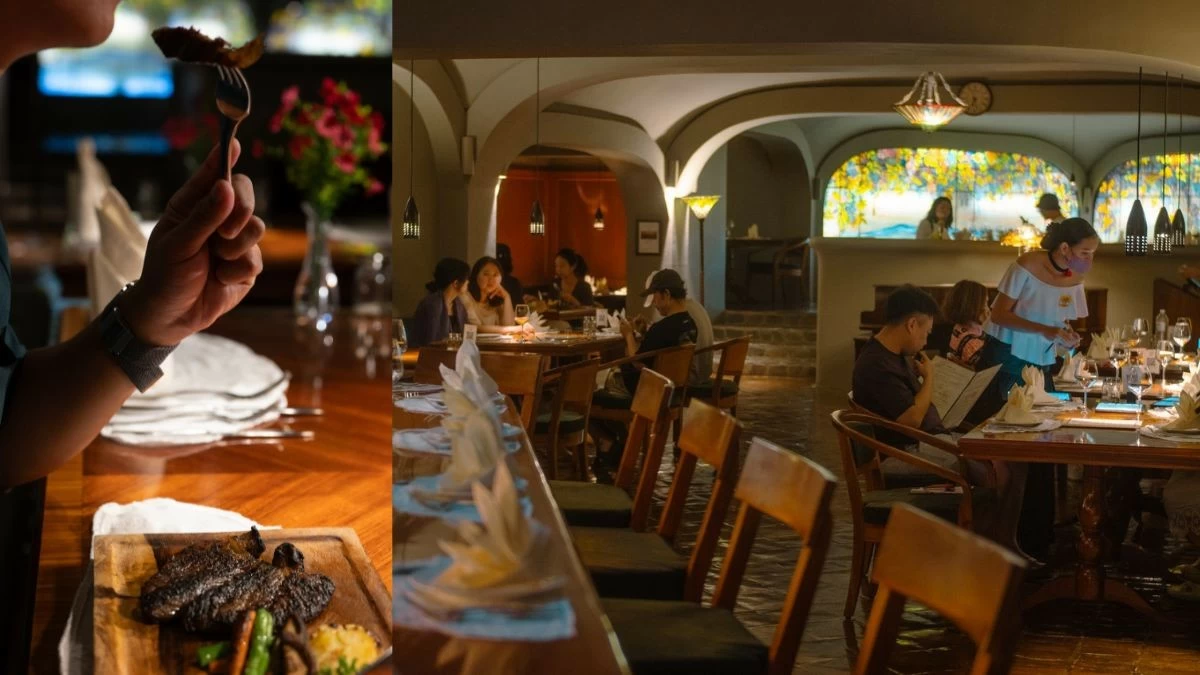
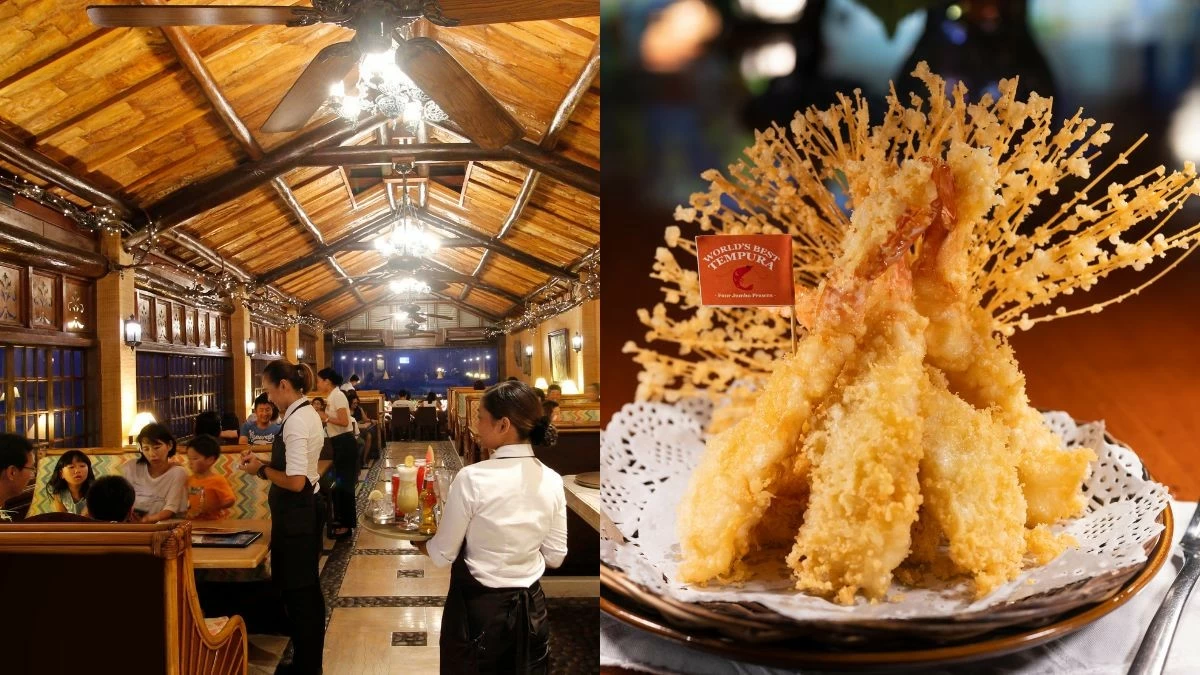
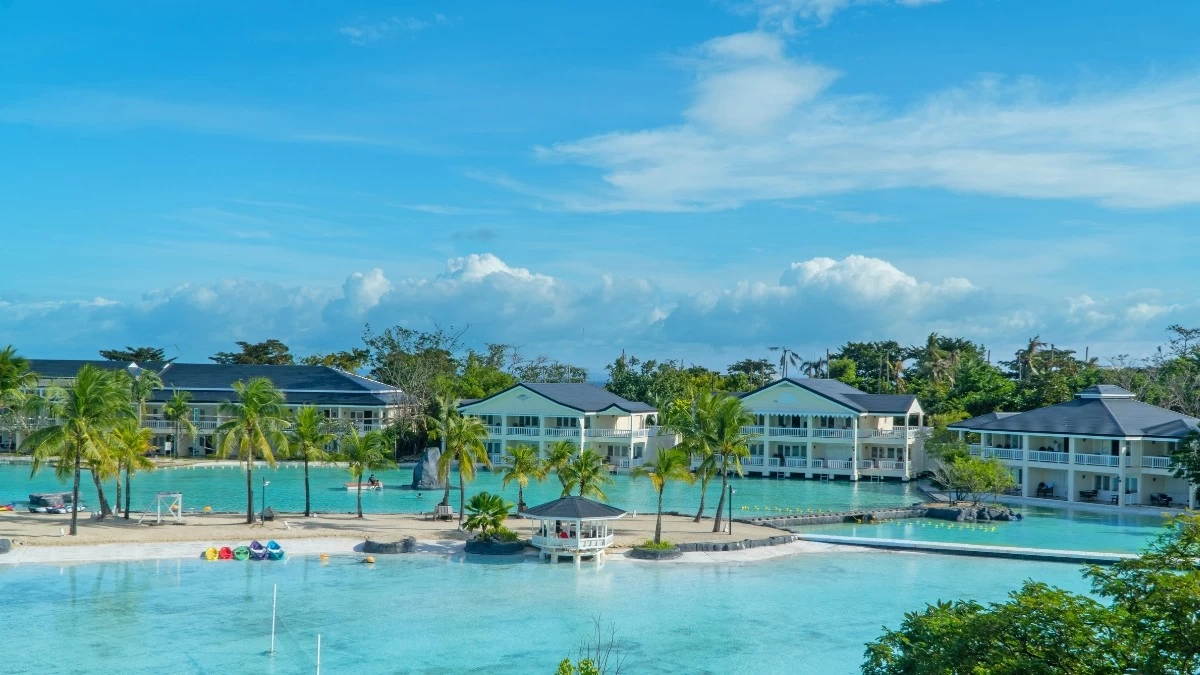
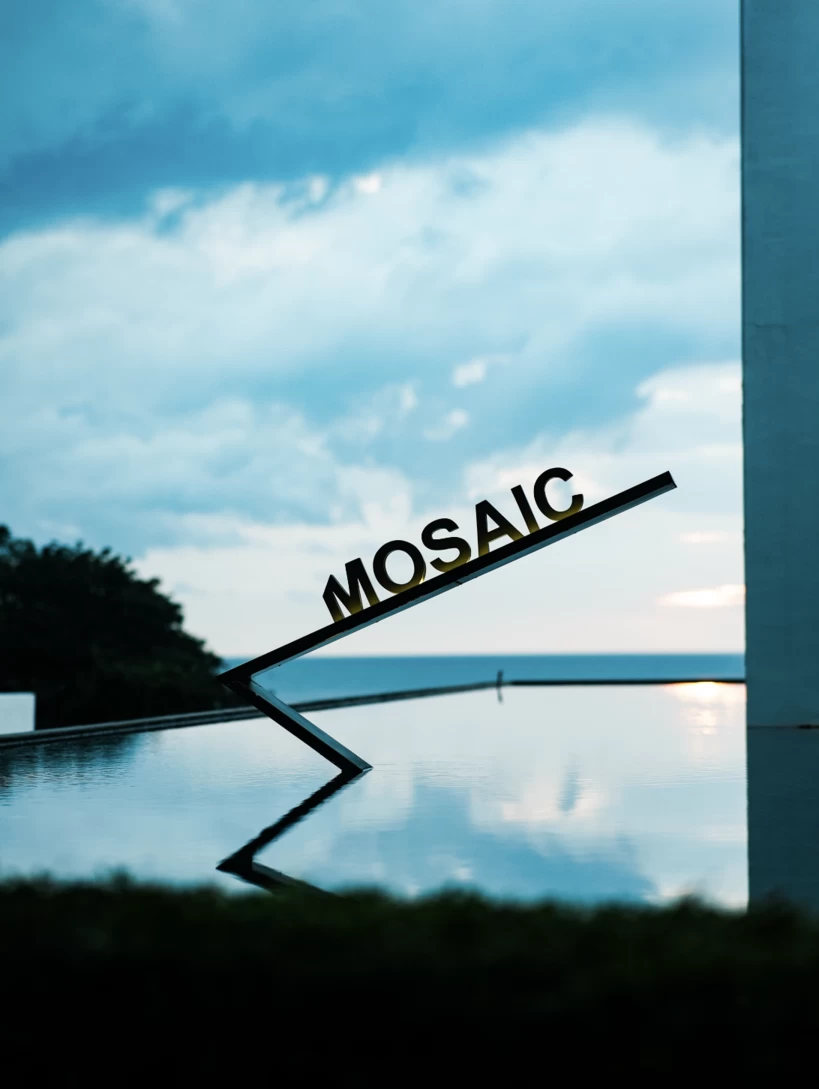
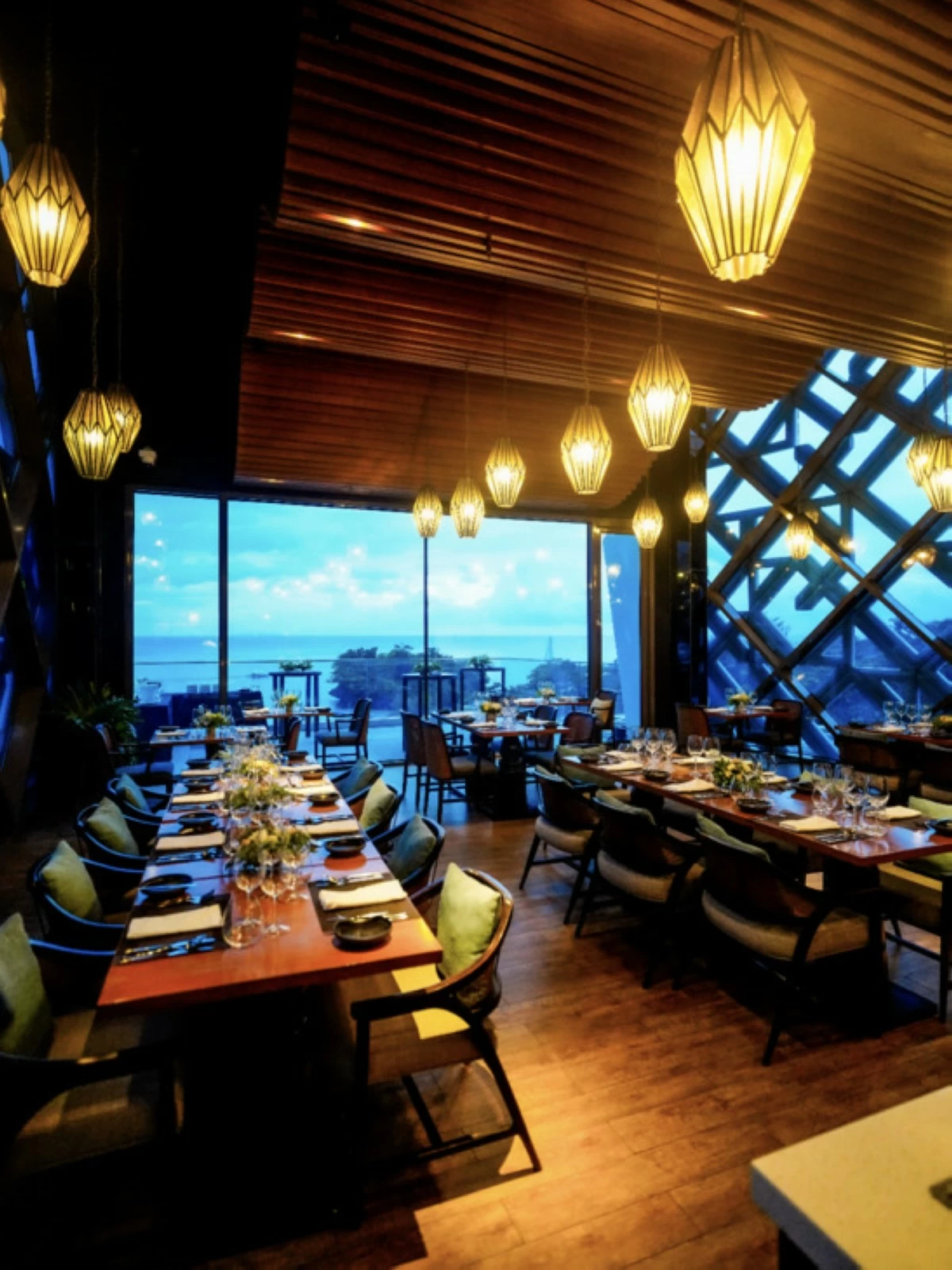
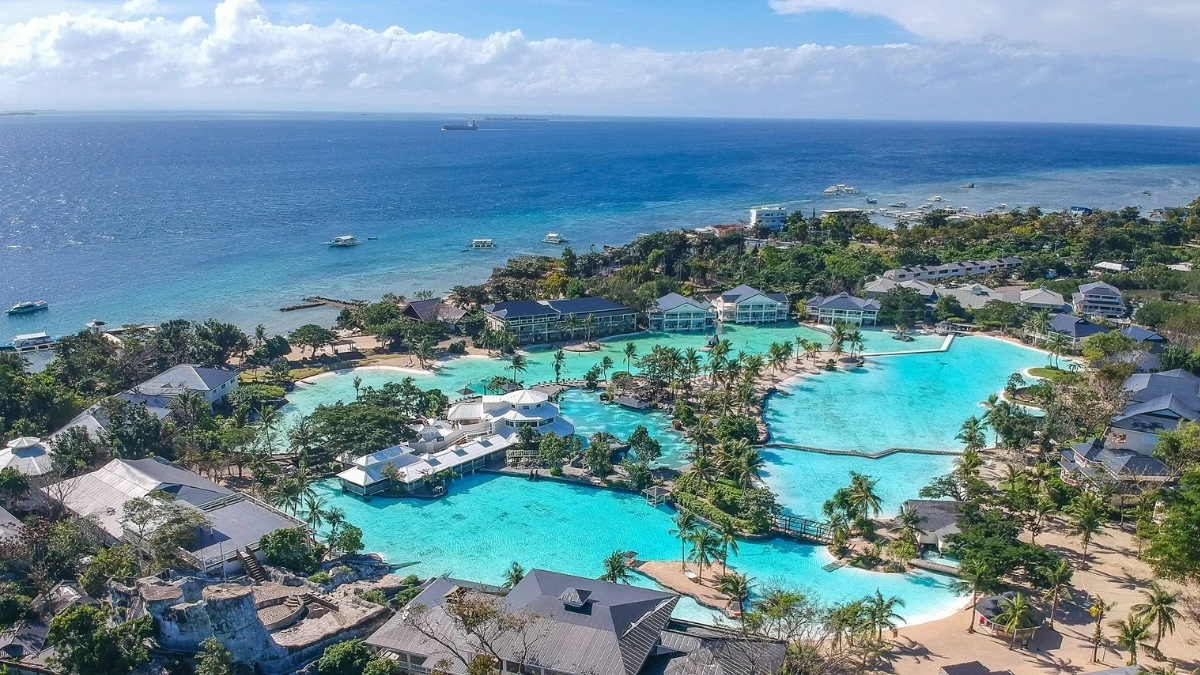
Mozaic Latin Grill at Crimson Spa and Resort Boracay
Golden collaboration
The collaboration itself came together organically. Crimson Boracay’s executive chef, Nickolai Stoyanov, had been increasingly interested in weaving Mindanaoan flavors into the resort’s dining concepts, whether subtly in buffet spreads or more deliberately through a la carte offerings. While exploring possible collaborations, he came across an article on Chef Miguel. By mid-2025, Crimson reached out.
At the time, neither party knew that Michelin recognition was just around the corner. In a twist of fate, the partnership was sealed before accolades arrived, making the collaboration feel less like a calculated move and more like a meeting of kindred spirits. Notably, Crimson Boracay itself, through its restaurant Mosaic, was later recognized as Best Restaurant at the Conde Nast Johansens Awards for Excellence in 2026. Its sister property in Cebu, Crimson Resort and Spa Mactan, would also get a nod from the Michelin Guide for its Spanish restaurant, Enye.
“When Crimson called, it was a no-brainer,” Chef Miguel recalled. “I never say no to collaborations. I always find time because that’s how we push the narrative forward. That’s how we spread the word.”
Echoes from the south
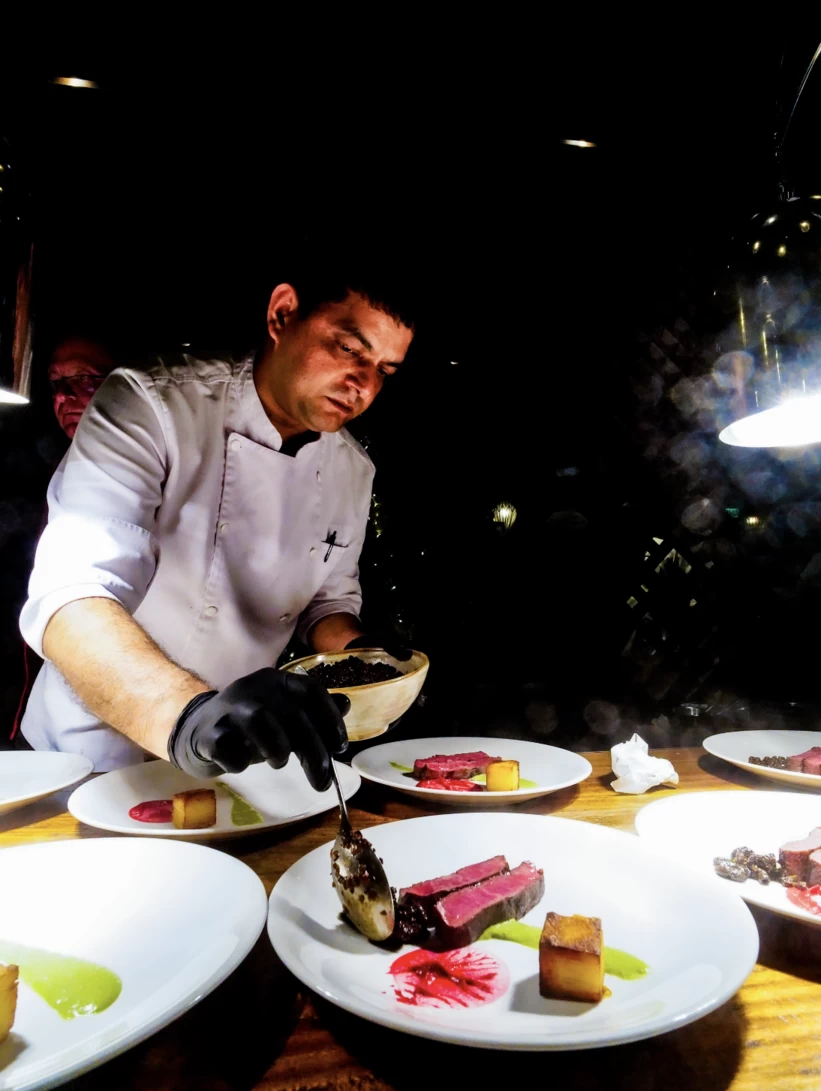
The first night unfolded at Mosaic Latin Grill, where Chef Miguel worked alongside Chef Nickolai and Chef Josephine Doromal. The brief from the executive chef was clear: Mindanaoan food, seen through a Spanish and Latin American lens. This approach felt natural for Chef Miguel given Zamboanga’s heritage.
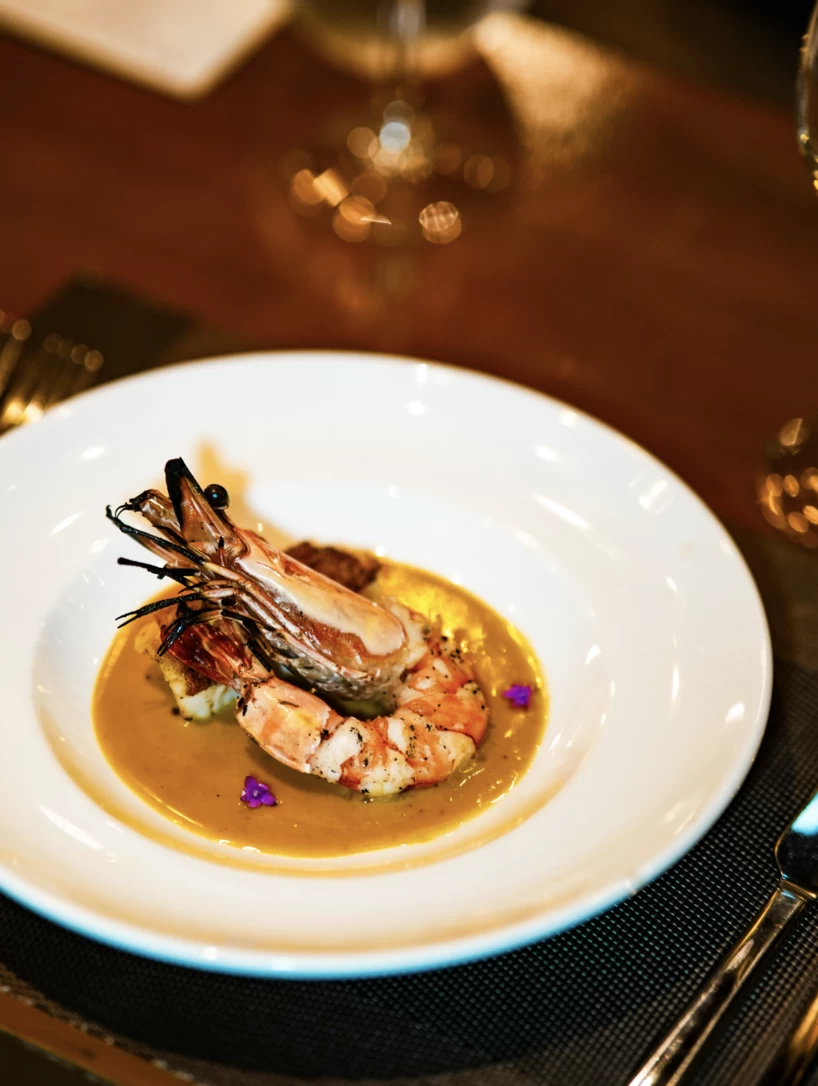
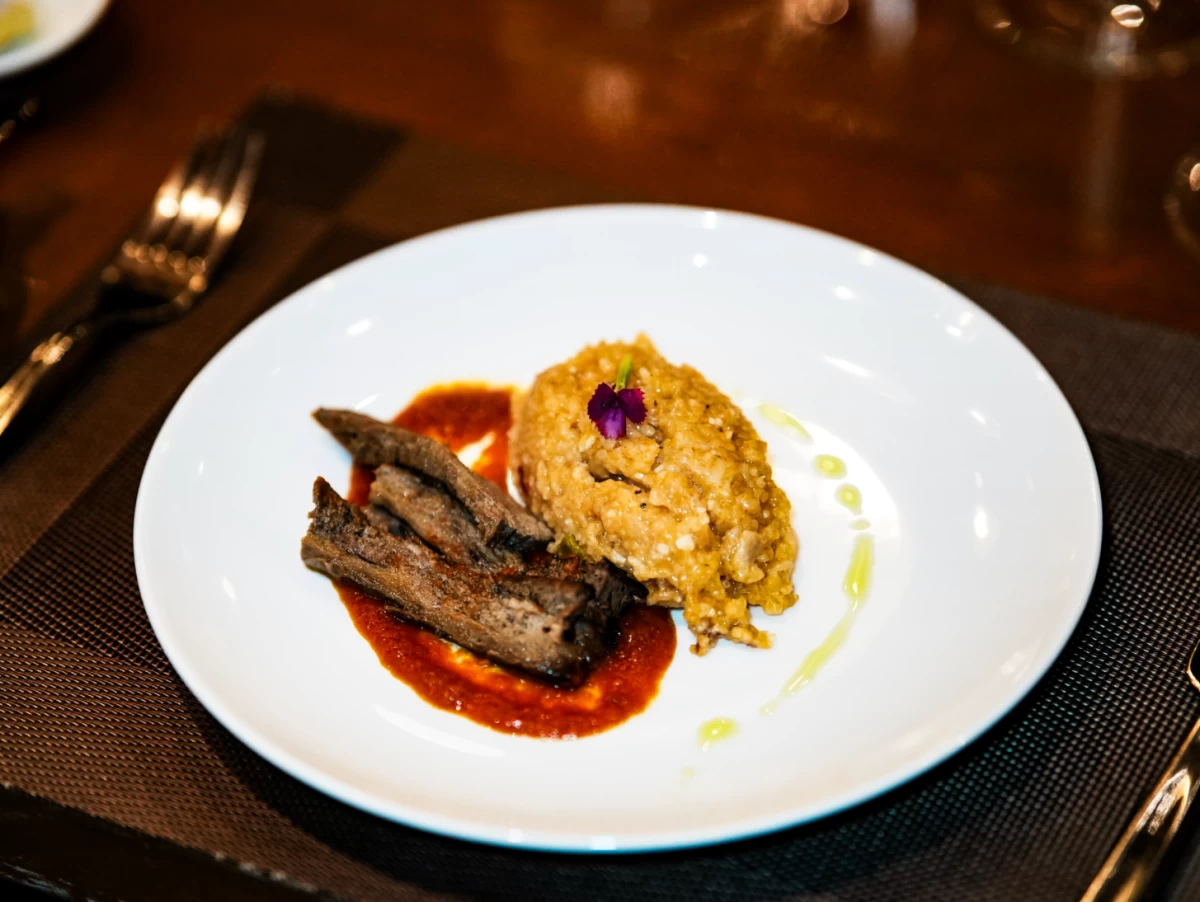
Chef Miguel presented Amor del Mar (translation: Love from the Sea), a delicate yet deeply flavored dish of tiger prawn and red grouped in coconut milk and turmeric reduction; and Mi Abuela (My Grandmother), lengua estofado paired with arroz valenciana—a recipe passed down from his grandmother to his mother, and now to him.
“This dish is an ode to my grandmother,” he said. “She taught me how to make valenciana and lengua when I was a kid.”
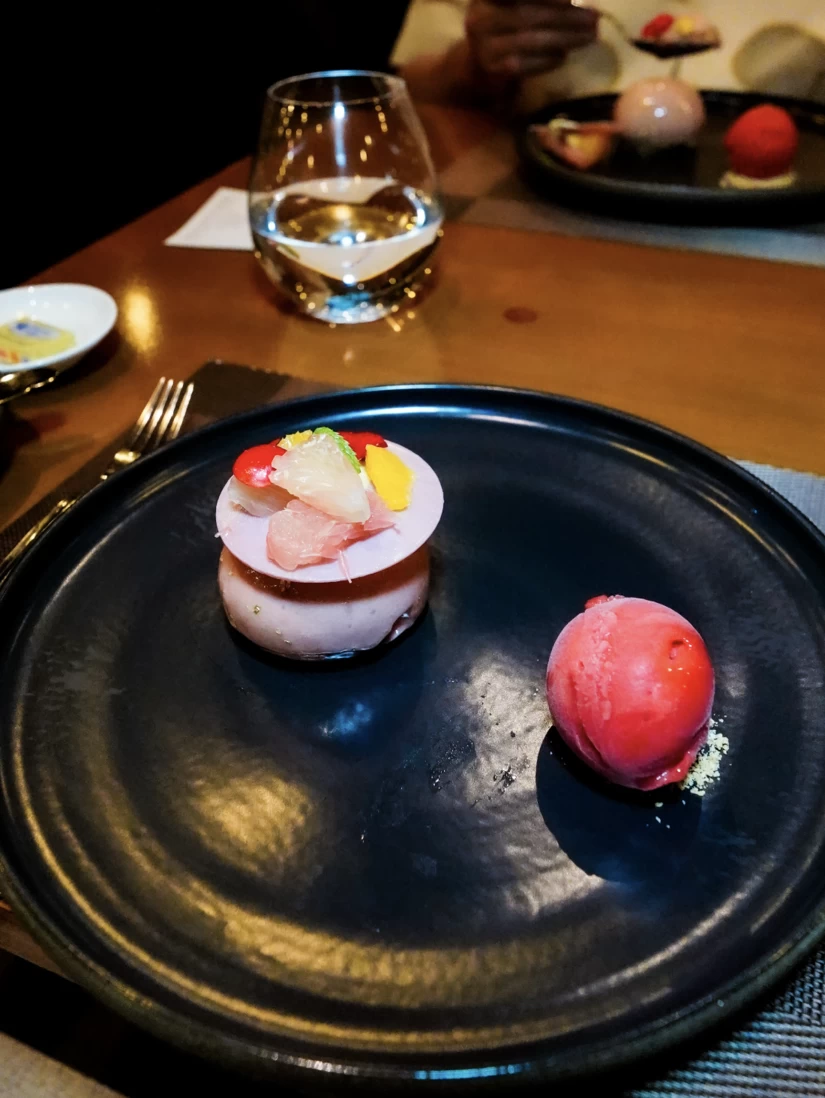
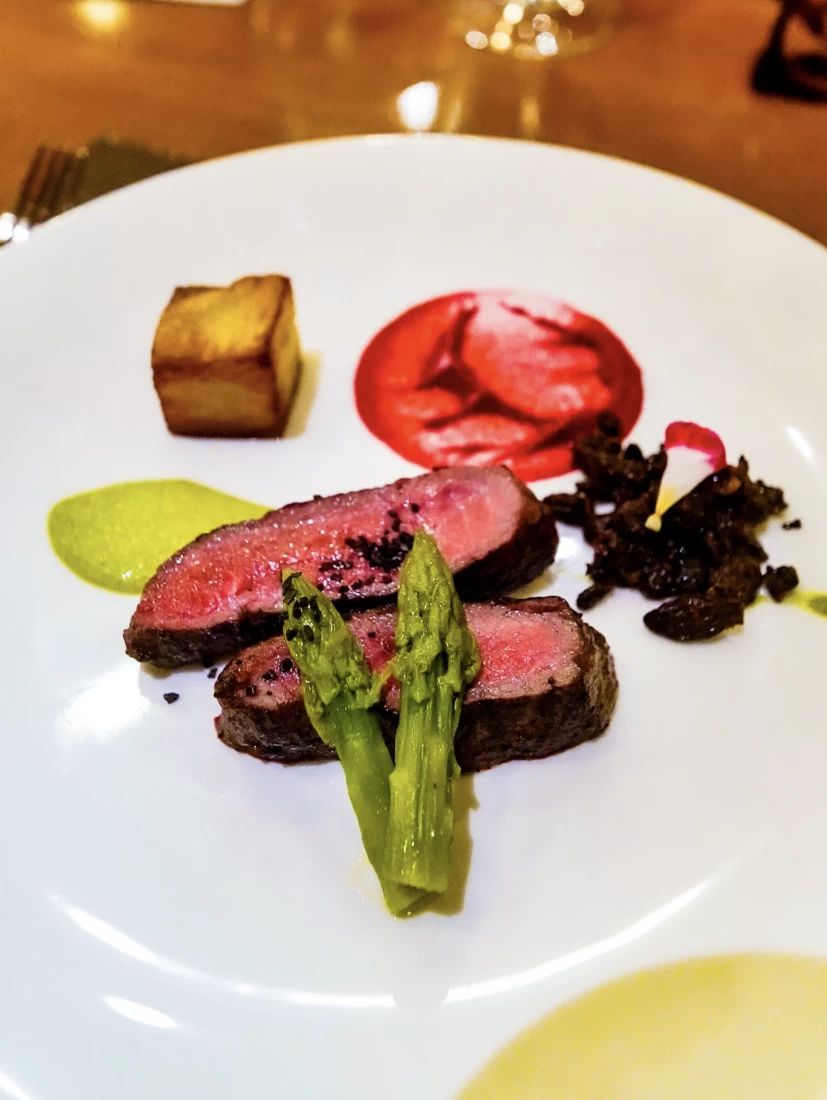
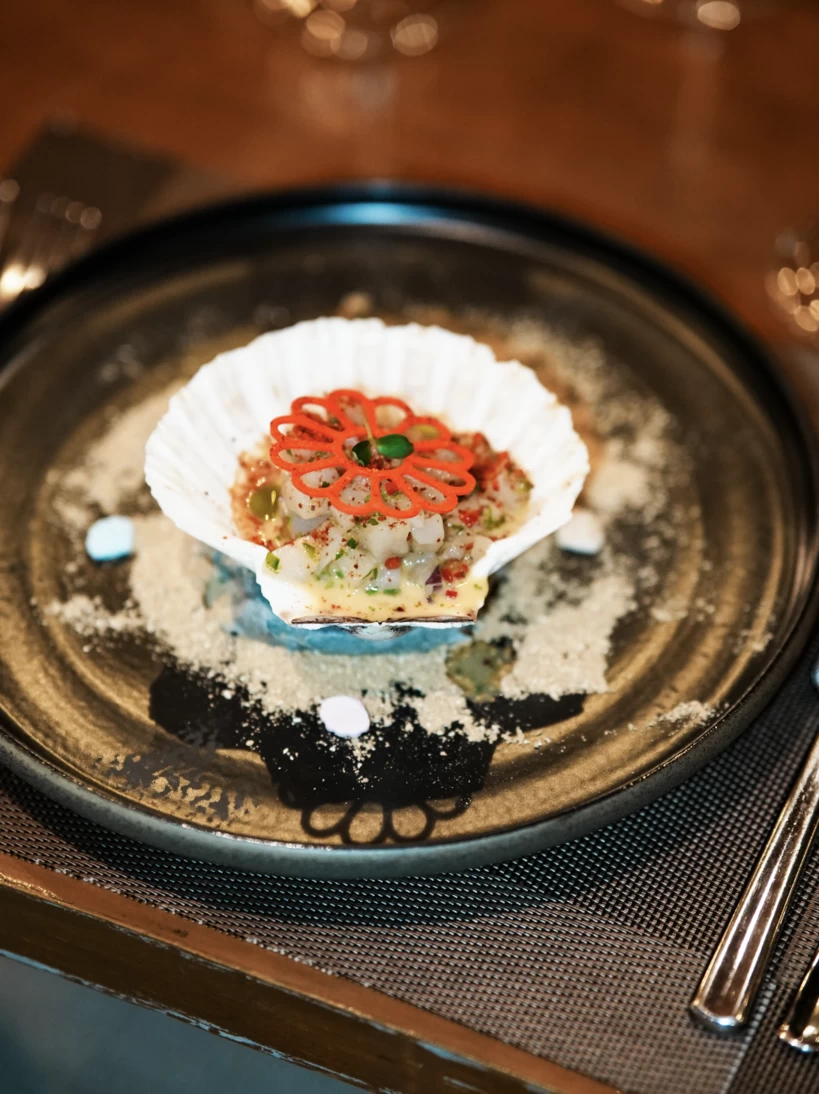
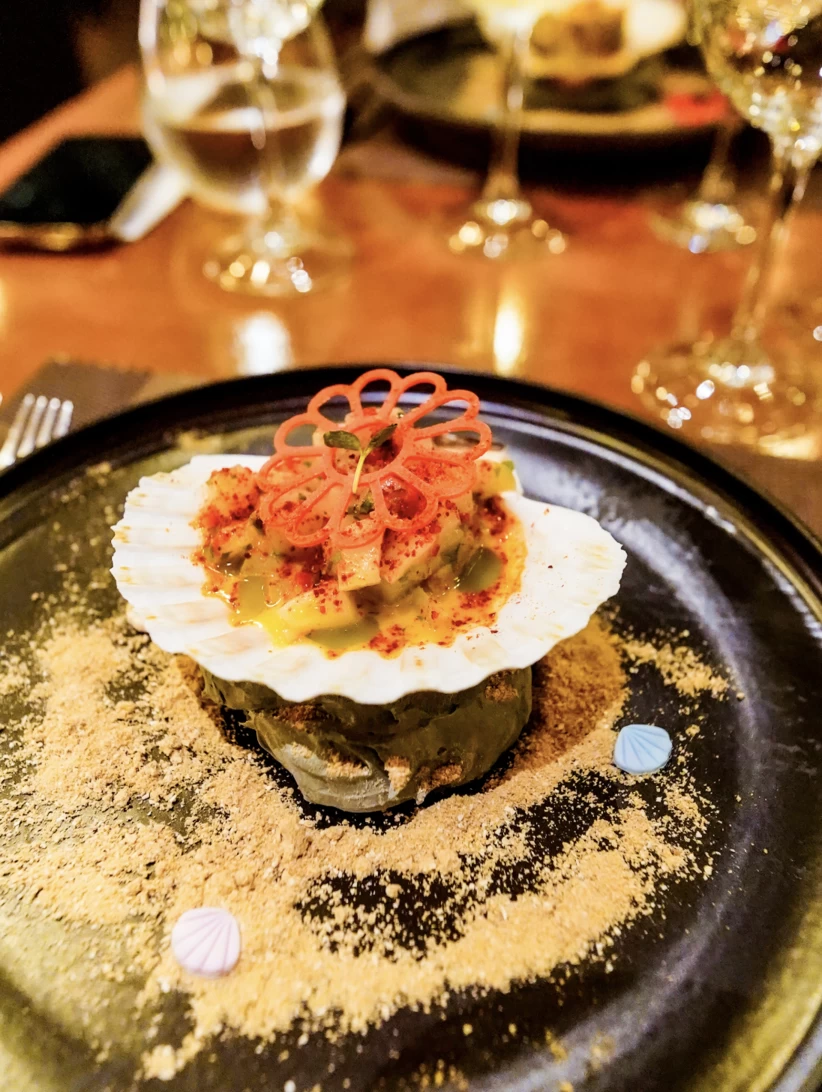
The dinner, paired with wines from AWC Philippines, also featured Scallop Ceviche, sea urchin leche de tigre, piment d’Espelette; Wagyu Flat Iron Steak, asparagus spears, roasted beef puree, braised morels, Aji Verde; and Pomegranate Mousse, pomegranate cremeux, citrus salsa, calamansi curd, and spicy strawberry sorbet.
Tausug roots by the sea
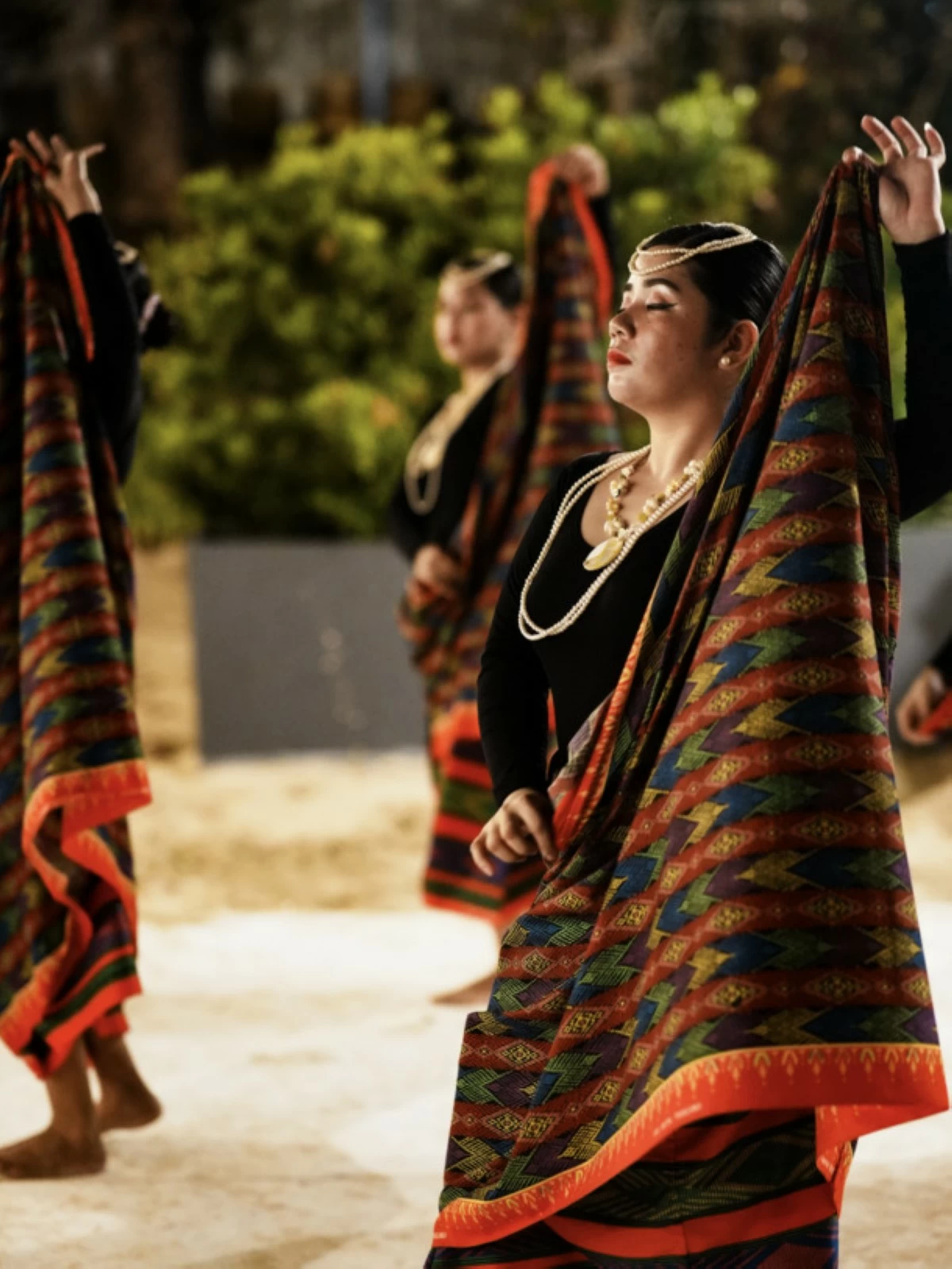
On the sophomore night, the experience shifted to Azure, Crimson Boracay’s beachfront dining outlet, where the atmosphere was livelier and the flavors more intense. Here, Chef Miguel collaborated with Chef de Cuisine Philip Arroza, bringing his Tausug roots to the forefront.
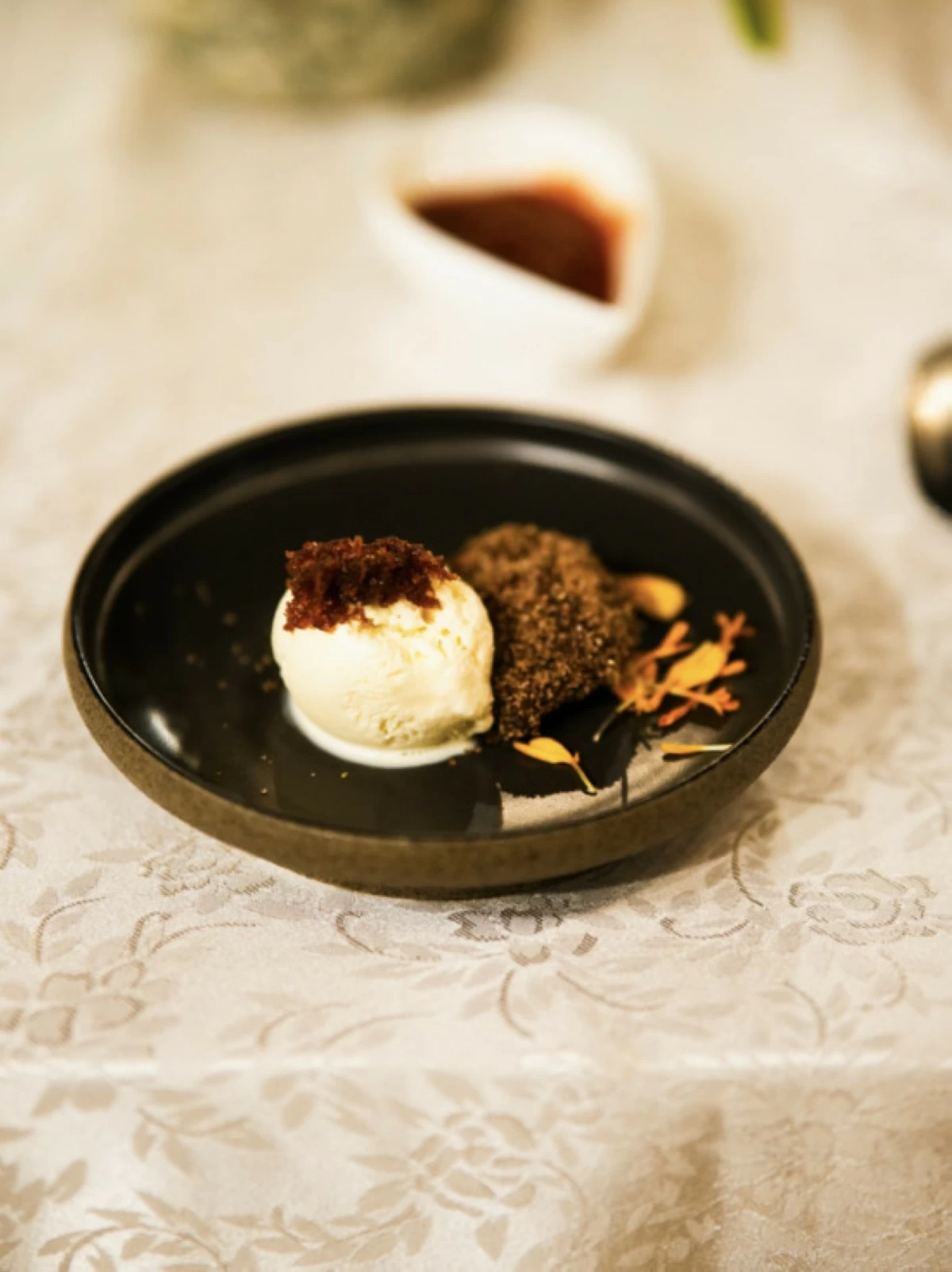
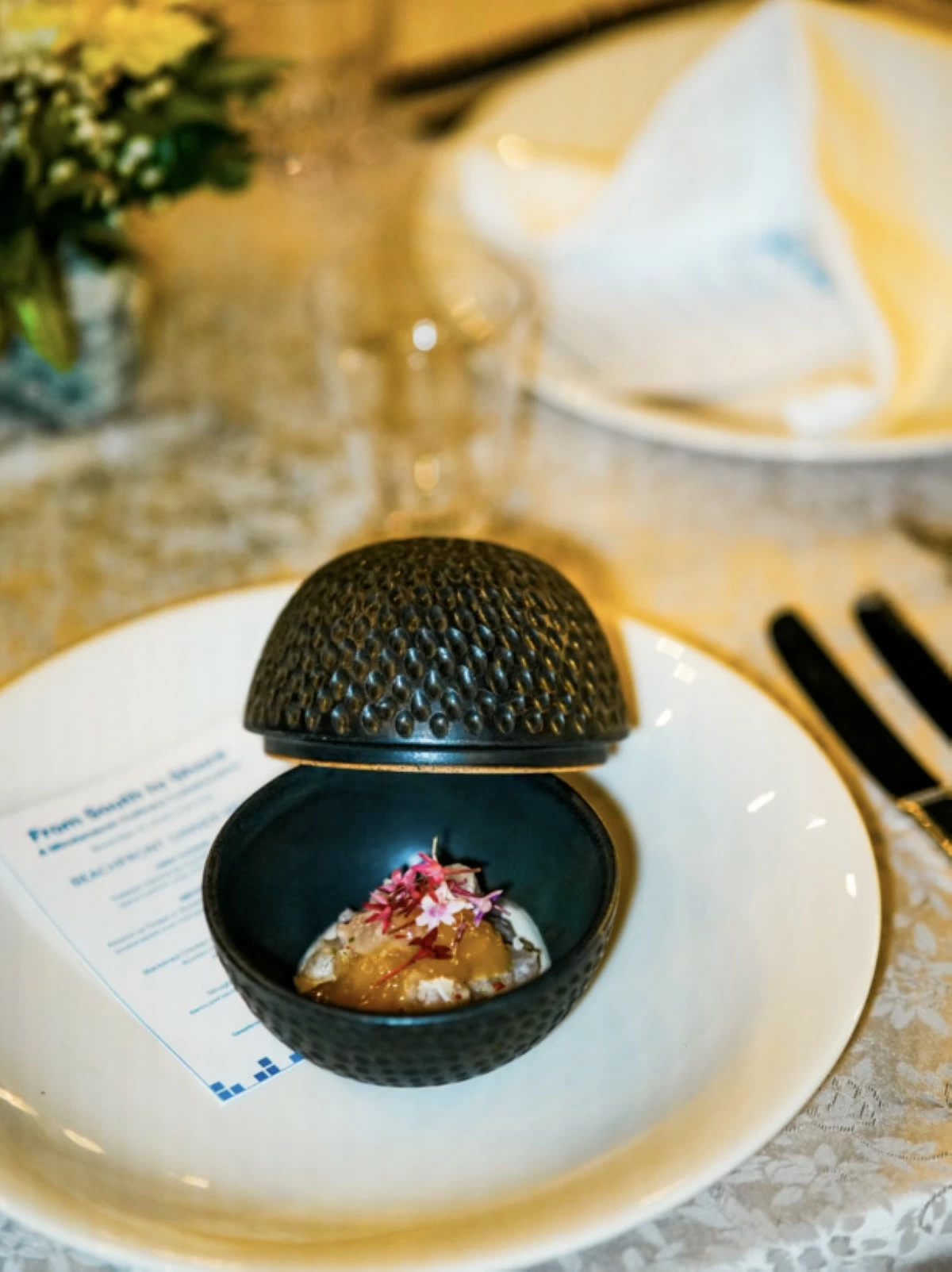
Standout dishes included Thalassic Ceviche—Spanish mackerel cured without vinegar, enriched instead with coconut milk and dried fish—and Blackened Chick of the Tausugs, featuring burnt coconut, turmeric rice, and Mindanaoan ensalada. Dessert was Hinti, a comforting composition of sweetened coconut mean, banana fritters, and house-made 100 percent carabao milk gelato.
“This is where it really dives into my Tausug roots,” Chef Miguel said. “Heavy coconut, burnt coconut, turmeric, these are flavors I grew up wth.”
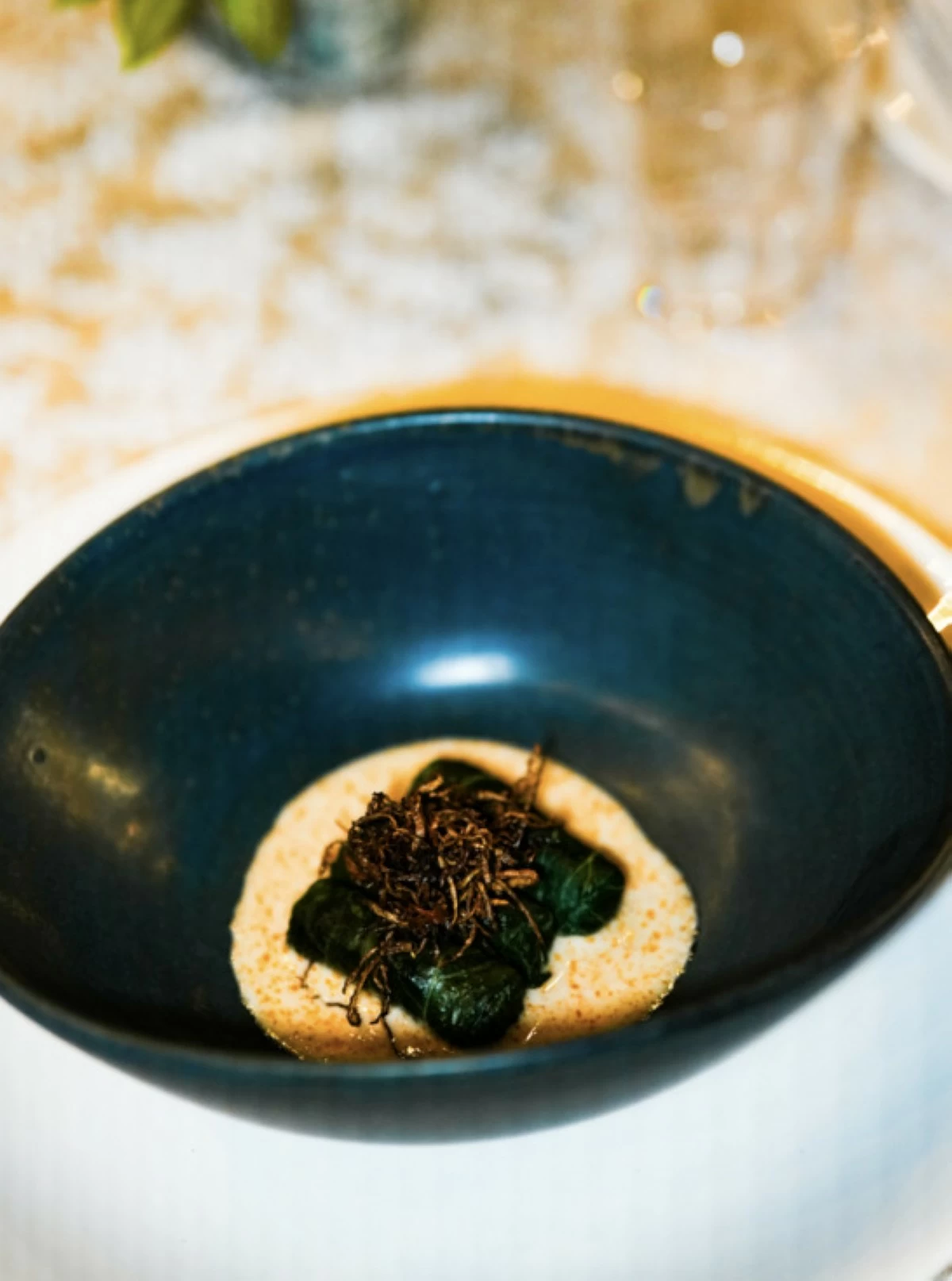
Chef Philip also offered Kinunot na Tinapa or Shredded Smoked Fish with smoked blacken scad, malunggay leaves, peachy, banana blossom, and coconut sauce; as well as Sinugba or Grilled Meat with iberico pork secrete, coriander coconut rice, green mango salsa, and pumpkin puree.
From Mindanao to the world
Nearly nine years into running Palm Grill, Chef Miguel still believes there is much work to be done.
“Not a lot of people get to travel to Mindanao, especially Zamboanga, Basilan, Sulu, Tawi Tawi,” he said. “So people don’t know the food. There’s also apprehension and fear.”
He is quick to dismantle misconceptions, especially the tendency to box Mindanaoan cuisine as something unfamiliar. In fact, the flavor profile of Mindanaoan food is right there along Southeast Asian cuisines–Thai, Indonesian, Singapores–rich in spices, coconut, turmeric, and familiar cooking methods. For many diners, the revelation is the same: It’s new, yet comforting.
Culture and legacy
Beyond restaurants and collaborations, Chef Miguel has also authored two children’s books, “Si Migoy, Ang Batang Tausug” and “Ang Kwento ni Putli Mandi.” These introduce culture and cuisine to the next generation.
Legacy, for Chef Miguel, is not measured by profit margins. “If there are savings, thank God,” he said. “Most of the time, we’re just breaking even. But what matters most is purpose.”
As the collaboration came to a close, I realized that what Chef Miguel is building is far larger than a culinary empire. It’s a bridge between regions, histories, and identities. In every dish, from Boracay to Manila, he reminds us that Filipino cuisine is truly something we should be proud of.
“It's not just a business of putting up a restaurant. It's a business of introducing history and culture. It's a business of educating people, and it's a business of reminding them to continuously be proud of who we are as Filipinos,” he said.
“I think we, as Filipinos, should be extremely proud of our cuisine because it's so diverse. It's so multifaceted. It's glorious,” he concluded.
And perhaps, all it takes to understand Mindanaoan cuisine is to sit at the table, and taste.

ADVERTISEMENT

Friday, March 14, 2025

Clearing the air

BY REY ILAGAN


EDITORS DESK

rey ilagan.jpg

IQAir recently released its 7th annual World Air Quality Report on March 11, shedding light on the most polluted countries and areas in 2024. The findings highlight concerning trends in global air pollution, with most regions failing to meet recommended air quality standards. 

The Philippines ranked 74th worldwide, with an average US AQI of 62 and a PM2.5 concentration of 14.82 micrograms per cubic meter (μg/m³) average of PM2.5—three times the World Health Organization’s (WHO) annual guideline value. This marks a decline from 2023, when the country ranked 79th with a PM2.5 level of 13.5 µg/m³. Pasig City emerged as the most polluted city in the country, recording a US AQI of 89, while Carmona, Cavite was named the cleanest city with a US AQI of 41. 

This year’s report analyzed data from more than 40,000 air quality monitoring stations across 8,954 locations in 138 countries, territories, and regions, providing a comprehensive look at global air pollution trends.

The report noted that only 17 percent of global cities meet WHO’s air quality guidelines. Seven countries—Australia, Bahamas, Barbados, Estonia, Grenada, Iceland, and New Zealand—met the WHO’s recommended annual PM2.5 level of 5 µg/m³, while the most polluted were Chad, Bangladesh, Pakistan, Congo, and India. 

“Air pollution remains a critical threat to both human health and environmental stability, yet vast populations remain unaware of their exposure levels,” IQAir Global CEO Frank Hammes said.

“Air quality data saves lives. It creates much-needed awareness, informs policy decisions, guides public health interventions, and empowers communities to take action to reduce air pollution and protect future generations,” Hammes continued.

We all know that health declines when people are exposed to poor air quality. Exposure to PM2.5—fine particulate matter linked to air pollution—can contribute to serious health conditions, including asthma, cancer, stroke, and lung diseases, according to IQAir. Studies also associate prolonged exposure with congenital heart defects, allergic diseases, cognitive impairments, neurodevelopmental disorders, and mental health issues.

With the Philippines highly vulnerable to environmental risks, local governments like Makati and Quezon City are stepping up efforts to improve air quality monitoring and policy interventions.

Makati has installed real-time air quality monitoring systems in key barangays to provide accurate pollution data. These sensors track various indicators, including heat index, temperature, humidity, CO2 levels, and particulate matter.

“With these sensors, we are able to zero in on areas in the city where poor air quality poses serious health hazards,” Makati Mayor Abby Binay said during the 2024 Taal Volcano vog emissions. “These smart devices also help the city government monitor compliance with the Clean Air Act and related regulations, particularly among businesses.”

The city then posts regular advisories on social media, informing residents about pollution levels and necessary precautions. In 2024, the city had 824 indoor air quality monitoring devices and 200 outdoor units equipped with solar panels. 

Quezon City has also expanded its air quality monitoring network last year, with 40 non-reference air quality sensors and one reference station tracking pollutants such as PM2.5 from vehicle and industrial emissions. The data collected informs local policies and environmental projects.

“Guided by the city’s air quality management plan, which identifies mobile sources as the primary contributor to air pollutants based on the city’s Emission Inventory, we are actively pursuing measures to meet the more stringent air quality guideline values set forth by the World Health Organization,” Quezon City Mayor Joy Belmonte explained. “These efforts involve evidence-based policy interventions and projects aimed at achieving even better air quality for our constituents.”

To keep residents informed, Quezon City publishes real-time air quality index updates every Monday, Wednesday, and Friday on its official website and social media pages, including the Climate Change and Environmental Sustainability Department Facebook page.

Improving air quality across the Philippines will require stronger policies and sustained efforts like these monitoring systems in Makati and Quezon City. With air pollution remaining a major public health risk, everyone must stay informed and do their part in reducing it.

(Rey Robes Ilagan is the editor of Manila Bulletin’s Environment and Sustainability section.)

Friday, January 17, 2025

New era in climate change

BY REY ILAGAN


EDITORS DESK

rey ilagan.jpg


It’s official: In 2024, the world breached the 1.5 degree Celsius threshold for global warming, a limit established by the 2015 Paris Agreement. This alarming development was confirmed by the World Meteorological Organization (WMO), drawing from analyses by scientists in the US, UK, and EU. Further validation came from the European Commission’s Copernicus Climate Service, the UK Met Office, and Japan’s weather agency.


Adopted by 196 parties during the UN Climate Change Conference (COP21) in Paris on Dec. 12, 2015, the Paris Agreement is a legally binding international treaty on climate change. Its overarching goal, as stated by the United Nations Framework Convention on Climate Change (UNFCCC), is to “hold the increase in the global average temperature to well below 2 degrees Celsius pre-industrial levels and pursue efforts to limit the temperature increase to 1.5 degrees Celsius above pre-industrial levels.”  

The recent breach underscores a grim reality: The past decade has been the hottest in recorded history, with 2024 marking the peak. This year is likely to be the first with a global mean temperature exceeding 1.5 degrees Celsius above pre-industrial levels. Samantha Burgess of the European Commission’s Copernicus Climate Service noted, “The last 10 years are the 10 hottest on record and are likely the hottest in 125,000 years.” Adding to this, Copernicus identified July 10, 2024, as the hottest day ever recorded.


Burgess added: “The primary reason for these record temperatures is the accumulation of greenhouse gases in the atmosphere. As greenhouse gases continue to accumulate in the atmosphere, temperatures continue to increase, including in the ocean, sea levels continue to rise, and glaciers and ice sheets continue to melt."


In the Philippines, extreme temperatures mirrored global trends. Metro Manila experienced its hottest day in history on April 27, 2024, with the Philippine Atmospheric, Geophysical, and Astronomical Services Administration (PAGASA) recording an air temperature of 38.8 degrees Celsius at Ninoy Aquino International Airport (NAIA). The heat index soared to 45 degrees Celsius at NAIA and 42 degrees Celsius at the Quezon City Science Garden.


The provinces also saw all-time high records. Zambales province recorded 53 degrees Celsius on April 28, 2024. Subic Bay in Olongapo, Munoz in Nueva Ecija, and Dagupan in Pangasinan recorded 47 degrees, according to PAGASA.


While individual years exceeding the 1.5-degree limit don’t spell the end of the Paris Agreement’s goals, they signal an urgent need for action. “It means we need to fight even harder to get on track,” said UN Secretary-General António Guterres in a statement confirming the breach. “There’s still time to avoid the worst of climate catastrophe. But leaders must act—now.”


Guterres underscored that the recorded heat of 2024 demands unprecedented climate action in 2025. Governments must deliver updated national climate action plans to curb global temperature rise and prioritize support for vulnerable communities facing the brunt of climate impacts.


The question remains: Will leaders heed this warning and act decisively, or will the world continue its trajectory toward irreversible climate catastrophe?


(Rey Robes Ilagan is the editor of Manila Bulletin’s Environment and Sustainability section.)

Sunday, December 22, 2024

Arch. Royal Pineda on redefining Filipino identity and inspiring the next generation

BY REY ILAGAN

IMG_5157.jpeg
Arch. Royal Pineda (Photo courtesy of Royal Pineda/Facebook)

During the launch of “Ugnayan,” Genteel Home’s latest collaboration with Arch. Royal Pineda at Manila FAME 2024, the spotlight wasn’t just on the stunning furniture collection—it was on the dialogue surrounding Filipino creativity. Renowned for his forward-thinking approach to design and architecture, Arch. Pineda shared insights on his partnership with designer Katrina Blanca de Leon, the local creative industry, and his vision for modern Filipino design.

One theme consistently emerged: Arch. Pineda’s commitment to pushing the boundaries of Filipino identity in design, always aiming for global recognition without losing authenticity.

IMG_5160.jpeg
Katrina de Leon and Arch. Royal Pineda (Photo courtesy of Genteel Home)

Culture of betterment

ADVERTISEMENT

For Arch. Pineda, every collaboration is an opportunity to inspire creatives to embrace and refine their unique Filipino identity. Reflecting on his work with de Leon and Genteel Home, he emphasized the importance of authenticity in creativity. “As I collaborate and work with any creatives as a naturalist, I always say, just be yourself. I am not here to tell you to follow my ways or my approach, but to understand the principle of how to become you and a better Filipino,” he explained.

This philosophy translates into a mindset of continual improvement—a rejection of mediocrity. “When I see a creative digging for that identity, I help them. Because I always tell them, you will not just be Filipino—you will be a better Filipino, a modern Filipino,” he said.

He further highlighted the importance of creating designs that contribute to a broader narrative. “The culture of betterment—where we keep saying better, better, better—is actually created to cancel out ‘pwede na.’ You see a version, so there’s a contribution, because it cannot be the same. Otherwise, there’s no point; there’s no creativity.”

IMG_5159.jpeg
(Photo courtesy of Royal Pineda)

Local design, global market 

Pineda believes that Filipino design has the potential to thrive in a global market, not by competing with mass-produced pieces but by embracing its exclusivity. “Philippine furniture stands out because we are not about mass production. That’s why I also challenge [designers]. Your exclusivity is not just about limiting it to a few people. Your exclusivity is in being able to create a design exclusively for a person,” he said.

This approach requires a clear understanding of what makes Filipino design unique. “The Philippines will have its authentic market because it will always prepare and present a very specific identity and quality of the Philippines. We’re not here to compete… But again, my question is: What makes ours Filipino? That’s the challenge—to always know,” Arch. Pineda explained.

He added that authenticity in Filipino design can command its value. “Why would I buy a table from the Philippines that’s exactly like a table from Vietnam, but Vietnam’s is cheaper? But if you, as a Filipino table, bring something to the world that makes it better Filipino, then you cannot compare the price.”

Modern Filipino identity

For Arch. Pineda, modern Filipino design is an evolving identity. “For the longest time, there was a colonial mindset that left us confused as architects. Some colleagues of mine, 20 years ago, when I asked them, ‘Can you define Philippine architecture?’ they said it was a long discussion because we were colonized,” he recalled.

But Arch. Pineda has moved beyond that mindset. “I believe I’m doing Philippine architecture of our time. The bahay kubo was Philippine architecture of its time, as was the bahay na bato. We are in a constant evolution, but my challenge to every creative—not just architects—is this: Are you contributing to the chain of history?” 

His design philosophy is deeply rooted in identity and purpose. “Why should a Filipino be forced to live in a Mediterranean house? Why do the French live in a French house? And yet, suddenly, when you come to the Philippines, you’re telling me I’m Filipino and I cannot live in a Filipino house?”

For Arch. Pineda, the challenge is clear: “If you don’t dare to find your own identity, if you don’t have that itch, you will always be a follower. You’ll remain in the status quo. But I challenge the status quo all the time.”

Next generation

Pineda is optimistic about the younger generation of Filipino creatives. “I’m happy to see the younger generation becoming more confident about who they are. They look for what’s Filipino,” he said.

While some criticize younger designers for being overly confident or entitled, Pineda sees this as an asset. “That’s not necessarily bad. Use that confidence to say, ‘We are Filipino.’ Graduate from the inferiority. That’s what makes the Philippines really exciting now, especially in creative fields.”

Friday, December 6, 2024

PH achieves Guinness World Record for bamboo planting

BY REY ILAGAN

DOST.jpeg
(Photos courtesy of DOST)

In a landmark environmental initiative, the Philippines set a Guinness World Record (GWR) for the most participants simultaneously planting bamboo, reinforcing its commitment to sustainability and climate resilience.

On October 18, 2,305 planters across 19 locations in Mindanao and Leyte province came together to achieve this record-breaking feat. On November 28, the record was officially confirmed by GWR adjudicator Sonia Ushiriguchi during the National Science and Technology Week celebration held in Cagayan de Oro City.

IMG_4925.jpeg


The initiative, led by the Department of Science and Technology (DOST) in collaboration with its Kawayanihan Circular Economy Movement partners, underscored bamboo’s pivotal role in advancing a circular economy, fostering climate resilience, and supporting sustainable development. "We must love our environment as much as we love our children, ensuring they live in a healthy, peaceful, and stable place,” said DOST Secretary Renato Solidum Jr., emphasizing the need for policies that align with a circular economy framework.

DOST’s efforts garnered strong support from local leaders, including Bukidnon 1st District Representative Jose Manuel Alba, who championed bamboo propagation as a key strategy to combat climate change. “By harnessing the transformative power of bamboo innovation and trade, we can cultivate prosperity from the roots up, lifting communities out of poverty and building a sustainable future for all,” Alba said.

IMG_4927.jpeg

Bamboo is widely recognized as an environmental powerhouse. According to the Climate Change Commission, it absorbs more carbon dioxide than most tree species, sequestering over five tons of carbon dioxide per hectare annually. Additionally, its extensive root system prevents soil erosion, enhances water retention, and aids disaster risk reduction, especially in flood-prone areas. As a versatile material, bamboo also improves air quality, supports biodiversity, and reduces reliance on wood-based products, thereby curbing deforestation. 

“The versatility of bamboo makes it an ideal ally in our fight against climate change. Bamboo serves as a carbon sink and contributes to disaster risk reduction. It strengthens community resilience by providing sustainable livelihoods, reducing the need for wood-based products, and preventing deforestation,” said Secretary Robert Borje, Climate Change Commission vice chairperson and executive director.

Borje further highlighted bamboo’s economic potential: “The strategic integration of bamboo in national and local climate initiatives enhances our mitigation and adaptation efforts and empowers communities, especially in rural areas. Through bamboo cultivation, we create economic opportunities and build resilience against the adverse effects of climate change."

With this achievement, the initiative highlights the power of collective action, showing that when we unite with a shared vision, we can achieve our sustainability goals more effectively and create lasting impact.

Monday, February 5, 2024

More reasons to ‘Love the Philippines’

Earning numerous accolades from prestigious travel institutions


2023 proved to be a remarkable year for Philippine tourism, surpassing the target international visitor arrivals and reaching the five-million mark before year-end.

Under the leadership of the Department of Tourism, the country earned numerous accolades from prestigious travel institutions, including the World Travel Awards 2023 (WTA) held at Burj Al Arab in Dubai, UAE, in December. 

The Philippines was honored with the inaugural Global Tourism Resilience Award, acknowledging the country's demonstration of “global leadership, pioneering vision, and innovation to overcome critical challenges and adversity.” Being one of just five countries acknowledged for this award, the Philippines sets the standard for best practices in tourism resilience. 

WE (4).jpg
(Background photo from Epik)


In addition to this significant recognition, the Philippines was once again honored as the World's Leading Dive Destination, World's Leading Beach Destination, and World's Leading City Destination for Manila City. 

Tourism Secretary Christina Garcia Frasco expressed joy over these accolades, stating, “We are elated and grateful that Philippine tourism continues to soar to global prominence with tourists declaring their love for the Philippines as the undisputed World’s Leading Beach Destination and World’s Leading Dive Destination, and now World’s Leading City Destination, Manila.”

Frasco continued, “Receiving the Global Tourism Resilience Award is also especially meaningful as this is an affirmation of all the hard work done in the past year to strengthen the pillars of tourism development through convergence and collaboration towards the tourism transformation envisioned by our President Ferdinand Marcos, Jr. These accolades are as much a source of Filipino pride as they are a testament to the enormous contribution of tourism to the Philippine economy and global standing.”