You plan to move to the Philippines? Wollen Sie auf den Philippinen leben?

There are REALLY TONS of websites telling us how, why, maybe why not and when you'll be able to move to the Philippines. I only love to tell and explain some things "between the lines". Enjoy reading, be informed, have fun and be entertained too!

Ja, es gibt tonnenweise Webseiten, die Ihnen sagen wie, warum, vielleicht warum nicht und wann Sie am besten auf die Philippinen auswandern könnten. Ich möchte Ihnen in Zukunft "zwischen den Zeilen" einige zusätzlichen Dinge berichten und erzählen. Viel Spass beim Lesen und Gute Unterhaltung!


Visitors of germanexpatinthephilippines/Besucher dieser Webseite.Ich liebe meine Flaggensammlung!

free counters

Total Pageviews

Showing posts with label JUANA YUPANGCO. Show all posts

Monday, February 23, 2026

A Filipino twist on a Middle Eastern classic


Juana Yupangco

In Filipino kitchens, monggo (mung beans) are synonymous with comfort. Simmered into hearty stews with malunggay, garlic, and sometimes tinapa or pork, monggo is a Friday staple in many households.

Meanwhile, in the Middle East, chickpeas are transformed into silky, lemony hummus—one of the region’s most beloved dishes. My husband’s first baby steps into plant-based eating was brought on by a love for hummus. Our fridge is stocked with hummus at any given moment. To lower the calories brought by olive oil, I use aquafaba or water that the beans are soaked in to add to the liquid, with the oil providing its taste instead of relying on it for texture and creaminess.

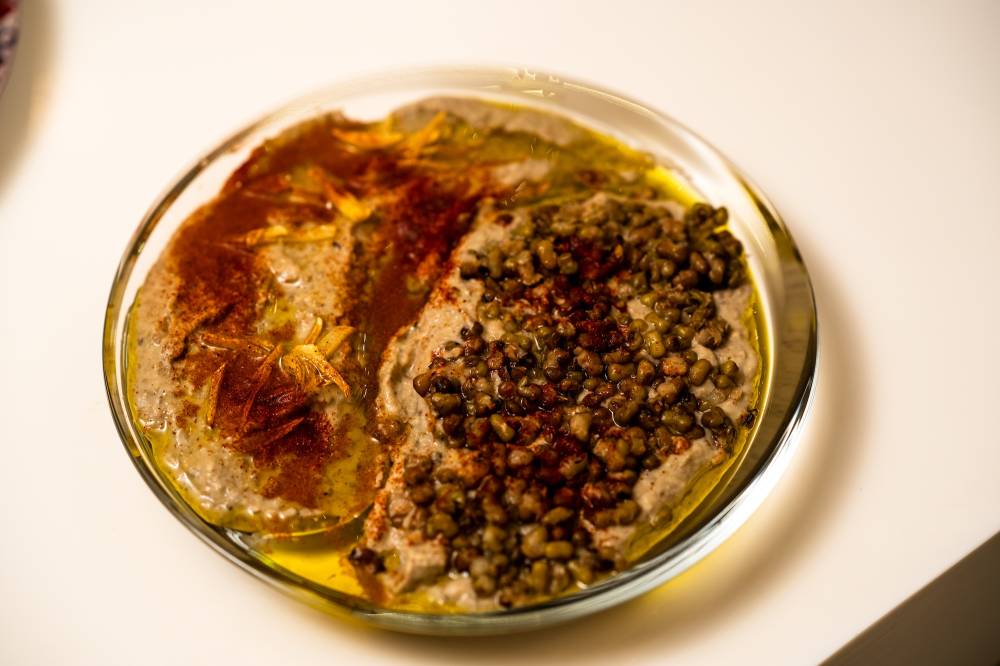
What happens when these two culinary traditions meet? You get monggo hummus—a vibrant, protein-rich spread that blends Filipino ingredients with Middle Eastern technique. The result is familiar yet new: earthy, creamy, and bright with citrus.

Monggo is the most researched Filipino legume, and for good reason. Its high protein content and year-round availability make it an affordable protein source. Most of us are used to eating monggo in the most common form: monggo guisado, topped with pork, fish, or served alongside paksiw.

Monggo was the first dish I used in creating my dishes for Mesa ni Misis—monggo Bolognese. Just like Bolognese recipes, the flavor varies from Filipino party spaghetti, which is sweet, to a more sophisticated version that uses red wine. The main point is to use the monggo, which is so versatile, in other dishes that are also familiar to us.

Monggo hummus proves that comfort food can cross borders. By blending the humble Filipino mung bean with the time-honored structure of Middle Eastern hummus, we create something nourishing, accessible, and culturally rich.

At first glance, swapping chickpeas for mung beans may seem unconventional. But from a culinary perspective, it makes perfect sense.
  1. Similar texture

When cooked until tender, monggo becomes soft and creamy—ideal for blending into a smooth paste. Like chickpeas, they hold structure while still breaking down easily. There are two kinds of monggo—monggo kintab, or shiny—which stays more firm even with soaking and boiling, and monggo labo, which is softer and murkier. For this hummus dish, look for the ‘labo’ variety, as you will want it as creamy as possible.

  1. Nutty, earthy flavor

Mung beans have a mild, slightly sweet earthiness. This pairs beautifully with tahini (sesame paste), garlic, olive oil, and lemon or calamansi.

  1. Local, affordable, sustainable

In the Philippines, monggo is more accessible and budget-friendly than imported chickpeas. Choosing locally grown legumes reduces food miles and supports local farmers.

  1. Nutritional benefits

Mung beans are:

*High in plant-based protein

*Rich in fiber

*Packed with folate, magnesium, and antioxidants

*Naturally low in fat

Traditional hummus from the Middle East often features a creamy chickpea base, richness that comes from tahini, lots of lemon, garlic, and olive oil. Monggo hummus on the other hand is a little gentler on the palate—sweeter and less heavy. For extra kick, I’ve added cumin but also feel free to try curry powder. I also added some serving suggestions for interesting takes on it.
Ingredients

*1 cup dried monggo (mung beans), soaked and cooked until soft

*1 to 2 cloves garlic

*Juice of 1 or 2 calamansi (or half a lemon)

*2 to 3 tablespoons olive oil

*Salt to taste

*Cooking water from monggo (as needed for blending)

*Pinch of cumin

SEE ALSO

Instructions

  1. Cook soaked monggo until very tender. Drain, reserving some cooking liquid.
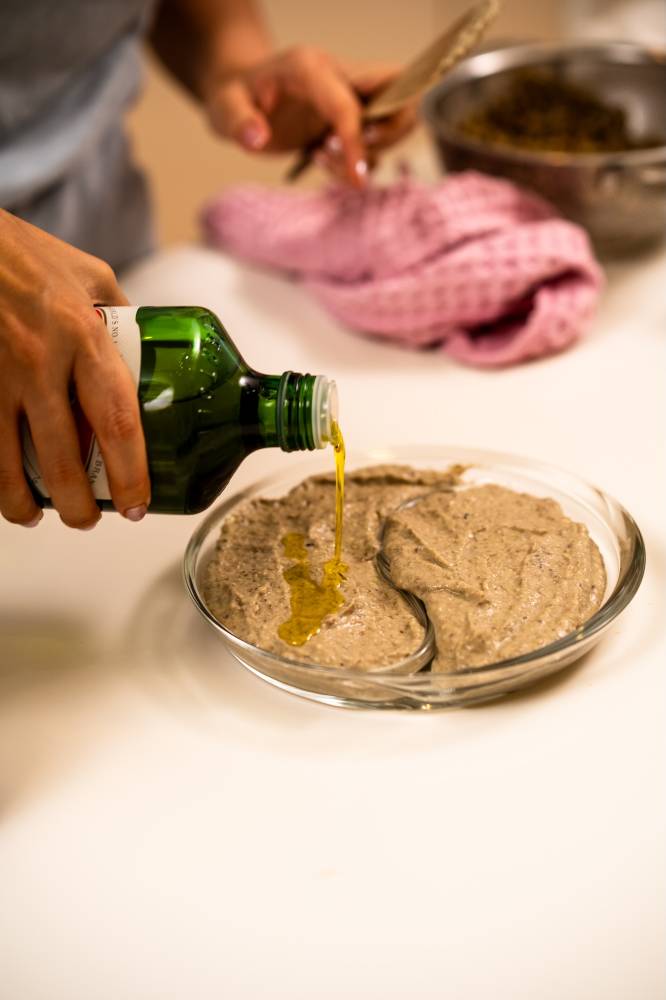
  2. In a food processor or blender, combine monggo, garlic, citrus juice, salt, and olive oil.
  3. Blend until smooth, adding cooking water gradually for desired consistency.
  4. Taste and adjust seasoning.
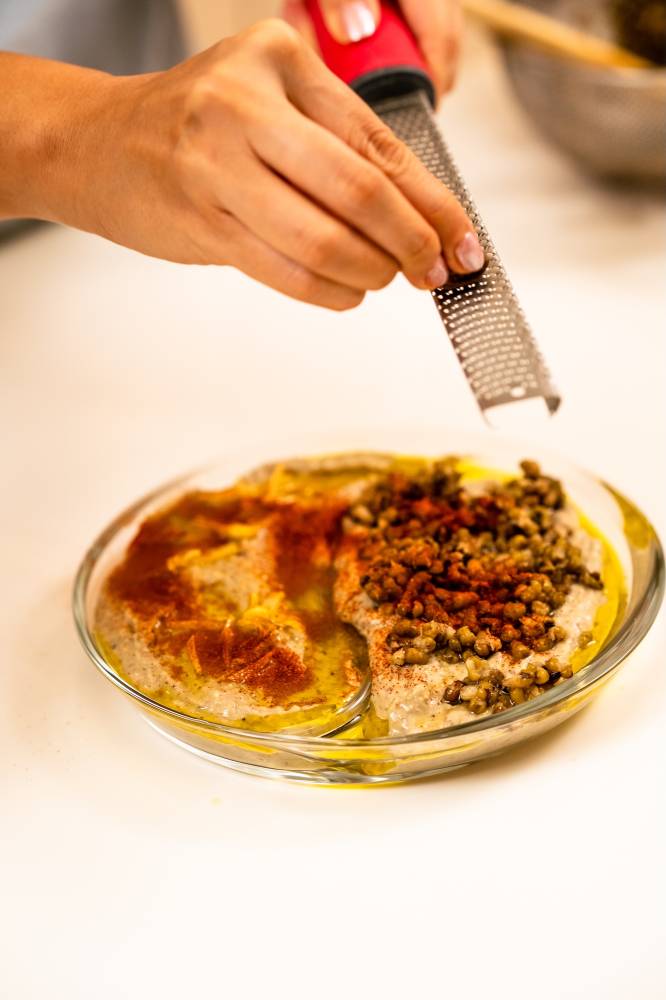
  5. Serve drizzled with olive oil and topped with paprika, toasted sesame, or chopped herbs.

Monggo hummus is versatile. Here are some serving suggestions to create your own twist for your desired occasion.

  1. Malunggay boost

Blend in fresh malunggay leaves for added nutrients and a deeper green color. Monggo is often served with malunggay, but this time, it takes on a different form.

  1. Smoked tinapa version

Incorporate flaked smoked fish for a savory, umami-forward spread—perfect with pandesal.

  1. Spicy sili kick

Add chopped red chilies or chili oil for heat. 

  1. Coconut-lime fusion

Swap part of the olive oil with a small amount of coconut oil for a subtle tropical aroma.

How to serve monggo hummus

Monggo hummus bridges cuisines effortlessly. Try it:

*As a dip with pita, flatbread, or pandesal

*Spread on whole-grain toast with tomatoes and cucumbers

*As a sandwich base instead of mayonnaise

*Paired with grilled vegetables or chicken

*As part of a mezze-style platter with olives and pickled vegetables

*It also fits beautifully into modern wellness-focused diets—whether you’re eating plant-based, high-protein, or simply trying to incorporate more whole foods.

Tuesday, February 10, 2026

Food for the pure of heart


Juana Yupangco

With Valentine’s Day around the corner, let me share a short story of food, relationships, and how they all relate—with a fabulous recipe at the end.

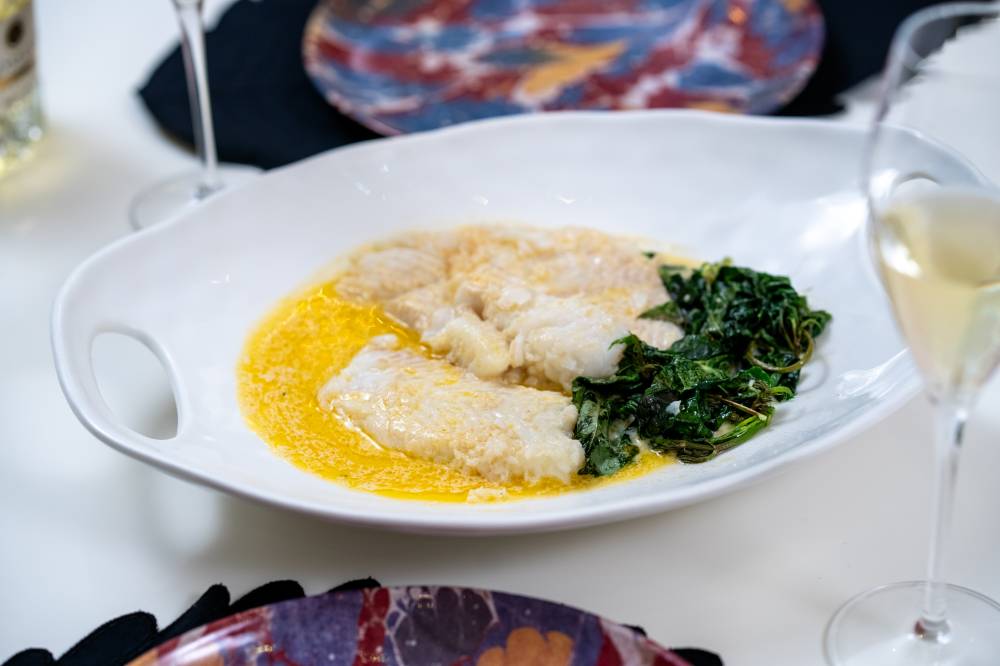
I have a friend who dated a guy who liked to cook. The highlight of his culinary repertoire? Creamy sauces made in the French style. This included béchamel, mousseline, beurre blanc, and bearnaise sauce—and these sauces covered everything he cooked, from fish to steak, to eggs, and the little vegetables he ate.

The food covered in sauce also covered his not-so-good personality and pretentious taste in food, which was really a reflection of other pretenses in his life—but let’s save that for another column. This fellow fell under the category of people who think food has to be complicated, reflect a labor of love, or impress people (again, covering up a lot of things).


Monday, February 2, 2026

The healing power of herbs


Juana Yupangco

Long before modern medicine, humans relied on plants for survival, healing, and longevity. Across ancient civilizations—from Egypt and Greece to China and the Philippines—herbs were considered sacred tools for restoring balance inside the body. And today, science is rediscovering what traditional healers always knew: Certain herbs don’t just add flavor to food—they actively heal.

In a world overloaded with chemicals, pills, and stress, these simple green leaves remain some of the most powerful medicines available.

Among the most powerful and accessible healing herbs are dill, basil, and mint. These three green allies work on digestion, inflammation, hormones, the nervous system, and even cellular detoxification. Together, they form a natural triad for whole-body healing.


Monday, November 24, 2025

Sweet potato pie and its origins as a comfort food


Juana Yupangco

Pies occupy a beloved place in kitchens across the world. They are comforting, portable, and infinitely adaptable—appearing on holiday tables, roadside stalls, and bakery shelves in nearly every region. Yet their story is far older and more complex than the golden, flaky pastries we enjoy today.

The history of pies stretches back thousands of years, shaped by necessity, empire, colonization, and creativity. Their evolution reveals not only how people cooked, but how they migrated, traded, and built identity through food.

A piece of history

The earliest versions of pies emerged—not from a desire for dessert, but from practicality. As far back as 6000 to 4000 BCE, ancient peoples discovered that wrapping food in a layer of dough protected the filling during cooking and made food easier to store and transport. Ancient Egyptians wrapped meat, fruits, and honey in thick barley dough. This early “crust” was hard and inedible, functioning like a sealed cooking vessel.

Back then, the focus wasn’t on the pastry but on safeguarding the filling from smoke, fire, and contamination.

Although these dishes were primitive, they introduced the essential pie idea: food enclosed in dough. The Greeks made significant advances by creating doughs thinner and more refined than the Egyptians’ coarse barley mixture. They developed early forms of phyllo, layering thin sheets over savory or sweet fillings. These light, delicate pastries started shifting the idea of pie from pure practicality to a craft of texture and taste.

Meanwhile, the Romans embraced and expanded Greek pastry-making. They developed the “coffyn”—a dough case made from flour, oil, and water. Sometimes edible and sometimes simply a container, it was an early ancestor of the modern crust.

Roman pies carried the flavors of an empire:

• fish and shellfish

• game meats

• dates, figs, nuts

• honey and spices

Their pie recipes appear in “Apicius,” one of the oldest cookbooks. As Roman influence spread across Europe, so did the practice of enclosing food in pastry.

By the Middle Ages, pies had become firmly established in European food culture—but with a different purpose than today. In medieval England and France, thick, sturdy pie shells were essential for food preservation. These crusts could be several centimeters thick and almost rock-hard. They stored meat for days, even weeks, and allowed food to be transported long distances. In fact, most diners discarded the crust and ate only the filling.

At the same time, pies became the centerpieces of grand banquets. Wealthy households created large pies filled with layers of meats, spices, and sometimes theatrical surprises—live birds or small animals that would fly or scurry out when the pie was cut. This tradition inspired the nursery rhyme “Sing a Song of Sixpence.”

By the 1500s and 1600s, the pie underwent a transformation. European bakers began using butter and lard, creating tender, flaky crusts meant to be enjoyed rather than discarded. Fruit pies became increasingly popular, especially in England, where apples, berries, and stone fruits were abundant.

The first printed recipe resembling modern apple pie appeared in 1545, signaling the arrival of pies as comfort food. Pies traveled to the Americas with European settlers, who relied on them as an efficient, portable, and economical way to feed families.

Must-have for Thanksgiving

When colonists arrived, they encountered ingredients unfamiliar in Europe but perfectly suited to pies. These included pumpkins, cranberries, wild berries, maple sugar, and sweet potatoes.

And this is where our story of the kamote, or sweet potato pie, begins, on the Thanksgiving menu.

Thanksgiving has slowly started to be celebrated in many Filipino households in the last 15 years or so. Growing up, I viewed Thanksgiving as something distant, celebrated only in America. In the advent of globalization, social media, and a generation of middle-aged Filipinos who spent time in America—either as students or balikbayans—now rooted in the Philippines, Thanksgiving is now recognized in many places.

In fact, hotels, restaurants, and private caterers now offer ready-to-serve turkeys for the occasion.

I, for one, started celebrating Thanksgiving at home when I got married. My husband lived in the U.S for a long time, having moved there at 11 years old. Thanksgiving was a big holiday that he had been used to celebrating. It is not part of our family’s tradition to celebrate it in November.

Since I was raised here in the Philippines, I had to learn how to make a turkey with all its sides. In my research, I came across a “yam pie,” which sounded interesting. I first made this kamote pie topped with marshmallows after spending Thanksgiving with my American friends, where they made something similar. This pie is much easier than a regular pie dish, as it involves no pie crust.

The recipe I created is so easy and delicious that I now serve it at other times of the year. However, its presence at our Thanksgiving table completes this family tradition that has now become our own.

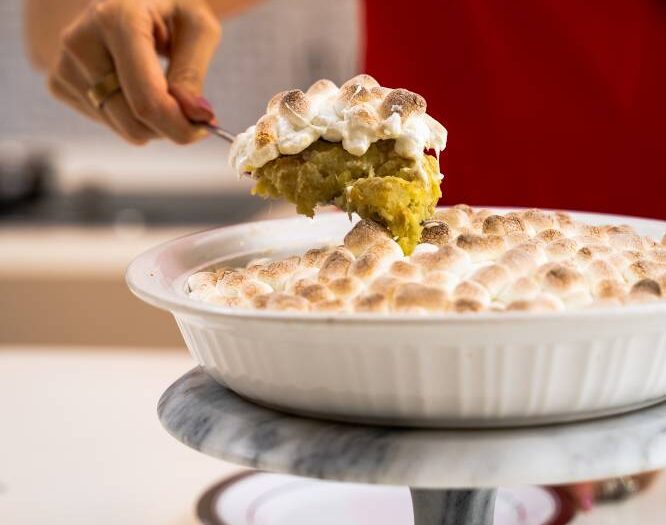
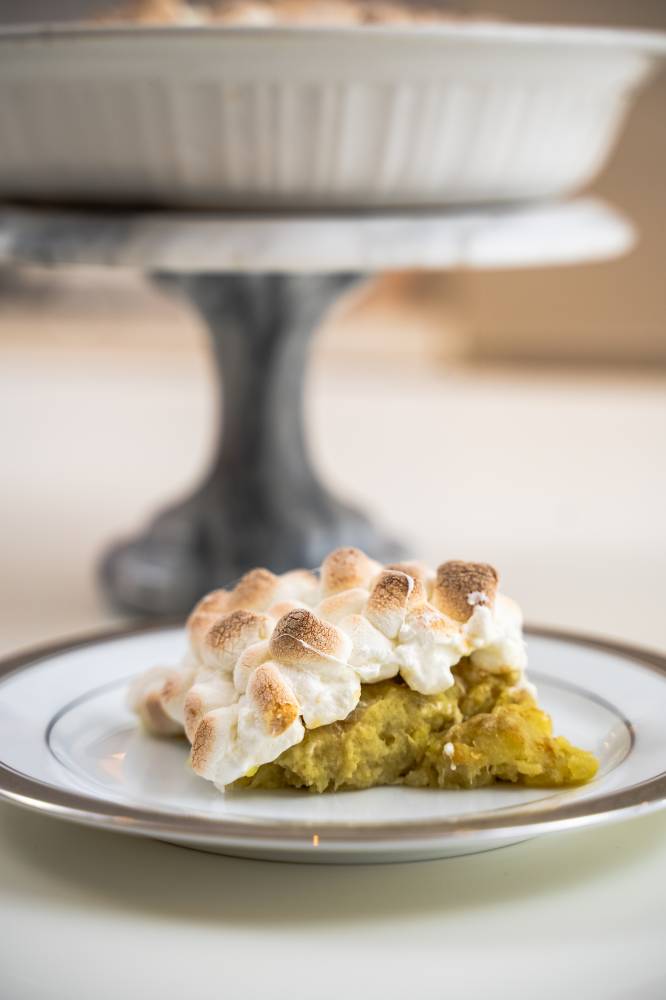
Kamote marshmallow pie

Kamote marshmallow pie

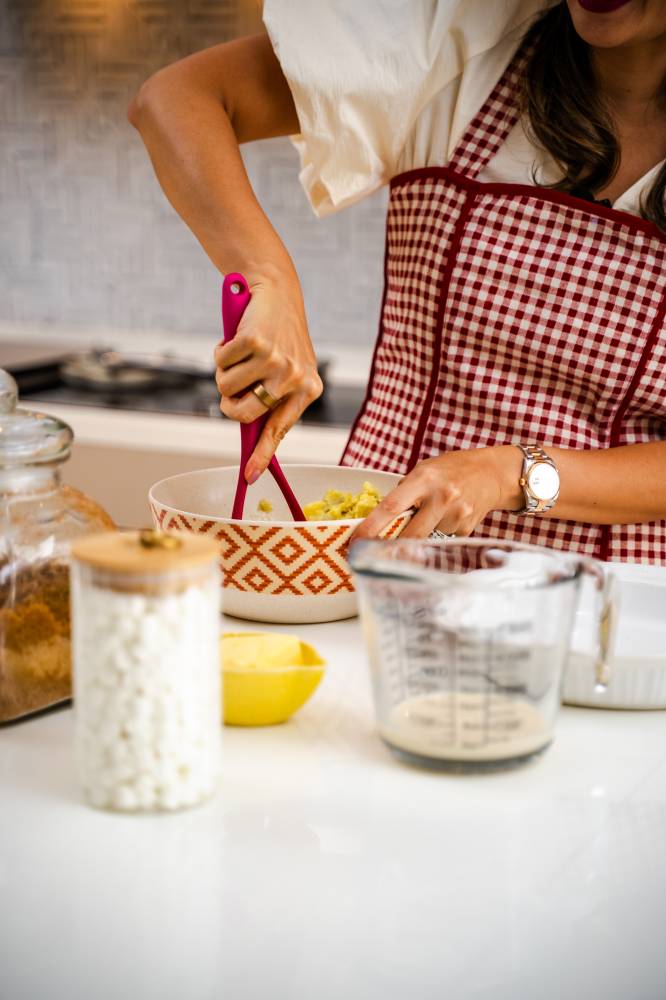
Ingredients

SEE ALSO

6 whole kamote—preferably orange, boiled, and peeled

¼ cup room temperature butter

¼ cup brown sugar

1 cup almond milk

1 bag or 5 cups marshmallows

Procedure

1. Peel and boil the kamote.

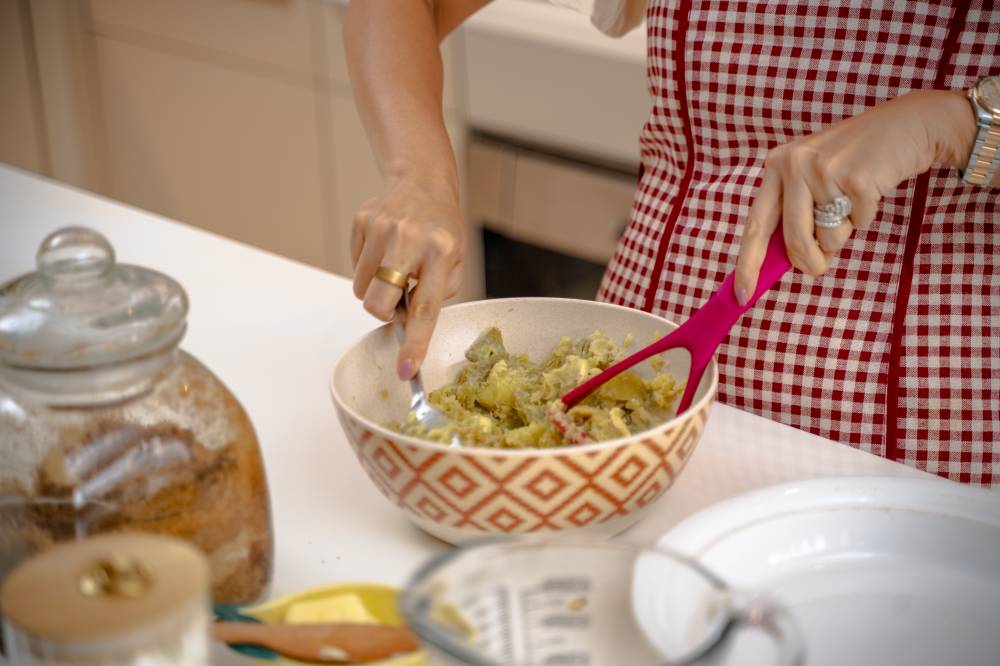
2. Dice them into small pieces and place them in a bowl.

3. Add butter and sugar, and mash until smooth.

4. Add almond milk to bring it to a smoother consistency.

5. Pour the mixture into a pie or baking dish.

6. Arrange the marshmallows on top.

7. Bake for 3 to 5 minutes at 250 degrees Celsius, making sure the top is slightly browned.