You plan to move to the Philippines? Wollen Sie auf den Philippinen leben?

There are REALLY TONS of websites telling us how, why, maybe why not and when you'll be able to move to the Philippines. I only love to tell and explain some things "between the lines". Enjoy reading, be informed, have fun and be entertained too!

Ja, es gibt tonnenweise Webseiten, die Ihnen sagen wie, warum, vielleicht warum nicht und wann Sie am besten auf die Philippinen auswandern könnten. Ich möchte Ihnen in Zukunft "zwischen den Zeilen" einige zusätzlichen Dinge berichten und erzählen. Viel Spass beim Lesen und Gute Unterhaltung!


Visitors of germanexpatinthephilippines/Besucher dieser Webseite.Ich liebe meine Flaggensammlung!

free counters

Total Pageviews

Showing posts with label Jane Kingsu-Cheng. Show all posts

Sunday, February 8, 2026

What's the most Filipino way of saying 'I love you?'

By Jane Kingsu-Cheng   


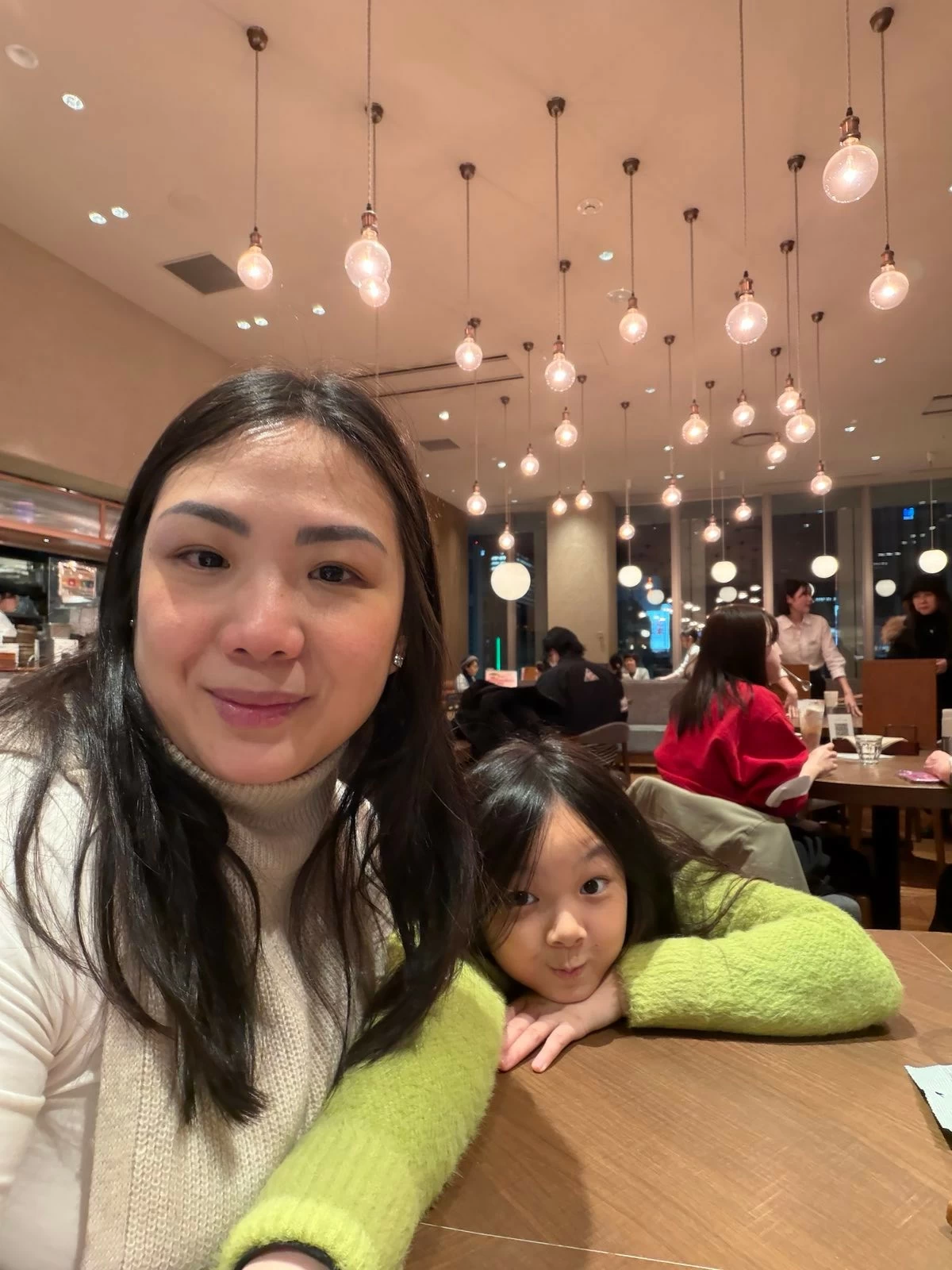
Kato and daughter Georgie, 9
‘Mag-jacket ka malamig’
Bringing a jacket for your child wherever you go, even when they insist they are not cold, is a very Filipino mom’s way of saying “I love you.” It is less about the weather and more about care, protection, and foresight. I grew up hearing “Mag-jacket ka, malamig,” and now I find myself saying the same thing to my own child. It is a quiet habit passed down through generations, rooted in love and concern for a child’s health long before they realize they need it.Kato Lim, Momzilla co-founder, mom of one
Micah with husband Rommel and daughters Luna, 6, and Astrid, 3
‘Para sa inyo’
For me and my kids, the most Filipino way of saying “I love you” is simply, “Para sa’yo, anak, oo.” It is not expressed through big words, but through acts of service and quiet patience. Every time they ask me to pick them up from school, help with small tasks, tie their hair in the morning, or get them ready for the day, I show up. Even while juggling work, home, and business, I make the time. No matter how busy life gets, they will always come first.—Micah Alvarez-Diaz, Here and There PH - Kaleia country director, mom of two
Sarabeth and husband Jake with their children
‘Kumain ka na ba?’
For me, the most Filipino way to show love is through food, especially by preparing meals for the whole family. Thinking about what someone would like to eat is not just about serving something delicious. It is an act of care, a way of knowing a person deeply and being attentive to their wants and needs. Asking “Kumain ka na ba?” carries a deeper meaning. When a meal is prepared, it does not have to be expensive. As long as it is made with love, it becomes a way of saying, “You matter to me, and I love you.”
Sharing meals brings everyone closer, and salu-salo is a very Filipino term that we Filipinos like to celebrate not just with family, but with friends, teammates, and workmates. The table where we sit around to eat is a place where stories and laughs are freely shared, making social bonds stronger. These salu-salos don't need to be grand. Even simple ones are enough to show that you appreciate their presence and that you want everyone to have a great time.—Sarabeth Salcedo Soriano, Baliwag Lechon Manok operations director, mom of three

How Filipino parents show love through action and words


From practical daily care to verbal encouragement, it's all about balancing tradition with emotional awareness


By Jane Kingsu-Cheng

Published Feb 7, 2026 01:52 pm


Filipino parents, like many Asian parents, have a special way of showing love—it’s in what they do more than what they say. Affection is expressed by preparing meals and managing daily chores.

A study by Lydia B. Aguilar and colleagues, “Cultural Values, Parenting, and Child Adjustment in the Philippines” in the International Journal of Psychology, explains why. In a collectivist culture like ours, family needs often take priority over words. Love is felt more, not heard, through daily acts.

Say it

Things have been changing lately. The younger generation of parents are increasingly saying “I love you” and encouraging children to share their feelings. The study “Emotional Socialization Practices Across Cultures” by Claudia A. Haight and Nancy L. Benson, published in the Journal of Cross-Cultural Psychology, shows that exposure to verbal emotional expression encourages open communication, even in traditionally reserved households.

“I make it a point to tell my kids I love them every morning,” says Marivic Santos, 32, marketing manager and mother of one. “It wasn’t something my mom did, so I’m trying to add it to our daily routine.”

Actions are still equally important. Reminding a child if they’ve eaten, checked their homework, cleaned their room are gestures that communicate care without saying it out loud. Maria Teresa A. Edillon’s research, “Filial Care Patterns Among Filipino Adults” in the Philippine Journal of Psychology, confirms that children recognize these as expressions of love.

Best of both

This evolution comes from a mix of cultural and modern influences. Exposure to different parenting styles through online resources, social media, and global discourse has given mothers the freedom to choose what works best for their families.

A 2024 study in Frontiers in Psychology, “How parenting styles affect primary school students’ subjective well‑being? The mediating role of self‑concept and emotional intelligence,” found that supportive and responsive parenting is linked with higher emotional intelligence and self‑concept in children. These qualities help kids grow more confident, socially aware, and emotionally resilient.

“I try to combine what I grew up with and what I learn online,” shares Anna Reyes, 38, school teacher and mother of two. “I prepare our meals and check homework like my mom did, but now I also ask my kids how they feel about school and friends. It’s a little of both old habits and new approaches.”

Balancing act

Parents, including younger grandparents, see the value of both showing and saying how much they love their children. Practical care builds a foundation of trust. Words give children the tools to understand their feelings. Together, they help kids feel secure and confident. This balance sums up how a parents’ love reveals itself in a Filipino home.

Monday, February 2, 2026

What parenting will look like in 2026


A shift toward emotional safety, growth, and resilience—without lowering standards

By Jane Kingsu-Cheng
Published Jan 24, 2026 01:18 pm

There is a subtle shift happening in Filipino homes. The idea that parenting must be perfect is finally being questioned. As families juggle long work hours, digital stress, and the lingering pressure of tradition, many parents are starting to choose a different path—one that values emotional connection, authenticity, and growth over performance.
We asked experts to share their parenting forecast for 2026, as families move toward gentler discipline, healthier expectations, and prioritizing each other’s wellbeing—by setting their own standards and defining personal family values.
Dr. Alexander Jack Herrin
Parenting forecast #1: Emotional regulation becomes a core parenting skill
By Dr. Alexander Jack Herrin, developmental pediatrician
From clinical practice and everyday interactions with families, there is growing awareness among parents that discipline and guidance cannot come solely from authority, rules, or reaction. While traditional structures remain, many parents are beginning to recognize the value of pausing, listening, and responding thoughtfully rather than reacting from frustration or anger. This shift is not yet universal, but it reflects the direction parents are increasingly working towards.
Why this is happening: Parents today are influenced by multiple forces—exposure to different parenting styles within extended families, schools, peer groups, and online communities has opened conversations that rarely happened before, while greater access to information about child development, mental health, and the long-term impact of discipline styles has encouraged reflection. At the same time, emotional regulation does not mean abandoning respect or authority, but it reframes respect as mutual, showing that listening to a child’s perspective can strengthen boundaries and cooperation rather than weaken them.
What this means: When parents regulate their emotions, decision-making becomes clearer and fairer. Rules, consequences, and rewards are set with intention rather than anger, which reduces regret and inconsistency. Children who experience this approach learn that disagreements can be discussed and not silenced. They develop self-restraint, empathy, and the ability to communicate during conflict. Emotional regulation becomes a legacy passed down and refined through generations, allowing parents to guide rather than control, discipline without fear, and build relationships grounded in respect and trust.
Practical tips:
  • Model first. Children learn emotional regulation by observing how adults speak, listen, and handle frustration.
  • Pause before responding. Avoid setting rules or consequences while angry. Take time to cool down so decisions are made with a clear mind.
  • Present a united front. Parents or caregivers should align privately before addressing a child, supporting each other’s decisions rather than contradicting them in front of the child.
  • Approach, don’t barge in. Simple actions like knocking, speaking calmly, and asking questions show respect and de-escalate tension.
  • Focus on discussion, not dominance. Emotional regulation is not about having the last word, but about having a meaningful conversation where both sides are heard.
Jose Raphael “Raph” G. Doval-Santos
Parenting forecast #2: Parents let go of “perfect parenting” and aim for “good enough.”
By Jose Raphael “Raph” G. Doval-Santos, clinical psychologist and psychotherapist
Across therapy sessions and lived experience, there is a growing recognition that perfect parenting is neither realistic nor healthy. Many parents—especially those juggling work, distance, migration, long commutes, or demanding professions—are beginning to admit that the idealized version of parenting they hold themselves to is impossible to sustain. Rather than aspiring to do everything flawlessly, parents are slowly confronting the shared reality that parenting is hard, imperfect, and human. This shift is not about lowering standards, but about redefining what success in parenting should be.
Why this is happening: Modern parenting expectations have risen dramatically. Beyond meeting basic needs, parents now feel pressure to be constantly present, emotionally attuned, academically supportive, and available for every milestone. These expectations assume time, resources, and flexibility that many families simply do not have. At the same time, many parents reflect on their own childhoods and recognize that their caregivers were also tired, overwhelmed, and imperfect. Seeing this across generations has fostered empathy rather than blame, and psychological theory supports this shift through ideas such as the “good enough parent,” which emphasizes that children need consistency and care, and not perfection.
What this means: Letting go of perfect parenting creates space for resilience to develop in both parents and children. When parents stop removing every obstacle from a child’s path, children learn how to cope with frustration, disappointment, and challenge. These are skills that build grit, flexibility, and problem-solving. Children also learn something powerful when parents admit mistakes: apologies, accountability, and repair model emotional maturity and humility. At its core, letting go of perfect parenting is an act of honesty as it allows parents to show up as real people and permits children to grow into resilient, capable individuals.
Practical tips:
  • Practice self-compassion. Parents will lose patience, miss events, and fall short. Responding to these moments with kindness toward oneself—not shame—leads to better behavior and emotional health over time.
  • Repair when you make mistakes. Saying “I’m sorry” to a child and explaining what went wrong teaches accountability, empathy, and emotional honesty. These moments can be deeply healing and transformative.
  • Allow children to struggle safely. Not every problem needs to be solved for them. Age-appropriate challenges help children develop grit and internal resources.
  • Ask for help when needed. Support does not have to come only from professionals—it can come from trusted family members, community leaders, or mentors. Some help is always better than none.
  • Redefine success. A good parent is not one who removes all hardship, but one who provides love, support, and guidance through hardship.
Jun Angelo
Jun Angelo "AJ" Sunglao
Parenting forecast #3: Breaking the cycle becomes the default for young Filipino parents
By Jun Angelo "AJ" Sunglao, licensed psychologist, global mental health consultant, family therapist
Many parents now find themselves caught between the ghost of their own upbringing and the reality of what they know doesn’t work. For previous generations, parenting was an exercise in unquestioned authority—discipline was rooted in fear, shame, and silence, and emotional expression was seen as weakness. Today’s parents still carry those imprints, but they are no longer accepting them as the gold standard; they aren’t rejecting their parents, only the methods that left them emotionally constrained and psychologically hurt.
Why this is happening: ​​This tension is unfolding in an environment with little margin for error. With high living costs, long work hours, and the constant hum of digital stress, the old fear-based model is exhausting to maintain, and it backfires by escalating conflict, pushing burnout, and building resentment. At the same time, parents are beginning to see that shame and hiya do not create discipline—only guardedness and reactivity.
What this means: Allowing children to express frustration without the threat of shame isn’t lax parenting. It builds emotional safety and helps children learn to regulate themselves. Parents who admit their own mistakes and focus on repair are not weakening their authority, they are building trust and predictability. This shift protects both parents and children from the heavy burden of perfection, helping families stay engaged, resilient, and emotionally healthy.
Practical tips:
  • Seek professional support through therapy. Therapy is not only for those experiencing clinical conditions. It is a valuable, evidence-based space for understanding personal history, identifying patterns, and developing healthier emotional responses—especially for parents navigating intergenerational dynamics.
  • Learn from evidence-based parenting resources. Research shows that many parents default to the methods they experienced growing up, even when those approaches are no longer considered developmentally sound. Today, parenting classes and expert-led programs—both locally and online—offer practical, science-backed guidance.
  • Practice self-compassion during the process. Unlearning ingrained parenting behaviors while adopting healthier ones is cognitively and emotionally demanding. Experts emphasize the importance of pacing change, recognizing effort, and allowing growth to happen gradually rather than perfectly.
Monica L. Javier
Monica L. Javier
Parenting forecast #4: Redefining school success
By Monica L. Javier, educational consultant and certified conscious parenting coach
While academic achievement still matters, more parents and schools now recognize that success cannot be measured by grades alone. Today, success also includes wellbeing, confidence, emotional regulation, and a child’s belief in their ability to grow.
Why this is happening: When success is defined too narrowly, children begin to associate learning with pressure, fear of mistakes, and comparison. We are already seeing the effects: burnout comes early, anxiety around schoolwork increases. Many learners hesitate to try unless they are sure they will succeed. Parents should consider this shift, because children learn and thrive when they feel safe, supported, and allowed to grow at a developmentally appropriate pace.
What this means: Redefining success does not mean lowering standards. Excellence still matters, but it should be rooted in growth rather than competition. True excellence looks like setting personal goals, persisting through challenges, learning from feedback, and striving to be better than you were before. When success includes wellbeing, children develop resilience without fear, understanding that mistakes are part of learning and effort matters. In homes and schools that nurture persistence and confidence, learners become motivated, grounded, and capable—driven by growth, not comparison, and carrying that mindset long after the grades are gone.
Practical tips:
  • Talk about success as growth, effort, and progress, not just outcomes.
  • Encourage children to set personal goals and reflect on improvement.
  • Praise perseverance, strategies, and consistency.
  • Remind children that success is not about being better than others, but about becoming better versions of themselves.
Kit Malvar-Llanes
Kit Malvar-Llanes
Parenting forecast #5: Parenting is becoming more personalized and values-led
By Kit Malvar-Llanes, conscious parenting advocate, certified coach and facilitator
Filipino parents are moving away from a one-size-fits-all approach to parenting and becoming more intentional about choosing what works for their own children—while staying grounded in shared family values.
Why it’s happening: Parenting today requires a lot of balance between collective and inclusive. We recognize the importance of support from the “village,” but are also more discerning about which advice, methods, and schools of thought they adopt. With greater access to information and diverse parenting philosophies, families are learning to personalize their approach rather than follow trends blindly.
What this means: This shift allows parents to respond more closely to each child’s needs, temperament, and emotional development. While approaches may differ from one household to another, shared values and principles remain the glue that holds families together. Children benefit from feeling seen as individuals rather than being measured against rigid standards.
Practical tips:
  • Parents can start by identifying their non-negotiable family values—respect, responsibility, empathy—then allow flexibility in how these are practiced.
  • Seek support from the community when needed, but filter advice through what aligns with your child’s needs and your family’s principles.

Sunday, January 18, 2026

Screen time isn't the enemy—unsupervised app culture is


Here's what a psychologist advises parents to focus on instead

Published Jan 17, 2026 02:22 pm
For many parents, conversations about screen time come with guilt. We count minutes, set timers, and wonder if we’re doing enough, or too much, to protect our children from screens. According to registered psychologist Dr. Elaine Rose S. Ferrer, focusing on screen time alone is not enough.
“Framing the conversation purely around screen time misses the bigger picture,” she explains. “It doesn’t consider the quality and impact of how technology is being used.” The more important discussion should be about digital health, and how technology use intersects with a child’s emotional, social, and cognitive wellbeing.
Screen time alone isn’t enough
Not all screens and their experiences are the same. Watching a family movie, attending an online class, or video-calling relatives is different from unsupervised scrolling through short-form videos curated by an algorithm.
“When we only focus on screen time, we ignore what kids are actually exposed to,” Dr. Elaine says. “Screen time includes TV, tablets, and phones—but what truly matters is what children are seeing, engaging with, and internalizing.”
This is where intention becomes important. Screens can be used as tools that support learning and connection, or simply as a way to pass the time. Dr. Elaine recalls witnessing this scenario in everyday parenting moments.
“I remember eating at a restaurant with friends whose tendency was to pull out a tablet so their child could stay busy while they ate,” she shares. “We’re not here to judge parents who want a bit of peace and quiet. But it’s important to understand the intentionality behind digital use.”
With intention in mind, parents can make conscious choices about what their children engage with, how long, and in what context. “Screen time then becomes a tool to supplement children’s experiences, not just something to fill time.”
TV versus apps
One of the most significant shifts in children’s media consumption today is the move from passive screen use to app-driven engagement. Unlike television, apps are powered by algorithms designed to keep users watching.
“Apps are driven by algorithms,” Dr. Elaine explains. “Yes, you can scroll, but the more you watch a certain type of content, the more that same content is fed back to you.”
“If app use is unsupervised, it can greatly influence a person’s identity and behavior,” she warns. “That’s why guidance is important—so children engage with the digital world in a healthier way, rather than letting algorithms stimulate their thoughts and feelings.”
Dr. Elaine clarifies that not all apps are harmful, but they require more awareness and involvement from adults, especially when children are still developing self-regulation skills.
Intentional screen use
Many parents feel conflicted about using screens as temporary distractions. Dr. Elaine emphasizes that understanding—not guilt—should guide these conversations.
“By being intentional with app use or screen time, we can make conscious efforts and choices,” she says, adding that intentional screen use transforms technology from a default solution into a purposeful tool. One that supports learning, creativity, and connection, rather than replacing offline interaction.
Identifying screen use
To help families better understand their digital habits, Dr. Elaine suggests distinguishing between different types of screen time.
Productive screen time includes activities that help children perform tasks or learn skills, such as writing school papers, attending online classes, or creating presentations.
Participative or engaging screen time involves interaction such as video calls, collaborative games, or live workshops where children actively engage with others.
Passive screen time requires minimal thought or participation, such as watching random videos or endlessly scrolling. “This is where unhealthy habits like doomscrolling can begin,” Dr. Elaine notes, especially when left unchecked.
The goal, she emphasizes, is balance and not elimination.
Guidance is the key
Monitoring digital health is not about strict bans or constant monitoring. “Supervision is meant to guide, not control,” Dr. Elaine says. Conversations, co-viewing, and checking in about what children consume online help them process their experiences more meaningfully.
Technology has become an increasingly integral part of everyday life, and there is no escaping it. What parents can do is to guide children through each experience. By focusing on intention and balance, screens can become tools for learning and advancement that support children’s growth.

Tuesday, January 13, 2026

Is your child ready for social media?


Published Jan 10, 2026 02:08 pm
When Australia announced plans to restrict social media access for children under 16, it reignited a familiar question for many Filipino parents. When is a child actually ready for social media?
Screens are already part of daily life, but for developmental pediatrician Dr. Jack Alexander Herrin, readiness is not about a number. It is about responsibility.
“Readiness should be more important than an arbitrary age,” he says. “A child is ready when rules are clear, and they have shown they can understand and follow them.”
The age cut-off
Sixteen falls within middle adolescence, a stage when many teens are expected to have better judgment and impulse control. Dr. Herrin explains that for younger children, developmental milestones are often set at an age when around 75 percent have achieved a certain skill. For older children, experts instead look for a point when most can reasonably be expected to make responsible choices.
Still, he cautions that age alone is not a guarantee. Even older adolescents may struggle to consistently manage online spaces.
Why social media is different
Parents often ask why social media is treated differently from television or online games. For Dr. Herrin, the concern lies in how content is delivered.
“You cannot always control what you read or watch,” he says. “It only takes one wrong click for the algorithm to keep feeding you similar content.”
Unlike traditional media, social media platforms are algorithm-driven and do not verify who is using the device. “Once the algorithm sets in, a younger child may not be aware of the effects of what they are watching,” he explains, noting that older adolescents are more likely to separate fact from fiction.
He also warns that repeated exposure can shape beliefs. “The more the algorithm refines your choices, the more you are given a biased feed,” he says. Over time, this can normalize certain behaviors or viewpoints, especially for children who are still forming values
Side effects
Beyond content, screen use also affects physical and emotional health. “Any screen use, whether for studying or for fun, will strain your eyes if there is too much of it,” Dr. Herrin explains. Screen light can suppress melatonin, disrupt sleep, and affect focus and mood the following day.
“Your physical, mental, and emotional health are all interconnected,” he adds.
Signs of readiness
Rather than focusing solely on age, Dr. Herrin encourages parents to observe behavior at home. “If your child cannot follow rules consistently, they are not ready,” he says.

Supervision remains key. “If there are no filters and no way to monitor, do not give them the freedom yet,” he adds. Privileges should be earned gradually, with trust increasing only when responsibility is shown.
A privilege, not a right
Dr. Herrin stresses the importance of reframing access to screens. “Owning a phone or creating a social media account is a privilege, not a right. It comes with responsibility,” he says. “Parents set boundaries for driving, dating, curfews—so why not for screens?”
As children grow older, rules should evolve. “Around 11 or 12, it shifts to contract setting,” he explains. These agreements can cover allowed apps, screen schedules, and clear consequences when boundaries are crossed.
In the end, Australia’s policy may influence global discussions, but Dr. Herrin believes the most important decisions still happen at home. “Readiness comes from mutual respect and the child’s capacity to follow what was agreed upon.”

No setting or age limit can replace thoughtful parenting. Knowing when a child is truly ready matters more than the number on their birthday.

Thursday, September 4, 2025

What to do when parents are caught between tradition and medicine

By Jane Kingsu-Cheng 

When it comes to baby care, many Filipino parents are caught between respecting age-old beliefs and modern medical advice grounded in science. From avoiding baths to ward off “pasma”—a common belief that sudden exposure to cold can cause illness—to applying herbal oils for colds, these folk practices have been passed down through generations.

These beliefs have evolved into a cultural ritual that involves sharing wisdom from elders. But are these truly helpful or could they be doing more harm than good?
A wakeup call
Dr. Jayeanne M. Bihag-Lomibao, a 32-year-old board-certified general pediatrician, has encountered various challenges in her practice. “We had a patient where the grandmother refused to bathe the newborn to avoid ‘pasma.' After a few days, the baby was brought to the emergency room due to lethargy and decreased feeding, only to find a brewing umbilical infection.”
The baby was diagnosed with sepsis, admitted to the hospital, given IV antibiotics, and had to undergo multiple tests and procedures—all because of a well-meaning but harmful belief.
Open communication
Dr. Jayeanne emphasizes the importance of respectful communication with her patients. “I strive to communicate effectively with them,” she shares. “By actively listening to their perspectives, I often see a reciprocal engagement. When I present factual information, I make sure to clear up any misunderstandings and back up my advice with scientific evidence to protect the child’s health.”
There are dangers in delaying medical treatment in favor of folk remedies. “Our children, especially newborns, are not just small adults. Infections can progress quickly, vital organs may be affected, and specialized pediatric treatments aren’t always available locally. Prompt medical care is essential.”
But not all traditional remedies can cause harm. “Some practices, like using coconut oil to massage the baby or herbal teas for breastfeeding moms, can provide comfort—so long as they don’t replace necessary medical treatment.”
Strike a balance
Balancing respect for Filipino culture with evidence-based medicine requires sensitivity and an open mind. “It’s important to show parents that everyone involved wants the same thing—the child’s well-being,” Dr. Jayeanne explains. “Recognizing the significance of traditional practices, particularly regarding psychological comfort or minor symptom relief, is an important consideration. At the same time, we work to educate families about the scientific basis of evidence-based medicine in a culturally sensitive manner.”
Many parents find themselves caught between their pediatrician's advice and an elder’s well-meaning insights. “But this worked for your siblings,” is a phrase first-time parents often hear from grandparents, leaving them unsure of whom to follow.
How to handle
Her advice? “It’s understandable to feel torn between honoring tradition and following modern medicine,” Dr. Jayeanne reassures. “It is often helpful to express gratitude to your in-laws for their concern, share your doctor's recommendations, and prioritize the safety and well-being of your child. Ultimately, it is the parents' love that will shape the child's development.”
For parents who are unsure about the safety of certain practices, Dr. Jayeanne recommends discussing these openly with a healthcare provider. Caring for a child doesn't have to be a choice between culture and science. When approached with openness and empathy, it can be both.
To learn more about newborn care myths, click here. For recommendations on health-related baby care myths, click here.

Friday, March 28, 2025

Breaking barriers, building community: The women behind Leading Ladies

BY JANE KINGSU-CHENG


IMG_6903.jpeg
Rica Peralejo, Cat Ilacad, and Rachelle Stern

Working non-stop for over two decades and experiencing an unexpected slowdown during the 2020 lockdown, Cat Ilacad, founder and CEO of Posh Nails Inc., and Rachelle Stern, CEO of Alphabetsoup Inc., found themselves reflecting deeply and engaging in meaningful conversations.

"During a late-night call, as we washed away our anxieties, Rachelle and I found ourselves talking about what else we could do. I told her how, when I was starting Posh Nails, I wished I had a small group of people to talk to — a place to share suppliers, business ideas, and simply rant about the challenges that business owners face. I never managed to form that group. She also felt the same way,” shares Cat on how the community group Leading Ladies was founded in 2021. 

"At a time when many women were feeling isolated, struggling to launch new ventures, or simply in need of a supportive ear during challenging times, we created this space. Leading Ladies is all about fostering an empowering community where women can connect, share experiences, and support each other’s growth—both personally and professionally,” adds Rachelle. 

Manila Bulletin sat down with Cat and Rachelle as they shared their journey as co-founders of Leading Ladies and how their vision continues to empower women.

74b338e921fa9189d67583aaac963d5d.jpeg
The ‘Ladies Who Launch’ event in October 2024 marked Leading Ladies’ first in-person gathering.

The collaborator
Cat Ilacad founded Posh Nails, Inc., a nail salon, beauty, and wellness business, in 2002. Today, the company boasts 35 branches nationwide and offers franchise opportunities to loyal clients who have come to love the salon.

Over the years, Cat has worked closely with many women who face the same challenges of balancing work and personal life while striving to break free from societal expectations. “But I’ve also seen the power of resilience, collaboration, and mentorship. When women support each other, success comes faster and feels more meaningful,” she says.

This belief is at the heart of Leading Ladies. Cat emphasizes that one of their main goals is to provide a community where women can share their journeys, including resources, contacts, and lessons learned—without gatekeeping. 


“Many of us had to figure things out the hard way, and we wanted to remove that barrier. We achieved this by building a culture of generosity and launching events where real conversations happen,” she points out.

The cheerleader
Rachelle Stern, chief executive officer and president of the advertising and marketing agency Alphabetsoup, Inc., has faced her fair share of discrimination at work. “It often takes extra effort to be taken seriously and have our expertise recognized,” she shares—a frustration many women experience. 

She attributes her resilience to her work environment, which celebrates women. “It’s inspiring to see my fellow female colleagues excel in their respective fields. It truly makes a difference when women support one another, rather than pulling each other down,” Rachelle says.

“My hope is that every member feels valued as a woman entrepreneur and leader. Through this network, they’ll discover fresh ideas, exciting collaborations, and new opportunities for growth,” she continues. “At the same time, I wanted this community to foster both personal and professional growth, helping women rediscover their passions and achieve holistic success.” 

a37ca3816f7fb81ff43e9f7ca6f34e03.jpeg
The second ‘Ladies Who Launch’ event, held in December 2024, welcomed a new wave of attendees.

The power of three
In 2024, celebrity-turned-advocate for family, fitness, and faith, Rica Peralejo, joined Leading Ladies as its third co-founder. Since then, the trio has had a busy and productive last quarter of the year.

What began as online gatherings during the lockdown evolved into their first in-person events late last year. "Ladies Who Launch" made its debut in October 2024, followed by a second event in December—held by popular demand. Both events sold out in less than two weeks. 

“It’s all about empowering women to turn their ideas into action. It’s a space where we dive into conversations about building meaningful connections, creating sustainable businesses, and learning directly from other women,” explains Cat.

Reflecting on the success of these two events, Rachelle knew they were making a difference, but she didn’t fully grasp the profound impact their efforts had on the community.

“I was blown away by the energy—women who hadn’t even met before came together, and it felt like we were all on the same page. That incredible experience fueled my desire to give even more to our community and push Leading Ladies to new heights,” she says.

Celebrate and empower

Now, three months after their back-to-back sold-out events, Leading Ladies is celebrating Women’s Month this March with their biggest gathering yet. Cat shares, “We knew we had to go bigger. We asked ourselves—how can we truly make an impact?”

Enter “She Shines”—a one-day summit offering attendees a range of activities based on their interests. These include inspirational keynotes, interactive workshops, networking opportunities, pampering sessions, and much more.

Hosting their biggest event this month holds a special significance for Rachelle. “Women’s Month is an opportunity to celebrate the many facets of womanhood. It’s about recognizing that we’re leading ladies—in our homes, workplaces, families, and beyond,” she explains.

Cat adds, “You are stronger, braver, and more capable than you realize. The dreams you hold in your heart are possible, but you don’t have to chase them alone. Surround yourself with people who believe in you, lift you higher, and remind you of your own power when you start to doubt it. Take bold steps, embrace challenges, and trust that every small move forward brings you closer to the life you envision. Success isn’t just about working hard—it’s about lifting each other up and rising together.”

Friday, November 10, 2023

A celebration of happiness in beauty

Happy Skin celebrates 10th anniversary


Homegrown beauty brand Happy Skin hosted a fun 10th anniversary party at White Space, Makati, last Oct. 3, 2023. An estimate of 400 guests flocked to the venue to celebrate and reminisce about their favorite beauty products over the years.

1-min.jpg
Carla Abellana, Verniece Enciso, Kryz Uy

A lot of activities were lined up which included bringing home items from their makeup vending and gachapon machines. The brand gives back by partnering with HOPE to build a new classroom at Bulualto Elementary School in Bulacan. Simply purchase their 10th birthday collectible pins and keychains—all proceeds from the sales will be donated to this initiative.

2-min.jpg
DJ Christi McGarry, Aryanna Epperson, Ashley Colet

Host Janeena Chan got the party going, introducing CEO and Co-Founder Jacqe Yuengtian-Gutierrez on stage. Also seen celebrating were Carla Abellana, Kryz Uy, Verniece Enciso, Marj Maroket, Jessica Yang, to name a few. Dj Christi McGarry kept the party going all night long with her beats.

6.jpg
Jacqe Gutierrez and Diane Tan
3-min.jpg
Christiana Collings, Coleen Garcia, Erika Hocson, Sam Pinto and Bella Jaeger
4-min.jpg
Marj Maroket, Janeena Chan, Jessica Yang
5-min.jpg
Joize Frilles, Mikay Torralba, Kenn Dayandayan