You plan to move to the Philippines? Wollen Sie auf den Philippinen leben?

There are REALLY TONS of websites telling us how, why, maybe why not and when you'll be able to move to the Philippines. I only love to tell and explain some things "between the lines". Enjoy reading, be informed, have fun and be entertained too!

Ja, es gibt tonnenweise Webseiten, die Ihnen sagen wie, warum, vielleicht warum nicht und wann Sie am besten auf die Philippinen auswandern könnten. Ich möchte Ihnen in Zukunft "zwischen den Zeilen" einige zusätzlichen Dinge berichten und erzählen. Viel Spass beim Lesen und Gute Unterhaltung!


Visitors of germanexpatinthephilippines/Besucher dieser Webseite.Ich liebe meine Flaggensammlung!

free counters

Total Pageviews

Showing posts with label Former Senator Atty. Joey D. Lina. Show all posts

Tuesday, April 28, 2026

What the fuel crisis reveals about the Philippines


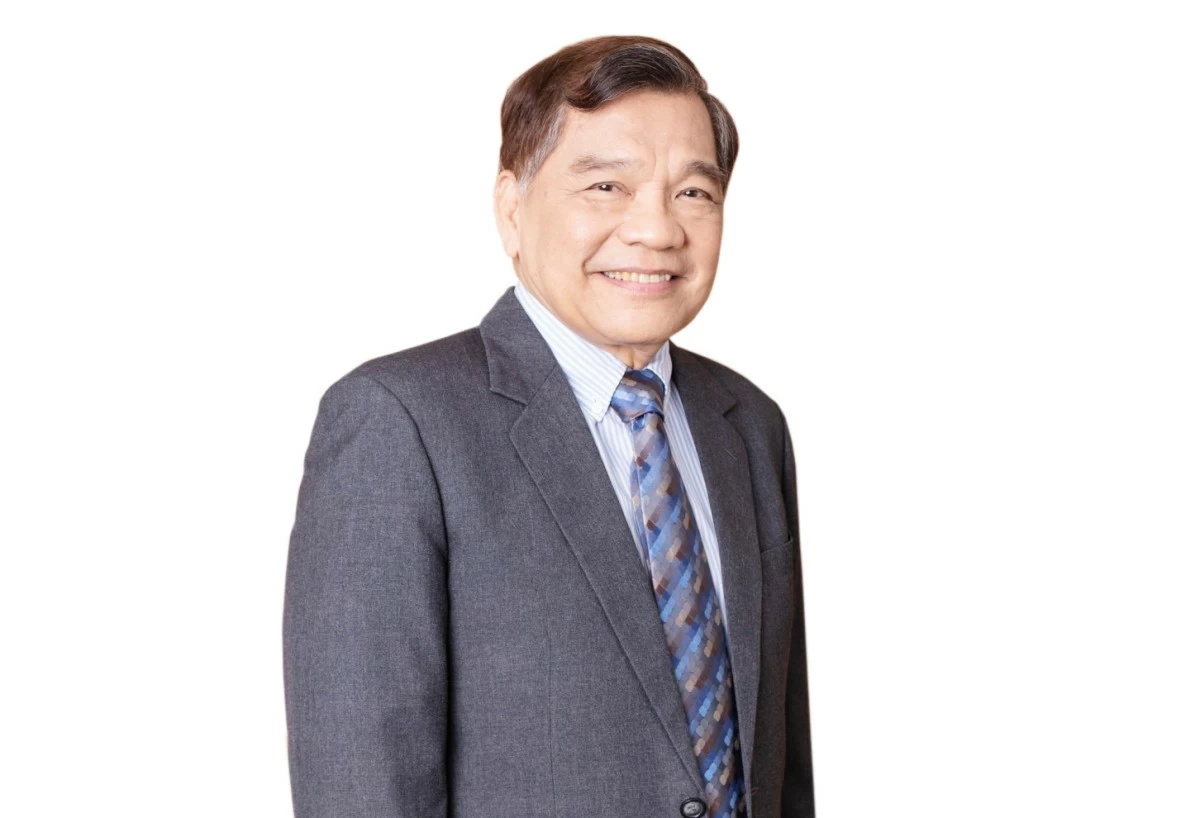
By Former Senator Atty. Joey D. Lina

Published Apr 28, 2026 12:05 am | Updated Apr 27, 2026 06:16 pm
FINDING ANSWERS
Two recent episodes of the Kapihan sa Manila Hotel spotlighted the Philippines’ response to the global oil crisis triggered by the US-Israel war on Iran.
One featured Sen. Rodante Marcoleta on fuel pricing accountability. The other guested Employers Confederation of the Philippines President Sergio Ortiz-Luis, Jr. on business survival and resilience, and Department of Agriculture Assistant Secretary and Spokesperson Arnel de Mesa on food security.
Both episodes converged on a single truth: the crisis driven by the closure and blockade of the Strait of Hormuz is exposing deep structural weaknesses the country can no longer ignore. The Philippines is now paying for long-standing policy gaps laid bare by global turmoil.
Sen. Marcoleta issued a blunt challenge: prove the numbers or return the profits. With high prices of fuel, the suspicion of overcharging resonates. He estimated that oil firms may be earning ₱2.7 to ₱3 billion in gross income daily since the crisis began.
He called for the identifying the exact point when replacement cost pricing was adopted, arguing that profits earned before that shift, while companies were still selling stock purchased at old, lower prices, could constitute unjust enrichment.
"If they used replacement cost pricing before it was warranted, they must refund the excess. That is the most practical and just solution," he said.
Fuel pricing is shaped by global benchmarks, freight, insurance, exchange rates, and replacement cost pricing—the practice of basing pump prices on the cost of replenishing supply rather than on existing stock. In volatile markets, this is standard.
Yet it is also where the problem begins.
Applied too early, replacement pricing allows firms to pass on higher costs before they are actually incurred. Consumers pay more now for costs that may come later. It might be legal, but it can edge into opportunism.
This is why Marcoleta’s challenge matters. Not because it proves wrongdoing, but because it forces a question that regulators have failed to answer clearly: are Filipinos paying fair prices?
He urged the Department of Energy to fulfill its mandate under RA 8479, the Oil Deregulation Law, to monitor and publish pricing data. "Wala pong nagmo-monitor (no one monitors)," he said. "If you cannot determine the precise point of replacement cost adoption, abuse becomes possible, and may already have occurred."
Sen. Marcoleta is right to call for transparency. Open the books. Audit pricing timelines. Explain the system in plain terms. If abuse occurred, act. If not, prove it.
But even as this transparency issue unfolds, another crisis is tightening—one that cannot be simply fixed by a pricing formula.
The government insists there is no food shortage. But the more urgent reality is this: food is becoming harder to afford. A full market means little if families cannot buy what they need.
At the other Kapihan episode, the ECOP head and the DA official outlined the chain reaction. Fuel underpins every stage of food production—irrigation, harvesting, transport. When fuel price rises, everything follows.
Add rising fertilizer costs and the looming threat of El Niño. The DA has called it a “three-shock” scenario. It is already evident in higher vegetable prices and strained supply chains.
Farmers are squeezed. Consumers are squeezed. The system tightens at both ends. Government responses—fuel subsidies, transport support, financial aid—are necessary. But they are stopgaps. They ease pressure without fixing the structure.
Beyond agriculture, micro and small enterprises are also under strain. Fuel price hikes erode already thin margins. Unlike large firms, they have little capacity to absorb shocks. As costs rise, closures and job losses become real risks.
Calls for stronger interventions like fuel tax relief, stricter monitoring, and tighter oversight are growing. These are not radical proposals but are emergency responses. Yet they all confront the same underlying constraint: structural dependence.
The Philippines relies heavily on imported fuel, leaving it exposed to shocks it cannot control. The disruption of the Strait of Hormuz makes this clear. The country absorbs the shock—but does not shape it. It is a recurring problem.
For years, energy diversification has lagged. Renewable investments remain low. Regulatory bottlenecks persist. Long-term planning yields to short-term fixes. And so each global disruption triggers the same cycle—price spikes, public anger, reactive policy.
That cycle is no longer sustainable. Energy independence is not an abstract goal. It is an economic safeguard. Accelerating renewable energy, modernizing infrastructure, and streamlining approvals are now urgent priorities.
Equally important is communication. Without clear explanations, technical issues become political flashpoints. Every price increase invites suspicion. Trust erodes.
And those who suffer most are those least able to absorb the shock: farmers, fisherfolk, small entrepreneurs. They are already paying the price.
If this crisis is to mean anything, it must force change, greater transparency, faster reform, and policies that protect the most vulnerable.
Because while the Strait of Hormuz is beyond the country’s control, the response to its consequences is not. And for millions of Filipinos on the brink of deeper poverty, that response can make all the difference. (finding.lina@yahoo.com)

Tuesday, June 24, 2025

Rizal as timeless role model for Filipinos


By Former Senator Atty. Joey D. Lina

Published Jun 24, 2025 12:05 am


FINDING ANSWERS

As I contemplated on Dr. Jose Rizal on the 164th birth anniversary of our national hero last June 19, the more I was convinced that enlightenment is crucial in attaining prosperity for our country.

In today’s world where misinformation spreads rapidly and where apathy often drowns out civic engagement, Filipino sought to emulate Rizal whose life shined with three key elements: power of education, love of country with action, and courage to stand for what is right.


He believed that acquiring knowledge is the cornerstone of empowerment. Rizal was a polymath who did not merely acquire educational degrees. He sought wisdom. In this present age of quick answers and short attention spans, we can learn from Rizal who valued extensive learning and cultivated a lifelong search for more knowledge and truth.

Whether by formal education or self-study, we can be inspired by Rizal in mustering the discipline to think critically and independently, especially in confronting the complex issues at present — prevalent corruption, widespread poverty, glaring inequality, even climate change.

Rizal’s love of country was phenomenal, yet his nationalism was not blind loyalty. It was informed devotion. He loved our country enough to criticize its flaws and to challenge both abuse and complacency of Filipinos.

His critique of Filipinos was profoundly expressed in his four-part essay, The Philippines a Century Hence, first published in La Solidaridad on Sept. 30, 1889 to Feb. 1, 1890, in which he portrayed Filipinos as “broken” during the centuries of Spain’s domination of the Philippines.

“They gradually lost their ancient traditions, their recollections – they forgot their writings, their songs, their poetry, their laws, in order to learn by heart other doctrines, which they did not understand, other ethics, other tastes, different from those inspired in their race by their climate and their way of thinking,” Rizal wrote. “Then there was a falling-off, they were lowered in their own eyes, they became ashamed of what was distinctively their own, in order to admire and praise what was foreign and incomprehensible: their spirit was broken and they acquiesced.”

But although broken, the people’s spirit was not shattered altogether. In fact, the “lethargic spirit woke to life” when the people realized their misfortune amid all the abuses and mistakes of the colonizers, Rizal said.

“The spirit of the people was not thereby cowed, and even though it had been awakened in only a few hearts, its flame nevertheless was surely and consumingly propagated, thanks to abuses and the stupid endeavors of certain classes to stifle noble and generous sentiments. Thus, when a flame catches a garment, fear and confusion propagate it more and more, and each shake, each blow, is a blast from the bellows to fan it into life.”

The awakening of Filipinos can, therefore, be sparked by just a few. These enlightened few must be agents of change to influence and lead others to transform and uplift the nation to a higher level in moving forward.

Thus, an enlightened citizenry is crucial to nation-building and in attaining prosperity for all Filipinos. Such enlightenment is best when matched with courage, the courage to do the right thing. Rizal faced martyrdom at age 35 when he dared to speak out against oppression.

Rizal’s courage was not reckless; it was rooted in deep conviction. Today’s generation of Filipinos ought to also muster courage to confront what is wrong in Philippine society, to reject disinformation and call out fake news, to resist a prevailing culture of fear and silence in many communities.

The lessons that can be gleaned from the life of Rizal can inspire Filipinos to complement our love of country with decisive action. Our patriotism ought to go beyond flag-waving and social media posts. Patriotism should mean voting wisely, engaging in community work, speaking out against injustices, rejecting fraud and corruption when faced in our daily lives, even obeying traffic rules.

We can honor the legacy of our national hero through our civic responsibility, moral courage, and never-ending pursuit of knowledge and wisdom. In honoring Rizal who certainly is a timeless model for Filipinos, let us not only contemplate on what he did for us — but what we must do for our country in pursuit of prosperity for all Filipinos. (finding.lina@yahoo.com)