You plan to move to the Philippines? Wollen Sie auf den Philippinen leben?

There are REALLY TONS of websites telling us how, why, maybe why not and when you'll be able to move to the Philippines. I only love to tell and explain some things "between the lines". Enjoy reading, be informed, have fun and be entertained too!

Ja, es gibt tonnenweise Webseiten, die Ihnen sagen wie, warum, vielleicht warum nicht und wann Sie am besten auf die Philippinen auswandern könnten. Ich möchte Ihnen in Zukunft "zwischen den Zeilen" einige zusätzlichen Dinge berichten und erzählen. Viel Spass beim Lesen und Gute Unterhaltung!


Visitors of germanexpatinthephilippines/Besucher dieser Webseite.Ich liebe meine Flaggensammlung!

free counters

Total Pageviews

Showing posts with label Sheila Tan. Show all posts

Monday, April 20, 2026


Sheila Tan

Using artificial intelligence (AI) is costing you your brain power.” This is the finding of a preliminary MIT research led by Nataliya Kosmyna.

Their study shows that using AI has been found to hurt brain connectivity and memory recall.

The emergence of smartphones and its multiple notifications, social media posts and stories that reel us in, AI to outsource thinking—all these have been causing our minds to lose focus, have ADHD brains and become lazy thinkers.

In school, we learn what to think, not how to think.

There has been a shortage of critical thinking pre-AI. With the barrage of information coming at us from social media, many opinions are formulated using fake information.

Without our consciousness of how our brains work, we are easy prey. The emergence of AI just makes the scarcity of critical thinking even more pronounced. Without this critical skill, we become puppets to those who benefit from our gullibility.

The brain follows a simple principle; “Use it or Lose it.” What doesn’t get used gets deactivated.

Our brains are programmed to preserve energy. If we don’t challenge our brains to stretch and think, it will just lay docile and hibernate. Critical thinking is the skill that will make us more intelligent, shield us from tricks and future-proof ourselves.

To do critical thinking, we need to be aware first of what nonthinking is. L Michael Hall, PhD writes in his book Brain Camp talks about nonthinking stages.

Here are the most common ones.

  •  Automatic Thinking. Learned and overlearned information that becomes part of our automatic thinking. No check of accuracy or ecology.
  • “Fast thinking without thought.” When we don’t pause to question our own thinking. For many, this is what feels like intuitive thinking. “My instinct tells me.”

And we’re usually wrong. When we take on this process, we’re not thinking, we’re just following a pattern we’ve been programmed to do.

  • Borrowed Thinking. In adult life, most of our thinking belongs to the nonthinking pattern. These are things we learned, we heard, we read and absorbed without questioning.

When we just repeat and quote other people mindlessly, we become guilty of this nonthinking stage. Most things in our culture are designed so that we don’t have to think.

Someone has already decided ahead what we should do, how we should think, what’s acceptable and what’s not.

This kind of thinking is helpful when we are learning, but when we just take things as a whole without breaking them down to question, we are not thinking. We are taking on someone’s thinking.

  • Superficial thinking–lazy and easy thinking. This is an escape from thinking.

We learn this when we were taught that thinking for ourselves is tabooed and dangerous. When we don’t ask for details and just let ourselves get absorbed in vague, deceptive language.

Many things we hear from people who preach certain ideologies could fall under superficial thinking. Questioning it is threatened and wrong. When we do this, we don’t protect ourselves from cognitive errors. We become victims of scams and deceptions.

While we may have errors in thinking, we don’t have to get stuck there. Real thinking is being able to see reality as it is, then choose how to best interpret and respond to it to enable best decision and best everyday experiences.

Considering

The first step in active thinking is trying on an idea that’s different from ours. Take on a neutral perspective, get curious and wonder about other people’s thoughts.

The one thing that gets in the way of this is knowing that I’m absolutely right, and they’re absolutely wrong. Knowing and accepting that we are all fallible reduces this barrier.

“What if they have a point? What can I learn from them? Where must they be coming from?” These are good frames to take on.

SEE ALSO

Questioning

Good questions expose errors in our thinking and force us to think differently. If the question is something we’ve never thought about, it drives us to explore into deep thinking.

Our brains get activated to search for information. This is what real thinking is about.

Pause and ask, “What am I assuming to be true when I say this?” “How do I know that what I know is true?”

Doubting is being skeptical about our what we think is true. Skepticism is how we suspend judgment. Challenge “facts” and play devil’s advocate. Look for evidence for the opposite statement.

These are the initial steps of doing critical thinking. Being critical about how we think, what we think and what our references are.

True freedom is having a choice on how to manage our minds.

If there are too many thoughts and thinking patterns that are inculcated in us without our awareness, we become prisoners of someone else’s brain.

Learning to think for ourselves is a skill that liberates us to have a life we choose.

******

Get real-time news updates: inqnews.net/inqviber

Tuesday, March 25, 2025

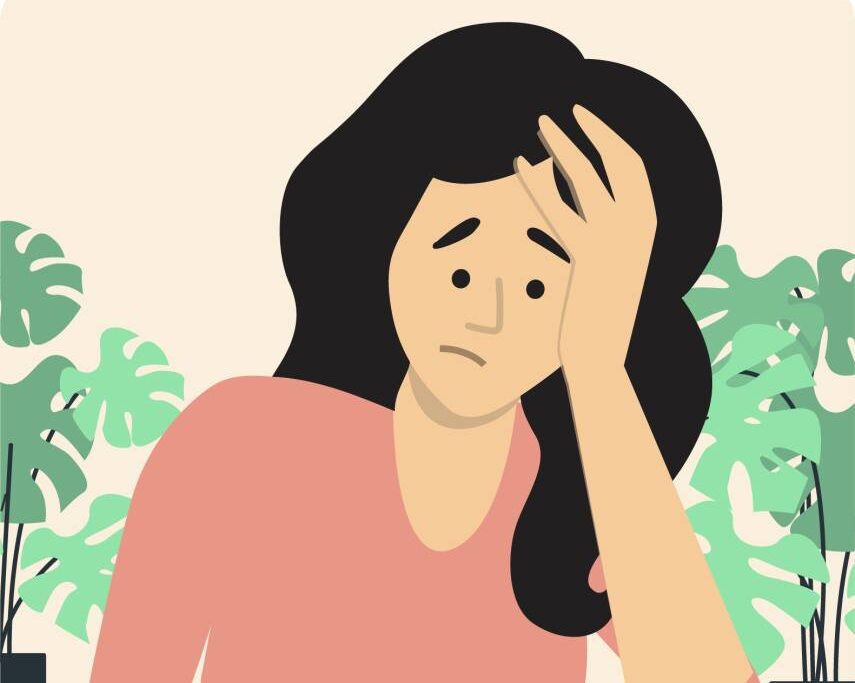
The epidemic of loneliness

Sheila Tan

The world’s productivity comes at the expense of the quality of our lives. Opportunities unimaginable in the past have now become a reality for many, thanks to technology. So many are now able to earn a living in the comfort of their pajamas. People can now afford better experiences—food, travel, fashion, and gadgets.

And yet, we are lonelier than ever. Are we aiming for the wrong target? Could we be missing the point?

In November 2023, the World Health Organization declared loneliness “a global public health concern.” Studies have linked loneliness to health risks including heart diseases, stroke, and dementia. In 2024, US surgeon general Vivek Murthy declared loneliness an epidemic in America. He described loneliness as “feeling invisible,” “that if I was gone tomorrow, no one would notice,” and “having no one to be vulnerable with.”

For many of us, loneliness may just feel like a void, or that “there’s something missing.”

Antidotes

Acknowledging it at the right time allows us to find solutions. Ignoring it comes at a steep price. Here are some ways we make our lives lonelier and the antidotes to each.

1. Lack of awareness with one’s inner world. Many of our perceived problems are symptoms of something small. So many of us do not even know how we feel. All we know is that there’s a feeling of discomfort. Our low tolerance for the slightest discomfort prevents us from even being curious. We misdiagnose it as boredom so we soothe it with distractions. Drinking, binge-watching, eating, shopping—all these could be attempts to silence what’s begging to be heard inside of us.

Antidote: Make it a habit to check in with yourself in silence. Inquire into what’s happening in your mind and body. What sensations do you feel? What thoughts are running in your head that are causing the sensations? What emotions are emerging? Awareness alone could already be healing.

2. Shallow connections. Our deepest desire is to be seen and heard. The busy-ness of our calendar doesn’t equate to depth of connection. What determines the quality of our connections is how much of ourselves we share, not the number of interactions. Our inability to go deep is what keeps things at surface level.

Antidote: Find your person. Find someone who can be there to be present with you in exploring what’s beneath the surface thoughts, anxieties, and worries. Give words to your feelings even if they defy logic. In these moments, the best company is someone who allows us to feel safe to dive into the scary internal world we’ve created for ourselves.

Sense of safety

3. Vulnerability. So many of us can’t have meaningful connections because we wear masks. We pretend to be okay even when we’re not. We mostly gaslight ourselves first, talk logic into validating our own emotions. Once we’re convinced, we convince other people of our lies, too.

Antidote: Find a way to feel a sense of safety within yourself. An image or sound in our mind that calms us is a great choice. Sometimes, it needs to be in the presence of someone you trust. Once you find this safe space, understand the torments that are happening inside. Are there fears, regrets, and hurts that are bubbling up? Just acknowledging their presence allows us to know ourselves better.

It’s a great start to have the space for vulnerability.

SEE ALSO

4. Being hyper dependent. We pride ourselves in being self-sufficient. Not needing anyone has become a goal. The ease with which we can achieve so many things has increased social isolation. This hyperpower has also given rise to the illusion that we are happy on our own. This illusion branches into thinking we are wasting other people’s time, and vice versa.

Antidote: Be part of a community. If this is something new, it may not feel good all the time, especially at the start. Familiarize yourself with giving and getting small favors. This is how networks begin. Having our presence acknowledged and our absence noticed are messages that our ewxistence matters. This is the best antidote for isolation.

5. Care for something. Somewhere along the way, we somehow got the idea that not caring is cool. Apathy and numbness are trending. With all the bad news going around, it makes sense to want to shield ourselves from the everyday trauma of reality. Taking the indifference to an extreme is bound to impact our own life experience.

Antidote: Choose an advocacy that resonates with you. Become an active or silent contributor of a positive vision. Allow yourself to feel pain for something you feel strongly about. This opens the passion to make a difference the opposite cause.

Loneliness and connections are two ways to go about life. The choice is ours, and ours alone. That choice determines the quality of our lives. Choose wisely.