You plan to move to the Philippines? Wollen Sie auf den Philippinen leben?

There are REALLY TONS of websites telling us how, why, maybe why not and when you'll be able to move to the Philippines. I only love to tell and explain some things "between the lines". Enjoy reading, be informed, have fun and be entertained too!

Ja, es gibt tonnenweise Webseiten, die Ihnen sagen wie, warum, vielleicht warum nicht und wann Sie am besten auf die Philippinen auswandern könnten. Ich möchte Ihnen in Zukunft "zwischen den Zeilen" einige zusätzlichen Dinge berichten und erzählen. Viel Spass beim Lesen und Gute Unterhaltung!


Visitors of germanexpatinthephilippines/Besucher dieser Webseite.Ich liebe meine Flaggensammlung!

free counters

Total Pageviews

Showing posts with label REGGIE ASPIRAS. Show all posts

Thursday, January 15, 2026

A lasting gift to Filipino food culture


Reggie Aspiras

Felice Prudente Sta. Maria is an award-winning author and a pioneer in Philippine food history. Through research and storytelling, she helps us understand where our food comes from, reminding us that everyday dishes are part of a long, deeply rooted past.

The latest fruits of her labor are the newly published “When Mangoes & Olives Met at the Philippine Table” and its sequel, “What Recipes Don’t Tell.” The books reflect her belief that Filipino food cannot be understood through recipes alone, but through the changes it has undergone over time.

Felice Prudente Sta. Maria

A food trip down memory lane

Long before colonization, Filipinos were already cooking using ingredients and techniques drawn from their land and daily needs. The earliest recorded meat eaten in the Philippines was a prehistoric rhinoceros hunted in what is now Kalinga over 777,000 years ago. Thousands of years later, Filipino ancestors were domesticating pigs in Lal-lo, Cagayan, and sun-drying dolphin fish in Batanes more than 3,000 years ago—early signs of preservation, planning, and skill.

“Mangoes & Olives” traces this long food story using archaeology and historical records. It tells us that coconut vinegar was already recorded in writing in 1521. Dayap was the first cooking citrus of the islands, and calamansi, often assumed to be ancient, was developed only in the early 20th century by Filipino scientists.
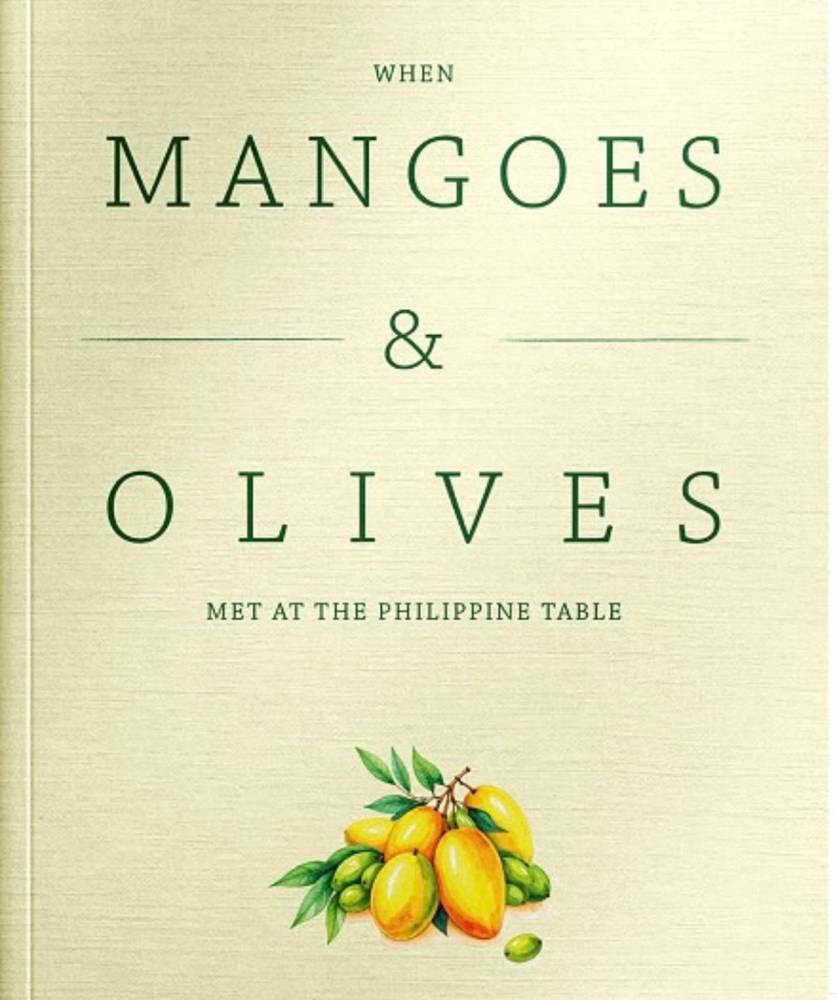
“When Mangoes & Olives Met at the Philippine Table”

The book also invites us to take another look at familiar food. Pan de sal, for instance, was once a measure of salt shaped like a bread bun. Lumpiang sariwa was originally served with a simple tahuri sauce—without soy sauce or cornstarch. Tsokolateh was so popular that it was served several times a day on galleon voyages, often in small bowls made of polished coconut shell. Even paho mango was once pickled to replace olives that could not grow in the Philippines.

“Mangoes & Olives” also shows that Filipino food history is a story of choice. Filipinos chose coffee over black pepper because it was easier to harvest. Spanish women born in the Philippines grew up eating tapa, tinola, sinigang, and eating with their fingers—habits they learned from the Filipina women who raised them.

The origins of Filipino spaghetti

“Recipes Don’t Tell” continues the story by focusing on food words. Everyday terms like kilaw, guisa, and halo-halo are highlighted and put in proper perspective. One Visayan word, nayá-nayá, captures the very essence of Filipino meals—caring for others and sharing happiness with guests.

Together, these books are Sta. Maria’s lasting gift to Filipino food culture. They prove that our food has a long, well-documented history and is something we can truly be proud of.

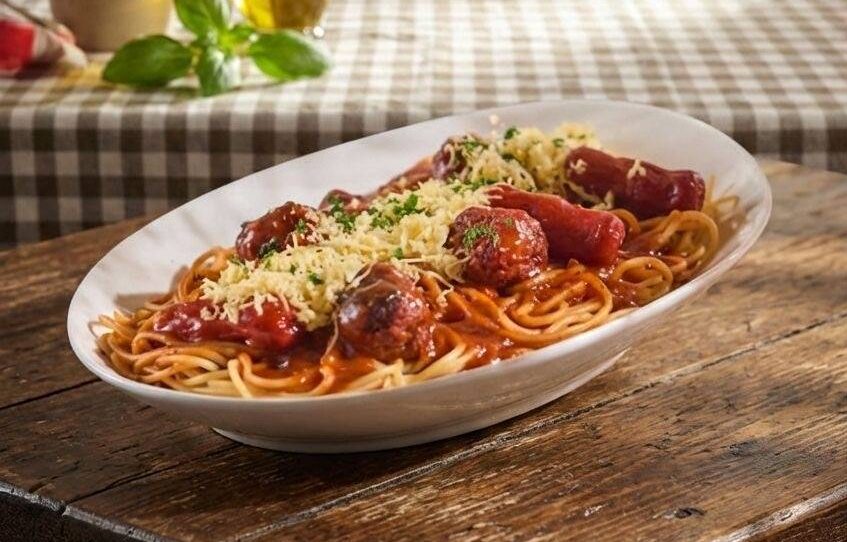
A delightful story she tells in her book is that of Filipino spaghetti, a dish many of us grew up with. In “What Recipes Don’t Tell,” Sta. Maria traces how spaghetti first appeared at the Philippine table in the 1920s, served publicly in Manila at places like the Santa Ana Cabaret. “Spaghetti dinners” were advertised for large gatherings and celebrations, when pasta was still new and considered special-occasion food.
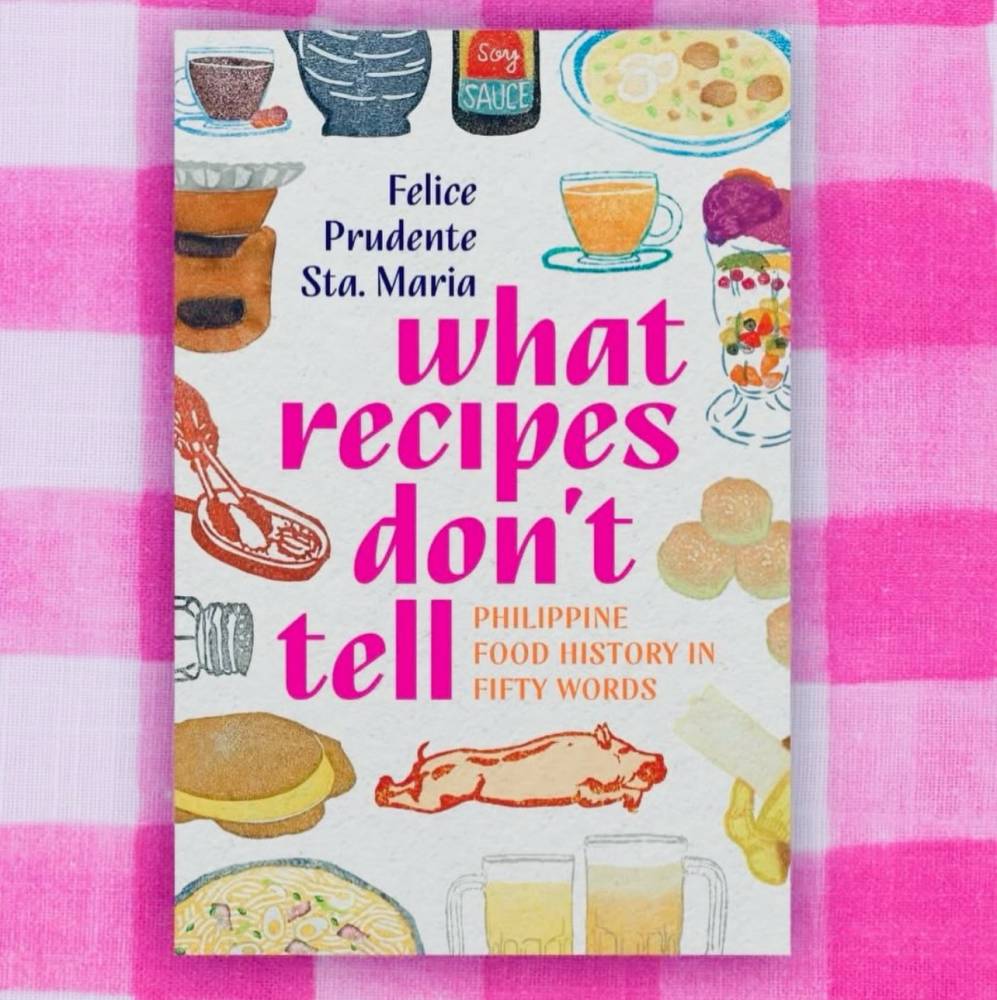
“What Recipes Don’t Tell”

By the 1930s, spaghetti slowly moved from dance halls into Filipino homes, pushed by the emergence of imported pasta, canned tomatoes, and American-style products. Early versions were savory, not sweet—closer to its Italian or American counterparts.

A clear example appears in the heirloom recipes chapter of “Mangoes & Olives”—a 1937 recipe for Spaghetti Italian from a Philippine Manufacturing Company booklet using Purico and Star Margarine. Made with bacon, tomato pulp, stock, mushrooms, and a simple roux, it shows how spaghetti was first prepared in Filipino kitchens.

There’s more to the food we eat

What I love about these two books is how they make you think more carefully about the food we eat every day. The shift from the 1937 Spaghetti Italian to today’s Filipino-style spaghetti happened gradually. Cooks substituted tomato pulp with banana ketchup, bacon for hot dogs. And somewhere along the way (perhaps as children became the stars of our celebrations), the sauce turned sweet.

Whether that last part is fact or fiction—is something I need to confirm with Sta Maria. But one thing is clear: Filipino sweet spaghetti, the staple of birthdays and family gatherings, shows that Filipino food is alive—always changing, always evolving.
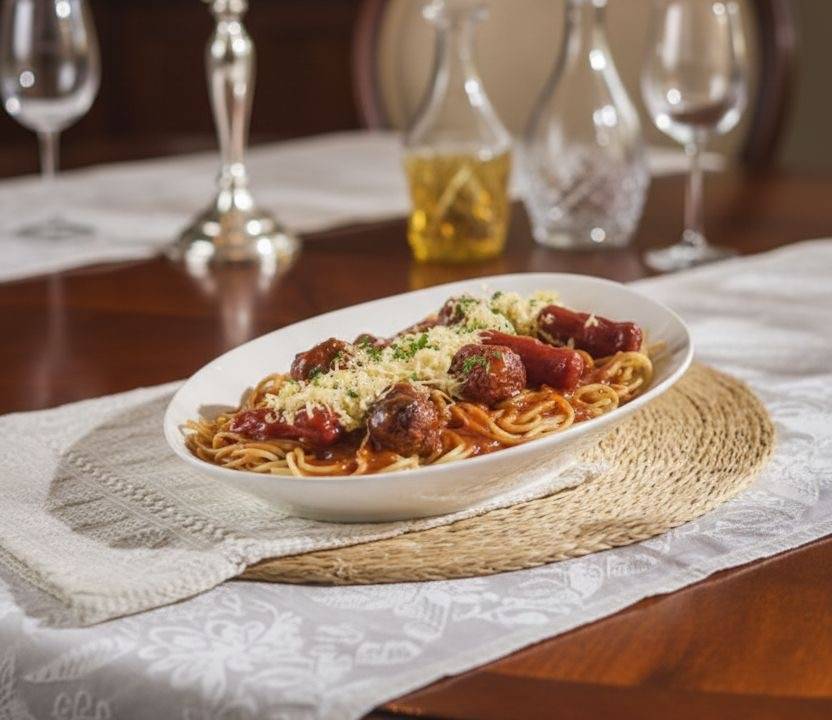
1937 Spaghetti Italian

Ingredients

1/4 pound cooked spaghetti

3 slices of bacon

1 to 1/2 Tbsp minced onion

2 sprigs of parsley

1/2 cup canned mushrooms

2 cups stock

1 cup tomato pulp

SEE ALSO

1 Tbsp flour

1 Tbsp Star Margarine

1/2 tsp salt

1/4 tsp paprika

Grated cheese

Procedure

1. Place chopped bacon in a saucepan. Once the bacon has released some oil, add onion and allow it to cook slightly in the fat.

2. Chop and add in the mushrooms, along with the stock, parsley, tomato, salt, and paprika.

3. Bring slowly to their boiling point and simmer until ingredients are cooked down into a thick sauce. Rub flour into Star Margarine to make a paste, similar to making a roux. Blend it into the sauce. Cook for 3 minutes.

4. Pour sauce over cooked spaghetti. Using two forks, lift the spaghetti several times to evenly cover it with sauce. Sprinkle with a generous amount of grated cheese.

Thursday, May 29, 2025

A chef’s journey to plant-based healing


Avatar

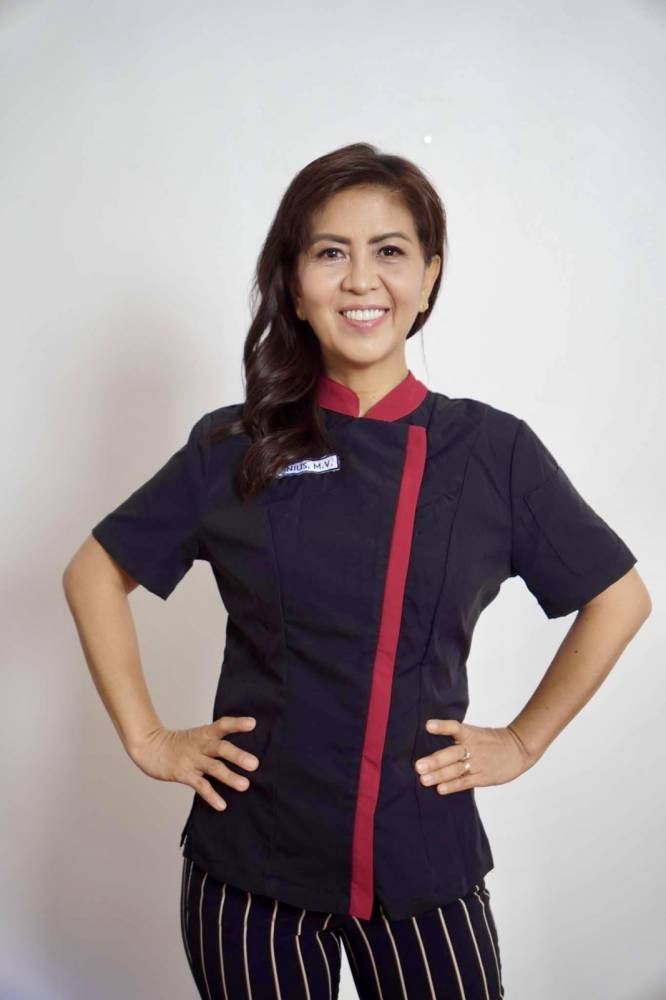
Mylene Vinluan Dolonius is a plant-based chef who pursued her culinary studies on the fundamentals of raw plant-based cookery in Thailand. She is also the founder of Plantmaed Academy, the country’s first plant-based culinary studio.

In the past decade, she has dedicated herself to promoting the benefits of plant-based cooking. Since the inception of her culinary school, the raw food instructor has successfully taught over 500 chefs who by now are equipped to prepare plant-based food, or at least incorporate plant-based dishes in their daily menus.

She is also a trainer for the Department of Health, where she educates medical practitioners on the healing properties of raw plant-based food.

Dolonius’ passion to spread wellness through nutrition has brought her recognition and won her numerous accolades.

She is proud of the courses and programs she designed. What she imparts to her students goes beyond the basics of preparing delicious raw vegan meals; it’s a journey beyond the kitchen that becomes a way of being, a way of life.

“I am not here to convince anyone to stop eating meat,” said Dolonius. All she yearns for is to be heard, and for people to know the many advantages that eating raw brings.

Raw plant-based chef Mylene Vinluan-Dolonius —CONTRIBUTED PHOTOS

Overall health

Raw plant-based food advocates are assured of vibrant health. Raw vegan cuisine, according to Dolonius, is abundant in vitamins, minerals, and enzymes that promote overall health and well-being. By consuming nutrient-dense, plant-based foods in their raw state, you can experience increased energy levels, improved digestion, and enhanced immunity.

She herself has benefited from the healing powers of plant-based food. When she was 44, her frequent bleeding caused by cervical cysts stopped. She attributed this to the food that she prepared and ate for 30 days while attending a raw food, plant-based course at Matthew Kenny’s vegan culinary academy in the US.

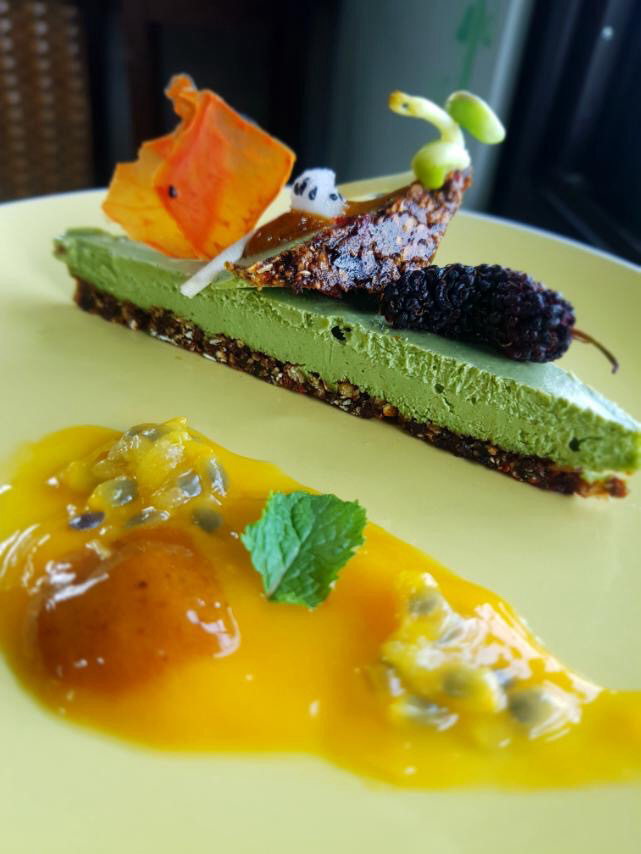
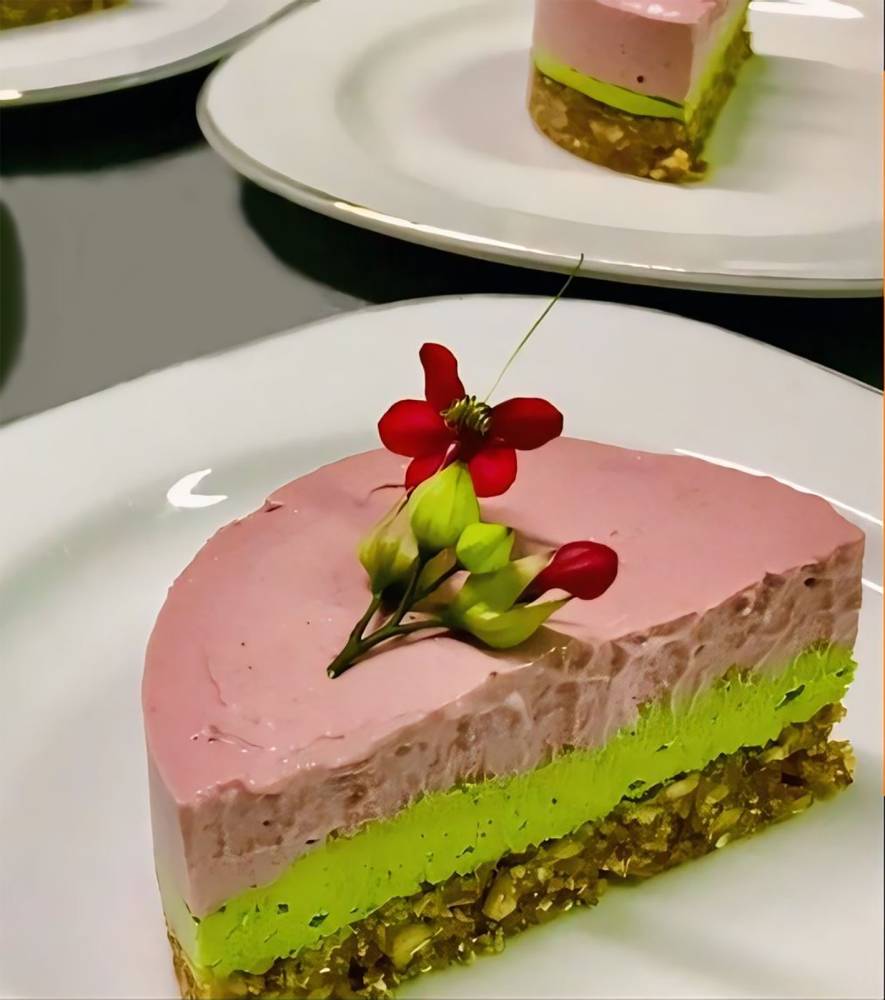
Kamote Tops Cheesecake

Diagnosed a little short of stage 1, Dolonius was due for a biopsy. In the span of a month, however, what was found simply vanished. Her healing was a gift that kept giving. Her other health issues such as acid reflux, hyperacidity, early-onset rheumatism, vertigo, and even depression from weight gain all slowly disappeared. The lady, who was once a size 8, now wears XS!

That’s how she was inspired to further explore the world of plant-based culinary education. Her desire to learn more brought her to the Sayuri Healing Academy in Bali, Indonesia, and to pursue further studies in plant-based nutrition in the United States.

Dolonius debunks the myth that preparing raw plant-based food is difficult. “No, it isn’t! If can do it, so can you,” she said. “I was in the entertainment industry as a producer for 20 years, and suddenly I woke up, and now, I am a happy vegan chef.”

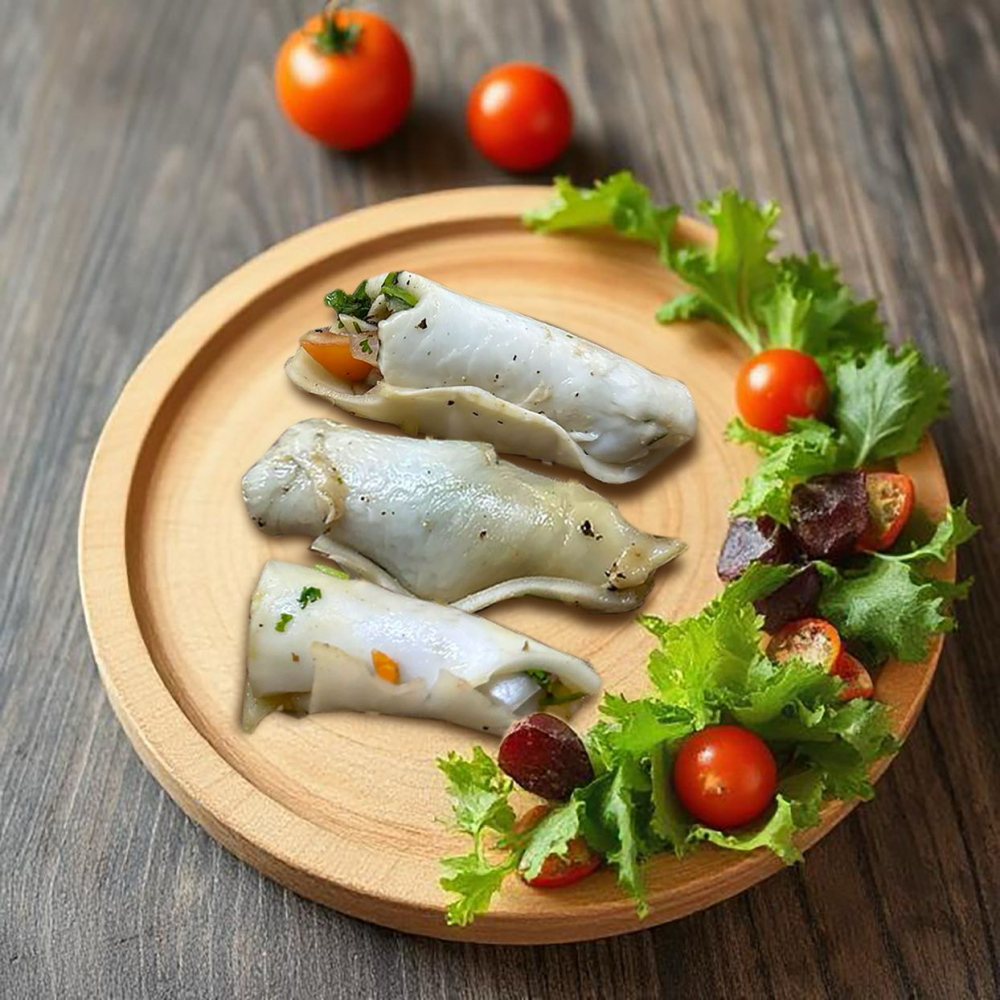
Coconut Squid

Culinary pursuit

Plant-based food is far from boring. Raw food is a refined culinary pursuit. It requires dedication to transform the highest quality of vegetables using simple techniques to extract exquisite flavors, while preserving the essential nutrients and enzymes.

Equally challenging is complementing a prepared dish with nuts, seeds, seaweeds, sprouts, and fruits. Properly done, it gives the food multiple layers of flavors, textures, and tastes while increasing its health benefits.

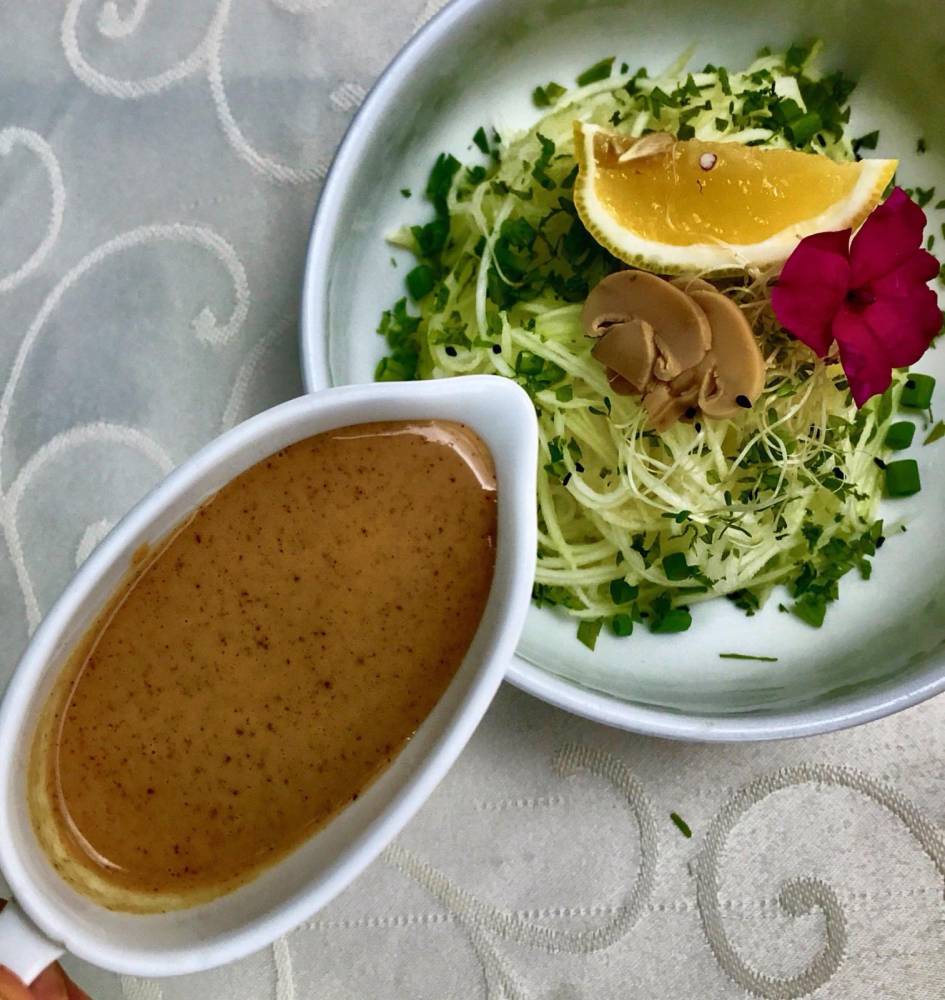
Radish Noodles

Dolonius pointed out that adopting a raw vegan lifestyle is beneficial not only for one’s health but also for the planet. “By reducing your carbon footprint and supporting a sustainable food system, you contribute to a greener and more eco-friendly future.”

To date, Dolonius has 2,500 pending inquiries for her cooking lessons, and multiple collaborations locally and internationally. A host of plant-based nutrition programs is also due to launch later this year.

Like the vegetables she cooks, the future of this plant-based vegan chef is bright and sunny.

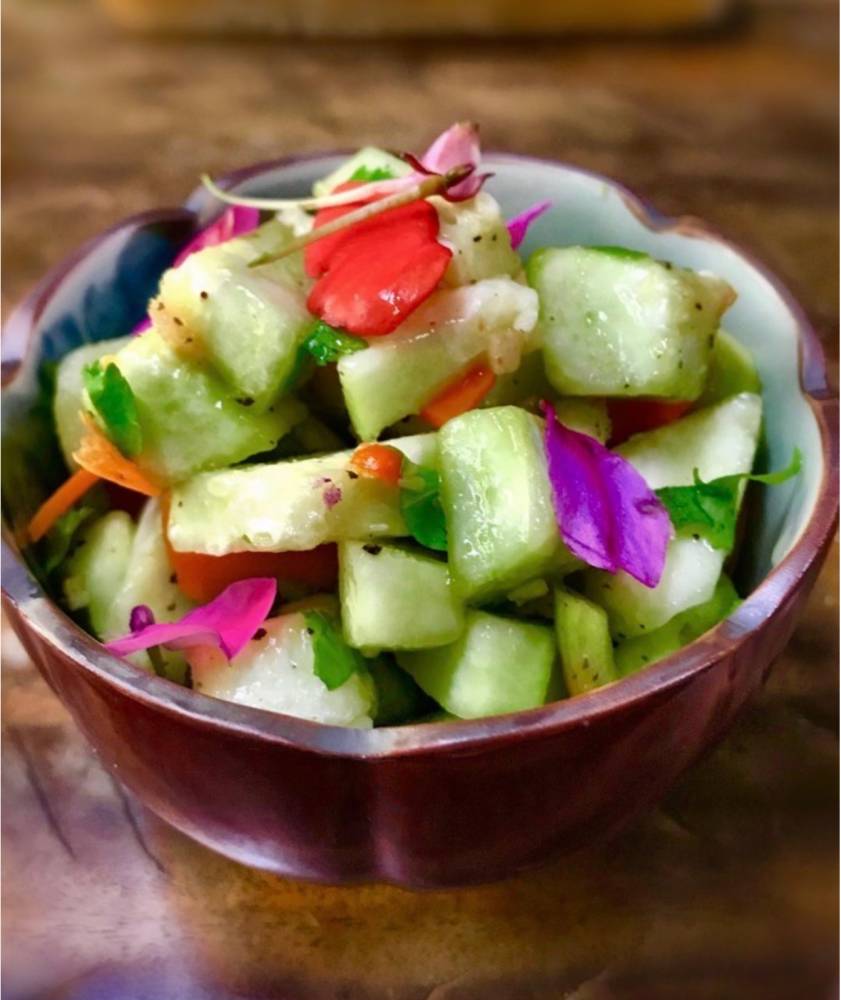
Potato Ceviche

Chef Mye’s Patola Ceviche

  • 2 c patola or sponge gourd (peeled and diced)
  • 1 c uong or banana mushroom (minced)
  • 1/2 c singkamas (minced)
  • 1/4 c lasona (local onion), sliced into rings
  • 1 c tomatoes, peeled, seeded, and diced
  • 2 Tbsp kamias, minced
  • ½ almost ripe mango, diced

Sauce:

  • 1 c fresh-squeezed
 calamansi juice, strained
  • 1/2 Tbsp lime juice
  • sili labuyo, seeds and ribs removed, minced
  • 2 Tbsp ginger, minced
  • 2 tsp onion, minced
  • 5 leaves of laurel
  • 1 Tbsp coconut sap (or yakon syrup)
  • 1/4 c chopped cilantro (extra for garnishing)
  • 1/4 c chopped spring onion
  • 1 tsp salt
  • 1 tsp pepper

Prepare patola, mushroom, lasona, tomatoes, singkamas, kamias, mango.

Mix all the sauce ingredients.

SEE ALSO

Drizzle 2 tsp of sauce on patola.

Add the rest of the ingredients to the sauce. Toss. Add patola last.

You may add basil and mint for extra flavor. Garnish with sesame seeds, too.

Uray and Strawberry Cheesecake

‘Uray’ and Strawberry Cheesecake

  • 2 c cashews
  • 3 bananas
  • 3/4 cup uray/kulitis or spinach or kale
  • 3/4 cup fresh strawberries
  • 1/3 cup coconut oil
  • 1/3 cup maple syrup (or agave nectar)
  • 1 tsp vanilla extract
  • 2 1/2 Tbsp lemon juice
  • 1/8 tsp sea salt

Crust

  • 2 cups rolled oats
  • 1 c granola
  • 4 dates ( soaked, peeled and seeded)

Process crust in a processor until it comes together like a ball. Flatten crust in an 8-inch cake pan. About 1 1/2 inch thick.

Combine rest of the ingredients in a blender. Blend until smooth.

Pour into cake pan. Freeze overnight.

Add toppings of choice mangoes, strawberries or mixed nuts. Keep frozen.

Contact @studioplantmaedph on Instagram.

Visit www.reggieaspiras.com or @iamreggieaspiras on Facebook.