This might not be the typical expat blog, written by a German expat, living in the Philippines since 1999. It's different. In English and in German. Check it out! Enjoy reading! Dies mag' nun wirklich nicht der typische Auswandererblog eines Deutschen auf den Philippinen sein. Er soll etwas anders sein. In Englisch und in Deutsch! Viel Spass beim Lesen!
You plan to move to the Philippines? Wollen Sie auf den Philippinen leben?
Ja, es gibt tonnenweise Webseiten, die Ihnen sagen wie, warum, vielleicht warum nicht und wann Sie am besten auf die Philippinen auswandern könnten. Ich möchte Ihnen in Zukunft "zwischen den Zeilen" einige zusätzlichen Dinge berichten und erzählen. Viel Spass beim Lesen und Gute Unterhaltung!
Total Pageviews
Thursday, May 21, 2026
P184.5-M bridge collapses in Davao City
Friday, May 15, 2026
Davao City Council OKs electric vehicle incentive ordinance
By Ivy Tejano

Friday, May 8, 2026
Davao City Council honors SPMC for citations

Thursday, May 7, 2026
Cacao to boost Davao City tourism, identity
CACAO producers and entrepreneurs showcase local cacao-infused dishes in celebration of Cinco de Mayo at Azuela High Street in Lanang, Davao City, on Wednesday, May 5. (Photo via Ivy Tejano)
By Ivy Tejano
Published May 6, 2026 11:35 pm
Davao City cacao producers and entrepreneurs have expressed confidence that locally grown cacao will boost the city's identity, tourism potential, and export competitiveness.
Cacao de Davao and Siempre Taqueria and Bar have joined hands during the Cinco de Mayo to show that cacao can be used beyond chocolate and confectionery.
"With this collaboration, we are pushing the idea that cacao is not just simply cacao. There are still so many things that can be done with it, and there are many more possible collaborations not only here but even with other countries," Ethan Kyle Lim, chief operating officer of Cacao de Davao, said.
Lim said Davao cacao's quality is now being recognized in high-end dining spaces, opening the door to wider applications such as skincare, soap, and butter-based products, as well as other emerging value-added industries.
He emphasized the broader economic and tourism impacts of showcasing local products through culinary events and collaborations, saying these initiatives help position Davao City as an open, innovation-driven city for investors.
The cacao producer noted that Davao is expanding its identity beyond its traditional association with fruits. "Davao is already known as the cacao capital of the Philippines, not only durian and mangosteen and other fruits here," he added.
Lim emphasized that collaborations with local restaurants have become key to sustaining cacao's visibility in the city, citing partnerships with establishments such as Lamano, Ikao, and Siempre.
"The growing collaboration among local businesses and farmers is helping establish a unified cacao movement in Davao City," he said. "If we unite and work together, we can showcase the best of our products and help tourism thrive even more."
Lim added that the initiative aims to encourage more farmers and businesses to participate in strengthening Davao's cacao industry, positioning it as a key driver of economic and tourism growth.
For Gastro Club Corp. and Siempre owner Jaru Chua, the initiative underscores the importance of working directly with local farmers and producers to strengthen supply chains and support local livelihoods.
Chua said their Filipino-Mexican cuisine concept is rooted in showcasing Davao's agricultural strength. He added that Davao City and the Davao region remain major hubs for fresh produce in Mindanao.
The local entrepreneur described the collaboration with Cacao de Davao as a continuation of earlier partnerships, noting that such efforts prove local businesses can scale impact when working together.
"I don't know if everybody is familiar with authentic Mexican food, but many of its dishes, desserts, and drinks truly use cacao. This time, localized using cacao from Davao City," Eric Patrick Dulay, entrepreneur and co-owner of Siempre.
Chua also said such initiatives have the potential to attract both domestic and international tourists to visit Davao City, as it always has something to offer, especially with cacao tourism in Davao continuing to grow and gain wider recognition.
Chef Mark Delumban explained that integrating cacao into savory and fusion dishes helps broaden Davao's culinary identity. He added that their approach combines familiarity with innovation.
Delumban said cacao naturally fits into Filipino-Mexican fusion cuisine due to shared culinary influences, citing dishes like mole in Mexican cuisine and traditional Davao tablea-based recipes. "We do not want the flavors to be too far from the local palate."
Lim shared insights from his benchmarking trips to Vietnam and Thailand last year, which he said helped identify opportunities to improve local cacao production systems and packaging.
He confirmed that Cacao de Davao products are already exported to markets including China, Europe, Singapore, Taiwan, and Japan, with plans to expand further through airport kiosks and additional Asian markets.
Lim noted that Southeast Asian countries have advanced chocolate industries with strong export presence. Despite this, he emphasized that Davao's competitive advantage lies in taste and quality.
Friday, April 24, 2026
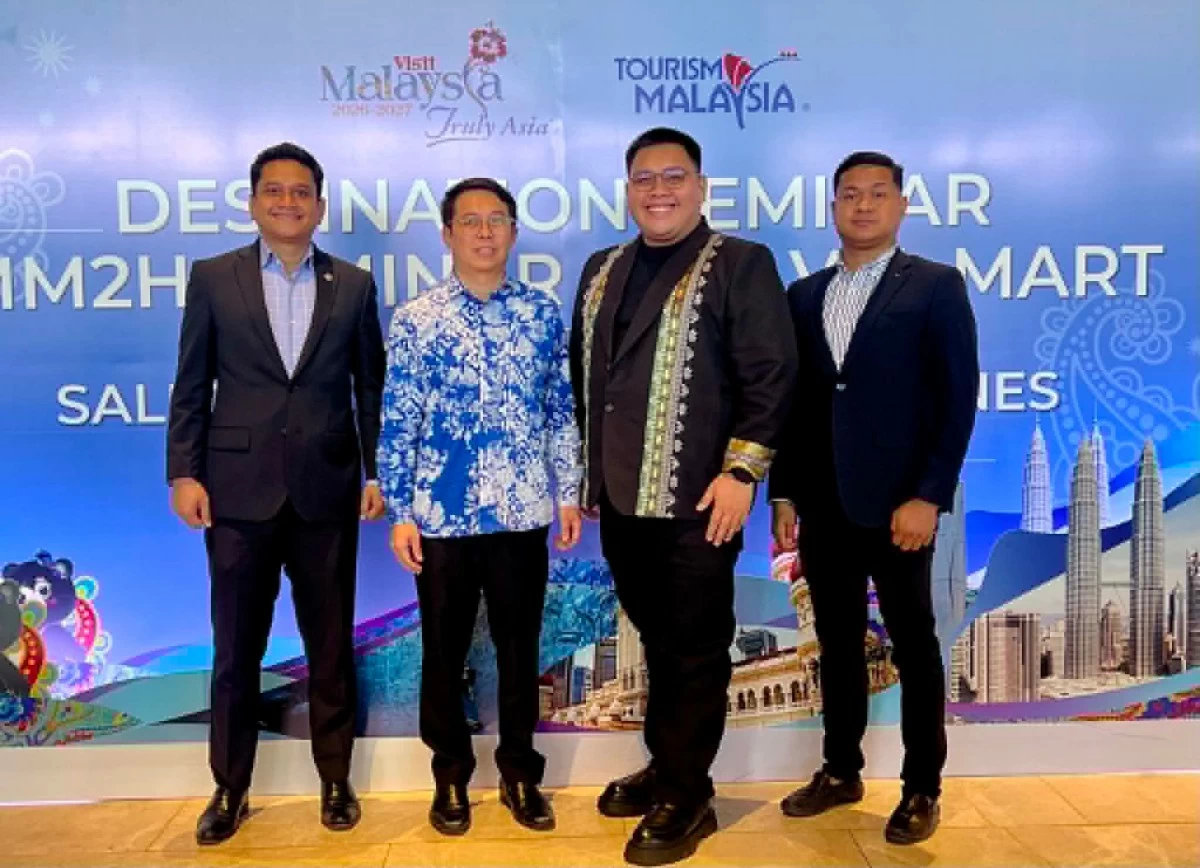
Travel expo slated in Davao City

Thursday, April 16, 2026
Davao City rejects US military facilities
By Ivy Tejano

Tuesday, March 31, 2026
Church urges faithful to practice simplicity this Holy Week

Sunday, March 29, 2026
Davao City celebrates FPRRD's 81st birth anniversary
By Ivy Tejano

Friday, March 20, 2026
Davao City dad appeals: Save gas on Araw ng Dabaw civic parade
By Ivy Tejano
Published Mar 19, 2026 10:34 pm
DAVAO CITY – The Davao City Council passed a resolution on Thursday, March 19, urging all participants in the 2026 Araw ng Dabaw Civic Parade to join the event on foot and refrain from using fuel-powered and electric vehicles.
Committee on Government-Owned Properties chairperson Councilor J. Melchor Quitain Jr. called on all participants to avoid deploying gasoline, diesel, oil-powered, and even electric vehicles in the parade on March 28.
Quitain said the initiative aims to underscore the importance of conserving energy resources amid ongoing global supply concerns stemming from the conflict in the Middle East.
According to the resolution, the Araw ng Dabaw celebration, observed annually in March, will culminate in a civic parade that traditionally draws hundreds of participants and often features motorized floats and displays.
The councilor cited the impact of the ongoing conflict in the Middle East, which he said has disrupted petroleum product supplies and contributed to rising fuel prices in the Philippines.
Quitain added that the resulting increase in transportation and production costs has also driven up the prices of basic commodities and utilities, including electricity.
The resolution emphasized that limiting fuel consumption, even during large public events, could help mitigate the economic strain brought about by these global developments.
It also noted that the situation remains uncertain, with no immediate signs of stabilization in fuel supply and pricing, amid continuing geopolitical tensions and volatile global oil market conditions.
Quitain appealed to Davaoeños to contribute in their own way by conserving fuel and resources, stressing that collective action can help cushion the broader economic impact.
Under the resolution, participants are strongly encouraged to take part in the parade without vehicles to promote awareness of energy conservation and responsible resource use.
Monday, March 16, 2026
Davao City unwraps Furusato Davao Tourism Circuit
OLAN Emboscado, tour guide and researcher of the Davao City Tourism Operations Office’s Tourism Circuit Development Project, leads the Furusato Davao Tourism Circuit Familiarization Tour on Friday, March 13. (Photo via Ivy Tejano)
By Ivy Tejano
Published Mar 15, 2026 05:13 pm
DAVAO CITY – The city government of Davao is deepening its tourism offerings with the new Furusato Davao Tourism Circuit, giving stakeholders, locals, and visitors a closer look at the city's Japanese heritage and historical landmarks during the 89th Araw ng Dabaw celebration.
A familiarization tour on March 13 allowed tourism stakeholders, cultural advocates, and media practitioners to revisit Barangay Mintal, once known as "Little Tokyo," home to one of the largest Japanese communities in the Philippines before World War II.
Organized by the Davao City Tourism Operations Office, the tour showed the history of Davao's Japanese community, the impact of the war, and their lasting contributions to the city, making the site a tourist spot and an important cultural landmark.
According to Olan Emboscado, tour guide and researcher of the Tourism Circuit Development Project of the CTOO, Japanese migration to Davao City started in 1903, when American abaca planters brought workers from Japan.
Suda Ryosuke led the first group from Kagoshima Prefecture. "They came to the city in search of a better life," Emboscado said. "Japanese later worked as abaca farmers and managed plantations across the area."
History said that some of the Japanese married Filipinas and started families in the city, where they found opportunities that improved their lives compared to what they had in Japan. The Japanese community in Davao grew and prospered.
Many settlers became successful abaca farmers and plantation owners. One of them was Ohta Kyosaburo, who established an abaca plantation in Mintal and is often called the "Father of Abaca Development."
Before World War II, many Japanese settlers lived in the Mintal–Calinan–Toril area, where fertile land supported large abaca plantations. The circuit development project team is still studying the history of the settlers in the Calinan and Toril areas.
At its peak, Davao had about 20,000 Japanese migrants, the largest Japanese community in Southeast Asia at the time. The area had Japanese schools, offices, stores, hospitals, photo studios, and more. They become influential in the city.
The abaca became one of the world's most in-demand export products. The Japanese introduced a machine called hagutan, which helped strip abaca fibers faster and produce more for export, especially for ropes used by merchant and naval ships.
Davao City was later created, in part, to limit Japanese influence in the area. In 1937, the Municipality of Davao and the Municipal District of Guianga—where many Japanese plantations were located—were merged to form the city.
According to history, early city mayors were appointed rather than elected because the government feared that the large and influential Japanese community might gain control of local elections.
However, the community's prosperity ended during World War II. After Japan's defeat and the liberation of the Philippines, many Japanese immigrants were sent back to Japan, except for their Filipino spouses and children.
With strong anti-Japanese sentiment after the war, several families hid in remote areas. They tried to conceal their Japanese identity to avoid discrimination and possible persecution, leaving remnants of the past.
Relations between the Philippines and Japan later improved, especially after the 1962 visit of Emperor Akihito and Empress Michiko to the Philippines. In 1968, 80 former Japanese immigrants returned to Davao for an emotional visit to the place they once called home.
Every August, groups of Japanese visitors travel to Davao City and visit the Mintal Public Cemetery to pay respects to their ancestors. Mintal, a barangay near Calinan, was once home to a large Japanese community and was often called Little Tokyo.
In 1980, second-generation Japanese descendants, known as Nikkei Jin, formed the Philippine Nikkei Jin Kai Inc. The organization aims to restore the identity and history of Japanese descendants in the Philippines who were affected by the war.
One of its strong supporters is Uchida Tatsuo, a Davao-born Japanese businessman who later found success in Japan. In 1994, he helped establish the Imin Museum inside the Philippine Nikkei Jin Kai School in Calinan District.
The museum was renovated in 2019 through funding from the Japanese government's cultural assistance program, along with support from PNJK and the Philippine Nikkei Jin Kai International School.
The tour also highlighted the former Santa Ana Port on Ramon Magsaysay Ave., Davao City Hall on San Pedro St., originally built in 1926, which, along with the Kyosaburo Monument in Mintal, celebrates its 100th anniversary this year.
Emboscado said the three landmarks, which bear historical markers installed by the National Historical Commission of the Philippines (NHCP), are recognized for their significance in Davao City's history.
"These sites remind the people of Davao and visitors, as well, of the people, events, and partnerships that shaped modern Davao," Emboscado said, also acknowledging Ohta Development Co.'s contribution to the city's early development.
Grace Plata, tourism relations specialist of the CTOO and focal person for the Tourism Circuit Development Project, said this familiarization tour is the first of three they are conducting for the newly launched tourism circuits in the city.
"It allows our partners, stakeholders, and visitors to experience the routes while we further enhance storytelling based on fact research and visitor experience," Plata said, adding that CTOO continues to refine such experience through ongoing research.
Plata said the upcoming circuits will feature other historical chapters, including the Furukawa and Toril communities, with key sites such as the Memorial to Datu Bangcas in Alambre, Toril, honoring one of the area's early local leaders.
The launch of Furusato Davao is part of the city government's broader effort to diversify tourism experiences, strengthen Davao City's position as a key destination in Mindanao, and honor its rich multicultural history.
Friday, March 13, 2026
Women's hybrid trade fair kicks off in Davao City