You plan to move to the Philippines? Wollen Sie auf den Philippinen leben?

There are REALLY TONS of websites telling us how, why, maybe why not and when you'll be able to move to the Philippines. I only love to tell and explain some things "between the lines". Enjoy reading, be informed, have fun and be entertained too!

Ja, es gibt tonnenweise Webseiten, die Ihnen sagen wie, warum, vielleicht warum nicht und wann Sie am besten auf die Philippinen auswandern könnten. Ich möchte Ihnen in Zukunft "zwischen den Zeilen" einige zusätzlichen Dinge berichten und erzählen. Viel Spass beim Lesen und Gute Unterhaltung!


Visitors of germanexpatinthephilippines/Besucher dieser Webseite.Ich liebe meine Flaggensammlung!

free counters

Total Pageviews

Showing posts with label The View from Rizal. Show all posts

Wednesday, April 8, 2026


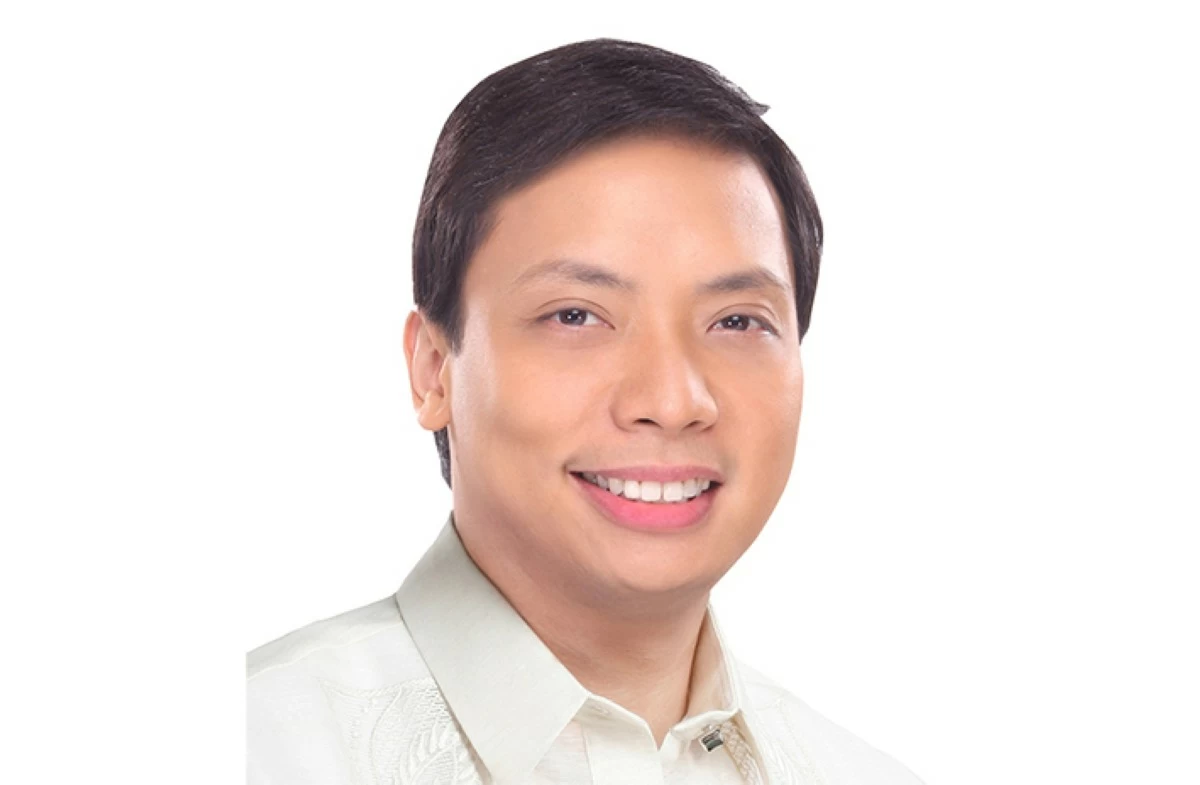
By Dr. Jun Ynares

Published Apr 8, 2026 12:05 am | Updated Apr 7, 2026 06:12 pm
THE VIEW FROM RIZAL
Tomorrow, the 9th of April, the nation will celebrate “Araw ng Kagitingan.”
The root word of “Kagitingan” is “giting,” and is translated in English as “bravery, valor, courage, or heroism.” By way of review, the date officially became the nationwide celebration of the Day of Valor in 1987, when the late President Cory Aquino signed Executive Order 203, changing the celebration's erstwhile label from “Bataan Day.”
While this may not be a loudly celebrated day, it is as relevant as ever. After all, our individual and shared “Kagitingan” matters today, especially as the world faces hard times and an uncertain future brought about by recent developments on the global stage.
We recall that the holiday's previous name contained a controversial reference to the historic “Fall of Bataan.” When it was still referred to by that name, a growing number of Filipinos of the post-war era started asking this question:
“Why do we, Filipinos, celebrate a ‘Fall’?”
Several years ago, I recall asking our elders in Rizal province about the former reference to the April 9 celebration. They offered a profound insight. They said that what was then referred to as the “Fall of Bataan” was actually a “win moment,” a “glorious occasion,” and a time to celebrate the “uncommon valor” of the Filipino soldier and of every Filipino.
Once again, let me share their perspective.
According to them, what Filipinos did in the events leading up to that infamous “Fall” was important to the peace-loving world.
They told us that Bataan – that peninsula west of Metro Manila – was the designated site of a “last stand” against invading forces. They said that at that point in the Second World War, the Philippines was the last country in the Far East left standing. The military forces made up of Filipinos and Americans were to give their all in a bid to delay the total victory of the invaders.
They were able to do so with just a meager supply of ammunition, little food, and water. They had to rely on pure courage and on the promise of an American general that he “shall return.”
The gallant stand in Bataan made by what was then known as the USAFFE (United States Armed Forces in the Far East) resulted in the deaths of thousands and the eventual surrender of some 80,000 wounded, sick, famished Filipinos soldiers who eventually joined the equally infamous “Death March” from Mariveles, Bataan to San Fernando, Pampanga.
Historians say that by holding off the enemy for three months, the 120,000 Filipino and American troops significantly delayed the enemy's advance. This was the last part of the region still resisting. By doing so, they diminished the adversary’s capability to approach and attack the almost indefensible northern coast of Australia.
Yes. The Fall of Bataan prevented the Fall of Australia and a total defeat of the Allied forces.
Our elders also point out that the defense of Bataan was a showcase of the Filipino’s sterling character. They say we have an enormous capacity for pain and suffering. We are a people who do not allow setbacks to bring us down and keep us on the ground. We do not surrender. We just keep fighting.
Today, this quality is often called the “Adversity Quotient,” or AQ, which applies to modern challenges as much as it did in the past.
AQ is a score, much like IQ and EQ. The AQ score helps one understand their ability to cope with life’s adversities. It shows how resilient one is. “Resilience” is what others call the “bounce back” power.
The Filipinos who stood up against superior forces displayed “Kagitingan.”
They showed the world they are not daunted by adversity. Scarcity of resources does not dictate how they fight the battle. They always rise after a brief, even if nasty, fall.
We do not know how long the present “adversity” will last. The powers that have triggered the latest round of global conflict have yet to tell the rest of the collateral-damaged world what the endgame is. Meanwhile, we will have to rely on our remarkable Adversity Quotient. We will have to adjust, innovate, and be creative to make it through these difficult times – just as our forebears did during the War.
We join the rest of the nation in remembering and saluting the uncommon valor of the Filipino soldiers who fought in Bataan in 1942. We also honor every Filipino fighting their own battle today.
(The author is a Doctor of Medicine, an entrepreneur and the mayor of Antipolo City, former Rizal governor, and DENR assistant secretary, LLDA general manager. Email: antipolocitygov@gmail.com)

Wednesday, May 24, 2023

The forgotten epidemic

BY DR. JUN YNARES


THE VIEW FROM RIZAL

What the numbers say

A few days ago, Antipolo City hosted a relatively small gathering of highly-committed organizations helping people cope with the scourge of HIV/AIDS.

The event was called the QUILTS Awards 2023. QUILTS stands for “Quality Uptakes and Improvements in Lifesaving Treatment Services.” The awards recognized the people and organizations who have provided outstanding care and treatment to people living with what used to be the world’s most dreaded virus.

At the helm of the event was EPIC Philippines, the local arm of the international project called HIV Epidemic Control (EPIC). The project is a collaboration of three United States-based agencies: USAID, the President’s Emergency Plan for AIDS Relief (PEPFAR) and Family Health International (FHI) 360, a non-profit organization focused on family planning and reproductive health.

The event was in line with the global observation of the International AIDS Candlelight Memorial which took place last Sunday. The occasion was a reminder to us that the Human Immunodeficiency Virus is still in our midst, that people are still getting infected by it, and that people are still dying from acquired immunodeficiency syndrome.

The reminder is crucial. Just like what is happening to our Covid-19 situation, we see the world sliding into a state of indifference and complacency regarding HIV/AIDS. As we have mentioned several times in past articles, complacency is a “health risk.” When we start to adopt the “I do not care anymore” mindset, we expose ourselves to danger, we let our guards down and we forget the established health protocols that helped us survive the peak of the pandemic.

Just like the Covid-19 virus, HIV is still here, stalking us and posing a serious danger to people’s lives. In the first three months of this year, the Department of Health logged a total of nearly 5,000 cases of HIV infection. During that period, more than 149 persons died of AIDS. That is more than the number of people who died from Covid-19 during the same period.

The situation in our country must be taken seriously. A recent article published by the Switzerland-based Multidisciplinary Digital Publishing Institute (MDPI) and which was written by two Filipino researchers said that the Philippines has “gained notoriety as the country with the fastest growing HIV epidemic in the Western Pacific region.”

The article pointed out that, before 2010, the growth of the epidemic in the country was described as “low and slow.”

That is no longer true. According to the research of the authors Louiemar A. Gangcuangco and Patrick C. Eustaquio, there has been a 114 percent increase in the daily incidence of HIV infection from 2012 to 2023. More, while the global trend is downward, the trend in our country is upward.

The Department of Health (DOH) has sounded the alarm. According to the agency, the number of HIV/AIDS cases in the country could reach a total of 364,000 by the year 2030. What is even more worrisome is that the number in the Philippines “is not showing decline” despite the 30 percent average decrease worldwide. Based on the projection, nearly half of the 364,000 who could be infected could be young people, ages 15 to 24.

The good news is that community-based efforts to combat the disease and help the victims continue to flourish. Collaboration is stronger than ever among international and local agencies, non-governmental organizations like EPIC Philippines, and its partners.

Local governments are doing their part. Republic Act 8504 mandates them to take strong measures to curb the spread of the disease in their respective jurisdictions. They set aside budgets and implement programs to prevent which addresses some of the root causes of this scourge, like poverty, prostitution, ignorance, and drug abuse.

Also, part of the effort are corporations that set aside funds from their corporate social responsibility programs for public education and testing for HIV.

At the QUILTS Awards ceremony, we underscored that the battle against HIV/AIDS requires the involvement of the entire community. It requires the same from individuals. We can all help.

Here are some of the ways we can. The website HIV.gov offers some tips on what we can do when a friend confides to us that he or she is infected with the virus,

First, is to “acknowledge.” Thank them for trusting you with very private health information.

Then, “ask.” The first question is “What can I do to help you.” The Third is, “reassure.” Show them with actions and words that the HIV status does not change anything in your friendship.

Lastly, “learn.” We must all continue to educate ourselves about HIV/AIDS. The article points out that today, people with HIV who take HIV medicine as prescribed can get and keep an undetectable viral load, stay healthy, and will not transmit HIV to their sexual partners. Don’t make assumptions and look to your friend for guidance.

HIV/AIDS epidemic and the more recent Covid-19 pandemic show that surviving in this world is something we cannot do alone. We are part of the human race which constantly faces risks.

We have to do our share to help this race survive and save itself from extinction.

(For feedback, please email it to antipolocitygov@gmail.com or send it to Block 6 Lot 10 Sta. Barbara 1 cor. Bradley St., Mission Hills Subd., Brgy. San Roque, Antipolo City, Rizal.)