You plan to move to the Philippines? Wollen Sie auf den Philippinen leben?

There are REALLY TONS of websites telling us how, why, maybe why not and when you'll be able to move to the Philippines. I only love to tell and explain some things "between the lines". Enjoy reading, be informed, have fun and be entertained too!

Ja, es gibt tonnenweise Webseiten, die Ihnen sagen wie, warum, vielleicht warum nicht und wann Sie am besten auf die Philippinen auswandern könnten. Ich möchte Ihnen in Zukunft "zwischen den Zeilen" einige zusätzlichen Dinge berichten und erzählen. Viel Spass beim Lesen und Gute Unterhaltung!


Visitors of germanexpatinthephilippines/Besucher dieser Webseite.Ich liebe meine Flaggensammlung!

free counters

Total Pageviews

Showing posts with label Droughts. Show all posts

Wednesday, June 17, 2026

El Nino is here and scientists fear it'll be big, bad and costly with heat, floods, droughts, fires


Published Jun 16, 2026 07:36 am | Updated Jun 16, 2026 01:26 pm
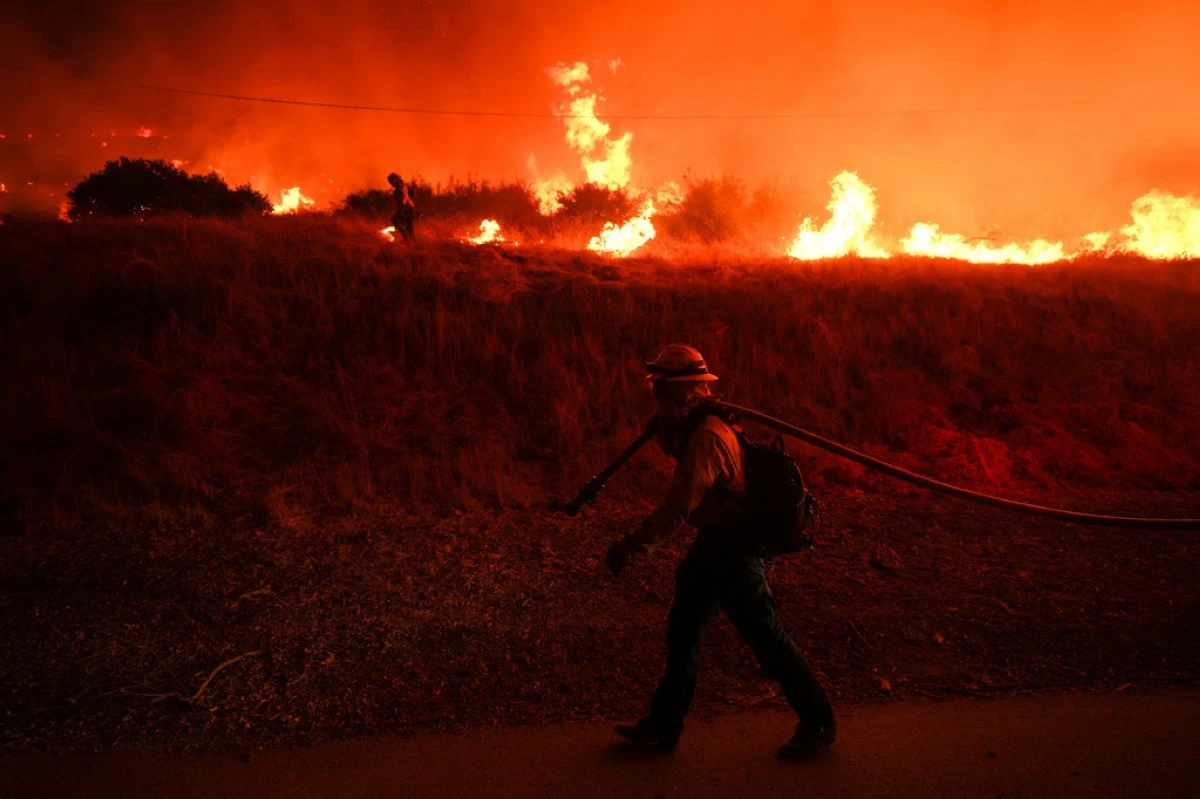
A firefighter monitors flames caused by the Hughes Fire along Castaic Lake in Castaic, Calif., Jan. 22, 2025. (AP Photo/Jae C. Hong, File)
WASHINGTON (AP) — El Nino, Nature's chaotic climate agent, has formed in a warmed-up Pacific Ocean and is expected to grow to historic strength, meteorologists announced Thursday.
Experts said the El Nino, a natural warming cycle, should further heat a globe already warming from fossil fuel pollution and will likely turbocharge extreme weather across the planet. Meteorologists forecast it will rival — or exceed — a record El Nino that began in 1997 and helped trigger billions of dollars in damage from heat waves, floods, droughts, tornadoes and wildfires.
The U.S. National Oceanic and Atmospheric Administration officially confirmed the existence of the El Nino, which is a warming of the Pacific near the equator that affects weather patterns across the globe. NOAA's announcement said there's a 63% chance that the El Nino will get so intense this late fall and early winter that it “would rank among the largest El Nino events in the historical record going back to 1950.”
The warm, deep waters of an El Nino affect weather patterns by bringing “a lot of extra heat to the surface, fueling a lot of extreme events for a lot of places around the world,” said Clark University climate scientist Abby Frazier.
She said, especially in the Pacific, “it can get dire very quickly.”
United Nations Secretary-General António Guterres described El Nino as an “urgent climate warning.”
“El Nino conditions will pour fuel on the fire of a warming world,” Guterres said in a video message.
El Nino's impacts spawn winners and losers
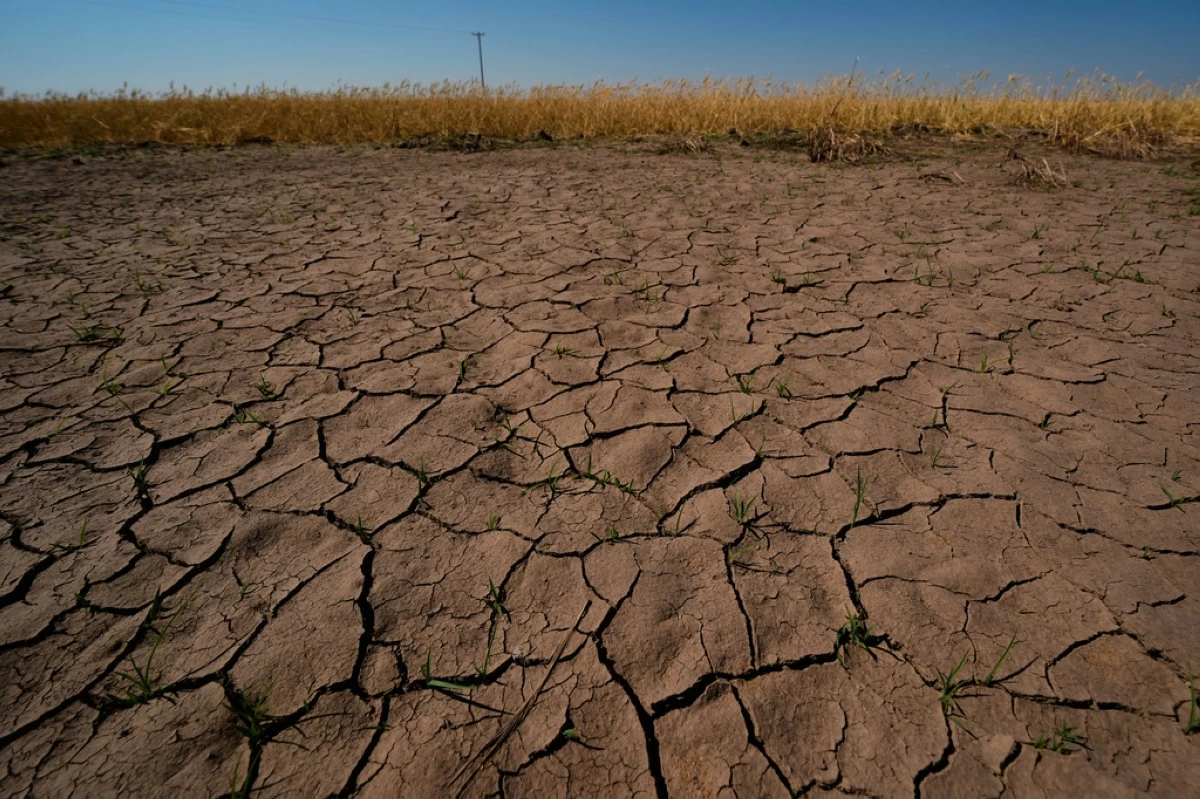
Drought-stressed wheat plants stand adjacent to parched ground in a field near Macksville, Kan., May 16, 2026. (AP Photo/Charlie Riedel, File)
The weather pattern's effects vary by region. El Nino often dampens — but doesn't eliminate — Atlantic hurricane season activity, but increases it in the Pacific. So while the U.S. East and Gulf coasts may get a break, Hawaii and other islands are more in danger, Frazier said.
The drought-stricken Middle East could benefit, climate scientists said. Other places are looking at more danger. Parts of western South America — where the first El Ninos were noticed decades ago — often get heavy rain and floods, along with an extra warm summer. India faces more intense heat waves, while drought, wildfires and heat threaten Australia.
Northeastern Africa is likely going to get weather whiplash from intense drought to dangerously heavy rains, said Columbia University climate scientist and El Nino expert Muhammad Azhar Ehsan.
In the U.S., El Ninos can cause more intense storms with heavier rainfall in the South, but they also tend to generally benefit the U.S. agriculture industry, said Jon Gottschalck, operational branch chief at NOAA's Climate Prediction Center.
Michael Ferrari, meteorologist and head of research at the investment research firm Moby, said conditions for grains and seed, especially soybeans, look favorable in 18 major growing states, but are more mixed when it comes to dairy and cattle.
The northern Rockies and Southwest — where there’s an “off the charts” snow drought — could get some strong summer rains, Gottschalck said. The biggest effect in the U.S. is often in the winter, when the south can get wetter and the Pacific Northwest warmer and drier.
But overall, temperatures raised by the weather pattern can dampen American economic growth, said Stanford climate economist Marshall Burke. Several climate scientists forecast that 2027 will be the hottest year on record because of lagging effects of this El Nino, which is expected to peak in the fall or winter.
“We have pretty clear evidence that the U.S. economy grows more slowly when temps are above normal,” Burke said.
Strong early signs

A person uses a fan during a heat advisory in the Brooklyn borough of New York, May 19, 2026. (AP Photo/Adam Gray, File)
The weather extremes caused by an El Nino also depend on when it develops.
Usually El Ninos form in the summer, peak in the late fall or early winter, and peter out the next spring, scientists said.
However, Ehsan's team forecasts that this El Nino will peak a month or two earlier based on strong early signs from recent weeks. Princeton University climate scientist Gabriel Vecchi said large El Ninos like these also tend to last longer.
The early indications — including warmer water pushing toward the surface of the Pacific — have been so strong and noticeable that forecasters have all been predicting the same ultra strong El Nino, Vecchi said, adding that El Nino forecasts often are all over the place at this time of year.
Scientists predict stronger El Ninos as the world warms from the burning of coal, oil and gas, Frazier and others said. But she said it is too early to say if this El Nino is part of that.
Even before it officially formed, this El Nino has gotten nicknames ranging from “super” to “Godzilla.”
“Instead of scared, we can ask people to be prepared,” Columbia's Ehsan said

Wednesday, August 10, 2022

Drought, floods linked to infectious diseases


By Associated Press


Researchers looked through the medical literature of established cases of illnesses and found that 218 out of the known 375 human infectious diseases, or 58 percent, seemed to be made worse by one of 10 types of extreme weather connected to climate change, according to a study in Monday's journal Nature Climate Change.


The study mapped out 1,006 pathways from the climate hazards to sick people. In some cases, downpours and flooding sicken people through disease-carrying mosquitos, rats and deer. There are warming oceans and heat waves that taint seafood and other things we eat and droughts that bring bats carrying viral infections to people.


Doctors, going back to Hippocrates, have long connected disease to weather, but this study shows how widespread the influence of climate is on human health.


"If climate is changing, the risk of these diseases are changing," said study co-author Dr. Jonathan Patz, director of the Global Health Institute at the University of Wisconsin-Madison.


Doctors, such as Patz, said they need to think of the diseases as symptoms of a sick Earth.


"The findings of this study are terrifying and illustrate well the enormous consequences of climate change on human pathogens," said Dr. Carlos del Rio, an Emory University infectious disease specialist, who was not part of the study.


"Those of us in infectious diseases and microbiology need to make climate change one of our priorities, and we need to all work together to prevent what will be without doubt a catastrophe as a result of climate change."


In addition to looking at infectious diseases, the researchers expanded their search to look at all types of human sicknesses, including non-infectious illnesses such as asthma, allergies and even animal bites to see how many maladies they could connect to climate hazards in some way, including infectious diseases.


They found a total of 286 unique sicknesses and of those 223 of them seemed to be worsened by climate hazards, nine were diminished by climate hazards and 54 had cases of both aggravated and minimized, the study found.


The new study doesn't do the calculations to attribute specific disease changes, odds or magnitude to climate change, but finds cases where extreme weather was a likely factor among many.


Study lead author Camilo Mora, a climate data analyst at the University of Hawaii, said what is important to note is that the study isn't about predicting future cases.


"There is no speculation here whatsoever," Mora said. "These are things that have already happened." One example Mora knows firsthand.


About five years ago, Mora's home in rural Colombia was flooded — for the first time in his memory water was in his living room, creating an ideal breeding ground for mosquitoes — and Mora contracted Chikungunya, a nasty virus spread by mosquito bites. And even though he survived, he still feels joint pain years later.


Sometimes climate change acts in odd ways. Mora includes the 2016 case in Siberia when a decades-old reindeer carcass, dead from anthrax, was unearthed when the permafrost thawed from warming. A child touched it, got anthrax and started an outbreak.


Mora originally wanted to search medical cases to see how Covid-19 intersected with climate hazards, if at all. He found cases where extreme weather both exacerbated and diminished chances of Covid-19. In some cases, extreme heat in poor areas had people congregate together to cool off and get exposed to the disease, but in other situations, heavy downpours reduced Covid spread because people stayed home and indoors, away from others.


Longtime climate and public health expert Kristie Ebi at the University of Washington cautioned that she had concerns with how the conclusions were drawn and some of the methods in the study.


It is an established fact that the burning of coal, oil and natural gas has led to more frequent and intense extreme weather, and research has shown that weather patterns are associated with many health issues, she said.


"However, correlation is not causation," Ebi said in an email. "The authors did not discuss the extent to which the climate hazards reviewed changed over the time period of the study and the extent to which any changes have been attributed to climate change."


But Dr. Aaron Bernstein, interim director of the Center for Climate, Health and the Global Environment at Harvard School of Public Health, Emory's del Rio and three other outside experts said the study is a good warning about climate and health for now and the future. Especially as global warming and habitat loss push animals and their diseases closer to humans, Bernstein said.


"This study underscores how climate change may load the dice to favor unwelcome infectious surprises," Bernstein said in an email. "But of course it only reports on what we already know and what's yet unknown about pathogens may be yet more compelling about how preventing further climate change may prevent future disasters like Covid-19."