You plan to move to the Philippines? Wollen Sie auf den Philippinen leben?

There are REALLY TONS of websites telling us how, why, maybe why not and when you'll be able to move to the Philippines. I only love to tell and explain some things "between the lines". Enjoy reading, be informed, have fun and be entertained too!

Ja, es gibt tonnenweise Webseiten, die Ihnen sagen wie, warum, vielleicht warum nicht und wann Sie am besten auf die Philippinen auswandern könnten. Ich möchte Ihnen in Zukunft "zwischen den Zeilen" einige zusätzlichen Dinge berichten und erzählen. Viel Spass beim Lesen und Gute Unterhaltung!


Visitors of germanexpatinthephilippines/Besucher dieser Webseite.Ich liebe meine Flaggensammlung!

free counters

Total Pageviews


Monday, October 6, 2025

Years I lost in the haze


It was in 2021 when I first learned how to write.


My mama prepared a table in our small garden, one with Christmas lights and a tiny bahay kubo decoration. I would sit there with my old, heavy laptop—all its keys creating sounds similar to that of a typewriter whenever I am immersed in my campus journalistic work. It was still at the height of the pandemic, when classes were largely remote and press endeavors had to be done online. I would sleep at six in the evening, wake up at four just before sunrise, make myself a mug of instant coffee, and listen to Chopin or Mozart or maybe Beethoven—it was my ritual for writing. I was familiar with the scent of midnight and the sight of daylight’s first fall on the ground.


Four years have passed since then. I am in college today at Los Baños, and I rarely come home to Rizal. The very few times I visit, this house always changes. The table I used to have in our small garden is no longer here. My office is now on a newly constructed balcony, where I can easily see the vast azure. The old chessboard set my dad gave me on my 14th birthday, with all the letters and paintings from old lovers inside it, is no longer under my bed in my room. The mountain in Montalban looks a little bit taller, complementing the sunrise even better. My table is no longer the table that seemed like it could break at the slightest motion, and my laptop does not sound like an ancient typewriter anymore.


Like countless iskolar ng bayan who travelled from their distant provinces to Laguna for college, I entered the university with courage. There was this feeling of certainty that I could just lose and find myself—be homesick, be hurt, drink in Puesto at night, jog at Pili Drive in the morning, join mobilizations in front of Oblation or at Carabao Park. I felt this sensation, this pride that made me think I could mold my world into what I want it to be at the University of the Philippines. “Go on a journey,” I would imagine Mozart telling me from the skies, for a writer whose inspirations still partly root from classical music.


What I failed to realize is that parts of me had already been lost long before university. The were years I lost in the haze when everything broke, dreams and friendships and love.


Long years inside the pandemic changed me. I learned to pretend I was more mature. My hair grew so much longer, and I became more conscious about my appearance. I fell in love, got broken, then fell in love again in April. I wrote poems and unfinished anthologies, then got broken again. I met the music of The Ridleys, I listened to Aphrodite and Germany, and Rome. I believed in love.


I miss writing poetry. I miss drafting editorials on issues that made me look smart when published in our student paper. I miss exchanging emails that make my heart flutter. I miss walking around campus, waiting for a jeep near Katipunan, navigating the roads of Anonas and Molave—things in my past life that I, in retrospect, took for granted and eventually lost.Maybe this is just a testament of what someone once told me, “Tomorrow is not certain, and it’s a dreadful thought to wake up without today’s warmth.” I miss the café I used to stay at, which had already closed three years ago.


There is this uncomfortable feeling of grief for the things and people that I loved. I would often ask myself, what about the essays and poems and prose I wrote for those who would no longer care to read them? What of the words left unsaid and the screams still echoing? I could have written more. Reminiscing now, I see how I was so young three years ago before the pandemic, and I was so disillusioned when suddenly times changed, and I was older—I had to act older. This feeling has recurred lately. I would initially tell myself, “This discomfort is temporary.” Things have no permanence, and I cannot cling to stillness.


But maybe, parts of me still willingly let themselves get stuck in these recollections, despite the initial preconception, because they are reminders of a life I once lived.


I remember once reading an article that said, “Home need not be a place.” Indeed, home, now, feels more metaphorical than physical. That little boy—who is familiar with the scent of midnight and the sight of daylight’s first break, who loves to write on the table his mama prepared for him—does not know this.


Perhaps this is why, since childhood, I have always been fond of constructing sentences that imply my hopes for events that are no longer likely to happen, that are just absurd and outright impossible.I want to visit and relive the past again.I want to guide that little boy today, to show him the reality of constant shifts and changes, of heartbreaks and years of broken things.

Saturday, October 4, 2025

Is drinking water right before sleeping good or bad?


 · 

Horrible idea if you enjoy waking up to pee at 2 AM.

Your kidneys don't shut down at night - they simply continue working on whatever you fill your system with. Drink plenty of water before you sleep and you'll get a full bladder when you wake up, spoiling your rest.

Sleep takes the prize here. Fragmented sleep disrupts everything - hormones, immune system, mood, metabolism. Not even worth it to guzzle water just before sleeping.

Skip fluid intake 2-3 hours before sleeping if you want to sleep undisturbed throughout the night. If thirsty, take a sip or two, but don't down an entire glass.

If you're always thirsty at night, you're dehydrated during the day. Fix it by drinking more water in the morning and early afternoon, not at night.

Exception: You could be ill, hung up, or on meds that dry you out. Then a little might be okay. But still look forward to waking up and urinating.

A few people can drink water late and sleep just fine - lucky bastards with iron bladders. The rest of us aren't so lucky.

Your body may survive for 8 hours without water. It can't survive on chronic sleep disturbance.

Prioritize sleep.

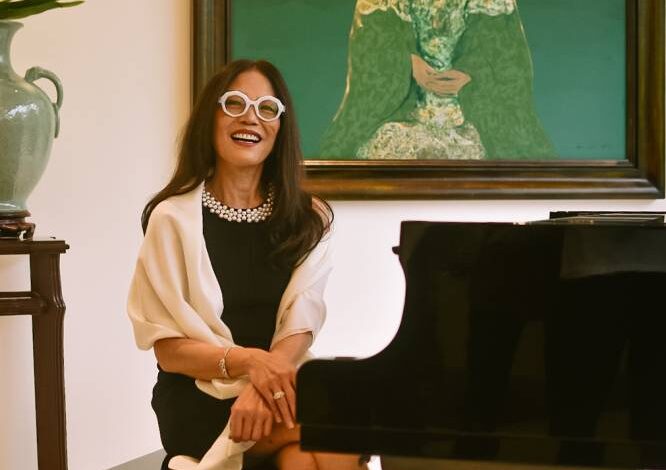
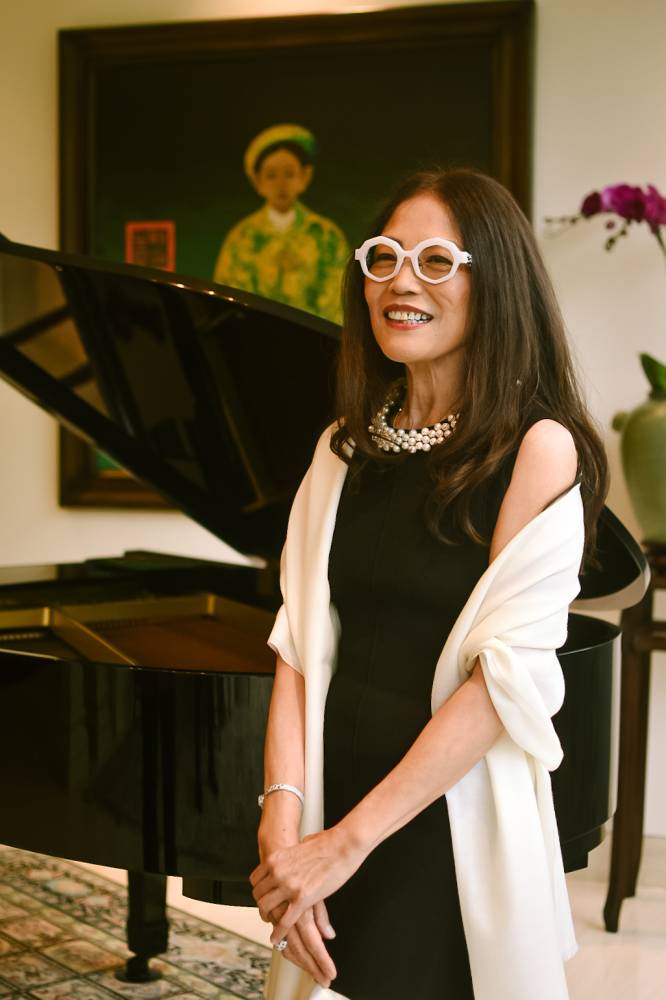
10 lessons to learn from Filipino global pianist Cecile Licad


I’d like to play on the top of the rice terraces,” Cecile Licad exclaims in a room full of art and culture writers, seemingly in jest, but completely earnest. It’s the kind of quote that captures her at once: ground-breaking, fearless, and rooted in home even as her career has taken her across the world.

Licad has been called “a pianist’s pianist,” a phrase that captures both her technical brilliance and the uncompromising seriousness of her decades-long practice as one of the most celebrated pianists of her generation.

“Like a missionary”

She was a young child—about seven or eight—when she first appeared with an orchestra in Manila, and barely out of her teens when she became the first Filipino to win the Leventritt Gold Medal, an award that had once vaulted Van Cliburn to international fame.

In the decades since, she has built a career less defined by celebrity than by a rare intensity—one that prizes substance and discipline over glossy display. At Carnegie Hall last winter, critics praised her playing as “less about pianistic display than about ideas and meaning,” a line that could serve as shorthand for her life as one of the Philippines’ most iconic concert pianists.

Yet to think of Licad solely in terms of accolades is to miss her complexity and nuance as an artist and a human being. She is a perfectionist who still delights in play, a relentless worker who has learned—at her son Otavio’s urging—to “chill out.” That balance between rigor and release, seriousness and humor, is part of what makes her artistry and persona so distinctive.

It also explains her sense of mission. She describes herself as someone who is “like a missionary” when performing in the provinces of her homeland, where she brings music to audiences who may be hearing Chopin or Saint-Saëns for the first time.

For her, performance is not only a showcase of a pianist’s artistry and virtuosity but also a potent space for shared cultural experiences to flourish.

Cecile Licad

A strong fighting spirit

Asked about the secret to her longevity, Licad is passionate and firm: It is her “fighting spirit” that insists on carrying on, even when her body gives up on her and her mind resists. That stubborn energy, she suggests, is what has allowed her to thrive despite the punishing demands of a pianist’s life. “Even if my hands failed me, I go on,” Licad was quick to share.

For all the international acclaim, Licad holds fast to the imprint of home. “I’m Filipino. That’s how I interpret the music,” she says. It is both a matter of roots and of ethos: an openness to transformation, a refusal to abandon language, taste, and community, and a belief that even the most difficult or unfamiliar piece can be made one’s own.

That sense of rootedness came into sharp focus at a recent gathering with art and culture writers. Anton Tantoco Huang—the eldest son of the late Zenaida “Nedy” Tantoco, retail magnate, patron of the arts, and longtime supporter of Licad—posed a question: What had been her most memorable performance in the Philippines?

Licad didn’t cite a venue or a concert. Instead, she paid tribute to Nedy.

“The last years, it was with your mom, definitely,” she says. “She was always encouraging me. Whenever I fell silent, she would say, ‘You’d better perform.’ She reminded me, ‘You cannot stop for a long time. You have to keep on playing here.’ Your mom was a real pusher—in the best sense.”

What follows is Licad in her own words—candid, unsparing, humorous, and wry—reflecting on a lifetime at the piano and the stubborn vitality that sustains her. Here are 10 life and leadership lessons the next generation can take from her story.

1. Find joy in building new relationships

“I’d love to meet people now. I’m not like when I was a kid. It’s just more fun, you know, life is short. I’m interested in many different personalities of people because I respect everybody’s colorful personalities. Everybody has their special thing, you know? Something I used to not know because I was always just stuck at the piano.”

2. Balance excellence and enjoyment

“I don’t practice just for the sake of working scales, like a good student. I practice because either I want to make this passage clearer to the listeners or, first of all, [it’s for] me. I like to enjoy myself.”

3. Make practice your form of mental preparation

“[I mentally prepare myself] by working all the time. That’s what I do. I practice every day.”

4. Grab the opportunity to learn difficult things

“[Part of my repertoire is] the Chopin concerto I played when I was 11 years old. That’s when I first left the country, and I don’t know if I should mention it, but I remember [that] they had auditions for the Manila Symphony, and one jury member said, ‘Why [did] the teacher teach her that [piece]? It’s like putting red lipstick on a little girl.’

But you know what? I’m so glad that I studied it. Once you can learn really difficult things, [do it]! Because now it’s like almost part of my body, you know, the [difficult] pieces.”

5. There is power in “owning” your work

“Every piece that I present to the public, I have to enjoy it even if I [initially] didn’t. Even if I don’t like a piece [in the beginning], I pretend that it’s the most incredible piece, and then, I can transform it. I don’t know [what my least favorite piece is] yet because I’ve made them all into ‘my pieces.’”

SEE ALSO

6. Embrace your Filipino identity

“I’m Filipino. That’s how I interpret the music. And maybe that’s what makes it different because of where I’m from. It’s how I transmit music [that makes my practice as a Filipino pianist].

I never forgot Tagalog, and I’ve been in America for a long time. You know, some people would travel, and it’s like, ‘Oh, they just speak English and don’t understand Tagalog anymore.’”

7. Fighting spirit produces staying power

“It is called ‘fighting spirit.’ Because during times when I am down, I always know how to go back up. That’s my secret to longevity. I am not a loser.”

8. Even “unusual” music can expand your soul

“[Even if] I’ve been recording ‘unusual’ stuff, it’s still classical. It’s like going to the flea market and finding gems [that are no longer being played].

If you’re not very good, you’re not going to manage to make it sound good. I mean, I sound arrogant, but that’s the way it is. It’s a lot of work.

[Like] American Nocturnes. It’s just beautiful stuff that you’re not used to hearing. But people should train themselves to hear other things because it opens their minds, souls.”

9. Harness chaos to learn focus

“I was trained when I was seven years old. My mother used to [tell] my brothers [to purposely be] so noisy while I was practicing. She said, ‘Bother her! You know, the more you bother her, the better she will be!’”

10. Tap into the power of intermittent fasting

“I’ve always done intermittent fasting. One time, I actually didn’t eat the whole day, and [that was when] I played the best.

I played the piano concerto in Germany, and I was so pissed at someone. Somebody hurt me personally, it was something really bad, and it was one of the best concerts I did… without eating anything because I couldn’t eat. And I thought I would be really weak. It’s the way I am. But people are different.”

Friday, October 3, 2025

A look into the luminous world of Katrina Cuenca


Abstract floral art shines in 'Elysian'


  • Katrina Cuenca's 'Elysian' is a glimpse into an artist's personal paradise, a luminous world she built for herself and now, for us.

Katrina Cuenca’s art, with its graceful, “petal-like abstract figurations,” is a celebration of light and happiness. Yet, as her latest solo exhibit, “Elysian,” opens at Art Lounge Manila, we discover that the seemingly tranquil works are born from a deeply personal journey of healing and resilience.
MEET THE ARTIST Katrina Cuenca
Katrina revealed that her signature style, characterized by “very flowy figures” and bright palettes, began as a way to process grief after the passing of her mother. “I found peace in painting how I wanted to feel,” she shares. “That has been the foundation of my art since it was my tribute to her.” This foundation gives her work a powerful underlying essence that has remained constant even as her style has evolved.
'BRAZEN BLOOMS'  36 inches diameter, oil and purple leaf on canvas, 2025
'BRAZEN BLOOMS' 36 inches diameter, oil and purple leaf on canvas, 2025
Her paintings are like portals to a world both remembered and imagined anew. This idea aligns with her mission as an artist. “The intention behind my work is always to give its viewers a feeling of peace and happiness,” she explains. For her, creating happy images is a deliberate act, “a conscious choice to turn my back on all the darkness and negativity from my past, with the goal of protecting my peace moving forward.” This proactive approach to finding and sharing tranquility is what makes her art so compelling.
'CHORUS OF PETALS AND PLAY' 36x48 inches, oil and gold leaf on canvas, 2025
For “Elysian,” Katrina has taken her materials to new heights. The exhibit’s works shimmer with light, partly due to her experiment with glass. “It is a very elegant and interesting material to work with,” she says, noting that it requires “so much patience and respect for the process. This new medium to her works added a layer of luminosity.
'ELYSIAN BLOOMS'  48x48 inches,  oil and purple  leaf on Canvas, 2025
'ELYSIAN BLOOMS' 48x48 inches, oil and purple leaf on Canvas, 2025
'WHISPERS OF SERENITY', 48x48 inches, oil and gold leaf on canvas, 2025
A journey of grit and creativity
As a self-taught artist, Katrina’s path to success was not without its challenges. She openly admits that her lack of formal art education was a major insecurity. But this initial disadvantage became her greatest asset. “I had to get creative and create the opportunity for myself instead of waiting for one to come up,” she recalls.
'FRACTUS CAELI' 8x7x4.5 inches, glass sculpture, 2025
This resourcefulness, which she calls “the lessons and grit that I earned while paying my dues,” led to some very unconventional ventures. In 2012, she even paid a gallery ₱3,500 just to show one of her paintings at a major art fair. This determination culminated in a successful group exhibit she and her husband organized in 2016, which included 40 artists and was held at a condominium. “It was my ticket,” she says.
'LUMEN CAPTUM' 10.5x10x5 inches, glass sculpture, 2025
Katrina’s creative process reflects her spontaneous spirit. She doesn’t follow a strict schedule, as “creativity comes in waves.” Instead, she keeps multiple notebooks for ideas and has cabinets filled with various materials, from beads to crystals, that she can play with. “I need days where I do something outside of what I normally make,” she says.
'WINGED EMBRACE' 13x9.5x11 inches, copper sculpture, 2025
Katrina Cuenca’s “Elysian” exhibit offers more than just beautiful paintings. It is a glimpse into an artist’s personal paradise, a luminous world she built for herself and now, for us. It is on view at Art Lounge Manila - Molito Lifestyle Center until Sept. 29, 2025.

Whoever listens to you...


By Manila Bulletin

Published Oct 3, 2025 12:05 am


The 72 other disciples—a group other than the Twelve (Apostles)—are sent as Jesus’ “ambassadors.”

They proclaim Jesus’ own message and are empowered by Jesus to teach, to cast out demons, to announce peace to whatever house they enter.

Their message is so important that it spells judgment on the receivers: to welcome it is to experience God’s salvation; to reject spells condemnation, and they will be treated as outsiders.

There is no going around the bush when it comes to the Gospel; there are no “fence-sitters” around it, persons who remain neutral or non-committed on the matter of salvation.

One is either “hot” and accept it gladly, or “cold,” not being interested.

Jesus says, “Whoever is not with me is against me, and whoever does not gather with me scatters” (Mt 12:30). Whoever does not help Jesus in his mission to gather citizens for the Kingdom of heaven is guilty of scattering them, and stands against the Holy Spirit. Whoever is not inside the boat of the Church that sails through history has to swim on his own to his own peril.

Responsorial Psalm • Ps 79

“For the glory of your name, O Lord, deliver us.”

Gospel • Luke 10:13-16

Jesus said to them, “Woe to you, Chorazin! Woe to you, Bethsaida!

For if the mighty deeds done in your midst had been done in Tyre and Sidon, they would long ago have repented, sitting in sackcloth and ashes. But it will be more tolerable for Tyre and Sidon at the judgment than for you.

And as for you, Capernaum, ‘Will you be exalted to heaven? You will go down to the netherworld.’ Whoever listens to you listens to me.

Whoever rejects you rejects me. And whoever rejects me rejects the one who sent me.”

MinDA pushes accelerated Mindanao dev't


 MAGNO (Keith Bacongco)


By Keith Bacongco

Published Oct 2, 2025 04:36 pm

DAVAO CITY – As many provinces in Mindanao have been declared insurgency free, Mindanao Development Authority (MinDA) Secretary Leo Tereso Magno believes that the time is ripe now for the region to accelerate development efforts amid the gains in the peace process.

Speaking before the delegates of the Mindanao Development Forum 2025 here, Magno emphasized that Mindanao is no longer a land of promise but a land of fulfilled promises.

He added that it’s time now for all stakeholders in the region to harmonize all efforts toward inclusive and sustainable growth.

“Peace comes first before development. With most of the provinces in Mindanao now declared insurgency-free, it is time to push forward with growth and transformation. We are no longer a land of promise, but a land of fulfilled promises,” Magno said during the two-day event that culminated on Thursday, Oct. 2.

Bangsamoro Autonomous Region in Muslim Mindanao (BARMM) interim Chief Minister Abdulraof Macacua also echoed Magno’s statement saying that Mindanao is changing.

“In 2025, we are no longer viewed as a conflict zone or a forgotten frontier. We are a growth engine in motion. Major infrastructure corridors are expanding. Inter-island connectivity is being realized. Agriculture and industry are being revitalized,” Macacua said in his speech before the delegates at Dusit Thani Residences here.

Peace and development, he added, are no longer opposites. “They are interdependent pillars of our shared vision for a better future.”

Presidential Adviser on Peace, Reconciliation, and Unity Secretary Carlito G. Galvez Jr. stressed that peace and development are inseparable.

The country’s peace agenda is a cornerstone of its development strategy, said Galvez. “Peace and development are interconnected and mutually reinforcing. We cannot achieve inclusive growth without first addressing conflict, marginalization, and injustice. Peace and development must always move together,” Galvez said.

Over the years, he added, convergence programs have transformed conflict-affected areas through infrastructure, livelihood support, education, health, and social services.

These interventions did not only address the roots of conflict but also unlock the economic potential of communities, Galvez said.

Cotabato province Gov. Emmylou Taliño-Mendoza assured that the provincial government will work closely with MinDA as it carries out programs for Mindanao.

Mendoza suggested that the Regional Development Councils (RDC) should actively take part in MinDA initiatives to ensure connectivity, sustainability, and continuity of every program.

“Together, we can harmonize our efforts and maximize resources to achieve inclusive and lasting development for Mindanao,” she added.

European Union Ambassador to the Philippines Massimo Santoro affirmed EU’s commitment to Mindanao, particularly the Bangsamoro peace process and the island’s long-term development.

“When it comes to the European Union support, it is articulated in three main lines of action,” Santoro said.

“First, our support to the peace process in full coordination with the central government and local authorities, these are the ingredients for peace. Next, normalization, which means supporting former combatants by introducing them to new economic and business opportunities to abandon their past ways.”

Lastly, he said, development, where “we translate normalization into progressive transformation, so BARMM continuously benefits from our assistance.”

According to MinDA, the EU recently committed 27 million euros to the Partnerships for Peace and Development in Mindanao Programme with MinDA, OPAPRU, and BARMM to strengthen resilience, sustain peace gains, and address conflict’s root causes.

This year's Mindanao Development Forum convened thought leaders, development partners, and changemakers to exchange insights and forge solutions for a stronger, more inclusive Mindanao.

The event was in partnership with the EU and the government of Germany, with support from GIZ Philippines, ADB Philippines, World Bank Philippines, and United Nations-Philippines.

Ornella Brianna: Following her mom's footsteps?


By Manila Bulletin Entertainment
Published Oct 2, 2025 12:18 am
Ornella Briana
Ornella Briana
A Swiss-Filipina rising star in Philippine theater, Ornella Brianna, carries the legacy of her artist mom.
She was born in Hong Kong, and her life has always been surrounded by creativity, culture, and performance. The eldest of three siblings, Ornella grew up watching her mother perform in various events in Hong Kong while taking musical and dance classes at her mother’s own studio. She is the daughter of international stage performer Tricia Canilao, who performed Kim in Miss Saigon (Netherlands) and Gigi and Ellen in Miss Saigon (Asia and UK), and in Hong Kong Disneyland.
She confessed, “I really want to play Kim one day! Miss Saigon is one of my favorite musicals, especially when I got the chance to watch it when it was here in the Philippines, so it’d be great to play Kim.”
Making a name for herself.
When her family moved back from Hong Kong in 2016, Ornella took her very first theater workshop with Repertory Philippines, under the mentorship of Ayam Barredo.
There, she stepped into her first leading role as Ariel in The Little Mermaid. It was an experience that sparked her love for musical theater. Just a year later, she appeared in A Christmas Carol with 9Works Theatrical.
Now, as a teenager, she makes her highly anticipated return to musical theater in Alice in Wonderland. It’s a moment that feels like “coming back home” to the stage that shaped her.
As an artist herself, she doesn't care what kind of roles would be assigned to her.
“I don’t really mind what roles I’m assigned, even if I have my preferences. I see every role as an opportunity to learn and grow.
“Being in the ensemble teaches teamwork and discipline, supporting roles allow me to develop character work, and lead roles challenge me to carry the story with confidence.”
For her, even if she’s not being cast, it teaches resilience and humility.
“I truly believe in the saying, ‘there are no small roles, only small actors’ because theater isn’t just about being in the spotlight, it’s about collaboration and storytelling. Every role, big or small, helps me become a stronger and more versatile artist.”
She’s her mom’s daughter, no matter what.
There is no denying that she looks up to her mother.
“One of the most important things my mom always told me was to give 120 percent in everything I do. She explained that if I only give 100 percent and I fall short, I might end up at 80 percent or 90 percent. But if I push for 120 percent, then even on the days I don’t feel at my best, I’ll still be giving 100 percent.”
“Another piece of advice she gave me was that talent isn’t the only thing that matters. What’s just as important is being a good person, because people will only want to work with you if you’re kind and respectful.
“I’ve always admired her as an artist because when she performs, she has the ability to capture the attention of an entire room. I only had the chance to see her perform a handful of times since most of her shows were either before I was born or when I was too young to remember, but the moments I did witness, and especially the times I was able to perform alongside her, showed me how kind, cooperative, and inspiring she is to work with.
“As a mother, she has always been supportive of me and my brothers, doing anything she can to help us achieve our dreams. She is the strongest and most caring person I know, which is why I look up to her so much.”
“At the same time, she has never wanted me to simply become a ‘mini her,’ especially when it comes to performing. She always told me that she tries not to interfere with my voice or acting, so that I wouldn’t just copy her, but instead grow into my own kind of artist.”
She knows what she wants as an individual.
Although Ornella is Tricia’s daughter, Tricia consistently encourages her to be independent.
With her mother’s legacy as inspiration and her own fearless determination as fuel, Ornella Brianna is stepping into her own spotlight — not as someone’s daughter, but as an emerging artist boldly carving her own path.
Ornella is a determined individual who confidently pursues her own path. She is a singer, dancer, and actor, and has also excelled as a competitive ice skater, earning gold medals in the Philippines and internationally.
Her creativity extends to drawing and painting, but she feels most inspired by musical theater.
Besides Kim, she has many dream roles such as Maggie or Connie in A Chorus Line, Sally Bowles in Cabaret, Eurydice in Hadestown, Cinderella or the Baker’s Wife in Into the Woods, Belle in Beauty and the Beast, Elphaba in Wicked, and even Angelica or really any role from Hamilton.
As a teenager who dreams of finding a space in a competitive world of theater, she’s mature enough to provide a sound advice for aspiring theater artists, “Stay open to every opportunity, never stop working hard, and remember that each experience, whether it feels like a success or a setback, can teach you something valuable that will help you grow both as a performer and as a person.”
Catch her in Repertory Philippines’ production as Tweedledee, which opened on Aug. 23 till Dec. 14 at Rep Eastwood Theater.
In the production, she has a partner named Tweedledum; their characters are from the English nursery rhyme "Tweedledee and Tweedledum" and Lewis Carroll's 1871 book Through the Looking-Glass, and What Alice Found There. The names have since become synonymous in Western popular culture slang for any two people whose appearances and actions are identical. (Contributed by Jude Cartalaba)

15 Urlauber wurden bereits angegriffen: Urlaubsperle warnt vor gefährlichem Virus


Strand Bali Indonesien Tollwut ausbreiten Übertragung durch Hunde
Bali gehört zu den indonesischen Regionen mit einer hohen Tollwutinzidenz. Große Impfkampagnen sollen helfen, der Ausbreitung des Virus Herr zu werden. © Anggoro Dendy/Imago

Auf der indonesischen Insel Bali häufen sich Fälle von Tollwut. Verantwortlich für die Verbreitung sind insbesondere streunende Hunde.

Tabanan – Viele Urlauber dürften auf ihren Reisen bereits mit streunenden Katzen oder Hunden Bekanntschaft gemacht haben. Nicht nur recht nahe Urlaubsziele wie Griechenland, Marokko oder Italien beherbergen zahllose streunende Haustiere, auch auf Bali stellen Straßenhunde ein zunehmendes Problem dar.     Am Gunung Batukaru soll nun ein einzelner tollwütiger Hund 15 Touristen auf den beliebten Wanderwegen der Region attackiert haben. Doch es ist laut The Jakarta Post nur einer von vielen: Bali gehört demnach zu den Regionen Indonesiens mit einer hohen Tollwutinzidenz. Auf der beliebten Urlaubsinsel werden täglich durchschnittlich 183 Tierbisse von potenziellen Tollwutüberträgern gemeldet.   

Nach Attacke eines tollwütigen Hundes auf Bali: Experte warnt vor fatalem Touri-Fehlverhalten

Der erschreckende Vorfall ereignete sich am 21. September 2025 im Wandergebiet des Gunung Batukaru im Regierungsbezirk Tabanan, im Süden der Insel, wie unter anderem der britische Independent berichtete. Das aggressive Tier biss die betroffenen Personen hauptsächlich an den Füßen. Alle Opfer erhielten sofort medizinische Behandlung, einschließlich Wundreinigung und Tollwut-Impfungen. Aus gutem Grund.

Laboruntersuchungen bestätigten den Verdacht: Das streunende Tier war mit dem Tollwut-Virus infiziert. Die örtlichen Behörden konnten den Hund einfangen und einschläfern. Als Reaktion auf den Zwischenfall startete die Tabanan Agriculture Agency eine Notfall-Impfkampagne. Gede Eka Parta Ariana, Leiter der Abteilung für Viehzucht und Tiergesundheit, berichtet der Jakarta Post: „Mindestens neun streunende Hunde in der Umgebung wurden gerettet und von einem Team einer lokalen Nichtregierungsorganisation in ein Tierheim gebracht.“   

Rund 500 Hunde – sowohl streunende als auch Haustiere – seien bereits geimpft worden. Die Kampagne konzentriert sich auf „rote Zonen“, die als Hochrisikogebiete für Tollwut-Übertragung identifiziert wurden. „Diese Massenimpfung ist eine gemeinsame Vorsichtsmaßnahme. Das Ziel ist es, die potenzielle Ausbreitung von Tollwut zu verhindern und die Gemeinschaft zu schützen“, erklärte der Experte und warnte sogleich davor, Essensreste am Wegesrand zurückzulassen. Dies hätte zur Zunahme der Streunerpopulation in der Gegend beigetragen.