
By Mat Richter
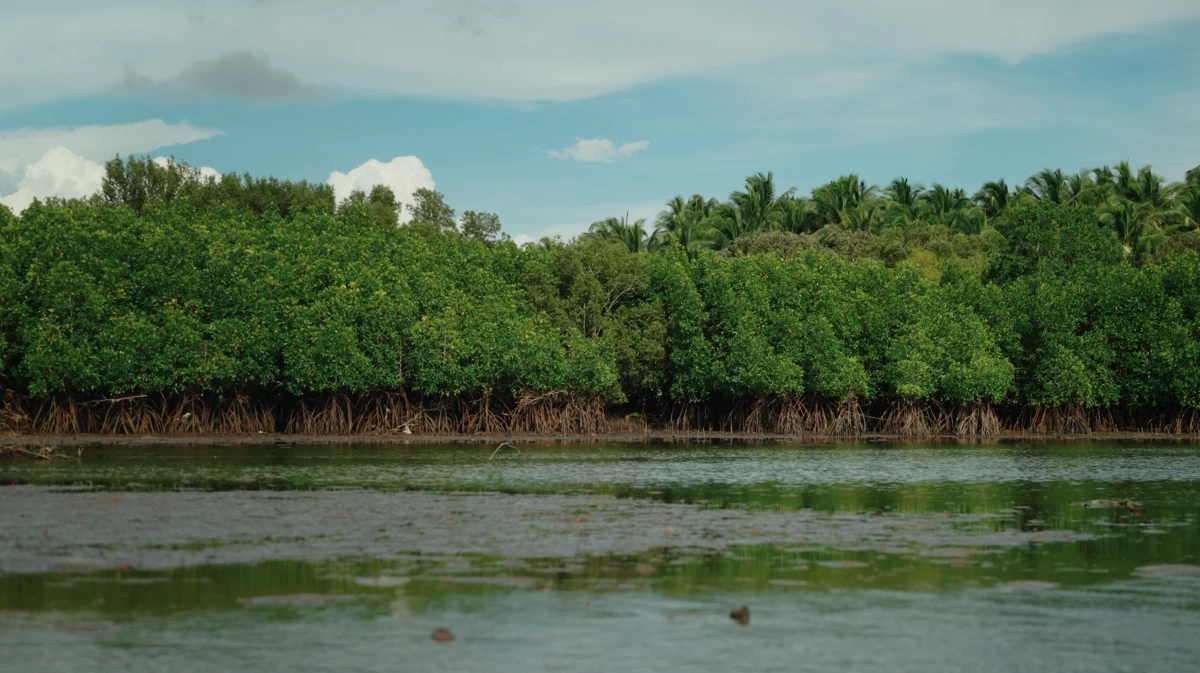
Along the country’s coastlines grows a plant that quietly helps address climate change. Experts continue to stress the importance of planting and conserving mangroves—a call that has only grown louder in recent years.
Mangroves protect shorelines, support biodiversity, and help communities withstand climate-related disasters. Yet they remain among the country’s most threatened ecosystems.
Role of mangrove conservation
The Philippines is among the countries most affected by mangrove loss. Studies estimate that only about 62 percent of the country’s mangrove cover is left compared to levels recorded in the early 1900s.
A study published in the Journal of Sea Research noted that mangroves play a vital role in reducing greenhouse gas emissions caused by human activities such as deforestation, agriculture, and industrial operations. As climate change intensifies, removing carbon dioxide from the atmosphere has become critical.
The paper found that mangroves are major carbon sinks that store vast amounts of carbon in their biomass and soils. When these are destroyed, the carbon storage is disrupted causing large volumes released back into the atmosphere. This accelerates climate change. The study emphasized that protecting and restoring mangrove habitats can play a significant role in mitigating its impacts.
The study added that carbon sequestration—the long-term capture and storage of carbon—is “the most crucial ecosystem function” provided by tropical coastal ecosystems, with mangroves particularly well suited for this role.
Another study found in the same journal underscored the importance of local community participation, including that of Indigenous Peoples, in mangrove conservation efforts. Working alongside ecologists and scientists, communities play an important role in ensuring long-term protection.
“The role of mangrove forests in reducing disaster risk and adapting to climate change is critical not only for biodiversity conservation but for socioeconomic wellbeing as well,” the study said, noting that healthy and dense mangrove forests significantly strengthen the resilience of coastal communities. These efforts also contribute to the United Nations’ Sustainable Development Goals.
Rising temperatures continue to drive flooding, food insecurity, health risks, and biodiversity loss. While the idea of a single plant “saving” humanity may sound exaggerated, mangroves offer a natural defense against many of climate change’s most destructive impacts.
A bill aimed to protect
The proposed National Coastal Greenbelt Bill seeks to rehabilitate and protect mangrove forests and coastal areas. Years after its introduction, it is still awaiting passage despite repeated appeals from experts and local communities.
The bill also aims to establish coastal greenbelt zones, including mangroves, seagrasses, and beach forests, to provide protection, food sources, and habitat. Coastal greenbelts are defined as at least 100-meter-wide strips of natural or planted coastal vegetation designed to prevent erosion and reduce the impact of coastal hazards on lives and property.
Under the bill, rehabilitation, reforestation, or afforestation efforts would be community-based, long-term, and implemented through city or municipal government.
“The program must cover a minimum target area of 20 percent of the designated priority areas in the first five years for maximum protection of the most vulnerable communities,” the bill stated. “The remaining priority areas must be completed within 10 years of designation.”
In July, scientists, civil society groups, fisherfolk organizations, youth groups, environmental advocates, and local government officials sent letters to President Ferdinand Marcos Jr. in Malacañang, urging him to certify the bill as urgent.
“The passage of the National Coastal Greenbelt Bill will stop arbitrary cutting of mangroves along coastal areas to pave the way for infrastructure and so-called coastal development that will lead to more disasters than benefits,” said Oceana acting vice president Atty. Rose-Liza Eisma-Osorio.
While proper drainage and flood control systems remain important, mangrove greenbelts are essential for a country that experiences an average of 20 typhoons each year, said Dr. Jurgenne Primavera, chief mangrove scientific adviser at the Zoological Society of London and one of the bill’s authors, in an earlier interview with the Manila Bullen.
Driving toward a greener future
Private sector participation is shaping mangrove conservation efforts as companies fulfill and strengthen their environmental commitments.
Mangrove planting has become popular in the Philippines following the introduction of Environmental, Social, and Governance (ESG) compliance requirements in 2019. When done correctly, experts say such efforts can create lasting benefits.
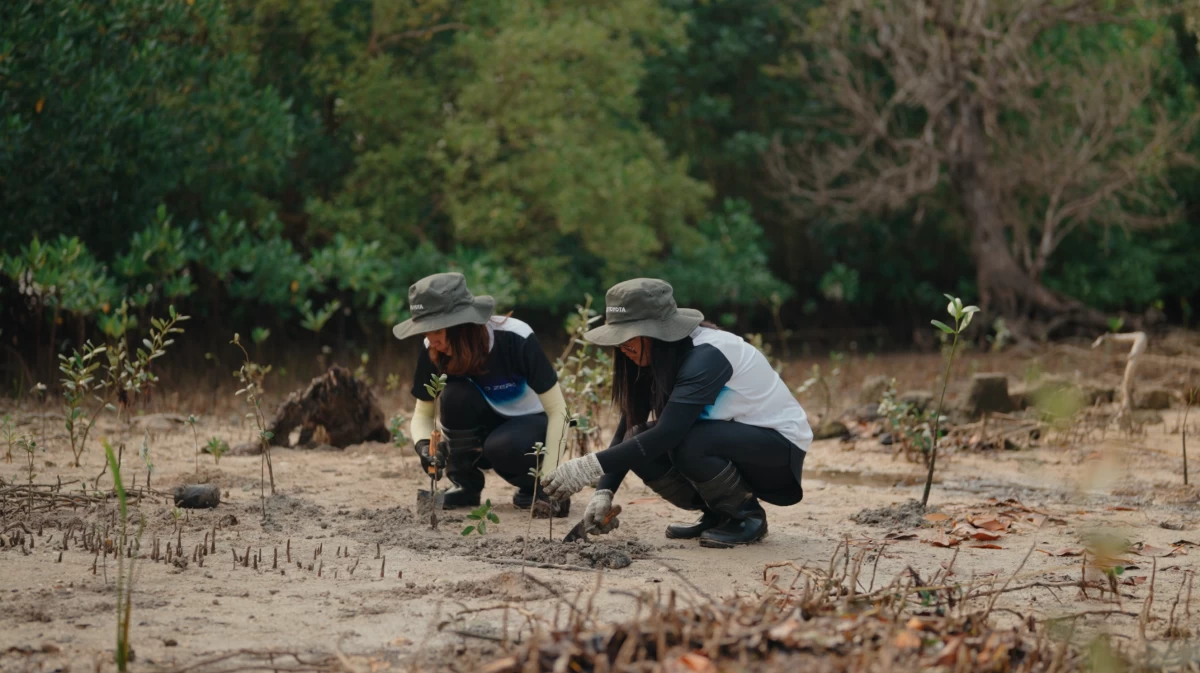
Toyota Motor Philippines has planted the appropriate mangrove species—Avicennia marina, locally known as piapi—in parts of Quezon Province, following guidance from the Community Environment and Natural Resources Office in Tayabas City. The project avoided unsuitable areas such as seagrass beds and lower intertidal zones.
Local communities take part in conserving and maintaining the site, with the company’s support providing livelihood opportunities. Working with the DENR, they planted 13,000 mangrove seedlings as part of the company’s pledge to plant 1 million trees by 2030.
“If we don’t involve the local community, anything you plant today will most likely not survive by next year,” said Mark Anthony Marcelo, assistant vice president for environment management at Toyota Motor Philippines. “Even if the trees survive, without community involvement, they could still be cut down or burned later on.”
The company also conducts capacity-building activities, inviting experts from a learning facility to teach community members on nursery development and mangrove maintenance.
"Usually, maintenance includes coastal cleanups and validation by the Department of Environment and Natural Resources,” Marcelo said. “If some plants die, we replant."
Marcelo admits that mangrove rehabilitation is a learning process, particularly in areas exposed to strong typhoons.
"When severe storms hit, mortality rates [of mangroves] can be extremely high. We just replant,” he said. “Despite these challenges, mangrove planting remains one of the most effective, sustainable, and practical flood control solutions.”
Apart from tree planting projects, Toyota Motor Philippines has also established a 1.46-megawatt rooftop solar power system in Sta. Rosa, Laguna, a wastewater treatment facility, and programs promoting responsible vehicle disposal.
Small but mighty, mangroves can help shield us from climate threats. But they, too, need saving—and that begins with us. Invite your peers to join a mangrove-planting activity. Share the latest research at family meals to spark awareness. Support organizations that protect these vital trees. These actions may not feel as instantly gratifying as a shopping spree or a movie marathon, but their reward proves far more meaningful: a healthy home that shelters and sustains us.
