You plan to move to the Philippines? Wollen Sie auf den Philippinen leben?

There are REALLY TONS of websites telling us how, why, maybe why not and when you'll be able to move to the Philippines. I only love to tell and explain some things "between the lines". Enjoy reading, be informed, have fun and be entertained too!

Ja, es gibt tonnenweise Webseiten, die Ihnen sagen wie, warum, vielleicht warum nicht und wann Sie am besten auf die Philippinen auswandern könnten. Ich möchte Ihnen in Zukunft "zwischen den Zeilen" einige zusätzlichen Dinge berichten und erzählen. Viel Spass beim Lesen und Gute Unterhaltung!


Visitors of germanexpatinthephilippines/Besucher dieser Webseite.Ich liebe meine Flaggensammlung!

free counters

Total Pageviews

Sunday, January 18, 2026

How Jesus learned to be human


By Fr. Rolando V. De La Rosa, OP

Published Jan 18, 2026 12:05 am | Updated Jan 17, 2026 04:42 pm
THROUGH UNTRUE
Many images of the Santo Niño that we see in churches or carried in Ati-Atihan festivals portray him wearing a crown and a velvet cape, holding a scepter or a globe, and radiating power and authority. They resemble miniature images of Christ the King. Yet one may ask: Why not depict the Santo Niño as an ordinary child, embodying our fragile humanity?
God became a child because He wished to understand what it truly means to be human. From our catechism, we learn that Jesus is fully divine and fully human. His humanity belongs to the very core of His being. But becoming human was not an automatic process for Jesus. He had to begin with infancy and childhood, the stages of life in which all of us are most vulnerable.
As a child, He experienced dependence, sickness, and hardship, along with other painful yet formative dimensions of human life. Jesus learned that being human entails suffering. Scripture expresses this poignantly: “Although he was a Son, he learned obedience through what he suffered” (Hebrews 5:8). The Gospels portray Him as deeply affected by hunger, fatigue, grief, and sorrow. Through suffering, He learned that joy cannot be fully appreciated without pain.
Through struggle, obedience, and love, He “grew in wisdom and stature, and in favor with God and others” (Luke 2:52). Part of that wisdom is the realization that love is given before it is deserved, and that forgiveness is more powerful than vengeance.
Jesus also learned why, despite our basic goodness, we are tempted to sin. But by rejecting temptation, He revealed the grandeur of our humanity. He showed that we are capable of choosing the good despite the seductiveness of sin. By His example, He taught us that excuses such as “I was born this way” or “I can’t help it. I just can’t say no” diminish, rather than honor, our human dignity.
The Santo Niño also reminds us of the childhood virtues we often lose in our haste to grow up. Like any ordinary child filled with wonder and reverence, the child Jesus must have seen, heard, smelled, tasted, and felt what the poet Gerard Manley Hopkins calls “the dearest freshness deep down things.” He must have listened attentively to nature, to people, and to life itself, refusing to confine His gaze to what is merely practical, functional, or useful.
Above all, the child Jesus must have played often. His playfulness, was surely tested by the pains of growing up and the pressures of survival. Yet He resisted surrendering the thrill of discovery and the joy of a game played for its own sake.
Today, many children are drawn too early into the vortex of competitive sports, where victory and power are treated as the highest values. One troubling consequence is that children stop looking for playmates. They instead look for opponents to conquer or humiliate.
Worse, many parents nurture their children’s curiosity and sense of wonder by regularly rushing them to air-conditioned malls to ride plastic horses, pedal stationary bikes, and play video games. At home, children spend their days absorbed in endless television shows, livestreamed videos, and mindless texting and chatting, while consuming a steady diet of junk foods. No wonder, many of them are early candidates for obesity, diabetes, and stroke.
On this Feast of the Santo Niño, let us pray for children everywhere who are constantly exposed to screens, text messages, and videos, and are drawn into an endless rhythm of doing, solving, clicking, and responding. May their parents teach them the habit of turning their hearts toward God, and speaking to Him in prayer.
The Gospels show us Jesus stepping away from the noise to pray, sometimes through the night, sometimes with tears and deep longing for the Father’s guidance. From His earliest years, through the quiet faith and daily example of Mary and Joseph, He learned that prayer was the foundation of His life. May children discover that God is not distant or unreachable, but a loving Father who is closer to them than they could ever imagine.

BLACKPINK set for comeback with new album 'Deadline' in February


Published Jan 15, 2026 03:53 pm
BLACKPINK (Instagram)

K-pop girl group BLACKPINK will be returning to the music scene with the release of their third mini-album “Deadline” on Feb. 27

On Jan. 14, a video announcing BLACKPINK’s new album was uploaded on YouTube

The album's title, "Deadline,” is the same name of BLACKPINK’s current world tour. Fans expressed excitement for BLACKPINK’s new album.    

Last year, with their digital single "Jump," BLACKPINK achieved their third No. 1 on the Billboard Global 200

YG Entertainment, BLACKPINK’s agency, earlier announced the group’s comeback. The agency said they have already finished filming the music video and other major album works and are currently in post-production. 

"We would like to express our deepest gratitude to the fans who have waited for a considerable amount of time. We plan to repay you with high-quality music, so please show lots of interest,” said the agency, Korean media reported. 

BLACKPINK’s world tour covers 16 cities with 33 shows. They held the concert tour in the Philippines on Nov. 22 and 23 last year at the Philippine Arena in Bulacan.   

They will perform at the Tokyo Dome in Japan from Jan. 16 to 18, and will end the tour at Kai Tak Stadium in Hong Kong on Jan. 24 to 26. 

BLACKPINK (Instagram)
The announcement about BLACKPINK's new album
The announcement about BLACKPINK's new album "Deadline" (Screenshot from BLACKPINK video on YouTube)

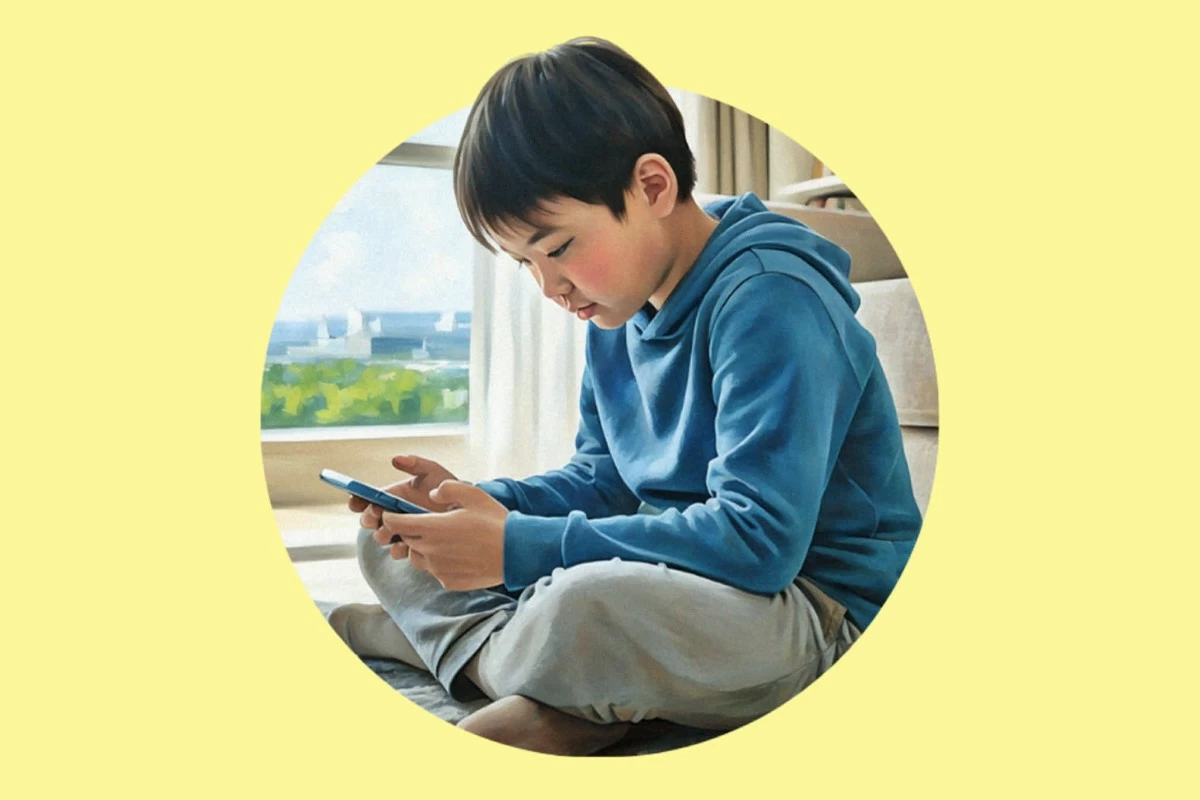
Screen time isn't the enemy—unsupervised app culture is


Here's what a psychologist advises parents to focus on instead

Published Jan 17, 2026 02:22 pm
For many parents, conversations about screen time come with guilt. We count minutes, set timers, and wonder if we’re doing enough, or too much, to protect our children from screens. According to registered psychologist Dr. Elaine Rose S. Ferrer, focusing on screen time alone is not enough.
“Framing the conversation purely around screen time misses the bigger picture,” she explains. “It doesn’t consider the quality and impact of how technology is being used.” The more important discussion should be about digital health, and how technology use intersects with a child’s emotional, social, and cognitive wellbeing.
Screen time alone isn’t enough
Not all screens and their experiences are the same. Watching a family movie, attending an online class, or video-calling relatives is different from unsupervised scrolling through short-form videos curated by an algorithm.
“When we only focus on screen time, we ignore what kids are actually exposed to,” Dr. Elaine says. “Screen time includes TV, tablets, and phones—but what truly matters is what children are seeing, engaging with, and internalizing.”
This is where intention becomes important. Screens can be used as tools that support learning and connection, or simply as a way to pass the time. Dr. Elaine recalls witnessing this scenario in everyday parenting moments.
“I remember eating at a restaurant with friends whose tendency was to pull out a tablet so their child could stay busy while they ate,” she shares. “We’re not here to judge parents who want a bit of peace and quiet. But it’s important to understand the intentionality behind digital use.”
With intention in mind, parents can make conscious choices about what their children engage with, how long, and in what context. “Screen time then becomes a tool to supplement children’s experiences, not just something to fill time.”
TV versus apps
One of the most significant shifts in children’s media consumption today is the move from passive screen use to app-driven engagement. Unlike television, apps are powered by algorithms designed to keep users watching.
“Apps are driven by algorithms,” Dr. Elaine explains. “Yes, you can scroll, but the more you watch a certain type of content, the more that same content is fed back to you.”
“If app use is unsupervised, it can greatly influence a person’s identity and behavior,” she warns. “That’s why guidance is important—so children engage with the digital world in a healthier way, rather than letting algorithms stimulate their thoughts and feelings.”
Dr. Elaine clarifies that not all apps are harmful, but they require more awareness and involvement from adults, especially when children are still developing self-regulation skills.
Intentional screen use
Many parents feel conflicted about using screens as temporary distractions. Dr. Elaine emphasizes that understanding—not guilt—should guide these conversations.
“By being intentional with app use or screen time, we can make conscious efforts and choices,” she says, adding that intentional screen use transforms technology from a default solution into a purposeful tool. One that supports learning, creativity, and connection, rather than replacing offline interaction.
Identifying screen use
To help families better understand their digital habits, Dr. Elaine suggests distinguishing between different types of screen time.
Productive screen time includes activities that help children perform tasks or learn skills, such as writing school papers, attending online classes, or creating presentations.
Participative or engaging screen time involves interaction such as video calls, collaborative games, or live workshops where children actively engage with others.
Passive screen time requires minimal thought or participation, such as watching random videos or endlessly scrolling. “This is where unhealthy habits like doomscrolling can begin,” Dr. Elaine notes, especially when left unchecked.
The goal, she emphasizes, is balance and not elimination.
Guidance is the key
Monitoring digital health is not about strict bans or constant monitoring. “Supervision is meant to guide, not control,” Dr. Elaine says. Conversations, co-viewing, and checking in about what children consume online help them process their experiences more meaningfully.
Technology has become an increasingly integral part of everyday life, and there is no escaping it. What parents can do is to guide children through each experience. By focusing on intention and balance, screens can become tools for learning and advancement that support children’s growth.