You plan to move to the Philippines? Wollen Sie auf den Philippinen leben?

There are REALLY TONS of websites telling us how, why, maybe why not and when you'll be able to move to the Philippines. I only love to tell and explain some things "between the lines". Enjoy reading, be informed, have fun and be entertained too!

Ja, es gibt tonnenweise Webseiten, die Ihnen sagen wie, warum, vielleicht warum nicht und wann Sie am besten auf die Philippinen auswandern könnten. Ich möchte Ihnen in Zukunft "zwischen den Zeilen" einige zusätzlichen Dinge berichten und erzählen. Viel Spass beim Lesen und Gute Unterhaltung!


Visitors of germanexpatinthephilippines/Besucher dieser Webseite.Ich liebe meine Flaggensammlung!

free counters

Total Pageviews

Thursday, January 15, 2026

A lasting gift to Filipino food culture


Reggie Aspiras

Felice Prudente Sta. Maria is an award-winning author and a pioneer in Philippine food history. Through research and storytelling, she helps us understand where our food comes from, reminding us that everyday dishes are part of a long, deeply rooted past.

The latest fruits of her labor are the newly published “When Mangoes & Olives Met at the Philippine Table” and its sequel, “What Recipes Don’t Tell.” The books reflect her belief that Filipino food cannot be understood through recipes alone, but through the changes it has undergone over time.

Felice Prudente Sta. Maria

A food trip down memory lane

Long before colonization, Filipinos were already cooking using ingredients and techniques drawn from their land and daily needs. The earliest recorded meat eaten in the Philippines was a prehistoric rhinoceros hunted in what is now Kalinga over 777,000 years ago. Thousands of years later, Filipino ancestors were domesticating pigs in Lal-lo, Cagayan, and sun-drying dolphin fish in Batanes more than 3,000 years ago—early signs of preservation, planning, and skill.

“Mangoes & Olives” traces this long food story using archaeology and historical records. It tells us that coconut vinegar was already recorded in writing in 1521. Dayap was the first cooking citrus of the islands, and calamansi, often assumed to be ancient, was developed only in the early 20th century by Filipino scientists.
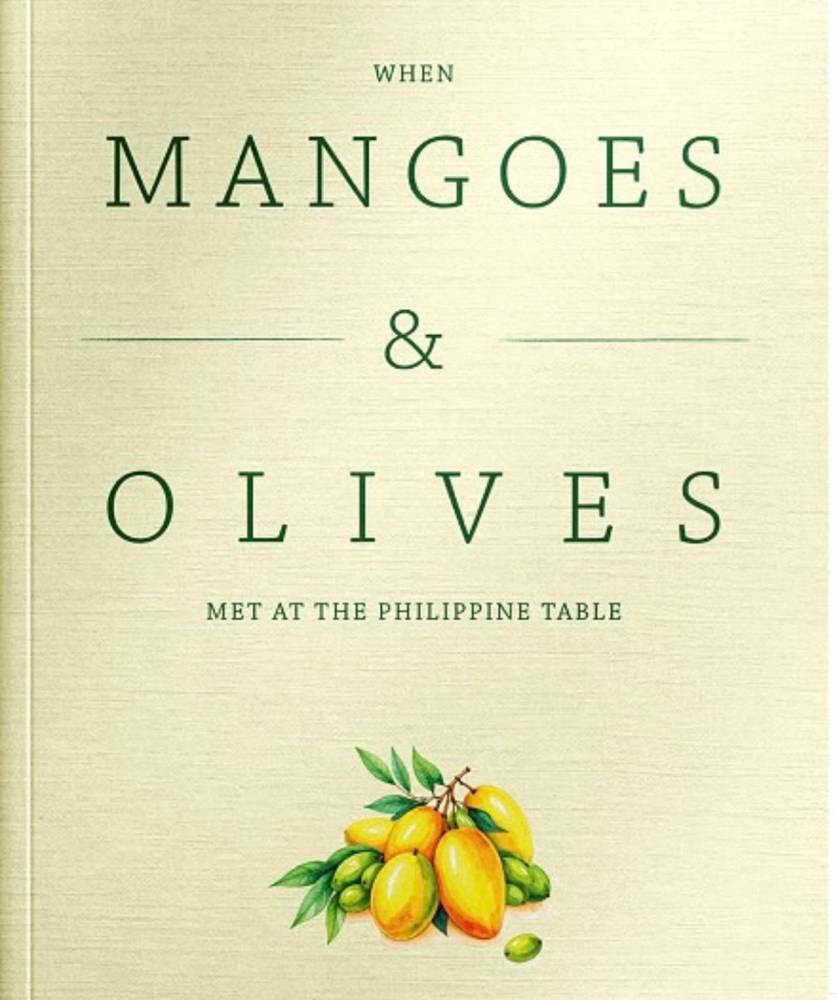
“When Mangoes & Olives Met at the Philippine Table”

The book also invites us to take another look at familiar food. Pan de sal, for instance, was once a measure of salt shaped like a bread bun. Lumpiang sariwa was originally served with a simple tahuri sauce—without soy sauce or cornstarch. Tsokolateh was so popular that it was served several times a day on galleon voyages, often in small bowls made of polished coconut shell. Even paho mango was once pickled to replace olives that could not grow in the Philippines.

“Mangoes & Olives” also shows that Filipino food history is a story of choice. Filipinos chose coffee over black pepper because it was easier to harvest. Spanish women born in the Philippines grew up eating tapa, tinola, sinigang, and eating with their fingers—habits they learned from the Filipina women who raised them.

The origins of Filipino spaghetti

“Recipes Don’t Tell” continues the story by focusing on food words. Everyday terms like kilaw, guisa, and halo-halo are highlighted and put in proper perspective. One Visayan word, nayá-nayá, captures the very essence of Filipino meals—caring for others and sharing happiness with guests.

Together, these books are Sta. Maria’s lasting gift to Filipino food culture. They prove that our food has a long, well-documented history and is something we can truly be proud of.

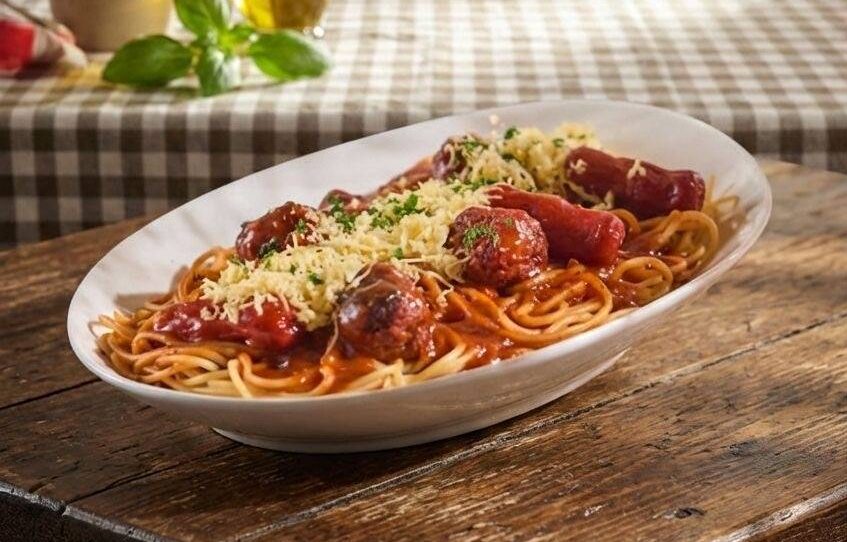
A delightful story she tells in her book is that of Filipino spaghetti, a dish many of us grew up with. In “What Recipes Don’t Tell,” Sta. Maria traces how spaghetti first appeared at the Philippine table in the 1920s, served publicly in Manila at places like the Santa Ana Cabaret. “Spaghetti dinners” were advertised for large gatherings and celebrations, when pasta was still new and considered special-occasion food.
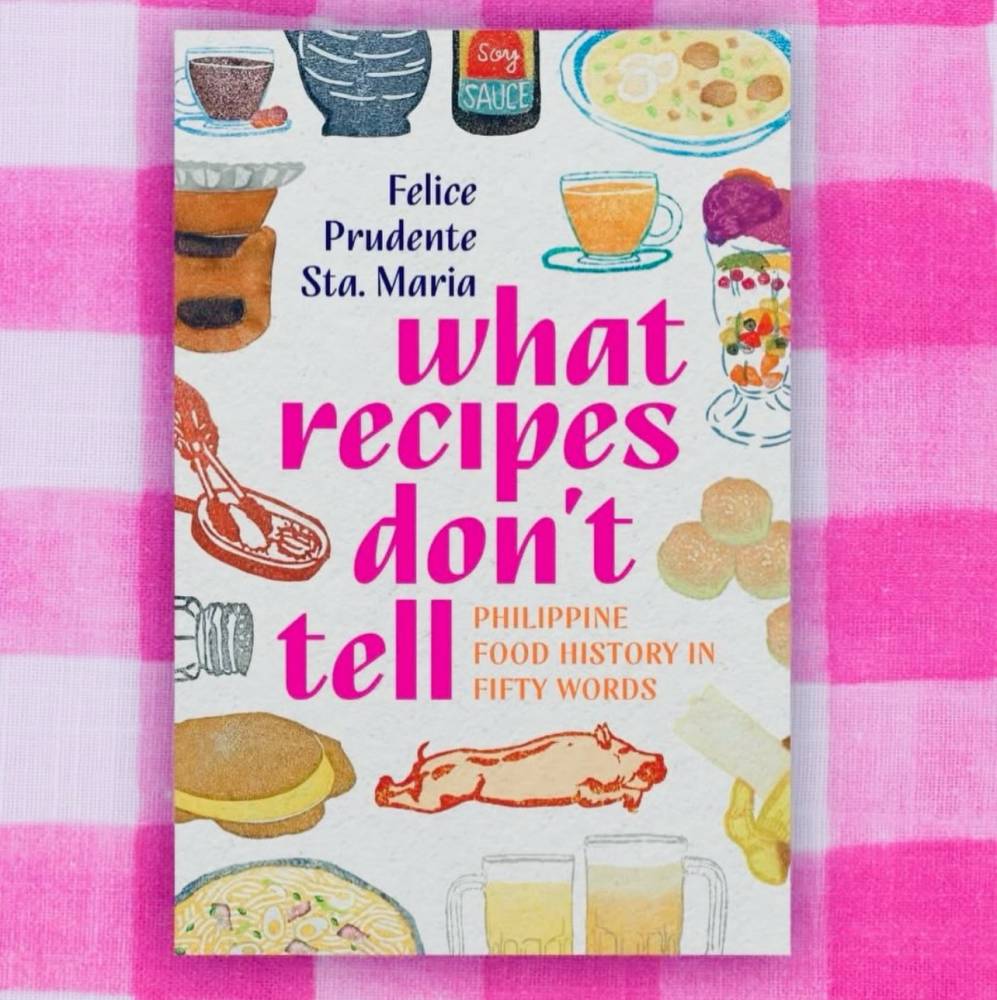
“What Recipes Don’t Tell”

By the 1930s, spaghetti slowly moved from dance halls into Filipino homes, pushed by the emergence of imported pasta, canned tomatoes, and American-style products. Early versions were savory, not sweet—closer to its Italian or American counterparts.

A clear example appears in the heirloom recipes chapter of “Mangoes & Olives”—a 1937 recipe for Spaghetti Italian from a Philippine Manufacturing Company booklet using Purico and Star Margarine. Made with bacon, tomato pulp, stock, mushrooms, and a simple roux, it shows how spaghetti was first prepared in Filipino kitchens.

There’s more to the food we eat

What I love about these two books is how they make you think more carefully about the food we eat every day. The shift from the 1937 Spaghetti Italian to today’s Filipino-style spaghetti happened gradually. Cooks substituted tomato pulp with banana ketchup, bacon for hot dogs. And somewhere along the way (perhaps as children became the stars of our celebrations), the sauce turned sweet.

Whether that last part is fact or fiction—is something I need to confirm with Sta Maria. But one thing is clear: Filipino sweet spaghetti, the staple of birthdays and family gatherings, shows that Filipino food is alive—always changing, always evolving.
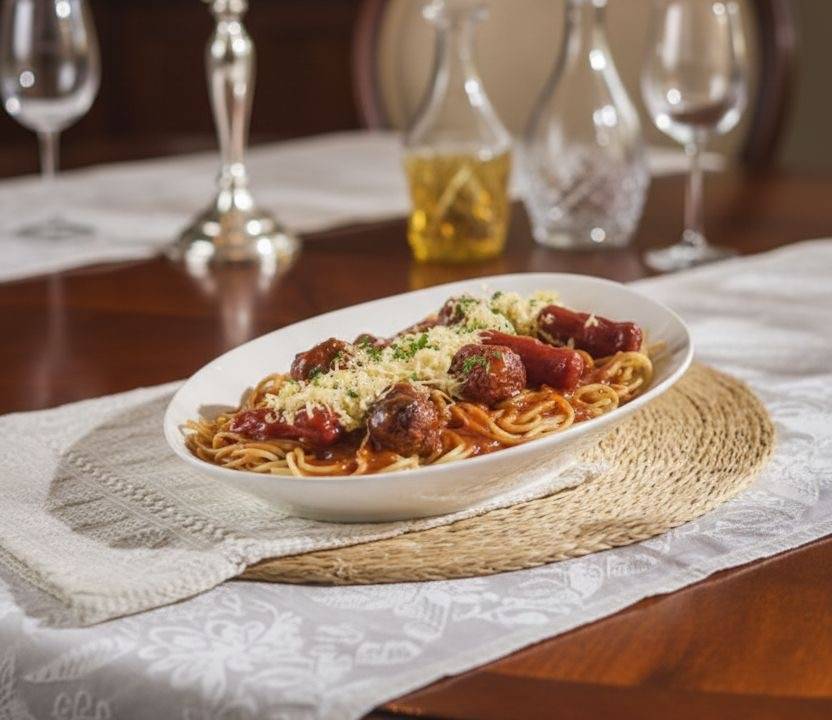
1937 Spaghetti Italian

Ingredients

1/4 pound cooked spaghetti

3 slices of bacon

1 to 1/2 Tbsp minced onion

2 sprigs of parsley

1/2 cup canned mushrooms

2 cups stock

1 cup tomato pulp

SEE ALSO

1 Tbsp flour

1 Tbsp Star Margarine

1/2 tsp salt

1/4 tsp paprika

Grated cheese

Procedure

1. Place chopped bacon in a saucepan. Once the bacon has released some oil, add onion and allow it to cook slightly in the fat.

2. Chop and add in the mushrooms, along with the stock, parsley, tomato, salt, and paprika.

3. Bring slowly to their boiling point and simmer until ingredients are cooked down into a thick sauce. Rub flour into Star Margarine to make a paste, similar to making a roux. Blend it into the sauce. Cook for 3 minutes.

4. Pour sauce over cooked spaghetti. Using two forks, lift the spaghetti several times to evenly cover it with sauce. Sprinkle with a generous amount of grated cheese.


DepEd program a timely answer to bullying in schools


Published Jan 15, 2026 12:01 am | Updated Jan 14, 2026 04:18 pm
Bullying has long haunted Philippine schools, leaving scars that go beyond bruises and disciplinary records. For many children, it breeds fear, anxiety, and a deep mistrust of institutions meant to protect them. This is why the Department of Education’s (DepEd) rollout of the Kaagapay Program, which formally invites parents to become partners in anti-bullying and mental health efforts, deserves strong public support—and vigilant implementation.
Launched Jan. 12, Kaagapay institutionalizes the role of parents, guardians, and caregivers as co-educators under DepEd Memorandum No. 002, s. 2026. With a ₱100-million nationwide allocation, the program recognizes a simple but often neglected truth: schools cannot fight bullying and mental distress alone. As Education Secretary Sonny Angara emphasized, the family is a critical part of a learner’s support system. When schools and families work together, learners are better protected, and teachers are no longer left to carry the burden by themselves.
The urgency of this reform is backed by alarming data. A Program for International Student Assessment (PISA) report cited by education reform advocates found that 43 percent of Filipino girls and 53 percent of boys experience bullying multiple times a month, far higher than the global average. The Second Congressional Commission on Education (EDCOM 2) has warned that bullying in the Philippines has reached crisis levels. DepEd data further shows that more than 79,000 bullying cases were recorded between 2019 and 2022, while the national helpline logged over a thousand reports of campus violence from late 2022 to early 2025.
Behind these numbers are real students whose lives have been derailed—children who skip classes out of fear, whose grades are affected, or who suffer long-term mental health consequences. Studies cited by EDCOM 2 point to bullying’s lasting harm on students’ trust in schools and overall well-being. In extreme cases, bullying has been linked to self-harm and suicide, underscoring why mental health and child protection must go hand in hand.
This is where the Kaagapay Program can make a difference. The program conducts parent engagement sessions that help caregivers recognize early warning signs of bullying and mental distress, understand their children’s socio-emotional needs, and practice positive discipline at home. Using guided reflection and action planning, parents are encouraged to translate school policies into everyday family practices. Importantly, the program is inclusive and flexible—offered through face-to-face, modular, and asynchronous modes—to reach parents across socioeconomic backgrounds.
DepEd said the goal is to help parents better understand learner behavior, socio-emotional needs, and early warning signs of bullying, mental distress, or other concerns that may affect students’ well-being.
The program also supports broader reforms, including the ₱2.9-billion School-Based Mental Health Program mandated by Republic Act No. 12080. While the country continues to face a severe shortage of guidance counselors, empowering parents helps fill critical gaps by ensuring that learners have attentive adults both in school and at home.
Still, Kaagapay’s success will depend on how communities respond. Parents must move beyond seeing bullying as a “school problem” and recognize their influence in shaping children’s values and behavior. Parent-teacher associations can organize peer support groups, while barangays and local governments can host awareness campaigns and safe spaces for youth. Faith-based groups, NGOs, and youth organizations can also help by mentoring students and promoting empathy, respect, and responsible online behavior.
Bullying thrives in silence and indifference. By making parents active partners rather than passive observers, DepEd’s Kaagapay Program sends a powerful message: protecting children is a shared responsibility. If embraced by families and communities, it can help turn schools into what they should always be—safe havens where learners can grow, dream, and hope without fear.

E-trikes barred from major Davao roads


By Philippine News Agency


CTTMO head Dionisio Abude clarified that, unlike motorcycles-for-hire (MTH), which adhere to licensing and registration rules, e-trikes do not meet these standards.
“There is still no local ordinance allowing e-trikes to accept passengers or ply national highways and major streets within the city,” Abude said in an interview.
He also mentioned that if e-trikes are allowed on city roads, they should be categorized as “unconventional” and must meet particular standards, such as having a closed cab, to guarantee passenger safety.
“Currently, they are used to carrying passengers without a closed cab, so almost everything is a violation,” Abude said.
Meanwhile, the Davao City Police destroyed 296 modified mufflers (bora-bora) and 270 “lantakas” (improvised pipes made from tin cans) that were confiscated during a series of operations aimed at curbing noise pollution and ensuring public safety.
City Ordinance 0334-12, enacted on Aug. 7, 2012, prohibits the installation of modified mufflers on all vehicles.
Police Col. Mannan Muarip, acting city police director, noted that the ordinance strictly prohibits such modifications because of their harmful impact on community peace and order.
He said police are investigating the sources of illegal mufflers to dismantle the supply chain and prevent additional violations.
“Our operations will continue with barangay-level raids and checkpoints to intercept violators and cut off the supply chain,” Muarip said.
He appealed to motorcycle owners, particularly the youth, to voluntarily surrender their modified mufflers.
“You can turn them over to your barangay captains, and we will collect them there,” he said. (PNA)

What does it feel like living in the Philippines?


 · 

Two of my favorite topics, feeling and Philippines. Bluntly put, from a North American standpoint, it feels pretty darn good. The everyday life that is.

Of course, there is plenty to complain about while living here, especially in Manila, and even moreso when you are used to living standards of, let's say, living in one of the top 10 most livable countries on earth. If that's how you prefer to live your life, complaining that is, then you would be well served in the Philippines because there is no lack of opportunities.

However, if you leave your prejudices at the airport before departing your homeland, and open your mind to discover why they say "It's more fun in the Philippines" you will soon be in for a great discovery. Yes, the geographical features of the islands are fantastic but it is NOT what will make you FEEL good about living here. Nor is it the stench or the air pollution of Manila in the summer months.

It's the people that makes you feel good. Of course, there's the good, the bad and the ugly just like anywhere else on the planet. In general though, people are nice here. They are friendly and warm. I would even say friendlier and warmer than most places I've been.

So if you're asking or following the question because you are thinking about moving here, let me assure you that it's the people who will make you feel good about living here.

Mabuhay!

BIZ BUZZ: Concert tickets going paperless soon


Logan Kal-El M. Zapanta

Go-to ticketing platform Ticketnet has welcomed a global fintech player into its ecosystem: Google Wallet.

Starting soon, Filipinos buying tickets for movies, concerts and sporting events may be able to store them directly in Google Wallet, which officially launched in the country in late November. This is in line with paperless ticketing that’s already commonplace in overseas markets.

This integration is expected to streamline how customers manage their event passes, as Google Wallet allows users to store event and cinema tickets, loyalty cards, digital vouchers and even digital car keys.

“We are glad to be one of the first services that will boast of Google Wallet integration,” said Irene Jose, chief operating officer of Uniprom, the parent company of Ticketnet. “This will mean easier access and more convenient ticketing for our customers.”

For Ticketnet, the partnership also reflects its push to use technology to elevate entertainment and sporting experiences.

SEE ALSO

At present, Google Wallet supports cards from seven partner banks in the Philippines: Chinabank, EastWest Bank, GoTyme Bank, Maya Bank, RCBC, UnionBank and Wise.

For ticket-buyers weary of misplaced stubs, Ticketnet’s tie-up with Google Wallet could soon make attending events a little less stressful.

Peso falls to weakest level in history


Ian Nicolas P. Cigaral

The Philippine peso slumped to a new record low on Wednesday, pressured by a rebounding dollar amid firmer expectations that the US Federal Reserve (Fed) will keep interest rates unchanged despite pressure from the White House.

The local currency capped yesterday’s session at 59.44 against the greenback, 9 centavos weaker than its previous finish and beating the previous record-low closing of 59.355 set on Jan. 7.

The peso’s worst showing in intraday trade stood at 59.45:$1. Total volume fell to $951 million, from $999.22 million before.

Latest data showed that the US consumer price index had risen by 2.7 percent last month, unchanged from November and in line with expectations. With economists divided over whether inflation in America has already peaked, Reuters reported that the Fed was widely expected to keep rates steady at its meeting this month.

“Expect the US dollar-peso spot to grind lower, as steady corporate demand and a firm US dollar backdrop are likely to overwhelm local bank supply,” a trader said.

Firmer greenback

“The dollar is strong because US growth is holding up; rates are staying higher for longer; and policy uncertainty around the Fed is reinforcing the dollar’s safe-haven appeal,” the trader added. “Fed uncertainty hasn’t weakened the dollar—it has actually strengthened it by keeping rates high and investors defensive.”

A weaker peso carries mixed consequences for the Philippines.

It boosts the domestic value of remittances sent home by millions of overseas workers and could help make Filipino exports more competitive. But it also risks driving up import costs and reigniting inflation.

Prolonged depreciation could likewise inflate the peso value of foreign debt held by the government and private firms.

The Bangko Sentral ng Pilipinas (BSP) has signaled it will allow market forces to determine the exchange rate, intervening only if a sustained downturn threatens to fuel imported inflation.

The BSP is willing to absorb some currency weakness as it approaches the conclusion of its pro-growth push. Governor Eli Remolona Jr. last week signaled that the central bank’s easing cycle could end with just one more interest rate cut—possibly in February—unless “bad surprises” emerge that would justify further reductions.

Looking ahead, analysts at MUFG Research warned that a renewed rise in global oil prices could weigh on the peso, as higher import costs would intensify dollar outflows in the Philippines, a net oil importer.

SEE ALSO

With Brent crude trading near $65 a barrel, oil-sensitive Asian currencies have already come under pressure, they said, even as the global oil market remained “fundamentally oversupplied.”

Diwa Guinigundo, an economist at New York-based GlobalSource Partners, said uneven and subdued foreign direct investment inflows could add to the strain.

“Prolonged FDI (foreign direct investment) weakness could place downward pressure on the peso, especially amid potentially tighter global financial conditions,” Guinigundo said. “With growth already struggling to reach the lower bound of the 2025 target of 5.5 percent, unresolved political and fiscal governance challenges risk making the outlook for 2026 even more demanding.”

Cheuk Wan Fan, chief investment officer for Asia at HSBC Private Bank and Premier Wealth, struck a more measured tone, holding a neutral view on the peso over the next six months.

“After the Philippines peso weakened to its record low level against the US dollar in 2025, we expect the peso to remain largely range bound this year and will reach 59.20 at the end of 2026,” Fan said.