You plan to move to the Philippines? Wollen Sie auf den Philippinen leben?

There are REALLY TONS of websites telling us how, why, maybe why not and when you'll be able to move to the Philippines. I only love to tell and explain some things "between the lines". Enjoy reading, be informed, have fun and be entertained too!

Ja, es gibt tonnenweise Webseiten, die Ihnen sagen wie, warum, vielleicht warum nicht und wann Sie am besten auf die Philippinen auswandern könnten. Ich möchte Ihnen in Zukunft "zwischen den Zeilen" einige zusätzlichen Dinge berichten und erzählen. Viel Spass beim Lesen und Gute Unterhaltung!


Visitors of germanexpatinthephilippines/Besucher dieser Webseite.Ich liebe meine Flaggensammlung!

free counters

Total Pageviews

Wednesday, January 28, 2026

Davao cheese maker finds success juggling family duties, business


Raoul J. Chee Kee - Philstar.com

January 25, 2026 | 11:20am


MANILA, Philippines — Two decades since she started making her cheeses in Davao, Olive Puentespina can still talk avidly about her passion for dairy — goat cheeses, in particular. While she spends most of her waking moments tweaking and perfecting the cheeses sold under the brand Malagos Farmhouse, she also sets aside time some afternoons to lead intimate cheese-and-wine pairings at the shop.


During a recent visit, she regaled marketing department members of several Davao hotels with the story of how her natural inquisitiveness set her on a path few have taken. 


Olive’s late husband, Roberto Jr., was a veterinarian who would often be given farm-fresh produce or young animals, including goats, as payment for his services. They named their first three goats Jolina, Marvin and Rica after three popular local celebrities at the time. 


“I began thinking about what to do with the milk these goats produced. I attempted to sell the milk as is but it tends to spoil quickly so I tried making goat’s milk soap. Again, it didn’t click,” Olive said. 


Pivot, pivot

By then, the goats were multiplying and she and her small team ended up tossing gallons of milk away. That’s when she considered making cheese because it didn’t spoil as quickly and it would be a chance to express her creativity.


“Filipinos then were not familiar with cheeses made with goat’s milk. What they knew about and were partial to was Kesong Puti, which is made with carabao’s milk.”


Olive then began learning and experimenting. She signed up for classes and seminars as far afield as the United States and Switzerland. She contacted her siblings based in the US, asking if they could shoulder her expenses including airfare, tuition and sometimes accommodations. “I vowed to them that if they would, then I would make them proud.”


Fast forward to the present and Olive has done more than that for her siblings who now expect her to come bearing some of her award-winning cheeses whenever she travels to the US. Malagos Farmhouse is now recognized for its range that includes the bestselling Mango Sublime, a soft chèvre in the French style but dotted with pieces of ripe mango harvested from Davao. “I prefer to describe it as done in Filipino-Davao style because I was the one who came up with it,” she said.


She also makes feta in olive oil, chèvre with rosemary, her version of gouda, and a deliciously pungent one that goes great with sliced fresh apples or dried fruit.   


Learning curve

Olive recalled how she proved her Swiss teachers wrong when they told her she wouldn’t be able to make cheese given the high humidity in the Philippines. 


“They didn’t know that I had learned to adapt to local conditions. Although I learned the basics from them, I tweaked the steps. When they saw and tasted the final product, they were amazed and told me, ‘Never copy. Do it your way, the Filipino way.’”


Olive smiled when she recounted this anecdote. “I should have told them, ‘Correction, it’s Olive’s way.’”


The entire time she was stoking her passion and learning as much as she could about cheese making, she had a husband and three kids who depended on her.


“When they were younger, I would perform my motherly and wifely duties but every chance I got — any free time I had — was spent in the work room. I’m really proud because my kids learned to figure things out for themselves. If they could do it on their own and with very little supervision, they would. They’re very proactive.”


At times when a parent’s counsel is sought, Olive is there to give her advice and help if needed. 


Olive then recounted another story that is a core memory. “When my daughter Ingrid was around 11, she came to me and said, ‘Mom, I want to apply to be your apprentice.’ 


“She didn’t come out and say outright that she wanted to be a cheese maker; she knew it would take time. Ingrid had been watching all along, observing me as I went about my day so when I finally put her in front of a vat of milk and she began inspecting the curds using her gloved hands, I felt like crying. She was a natural.”


As a widow now with three almost-adult children, she has more time to tinker around in her workroom, creating cheeses that are served on Philippine Airlines’ long-haul business class flights, in restaurants and luxury hotels, and in the kitchens of cheese aficionados. 


“I’ve learned that if you raise your children properly, they turn out independent. Now, we learn from each other,” Olive said. 

Investing in tomorrow's Filipinos


By Amenah F. Pangandaman

Published Jan 28, 2026 12:05 am


BEYOND BUDGET

Assalamu alaikum wa Rahmatullahi wa Barakatuh.

Whenever I speak with a child, I feel a quiet sense of excitement. Children see the world differently—with a clarity adults often lose. They are full of curiosity, honesty, and an unshakable belief that tomorrow can still be better. In their queries and laughter, you can glimpse the future taking shape. Thus, I have always believed that children must be at the heart of governance. The decisions we make today will shape the lives they grow into.

This belief guided my work at the Department of Budget and Management (DBM), particularly our push for Public Finance for Children, or PF4C. It carries the simple message that children should never be an afterthought in public spending. They should be a priority. Every peso we allocate must translate into something real in a child’s life—better learning, better health, stronger protection, and a genuine chance to thrive.

For many years, our budgets spoke about children in fragments. Education appeared in one section, nutrition in another, and child protection elsewhere. On paper, everything seemed covered. On the ground, we can see the gaps. Services overlapped, while others failed to reach the children who need them most. PF4C challenges this disconnect by ensuring that our programs work together and that outcomes are felt in communities and not only reflected in reports.

Hence, in May 2025, the DBM, together with the European Union and UNICEF, launched a Public Finance Facility, a cooperation program to support more coordinated and targeted budgeting to improve the lives of the most vulnerable children in our country. This partnership was built on a shared understanding that improving children’s lives requires more than good intentions. It demands sustained, protected, and transparent public spending, guided by evidence and focused especially on the most vulnerable.

PF4C is about weaving children’s rights into the entire budget process—from planning and allocation to implementation and monitoring. This approach is reinforced by the Program Convergence Budgeting, which encourages agencies to align their efforts rather than work in silos. When programs converge, resources go further, duplication is reduced, and services reach children in a more coherent and meaningful way.

Our resources are finite. Competing needs are constant. Hard choices are unavoidable. PF4C does not deny these realities but insists that even in the face of difficult choices, children must never be left behind in our budget.

Armed with this belief, we at the DBM, together with the Department of the Interior and Local Government, and the Bureau of Local Government Finance, launched the Child Budget and Expenditures Tagging and Tracking (CBETT) tool, which grew from a simple concern many of us shared: To make sure that government spending reaches children. Without clear data, even the best intentions remain untested. The CBETT tool gives us visibility. It enables the systematic identification, classification, and monitoring of child-focused budget and expenditures within local budget frameworks. This directly addresses the critical gap in expenditure tracking identified in the Child-Responsive Public Financial Management Assessment Report.

This became even more important after the Mandanas-Garcia ruling, which shifted greater responsibility—and resources—to local governments. LGUs are now on the frontlines of delivering services for children. CBETT helps ensure that as fiscal autonomy expands, accountability and child-responsiveness grow alongside it.

Equally important is opening the budget conversation itself. Through the government’s Open Government initiatives, we have taken steps to make fiscal discussions more transparent and participatory—creating spaces where citizens, including children and young people, can be heard. In fact, during the OpenGov Week last May, we invited children and youth participants for a dialogue titled, “Making Spaces: Children Driving Change for Open Government.” I believe when children are included in conversations about budgets in age-appropriate ways, they learn that governance is not distant or abstract. The government should also truly listen and make sure that lines are open because the best way to move forward is together. Through this, we build consensus, and we make decisions that affect their daily lives and one they can one day help shape.

Education shows how these principles translate into action. Responding to the learning crisis, we at the DBM allocated ₱1.34 trillion to education—the largest education budget in our history. And, for the first time, our country met UNESCO’s global benchmark of four percent of GDP. Over ₱1 trillion supports the hiring of teachers and non-teaching staff, classroom construction, academic recovery programs, and school-based feeding for millions of learners. These are not mere figures. They represent children who can learn better, eat better, and stay in school longer.

Beyond budget, Public Finance for Children reminds us that the true measure of public finance is lived experience—in safe classrooms, accessible clinics, and communities that protect and hear our children. As citizen Mina, I carry this belief beyond public office. Children live longest with the consequences of our choices. When we place them at the center of public finance, we do more than manage resources. We choose the kind of future we are willing to stand for.

(Amenah F. Pangandaman is the former Secretary of the Department of Budget and Management.)

Gen Z superstar Belle Mariano continues to uplift young lives as World Vision ambassador


By MBrand

Published Jan 27, 2026 11:30 pm

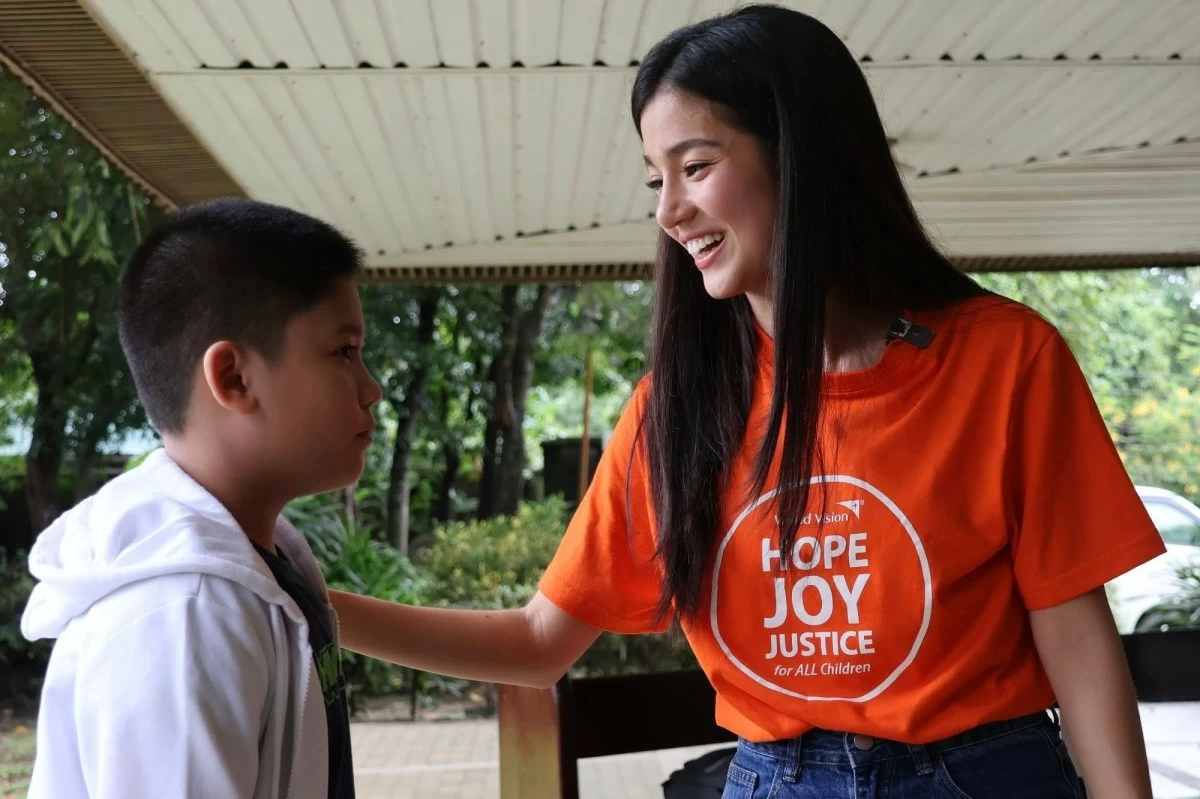
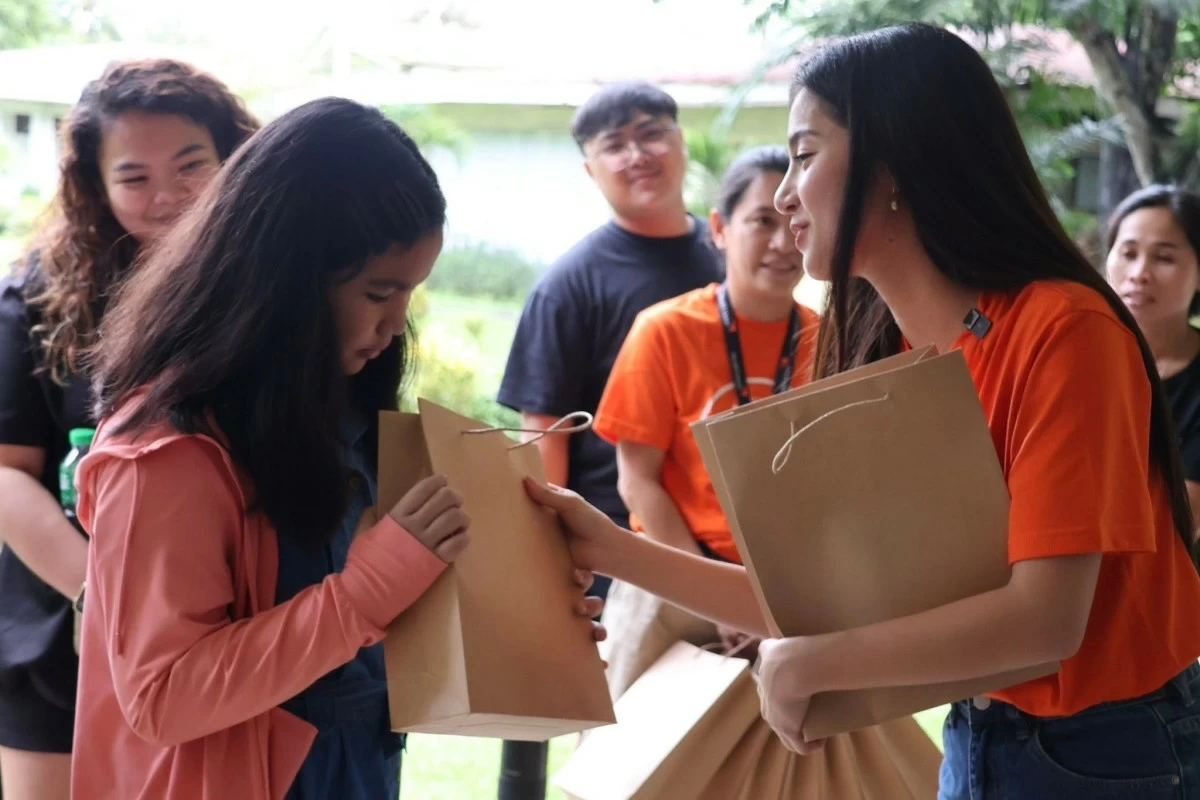
There is power in using fame and influence for good. Gen Z superstar Belle Mariano knows this all too well as she continues to support World Vision, a Christian humanitarian organization. Now in her second year as its ambassador, the in-demand star hopes to help raise awareness of the organization’s mission to create a world where every child can live life to the fullest.
Belle Mariano
Belle Mariano
Belle became known as a chart-topping singer and a versatile young actress who starred in lead roles for hit shows such as He’s Into Her and Can’t Buy Me Love. But her role as an ambassador is one that she holds close to her heart, using her platform to raise awareness of the needs of the most vulnerable children.
“I have long been passionate about supporting important causes that help empower children, especially young girls,” noted Belle. “So it’s an honor that I still get to be part of World Vision’s goal of helping children access their basic rights, such as education, protection, and opportunities to thrive.”
Previously, Belle initiated various activities with World Vision. For her 23rd birthday last year, she celebrated with 50 World Vision-supported children in Pangasinan, some of her active fan base, and World Vision staff led by World Vision National Director in the Philippines, Dr. Herbert Q. Carpio. The celebration included getting to know the community better, games, and making and trading friendship bracelets to commemorate the fun-filled day. The children, along with their parents, went home with treats from Belle, including school supplies, hygiene items, and other essentials, boxes of donuts, and sacks of rice.
Aside from the meaningful birthday celebration, Belle also treated at least 15 children to a storytelling session. The children are part of Brigada Pagbasa, World Vision’s reading remedial program that fosters a love of reading among Filipino children.
Last year, Belle also engaged in the #GirlsCan campaign and participated in World Vision International’s 75th anniversary celebration was held in Iloilo, even amidst the storm season.
World Vision National Director in the Philippines, Dr. Herbert Q. Carpio, stressed that Belle’s reach can inspire many more Filipinos to support the organization’s campaigns that bring hope, joy, and justice to Filipino children. He shared, “Belle’s presence brings fresh inspiration to World Vision’s mission. We’re excited to continue working hand-in-hand with her, hoping that we can encourage many more Filipinos to sponsor kids so that they may
achieve their full potential.”
World Vision works with families, communities, and partners to ensure that children grow up healthy, are educated for life, experience the love of God and their neighbors, and are cared for, protected, and able to participate fully in their communities. Through this holistic, community-based approach, the organization aims to address the root causes of poverty and transform lives.
For more updates on World Vision and its programs, visit the World Vision website at www.worldvision.org.ph and follow World Vision Philippines’ official social media pages: @worldvisionph on Facebook and Twitter, and @worldvisionphl on Instagram.

Rente kompakt: Das ändert sich 2026 für Rentnerinnen und Rentner


Ehepaar im Ruhestand sitzt auf Sofa
Im Alter entspannt die Rente genießen – 2026 gibt es so einige Überraschungen. © IMAGO Images/imageBROKER/Oleksandr Latkun

2026 gibt es zahlreiche gesetzliche Änderungen bei der Rente in Deutschland. Diese betreffen sowohl aktuelle Rentner als auch künftige Bezieher.

Das Positive zuerst: Nach aktuellen Prognosen der Bundesregierung können deutschlandweit alle Rentnerinnen und Rentner zum 1. Juli 2026 mit einem deutlichen Plus ihrer monatlichen Bezüge rechnen. Die Schätzungen liegen derzeit bei einer Erhöhung von rund 3,7 Prozent. Der endgültige Wert wird allerdings erst im Frühjahr 2026 auf Basis der Lohnentwicklung festgelegt.   

Späterer Renteneintritt: Höhere Altersgrenzen bei der Rente

Weniger schmeichelnd: Das gesetzliche Renteneintrittsalter steigt auch 2026 weiter an. Gemäß der stufenweisen Anhebung erhöht sich die Grenze der Regelaltersrente für den Geburtsjahrgang 1960 auf 66 Jahre und vier Monate. Bei Renten für besonders langjährig Versicherte gilt künftig: Wer 45 Beitragsjahre erreicht hat (Jahrgang 1962), kann ab 2026 mit 64 Jahren und 8 Monaten abschlagsfrei in den Ruhestand gehen.   

Gratis für Sie: Der große Renten-Ratgeber

So holen Sie das meiste aus Ihrer Rente. Versteckte Fehler vermeiden. Dies und viele Tipps von Renten-Profis finden Sie in unserem kostenlosen Ratgeber.

Laden Sie sich HIER den Ratgeber kostenlos als PDF herunter

Laden Sie sich den Renten-Ratgeber kostenlos als PDF herunter.
Laden Sie sich den Renten-Ratgeber kostenlos als PDF herunter. © IPPEN.MEDIA   
Neu: Sonderregeln für Schwerbehinderte fallen weg

Eine wesentliche Änderung betrifft zudem Menschen mit Schwerbehinderung. Für alle Geburtsjahrgänge ab 1964 endet im neuen Jahr der bisherige Vertrauensschutz. Eine abschlagsfreie Rente ist für sie somit erst ab dem 65. Lebensjahr möglich. Zwar ist ein früherer Renteneintritt ab 62 Jahren weiterhin möglich – allerdings müssen Betroffene dann mit dauerhaften Abschlägen von bis zu 10,8 Prozent rechnen.    

Rente 2026: Das ändert sich bei Steuern und Abgaben

Wer im neuen Jahr erstmals seine wohlverdiente Rente bezieht, muss sich auf einige Neuerungen einstellen. Dies betrifft sowohl steuerliche Aspekte als auch mögliche Abgaben bei höheren Einkommen.

Höherer Steueranteil: Für alle Neurentner des Jahres 2026 steigt der steuerpflichtige Anteil der Renteneinkünfte um einen weiteren halben Prozentpunkt auf 84 Prozent. Somit bleiben künftig nur mehr 16 Prozent der ersten vollen Bruttojahresrente steuerfrei.   

Neue Aktivrente: Seit 1. Januar 2026 können Rentnerinnen und Rentner mit der Aktivrente über die Regelaltersgrenze hinaus arbeiten und bis zu 2.000 Euro pro Monat steuerfrei hinzuverdienen. Sozialabgaben werden hier dennoch fällig.

Beiträge für Gutverdiener: Die Beitragsbemessungsgrenze in der Rentenversicherung steigt im neuen Jahr auf 8.450 Euro pro Monat. Bis zu einem Jahreseinkommen von 101.400 Euro bedeutet dies für Besserverdienende künftig höhere Abgaben.   

Beitragszahler können aufatmen: Beitragssatz bleibt 2026 stabil

Der Beitragssatz zur gesetzlichen Rentenversicherung bleibt stabil: Bereits seit neun Jahren in Folge liegt er bei 18,6 Prozent, in der knappschaftlichen Rentenversicherung beträgt er 24,7 Prozent.

Minijob und Pflege: Weitere Neuerungen bei der Rente 2026

Minijobs: Ab Juli 2026 können Minijobber eine einmal gewählte Befreiung von der Rentenversicherungspflicht künftig wieder rückgängig machen.

Der Rente-Newsletter: Wege in die Frührente
Wichtige Entwicklungen rund um Ihre Rente erhalten Sie wöchentlich am Mittwoch. Eine kurze Registrierung genügt.

Private Pflegeversicherung: Für privat versicherte Rentnerinnen und Rentner steigen die Beiträge zur Pflegepflichtversicherung ab 2026 im Schnitt um rund 16 Prozent.