You plan to move to the Philippines? Wollen Sie auf den Philippinen leben?

There are REALLY TONS of websites telling us how, why, maybe why not and when you'll be able to move to the Philippines. I only love to tell and explain some things "between the lines". Enjoy reading, be informed, have fun and be entertained too!

Ja, es gibt tonnenweise Webseiten, die Ihnen sagen wie, warum, vielleicht warum nicht und wann Sie am besten auf die Philippinen auswandern könnten. Ich möchte Ihnen in Zukunft "zwischen den Zeilen" einige zusätzlichen Dinge berichten und erzählen. Viel Spass beim Lesen und Gute Unterhaltung!


Visitors of germanexpatinthephilippines/Besucher dieser Webseite.Ich liebe meine Flaggensammlung!

free counters

Total Pageviews

Tuesday, January 27, 2026

ARE YOU ALONE?


Studies show the ability to tolerate alone time has been linked to increased happiness, better life satisfaction, and improved stress management. People who enjoy alone time experience less depression.


Short-term tips to get you started to avoid comparing yourself to others are easy to be said:

Take a step back from social media. …
Take a phone break. …
Carve out time to let your mind wander. …
Take yourself on a date. …
Get physical. …
Spend time with nature. …
Lean into the perks of being alone.

I can be a reluctant socializer. I’m sometimes secretly pleased when social plans are called off. I get restless a few hours into a hangout. Maybe, I’ll not be invited any more. Or not so often… . I even once went on a free 10-day silent meditation retreat – not for the meditation, but for the silence.

So I can relate to author Anneli Rufus, who recounted in Party of One: The Loners’ Manifesto: “When parents on TV shows punished their kids by ordering them to go to their rooms, I was confused. I loved my room. Being there behind a locked door was a treat. To me a punishment was being ordered to play Yahtzee with my cousin Louis.”
Several years ago in one of my write-ups, I wrote about loneliness or in other words splendid isolation.

Asocial tendencies like these are often far from ideal. Abundant research shows the harms of social isolation, considered a serious public health problem in countries that have rapidly ageing populations (though talk of a ‘loneliness epidemic’ may be overblown). In the UK, the Royal College of General Practitioners says that loneliness has the same risk level for premature death as diabetes. Strong social connections are important for cognitive functioning, motor function and a smoothly running immune system.

This is especially clear from cases of extreme social isolation. Examples of people kept in captivity, children kept isolated in abusive orphanages, and prisoners kept in solitary confinement all show how prolonged solitude can lead to hallucinations and other forms of mental instability.

But these are severe and involuntary cases of loneliness. For those of us who just prefer plenty of alone time, emerging research suggests some good news: there are upsides to being reclusive – for both our work lives and our emotional well-being.
Social anxiety is the single most common psychological problem according to innumerable survey results worldwide. The magnificent, gorgeous and excellent isolation, resulting from being nervous when meeting people is really the opposite. The state of being isolated reminds me of being in a hospital with an infectious disease.

Does the project of giving a speech or going to a social gathering give you the willies?
Relax, there are always ways and solutions to help you but teaching you “never to be nervous again”.

I have always been the most silent pupil in elementary and high school. I was ashamed even to talk to or with my teachers. Several terrible school records have been the result. But, I wanted to become a journalist. I am still one.

During college times and while writing my first articles, I learned from my first boss, a daily news publisher, to avoid being nervous while meeting people. I was always prepared. Preparation for any communicating situation is a must. I have been invited to many parties and gatherings. I always asked for the guest list. I scanned all the newspapers and browsed the net.

One key benefit is improved creativity. Gregory Feist, who focuses on the psychology of creativity at California’s San Jose State University, has defined creativity as thinking or activity with two key elements: originality and usefulness. He has found that personality traits commonly associated with creativity are openness (receptiveness to new thoughts and experiences), self-efficacy (confidence), and autonomy (independence) – which may include “a lack of concern for social norms” and “a preference for being alone”. In fact, Feist’s research on both artists and scientists shows that one of the most prominent features of creative folks is their lesser interest in socializing.

One reason for this is that such people are likely to spend sustained time alone working on their craft. Plus, Feist says, many artists “are trying to make sense of their internal world and a lot of internal personal experiences that they’re trying to give expression to and meaning to through their art.” Solitude allows for the reflection and observation necessary for that creative process.

A recent vindication of these ideas came from University at Buffalo psychologist Julie Bowker, who researches social withdrawal. Social withdrawal usually is categorized into three types: shyness caused by fear or anxiety; avoidance, from a dislike of socializing; and insociability, from a preference for solitude.

There is gender and cultural variation, of course. For instance, some research suggests that unsociable children in China have more interpersonal and academic problems than unsociable kids in the West. Bowker says that these differences are narrowing as the world becomes more globalized.

Still, it turns out that solitude is important for more than creativity. Since ancient times, meanwhile, people have been aware of a link between isolation and mental focus. After all, cultures with traditions of religious hermits believe that solitude is important for enlightenment.

Recent research has given us a better understanding of why. One benefit of unsociability is the brain’s state of active mental rest, which goes hand-in-hand with the stillness of being alone. When another person is present, your brain can’t help but pay some attention. This can be a positive distraction. But it’s still a distraction.
Daydreaming in the absence of such distractions activates the brain’s default-mode network. Among other functions, this network helps to consolidate memory and understand others’ emotions. Giving free rein to a wandering mind not only helps with focus in the long term but strengthens your sense of both yourself and others. Paradoxically, therefore, periods of solitude actually help when it comes time to socialize once more. And the occasional absence of focus ultimately helps concentration in the long run.


I learned, if your personality tends toward insociability, you shouldn’t feel the need to change. Of course, that comes with caveats. But as long as you have regular social contact, you are choosing solitude rather than being forced into it, you have at least a few good friends and your solitude is good for your well-being or productivity, there’s no point agonizing over how to fit a square personality into a round hole.

So feel free to de-clutter your social calendar. It’s psychologist-approved.

The heartbeat of democracy


Inquirer Editorial

If press freedom is, as the late American diplomat Madeleine Albright once said, the “heartbeat of democracy,” then the conviction of community journalist Frenchie Mae Cumpio suggests that democracy in the Philippines now palpitates under strain.

On Thursday, Cumpio, former executive director of the alternative news outfit Eastern Vista, became the “first journalist in the world to be convicted of terrorism financing,” according to Bi Lih Yi, Asia Program Coordinator of the Committee to Protect Journalists.

Judge Georgina Perez of the Tacloban City Regional Trial Court Branch 45 sentenced Cumpio and Mariel Domequil, finance officer of the Rural Missionaries Philippines Eastern Visayas, to a prison term of 12 to 18 years after finding them guilty of violating the Terrorism Financing Prevention and Suppression Act of 2012.


Honoring excellence: Enduring value of TOFIL


Published Jan 27, 2026 12:05 am | Updated Jan 26, 2026 06:22 pm     


At a time when public discourse is weighed down by cynicism and despair—much of it fueled by recurring scandals of corruption and abuse of power—the annual recognition of The Outstanding Filipino (TOFIL) awardees stands as a quiet but resolute counterpoint. The 2025 TOFIL honorees remind us that integrity, excellence, and selfless service are not relics of the past, but living values embodied by Filipinos who continue to uplift the nation through their work.
Each year’s TOFIL awardees come from diverse fields—education, science, business, culture, public service, and community development—yet they share a common thread: an unwavering commitment to the greater good. The 2025 awardees exemplify this tradition of merit and meaning. Their achievements are not merely personal milestones but contributions that have enriched institutions, empowered communities, and expanded the country’s capacity to meet complex challenges. In honoring them, we affirm that excellence still matters—and that it is attainable without compromise of values.
TOFIL’s significance lies not only in celebrating individual achievement, but in building a collective narrative of what Filipinos can aspire to be. Since its establishment in 1988 by the Metrobank Foundation and Rotary Club of Makati, TOFIL has recognized men and women whose lives reflect professionalism anchored in ethics and service. Past laureates include towering figures in medicine, jurisprudence, the sciences, education, arts, and enterprise—individuals who quietly shaped national life, often outside the glare of politics or celebrity.
Names such as Dr. Fe del Mundo in pediatrics, Washington SyCip in business and institution-building, Chief Justice Hilario Davide Jr. in law and democratic governance, and National Artists and scientists who elevated Filipino creativity and innovation, form part of TOFIL’s distinguished honor roll. These laureates demonstrate that lasting national impact is built patiently—through competence, credibility, and character.
At crucial moments in Philippine history—during political transitions, economic uncertainty, and social upheaval—TOFIL awardees serve as moral anchors. They remind us that while institutions may falter and leaders may disappoint, the nation’s moral capital resides in its people. Their lives stand as proof that one can succeed without surrendering principle, and lead without exploiting power.
This message is especially resonant today. Public trust in governance has been eroded by persistent reports of corruption and impunity. Many Filipinos, particularly the youth, grapple with a sense of disillusionment, questioning whether honesty and hard work still have a place in public life. In this context, honoring TOFIL awardees becomes more than ceremonial; it becomes restorative.
We salute the 2025 TOFIL awardees, namely: Senator JV Ejercito, Public Service; former DTI Secretary Alfredo Pascual, Government; Dr. Maria Minerva Calimag, Academic Community, Dr. Neil Aldrin Mallari, NGO and Civil Sector; and Rene Meily, Private Sector.
By shining a light on exemplary Filipinos, TOFIL helps recalibrate our collective compass. It reminds citizens that the narrative of the nation is not defined solely by its failures, but also by its quiet victories—won in classrooms, laboratories, courtrooms, hospitals, boardrooms, and communities. These are victories that steadily shape a more humane and hopeful society.
The 2025 TOFIL awardees deserve not only applause, but emulation. Their stories affirm that nation-building is not the exclusive domain of those in power, but a shared responsibility carried out through vocation and service. In honoring them, we honor the best of the Filipino spirit—and, in doing so, renew our faith that integrity and excellence can still light the way forward.

Miss Globe 2025 Chayathanus 'Cheraim' Saradatta makes first PH visit, spends birthday with Bb. Pilipinas


Published Jan 27, 2026 08:31 am


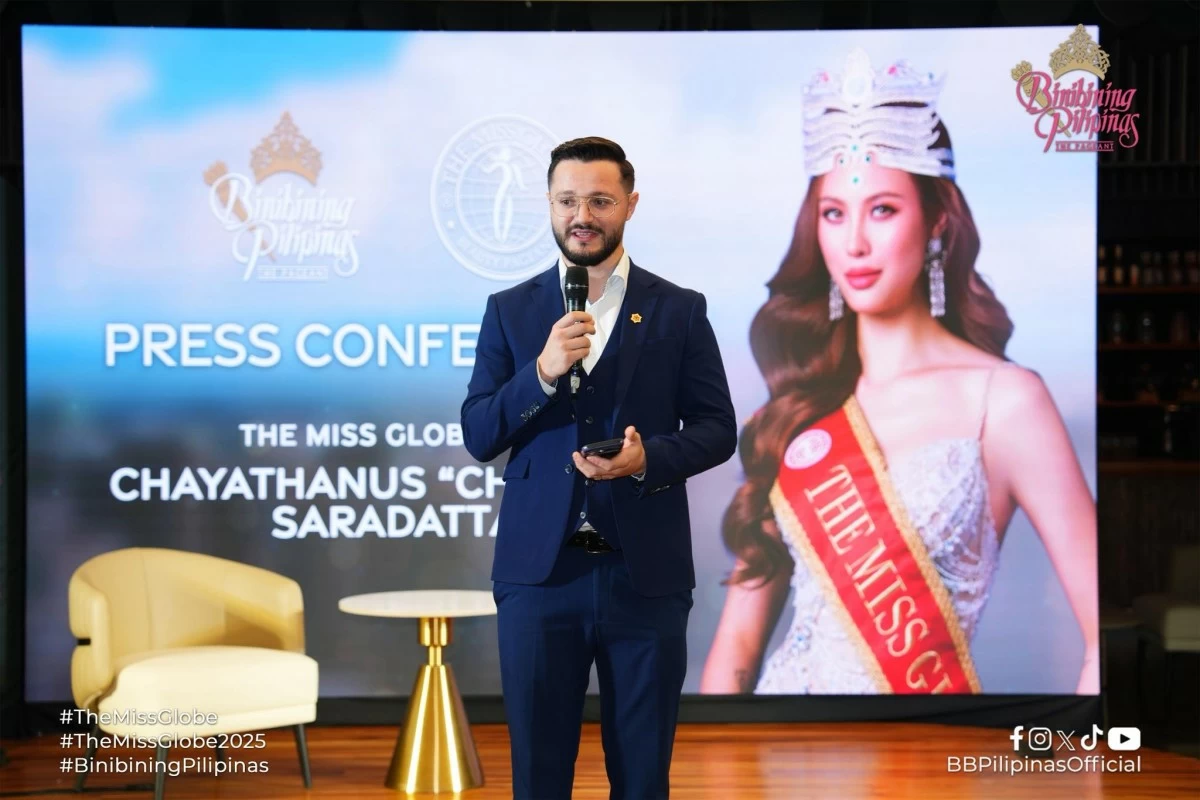
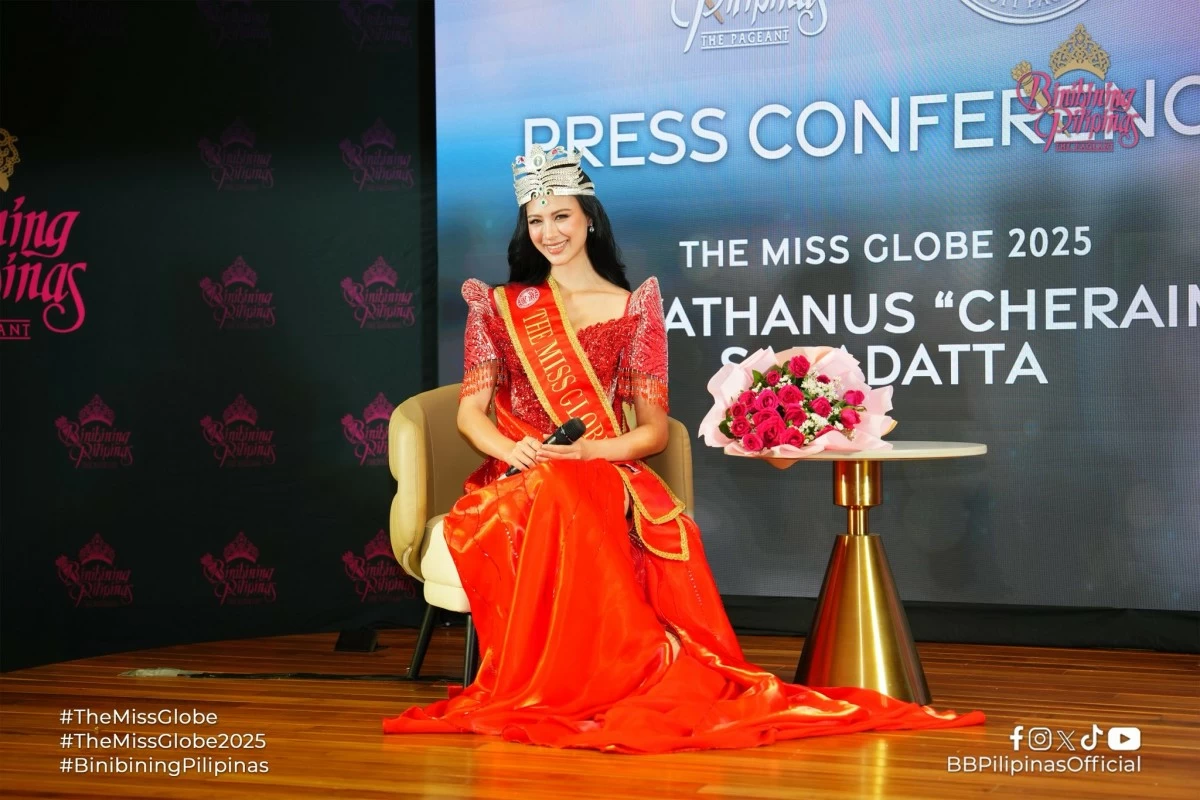
Reigning Miss Globe 2025 Chayathanus “Cheraim” Saradatta of Thailand arrived last Sunday on her first visit to the Philippines. She also marked two milestones as she celebrated her birthday and witnessed the renewal of The Miss Globe Organization’s partnership with Binibining Pilipinas Charities, Inc. (BPCI).
Reigning Miss Globe 2025 Chayathanus 'Cheraim' Saradatta of Thailand (Images courtesy of Facebook)
Cheraim was warmly welcomed by BPCI officials and queens during a media conference at World Kitchens in Gateway Mall 2, Araneta City on Jan. 26.
The Miss Globe Vice President Frenki Bozo, announced in the event a new three-year contract extension between BPCI and The Miss Globe. "Unofficially, I think this will last a lifetime," he stated of the 12-year partnership, describing the Philippines as "a second home."
Cheraim arrived in Manila on Jan. 25, which happened to be her birthday, and marked the occasion with a dinner alongside BPCI executives and Binibining Pilipinas queens.
At the welcome party, Cheraim was greeted by a friendly lineup of Bb. Pilipinas queens, namely: Maureen Montagne (The Miss Globe 2021). Katrina Anne Johnson (Binibining Pilipinas International 2025), Anna Valencia Lakrini (The Miss Globe 2023 2nd runner-up), Jasmin Castro Bungay (The Miss Globe 2024 2nd Runner-Up) , and Dalia Varde Khattab (Binibining Pilipinas 2025 1st Runner-Up). Annabelle Mae McDonnell (Binibining Pilipinas Globe 2025) greeted Cheraim via video.
Cheraim expressed her delight at the reception, saying, “If Thailand is my first home, the Philippines can be my second home. You make me feel welcome and comfortable all the time.”
Miss Globe 2025 Chayathanus 'Cheraim' Saradatta of Thailand celebrates her birthday with Bb Pilipinas queens.
She shared her fondness for Filipino cuisine, naming adobo and halo-halo among her favorites, and proudly recited a few Filipino phrases including "salamat po."
"I love adobo. And then halo-halo. And actually, back when I was a model, a friend bought me sisig!," Cheraim revealed.
She is scheduled to remain in Manila until Jan. 29, during which time she will join BPCI for tours and charity activities.
Addressing rivalries among international pageant fans, Cheraim relayed a message of unity and respect.
“Being proud of your country is very good,” she said. “But seeing diversity from all around the world gives us a chance to open our hearts. You can cheer for your country, but also cheer for others.”
Miss Globe Vice President Frenki Bozo
Cheraim outlined her international travel plans, noting that after visits to Nepal, Vietnam, and Thailand, she will continue to China and Malaysia before embarking on European and South African tours.
She named Maria Ehren as her favorite Thai beauty queen and role model for her dedication to advocacy and empowerment.
“For a queen, it’s not only about beauty or gowns,” she said. “It’s about the goals you advocate for and how much you empower others.”
Cheraim fondly recalled friendships formed during the Miss Globe finals, especially with candidates from Albania, Indonesia, Australia, the Czech Republic, and other countries.
"It was a very good time. I think the friendship between queens is what keeps you going every day because of the competition. They are tiring sometimes. But if you have someone who helps you, understands you, and encourages you, you can get through many things," she reminisced.
Miss Globe 2025 Chayathanus 'Cheraim' Saradatta of Thailand attends the media conference at World Kitchens in Araneta City.
Cheraim offered practical advice to aspiring pageant candidates, stressing the importance of preparation and time management.
“Being a queen doesn’t happen overnight,” she said. “It comes from years of dedication. So always manage your time, be ready for anything, and be your best version. Because you never know, like, maybe the chance is hiding somewhere you can't see, you know? You need to be in your best version all the time and know that it's not just about how you perform. It's all about your daily life," she advised.
Her beauty regimen, she said, focuses on rest and consistent skincare, particularly before makeup application.
Asked about her birthday wish, Cheraim replied: "One thing that I wish for is that I wish that my reign is full of experience. So that after I give the crown to others, I can still retain the knowledge I gained from Miss Globe. And also, I wish that I could give so many things to my next queen, even from Miss Globe Thailand. So you need to invite me back so I can learn a little bit more. I would love to come back."
Cheraim’s visit coincides with the early buzz leading up to the 62nd Binibining Pilipinas pageant, the details of which are expected to be formally announced soon.

So hoch wie noch nie – Goldpreis steigt erstmals über 5000 Dollar


Stand: 26.01.2026Lesedauer: 3 Minuten    
Der Goldpreis hat ein neues Rekordhoch erreicht: Erstmals stieg eine Feinunze über 5000 US-Dollar. Geopolitische Spannungen, Zentralbankkäufe und Zinserwartungen treiben den Kurs. Auch Silber verteuerte sich zuletzt deutlich.

Der Goldpreis erreicht ein historisches Rekordhoch: Erstmals kostet eine Feinunze mehr als 5000 Dollar. Politische Spannungen, Goldkäufe von Notenbanken und die Aussicht auf sinkende US-Zinsen treiben die Nachfrage nach dem Edelmetall.   

Der Goldpreis hat erstmals die Marke von 5000 Dollar geknackt. Der Preis für eine Feinunze (etwa 31,1 Gramm) kletterte an der Metallbörse in London im frühen Handel um bis zu zwei Prozent auf 5093 US-Dollar (4296 Euro) und war damit so hoch wie noch nie. Zu den stärksten Treibern zählen geopolitische Risiken, die Käufe von Notenbanken und die Spekulation auf weiter sinkende Zinsen in den USA.

Gold hat sich in den ersten Wochen des Jahres um knapp 18 Prozent verteuert, nachdem der Preis für das Edelmetall im Vorjahr bereits um 65 Prozent gestiegen war. Dies war das höchste Jahresplus seit 1979. Der Preis ist 2025 um mehr als 2000 Dollar gestiegen.

Weltpolitische Lage treibt Goldpreis

Preistreiber im vergangenen Jahr waren unter anderem die vielen Konflikte weltweit. Auch 2026 sorgten politische Spannungen für mehr Nachfrage. So führten Experten die Gewinne in den ersten Handelstagen des Jahres vor allem auf die Lage im Iran und die zeitweisen Zolldrohungen von US-Präsident Donald Trump gegen acht europäische Staaten im Zusammenhang mit Grönland zurück.  

Auch Silber ist an der Börse begehrt: Der Preis für eine Feinunze war in der vergangenen Woche erstmals über 100 US-Dollar gestiegen. Silber ist ein wichtiges Industriemetall, das für viele Anwendungen rund um KI, Robotik und Energie benötigt wird.     

Edelmetalle – allen voran Gold – gelten bei vielen Investoren als „sichere Häfen“ in Krisenzeiten. Daneben gibt es Sorgen um die Unabhängigkeit der US-Notenbank Fed. Die wiederholten Angriffe von Trump auf Fed-Chef Jerome Powell schüren die Angst, dass die mächtige Notenbank künftig nicht mehr unabhängig agieren, sondern politisch gesteuert werden könnte.

Goldkäufe von Zentralbanken

Zentralbanken weltweit, insbesondere aus Schwellenländern wie China, haben ihre Goldreserven in den vergangenen Jahren deutlich aufgestockt. Diese Käufe sollen die nationalen Reserven unabhängiger vom US-Dollar machen und gelten als wichtiger Preistreiber.   

\ Vorteile erleben

Auch sinkende Zinsen, wie zuletzt von der US-Notenbank Fed, spielen oft eine Rolle, wenn der Goldpreis steigt. Da Gold weder Zinsen noch Dividenden abwirft, verstärkt die Aussicht auf fallende Zinsen die Nachfrage nach dem Edelmetall. Bei niedrigeren Zinsen werden festverzinsliche Anlagen wie Staatsanleihen im Vergleich dazu weniger attraktiv.