You plan to move to the Philippines? Wollen Sie auf den Philippinen leben?

There are REALLY TONS of websites telling us how, why, maybe why not and when you'll be able to move to the Philippines. I only love to tell and explain some things "between the lines". Enjoy reading, be informed, have fun and be entertained too!

Ja, es gibt tonnenweise Webseiten, die Ihnen sagen wie, warum, vielleicht warum nicht und wann Sie am besten auf die Philippinen auswandern könnten. Ich möchte Ihnen in Zukunft "zwischen den Zeilen" einige zusätzlichen Dinge berichten und erzählen. Viel Spass beim Lesen und Gute Unterhaltung!


Visitors of germanexpatinthephilippines/Besucher dieser Webseite.Ich liebe meine Flaggensammlung!

free counters

Total Pageviews

Sunday, January 18, 2026

How Jesus learned to be human


By Fr. Rolando V. De La Rosa, OP

Published Jan 18, 2026 12:05 am | Updated Jan 17, 2026 04:42 pm
THROUGH UNTRUE
Many images of the Santo Niño that we see in churches or carried in Ati-Atihan festivals portray him wearing a crown and a velvet cape, holding a scepter or a globe, and radiating power and authority. They resemble miniature images of Christ the King. Yet one may ask: Why not depict the Santo Niño as an ordinary child, embodying our fragile humanity?
God became a child because He wished to understand what it truly means to be human. From our catechism, we learn that Jesus is fully divine and fully human. His humanity belongs to the very core of His being. But becoming human was not an automatic process for Jesus. He had to begin with infancy and childhood, the stages of life in which all of us are most vulnerable.
As a child, He experienced dependence, sickness, and hardship, along with other painful yet formative dimensions of human life. Jesus learned that being human entails suffering. Scripture expresses this poignantly: “Although he was a Son, he learned obedience through what he suffered” (Hebrews 5:8). The Gospels portray Him as deeply affected by hunger, fatigue, grief, and sorrow. Through suffering, He learned that joy cannot be fully appreciated without pain.
Through struggle, obedience, and love, He “grew in wisdom and stature, and in favor with God and others” (Luke 2:52). Part of that wisdom is the realization that love is given before it is deserved, and that forgiveness is more powerful than vengeance.
Jesus also learned why, despite our basic goodness, we are tempted to sin. But by rejecting temptation, He revealed the grandeur of our humanity. He showed that we are capable of choosing the good despite the seductiveness of sin. By His example, He taught us that excuses such as “I was born this way” or “I can’t help it. I just can’t say no” diminish, rather than honor, our human dignity.
The Santo Niño also reminds us of the childhood virtues we often lose in our haste to grow up. Like any ordinary child filled with wonder and reverence, the child Jesus must have seen, heard, smelled, tasted, and felt what the poet Gerard Manley Hopkins calls “the dearest freshness deep down things.” He must have listened attentively to nature, to people, and to life itself, refusing to confine His gaze to what is merely practical, functional, or useful.
Above all, the child Jesus must have played often. His playfulness, was surely tested by the pains of growing up and the pressures of survival. Yet He resisted surrendering the thrill of discovery and the joy of a game played for its own sake.
Today, many children are drawn too early into the vortex of competitive sports, where victory and power are treated as the highest values. One troubling consequence is that children stop looking for playmates. They instead look for opponents to conquer or humiliate.
Worse, many parents nurture their children’s curiosity and sense of wonder by regularly rushing them to air-conditioned malls to ride plastic horses, pedal stationary bikes, and play video games. At home, children spend their days absorbed in endless television shows, livestreamed videos, and mindless texting and chatting, while consuming a steady diet of junk foods. No wonder, many of them are early candidates for obesity, diabetes, and stroke.
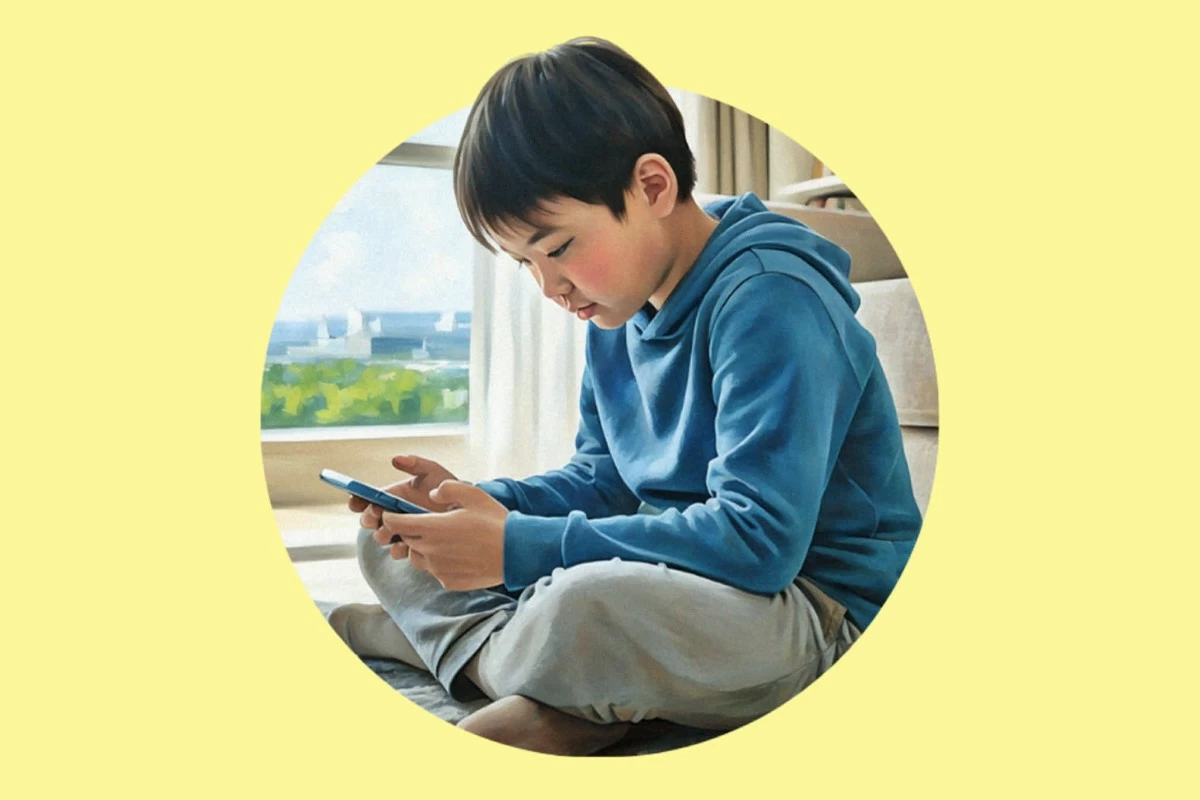
On this Feast of the Santo Niño, let us pray for children everywhere who are constantly exposed to screens, text messages, and videos, and are drawn into an endless rhythm of doing, solving, clicking, and responding. May their parents teach them the habit of turning their hearts toward God, and speaking to Him in prayer.
The Gospels show us Jesus stepping away from the noise to pray, sometimes through the night, sometimes with tears and deep longing for the Father’s guidance. From His earliest years, through the quiet faith and daily example of Mary and Joseph, He learned that prayer was the foundation of His life. May children discover that God is not distant or unreachable, but a loving Father who is closer to them than they could ever imagine.

BLACKPINK set for comeback with new album 'Deadline' in February


Published Jan 15, 2026 03:53 pm
BLACKPINK (Instagram)

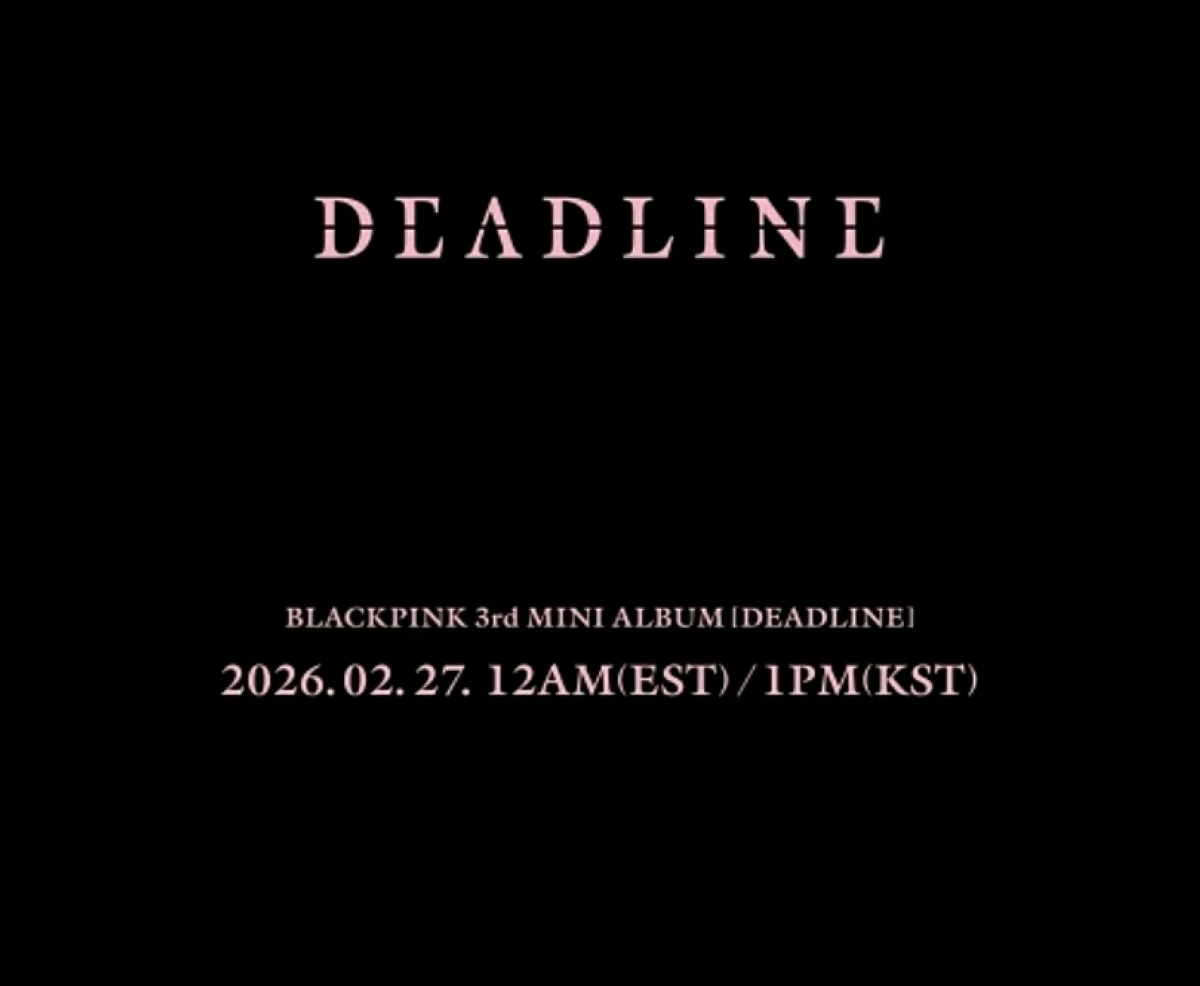
K-pop girl group BLACKPINK will be returning to the music scene with the release of their third mini-album “Deadline” on Feb. 27

On Jan. 14, a video announcing BLACKPINK’s new album was uploaded on YouTube

The album's title, "Deadline,” is the same name of BLACKPINK’s current world tour. Fans expressed excitement for BLACKPINK’s new album.    

Last year, with their digital single "Jump," BLACKPINK achieved their third No. 1 on the Billboard Global 200

YG Entertainment, BLACKPINK’s agency, earlier announced the group’s comeback. The agency said they have already finished filming the music video and other major album works and are currently in post-production. 

"We would like to express our deepest gratitude to the fans who have waited for a considerable amount of time. We plan to repay you with high-quality music, so please show lots of interest,” said the agency, Korean media reported. 

BLACKPINK’s world tour covers 16 cities with 33 shows. They held the concert tour in the Philippines on Nov. 22 and 23 last year at the Philippine Arena in Bulacan.   

They will perform at the Tokyo Dome in Japan from Jan. 16 to 18, and will end the tour at Kai Tak Stadium in Hong Kong on Jan. 24 to 26. 

BLACKPINK (Instagram)
The announcement about BLACKPINK's new album
The announcement about BLACKPINK's new album "Deadline" (Screenshot from BLACKPINK video on YouTube)

Screen time isn't the enemy—unsupervised app culture is


Here's what a psychologist advises parents to focus on instead

Published Jan 17, 2026 02:22 pm
For many parents, conversations about screen time come with guilt. We count minutes, set timers, and wonder if we’re doing enough, or too much, to protect our children from screens. According to registered psychologist Dr. Elaine Rose S. Ferrer, focusing on screen time alone is not enough.
“Framing the conversation purely around screen time misses the bigger picture,” she explains. “It doesn’t consider the quality and impact of how technology is being used.” The more important discussion should be about digital health, and how technology use intersects with a child’s emotional, social, and cognitive wellbeing.
Screen time alone isn’t enough
Not all screens and their experiences are the same. Watching a family movie, attending an online class, or video-calling relatives is different from unsupervised scrolling through short-form videos curated by an algorithm.
“When we only focus on screen time, we ignore what kids are actually exposed to,” Dr. Elaine says. “Screen time includes TV, tablets, and phones—but what truly matters is what children are seeing, engaging with, and internalizing.”
This is where intention becomes important. Screens can be used as tools that support learning and connection, or simply as a way to pass the time. Dr. Elaine recalls witnessing this scenario in everyday parenting moments.
“I remember eating at a restaurant with friends whose tendency was to pull out a tablet so their child could stay busy while they ate,” she shares. “We’re not here to judge parents who want a bit of peace and quiet. But it’s important to understand the intentionality behind digital use.”
With intention in mind, parents can make conscious choices about what their children engage with, how long, and in what context. “Screen time then becomes a tool to supplement children’s experiences, not just something to fill time.”
TV versus apps
One of the most significant shifts in children’s media consumption today is the move from passive screen use to app-driven engagement. Unlike television, apps are powered by algorithms designed to keep users watching.
“Apps are driven by algorithms,” Dr. Elaine explains. “Yes, you can scroll, but the more you watch a certain type of content, the more that same content is fed back to you.”
“If app use is unsupervised, it can greatly influence a person’s identity and behavior,” she warns. “That’s why guidance is important—so children engage with the digital world in a healthier way, rather than letting algorithms stimulate their thoughts and feelings.”
Dr. Elaine clarifies that not all apps are harmful, but they require more awareness and involvement from adults, especially when children are still developing self-regulation skills.
Intentional screen use
Many parents feel conflicted about using screens as temporary distractions. Dr. Elaine emphasizes that understanding—not guilt—should guide these conversations.
“By being intentional with app use or screen time, we can make conscious efforts and choices,” she says, adding that intentional screen use transforms technology from a default solution into a purposeful tool. One that supports learning, creativity, and connection, rather than replacing offline interaction.
Identifying screen use
To help families better understand their digital habits, Dr. Elaine suggests distinguishing between different types of screen time.
Productive screen time includes activities that help children perform tasks or learn skills, such as writing school papers, attending online classes, or creating presentations.
Participative or engaging screen time involves interaction such as video calls, collaborative games, or live workshops where children actively engage with others.
Passive screen time requires minimal thought or participation, such as watching random videos or endlessly scrolling. “This is where unhealthy habits like doomscrolling can begin,” Dr. Elaine notes, especially when left unchecked.
The goal, she emphasizes, is balance and not elimination.
Guidance is the key
Monitoring digital health is not about strict bans or constant monitoring. “Supervision is meant to guide, not control,” Dr. Elaine says. Conversations, co-viewing, and checking in about what children consume online help them process their experiences more meaningfully.
Technology has become an increasingly integral part of everyday life, and there is no escaping it. What parents can do is to guide children through each experience. By focusing on intention and balance, screens can become tools for learning and advancement that support children’s growth.

Saturday, January 17, 2026

Back to the beginning


Published Jan 17, 2026 12:05 am | Updated Jan 16, 2026 05:09 pm
IT'S THE SMALL THINGS
Every new year comes with new beginnings, new chances, new opportunities. Or at least, this is how our minds have been programmed to think. But with every new year, we cannot forget what we have left behind. If there is anything I learned more than ever last year, it is the importance of always going back to our roots – our purpose, our reasons, and our “why?” It is only when we attune ourselves to live purposefully can we pave our path toward finding happiness, contentment and fulfillment. It is only when we find the very meaning in our purpose can we truly feel successful, and fuel our passion to continue doing more.
In order to begin the journey, or even just to re-visit our purpose, we have to go back to our very reason, and our “whys” – why are we doing this? Why have we gotten here? – to see if it is worth going on, if we have met our goals, or sometimes, to change direction and to re-examine. I think what people have to realize is that there is completely nothing wrong with the need to change things, tweak, or fine-tune. Change does not equate to failure or weakness. In fact, it means and demonstrates the strength to admit the wrong, and do something about it. Instead of resisting change, we must remember that it is the only constant in this world, and the sooner we accept and imbibe it, the more progressive we can become.
Once we find our purpose, we will simultaneously find the meaning behind it all, and that will consistently substantiate our very reasons. As time passes by, our reasons become multi-layered, as our meaning becomes multi-faceted. After all, this is how we roll with the times, progress and evolve. The importance then becomes being resilient enough to focus, and stick to our original intentions, reasons and purpose.
As January is well on its way, it is now also the perfect time to re-align and re-visit – projects, people, daily chores and errands even, but most especially ourselves. It is an exercise we tend to shelf and deem unnecessary, but if only we take a little time to do, trajectories are much clearer, and the haze disappears. The holidays and the last quarter of every year have a way of throwing us off amidst all the pandemonium, and giving us the perfect excuse to do things later. As a new year begins, let us find our center, and re-focus, if only to aim for clarity for the rest of the year.

24 candidates vie for Miss World Philippines 2026 on Feb. 3


By Annalyn S. Jusay
Published Jan 17, 2026 08:10 am


The grand coronation night of Miss World Philippines will be held on Feb. 3 at the SM Mall of Asia Arena, with the organization officially presenting its 24 candidates to the media at the Golden Ballroom of Okada Manila on Jan. 16.

Miss World Philippines 2026 candidates pose with MWP national director Arnold Vegafria (center) at Okada Manila.

In his opening remarks, Miss World Philippines national director Arnold L. Vegafria expressed hope that the country's second blue crown is within reach, following Megan Young's win in 2013. He noted that last year's representative, Krishnah Gravidez, came close after being named Miss World Asia 2025 at the 72nd Miss World pageant held in Telangana, India.

"Krishnah set the bar high with her near-finish last year, but we pray that we remain consistent with our winning track record," he noted.   

Aside from the main winner, the Feb. 3 pageant will also crown the candidates who will represent the Philippines in Universal Woman 2026 and Miss Global 2026.

This year's official candidates are the following: 

1. Nikki Malabuyoc Lorzano - Batangas

2. Carolyn Kean Tuquero - Bauan, Batangas   

ADVERTISEMENT

3. Gwen Marie Perion - Bukidnon

4. Jayvee Lyn Lorejo - Davao Region

5. Imani Ja'Asia Quiban-Smith - Filipino Community of Hawaii

6. Marizza Delgado - Filipino Community of New York

7. Angel Abergas - Filipino Community of Singapore

8. Margarethe Elize Romano - Filipino Community of United Kingdom   

9. Valerie Pawid West - Ifugao

10. Christal Briseis Polancos - Iligan City

11. Zia Ainhize Arboleda - Laguna

12. Anne De Mesa - Manila

13. Zoe Sofia Gabon - Naga City

14. Cindy Valencia - Negros Island Region

15. Meridith Bobadilla - Occidental Mindoro

16. Ronette Castillo - Oriental Mindoro

17. Jiji Galapia - Pampanga

18. Asia Rose Simpson - Quezon City

19. Kiana Rose Henson - Quezon Province

20. Lorraine Ojimba - Rizal Province

21. Olivia Grace Reilly - Sultan Kudarat

22. Cherline Dalangin - Valenzuela

23. Ansha Lichelle Jones - Zamboanga City

24. Roveelaine Eve Castillo - Zamboanga Peninsula

Darling of the Press winners were (from left): Miss Ifugao, Miss Davao Region, and Miss Filipino Community of the United Kingdom

At the event, three candidates were named the Darling of the Press based on their beauty, personality, and stage presence. They are: Miss Davao Region Jayvee Lyn Lorejo, Miss Ifugao Valerie West, and Miss FilCom UK Margarethe Romano.

The candidates will now proceed to a series of fast-track competitions, including Top Model, Talent, Sports Challenge, Multimedia Challenge, and Head-to-Head Challenge. This will all culminate in a Charity Gala Night scheduled on Jan. 29 at the Okada Manila Grand Ballroom.

Vegafria noted that one of its accomplishments this year was acquiring more franchise partners. This led to the participation of Filipino communities in Hawaii, New York, Singapore, the United Kingdom, as well as in Davao City, Ifugao Province, Iligan City, and Sultan Kudarat.

Arnold Vegafria (second from left) is flanked by his queens: Miss World Asia 2025 Khrishnah Gravidez (leftmost),  Universal Woman 2025 PH delegate and MWP 2024 first runner-up Jasmine Omay (second from right), and Universal Woman Philippines 2025 Sophia Bianca Santos
Arnold Vegafria (second from left) is flanked by his queens: Miss World Asia 2025 Khrishnah Gravidez (leftmost), Universal Woman 2025 PH delegate and MWP 2024 first runner-up Jasmine Omay (second from right), and Universal Woman Philippines 2025 Sophia Bianca Santos

"This is part of our organization's push for inclusivity and our legacy of promoting local tourism. I always say pageantry is the best and cheapest platform to promote our tourism industry. If the government will not do anything to promote, then we will take the initiative ourselves because we love our country," he stressed.

Miss World Philippines 2026 is presented by: JuanHand in cooperation with Bench, Bench Body, and Bench Active. Major sponsors are: GlutaLipo, Philippine Airlines, Honest Glow, Hikari, Hotel 101, SY Glow, Discovery Suites, Monarch Montage Skin Science and Medical Aesthetics International, Nova Aesthetic and Wellness Clinic, and co-sponsors MWell, Hairfix, Megan Beauty, Nutriexpert, Deoflex, and Nook Salon + Estetik. 

Miss World PH also gives thanks to: John Robert Powers, SysProtech, Reyes-Tacandong and Company, City of Pasig, Jojo Bragais, Southville, Power House, Victoria Sports Club, Kembot Studios, Sta. Barbara Polo & Racquet Club, Peculiar Eyewear, Proshot, Flower Bouquet by Abbey Abad, and Flower Bouquet by Muelo.

Motorists face ₱2 fuel hike as Iran unrest spurs supply risk


By Gabriell Christel Galang

Published Jan 16, 2026 09:41 am


Fuel prices are poised for a hefty jump next week as escalating geopolitical risks in the Middle East and the Black Sea outweigh a potential global supply glut.

Based on the four-day trading data from the Mean of Platts Singapore, gasoline prices may rise by ₱1 to ₱1.20 per liter, while diesel is projected to spike by ₱1.80 to ₱2 per liter. Kerosene is also expected to increase by approximately ₱1 per liter.

The potential adjustments follow a volatile week where supply disruption fears took center stage.

The rally is being driven by civil unrest in Iran, the fourth-largest producer in the Organization of Petroleum Exporting Countries. Demonstrations against the country’s clerical system have sparked concerns over the stability of its output, which accounts for roughly four percent of global demand.

Any sustained loss of Iranian exports would tighten markets across Asia, particularly in China, which remains the primary buyer of the Islamic Republic’s crude.

“Crude oil and finished petroleum products had a short-lived upswing this week driven primarily by fears of an escalation in tension in Iran,” said Rodela Romero, director of the Department of Energy’s Oil Industry Management Bureau.

Market participants are also monitoring the Strait of Hormuz, a critical chokepoint for global oil transit.

Leo Bellas, president of Jetti Petroleum, said that despite a looming supply surplus, the threat of United States (US) intervention in support of Iranian protesters has raised the risk of the conflict spreading and threatening flows through the waterway.

Further pressure emerged from the Black Sea, where drone attacks on two Western-operated oil tankers added to the geopolitical premium. The incident has intensified worries that regional conflicts are expanding to hit vital energy infrastructure far beyond the Persian Gulf.

Domestic factors are exacerbating the impact of rising global benchmarks. The Philippine peso recently hit a record low of ₱59.46 against the US dollar, adding an estimated ₱0.10 to ₱0.50 per liter to the projected price hikes.

To be sure, some factors could limit the scale of the increases. The U.S. recently reported a larger-than-expected build in oil and fuel inventories, and the potential for steady supply from Venezuela may provide a buffer. However, these factors have yet to offset the risk premium currently baked into regional prices.

Hat das Sparbuch ausgedient? So können Sie sinnvoll Geld für Kinder anlegen


Sparbuch mit Euro-Münzen
Ein Klassiker, der inzwischen durch konstant niedrige Zinsen ausgedient hat: Das Sparbuch. © IMAGO/BODE

Das Sparbuch war lange der Klassiker, wenn Eltern oder Großeltern Geld für Kinder und Enkel anlegen wollten. Doch es gibt bessere Alternativen.

Viele Eltern möchten frühzeitig finanziell für ihre Kinder vorsorgen – doch das klassische Sparbuch ist dafür kaum noch geeignet. Die Zinsen sind niedrig, während die Preise steigen. Das bedeutet: Das Ersparte verliert über die Jahre an Kaufkraft, selbst wenn der Kontostand wächst. Für langfristige Ziele wie Studium, Ausbildung oder eine Starthilfe ins Erwachsenenleben braucht es daher bessere Lösungen.   

Tipps rund um das Thema Familien-Finanzen finden Sie auch in unserem gratis PDF:

Finanzielle Unterstützung für Familien vom Staat

Download für gratis PDF-Ratgeber: Finanzielle Unterstützung für Eltern
Das PDF gibt einen Überblick für Familien rund um das Thema finanzielle Unterstützung. © IMAGO / Zoonar & Ippen.Media

Welche finanziellen Unterstützungen gibt es vom Staat für Eltern vor und nach der Geburt des Kindes? Dieses PDF gibt einen Überblick über die Leistungen, einzuhaltende Fristen und Voraussetzungen für den Bezug der Gelder.   

Eine der beliebtesten Alternativen sind ETF-Sparpläne. Sie investieren breit gestreut in viele Unternehmen und bieten langfristig deutlich höhere Renditechancen als klassische Sparprodukte. Durch regelmäßige Einzahlungen profitieren Eltern vom Durchschnittskosteneffekt, der Kursschwankungen abmildert. Auch Fonds, Tages- oder Festgeldkonten können sinnvoll sein – vor allem für kürzere Zeiträume oder als Ergänzung zu renditestärkeren Anlagen. Viele Familien setzen auf eine Mischung aus Sicherheit und Wachstum.

Eigene Steuerfreibeträge der Kinder nutzen

Besonders interessant ist das Anlegen auf den Namen des Kindes, etwa über ein spezielles Kinderdepot bei Banken oder Online-Bro­kern. Der große Vorteil: Kinder haben eigene Steuerfreibeträge, die genutzt werden können. Kapitalerträge bleiben so oft steuerfrei, während Eltern mit denselben Erträgen möglicherweise bereits Steuern zahlen müssten. Wichtig ist jedoch zu wissen: Das Geld gehört rechtlich dem Kind und steht ihm spätestens mit dem 18. Geburtstag vollständig zur Verfügung.   

Kinderdepots sind bei vielen Banken günstig oder sogar kostenlos und eignen sich gut für langfristige Sparpläne. Ein Anbieter-Vergleich lohnt sich, da Kosten, Angebot und Bedienung variieren.

Noch mehr Infos zu finanziellen Hilfen für Familien vom Staat haben wir in einem praktischen PDF zusammengefasst.   

Fazit zur Geldanlage für Kinder

Wer Geld für sein Kind anlegen möchte, sollte das Sparbuch nur noch als kurzfristige Lösung sehen. Langfristige Anlagen wie ETF-Sparpläne bieten deutlich bessere Chancen, Vermögen aufzubauen und die Inflation auszugleichen. In Kombination mit der Nutzung der Steuerfreibeträge für Kinder lässt sich mit überschaubaren Beträgen früh ein solides finanzielles Fundament schaffen – je früher, desto besser.

Forging the Filipino future

A new year has just begun, but 2026 arrives with a bang, as if to remind us that the world does not pause for calendars.


Nicolás Maduro, the embattled president of Venezuela, has been captured by the United States. On the surface, it is another headline in the endless stream of news, yet for us in the Philippines, it resonates differently. When we see a leader being taken down by the United States, it echoes a history we know too well, a history that continues to shape how we understand power and resistance.


When Maduro’s capture appears on our smart phone or television screens, it is difficult, as Filipinos, not to think of our own past, when after the Spanish-American War, the United States annexed the Philippines, transforming what had been hope for liberation into a long, bloody struggle against a new colonizer.


The Philippine Insurrection, or the Philippine-American War, began in 1899, triggered by the firing upon soldiers who had expected independence after Spain’s defeat, and over the next three relentless years, guerrilla tactics, ambushes, and brutal reprisals left tens of thousands of Filipinos dead, exposing in the harshest terms the violent logic of imperial ambition and the fragility of freedom when power is unevenly distributed.


In March 1901, in Palanan, Isabela, a small group of American soldiers, led by General Frederick Funston, disguised as prisoners of war, slipped deep into Aguinaldo’s camp and captured Emilio Aguinaldo, the self-proclaimed President of the Philippine Republic, effectively decapitating the leadership and causing organized resistance to falter; history, if we are willing to look closely, shows this pattern repeating itself across time and place, whether it was Saddam Hussein in Iraq, Muammar Gaddafi in Libya, or now Nicolás Maduro in Venezuela, where the removal or isolation of a leader sends a message, not only to the people resisting but to the wider world, that dissent against the hegemon will not be tolerated.


From where I stand, as a Filipino youth committed to understanding global affairs, 2026 is shaping up to reveal how far a global hegemon will go to preserve its grip on power, and guided by its grand strategy, every policy, every alliance, every intervention seems designed to secure a world order in which it remains dominant. I support Western values such as freedom and justice—they are worth defending—but history and current events show that these ideals are often subordinated to strategic interests, bending to serve power rather than people.


Even domestic policies abroad, or actions aimed at vulnerable populations, demonstrate how foreign and domestic priorities converge in the service of control, which leaves those who resist to face the full weight of that power.


This is the paradox we, as Filipinos, inherit: the language of moral leadership, often spoken with grand ideals and lofty promises, frequently conceals a simpler, harsher truth—that survival, control, and dominance, rather than justice or virtue, drive the actions of the powerful, while ordinary people bear the heaviest consequences, struggling to live and to dream under systems they neither shaped nor consented to.


The Global North frames its interventions and strategies as the defense of order, as the maintenance of stability, yet much of the Global South, where the Philippines is part of, experiences them as nothing more than the continuation of an uneven system, one in which compliance is rewarded, dissent punished, and the very notion of freedom becomes contingent on the whims and calculations of those in power.


As Filipinos, we have seen this play out across generations: in the sudden imposition of foreign policies, in the rewriting of our history, and in the ways in which decisions made oceans away ripple through our daily lives, shaping what we can aspire to, what we are allowed to question, and ultimately, what it means to be free in our own land.


2026 is not just another year to mark on the calendar; it arrives as a challenge, a call to remember that history is not a distant story but a living presence that shapes how we, as Filipinos, perceive the world and our place within it. It reminds us that the struggles for sovereignty, for dignity, and for self-determination did not end with Aguinaldo’s capture or with the countless unnamed heroes who took up arms against colonizers; they continue in every act of resistance against oppression, in every effort to claim our rights, and in every question we ask about who truly holds power in our world.