๐๐ฎ๐ซ๐ข๐๐ง ๐๐ฎ๐ฆ๐ฆ๐ข๐ญ ๐ญ๐จ ๐๐ช๐ฎ๐ข๐ฉ ๐๐๐๐๐ฐ๐๐ง๐ฒ๐จ ๐๐๐ซ๐ฆ๐๐ซ๐ฌ ๐๐จ๐ซ ๐ ๐ฅ๐จ๐๐๐ฅ ๐ฆ๐๐ซ๐ค๐๐ญ ๐๐๐ฆ๐๐ง๐๐ฌ
This might not be the typical expat blog, written by a German expat, living in the Philippines since 1999. It's different. In English and in German. Check it out! Enjoy reading! Dies mag' nun wirklich nicht der typische Auswandererblog eines Deutschen auf den Philippinen sein. Er soll etwas anders sein. In Englisch und in Deutsch! Viel Spass beim Lesen!
You plan to move to the Philippines? Wollen Sie auf den Philippinen leben?
Ja, es gibt tonnenweise Webseiten, die Ihnen sagen wie, warum, vielleicht warum nicht und wann Sie am besten auf die Philippinen auswandern kรถnnten. Ich mรถchte Ihnen in Zukunft "zwischen den Zeilen" einige zusรคtzlichen Dinge berichten und erzรคhlen. Viel Spass beim Lesen und Gute Unterhaltung!
Total Pageviews
Thursday, November 13, 2025
๐๐ฎ๐ซ๐ข๐๐ง ๐๐ฎ๐ฆ๐ฆ๐ข๐ญ ๐ญ๐จ ๐๐ช๐ฎ๐ข๐ฉ ๐๐๐๐๐ฐ๐๐ง๐ฒ๐จ ๐๐๐ซ๐ฆ๐๐ซ๐ฌ ๐๐จ๐ซ ๐ ๐ฅ๐จ๐๐๐ฅ ๐ฆ๐๐ซ๐ค๐๐ญ ๐๐๐ฆ๐๐ง๐๐ฌ
A lesson from the super typhoon: Protect our mountain ranges

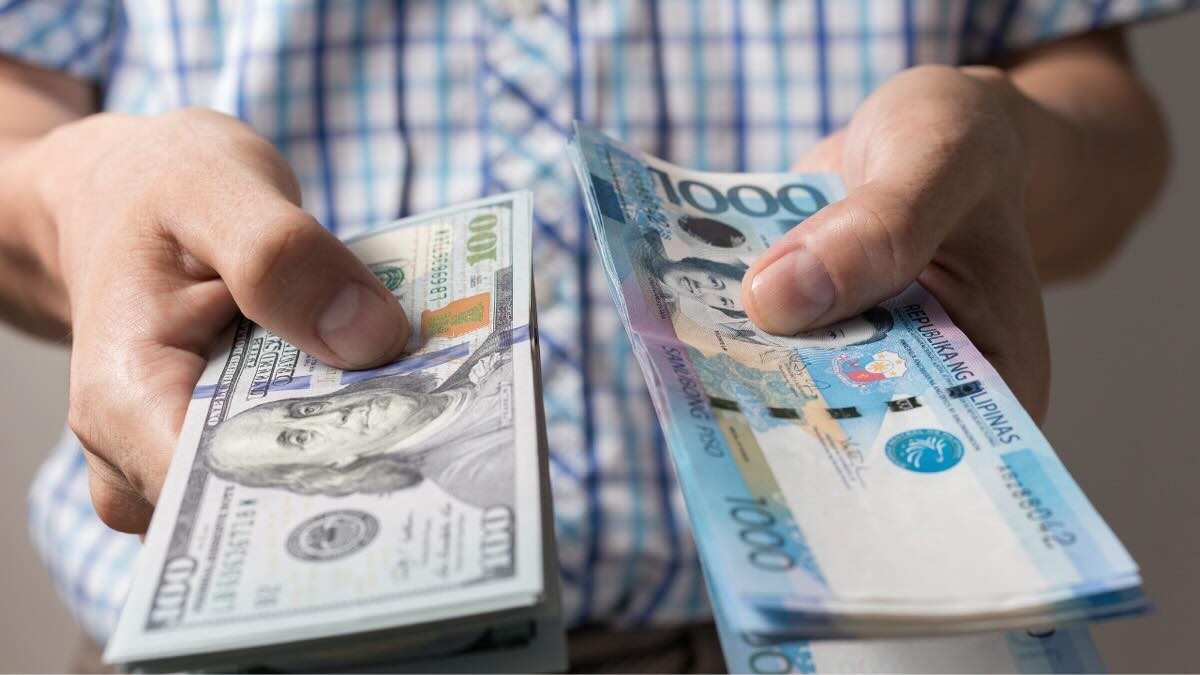
Cratering peso sinks to new record low vs US dollar

The Philippine peso fell to a new record low on Wednesday, as investor confidence continued to be rattled by a widening corruption scandal at home that has already taken a toll on economic growth.
The local currency weakened by 18.5 centavos from the previous day to close at 59.17 against the dollar, surpassing the previous record low of 59.13 set on Oct. 28. Trading volume was heavy, rising to $1.7 billion from $1.47 billion in the prior session.
“Locally, market confidence is being tested by governance issues and slower growth, which make investors more cautious,” John Paolo Rivera, a senior research fellow at the state-run Philippine Institute for Development Studies, said.
FIRST IN 2 YEARS
FIRST IN 2 YEARS
The roots of poverty and overcoming it
By Fr. Shay Cullen, Founder since 1974
Juan dela Cruz and 20 of his neighbors in a remote village in southern Mindanao are rejoicing. They sell their mangoes every year to an ethical enterprise and receive high prices from them; they also receive additional payments and other benefits. Before, traders rejected their mangoes because these were too small. Then, the enterprise bought almost all of their mangoes at fair prices and turned them into dried mangoes. The farmers then invested their bonus earnings in small enterprises like piggeries, chicken farms and sari-sari stores, helping them overcome their poverty.
What is urgently needed in countries like the Philippines — where inequality is great — is practicing fair trade principles. Implementing these principles helps people organize themselves into farmers’ associations and secure fair prices for their products. Together, they protect the environment, help educate people, ban child labor, go organic, and promote a healthy lifestyle and human rights. To end social injustice, government officials must follow fair trade principles and serve the people, not exploit them. To help people overcome poverty and hunger, we need to help them empower themselves; overcome their fears, lack of self-confidence and feelings of inferiority; and stand for social injustice and against exploitation.
The poor must stop their dependence on politicians for favors and financial assistance, since, in fact, the services of these officials are paid for by taxes. If development for the poor and an end to inequality are to be real and meaningful, there has to be a strong and well-organized national movement for social and economic justice that challenges the rich to control their greed for unlimited personal and corporate growth and profits, and redirects themselves to working for meaningful human development and espousing social responsibility.
Government officials must be persuaded to serve the people, not the interests of powerful corporations. Together with the people, the government and rich, socially responsible corporations can work together and build a more just society. Their goal must be to uplift more than 17.5 million Filipinos out of humiliating and crushing poverty and hopelessness.
There are good rich people who work for social transformation and to end poverty and hunger. But they are not enough. For some, national transformation and an end to poverty are considered an unreachable ideal or hopeless dream, because it calls on the rich to share their wealth with the poor in a sustainable way. But will they have the necessary change of mind and heart for this?
In the New Testament, when a rich young man was challenged by Jesus of Nazareth to share his riches with the poor, but cannot, Jesus said: “It is easier for a camel (or rope) to go through the eye of a needle than for someone who is rich to enter the Kingdom of God.” Many rich people worship money, and they don’t believe in a God that is unselfish love, compassion, justice and truth personified.
Blessed are the rich and all who have feelings of concern, understanding and solidarity with the poor and dedicate their wealth and even their lives to do good and end human suffering. There are an estimated 12,800 millionaires and 12 billionaires in the Philippines and 70 individuals with a net worth of at least $100 million, according to a Henley & Partners Private Wealth Migration report in 2025. If even a few of them focus on alleviating poverty, they could save millions of people from great hunger and suffering. Their lives would be worthwhile and have great value if they do so.
Beyond the Philippines, there are 5 billion people in the developing world suffering hunger without access to humanitarian aid, like those in Sudan. Approximately another 575 million people will suffer extreme poverty by 2030, the year the United Nations and rich nations said poverty would be eradicated. These are just empty promises. If every empty promise were a sack of rice, we could feed the world.
In 2024, there were about 2.59 million Filipinos unemployed and unable to feed their families. By August 2025, there were 2.03 million unemployed, the Philippine Statistics Authority said. A Social Weather Stations survey in September 2025 said 41 percent of Filipino families rated themselves “food-poor,” or unable to eat a full, healthy meal a day. The OCTA Research group has said in a report that approximately 11.3 million Filipino families suffered from food poverty. A UN Children’s Fund report from 2024/2025 revealed that around 18 percent (or 2 million) children in the Philippines suffered from severe food poverty, often eating primarily starch with little or no protein. That’s where “pag-pag” food comes in to help. The leftovers from the dining plates of the rich in fine restaurants are collected, recycled, and recooked and shared with the hungry poor.
The cause of poverty and hunger lies in the political structure of the country, where the super rich virtually hold the electoral process captive. A few hundred families are managing a nation of 115.8 million people. But there is always hope. Enough rich people might have a change of mind and heart, and work for the common good and dedicate themselves and their wealth to serving humanity, like Microsoft founder Bill Gates.
Another source of change is possible by the emergence of a new generation of educated young people committed to human rights and social justice, and filled with compassion for the poor. These people are moved by the hunger, social injustice and inequality plaguing more than 17.5 million impoverished Filipinos. They want to change it, but how?
As David Boyd, the former UN special rapporteur on human rights and the environment, said: “Powerful interconnected business and political elites — the diesel mafia — are still becoming wealthy from the existing system. Dislodging this requires a huge grassroots movement using tools like human rights and public protest, and every other tool in the arsenal of change-makers.”
Filipinos’ peaceful grassroots movement for social justice and human rights is growing as hundreds of brave, socially committed, environment- and human rights-focused Filipinos sacrifice themselves in the service of the poor. They are inspiring many more and keeping alive the faith by doing good and opposing wrongdoing against the poor, believing in Jesus of Nazareth that they can and will win. With that kind of faith, how can they fail in due time to change the Philippines for the better?
2020’s return
To time travel is impossible and far-fetched.
Not until I started hearing these sounds, which transported my consciousness back in time. It was when we, the digital community, conquered boredom and isolation that led to an incredible amount of fun, companionship, and even an eventful lockdown.
That transport happened one cozy afternoon in my room. I was curled up in bed, phone in one hand, while I scrolled through my TikTok “For You” page.
My account is just a sea of pop culture memes, a student’s life at university, and mostly about my favorite artist, Tate McRae. When a single swipe from my thumb reveals what’s been lurking underneath, I can’t ignore it or refresh my feed.
The content’s caption said: “Most Iconic Songs in 2020.” I even balled up my position like a millipede. Something knocked my brain that felt so good when the first song started playing: “Supalonely” by Benee. Its striking melody caressed me and all I could do was listen. The way it could lift my soul and take me to that time was a sign that I wanted to hear more of those songs that trigger such memories from the past.
Another iconic song that made my mattress cozier, and I’m confident that each one of you knows this: “Backyard Boy” by Claire Rosinkranz. You will easily remember how it sounds because of its undying lyrics, “Five, Six, Seven, Eight / Dance with me in my backyard, boy / Looking super fine in your corduroy / Drive me ‘round the block / We can go in a loop.”
At night, I crawled under the sheets. I wasn’t sleeping yet because the songs I just listened to were still sailing over my head so I had my phone and opened my Instagram to the Explore page. By the time I became drowsy, I told myself to make one scroll before wrapping up everything. When I did, a content out of nowhere flashed before my eyes. There were stars revolving against the dark backdrop, flowers blossoming, and a man holding a coffee mug.
What caught me was the warm-hearted sound of “Coffee” by Beabadoobee and how fast it shot right through my senses. “Don’t stay awake for too long / Don’t go to bed / I’ll make a cup of coffee for your head / I’ll get you up and going out of bed.”
I looked at the comments to see how people’s emotions responded to that. One commenter said, “I feel so nostalgic.” And there was a comment that drew the same visceral reaction from everyone, bringing even more vivid pictures to me about the early pandemic: “Memories of 2020.” It got 10,158 likes and counting.
Seeing it heals me. Seeing it comforts me. We’re in the same boat.
I thought I was the only one revisiting songs in 2020. Just this year in August, Benji Krol and Anokhina Liza, who earned stardom behind the heart makeup in 2020 using ElyOtto’s “SugarCrash!”, one of 2020’s trendy songs, recreated their looks once more. An emphatic statement from viewers that stood out to me was, “We are back at the start,” pertaining to the year 2020. The comment got a mega 1.1 million likes.
Similar to what Jason Derulo did. His song “Savage Love” paired with that legendary dance became a big hit that blew up TikTok’s domain. Derulo and TikToker Justmaiko performed the whole thing again in September, capturing the same energy they had five years ago.
But the person I would never forget who hopped on that trend was my dad. His almost glitching hands while doing the dance movement made me and mom giggle, but the most striking were those crinkly lines on the side of his eyes because he was smiling too much. Also, thanks to Ranz and Niana’s “Savage Love” siblings dance we couldn’t get enough of. On the other hand, my mom who was happily clapping for my sister’s take on “Gatal Gatal” dance was just contagious. Hearing those sounds once again evokes memories like fresh grapes just picked from the vineyard.
People online also associate music with areas in their house, either outside or inside, where they used to dance. Some studies show that hearing a few notes of a song can take us back to a period or place from the past.
To let it all out, I invited my friend to sleep over. In the morning, we challenged each other to guess the iconic songs of TikTok 2020 through a dance. We did “Sunday Best” by Surfaces; “Heartbreak Anniversary” by Giveon; “Say So” by Doja Cat; “Copines” by Aya Nakamura; “Marikit” by Juan Caoile (one that Filipinos loved).
Artists behind those viral songs and TikTokers who made them popular received a lot of attention just as people listening to them now experience a lot of nostalgia.
We lodged them in our minds as part of that memory. We romanticized these collections because they helped us through the ups and downs of that era.
We might not be able to literally travel back to 2020, but we can by listening and dancing to the songs from that period.
We can always bring it back—and we’ll easily remember.
Kenneth Wayne Batangan Visaya
Tuesday, November 11, 2025
Angel Bianca Agustin crowned Miss Asia Global 2025 in India