You plan to move to the Philippines? Wollen Sie auf den Philippinen leben?

There are REALLY TONS of websites telling us how, why, maybe why not and when you'll be able to move to the Philippines. I only love to tell and explain some things "between the lines". Enjoy reading, be informed, have fun and be entertained too!

Ja, es gibt tonnenweise Webseiten, die Ihnen sagen wie, warum, vielleicht warum nicht und wann Sie am besten auf die Philippinen auswandern könnten. Ich möchte Ihnen in Zukunft "zwischen den Zeilen" einige zusätzlichen Dinge berichten und erzählen. Viel Spass beim Lesen und Gute Unterhaltung!


Visitors of germanexpatinthephilippines/Besucher dieser Webseite.Ich liebe meine Flaggensammlung!

free counters

Total Pageviews


Tuesday, July 29, 2025

Complexities, opportunities, dangers


By Fr. Roy Cimagala

Chaplain

Center for Industrial Technology and Enterprise (CITE)

Talamban, Cebu City

Email: roycimagala@gmail.com


THAT’S what we are facing these days. We actually have been having them for quite a while now, but these days, with the advent of AI—and we can expect more advanced technologies in the coming years—things have become exponentially more complicated.


How should we handle this condition such that we can manage not to be trapped by them and diverted from our true goal in life? Perhaps, we can get some ideas from these words of Christ in the gospel.


“The kingdom of heaven is like unto a treasure hidden in a field, which a man having found, hid it, and for joy thereof goes and sells all that he has, and buys that field.” (Mt 13,44) Reiterating the same point, he said: “Again the kingdom of heaven like a merchant seeking good pearls. When he had found one pearl of great price, he went his way, and sold all that he had, and bought it.” (Mt 13,45-46)


In other words, to successfully navigate in these complicated times, we need to see to it that while we immerse ourselves in these powerful things of today’s world, we have to practice a certain kind of detachment from them so that our pursuit for the kingdom of heaven is not undermined, much less, compromised.


But let’s remember that detachment here does not mean that we run away from the things of the world. We have to take advantage of the good opportunities these new and very powerful technologies offer. I am happy, for example, that many young people today are going into start-ups that are helping them and the economy on the whole.


The detachment we are speaking of here simply means that we are clear and strong about the goal we are supposed to pursue. The things of this world are simply means, occasions and reasons for us to go on with that pursuit. We should not allow them to entangle us along the way.


This certainly means that we should have a working and healthy spiritual life, a constant and intimate relation with God and with everybody else that is always nourished by the appropriate practices of piety, like regular periods of prayer and meditation, recourse to the sacraments, undergoing continuing formation and spiritual guidance, etc.


These practices of piety are much more needed now than before. They should be taught and popularized as widely as possible, focusing more on the young ones who are very vulnerable to be confused and lost in these complicated times. We cannot deny that nowadays we are witnessing a massive leap of juvenile cases of vices and perversions, addictions, mental and psychological illnesses, suicides, etc.


We need to remind everyone of the need to have the proper intentions in this life. To put it bluntly, the ultimate intention that is proper to us is that of doing everything for the glory of God. If that intention is not clear, we surely would be treading on a dangerous path that most likely would lead us to a bad end.


If there is such a thing as upskilling, that is, acquiring additional skills and capabilities, we should first of all “upskill” our spiritual life and the virtues involved, like prudence, detachment, etc. in order to face the complexities, opportunities and dangers of our times.


The challenge of our times actually invites us to grow more in our spiritual life, in our love for God and for others.



Monday, July 28, 2025

More than just reading

In the late 1980s, two American researchers conducted what would become one of the most cited experiments in education. A group of Grade 7 and 8 students was told to read a passage about baseball and answer a set of comprehension questions. As expected, strong readers who knew a lot about the sport obtained the highest scores. Surprisingly, however, students with lower reading ability but with extensive knowledge of baseball outperformed those with stronger reading skills but limited knowledge of the sport.

The now-famous baseball study challenged the long-held belief that reading is a skill that must be taught in isolation. It revealed how our prior knowledge of a topic acts like a scaffold that helps us make sense of new concepts by connecting them to what we already understand. A 2019 study published in Psychological Science reinforced this idea. Researchers found that when students are unfamiliar with 59 percent or more of the terms in what they’re reading, their ability to comprehend the text significantly suffers. To develop a child’s comprehension skills, it’s not enough to teach them how to read. We must assess what they know, build on that knowledge, and guide them to find the connections between ideas.

Understanding the science behind teaching comprehension skills matters now more than ever. In 2022, the Philippines ranked among the bottom 10 countries in reading comprehension in the 2022 Program for International Student Assessment. According to the World Bank, the Philippines has a 90 percent learning poverty rate, which means nine out of 10 Filipino 10-year-olds are unable to read or understand a simple paragraph. Since assuming office, Department of Education (DepED) Secretary Sonny Angara has prioritized addressing the learning crisis by launching various targeted interventions. Last week, DepEd announced a major improvement: the number of Grade 3 students who were unable to recognize letters dropped from 65,000 last year to just 2,000. This progress is certainly no small feat, and serves as a promising sign that urgent, focused efforts can move the needle.

You must upgrade your account to read the rest 

Sunday, July 27, 2025

The Weight of Words

If one wrong piece of advice could change your life forever, how careful would you be in choosing whom to listen to?

Looking for God in the little things


By Fr. Roy Cimagala

Chaplain

Center for Industrial Technology and Enterprise (CITE)

Talamban, Cebu City

Email: roycimagala@gmail.com


THIS is the lesson we can draw from those parables where Christ compared the Kingdom of God with a mustard seed and a yeast. (cfr. Mt 13,31-35) We need to develop the urge to look and find God in the little ordinary things of our daily life, because only then can we find him in the big things of life, whether good or bad in human terms.


God should be the one who should arouse our most intense and constant attraction. That’s because if we make God the source and cause of all our attraction, of all our joy and pleasures, of what ultimately gives us perfect satisfaction and ultimate fulfillment, all the other things can attract us and give us joy in the proper way, always respecting our true dignity as persons and as children of God.


Otherwise, there is no other way but for us to have merely a fake kind of joy, pleasure and satisfaction that can only lead us to bigger dangers. We really have to train ourselves to make God and to make following his will and ways the constant source and cause of our attraction and joy.


For this, we first of all should ask for God’s grace which is actually given to us in abundance. And from there, let’s go through some systematic plan of life that will nourish and strengthen our constant and intimate relationship with God, a relationship that should involve our entire self—body and soul, feelings, emotions and passions down to our very instincts, as well as our mind and heart.


It should be a plan that should obviously include prayer in all its forms—vocal, liturgical, ejaculatory, mental, contemplative, etc. Our life of prayer should be such that even when we are immersed in the things of the world due to our work and our temporal duties, we would still be aware of God’s presence, and it is doing God’s will that should always motivate us.


Let’s hope that we can manage to see and find God in the little ordinary things of our daily life. That’s because when we fail to see, know and love God in the little things, it is very likely that we also will fail to see, know and love God in the big things of our life. Let’s keep in mind what Christ said in this regard: “One who is faithful in a very little is also faithful in much.” (Lk 16,10)


In short, the point we should realize more deeply is that sanctity, our ticket to heaven, certainly requires heroism, even to the point of martyrdom. But we can be sure that by being consistently loving in doing the little things of life, especially when they are hidden and unappreciated humanly, we would already be very heroic indeed, even approaching the level of martyrdom.


What we have to do is to learn to find God in the little things which comprise most of our day, if not of our whole life. Another way of saying it is to learn to refer everything to God, no matter how little or insignificant it is.


We should always be with God at every moment of our day, offering things to him, asking him questions like, “Lord, how should I deal with this particular situation, be it an exciting work or a boring and tiring moment, etc.?”


When we learn to find God in the little things, we have a better prospect of being with God the whole day. Our pursuit for sanctity would be more consistent despite the varying conditions of our daily life.


Friday, July 25, 2025

Viva Hot Babes reunite to support Ella V’s business venture


Ella V (fourth from right), executive vice president of Ella’s Aura Wellness Spa, is joined by fellow Viva Hot Babes members (from left) Katya Santos, Zara Lopez, Andrea del Rosario, Maui Taylor, Sheree Bautista and Jaycee Parker. Diana Zubiri (fourth from left) also attends the spa launch


Leah C. Salterio - The Philippine Star 

July 25, 2025 | 12:00am


Viva Hot Babes member Ella V (Villanueva) recently opened her dream business, which saw an instant reunion of her former pop girl group.


At the opening of her Aura Wellness and Spa in its first location in Marikina City along Marcos Highway, Ella V was joined by Katya Santos, Maui Taylor, Sheree Bautista, Andrea del Rosario, Jaycee Parker and Zara Lopez. The ladies even did the popular Bulaklak dance for the guests.


“Sana kaya pa ng powers natin,” smiled Katya.


Ella, who has been based on the US West Coast with her family for nearly two decades now, was here three years ago to test the waters. “We changed our plans into this setup now,” Ella said. “We don’t want to offer expensive machines.”


They are looking for possible franchises in the south or Makati. “I know this is kind of far, but hopefully, we can branch out by next year.”


The challenge that Ella encountered from the start was to make her Aura Wellness Spa “unique” than the others. “We want to be unique from any other spa. We offer non-invasive treatments and our therapists do the services in an excellent way.”


At present, Aura Wellness and Spa has 15 staff members that cover her nail spa. “We teach and educate,” Ella said. “I joined the program that taught the curriculum. We sent our educator for neo-lifting and buccal to Singapore early this year to get the certification for the massages. They’re anti-aging treatments that include the scalp. Our educator is now qualified to teach.”


Ella’s younger sister, Paula Villanueva, is the co-owner, president and chief executive officer. “She invested her savings, too,” Ella said. “I love it that we now have a collaboration together.”


When show business inevitably beckoned to Ella, she lost no time to try her luck. She grabbed every opportunity to act, be on TV and perform onstage.


“Who would’ve thought that I was able to do it?” Ella said about her showbiz venture. “I may not be as big as I hoped I would be, but you know, it was a blast. I learned so much and I was able to leverage what I learned in all that I do in my personal and professional life.”


To be in showbiz was Ella’s original childhood ambition. She took up Bachelor of Science in Mass Communications at Dominican College. Initially, she got employed at Viva Films, where her college degree became useful and the doors to show business opened for her.


She appeared on the big screen and had the chance to be seen in such films as director Lyle Sacris’ “First Time,” with her fellow Viva Hot Babes stars (2003), Mac Alejandre’s “Lastikman” (2004) and even in Tony Reyes’ “Enteng Kabisote 3” (2006).


“I did work in radio, concerts and television, where I was able to put to good use the degree I took in college,” Ella asserted.


Eventually, she met the man of her dreams, tied the knot in May 2008 after she was uprooted from Manila and started her family in the US.


After the opening of business here, Ella will return to the US to attend to her weight loss clinic, which she opened in 2022. The clinic sells Ella’s VGlow products. Her sister, Paula, will manage the Marikina spa.


Back in the US, Ella is also busy attending to her family. She is married to physician-businessman Shane Manalang and they have four children — Isabella, 14, Jayden, 13, Justin, 10 and Jordan, seven.


On a daily basis, Ella checks on her kids and her husband. “Usually, my husband leaves the house early to go to work and I go on my day visiting our care homes and our spas,” Ella said.


“I am very lucky to be surrounded by a loving family. I know that they will always support me in all my endeavors. They not only support me in my professional career, but more so, on an emotional level that makes us a close-knit family.”


“I value my husband’s words of wisdom and how much he inspires me to work as hard as him for our children, family and our employees.”


“On weekends, it’s date night with my husband. It’s very important for us to spend alone time together. We understand that with our professional careers, our relationship and intimacy come first.”

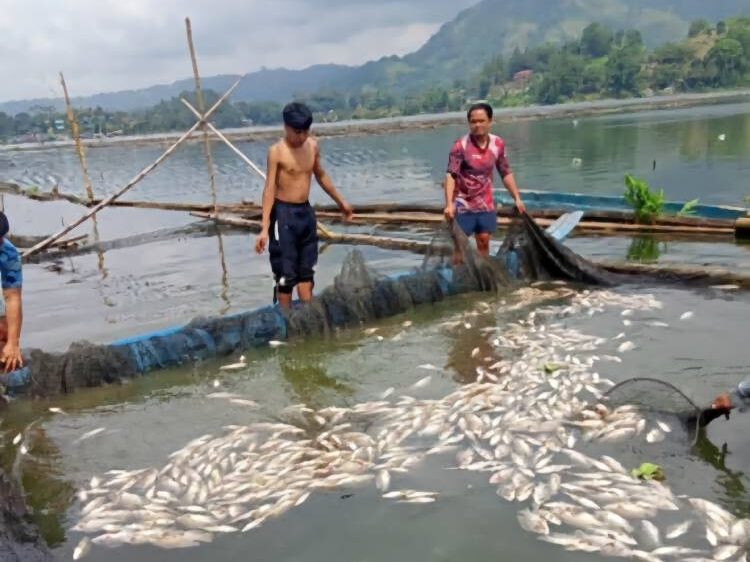
Fish kill in Lake Sebu blamed on ‘habagat’


KORONADAL CITY—Heavy rains due to the southwest monsoon, or “habagat,” triggered a fish kill in Lake Sebu, South Cotabato, affecting tilapia farms that are the main source of fish for many localities in the province.

Jose Rudy Muyco, lake warden of Lake Sebu town, noted that just like in the past, a fish kill, locally known as “kamahong,” follows episodes of torrential rains similar to the ones experienced in Mindanao several days ago.

“The rainwater that flowed from the forest to the lake could be contaminated, and it affects the oxygen level of the lake,” Muyco said, adding that other factors could have contributed to the kamahong, like “overpopulation” of fish stock.


Elysse Joson and McCoy De Leon end relationship


Elysse Joson and McCoy De Leon (A screenshot from Instagram)


By Robert Requintina

Published Jul 25, 2025 09:00 am


Actors Elysse Joson and McCoy De Leon have decided to end their relationship.

The celebrity couple announced their split on social media on July 25.

Elysse Joson and McCoy said they held on together as long as they could. However, it was time for them to let go, they said. The celebrities never married, but they have a child.

"No need for speculations, no assumptions. This wasn’t easy for either of us. We simply ask for kindness and respect as this story, and how it’s remembered, may one day shape what our daughter believes about love, family, and letting go," wrote Elysse and McCoy on Instagram.

Elysse and McCoy first became romantically involved after meeting on "Pinoy Big Brother" in 2016. They broke up in 2018 but later reconciled in 2020. The couple welcomed their daughter, Felize, in April 2021. In January 2023, McCoy confirmed that they had separated once again. However, a few months later, they got back together, only to separate again shortly after.

PSA: Rice prices to dip despite typhoons, but veggies may climb


A farmer harvests rice crops in a field in Kalayaan, Laguna on Thursday, May 29. Photo by John Louie Abrina | MB

Despite an expected onslaught of typhoons in the third quarter, the Philippine Statistics Authority (PSA) anticipates that consumer prices, particularly for rice, will continue to decline, but weather disturbances are expected to drive up vegetable costs. Read more

Mindanao is the second-largest island in the Philippines

 Jocelyn Cruza


Mindanao is the second-largest island in the Philippines, after Luzon, and seventh-most populous island in the world. Located in the southern region of the archipelago, the island is part of an island group of the same name that also includes its adjacent islands, notably the Sulu Archipelago. According to the 2020 census, Mindanao had a population of 26,252,442, while the entire island group had an estimated population of 27,021,036. Mindanao is divided into six administrative regions: the Zamboanga Peninsula, Northern Mindanao, the Caraga region, the Davao region, Soccsksargen, and the autonomous region of Bangsamoro. According to the 2020 census, Davao City is the most populous city on the island, with 1,776,949 people, followed by Zamboanga City (pop. 977,234), Cagayan de Oro (pop. 728,402), General Santos (pop. 697,315), Butuan (pop. 372,910), Iligan (pop. 363,115) and Cotabato City (pop. 325,079).[6] About 70% of residents identify as Christian and 24% as Muslim.[7][needs update] Mindanao is considered the major Bread Basket of the Philippines.

May be an image of map and text that says 'g-e Mindanao'

Is Germany named after the Germanic tribes?


 · 

In English, the major nation state between France and Poland is known as “Germany”. That is purely an English affair(*).

The French call that nation “Allemagne” — named after a southern Germanic tribe, the Alemans. The Poles call it Niemcy, which comes from an ancient Slavic word meaning “mute”. I assume the Poles thought the Germans were mute because they said nothing (couldn’t understand or reply) when addressed in Polish.

Up north, the Danes call the nation to their south Tyskland, which comes from “tysk” the Norse equivalent of German “deutsch”. It came from the Germanic word for “of the people” or “the vernacular” (the language the native people spoke).

So Germany is named after mute people, if you live in Poland; after the Aleman tribe, if you live in France; after the vernacular speakers if you are actually German, or by borrowing if you are Scandinavian. The English alone(*) use the old Latin name Germania, which in ancient times was used for all the territories across the Rhine from the Netherlands down to border of Switzerland. This name is of uncertain origin, but it seems that early on both the Celts and the Romans used it to describe people on “the other side” of the Rhine, like the Franks. Eventually the term Germania was used for “East Francia” — the Germanic speaking lands across the Rhine from France (“West Francia”).

So in English the nation is called Germany because of its medieval Latin use for that territory. But Germans call themselves approximately the “people’s land” or the “vernacular land”, while the Poles call it the “mute land”, and the French call it “the land of the Alemans”. “Germany” is not THE name for Germany, it is merely one of many names for that land, and not the name they call themselves: Deutschland.

Germans speak Deutsch — their vernacular language. They don’t speak “German” unless they are speaking English. They don’t call their country “Germany” unless they are speaking English. Germany is only named “Germany” by English speakers — not by anyone else, at least not by their neighbours, and not by the people who actually live there.

EDITED TO ADD:

(*) Sorry, I failed to spell out my mental context here: I am purely focusing on the nations immediately surrounding Germany, as well as English because we speak it. As I explain in a comment, other nations further away generally adopt a name used by those close by — including the name used by the Romans who guarded the Rhine across from the Germani two thousand years ago. In terms of linguistics and history, it is the names used by Germans and those immediate neighbours who have been interacting with Germans for the last two thousand years, that are the most interesting and significant.

Useful resource, also mentioned by some commenters:

Names of Germany - Wikipedia