
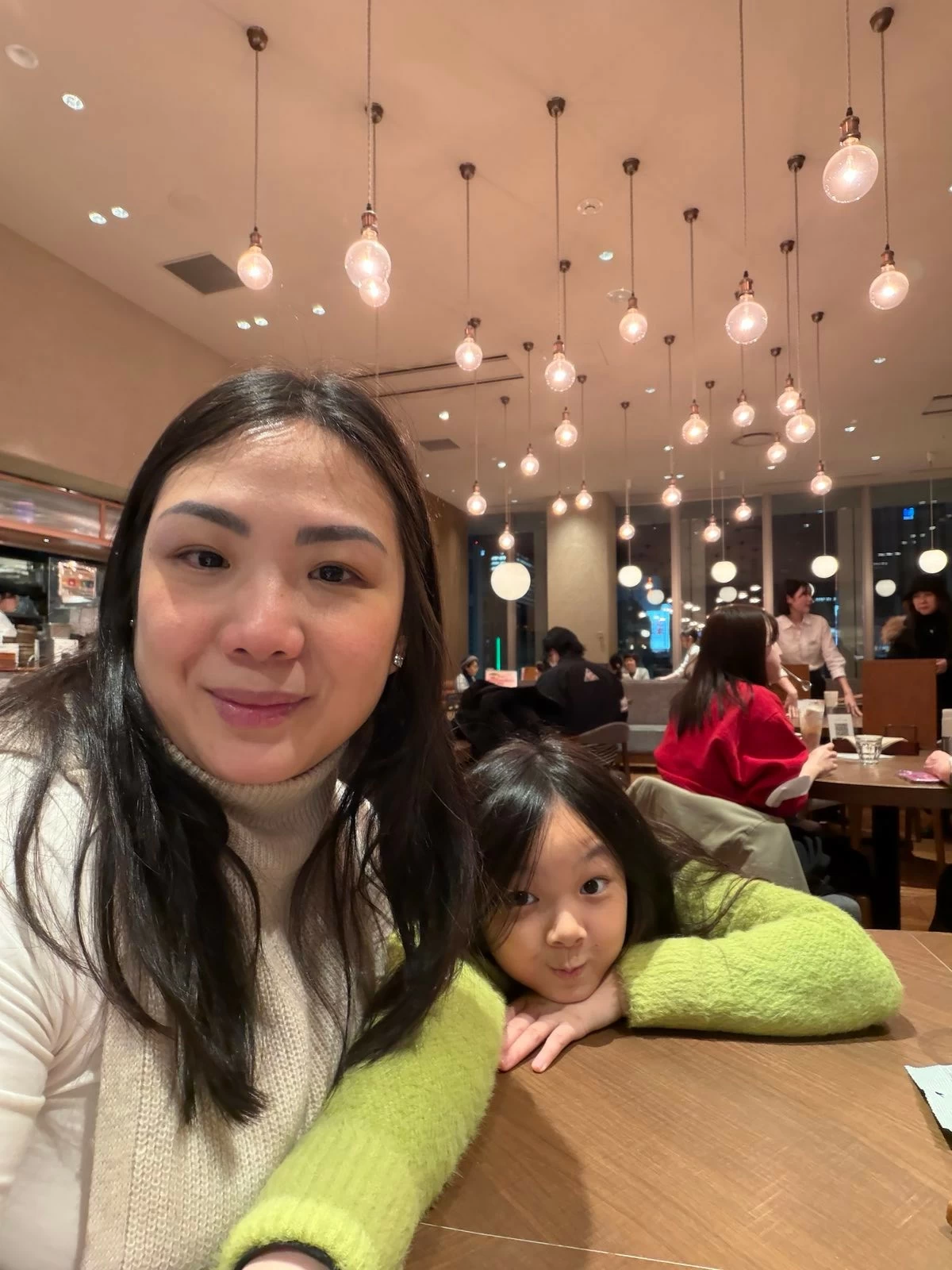
Kato and daughter Georgie, 9
‘Mag-jacket ka malamig’
Bringing a jacket for your child wherever you go, even when they insist they are not cold, is a very Filipino mom’s way of saying “I love you.” It is less about the weather and more about care, protection, and foresight. I grew up hearing “Mag-jacket ka, malamig,” and now I find myself saying the same thing to my own child. It is a quiet habit passed down through generations, rooted in love and concern for a child’s health long before they realize they need it.—Kato Lim, Momzilla co-founder, mom of one

Micah with husband Rommel and daughters Luna, 6, and Astrid, 3
‘Para sa inyo’
For me and my kids, the most Filipino way of saying “I love you” is simply, “Para sa’yo, anak, oo.” It is not expressed through big words, but through acts of service and quiet patience. Every time they ask me to pick them up from school, help with small tasks, tie their hair in the morning, or get them ready for the day, I show up. Even while juggling work, home, and business, I make the time. No matter how busy life gets, they will always come first.—Micah Alvarez-Diaz, Here and There PH - Kaleia country director, mom of two

Sarabeth and husband Jake with their children
‘Kumain ka na ba?’
For me, the most Filipino way to show love is through food, especially by preparing meals for the whole family. Thinking about what someone would like to eat is not just about serving something delicious. It is an act of care, a way of knowing a person deeply and being attentive to their wants and needs. Asking “Kumain ka na ba?” carries a deeper meaning. When a meal is prepared, it does not have to be expensive. As long as it is made with love, it becomes a way of saying, “You matter to me, and I love you.”
Sharing meals brings everyone closer, and salu-salo is a very Filipino term that we Filipinos like to celebrate not just with family, but with friends, teammates, and workmates. The table where we sit around to eat is a place where stories and laughs are freely shared, making social bonds stronger. These salu-salos don't need to be grand. Even simple ones are enough to show that you appreciate their presence and that you want everyone to have a great time.—Sarabeth Salcedo Soriano, Baliwag Lechon Manok operations director, mom of three
