
By Philippine News Agency
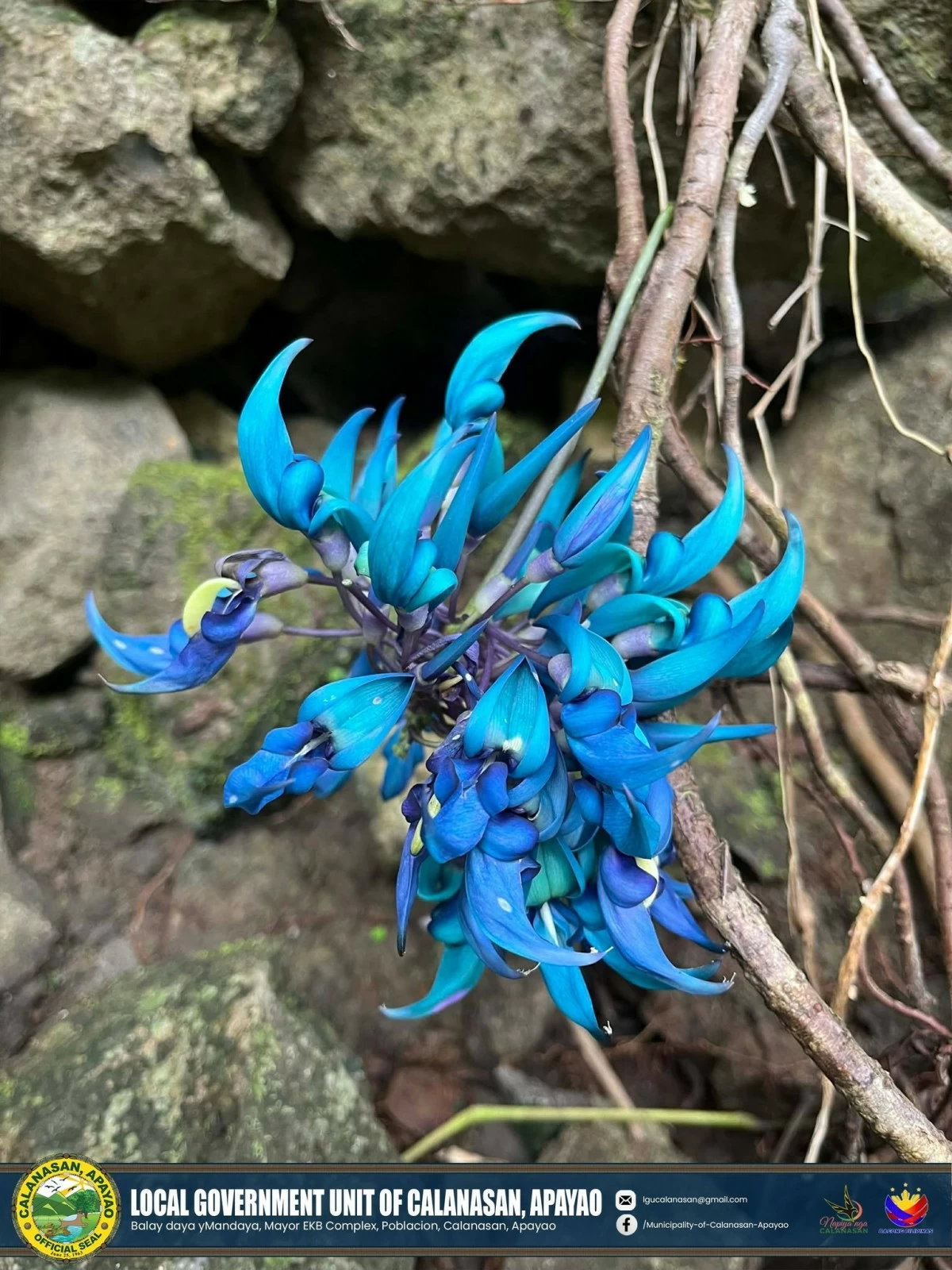
TAYABAK
CALANASAN, Apayao – Forest guards in Apayao province, along with personnel of the Municipal Environment and Natural Resources Office (MENRO) in mountainous Calanasan town, discovered clusters of thriving rare wild jade vine, or most commonly known as Tayabak (Strongylodon macrobotrys), in remote Barangays Tanglagan and Langnao.
Municipal environment and natural resources officer Sarah Mae Batil said on Thursday that they were conducting regular biodiversity monitoring a day earlier when they sighted the jade vine's blooming flower.
“We have documented this in past years but it is only now that we found it in perfect bloom,” she said.
According to Batil, the presence of the species in Calanasan is a strong indicator of a healthy, biodiverse ecosystem.
The public was advised to report sightings of the species to the MENRO for monitoring and documentation and is reminded not to gather the plants for cultivation.
Authorities said this is endemic to the tropical rainforests of the Philippines. The climbing plant is known for its spectacular hanging clusters of claw-shaped flowers in a rare turquoise to jade-green color, which can grow up to a meter long.
It is generally regarded as endangered or vulnerable in the wild and is a rare find because it is pollinated by bats.
Considered a national treasure and a symbol of natural beauty, the plant is even featured on the Philippine five peso coin.
“We are strictly implementing the Wildlife Act and the Lapat Ordinance, which prohibits the gathering of wild plants,” she added.
Lapat (meaning prohibited or off-limits) is a customary belief practiced by the Isnag people for generations. In this practice, a specific area is designated by community members as sacred.
This public declaration happens after the death of its owner or occupant, making an area off-limits to the public, including immediate family members. (PNA)
