You plan to move to the Philippines? Wollen Sie auf den Philippinen leben?

There are REALLY TONS of websites telling us how, why, maybe why not and when you'll be able to move to the Philippines. I only love to tell and explain some things "between the lines". Enjoy reading, be informed, have fun and be entertained too!

Ja, es gibt tonnenweise Webseiten, die Ihnen sagen wie, warum, vielleicht warum nicht und wann Sie am besten auf die Philippinen auswandern könnten. Ich möchte Ihnen in Zukunft "zwischen den Zeilen" einige zusätzlichen Dinge berichten und erzählen. Viel Spass beim Lesen und Gute Unterhaltung!


Visitors of germanexpatinthephilippines/Besucher dieser Webseite.Ich liebe meine Flaggensammlung!

free counters

Total Pageviews

Sunday, February 8, 2026

What's the most Filipino way of saying 'I love you?'

By Jane Kingsu-Cheng   


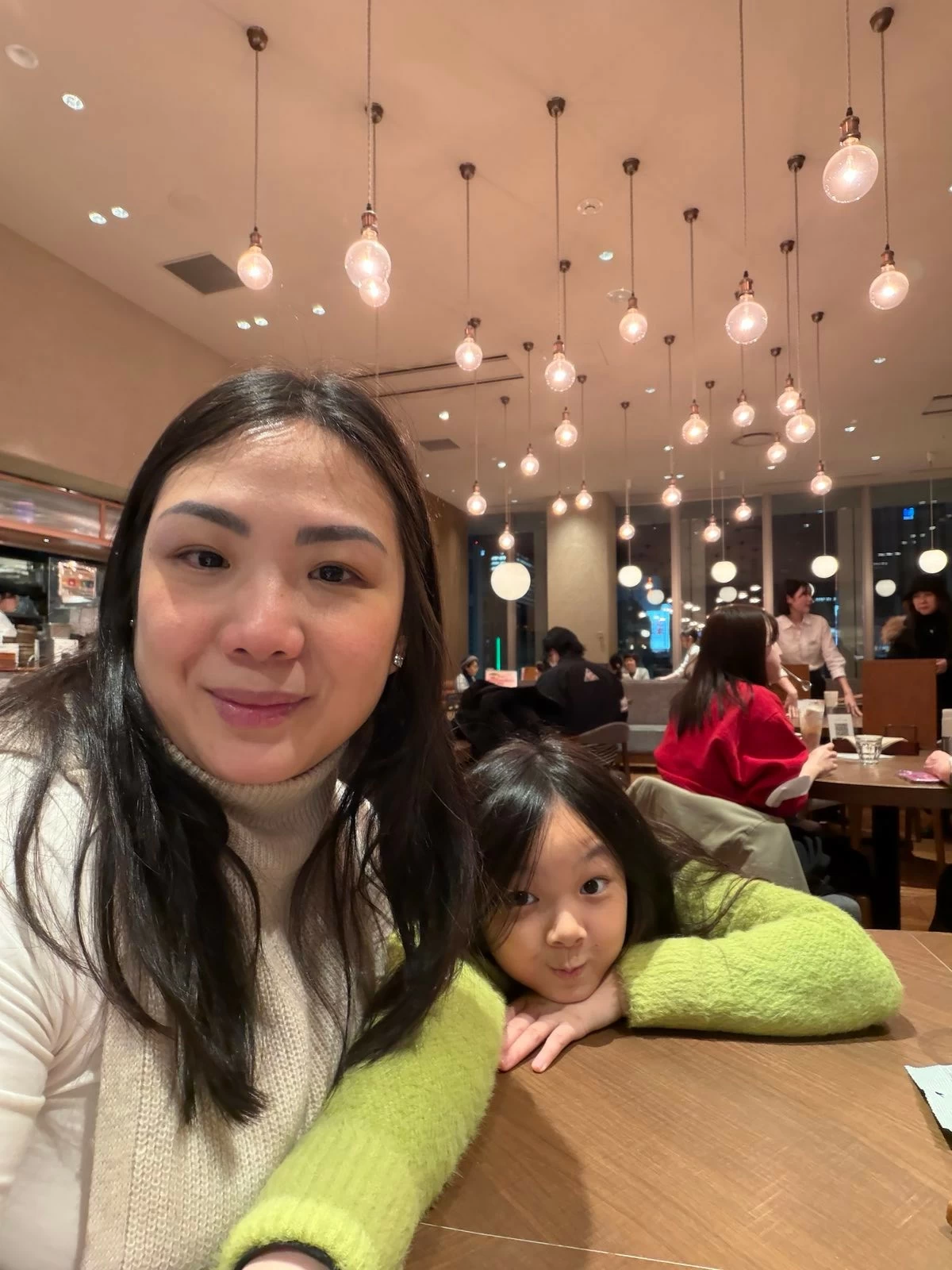
Kato and daughter Georgie, 9
‘Mag-jacket ka malamig’
Bringing a jacket for your child wherever you go, even when they insist they are not cold, is a very Filipino mom’s way of saying “I love you.” It is less about the weather and more about care, protection, and foresight. I grew up hearing “Mag-jacket ka, malamig,” and now I find myself saying the same thing to my own child. It is a quiet habit passed down through generations, rooted in love and concern for a child’s health long before they realize they need it.Kato Lim, Momzilla co-founder, mom of one

Micah with husband Rommel and daughters Luna, 6, and Astrid, 3
‘Para sa inyo’
For me and my kids, the most Filipino way of saying “I love you” is simply, “Para sa’yo, anak, oo.” It is not expressed through big words, but through acts of service and quiet patience. Every time they ask me to pick them up from school, help with small tasks, tie their hair in the morning, or get them ready for the day, I show up. Even while juggling work, home, and business, I make the time. No matter how busy life gets, they will always come first.—Micah Alvarez-Diaz, Here and There PH - Kaleia country director, mom of two

Sarabeth and husband Jake with their children
‘Kumain ka na ba?’
For me, the most Filipino way to show love is through food, especially by preparing meals for the whole family. Thinking about what someone would like to eat is not just about serving something delicious. It is an act of care, a way of knowing a person deeply and being attentive to their wants and needs. Asking “Kumain ka na ba?” carries a deeper meaning. When a meal is prepared, it does not have to be expensive. As long as it is made with love, it becomes a way of saying, “You matter to me, and I love you.”
Sharing meals brings everyone closer, and salu-salo is a very Filipino term that we Filipinos like to celebrate not just with family, but with friends, teammates, and workmates. The table where we sit around to eat is a place where stories and laughs are freely shared, making social bonds stronger. These salu-salos don't need to be grand. Even simple ones are enough to show that you appreciate their presence and that you want everyone to have a great time.—Sarabeth Salcedo Soriano, Baliwag Lechon Manok operations director, mom of three

Alex Eala bags P2.6 million in Abu Dhabi


By Mark Rey Montejo

Published Feb 8, 2026 09:18 am


Tennis Alex Eala still pocketed a good sum of prize money after her exit in the recently concluded WTA 500 Abu Dhabi Open in the UAE.

Alexandra Eala of the Philippines plays a backhand return to Alycia Parks of the U.S. during their first round match at the Australian Open tennis championship in Melbourne, Australia, Monday, Jan. 19, 2026. (AP Photo/Dar Yasin)

Alexandra Eala of the Philippines plays a backhand return to Alycia Parks of the U.S. during their first round match at the Australian Open tennis championship in Melbourne, Australia, Monday, Jan. 19, 2026. (AP Photo/Dar Yasin)

Tennis Alex Eala still pocketed a good sum of prize money after her exit in the recently concluded WTA 500 Abu Dhabi Open in the UAE.

The 20-year-old Eala had promising runs as she advanced to the quarterfinals and semis of singles and doubles events, respectively, where she bagged a combined amount of $45,859 (P2,683,314).

Eala, currently No. 45 in the WTA rankings, earned her bigger pay in the singles of $35,000 (around P2 million) after she bowed to eventual runner-up in No. 2 seed Russian Ekaterina Alexandrova in the quarters, 3-6, 3-6.

She took home P635,429 in the doubles – half of the $21,720 semis purse which she shared the same amount with her Indonesian partner Janice Tjen. The two Southeast Asian stars succumbed in the semis to Slovakia’s Tereza Mihalíková and Great Britain’s Olivia Nicholls, 4-6, 2-6.

But the journey in the Middle East extends for Eala as she struts her wares in two WTA 1000 competitions.

These are the Qatar Open in Doha (Feb. 8-14), and the Dubai Tennis Championships (Feb. 15-21) which both attracted high-ranking players in the women's circuit.

In Qatar, Eala is already assured of winning $18,300 (P1 million) in Round of 64 where she seeks a redemption win over Czech teen ace Tereza Valentova.

Eala and Valentová first crossed paths in the opening round of the WTA 250 Japan Open, where the latter came away with a 6-1, 6-2 victory.


Matters of the heart


By Manila Bulletin

Published Feb 8, 2026 12:05 am


February is often called the month of hearts—thanks largely to Valentine’s Day, with its flowers, chocolates, and professions of love. But beyond romance, February carries a more urgent reminder. It is Philippine Heart Month, a designation that underscores a reality we cannot afford to ignore – heart disease remains the country’s leading cause of death.

Declared under Proclamation No. 1096 in 1973, Philippine Heart Month was meant to promote national awareness, continuing education, and collective action against cardiovascular disease. More than five decades later, the challenge persists, intensified by lifestyle changes, limited access to care, and the growing spread of health misinformation.

The Philippine Heart Association (PHA) has raised alarm over the rise of false and misleading information about heart disease circulating on social media. Cardiologists report that some patients are persuaded by friends, neighbors, or online sources to stop taking prescribed medication once they feel better—despite medical advice that such treatment is often lifelong. This dangerous misconception can delay recovery, worsen illness, and, in many cases, prove fatal.

To counter fake news, the PHA has stepped up efforts through lectures, community consultations, and public education campaigns, particularly during the observance of Philippine Heart Month. With the theme “Bringing heart care closer to every Filipino all over the country,” the association, together with the Department of Health (DOH), continues to stress that heart health decisions must be guided by science and medical expertise—not viral posts or hearsay.

The DOH has likewise reiterated the basics of heart disease prevention: early intervention, healthy lifestyle choices, and regular health checkups. The advice is clear and consistent—eat a proper and balanced diet, avoid vices such as smoking and excessive alcohol intake, engage in regular physical activity, and consult health professionals regularly.

These recommendations may sound simple, but following them is not always easy, especially in a country where access to specialized care remains uneven.

According to the PHA, there is only one cardiologist for every 44,000 Filipinos nationwide, and nearly half of these specialists are based in Metro Manila. This concentration leaves many provinces with limited or no access to cardiology services, making early diagnosis and timely treatment difficult for patients outside the National Capital Region.

The imbalance has serious consequences. Heart disease does not wait for convenience, nor does it respect geography. Delayed consultations and untreated conditions can quickly turn fatal, particularly in areas where specialist care is scarce. While the PHA is expanding its network by opening new chapters and planning subchapters in underserved provinces, the shortage highlights the need for stronger preventive measures and better primary care support at the community level.

Recent data further underscore the urgency. Government health records show that more than one in three Filipinos were affected by heart disease in 2024. In Metro Manila alone, ischemic heart disease claimed nearly 24,000 lives that year. These are not just statistics—they represent families broken, livelihoods lost, and futures cut short.

Philippine Heart Month is a reminder that caring for the heart is both a personal responsibility and a national concern. In an era when misinformation spreads faster than medical advice, choosing to listen to qualified health professionals can save lives.

February may celebrate hearts in a symbolic sense, but its deeper meaning lies in protecting the very organ that sustains life. We have only one heart. Taking care of it—through informed choices, healthy habits, and timely medical care—is the truest expression of self-love, and one the nation must continue to promote long after the month ends.

How Filipino parents show love through action and words


From practical daily care to verbal encouragement, it's all about balancing tradition with emotional awareness


By Jane Kingsu-Cheng

Published Feb 7, 2026 01:52 pm


Filipino parents, like many Asian parents, have a special way of showing love—it’s in what they do more than what they say. Affection is expressed by preparing meals and managing daily chores.

A study by Lydia B. Aguilar and colleagues, “Cultural Values, Parenting, and Child Adjustment in the Philippines” in the International Journal of Psychology, explains why. In a collectivist culture like ours, family needs often take priority over words. Love is felt more, not heard, through daily acts.

Say it

Things have been changing lately. The younger generation of parents are increasingly saying “I love you” and encouraging children to share their feelings. The study “Emotional Socialization Practices Across Cultures” by Claudia A. Haight and Nancy L. Benson, published in the Journal of Cross-Cultural Psychology, shows that exposure to verbal emotional expression encourages open communication, even in traditionally reserved households.

“I make it a point to tell my kids I love them every morning,” says Marivic Santos, 32, marketing manager and mother of one. “It wasn’t something my mom did, so I’m trying to add it to our daily routine.”

Actions are still equally important. Reminding a child if they’ve eaten, checked their homework, cleaned their room are gestures that communicate care without saying it out loud. Maria Teresa A. Edillon’s research, “Filial Care Patterns Among Filipino Adults” in the Philippine Journal of Psychology, confirms that children recognize these as expressions of love.

Best of both

This evolution comes from a mix of cultural and modern influences. Exposure to different parenting styles through online resources, social media, and global discourse has given mothers the freedom to choose what works best for their families.

A 2024 study in Frontiers in Psychology, “How parenting styles affect primary school students’ subjective well‑being? The mediating role of self‑concept and emotional intelligence,” found that supportive and responsive parenting is linked with higher emotional intelligence and self‑concept in children. These qualities help kids grow more confident, socially aware, and emotionally resilient.

“I try to combine what I grew up with and what I learn online,” shares Anna Reyes, 38, school teacher and mother of two. “I prepare our meals and check homework like my mom did, but now I also ask my kids how they feel about school and friends. It’s a little of both old habits and new approaches.”

Balancing act

Parents, including younger grandparents, see the value of both showing and saying how much they love their children. Practical care builds a foundation of trust. Words give children the tools to understand their feelings. Together, they help kids feel secure and confident. This balance sums up how a parents’ love reveals itself in a Filipino home.

Gov't agencies to fast-track 'Basyang' recovery efforts in Iligan City


Published Feb 7, 2026 05:47 pm
PEOPLE flee flooding triggered by 'Basyang' in Iiligan City. (FB)
CAGAYAN DE ORO CITY – National government agencies are working for the speedy recovery of Iligan City after it declared a state of calamity due to the damage caused by tropical cyclone ‘’Basyang’’ (international name ‘’Penha’’) this week.
On Saturday, Department of Social Welfare and Development (DSWD) Secretary Rex Gatchalian and Mayor Frederick Siao visited evacuation centers and checked on the progress of relief operations.
"President Ferdinand Marcos Jr. sent me here to see to it no one will get hungry and (everybody is) taken care of," Gatchalian told evacuees.
DSWD recorded more than 21,700 evacuees in 33 centers, but affected individuals from the flooding on Feb. 5 reached 24,540.
The agency has released P8.5-million worth of food and non-food relief packs to more than 5,500 families, with a standby fund of P2.2 million.
The Department of Public Works and Highways is conducting inspection and assessment of key infrastructures affected by the flood, including bridges and dikes.
On Friday, the Iligan City Council unanimously approved Resolution No. 26-101 which declared a state of calamity and authorized the utilization of calamity fund for relief assistance and rebuilding damaged infrastructure. (PNA)

FASHION PULIS: Unrequited love


By Mike Lim

Published Feb 7, 2026 11:52 am


Pretty Actress (PA) is said to be lukewarm to the love offered by Handsome Businessman (HB).

Love is supposed to be lovelier the second time around. People who are given a second chance at love hope they can finally make the relationship work—for keeps. But what if one realizes the comeback is one-sided while the other party is too blind to see reality?

In the case of Pretty Actress (PA) and Handsome Businessman (HB), the affair is rumored to be one-sided. HB is in love with PA and is giddy about it. However, PA is said to be lukewarm.

PA and HB are both established in their respective fields. While HB has opted to take a low-profile stance in his activities, PA is very visible in her work. She meets with people and is always ready to assist with their needs. With their kids already grown and both having ended their previous relationships, kibitzers are puzzled as to why PA is not really into HB.

Perhaps some people are meant to be nothing more than friends. Though PA could have opened her heart to HB years ago, she chose not to. She had several relationships, but HB was never one of them. HB had his own relationships, but even as years passed, he still carried a torch for PA. He’s in love—but she isn’t. Will she break his heart the second time around? Or, with patience and persistence, will HB finally become the one she learns to love after all?

'People do incredible things for love, particularly for unrequited love.' —Daniel Radcliffe

Muddled marriage

Is the fairytale over? Rumors are growing louder that the marriage of another couple is on the rocks—that is, if they haven’t separated already.

The couple endured several trials before they ended up together. Dashing Groom (DG) grew up with parents who worked hard to build a comfortable life. His mother struggled in establishing herself in the industry, but given her talents, producers learned to trust her. Her subsequent projects molded her into a respected personality. His father, meanwhile, was involved in controversies that were resolved in due time. Thus, DG decided to carve his own path and step out of his parents’ shadow. He succeeded—but love called loudly.

DG went through much to prove himself to His Love (HL). HL was like a blazing meteor when she entered showbiz. Her magnificent presence was impressive, and endorsements soon came one after another. Though she came from a well-to-do family, her drive to prove herself—choosing to forego her professional training for a place in showbiz—was strong. Her reel partnership made fans assume they were the real deal, but rejection beyond the cameras was real.

Coming out as a couple was like hitting a wall for the two. Fans were against HL ending up with DG. The reaction of outsiders didn’t bother them, and the wedding pushed through. Years later, DG was dragged into issues that questioned his reputation. While everyone was shocked, HL stood by him. Her defense, however, was deemed insufficient by fans and kibitzers, forcing her to stop.

Now, the grapevine claims the partnership of the two is no longer sailing smoothly. Are they the ones being referred to in the notorious blind item?

‘If you cannot hold me in your arms, then hold my memory in high regard. And if I cannot be in your life, then at least let me live in your heart.’ ― Ranata Suzuki

Follow @FashionPulis on Twitter and @fashionpulis on Instagram.

Send your comments and juicy stories to fashionpulis2023@gmail.com.

Charity knows no bounds


By Fr. Roy Cimagala

Chaplain

Center for Industrial Technology and Enterprise (CITE)

Talamban, Cebu City

Email: roycimagala@gmail.com


WE have to be ready for the challenge of charity which is actually the perfection of our humanity. It is what would make us like Christ and fulfill the ideal meant for us as God’s image and likeness.


In the gospel, we see Christ performing all sorts of miraculous healings. The more healings he made, the more people needing some cure would come to him. (cfr. Mk 6,53-56) And he did not run away from this, even if he also had to find time to do his prayer in some isolated place. 


We have to be prepared to tackle the arduous side of love which, as we all know, is given without measure and without expecting any return. It’s purely gratuitous. That’s just how true love is. That is to say, if it is the love that flows from the same love which is the very essence of God and that is also meant for us.


We just have to do our part which, of course, will take some time and some process. The important thing is that we should try to put our mind and heart into this responsibility, and no matter how things go, we should just move on. God is always understanding and patient with us, “quick to forgive, slow to anger.”


We need to realize that true love has a universal scope. It is all inclusive. We are meant to love our neighbor, who is actually anyone and everyone, including those we do not know, and those who are strangers and are even our enemies.


Let’s also remember that our love for God is expressed and is proven by our love for others. St. John in his first Letter said as much, “He who does not love his brother whom he has seen, cannot love God whom he has not seen.” (4,20)


In this regard, we have to see to it that we are always thinking of the others, and of how we can serve them in any way. This will prove our love for God, since love is deeds and not just sweet words.


Obviously, to pursue this ideal will always be a work in progress, requiring a lot of patience and prudence. Before anything else, it will require that we be more and more Christ-like because only then can we really have this inclusivity of charity. Let’s hope that we are game with that.


Obviously, if we are to rely only on our own powers, there is no way we can have this kind of self-giving. This can only take place if we are truly identified with Christ, if we have his grace and are corresponding to it with all that we have got.


It’s only in this condition that we can go beyond the limits of our natural self and above the usual drama in life. We of course have our limitations, physical, mental, emotional, etc. And yet, as long as we are truly with Christ, we can still manage to give ourselves unstintingly. The spiritual and supernatural in us through Christ would enable us to give ourselves despite our natural limitations and worldly conditions.


That is why Christ commanded us to love even our enemies, to offer the other cheek when we are slapped in the one cheek. That’s because true love does not count the cost. Let’s remember that Christ in loving us assumed all our sins and conquered them by dying on the cross and rising from the dead. He even asked the Father to forgive those who crucified him.


Saturday, February 7, 2026

The Filipino multi-concept lifestyle store toasts its arrival in Bangkok with Thai spice and cocktails


Published Feb 4, 2026 10:57 am


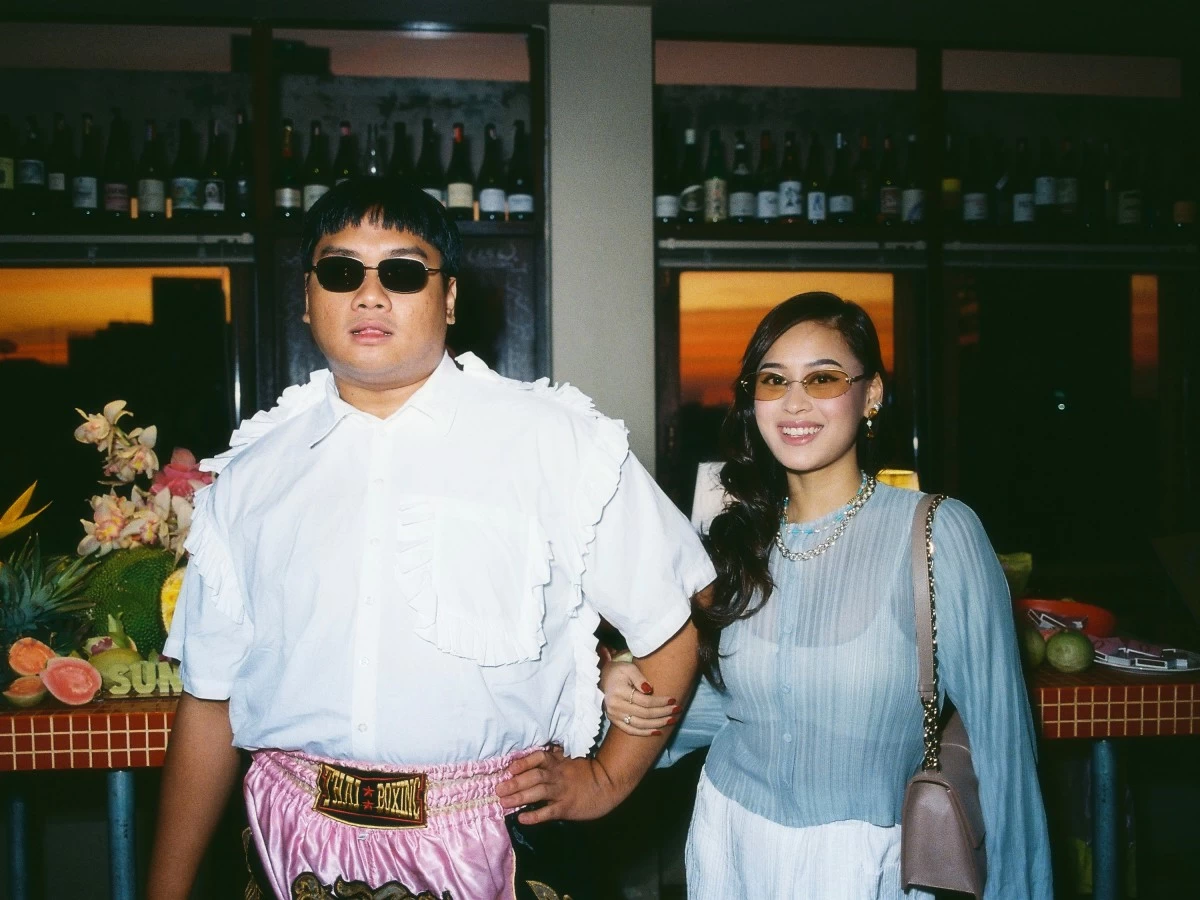
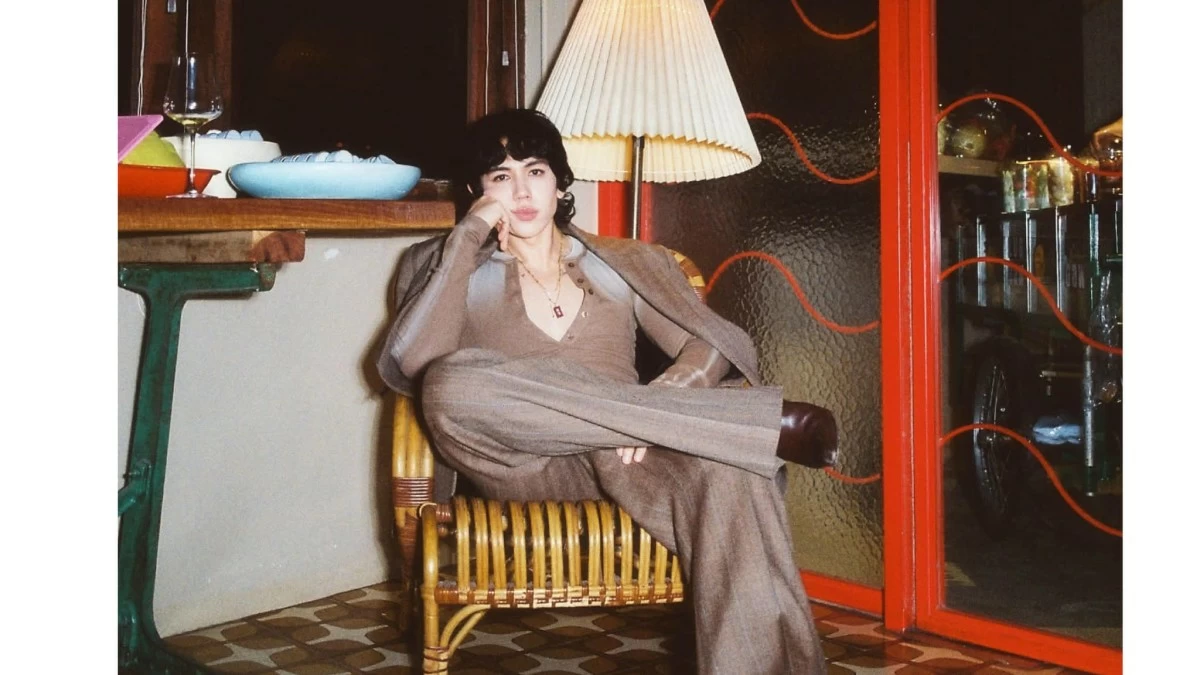
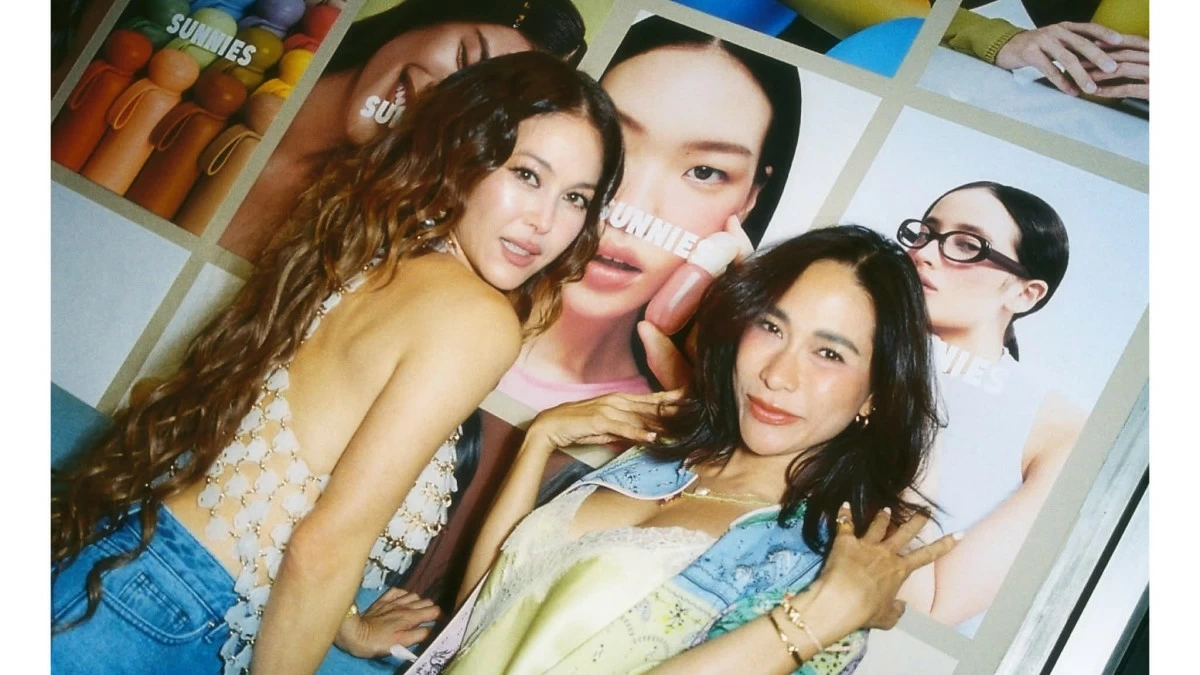
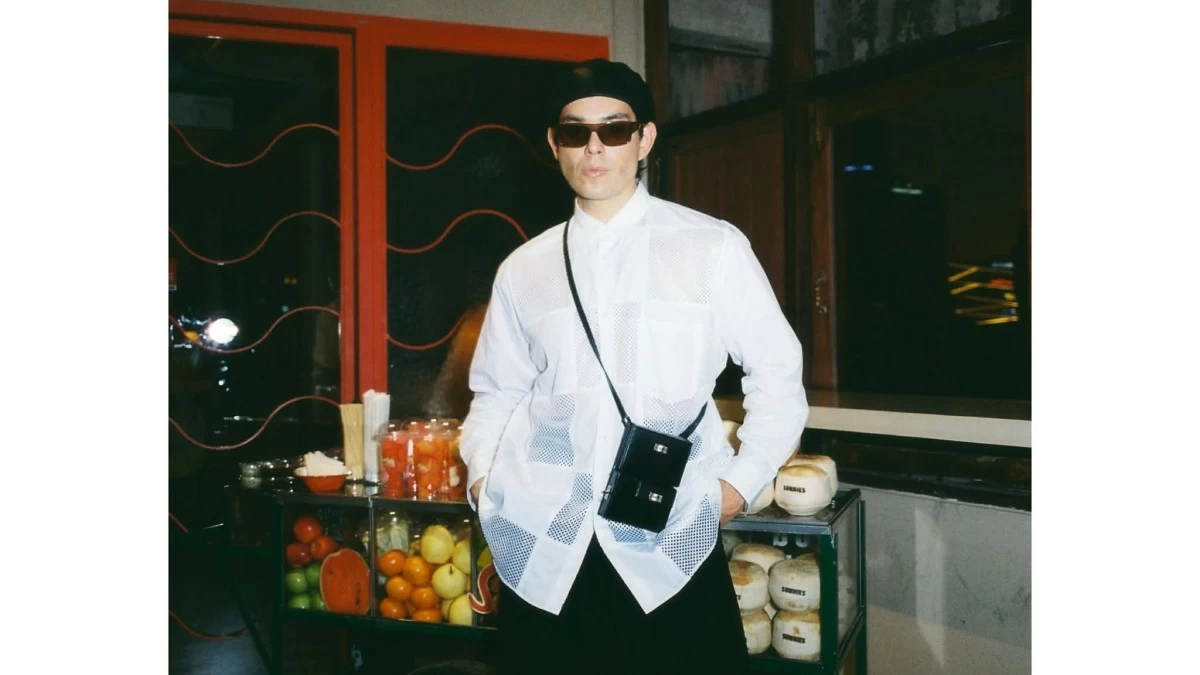
Sunnies Studios started 2026 with the opening of Sunnies World in Bangkok, Thailand, on Jan. 29, 2025. But before the unveiling of the Filipino multi-concept lifestyle store, its founders, Eric Dee Jr., Bea Soriano-Dee, Georgina Wilson, Martine Cajucom-Ho, and Jessica Wilson, treated the brand’s Thai and Filipino friends to a party, toasting its arrival.
Jessica Wilson, Bea Soriano-Dee, Martine Cajucom-Ho, and Georgina Wilson
The welcome dinner, which took place at Charmkrung restaurant, gathered many Thai creatives, including Paula Taylor, Janesuda Parnto, Ploy Chermarn, and Beau Victoria, among others. Keeping everyone in a merry mood was the music set by DJ About Time.
Sunnies set the scene perfectly. The space glowed warm and inviting, plates arriving colorful and meant for sharing, flavors bold enough to stop the conversation for a second before starting it up again. Glasses clinked, chairs shifted closer, and the table slowly filled with the comfortable chaos of a good dinner.
Em Enriquez and Jacqueline Dizon
BJ Pascual
BJ Pascual
Pacharee Sophie Schuemers-Rogers, Woonsen, Ase Wang, and Janesuda Parnto
Paula Taylor and Ploy Chermarn
Safa Almusallam and Nannapin Banjurtrungkajorn
Raymond Gutierrez
Raymond Gutierrez
Carla Buyo
Carla Buyo
The opening of Sunnies World in Bangkok marks a major milestone in the Filipino brand’s international expansion. Located at the newly opened Dusit Central Park, the store is the vision of Sunnies' founders.
Sunnies currently operates five stores in Bangkok with plans of opening several more in the Thai capital as well as other territories.

National Arts Month 2026: Legarda seeks stronger support for Filipino artists, creative communities


Published Feb 6, 2026 03:08 pm


At A Glance

  • Senator Loren Legarda has made the call for stronger support for Filipino artists, artisans and creative communities whose work keeps local culture alive and drives innovation across the country.


Senator Loren Legarda has made the call for stronger support for Filipino artists, artisans and creative communities whose work keeps local culture alive and drives innovation across the country.

Legarda made the call when she marked the opening of February as National Arts Month 2026. This year’s celebration, “Ani ng Sining: Katotohanan at Giting,” centers on how artists and cultural workers confront contemporary challenges with courage and creative integrity.   

“Every February, we celebrate the soul of our nation through the arts. This year’s theme reminds us that truth and courage are lived through the creativity of our people,” said Legarda, chairperson of the Senate Committee on Culture and the Arts.

“The arts continue to guide us toward justice, cultural strength, and progress,” she further said.

Two key measures she recently authored and sponsored that have passed on third and final reading in the Senate play a crucial role in promoting Filipino arts and culture:

the Aklan Piña Conservation and Innovation Center Act (Senate Bill No. 1425) and the Schools of Living Traditions Act (Senate Bill No. 1507).   


SBN 1425 seeks to establish the Aklan Piña Conservation and Innovation Center in Kalibo to expand the planting of Red Spanish pineapple, build facilities for research and innovation, and strengthen cooperation among weavers, farmers, and educational institutions.

Meanwhile, SBN 1507 institutionalizes the Schools of Living Traditions (SLTs) as community based, intergenerational cultural education mechanisms.

“SLTs are sanctuaries of wisdom where cultural masters transmit knowledge to younger generations, ensuring that oral traditions, crafts, and rituals continue to inspire our future,” she said.

Legarda’s long-standing work in culture and heritage policy includes major laws such as the National Cultural Heritage Act, National Museum of the Philippines Act, Philippine Creative Industries Development Act, Philippine Tropical Fabrics Law, Cultural Mapping Act, and National Music Competitions for Young among others—collectively designed to make the cultural sector a driver of employment, innovation, and inclusive development.

The senator also initiated the National Arts and Crafts Fair (NACF), launched in 2016, which continues to give local artisans national exposure and market opportunities.

The 2025 edition, held at the Megatrade Halls of SM Megamall, featured over 300 exhibitors from Luzon, Visayas, and Mindanao, showcasing how heritage and culture can sustain livelihoods while preserving tradition.      

She said this year’s celebration of the National Arts Month is both a celebration and a call to action: to honor Filipino artistry, to uphold truth and courage, and to ensure that culture continues to shape a fair and sustainable society.

“Every work of art and every piece of culture is part of the larger story of who we are as a people. When we stand beside the artists and cultural workers who keep that story alive, we also keep our future more imaginative, more just, and more humane," Legarda said.

The orchard called work


They say landing your first job is one of life’s sweetest fruits—a mark of independence, proof that you’ve finally “made it.” For many, it’s the beginning of a dream. But for others, like me, it’s simply what’s available.


As a fresh graduate, I thought finding a job would be easy. Everyone says that once you graduate, opportunities come pouring in. That’s what our parents always tell us—“Mag-aral ka nang mabuti para may magandang trabaho ka balang araw” (Study well so you’d land a good job someday).


But truth be told, it’s not that simple. There are countless interviews, exams, and callbacks before you land even one offer.


So when I finally did, even before graduation, people were quick to say, “Wow, sana all!” I smiled, but deep down, I knew this wasn’t the job I had imagined for myself. I didn’t wake up one morning thinking, This is what I want to do for the rest of my life. But when bills start knocking and opportunities are scarce, practicality often wins over passion. So, I took the offer. I told myself that maybe, with time, I’d learn to love it.


At first, everything felt new and exciting—my first company ID, my own desk, my first paycheck. I thought this was the sweetness everyone talked about, the taste of adulthood. There was pride in being able to say, “I’m employed.” My parents were proud. My friends congratulated me. I convinced myself this was a beginning worth celebrating.


But as the months rolled in, the sweetness began to fade.


The daily routine became monotonous: wake up early, sit for eight hours staring at the same screen, then drag myself home only to repeat it the next day. What once felt like an opportunity started to feel like an obligation. The fruit still looked ripe from the outside—but it no longer tasted as good.


My tasks were manageable, and I was lucky to have kind coworkers who made the workload lighter. But the problem wasn’t the work itself—it was the environment. I couldn’t move freely because every action had to be monitored. A single misunderstanding could spark my boss’ anger, sometimes over the smallest things.


One coworker even advised me not to do my best because it could lead to abuse or more tasks.


As a fresh graduate eager to prove myself, that hit me hard. I wanted to contribute, to grow, to do well. But slowly, I learned that excellence here wasn’t rewarded—it was punished.


I later found out that I wasn’t alone. The AXA Mind Health Report (2024) revealed that work-related stress is at its highest among millennials and Gen Zs in the Philippines, with many reporting feelings of burnout, anxiety, and mental exhaustion. The report found that younger employees are increasingly prioritizing work-life balance, yet still find themselves in rigid, high-pressure environments that compromise their well-being. Many stay in their jobs not out of fulfillment, but out of fear of unemployment. After all, even with an official unemployment rate of just 3.7 percent in mid-2025, the quality and stability of available jobs remain uncertain.


I thought of resigning. I felt stuck, stagnant. Yet the phrase kept echoing in my head: “Be grateful you have a job.” A sentence meant to silence rather than comfort.


So, I stayed. I smiled through it all and clung to the illusion of stability. But behind that façade, I realized I was losing more than I was gaining—time, motivation, and, sometimes, even myself.


The sweetness had turned bland. Then the blandness became toxic.


There were days I caught myself staring at the clock, counting down the hours like a prisoner waiting for release. Work became a fruit I had to chew on, even when every bite drained the joy from my day. I told myself it was temporary, that maybe this was just how adulthood worked. You don’t have to love your job; you just have to survive it.


But then I started to wonder: When did survival become the standard? When did we start equating endurance with success?


Excellence shouldn’t be measured by how long we can tolerate monotony, but by how we continue to learn, adapt, and grow despite it. Yet here I am, trapped in an orchard that once promised sweetness, now filled with fruits that look ripe but taste hollow.


Maybe the job isn’t entirely to blame. Maybe it’s me—expecting fulfillment where only stability was promised. Still, I can’t help but hope that one day, I’ll find a fruit that nourishes rather than drains.


Until then, I keep chewing. Because for now, it’s the only fruit I’ve got.