You plan to move to the Philippines? Wollen Sie auf den Philippinen leben?

There are REALLY TONS of websites telling us how, why, maybe why not and when you'll be able to move to the Philippines. I only love to tell and explain some things "between the lines". Enjoy reading, be informed, have fun and be entertained too!

Ja, es gibt tonnenweise Webseiten, die Ihnen sagen wie, warum, vielleicht warum nicht und wann Sie am besten auf die Philippinen auswandern könnten. Ich möchte Ihnen in Zukunft "zwischen den Zeilen" einige zusätzlichen Dinge berichten und erzählen. Viel Spass beim Lesen und Gute Unterhaltung!


Visitors of germanexpatinthephilippines/Besucher dieser Webseite.Ich liebe meine Flaggensammlung!

free counters

Total Pageviews


Monday, October 27, 2025

10 Life Lessons to Always Remember


  1. Staying quiet is often stronger than trying to win an argument.
  2. Once trust is broken, “sorry” doesn’t fix it.
  3. Control how you act and don’t react to everything.
  4. Being honest pushes away people who don’t truly value you.
  5. A good heart is more valuable than good looks.
  6. A small circle of close people and a private life give peace.
  7. Never go back to someone who left you.
  8. Stop thinking too much, you can’t control everything.
  9. If someone leaves, let them go.
  10. Real friends are rare, if you have one, be grateful.

Why can't modern English or German speakers understand Old English or Proto-Germanic without translation?


 · 

Because Old English is basically like a foreign language for modern English speakers in all aspects of it, most notably in the grammar structures and vocabulary, if modern English speakers wanted to understand Old English they’d have to study it independently from the beginning and if besides they have some knowledge of German they’d help them to understand it better.

German speakers on the contrary would have much easier to understand Old English without certain help, given that as I previously commented Old English resembled more to modern German on terms of grammar and vocabulary, once I watched a video of Beowulf poem being read and on the comment section I saw that several German speakers have understood part of most part of the poem without so much difficulty.

Proto- Germanic definitely would be completely unintelligible for both modern English speakers and German speakers not even for the rest of modern Germanic languages’ speakers given that Proto- Germanic is actually a reconstructed language given that it didn't have written records originally and if it had been the case where it would have had originally written sources, it would be incomprehensible for all the speakers of contemporary Germanic languages without translation, given that Proto- Germanic was much more conservative in all their structures and core of it, very few modern Germanic languages have preserved heavily the grammar and structures of Proto- Germanic, being the most notable Icelandic.

Darum gibt es überhaupt die Zeitumstellung

 Eine Stunde mehr schlafen

:Darum gibt es überhaupt die Zeitumstellung

Immer im Herbst und im Frühjahr werden die Uhren umgestellt – was steckt dahinter?

Immer im Herbst und im Frühjahr werden die Uhren umgestellt – unser Schlafverhalten muss sich anpassen

Foto: Getty Images/iStockphoto
ADVERTISEMENT

Trotzdem ist die Irritation groß: Wie war das denn vor dem 6. April 1980, als in beiden deutschen Staaten die Zeitumstellung eingeführt wurde? Ist nun die Sommerzeit oder die Winterzeit „normal“?

Es ist die Winterzeit – sie ist die Normal- oder Standardzeit. Die Sommerzeit war hingegen eine (verspätete) Reaktion auf die Ölkrise 1973 und sollte durch das bessere Ausnutzen der Lichtverhältnisse zu geringeren Energieverbräuchen beitragen.

Die Winterzeit beginnt:Wird die Uhr jetzt vor- oder zurückgedreht?

Quelle: BILD   

Wie groß dieser Beitrag jemals war, ist umstritten. Aber spätestens mit der Abschaffung der Glühbirnen, die im Vergleich zu aktueller Lichttechnik wie LEDs mehr Wärme als Licht produzierten, hat sich der mögliche ökologische Vorteil der Sommerzeit ohnehin noch einmal reduziert. LEDs benötigen bei gleicher Lichtstärke nur etwa 7 bis 15 Prozent der Energie einer Glühlampe.

Bei der Umstellung auf Sommerzeit gehen die meisten Studien von sehr geringen Auswirkungen aus, oft weniger als 0,2 Prozent des Stromverbrauchs oder 0,03 Prozent des Endenergieverbrauchs eines Landes. Die Veränderung der Beleuchtung hat also deutlich mehr an Einsparung gebracht als das Drehen an der Uhr.

Lieber Winterzeit oder Sommerzeit?

2018 führte die EU-Kommission eine Umfrage durch, bei der sich über 80 Prozent der 4,6 Millionen Teilnehmer für die Abschaffung der Zeitumstellung aussprachen. Und eigentlich ist die Abschaffung der Zeitumstellung seither in der EU beschlossene Sache.

Nur: Die Mitgliedsstaaten können sich nicht darauf einigen, ob gemeinsam auf Sommer- oder Winterzeit umgestellt werden soll.

Holen Sie sich HIER den Schlaf-Pass von BILD

+++ Hier auf den Banner klicken und Ihren Schlaf-Pass sichern! +++

Foto: a

What remains of me


I began living on my own at 16, not fully, perhaps, but far enough from home to feel it. Senior high school brought me to Quezon City, and college kept me in the metro.


Living alone in the city wasn’t easy at first. I remember crying myself to sleep on some nights, overwhelmed by the silence, homesickness, and the weight of expectations. I struggled to cook meals for one, to manage my time, to keep myself afloat. But over time, it became bearable, even beautiful.


I started to relish the freedom, the autonomy, the space to figure out who I was without the shadow of home. There, in the noise and loneliness of the metro, I began to know myself. I made friends. I fell in love with life’s little rituals: coffee dates, the late-night walks, the thrill of navigating things on my own.


My visits home became occasional, on weekends, or sometimes just twice a month. The only long pauses were during the holidays and in those uncertain months of the pandemic, when time stood still for all of us.


When the lockdowns lifted, I ran back to the life I was building—fast-paced, driven, full of motion. I packed my world into two oversized boxes and a backpack and moved back to the city for work. It wasn’t glamorous, but it was mine. I worked as a corporate slave and took freelance gigs on the side. I survived off side hustles, project-based contracts, and cheap takeout. Money was tight, but life was rich in experiences. I was growing professionally and even emotionally. I was proud of the life I was crafting, slowly but surely.


Then my mother died, suddenly, without warning. And everything I had built began to crumble.

Grief has a way of freezing time. One moment, I was scheduling client calls and planning my next apartment move, and the next, I was on a motorcycle headed home with my world turned upside down. Her absence was deafening. Her responsibilities became mine even before I had the chance to understand the loss.


It has been eight months since I came back. This is the longest I’ve stayed in this rural hometown. I live with my not-so-little sister and my father, who is getting old faster than I’d like to admit. And the truth is: I miss my old life. I miss the independence, the spontaneity, the version of me who only had to think about herself—not whether there’s food in the fridge, clean laundry in the basket, or someone to talk to over dinner.


Life here drains me in ways that are hard to explain. I’ve become a full-time homemaker, part-time job seeker, unpaid therapist, reluctant breadwinner to say the least. I take care of the chores, I handle the bills, I stretch what little income we have to cover what it can, not just for our family but sometimes even for extended relatives who quietly depend on me, too. There’s no room to dream. I feel stagnant, stuck, and left behind, watching peers move forward while I try to hold this house together.


These days, I feel trapped. My father needs care. My sister is focused on her studies. My brother has his own family. And so, I stay. I picked up the responsibilities my mother left behind. I hold the line. But somewhere deep inside me, the girl from Manila still aches, the one who dreamed, who chased purpose and ambition in the heart of the city. I want to go back. I want to build a career, a home of my own, a future with the person I love. But here I am, caught between duty and desire, between who I am and who I want to become.


People around me keep telling me to stay with my father. They mean well. Even my father won’t allow me to look for jobs in the metro anymore. He insists I stay here and find work locally, but opportunities are scarce. The job market in this town is small, and the positions rarely align with what I’ve worked so hard to become. Every rejection adds to the quiet erosion of my confidence.


This is the tension no one warns us about: how culture asks us to stay, to sacrifice, to uphold tradition, even if it costs us our future. I’m standing in a house that was never quite stable, trying to keep it upright as the weight bears down. And I am tired. My knees are buckling. I wonder, am I grieving for my family’s loss, or for the pieces of myself I’ve had to bury to be here? Maybe it’s both.


But here’s what I’m learning: love doesn’t have to mean losing myself. Maybe there’s a way to care without disappearing. Maybe it’s okay to want more, not out of selfishness, but out of the hope that I can one day return to this house stronger, more whole, more alive. I want to believe that I don’t have to choose between being a good daughter and being a fulfilled person.


So I hold on to that hope, even if just barely.


One day, I will build the life I paused. Not because I’m turning my back on my family, but because I owe it to the girl who once believed she could have more—and to the woman I am slowly becoming.


Rizhamae Rodil

Rizhamae Rodil, 25, is a writer and communication graduate navigating the space between ambition and responsibility.

Sunday, October 26, 2025

Let’s keep growing and going


By Fr. Roy Cimagala

Chaplain

Center for Industrial Technology and Enterprise (CITE)

Talamban, Cebu City

Email: roycimagala@gmail.com


THIS is the ideal we should pursue in our self-giving, first to God and then to everybody else. If we truly love God and everybody else, with a love that is nothing less than a participation of the love God has for us and as commanded by Christ to us, then we will never say enough in our self-giving.


While it’s indeed laudable that in whatever we do, we try to give it our best shot, we should never forget that our best will never be enough insofar as pleasing God and everybody else is concerned. Our best can always be made better.


This should not surprise us, much less, cause us to worry. But we should acknowledge it so that we avoid getting self-satisfied with what we have done and then fall into self-complacency. That’s when we stop growing and improving as a human person and as a child of God.


We have to remember that we are meant for the infinite, for the spiritual and the supernatural. That’s a goal that we can never fully reach in our life here on earth. But we are meant to keep on trying.


In our spiritual life, we need to always go forward, to advance, to cover more area. In other words, we have to always go on the offensive, always growing and going. We cannot be all the time defensive, though that is also necessary, but as a complement to our efforts to reach our ultimate goal.


For our spiritual life to be truly alive and healthy, we should not just wait for things to happen. We have to make things happen. We cannot afford to be cold. We have to try our best to be as hot as possible and for always.


This is not going to be an easy task, of course. But we have been assured of God’s grace, and if we correspond to that grace as much as we can, somehow some progress can be made. More virtues can be acquired and developed. We can reach out to more and more people. We can do a lot of good.


Let us remember that in our spiritual life, that is, in our relation with God and with everybody else which is marked always by love, there is no such thing as a fixed position. Either we move forward or we slide backward. Let us not be deceived by the idea that we can be in some stable and fixed condition. The spiritual life is supposed to be always in a dynamic state.


What can keep us going in this regard is certainly not our own effort alone, much less our desire and ambition for fame, power or wealth. It’s not pride or some form of obsessions. These have a short prescription period. A ceiling is always set above them. In time, we will realize that everything we have done was just “vanity of vanities.”


It is God’s grace that does the trick. It’s when we correspond sincerely to God’s love for us that we get a self-perpetuating energy to do our best in any given moment. It’s when we can manage to do the impossible.


It’s a correspondence that definitely requires a lot of humility because we all have the inclination to be proud of our accomplishments that would kill any desire to do better. It’s also a correspondence that is always respectful of our human condition, given our strengths and weaknesses, our assets and limitations. 


It is important that this attitude be instilled actively in all of us, since it is what is proper to us as persons and children of God. It’s what keeps us growing and going.


Police step up 'Undas' security in 2 regions

By Mike Crismundo

Published Oct 25, 2025 01:21 pm
   
BUTUAN CITY – Police in the Caraga and Northern Mindanao regions have stepped up security for “Undas” or All Saints’ Day next week.
They are complemented by the Armed Forces of the Philippines (AFP), Bureau of Jail Management and Penology (BJMP), Bureau of Fire Protection (BFP), Philippine Drug Enforcement Agency (PDEA), Philippine Coast Guard (PCG), and force multipliers composed of barangay tanods (watchmen), radio groups, and non-government organizations.
More than 1,800 police officers will be deployed in the Caraga or Northeastern Mindanao region and 1,100 in Northern Mindanao or Region 10.
They will be assigned to cemeteries and memorial parks, transport terminals, seaports, and airports to provide security, manage traffic, and assist the public.
Police Major Jennifer S. Ometer, PRO-13 Regional Public Information Office (RPIO) chief, said the Media Action Center is open at the regional headquarters in Camp Rafael C. Rodriguez here.
“All systems go,” she said.
“We assure the public of our readiness to maintain peace and order, provide immediate assistance, and respond to any untoward incidents during the observance of the All Saints’ Day and All Souls’ Day,” PRO-13 Director Police Brig. Gen. Marcial Mariano P. Magistrado IV said.
Magistrado encouraged the public to cooperate with authorities and remain vigilant while visiting cemeteries, other public areas, and tourist destinations.
PRO 10-RPIO chief Police Major Joan G. Navarro said public assistance desks have been established in strategic locations in the region to cater to the needs of the public.
Police recorded around 672,000 visitors in Northern Mindanao during Undas last year.
“We have intensified our preparation and coordination with partner agencies and local government units to ensure the smooth observance of Undas. Our police officers are deployed not just to secure, but also to assist and respond to the needs of the public,” PRO-10 Director Police Brig. Gen. Christopher N. Abrahano said.
He reminded the public to cooperate with authorities, follow rules inside cemetery, and avoid bringing prohibited items such as bladed weapons, liquor, firearms, and loud sound systems.
“We appeal to everyone to be mindful and respectful during the observance. Let us work together to make this Undas peaceful and meaningful,” he added.

Study finds why poor sleep and high blood pressure may increase dementia risk


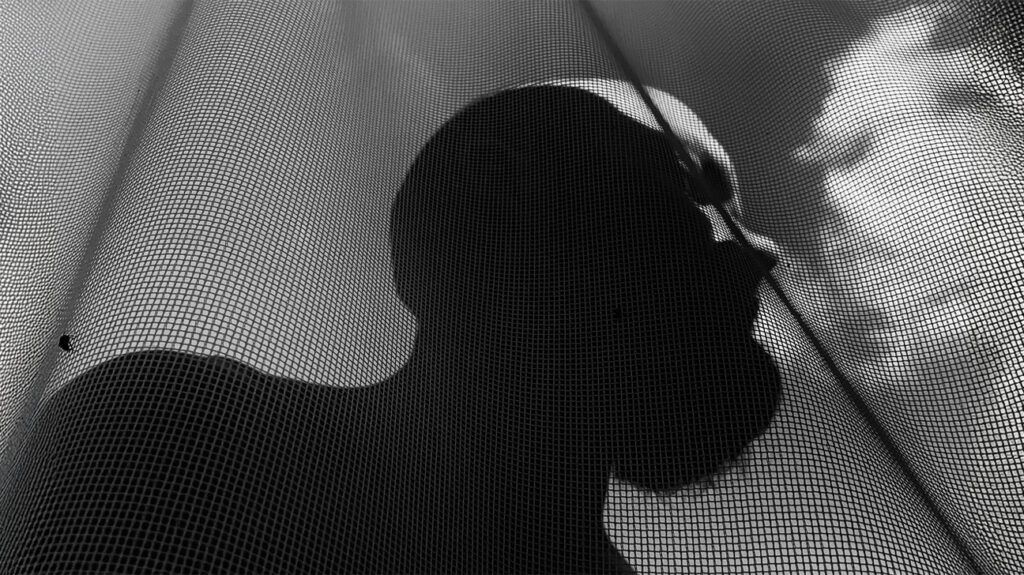
A man's silhoutte through nettingShare on Pinterest
New research links dementia to problems with the brain’s waste clearance system. Asya Molochkova/Stocksy
  • The ‘glymphatic system’ — the flow of cerebrospinal fluid during sleep to flush out toxins and waste materials from the brain — plays an essential role in keeping the brain healthy.
  • A new study, using MRI scans, found that people with cardiovascular risk factors that impaired the function of the glymphatic system had an increased risk of dementia.
  • The researchers suggest that improving sleep patterns to enhance glymphatic system function and treating cardiovascular risks could both help reduce dementia risk.

The glymphatic system is a recently discovered waste clearance system, most active during sleep, that removes toxins and waste materials, including those associated with dementia, from the central nervous systemTrusted Source.

A new study has found that people with an impaired glymphatic system have a higher risk of developing dementia.

The study, published in Alzheimer’s & Dementia: The Journal of the Alzheimer’s AssociationTrusted Source, suggests that improving glymphatic function could be a powerful tool in reducing the risk of dementia.

“These findings are largely expected, building on a growing body of research that implicates impaired cerebrospinal fluidTrusted Source (CSF) dynamics, often referred to as the ‘glymphatic system’, in dementia. Animal studies have long shown that disrupted CSF flow hampers the clearance of toxic proteins such as amyloid beta and tau, which are central to Alzheimer’s disease pathology. What makes this study significant is that it provides large-scale, human-based evidence from over 45,000 participants in the UK Biobank, confirming that MRI markers of CSF dysfunction […] are associated with higher dementia risk.”

— Dr Steve Allder, consultant neurologist at Re:Cognition Health, who was not involved in the study.

Saturday, October 25, 2025

HOLY SACRIFICE OF THE MASS IN DAVAO

 LIBUAN KA MGA ROMANO KATOLIKO, MIDUYOG SA ARCHDIOCESAN PENITENTIAL WALK AND HOLY SACRIFICE OF THE MASS SA DAVAO CITY …

See more
THOUSANDS OF ROMAN CATHOLICS JOINED THE ARCHDIOCESAN PENITENTIAL WALK AND HOLY SACRIFICE OF THE MASS IN DAVAO …
See more
 
Hide Translation
 
Rate this translation
GMA Super Radyo Davao
Send message
s