You plan to move to the Philippines? Wollen Sie auf den Philippinen leben?

There are REALLY TONS of websites telling us how, why, maybe why not and when you'll be able to move to the Philippines. I only love to tell and explain some things "between the lines". Enjoy reading, be informed, have fun and be entertained too!

Ja, es gibt tonnenweise Webseiten, die Ihnen sagen wie, warum, vielleicht warum nicht und wann Sie am besten auf die Philippinen auswandern könnten. Ich möchte Ihnen in Zukunft "zwischen den Zeilen" einige zusätzlichen Dinge berichten und erzählen. Viel Spass beim Lesen und Gute Unterhaltung!


Visitors of germanexpatinthephilippines/Besucher dieser Webseite.Ich liebe meine Flaggensammlung!

free counters

Total Pageviews

Monday, February 23, 2026

Praying from the heart


By Fr. Roy Cimagala

Chaplain

Center for Industrial Technology and Enterprise (CITE)

Talamban, Cebu City

Email: roycimagala@gmail.com


THIS can only mean that our communication with God should be genuine, sincere and authentic. It’s about being honest about our thoughts, feelings and struggles. It should express our true intentions and desires.


It should not be about using fancy language or trying to impress. It’s about being real and open with God, connecting with God on a personal and emotional level, and speaking from a position of humility. It should be freed from pretenses, using the so-called “right words.”


This much we can gather from that gospel episode where Christ told his disciples: “When you pray, speak not much, as the heathens. For they think that in their much speaking they may be heard. Be not you therefore like them, for your Father knows what is needful for you, before you ask him.” (Mt 6,7-8) And from there he proceeded to give the ideal prayer which is the Lord’s Prayer or the “Our Father.”


In our quest to be true souls of prayer, we should see to it that our prayer really comes from our heart that is full of faith and humility. We have to be wary of our great tendency to be dominated by worldly and temporal concerns such that we fail to properly pray. That would be a disaster since that would be like being deluded that we are doing well in life when in fact we are failing big time.


We have to start to pick up the rudiments of prayer and begin the process of becoming authentic souls of prayer, such that wherever we are, whatever situation we may be in, somehow we are always praying, we are always in touch with God.


This should not be difficult because we know that God is always around. He is everywhere. Besides, he is always solicitous of us. He cannot fail to love us. We may fail him and earn his anger, but that anger would only be for a while, since his mercy is forever. We can always manage to pray any time and in any place if we just would have the proper disposition.


Definitely, we need to exercise our faith and be willing to exert effort and make sacrifices. That is how we can aspire to make our prayer alive always. We should put ourselves in God’s presence so we avoid anonymity in our intimate conversations with him.


What can also help is to train and use our imagination in our prayer. In fact, we have to use all our human powers and faculties—our intelligence and will, our feelings and memory, etc.—in our prayer.


And we should be ready to handle the unavoidable difficulties in our prayer. There will be times when we would feel dry and uninspired or when we would be tempted to think that our prayer is going nowhere.


Those difficulties are actually opportunities to improve our prayer and to grow in our spiritual life. If we persevere in praying, using all the means that are always available, we will see how this improvement and growth are taking place, and be filled with joy and satisfaction.


We really need to learn to pray from the heart, which also means that prayer should be second nature to us. As such, prayer becomes a constant activity. We can and should turn everything into prayer. 


Even our work and mundane affairs should be an occasion or even a means of prayer also. We should end up praying as we breathe, and as our heart beats. Thus, St. Paul once said: “Pray without ceasing.” (1 Thes 5,17)



Faith can move mountains


Game

A person is said to buy in good faith when he or she holds an honest belief in his or her right or title to the property and has no knowledge or reason to know of any defect in the title.

Trust or reliance? What is faith for you? To say it clearly: without faith we are really nothing. Faith is belief; believe in us, beliefs in our works, talents and personalities.  

We also should believe in our parents or better, in the whole family including the black sheep, who can be found everywhere. We should also believe in our friends, even sometimes it seems to become a very difficult task. A friend? A real friend? An expatriate friend…?

Without faith, we will be reaching the rock bottom. Please don’t say, it’s a likely story. The German poet Johann Christian Friedrich von Schiller (1759-1815) mentioned in his drama “Maria Stuart”: “Even the word might be dead, but faith keeps it alive.” Yes, I can live with this.

Faith and hope belong together. In his book “Through the Valley of the Kwai”, Scottish officer Ernest Gordon wrote of his years as a prisoner of World War II. The 6’2” man suffered from malaria, diphtheria, typhoid, beriberi and jungle ulcers. Many circumstances quickly plunged his weight to less than 100 pounds. Lying in the dirt of the death house, he waited to die. But every day, a fellow prisoner came to wash his wounds and to encourage him to eat parts of his own rations. As this fellow prisoner nursed Ernest back to health, he talked with the agnostic Scotsman of his own strong faith in God and showed him that, even in the midst of suffering – there is hope – and faith!

Faith is indeed tantamount to convincing and conviction. Richard Wagner, a German classical composer and poet found the following lyric: “Blessed are those people, who know how to live their life in humility and faith!”

Well, let’s even continue believing in our government. Faithful hope is loyal, reliable, exact and honorable.

Faith looks beyond the transient life with hope for all eternity. The hope we read in scripture is not a wishy-washy optimism. First and second Chapter of Thessalonians, for example, give encouragement to all Christians, who have been undergoing persecution for their faith. And, Corinthians 13:2 says: “If I have faith it can move mountains!”

A Filipino twist on a Middle Eastern classic


Juana Yupangco

In Filipino kitchens, monggo (mung beans) are synonymous with comfort. Simmered into hearty stews with malunggay, garlic, and sometimes tinapa or pork, monggo is a Friday staple in many households.

Meanwhile, in the Middle East, chickpeas are transformed into silky, lemony hummus—one of the region’s most beloved dishes. My husband’s first baby steps into plant-based eating was brought on by a love for hummus. Our fridge is stocked with hummus at any given moment. To lower the calories brought by olive oil, I use aquafaba or water that the beans are soaked in to add to the liquid, with the oil providing its taste instead of relying on it for texture and creaminess.

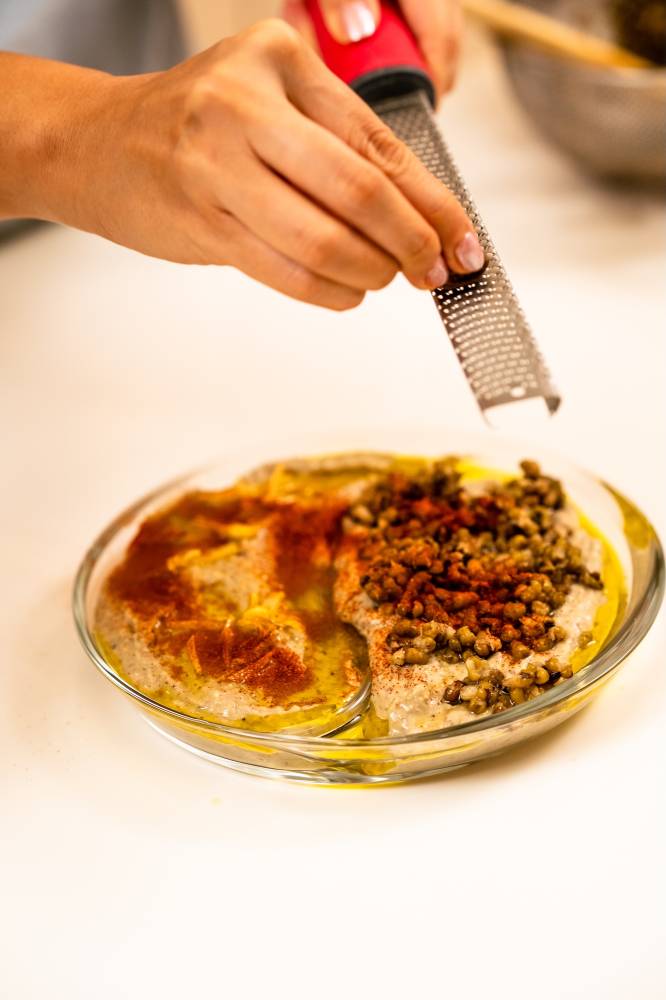
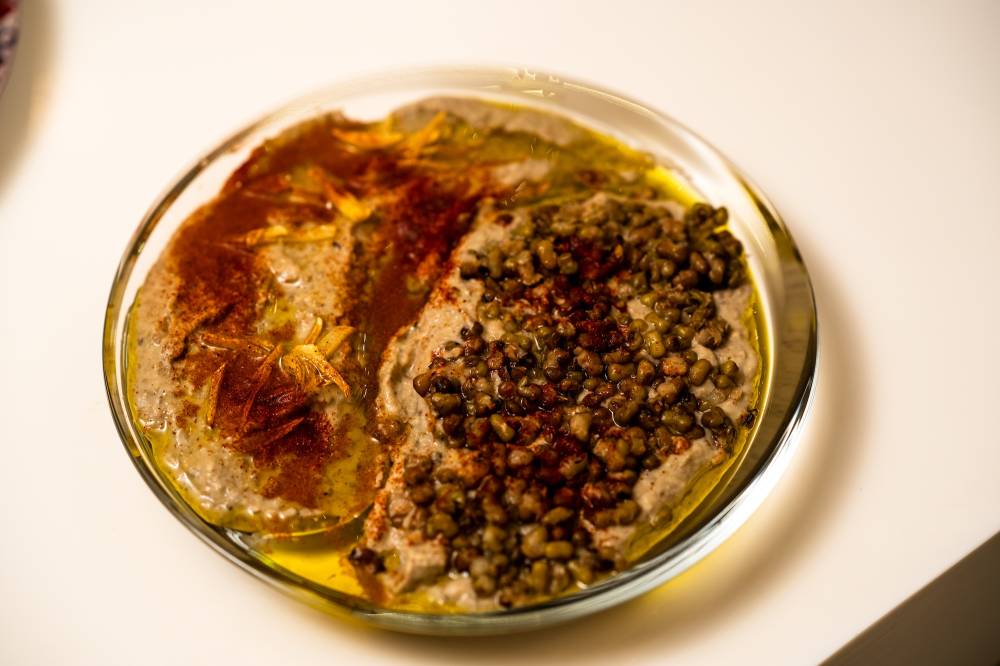
What happens when these two culinary traditions meet? You get monggo hummus—a vibrant, protein-rich spread that blends Filipino ingredients with Middle Eastern technique. The result is familiar yet new: earthy, creamy, and bright with citrus.

Monggo is the most researched Filipino legume, and for good reason. Its high protein content and year-round availability make it an affordable protein source. Most of us are used to eating monggo in the most common form: monggo guisado, topped with pork, fish, or served alongside paksiw.

Monggo was the first dish I used in creating my dishes for Mesa ni Misis—monggo Bolognese. Just like Bolognese recipes, the flavor varies from Filipino party spaghetti, which is sweet, to a more sophisticated version that uses red wine. The main point is to use the monggo, which is so versatile, in other dishes that are also familiar to us.

Monggo hummus proves that comfort food can cross borders. By blending the humble Filipino mung bean with the time-honored structure of Middle Eastern hummus, we create something nourishing, accessible, and culturally rich.

At first glance, swapping chickpeas for mung beans may seem unconventional. But from a culinary perspective, it makes perfect sense.

  1. Similar texture

When cooked until tender, monggo becomes soft and creamy—ideal for blending into a smooth paste. Like chickpeas, they hold structure while still breaking down easily. There are two kinds of monggo—monggo kintab, or shiny—which stays more firm even with soaking and boiling, and monggo labo, which is softer and murkier. For this hummus dish, look for the ‘labo’ variety, as you will want it as creamy as possible.

  1. Nutty, earthy flavor

Mung beans have a mild, slightly sweet earthiness. This pairs beautifully with tahini (sesame paste), garlic, olive oil, and lemon or calamansi.

  1. Local, affordable, sustainable

In the Philippines, monggo is more accessible and budget-friendly than imported chickpeas. Choosing locally grown legumes reduces food miles and supports local farmers.

  1. Nutritional benefits

Mung beans are:

*High in plant-based protein

*Rich in fiber

*Packed with folate, magnesium, and antioxidants

*Naturally low in fat

Traditional hummus from the Middle East often features a creamy chickpea base, richness that comes from tahini, lots of lemon, garlic, and olive oil. Monggo hummus on the other hand is a little gentler on the palate—sweeter and less heavy. For extra kick, I’ve added cumin but also feel free to try curry powder. I also added some serving suggestions for interesting takes on it.

Ingredients

*1 cup dried monggo (mung beans), soaked and cooked until soft

*1 to 2 cloves garlic

*Juice of 1 or 2 calamansi (or half a lemon)

*2 to 3 tablespoons olive oil

*Salt to taste

*Cooking water from monggo (as needed for blending)

*Pinch of cumin

SEE ALSO

Instructions

  1. Cook soaked monggo until very tender. Drain, reserving some cooking liquid.
  2. In a food processor or blender, combine monggo, garlic, citrus juice, salt, and olive oil.
  3. Blend until smooth, adding cooking water gradually for desired consistency.
  4. Taste and adjust seasoning.
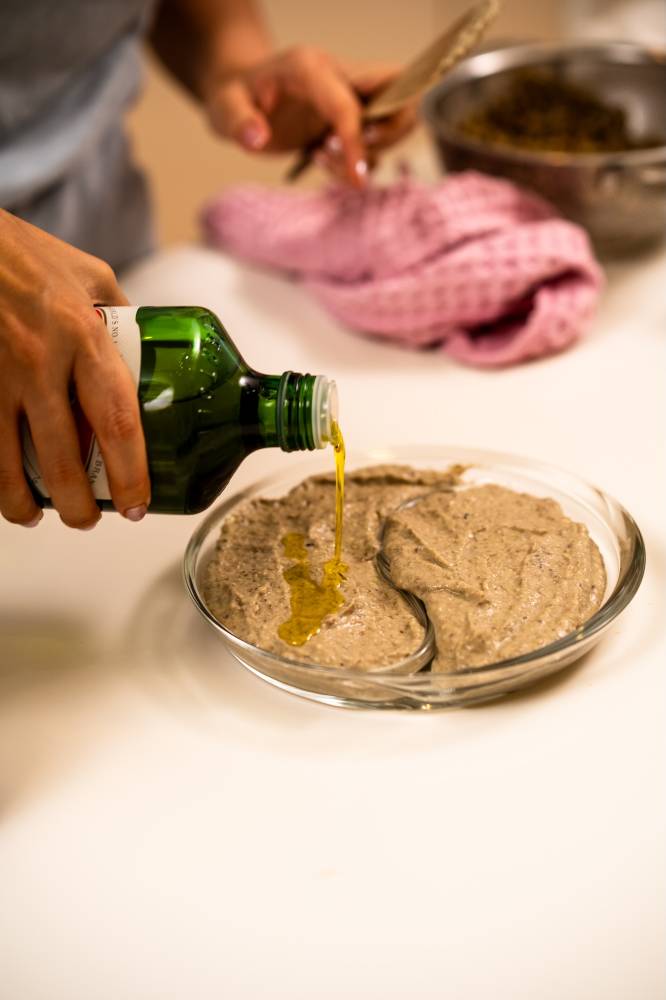
  5. Serve drizzled with olive oil and topped with paprika, toasted sesame, or chopped herbs.

Monggo hummus is versatile. Here are some serving suggestions to create your own twist for your desired occasion.

  1. Malunggay boost

Blend in fresh malunggay leaves for added nutrients and a deeper green color. Monggo is often served with malunggay, but this time, it takes on a different form.

  1. Smoked tinapa version

Incorporate flaked smoked fish for a savory, umami-forward spread—perfect with pandesal.

  1. Spicy sili kick

Add chopped red chilies or chili oil for heat. 

  1. Coconut-lime fusion

Swap part of the olive oil with a small amount of coconut oil for a subtle tropical aroma.

How to serve monggo hummus

Monggo hummus bridges cuisines effortlessly. Try it:

*As a dip with pita, flatbread, or pandesal

*Spread on whole-grain toast with tomatoes and cucumbers

*As a sandwich base instead of mayonnaise

*Paired with grilled vegetables or chicken

*As part of a mezze-style platter with olives and pickled vegetables

*It also fits beautifully into modern wellness-focused diets—whether you’re eating plant-based, high-protein, or simply trying to incorporate more whole foods.

Unaricci turns up a night of fashion, funk, and friendships


It was a night of fashion, music, reunion, and new beginnings at Unaricci’s high-spirited event, co-presented by Philippine Fashion Week, last Jan. 24 at Dr. Wine Poblacion. The brand’s founder-CEO and designer, Nina Ricci Eleazar, launched a collection that she describes as “reinvention—working with linen in a high-fashion context and merging Unaricci’s early beginnings with fashion accessories with the brand’s current design aesthetic.”
 Margaux Salazar, Nina Ricci Eleazar, and Monique Jamlang
Margaux Salazar, Nina Ricci Eleazar, and Monique Jamlang
Professional dancer Lema Diaz opened the program with an amazing freestyle performance to ‘90s hit “Ghetto Superstar” followed by the much-awaited mini fashion show. Live music was courtesy of Bacolod’s rising acoustic duo Russ and Daph, and sets by legendary DJs Mick Martinez, Elmer Dado, and James Mccranie made the night even more memorable with nostalgic tracks from the 1990s and early 2000s. The event also had special participation from Tropical Nomad, Wanderskye, Wine Drop, and Kanebo.
“I wanted to open the show with dance and movement, reminiscent of my college days as a former dancer (with Lema), “ says Nina. “The first part of the fashion show features a couture linen textile crafted through horizontal and vertical paneling, creating a patterned base that embraces a raw, distressed aesthetic with deliberately unfinished edges throughout. This was also accentuated by equally labor-intensive handmade florettes. The second part gives a glimpse of how Unaricci entered the retail industry with chunky fashion accessories, this time woven onto the clothing pieces, creating a luxuriously edgy yet comfortable look.”
Russ and Daph
Russ and Daph
 PJ and Kim Tugade
PJ and Kim Tugade
Faith Cuneta
Faith Cuneta
DJ James Mccranie
DJ James Mccranie
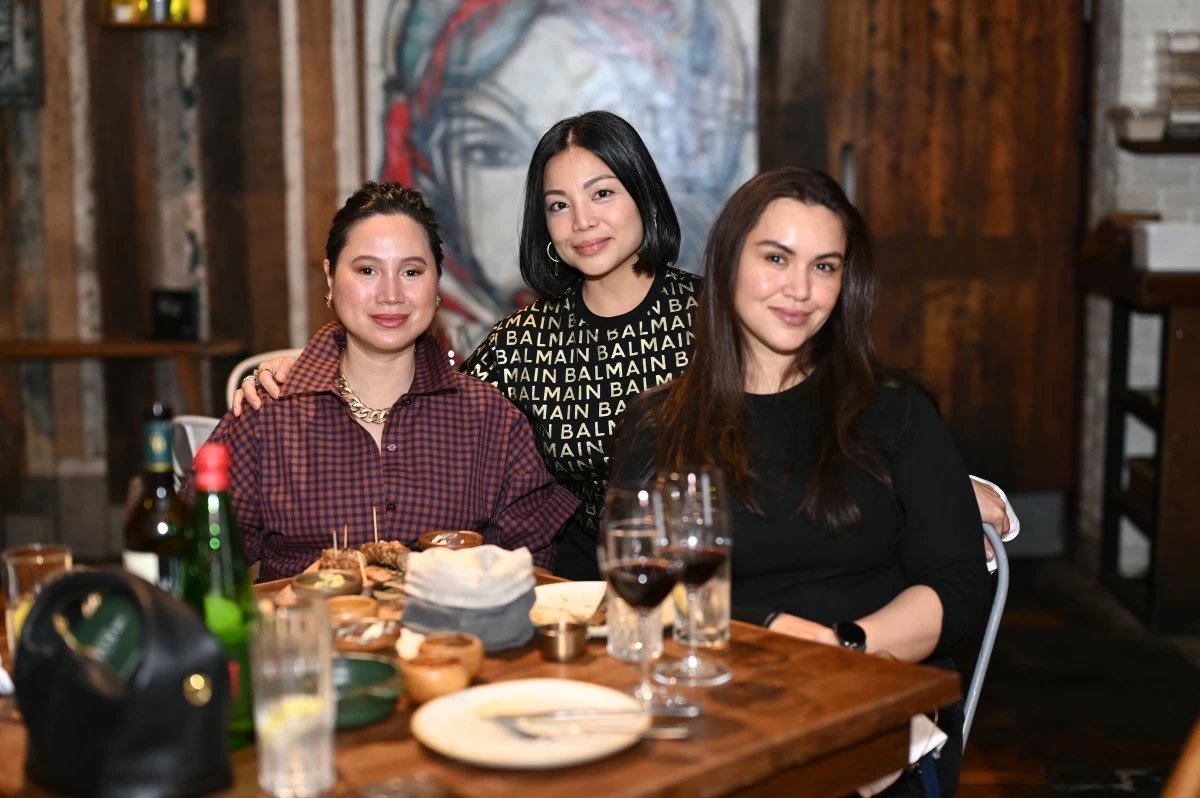
Joji Malinao, Gigi Bautista-So, and Michelle Bautista-Tañada
DJ Elmer Dado
DJ Elmer Dado
Jasmine Maierhofer, Marie Field Faith, and Vanessa Tedesco clad in Unaricci
Lexie Eleazar, Candice Gil, and Kara Ponce Enrile
Nina and Unaricci’s Margaux Salazar describe the evening as a celebration of friendships, real connections, and sharing their passions with the community they have graciously built. This is also the start of the duo’s venture into doing more events and collaborating with brands and talents for uniquely curated experiences.