You plan to move to the Philippines? Wollen Sie auf den Philippinen leben?

There are REALLY TONS of websites telling us how, why, maybe why not and when you'll be able to move to the Philippines. I only love to tell and explain some things "between the lines". Enjoy reading, be informed, have fun and be entertained too!

Ja, es gibt tonnenweise Webseiten, die Ihnen sagen wie, warum, vielleicht warum nicht und wann Sie am besten auf die Philippinen auswandern könnten. Ich möchte Ihnen in Zukunft "zwischen den Zeilen" einige zusätzlichen Dinge berichten und erzählen. Viel Spass beim Lesen und Gute Unterhaltung!


Visitors of germanexpatinthephilippines/Besucher dieser Webseite.Ich liebe meine Flaggensammlung!

free counters

Total Pageviews

Wednesday, February 25, 2026

MUSIC IS AN IMPORTANT PART OF MY LIFE


By Klaus Döring


Music is an important part of our life as it is a way of expressing our feelings as well as emotions. No matter where you are living on this globe.  Some people consider music as a way to escape from the pain of life. It gives you relief and allows you to reduce stress. ... Music plays a more important role in our life than just being a source of entertainment.


Music affects our emotions. When we listen to sad songs, we tend to feel a decline in mood. When we listen to happy songs, we feel happier. Upbeat songs with energetic riffs and fast-paced rhythms (such as those we hear at sporting events) tend to make us excited and pumped up. 

Music means the world to me. It makes me think about how it relates to life and I love the beats. Music is a way to express yourself, keep you company while you're alone, and always give you something to do. Music is a way of expressing me and being able to relate to other people.

It won't be a surprise to most that music can affect the human brain emotionally. ... Happy, upbeat music causes our brains to produce chemicals like dopamine and serotonin, which evokes feelings of joy, whereas calming music relaxes the mind and the body.

Music is a form of art; an expression of emotions through harmonic frequencies. ... Most music includes people singing with their voices or playing musical instruments, such as the piano, guitar, drums or violin. The word music comes from the Greek word (mousike), which means "(art) of the Muses.

Music is love. David Crosby sang this wonderful song already in 1971. "Everybody's sayin' music is love .

Music tells stories. Well, composers and musicians use music to tell stories. From all over the world.  Music can be used to depict characters, places, actions and even emotions. Music is often used to heighten a mood, or to express a thought or feeling when mere words are not enough.

“[Music] can propel narrative swiftly forward, or slow it down. It often lifts mere dialogue into the realm of poetry. It is the communicating link between the screen and the audience, reaching out and enveloping all into one single experience.” The best stories engage all of the senses.

One of the great things about music in general, and in particular concert music, is that playing it opens up a whole new world of experience that further enhances the mind, physical coordination, and expression. Music lovers, who are also amateur performers, may choose to play in community ensembles (orchestra, band, choir), take lessons, perform with others, compose, and nearly anything else a professional musician may do, while maintaining their regular lives. All of this involves intense physical coordination in performing an instrument alone or with others, while reading musical notation, and adding delicate or strong nuanced changes to the music that only a performer can bring. In general, to an amateur musician, music can provide an escape from everyday life or an alternative means of expressing one's own capabilities. It is an important part of their lives and fills a need or an urge to create music.

I have been a music lover since my 4th birthday. Meanwhile, living as a German expat in the Philippines, I found out that Filipinos and Germans are music lovers. Among indigenous Filipinos, one important function of music is to celebrate or commemorate important events in the human life cycle. Fortunately, until today, these rich indigenous musical traditions live on. They serve as a reminder of the Filipinos' long history of musical talent and ingenuity.

Such is the case of Philippine music which today is regarded as a unique blending of two great musical traditions – the East and the West. ... The majority of Philippine Music revolves around cultural influences from the West, due primarily to the Spanish and American rule for over three centuries.

Becoming a German expatriate in the Philippines in 1999, I have attended many music events. I fell in love with Filipino classical music. So what does music really mean to Filipinos? It simply tells them where they've been and where they could go. It tells a story that everyone can appreciate and relate to, which is why it's a big part of every Filipino culture. 

Music of the Philippines (Filipino: Himig ng Pilipinas) include musical performance arts in the Philippines or by Filipinos composed in various genres and styles. The compositions are often a mixture of different Asian, Spanish, Latin American, American, and indigenous influences.

Notable folk song composers include the National Artist for Music Lucio San Pedro, who composed the famous "Sa Ugoy ng Duyan" that recalls the loving touch of a mother to her child. Another composer, the National Artist for Music Antonino Buenaventura, is notable for notating folk songs and dances. Buenaventura composed the music for "Pandanggo sa

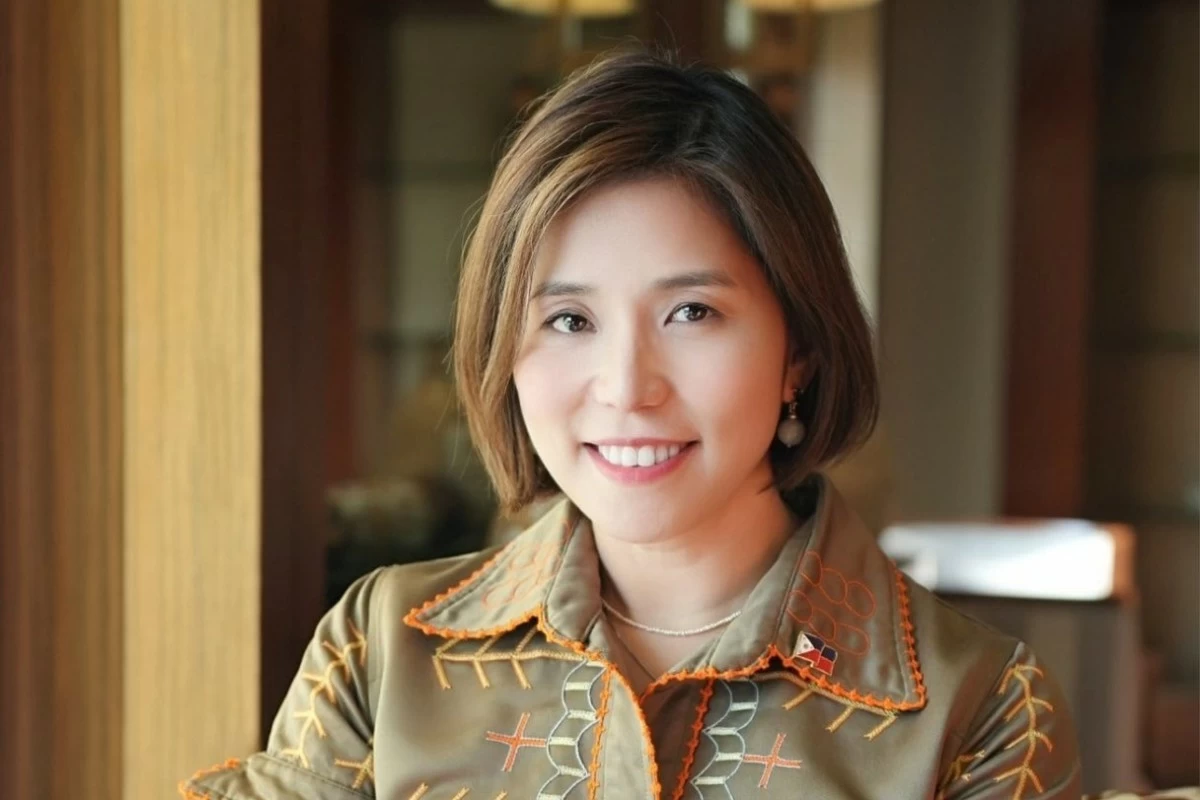
Loving the environment through Green Public Procurement


By Amenah F. Pangandaman

Published Feb 25, 2026 12:05 am | Updated Feb 24, 2026 04:38 pm
BEYOND BUDGET
Assalamu alaikum wa Rahmatullahi wa Barakatuh.
February has always been associated with love. While the most popular kind is romantic love, I believe there are other kinds of love. One is love for the environment. Because for me, loving oneself, another, and the country must also equate to loving the environment that sustains them.
Thus, when I was the secretary of the Department of Budget and Management, I advocated for climate resilience and sustainability, especially through public procurement.
I realized that the government has enormous power to influence outcomes simply through how it spends funds. Public procurement represents an average of 13 to 20 percent of our gross domestic product. In fact, for Fiscal Year 2025, our climate change expenditures grew by 152.7 percent from the previous year’s budget. This was the highest budget increase since 2015, accounting for 18.3 percent of the National Budget, well above the target of 9.0 percent under the Philippine Development Plan (PDP) 2023-2028. For me, the numbers do not reflect mere statistics. These are investments in safer homes and communities, more resilient infrastructure, and a more sustainable future for the nation.
A significant part of our country’s sustainability journey is Republic Act No. 12009, or the New Government Procurement Act (NGPA), the biggest anti-corruption measure in recent history, which incorporates green procurement.
For those who may not know, Green Public Procurement (GPP) is a process by which procuring entities (PEs) seek to procure goods, projects, and services with reduced environmental impact throughout their life cycle. Under the law, PEs must integrate and implement green practices, as well as environmentally relevant criteria or requirements, into the design and specifications of their procurement projects.
This is not only to achieve value for money and meet specific organizational needs, but also to benefit society and the economy while reducing adverse environmental impact. It is part of strategic procurement planning and in support of the Philippines’ commitment to accelerate climate action, strengthen disaster resilience, and achieve broader policy objectives on energy, water, and material efficiency; waste reduction; pollution and emission prevention; climate change mitigation; and circular economy, among others.
The foundations for this reform were laid years earlier through the Government Procurement Policy Board (GPPB), which adopted the Philippine GPP Roadmap and technical specifications for prioritized common use and non-common use supplies and equipment. This aims to mainstream GPP in government procurement, ensuring that environmental criteria are considered in government spending. In fact, the GPPB has noted, in its 2018-2022 Agency Procurement Compliance and Performance assessment reports, a gradual increase in the adoption of green specifications in the procurement of non-common use supplies and equipment. From 26 percent of PEs considering the environmental impact of their procurement projects, it increased to 90.91 percent in 2022.
This momentum was further fueled by the 2022 United Nations Environment Programme, which commended the Philippines for its highest rating for sustainable public procurement monitoring efforts. Building on these successes, the GPPB Board, which I then chaired, approved Resolution No. 19-2023, marking a pivotal moment with the introduction of mandatory green specifications for seven broad product categories of non-CSEs. This initiative is a gamechanger, as it paved the way for a more sustainable and flexible procurement system across the nation.
The NGPA further strengthened these reforms. Section 73 of the NGPA introduced GPP as one of its strategic procurement planning approaches. The NGPA also promotes greater weight in evaluating proposals with green specifications.
The GPP is designed to achieve environmental sustainability. Encouraging the purchase of goods and services that have a reduced environmental impact, including energy-efficient products made from recycled materials or that have a lower carbon footprint. By prioritizing these products, PEs can help reduce greenhouse gas emissions and promote sustainable practices.
In addition, implementing GPP leads to longterm economic efficiency. Electronic or information communication technology energy-efficient products may have higher investment costs but result in lower operational and maintenance expenses over time.
Further, by adopting GPP, PEs can drive market demand for green products and services, stimulating innovation and development of more sustainable solutions, ultimately leading to a greener economy.
And GPP contributes to improving our country’s public health by reducing pollution and promoting the use of non-toxic materials. It also supports fair labor practices and local sourcing, which have positive social impacts.
Beyond budget, I believe that the GPP is essential in unlocking a sustainable and resilient future for our nation. It is a promise that should be kept.
As Citizen Mina, I hope that we can keep this promise to the Filipino people, especially future generations. But, as with everything grand, we can only achieve this through collective action. The government, civil society organizations, the private sector, and every Filipino must work hand-in-hand to secure this future. Hence, let’s work together towards a sustainable future by supporting Green Public Procurement.
(Amenah F. Pangandaman is the former Secretary of the Department of Budget and Management.)

Heart Evangelista brings hope and warmth to the forgotten elderly


Named among the Top 10 influencers in Paris Fashion Week


Published Feb 24, 2026 10:55 am

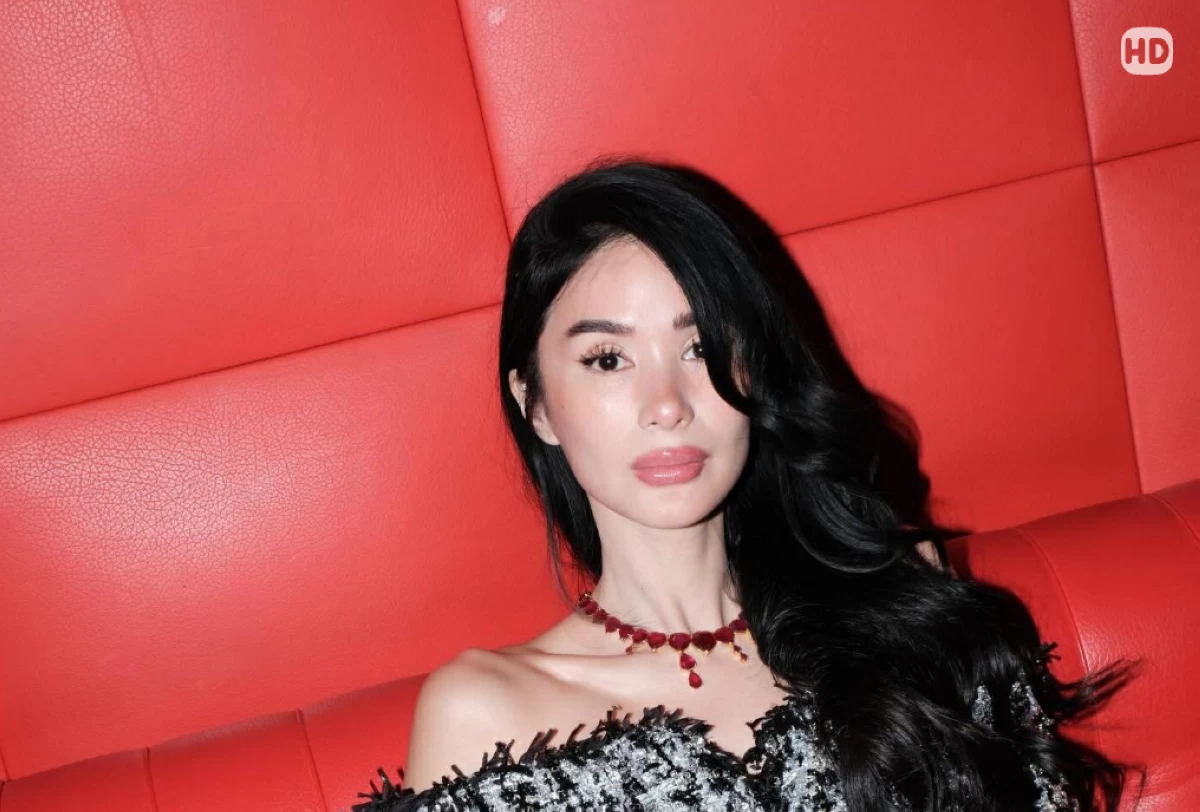
Actress and global fashion icon Heart Evangelista was deeply touched by her visit to an elderly resident at Tahanang Mapagpala in Malolos, Bulacan.
During the visit, as shown in a video clip, Heart chatted with the elderly, and a grandmother reminded her about the importance of goodness and a pure heart.
Heart Evangelista
Heart Evangelista
"Blessed are the merciful. Blessed are the pure in heart," said a grandmother in a wheelchair.
"That hit a core. I really needed that, Nay," Heart's emotional response.
They shared a heartfelt conversation about aging, family, and care.
"You need children to take care of you when you are old," said the grandmother.
"Yes. Nay, you were sent a lot of children like me to give you sparks of happiness," Heart said.
Recently, Heart also visited another facility for the poor and abandoned elderly in Rizal province.
At Anawim, a home founded by Catholic lay preacher Bo Sanchez, Heart performed songs and dances for the elderly and brought gifts, including wheelchairs and basic necessities.
Heart appears to enjoy spending time with the elderly, sharing her blessings and affection.
Meanwhile, Heart's return to television promises to be more personal and moving in the new season of "Heart's World," her lifestyle and reality series. The first season aired last year, while her previous drama series was in 2022.
Heart shared that viewers can expect a more passionate and in-depth second season of "Heart’s World."
She explained that while the first season focused on glamour, fashion, and her international achievements, the new season will highlight her personal experiences and offer an unfiltered look behind the scenes of life as a celebrity and international fashion icon.
“We need drama. I don’t have drama; they were surprised by the plot twist. There’s a lot of drama. It’s very interesting, this second season,” she shared.
Heart, who is also a businesswoman and influencer, added, “I am divinely protected. And when somebody’s divinely protected, which we all are, you will reach your dreams no matter what.”
Despite the challenges she has faced, Heart proudly shared that her heart remains gentle.
Her mother, Cecilia Ongpauco, was also moved after watching the new season of "Heart World."
“I thought she was just being cute and posing. No, it was way different. That's why I cried. She just loves it and gives it more than her own. Made me so proud,” said Mommy Cecilia.
Heart admitted her mother is not easy to please, so this support and praise from her "momager" means a great deal.
The first episode of Heart World Season 2 will premiere on March 7 and air every Saturday at 9:30 p.m. on GMA Network.
Heart stands out in Paris
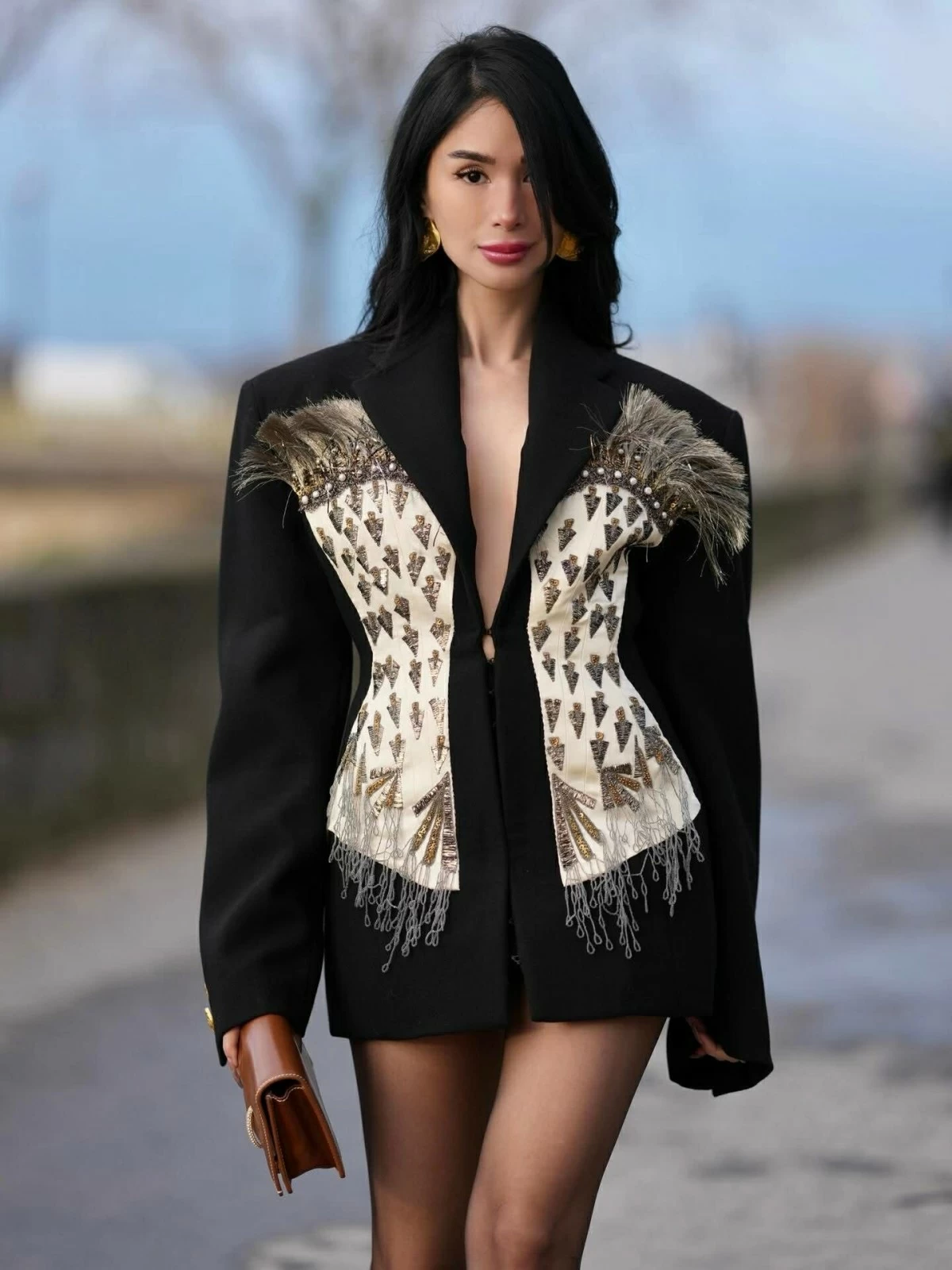
Once again, Heart solidified her status as a global fashion icon when she landed among Lefty’s Top 10 Key Voices for the January 2026 Paris Menswear Fashion Week.
Heart breached a heavily male-dominated influencer landscape, posting a 5.4 percent engagement rate that generated $3.34 million in Earned Media Value (EMV).
With her in the Top 10 were K-pop idols Mingyu (Seventeen), The8 (Seventeen), and Hyun-jin (Stray Kids); Thai actor and singer Nattawat Jirochtikul (Fourth); and other talents and brand ambassadors in the Asia-Pacific region.
The only other female in the list was Chilean-Mexican singer Mon Laferte, who performed and appeared at the Willy Chavarria show.
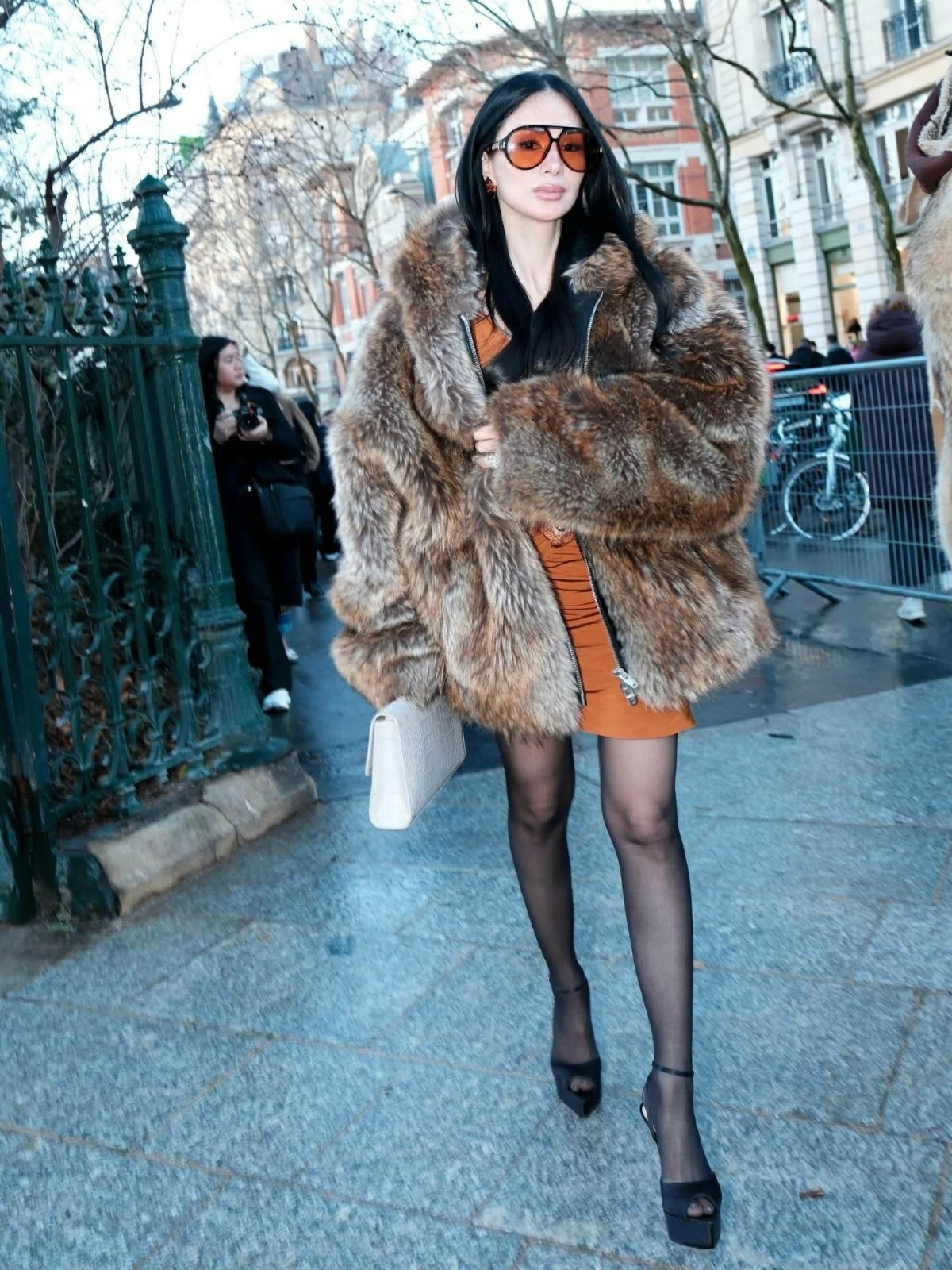
During the Menswear Fashion Week Fall-Winter 2026 last month, Heart Evangelista attended high-profile shows by Amiri, Sacai, Patou, Hermès, LGN Louis Gabriel Nouchi, and Kenzo.
According to observers, Heart’s strong media impact — especially being the only Filipino representative in the latest Lefty ranking — proves that she continues to drive significant luxury fashion value in the Asia-Pacific region.
Lefty is the influencer marketing platform for leading luxury and lifestyle brands. It identifies the right influencers from a broad number of qualified online profiles, using advanced systems to gain a deep understanding of their demographics, audiences, and profile statistics.
Through Lefty’s Industry Reports, brands can uncover unparalleled insights into the ever-evolving worlds of fashion, beauty, and lifestyle.
The last time Heart Evangelista entered Lefty’s Top 10 was during Paris Fashion Week in June 2025. Meanwhile, no Filipino representative ranked in the Lefty report for Paris Fashion Week in September 2025, when Heart was notably absent from any shows during that period.

Lubao International Balloon and Music Festival is painting the sky alive this summer


By MBrand

Published Feb 23, 2026 10:45 am


The Lubao International Balloon and Music Festival makes its highly anticipated return this summer, reaffirming its stance as one of the biggest and most iconic hot air balloon festivals in the Philippines! 

Since its debut in 2014, the Lubao International Balloon and Music Festival has captivated its thousands of audiences with its unique blend of aviation spectacle, live music, and immersive on-ground experiences. 

After a 5-year hiatus due to the pandemic, the festival returned successfully to the skies over Lubao last April 2025. More than 70,000 people flocked to Pampanga to celebrate its much-awaited comeback. From hot air balloon flights to electrifying performances from your favorite local artists, this festival served it all! 

This 2026, we’re keeping the streak and bringing you two days of breathtaking hot air balloon flights, thrilling attractions, and an exciting lineup of artist performances you can’t resist! Happening on March 7-8, 2026, at Pradera Verde in Lubao, Pampanga, the Lubao International Balloon and Music Festival is set to be a landmark celebration and a must-attend destination event. 

Kicking off the festivities at sunrise, festival-goers can expect a mass ascension of over 25 colorful hot air balloons flown by both local and international pilots. Experience the skies of Lubao with spectacular balloon flights you can hop on right there and then. 

Throughout the day, attendees can also enjoy a wide range of activities. Take in the magnificence of Pampanga’s landscape with helicopter and ultralight rides, bask in gastronomic food bazaars, and immerse in nature with the crowd favorite outdoor zoo attraction. 

Pradera Islands, the newest theme park destination in Pampanga, located within the sparkling grounds of Pradera Verde also welcomes thrill-seekers and families alike for adrenaline-pumping rides, immersive attractions, and island-inspired adventures. 

At sunset, the festival transforms into a dynamic concert experience, featuring acts from the biggest names in the Philippine music scene, delivering high-energy performances to cap off each day in unforgettable fashion.

This year’s lineup fulfills every OPM fan’s fantasy with musical acts from jikamarie, Illest Morena, Hev Abi, Flow G, Arthur Nery, December Avenue, Dionela, Maki, IV of Spades, Kamikazee, and Parokya ni Edgar! 

And for the first time ever, former Rivermaya bandmates Rico Blanco and Bamboo will share the same stage at this year’s Lubao International Balloon and Music Festival!  Bamboo is set to perform on the first day (March 7) while Rico’s set takes place on the second day (March 8). It’s safe to say that this year’s lineup ate. 

Festival tickets are priced at PHP 500 for General Admission and  PHP 1,500 for VIP. To get the most out of Lubao, you can purchase two-day passes for PHP 800 for General Admission and PHP 2,500 for VIP. Get your tickets at all SM Ticket outlets nationwide and/or online atwww.smtickets.com

The Lubao International Balloon and Music Festival 2026 is organized by BLUE SKIES Hot Air Balloon AdVentures Association Inc. and Forthinker, Inc., in partnership with Pradera Verde and Pradera Islands Theme Park, with the support of the Provincial Government of Pampanga. 

What makes a person look confident?


  1. Good posture.
  2. They talk slowly.
  3. They remain calm.
  4. They have control over their emotions and thoughts.
  5. They don’t care what people think of them so they do what makes them happy.
  6. They treat themselves with respect.
  7. They help people.
  8. They make fun of themselves because they’re so comfortable.
  9. They hold eye contact.
  10. They dress well.
  11. They take care of their health.
  12. They cheer people up and they never show off.

Can I be happy without suffering?


Althea Balladares 

I am in college now, yet part of me still lives in the quiet glow of birthday candles.

Every year, I closed my eyes and wished for the same thing: that my family would become whole again. I repeated that wish for more than a decade, as if repetition could bend reality. It took me years to understand that children do not wish because they are naive—they wish because hope is the only power they have.

I grew up learning that love could be withheld. When my father was away, my stepmother forced me to eat what she knew I despised.

She would grip my face and push it into my mouth while I cried. I was seven, already washing my clothes by hand, my small arms aching as if labor were proof of obedience. At night, she turned off the electric fan, leaving me sweating in the dark, my skin marked by mosquito bites. I remember lying awake, wondering what flaw in me justified the punishment.

I began to believe that suffering must be correction—that pain was evidence of my inadequacy. I was not a difficult child. I was simply dependent. And dependency, I learned, is dangerous when placed in the wrong hands. Even small gestures confused me.

Wen she held my hand while crossing the street, I mistook proximity for affection. I interpreted survival as care. When one grows up deprived of gentleness, even the bare minimum feels like grace. There were other forms of violence, quieter but just as formative.

An aunt entrusted with my care disciplined me in ways that filled me with dread. I learned that authority does not guarantee morality.

That adults, too, can fail in their duty. I did not have the vocabulary for injustice then. I only knew the instinct to shrink, to silence myself, to endure. From this, I formed a philosophy of love: that it must be earned through suffering. If I endured enough, perhaps I would be worthy. If I gave enough, perhaps I would not be abandoned.

I carried this belief into adolescence, where I became the giver—the supportive friend, the dependable “Ate,” the one who absorbed others’ pain quietly. It felt noble. It felt virtuous. It also felt necessary.

Then I fell in love.

At first, I believed I had finally been chosen. But slowly, I began to feel measured. Compared. Adjusted.

He admired other girls openly. I recalibrated myself to fit his gaze. I abandoned hobbies, friendships, and even my dream university when he presented me with an ultimatum: follow him or lose him.

I chose him, believing that sacrifice was proof of devotion. The day before classes began, he cheated on me. What unsettled me most was not anger, but recognition. The pattern was familiar.

Once again, I had equated suffering with loyalty. Once again, I believed that shrinking myself was an act of love.

Philosophers speak of moral responsibility—of the obligation to care for those who depend on us. Children are the most vulnerable among us. When adults fail them, the damage is not merely emotional; it reshapes their understanding of justice. It teaches them that pain is ordinary, that harm is survivable, that endurance is virtue. But endurance is not the same as love.

Through reflection, especially through the lens of care ethics, I began to see that what was missing from my childhood was not discipline or resilience, but relational responsibility.

To care is not simply to provide food or shelter. To care is to protect dignity. To respond with empathy. To ensure that vulnerability is met with safety, not exploitation. When that care is absent, a child internalizes the failure. She concludes that she must be the defective one.

For years, I believed I was unlovable. That I required improvement before I deserved gentleness. That happiness, if it existed, would always demand payment in pain. Now I am questioning that belief.

Is suffering truly the prerequisite for depth? Must love wound before it heals? Or have I simply normalized what was never meant to be normal?

I am beginning to suspect that my deepest mistake was not loving too much, but misunderstanding love entirely. I thought it required self-erasure. I thought it demanded silence. I thought staying, no matter the cost, was moral. But perhaps morality also includes the self. Perhaps I, too, am someone to be cared for.

To choose a future that honors my dreams is not selfishness. To leave spaces where I am diminished is not betrayal. To want love that feels safe is not weakness. It is a reclamation of dignity.

Some days, I still feel like that child whispering wishes into the dark, hoping happiness will arrive if I endure long enough. But I am slowly realizing that happiness is not the reward for suffering. It is the result of refusing to accept harm as destiny.

Maybe I was never unlovable. Maybe I was simply taught that love and pain were inseparable—and now I am learning to untangle them.

If I was not loved gently as a child, I cannot change that past. But I can question the philosophy it left behind.

If love was never supposed to hurt, then why did hurting feel like the only proof it was real?