Bill Gates said
Visitors of germanexpatinthephilippines/Besucher dieser Webseite.Ich liebe meine Flaggensammlung!

Saturday, March 7, 2026


Building businesses, not just relief for OFWs
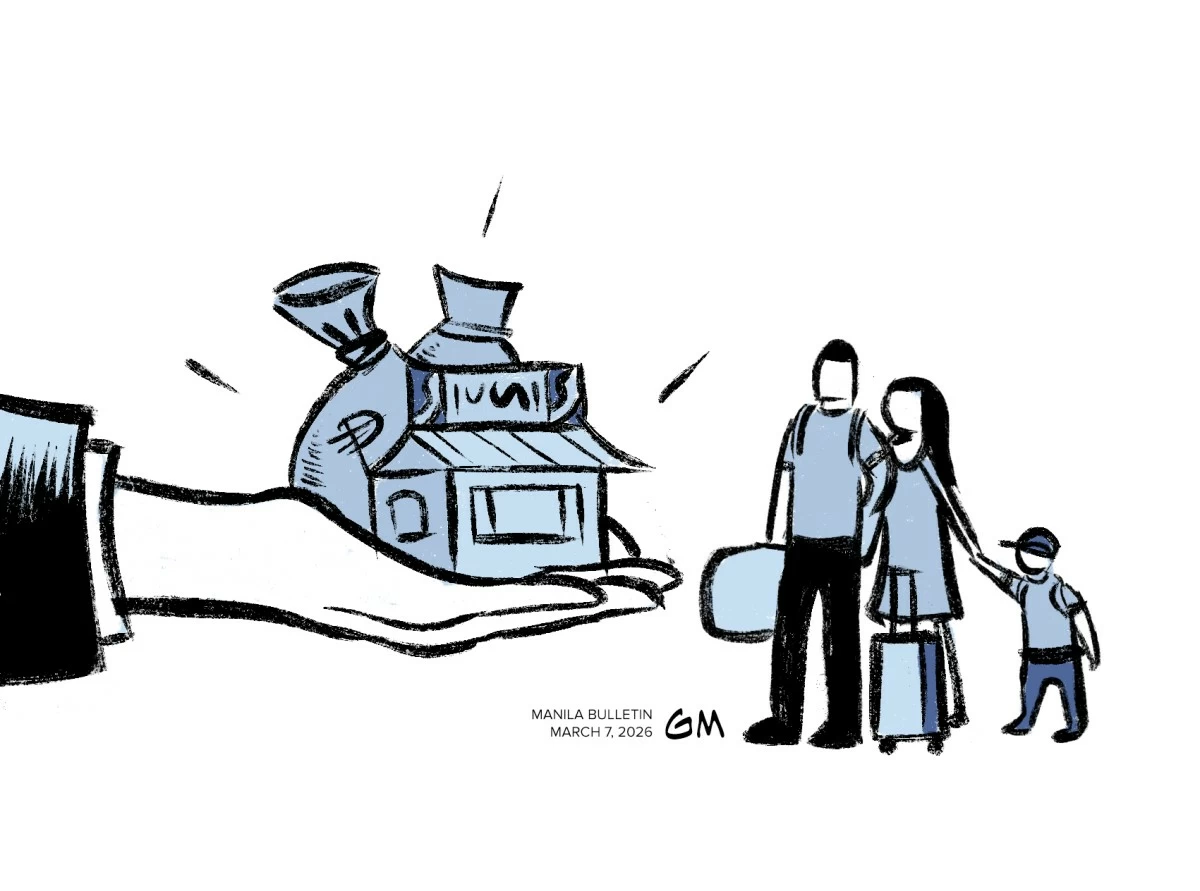
When global tensions escalate, like the latest Middle East conflict, overseas Filipino workers (OFWs) are often among the first to feel the consequences. Economic disruptions, geopolitical conflicts, and labor market shifts in host countries can abruptly displace thousands of Filipino workers, exposing the fragility of livelihoods built far from home.
Against this backdrop, the government’s newly launched ₱2-billion OFW Negosyo Fund is an important and timely intervention. More than a financial safety net, it presents an opportunity to strengthen the long-term economic security of OFWs and their families.
Administered by the Department of Trade and Industry (DTI) through the Small Business Corp., the fund allows qualified OFWs to borrow between ₱30,000 and ₱20 million, with a one-year grace period on both principal and interest and repayment terms of up to five years. The waiver of collateral requirements for loans up to ₱5 million further lowers the barriers to entrepreneurship for returning workers. These features demonstrate a clear intent to encourage enterprise development among OFWs who may suddenly find themselves rebuilding their livelihoods at home.
This financial facility is one way of honoring our OFWs who have been helping sustain the Philippine economy with billions in remittances each year. This is why we hail them as modern-day heroes.
Yet access to capital alone will not guarantee success. The true value of this initiative will ultimately depend on whether it produces sustainable businesses capable of generating stable income beyond the life of the loan.
For this reason, government support must extend beyond financing. Many small enterprises fail not due to lack of effort or determination, but because entrepreneurs enter markets without adequate preparation or strategic planning. To address this, the government should complement the fund with comprehensive mentorship and business incubation programs. Returning OFWs could be linked with experienced entrepreneurs, industry professionals, and academic institutions that can guide them through feasibility studies, market analysis, and operational planning.
Equally important is the provision of reliable market intelligence. Government agencies, in partnership with universities and research institutions, should help identify industries with genuine growth potential in various regions of the country. Sectors such as agribusiness, food processing, logistics, tourism services, and digital commerce may offer viable opportunities, but these must be carefully matched with local demand, supply chains, and available skills.
The private sector can likewise play a vital role in strengthening the prospects of OFW-led enterprises. Large corporations, financial institutions, and technology platforms can support these businesses by integrating them into broader commercial ecosystems. Retail chains, for example, could provide shelf space for locally produced goods from OFW entrepreneurs. Digital platforms can assist small enterprises in accessing wider markets through e-commerce. Meanwhile, banks and business associations could sponsor training in financial management, marketing, and operational efficiency.
However, the success of this initiative ultimately depends on the discipline and foresight of OFWs and their families themselves. Financial assistance must be approached not as temporary relief but as a carefully managed investment. Families should undertake thorough planning, prepare realistic business models, and ensure that borrowed funds are used strictly for productive purposes. Without careful stewardship, even well-intentioned programs can fall short of their transformative potential.
More than a credit facility, the OFW Negosyo Fund represents a strategic opportunity for the country to convert the vulnerabilities associated with overseas employment into a pathway toward domestic entrepreneurship and economic resilience.
If supported by sound guidance, strong public-private collaboration, and responsible participation from OFWs themselves, this initiative could help many Filipino families move from dependence on overseas work toward stable and sustainable livelihoods at home.
That would be the most meaningful protection of all.
Remolona warns BSP may raise rates if oil hits $100/barrel
|


When our votes gamble the future
.jpg)
By Jade Nicole M. Gatchalian
The sound of vehicles blaring their horns echoes across the highway. Tires roll endlessly on burning roads, while the city continues to move as if it has no time to look down. Yet on the sidewalks, and sometimes even between lanes, people stand still, holding their small livelihoods in their hands.
Plastic bags filled with food. Folded rugs. Handmade crafts. Bottles of water. Sampaguita garlands.
They smile, not because life is kind, but because they must.
Some people say, “Poor people are poor because they are lazy.”
But if they only dared to look outside their tinted windows, they would realize how cruel and ignorant that statement is. Poverty in the Philippines is not a punishment for laziness. It is the outcome of an unfair system, one that rewards privilege and leaves the struggling behind.
Filipinos are known all over the world for being hardworking and warm. We are praised for our diligence, resilience, and ability to endure. Many of us even leave our own country, not because we want to abandon our families, but because we know how difficult it is to build a stable future here. In the Philippines, hard work does not always lead to success. Sometimes, it only leads to exhaustion.
Every day, we witness “diskarte.” People do what they can to survive. They sell their time, grit, and talent. They offer pieces of themselves just to earn enough for one meal, one day, and one more chance to continue. What breaks my heart the most is seeing the elderly still working in the heat. Their backs are bent, their steps are slow, yet they continue. It is as if rest is a luxury they were never meant to have.
But should life be like this?
Should those who have worked their entire lives still be forced to beg, sell, and struggle just to stay alive?
In a country where a lot of taxes are collected, budgets are announced, and promises are made, people should not have to suffer this way. Yet, instead of protection, we are neglected. Instead of progress, we get excuses. Instead of service, we witness greed.
Funds meant for the people disappear. Projects turn into scandals. Programs become tools for campaigns. And while ordinary citizens count coins in their palms, politicians count wealth that cannot be explained by salaries alone. They are surrounded by luxury, defended by supporters, and shielded by speeches filled with empty promises.
Some say, “The Philippines is poor.”
But I do not believe that.
How can we call ourselves poor when our land is filled with natural beauty, rich culture, and people who never stop hoping? We are the Pearl of the Orient Seas. We are blessed with seas, mountains, forests, and a spirit that refuses to die. We are not lacking in resources or hard working citizens. What we lack is honest leadership.
The Philippines is not poor. The Philippines is being robbed. Our nation is being plundered.
What makes it worse is that many still believe the ones who are stealing from them. The vulnerable cling to promises because sometimes hope is the only thing they have left. But hope should not be weaponized. It should not be used as bait to gain power.
I often wonder what would happen if corrupt politicians lived one day as an ordinary Filipino? If they had to wake up not knowing if there would be food on the table. If they had to commute under the heat, work endlessly, and still come home with barely enough. If they had to count every coin, calculate what to sacrifice, and choose between needs. Would they still steal?
Would they still smile onstage, wearing expensive clothes, while people beg for a chance to live?
Maybe then they would realize that being a public servant is not a title to be worn. It is a responsibility to be carried.
We must open our eyes and stop normalizing suffering and resiliency. We must stop treating corruption as something expected. We must stop accepting a country where survival is the only goal.
We see people working hard every day. We see vendors, laborers, street sellers, and the elderly continue despite the pain. They carry this nation on their backs. They deserve more than sympathy. They deserve justice. And justice begins with awareness.
Voting is not just a right. It is power. Every vote counts, and every voice matters. We should not be afraid to speak out when something is wrong because silence allows corruption to grow. To stay quiet while crimes are committed is to let them continue.
When we vote without thinking, we do not just waste a ballot. We gamble the future. We risk the dreams of the next generation. We risk the lives of those who have already suffered enough.
So may we choose wisely. May we research deeply. May we stop rushing decisions that will shape the country for years. And may we finally refuse leaders who treat the nation as their personal treasure chest.
If we want real unity, it must begin with truth.
And if we want change, it must begin with us.
.jpg)
WHEN I THINK BACK SOMETIMES

Thinking back on the past is a natural, often emotional, process that can bring both comfort and sadness, fostering self-identity, or inducing feelings of longing. This type of reminiscence is a common, often nostalgic, reflection on past experiences, sometimes involving "ruminating" on past events, which can be a way to process old situations.
Not long ago, I passed a milestone marking 55 years since I began writing my first published article in a newspaper. I began keeping all the clippings since then. Time changed. Yes. I have my only online-archive. Believe me, it's like a book. As I reread my first articles, I was amazed, I ever kept them up.
Back to my clippings. Can you imagine that there are some benefits from keeping them? From life experiences, I see that progress and failure are both parts of my journey. My columns are mostly a view into a mirror. I am reminded of God's grace when I read (and wrote before) how He helped me to find solutions to problems. I also gained insight from past struggles that help with issues I am currently facing. I remember one of my previous columns entitled "If failures get results".
God has indeed been faithfully working in my life.
I read a story by Dennis Fisher, who didn't keep publishing clippings but a spiritual journal. He advised: "Journaling may be useful to you too. It can help you see more clearly what God is teaching you on life's journey. To begin a journal, record your struggles, reflect on a verse that is especially comforting or challenging, or write a prayer of thankfulness for God's faithfulness."
Our brains prioritize rewarding memories over others, and reinforce them by replaying them when we are at rest.
It may help strengthen bonds with friends and family. It makes me optimistic. Optimism is having the ability to think positively of the future, and recalling moments that made you feel courageous, happy, successful, or any other positive emotion gives you an optimistic lens to see the future through.This can help us live each day to the fullest or even help us see the beauty that is in everyday life.
Looking back can reinforce your sense of self and purpose, reminding you of growth and achievements.
It is common to feel a sense of loss or a deep yearning for the past, even if you are not currently depressed.
You might experience "restorative nostalgia" (a desire to go back and change things) or "reflective nostalgia" (accepting memories as they are).
Memories often surface during periods of low activity or loneliness. Music can also trigger these nostalgic, sometimes sad, reflections.
Yes, I am 73 now. I will complete my biography during these days in the middle of my wonderful Philippine family.
Subscribe to:
Posts (Atom)