
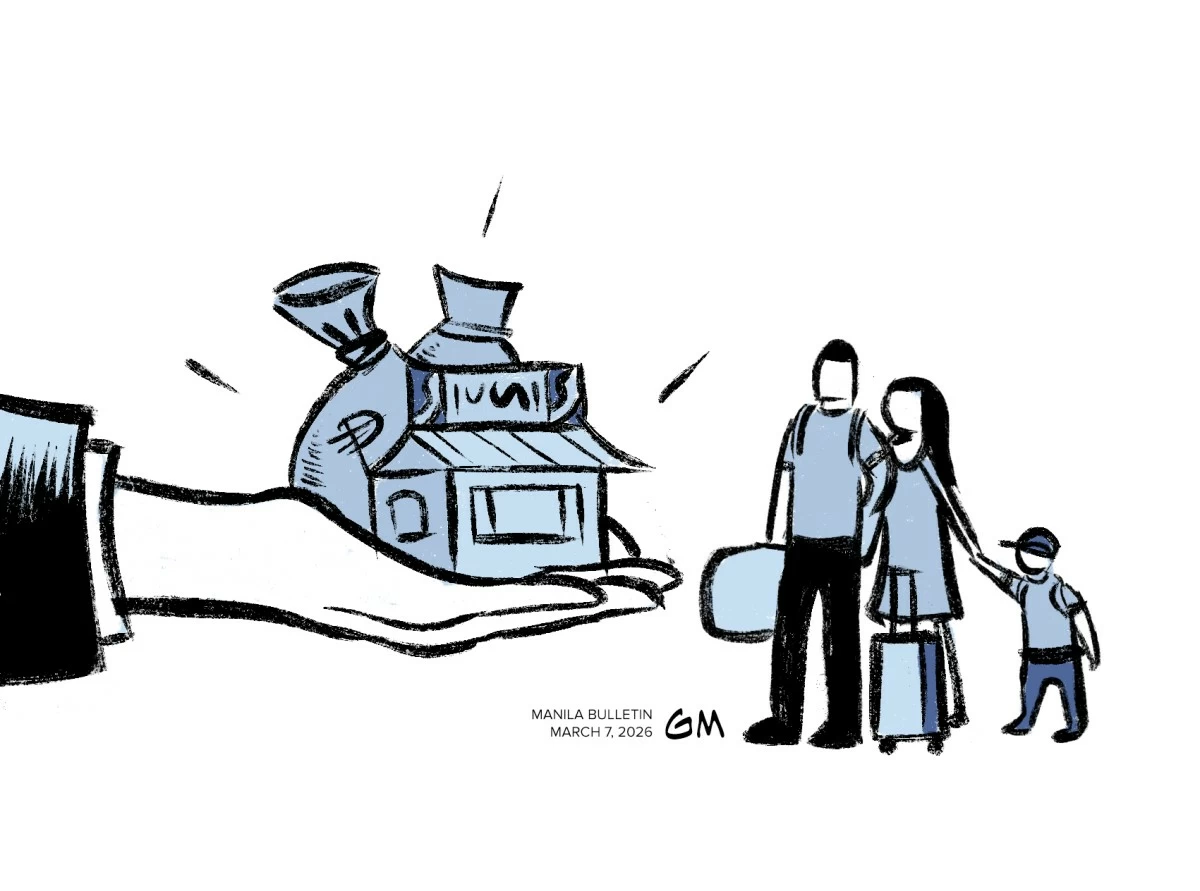
When global tensions escalate, like the latest Middle East conflict, overseas Filipino workers (OFWs) are often among the first to feel the consequences. Economic disruptions, geopolitical conflicts, and labor market shifts in host countries can abruptly displace thousands of Filipino workers, exposing the fragility of livelihoods built far from home.
Against this backdrop, the government’s newly launched ₱2-billion OFW Negosyo Fund is an important and timely intervention. More than a financial safety net, it presents an opportunity to strengthen the long-term economic security of OFWs and their families.
Administered by the Department of Trade and Industry (DTI) through the Small Business Corp., the fund allows qualified OFWs to borrow between ₱30,000 and ₱20 million, with a one-year grace period on both principal and interest and repayment terms of up to five years. The waiver of collateral requirements for loans up to ₱5 million further lowers the barriers to entrepreneurship for returning workers. These features demonstrate a clear intent to encourage enterprise development among OFWs who may suddenly find themselves rebuilding their livelihoods at home.
This financial facility is one way of honoring our OFWs who have been helping sustain the Philippine economy with billions in remittances each year. This is why we hail them as modern-day heroes.
Yet access to capital alone will not guarantee success. The true value of this initiative will ultimately depend on whether it produces sustainable businesses capable of generating stable income beyond the life of the loan.
For this reason, government support must extend beyond financing. Many small enterprises fail not due to lack of effort or determination, but because entrepreneurs enter markets without adequate preparation or strategic planning. To address this, the government should complement the fund with comprehensive mentorship and business incubation programs. Returning OFWs could be linked with experienced entrepreneurs, industry professionals, and academic institutions that can guide them through feasibility studies, market analysis, and operational planning.
Equally important is the provision of reliable market intelligence. Government agencies, in partnership with universities and research institutions, should help identify industries with genuine growth potential in various regions of the country. Sectors such as agribusiness, food processing, logistics, tourism services, and digital commerce may offer viable opportunities, but these must be carefully matched with local demand, supply chains, and available skills.
The private sector can likewise play a vital role in strengthening the prospects of OFW-led enterprises. Large corporations, financial institutions, and technology platforms can support these businesses by integrating them into broader commercial ecosystems. Retail chains, for example, could provide shelf space for locally produced goods from OFW entrepreneurs. Digital platforms can assist small enterprises in accessing wider markets through e-commerce. Meanwhile, banks and business associations could sponsor training in financial management, marketing, and operational efficiency.
However, the success of this initiative ultimately depends on the discipline and foresight of OFWs and their families themselves. Financial assistance must be approached not as temporary relief but as a carefully managed investment. Families should undertake thorough planning, prepare realistic business models, and ensure that borrowed funds are used strictly for productive purposes. Without careful stewardship, even well-intentioned programs can fall short of their transformative potential.
More than a credit facility, the OFW Negosyo Fund represents a strategic opportunity for the country to convert the vulnerabilities associated with overseas employment into a pathway toward domestic entrepreneurship and economic resilience.
If supported by sound guidance, strong public-private collaboration, and responsible participation from OFWs themselves, this initiative could help many Filipino families move from dependence on overseas work toward stable and sustainable livelihoods at home.
That would be the most meaningful protection of all.
