

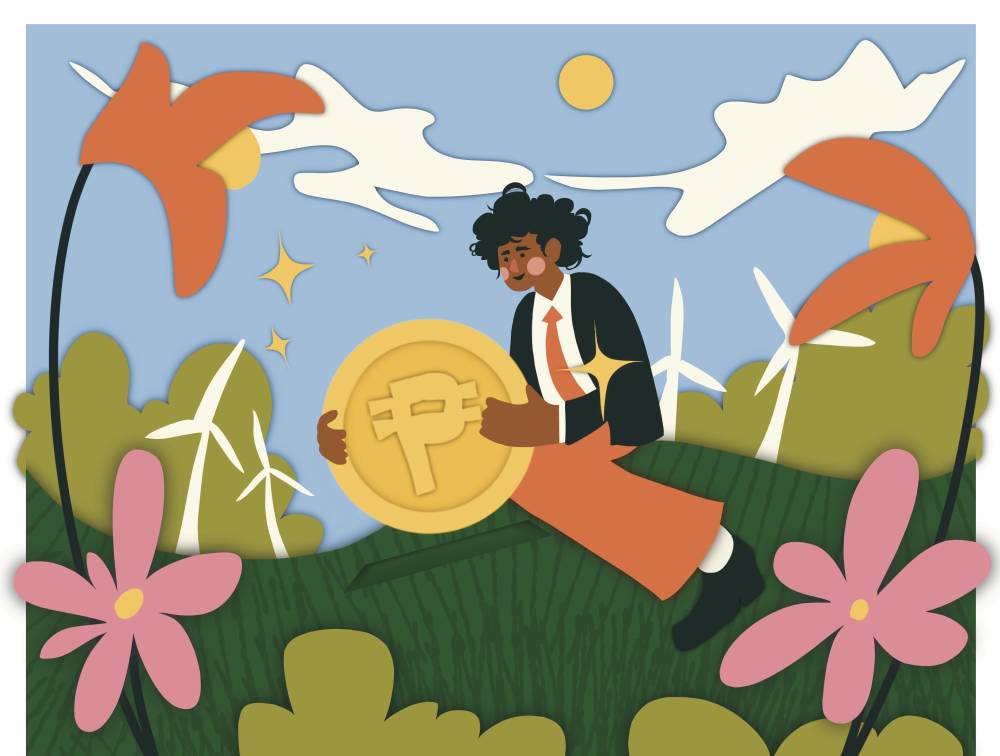
As the world confronts climate change and biodiversity loss, there is growing recognition that economies must invest in green and sustainable finance. Investment remains vital for development, but it must now serve a dual purpose: to “finance the green” by supporting environmentally friendly solutions, and to “green the finance” by reshaping the financial system to prioritize sustainability.
The United Nations Economic and Social Commission for Asia and the Pacific broadly defines “green finance” as funding that supports environment-oriented technologies, projects, industries, or businesses. More specifically, it includes environment-oriented financial products or services, such as loans, credit cards, insurances, or bonds. It is also closely linked to concepts such as climate finance and sustainable finance.
Intensified headwinds
Equity and debt are key instruments in green finance. Equity is often used in early stages of projects, while debt—such as loans and bonds—are typically utilized in later stages alongside equity.
In 2024, the sustainable finance market grew to more than $8.2 trillion, up 17 percent from 2023—even so, it faced intensified headwinds as well as growing investor caution.
According to the World Investment Report 2025 released by the United Nations, accelerating growth in the sustainable bond market saw “record issuance of over $1 trillion.” The value of the sustainable fund market also reached a record high at $3.2 trillion.
However, the number of new funds stalled and new inflows to the market fell to their lowest since 2015.
The report found that annual issuance grew at an average rate of 19 percent since 2019, as the market continued to mature and investors aligned their strategies with more sustainable outcomes.
The annual issuance of sustainable bonds as a share of the global bond market remained above 10 percent since 2021, and represented 11 percent of the market in 2024. Green bonds even accounted for 64 percent of total issuance, growing 14 percent from 2023 to 2024.
Complementary action
Advancing green finance requires complementary action from both the public and private sectors. By providing grants for policy reform, the public sector can act as a catalyst to leverage private finance at scale. Meanwhile, the private sector represents a major potential source of financing, seeking opportunities that generate market-rate financial returns and an environmental impact.
Governments can also directly support green growth through sustainable public procurement and eco-efficient investment in public buildings and enterprises.
In the Philippines, institutional investors and underwriters have shown interest in investing in and underwriting green bonds, but most have limited awareness and resources, according to a 2022 survey by the Asian Development Bank (ADB) and the Global Green Growth Institute.
The study also found that investors have strong preference for small green projects (less than $10 million,) while underwriters prefer larger deals (more than $100 million). Renewable energy, green buildings, sustainable agriculture, and water management were identified as the most promising sectors.
According to the Global Climate Risk Index, the Philippines ranked fourth most affected by extreme weather globally between 2000 and 2019. As one of the countries most vulnerable to the impacts of climate change, green finance is growing in the Philippines.
First in Asean
In 2016, the Philippines became the first Asean country to issue green corporate bonds. Between 2017 and 2018, the Securities and Exchange Commission adopted Asean green, social, and sustainability bond standards. In 2019, the Philippines joined the Coalition of Finance Ministers for Climate Action and its Helsinki Principles, which promotes national climate action through fiscal policy and the use of public finance.
In 2023, the ADB programmed $10 billion in climate finance for the Philippines between 2024 and 2029 to support low-carbon transport, renewable energy, the development of carbon markets, flood management, resilient coastal development, food security, and adaptive health and social protection.
In 2024, the Philippines ranked as the second top issuer of Asean-labeled green, social, and sustainability bonds, with a total issuance of $15.30 billion. By 2025, the Philippines had already exceeded $10 billion in sustainable finance for renewable energy, according to a report by global bank ING.
The capital invested today will have a lasting impact on tomorrow’s ecosystems and production and consumption patterns. With these green finance initiatives, the Philippines is heading for a sustainable future, creating long-term environmental and economic benefits for both the planet and generations to come. —Dana Quirante and Erin Alcala, Inquirer Research
Sources: Inquirer Archives, adb.org, iso.org, unescap.org, worldbank.org, climatebonds.net, unctad.org
