
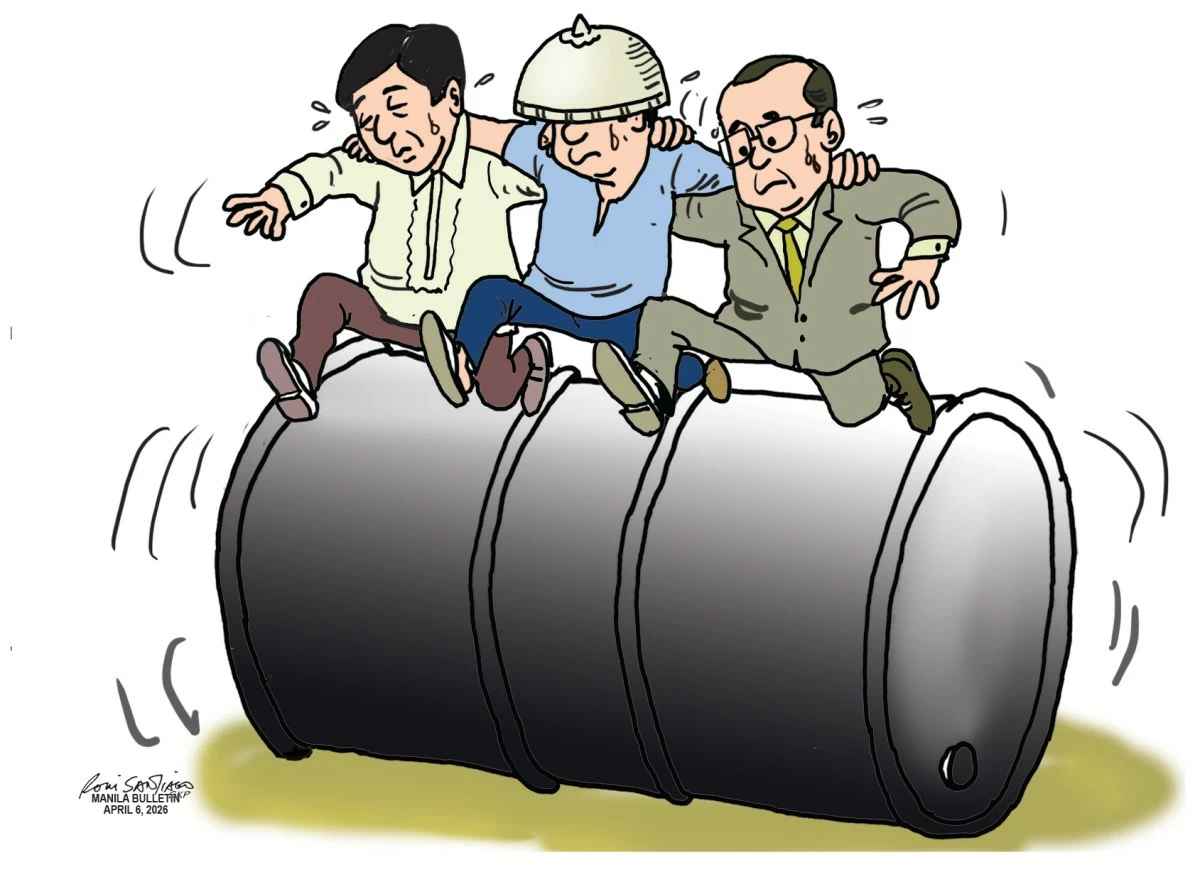
The renewed conflict in the Middle East has triggered sharp increases in global oil prices, once again testing the Philippines’ economic resilience. In response, both the national government and local government units (LGUs) have rolled out a range of concrete measures to cushion the impact on transport costs, electricity prices, and the cost of basic goods. These interventions are necessary and commendable, but they will only be fully effective if citizens and the private sector actively do their part.
At the national level, government action has been both immediate and strategic. Under existing energy contingency frameworks, fuel subsidies have been reactivated and expanded for public utility vehicle (PUV) drivers, farmers, and fisher folk—sectors most directly affected by rising diesel and gasoline prices. The Department of Energy (DOE) has intensified weekly monitoring of oil companies to ensure compliance with fair pricing rules, while the Department of Trade and Industry (DTI) has stepped up enforcement against hoarding and profiteering, particularly for essential goods whose prices are sensitive to fuel costs.
In addition, the government has implemented demand-side management measures. National agencies have been directed to reduce electricity and fuel consumption by limiting non-essential travel, optimizing air-conditioning use, and adopting energy-efficient lighting in public buildings. The Government Energy Management Program (GEMP) has been reinforced, requiring agencies to meet specific reduction targets. Work-from-home or hybrid arrangements have also been encouraged in appropriate sectors to reduce transport demand.
On the supply and structural side, the Department of Energy has accelerated the roll out of the Renewable Energy (RE) program. This includes fast-tracking approvals for solar and wind projects, promoting the Green Energy Auction Program (GEAP), and encouraging greater private sector participation in power generation. Efforts to diversify energy sources—including liquefied natural gas (LNG) imports—are likewise being pursued to stabilize supply.
Local governments have complemented these measures with practical, community-based responses. Many LGUs have enforced energy-saving protocols in government facilities, such as reduced operating hours for air-conditioning and stricter vehicle-use policies. In urban centers, traffic management schemes—like synchronized traffic lights, carpool lanes, and designated bike lanes—have been strengthened to reduce fuel wastage. Some LGUs have also provided localized fuel assistance or transport discounts for tricycle and jeepney drivers.
Public transport rationalization has been adjusted in certain areas, with LGUs coordinating route optimization to avoid duplication and reduce unnecessary fuel consumption. Community-level information campaigns—through barangays and local media—have promoted simple energy-saving practices, such as using LED lighting, unplugging idle appliances, and conserving water (which also reduces energy use in pumping and distribution).
Despite these comprehensive measures, the scale of the crisis demands broader participation. Citizens must embrace energy conservation as a daily discipline. Minimizing private vehicle use, combining errands into fewer trips, and adopting energy-efficient appliances are practical steps that can collectively reduce national demand.
The private sector, for its part, must go beyond compliance. Companies should conduct energy audits, invest in renewable energy installations such as rooftop solar, and adopt more efficient supply chain systems. Flexible work arrangements can significantly cut fuel consumption, while innovation in logistics and production can help offset rising costs. Equally important, businesses must exercise restraint in passing on price increases, especially for essential goods.
Ultimately, the current energy crisis is a stark reminder that vulnerability to external shocks remains a persistent challenge. While the government has laid out a clear and multi-level response, achieving resilience will depend on a whole-of-society effort. By aligning public policy with responsible consumption and forward-looking investments, the Philippines can navigate this with greater unity and emerge stronger in the face of future disruptions.
