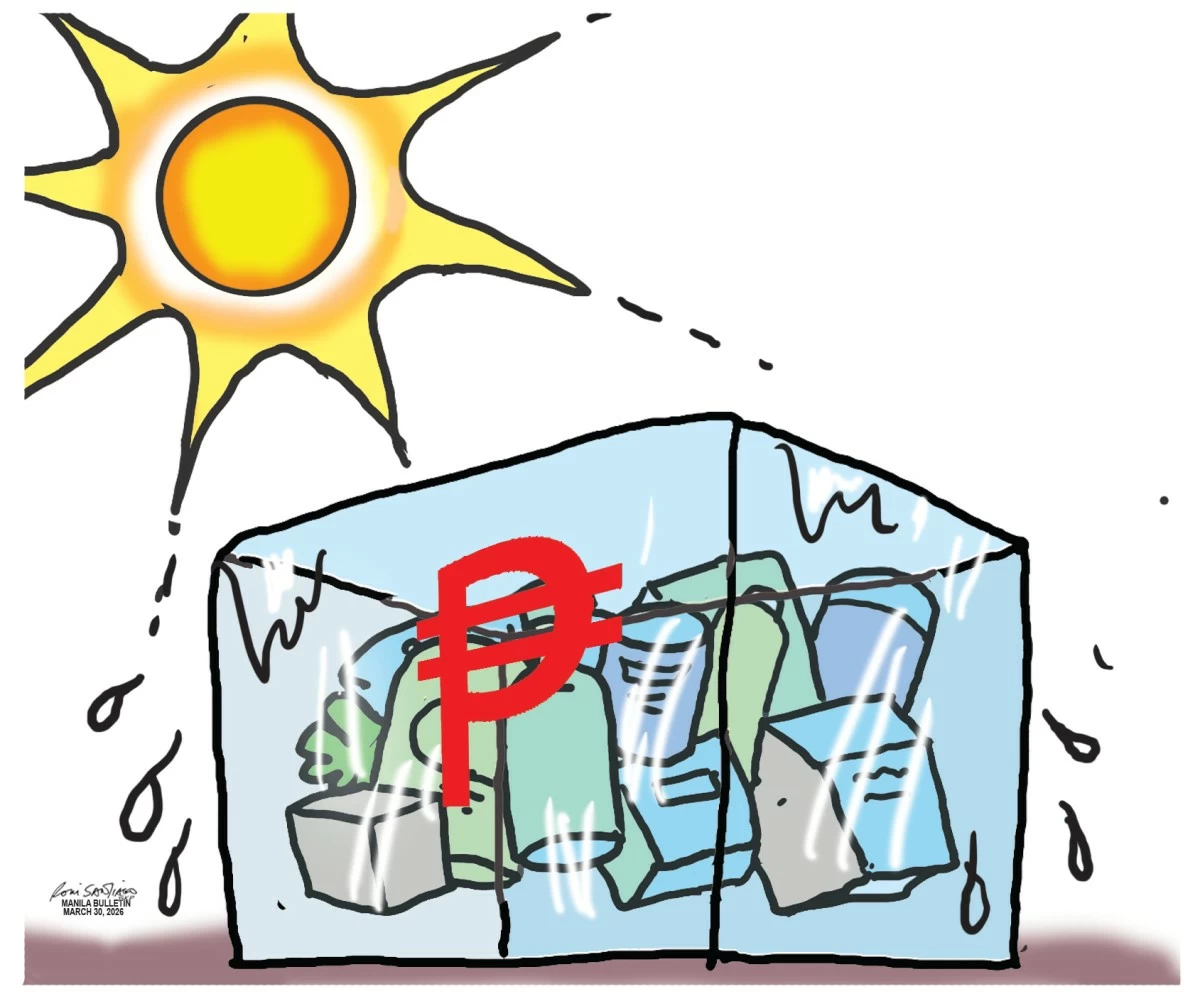
The renewed volatility in global oil markets, triggered by escalating tensions in the Middle East, is once again testing the resilience of the Philippine economy. As fuel prices surge, the ripple effects are swiftly felt across sectors. Transportation fares rise, production costs escalate, and inevitably, the prices of basic commodities follow suit. For millions of Filipino households, especially those at the lower end of the income spectrum, this is not merely an inconvenience; it is a matter of daily survival.
Calls for a price freeze on essential goods and basic commodities have thus gained urgency and moral weight. At the heart of this appeal lies a simple but compelling truth. When external shocks threaten to destabilize the economic order, government must act decisively to protect the most vulnerable while preserving overall stability.
Fuel price increases have a uniquely pervasive impact. Unlike other commodities, oil affects nearly every stage of the supply chain: from farm inputs and food transport to manufacturing and retail distribution. As logistics costs climb, food prices become particularly susceptible to continuous upward adjustments. Left unchecked, this can trigger a cycle of inflation that erodes purchasing power, dampens consumer confidence, and constrains economic activity.
The poorest sectors bear the heaviest burden. With already limited incomes, even marginal price increases can force painful trade-offs—less food on the table, deferred healthcare, or children pulled out of school. Inflation, in this context, is not an abstract economic indicator. It is a painful reality that deepens inequality and undermines social cohesion.
The declaration of a national energy emergency under Executive Order No. 110 was a necessary step in addressing supply-side risks and mobilizing government resources. However, its scope notably stops short of directly addressing the cascading effects on food and other essential goods. This gap underscores the need for complementary policy measures that can cushion the immediate impact on consumers.
A carefully calibrated price freeze, limited in duration and scope, can serve as a stabilizing mechanism during periods of extraordinary volatility. It signals government’s resolve to prevent opportunistic pricing and speculative behavior, while giving both producers and consumers a predictable environment in which to operate. Such an intervention, however, must be accompanied by robust enforcement and clear guidelines to avoid unintended consequences such as hoarding, supply shortages, or black-market activities.
Equally important is the need for targeted support to producers and small businesses who may be adversely affected by a price cap. Subsidies, tax relief, or temporary financial assistance can help ensure that supply chains remain intact and that the burden of adjustment is shared equitably across the economy.
Beyond immediate relief, this moment calls for a broader reflection on economic resilience. Strengthening local food production, investing in energy diversification, and enhancing supply chain efficiency are critical to reducing vulnerability to external shocks. Social safety nets must also be reinforced to provide timely assistance to those most in need.
The objective is not to distort markets indefinitely, but to prevent short-term disruptions from evolving into long-term crises. Economic continuity depends as much on maintaining consumer confidence as it does on safeguarding production and distribution systems. A measured price freeze, implemented with transparency and supported by complementary policies, can help achieve this balance.
In times of uncertainty, the role of government as steward of the public good becomes paramount. Ensuring that no Filipino is left behind amid rising prices is not only an economic necessity; it is a moral imperative.




'/%3E%3Cpath d='M16.0001 7.9996c0 4.418-3.5815 7.9996-7.9995 7.9996S.001 12.4176.001 7.9996 3.5825 0 8.0006 0C12.4186 0 16 3.5815 16 7.9996Z' fill='url(%23paint1_radial_15251_63610)'/%3E%3Cpath d='M16.0001 7.9996c0 4.418-3.5815 7.9996-7.9995 7.9996S.001 12.4176.001 7.9996 3.5825 0 8.0006 0C12.4186 0 16 3.5815 16 7.9996Z' fill='url(%23paint2_radial_15251_63610)' fill-opacity='.5'/%3E%3Cpath d='M7.3014 3.8662a.6974.6974 0 0 1 .6974-.6977c.6742 0 1.2207.5465 1.2207 1.2206v1.7464a.101.101 0 0 0 .101.101h1.7953c.992 0 1.7232.9273 1.4917 1.892l-.4572 1.9047a2.301 2.301 0 0 1-2.2374 1.764H6.9185a.5752.5752 0 0 1-.5752-.5752V7.7384c0-.4168.097-.8278.2834-1.2005l.2856-.5712a3.6878 3.6878 0 0 0 .3893-1.6509l-.0002-.4496ZM4.367 7a.767.767 0 0 0-.7669.767v3.2598a.767.767 0 0 0 .767.767h.767a.3835.3835 0 0 0 .3835-.3835V7.3835A.3835.3835 0 0 0 5.134 7h-.767Z' fill='%23fff'/%3E%3Cdefs%3E%3CradialGradient id='paint1_radial_15251_63610' cx='0' cy='0' r='1' gradientUnits='userSpaceOnUse' gradientTransform='rotate(90 .0005 8) scale(7.99958)'%3E%3Cstop offset='.5618' stop-color='%230866FF' stop-opacity='0'/%3E%3Cstop offset='1' stop-color='%230866FF' stop-opacity='.1'/%3E%3C/radialGradient%3E%3CradialGradient id='paint2_radial_15251_63610' cx='0' cy='0' r='1' gradientUnits='userSpaceOnUse' gradientTransform='rotate(45 -4.5257 10.9237) scale(10.1818)'%3E%3Cstop offset='.3143' stop-color='%2302ADFC'/%3E%3Cstop offset='1' stop-color='%2302ADFC' stop-opacity='0'/%3E%3C/radialGradient%3E%3ClinearGradient id='paint0_linear_15251_63610' x1='2.3989' y1='2.3999' x2='13.5983' y2='13.5993' gradientUnits='userSpaceOnUse'%3E%3Cstop stop-color='%2302ADFC'/%3E%3Cstop offset='.5' stop-color='%230866FF'/%3E%3Cstop offset='1' stop-color='%232B7EFF'/%3E%3C/linearGradient%3E%3C/defs%3E%3C/svg%3E)
'%3E%3Cpath d='M15.9963 8c0 4.4179-3.5811 7.9993-7.9986 7.9993-4.4176 0-7.9987-3.5814-7.9987-7.9992 0-4.4179 3.5811-7.9992 7.9987-7.9992 4.4175 0 7.9986 3.5813 7.9986 7.9992Z' fill='url(%23paint0_linear_15251_63610)'/%3E%3Cpath d='M15.9973 7.9992c0 4.4178-3.5811 7.9992-7.9987 7.9992C3.5811 15.9984 0 12.417 0 7.9992S3.5811 0 7.9986 0c4.4176 0 7.9987 3.5814 7.9987 7.9992Z' fill='url(%23paint1_radial_15251_63610)'/%3E%3Cpath d='M7.9996 5.9081c-.3528-.8845-1.1936-1.507-2.1748-1.507-1.4323 0-2.4254 1.328-2.4254 2.6797 0 2.2718 2.3938 4.0094 4.0816 5.1589.3168.2157.7205.2157 1.0373 0 1.6878-1.1495 4.0815-2.8871 4.0815-5.159 0-1.3517-.993-2.6796-2.4254-2.6796-.9811 0-1.822.6225-2.1748 1.507Z' fill='%23fff'/%3E%3C/g%3E%3Cdefs%3E%3CradialGradient id='paint1_radial_15251_63610' cx='0' cy='0' r='1' gradientUnits='userSpaceOnUse' gradientTransform='matrix(0 7.9992 -7.99863 0 7.9986 7.9992)'%3E%3Cstop offset='.5637' stop-color='%23E11731' stop-opacity='0'/%3E%3Cstop offset='1' stop-color='%23E11731' stop-opacity='.1'/%3E%3C/radialGradient%3E%3ClinearGradient id='paint0_linear_15251_63610' x1='2.3986' y1='2.4007' x2='13.5975' y2='13.5993' gradientUnits='userSpaceOnUse'%3E%3Cstop stop-color='%23FF74AE'/%3E%3Cstop offset='.5001' stop-color='%23FA2E3E'/%3E%3Cstop offset='1' stop-color='%23FF5758'/%3E%3C/linearGradient%3E%3CclipPath id='clip0_15251_63610'%3E%3Cpath fill='%23fff' d='M-.001.0009h15.9992v15.9984H-.001z'/%3E%3C/clipPath%3E%3C/defs%3E%3C/svg%3E)