You plan to move to the Philippines? Wollen Sie auf den Philippinen leben?

There are REALLY TONS of websites telling us how, why, maybe why not and when you'll be able to move to the Philippines. I only love to tell and explain some things "between the lines". Enjoy reading, be informed, have fun and be entertained too!

Ja, es gibt tonnenweise Webseiten, die Ihnen sagen wie, warum, vielleicht warum nicht und wann Sie am besten auf die Philippinen auswandern könnten. Ich möchte Ihnen in Zukunft "zwischen den Zeilen" einige zusätzlichen Dinge berichten und erzählen. Viel Spass beim Lesen und Gute Unterhaltung!


Visitors of germanexpatinthephilippines/Besucher dieser Webseite.Ich liebe meine Flaggensammlung!

free counters

Total Pageviews

Saturday, March 21, 2026

Monitoring ‘happiness’


Mahar Mangahas

March 20th was the United Nations’ annual International Day of Happiness, which stemmed from a 2012 UN Resolution initiated by Bhutan, the famed originator of the Gross National Happiness (GNH) concept. It explains the timing of the release of: (a) the Social Weather Stations (SWS) report, “Fourth Quarter 2025 Social Weather Survey: 33% of Pinoys are ‘very happy’ with life; 23% are ‘very satisfied’ with life” (www.sws.org.ph, 3/19/26), and (b) the 2026 World Happiness Report (WHR), published by the Wellbeing Research Group of the University of Oxford in partnership with Gallup, the UN Sustainable Development Solutions Network, and the WHR’s editorial board.

Happiness of Filipinos according to SWS. The SWS report discloses its two survey questions for monitoring happiness, one with the adjective “happy” (masaya) and another with the adjective “satisfied” (nasisiyahan), and both describing the respondent’s present life as a whole. Each option has a four-point scale: Very Happy/Fairly Happy/Not Very Happy/Not At All Happy and Very Satisfied/Fairly Satisfied/Not Very Satisfied/Not At All Satisfied. SWS has asked the “happy-life” question 49 times since 1991, and the satisfied-life question 57 times since 2002; see the report’s charts and tables.

Personally, I think the happy-life option goes straight to the point; I also like to focus more on downside rather than the upside. In 2025, SWS used both options in two surveys, with these average results (in percentages): 32 Very Happy, 52 Fairly Happy, 14 Not Very Happy, and 2 Not At All Happy; and 29 Very Satisfied, 51 Fairly Satisfied, 14 Not Very Satisfied, and 6 Not At All Satisfied. For me, these may be simplified into 16 percent “unhappy” and 20 percent “dissatisfied.”


THE POINT OF PRAYER


THE POINT OF PRAYER

0
157

The point of prayer is to communicate and build a relationship with God, aligning oneself with divine will rather than just requesting favors. It serves as a means of worship, gratitude, and finding peace, allowing individuals to seek strength, guidance, and spiritual growth while fostering dependence on the divine.

The Prayer Hand is an easy way to remember five essential aspects of prayer: confession, petition, intercession, thanksgiving and praise. Use this helpful diagram in your personal prayer life or when teaching about prayer to others.  

When tragedy strikes, it’s easy to harden our hearts and cry out, “God, why did you let this happen?” Maybe then, we started praying. Before, when everything went smoothly, we would not even think a minute about praying… 

Prayer may be the most powerful tool we have for personal and global transformation. Personal prayers and the prayers of a united community provide a direct link and connection to the Divine. All things become possible and exalted.

We must pray all the time, and when we pray, we must always pray in faith. Prayer should rise from the depths of our being, be adjusted to line up with God’s word and the Holy Spirit, and then be released like hot incense. That kind of prayer will always enter the throne room and catch the attention of heaven. If you pray like that, you are praying in faith. If you pray like that, then you demonstrate that you believe you are being heard and that the Lord will answer your prayers. Do that and your prayers will be powerful.

“To be a Christian without prayer, “said Martin Luther, “is no more possible than to be alive without breathing.” Prayer is the only way of becoming what God wants us to be. This is the reason why Jesus spent many hours praying.

Unquestionable, our needs bring us to a place of prayer. Confronted with danger or tragedies, as I mentioned earlier, we look for God’s help. Difficult times always cause the hearts of men to turn to God into prayer. 

Let me ask you: How long has it been since you’ve brought your burdens to God? Since you asked His forgiveness for your shortcomings? 

In his very interesting book “People in Prayer”, Dr. John White reminds us that prayer is a divine-human interaction and it is always God who takes the initiative. White writes: “God speaks and we respond. God is always speaking. To hear his voice is not usually a mystical experience. It consists merely of a willingness to pay heed to God who lays a claim to our lives.”

Yes, God always speaks. It is up to us whether we will listen and respond to Him. Many think we are the ones who initiate prayer. But prayers begin and end with God. 

There was a time, I wasn’t in the mood to pray any more. It seemed that God didn’t listen to my prayer any more. I didn’t get what I prayed for. Of course, not… ! That’s not the meaning of praying to God. Will all my wishes be granted? Heaven forbid!

Sometimes, after we have prayed, God’s answers may puzzle us. But as time goes by and as events unfold we see God’s purpose in his answers. We might get a larger vision, what HE likes. Not what WE like… .

Think about it for a moment” How does the idea that prayer begins and ends with God affect me now? Do I have the habit of listening to god? How do I respond to Him? How do I usually pray?I confess that a long time ago I have been trying to persuade God to change other people in my surroundings or circumstances. Nothing changed. Of course not, what a fatal attraction? I got confused because God never granted my requests. Meanwhile I got God’s answers to my prayers. Maybe very simple: I was willing to let God change me… .This is how each one of us should start. Happy endings. Because I prayed according to His will… 

Prayer can foster a sense of connection, whether it’s to a higher power, what a person finds important in life or their values, said Ryan Bremner, an associate professor of psychology at the University of St. Thomas in Minnesota. Prayer can reduce feelings of isolation, anxiety and fear as well.

In Christianity, the purpose of prayer is to build a personal relationship with God, align the believer’s will with His, and glorify Him. It serves as a vital communication channel for praise, thanksgiving, confession, and presenting requests, enabling believers to experience God’s grace and receive strength.

Nowadays, I live a wonderful life in my second and last home, the Philippines. I never regretted moving here for good. I have everything I could ask for. I can do everything I wish to do. Thank you Lord.

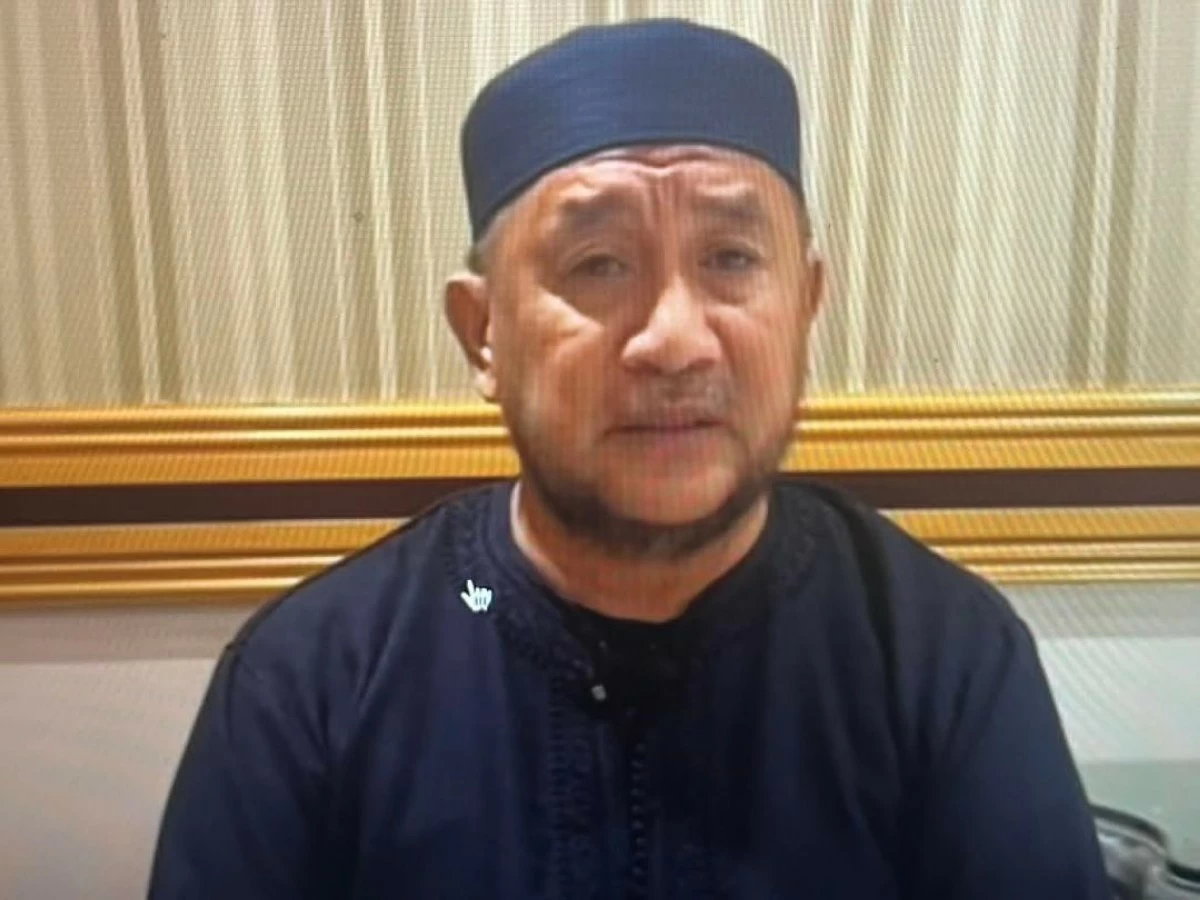
Eid'l Fitr set Saturday, March 21


Published Mar 20, 2026 05:20 pm
ABUBAKAR (Photo via Liza Jocson)
ZAMBOANGA CITY – The Darul Ifta of Bangsamoro and the Zamboanga Peninsula and Palawan said Eid’l Fitr will be on Saturday, March 21.
“The Bangsamoro Darul Ifta-BARMM formally pronounces that the moon has not been sighted tonight,” said the Darul Ifta-BARMM. “Therefore, the Eid’l Fitr will be celebrated on March 21, 2026, Saturday.”
The same announcement was made by the Grand Mufti, Sheikh Walid Abubakar, of Region 9 and Palawan on Thursday, March 20.
Observers gathered at the Paseo del Mar here on Thursday afternoon to conduct moon-sighting activities which ended without the appearance of the crescent moon.
Eid’l Fitr is celebrated as the culmination of the month-long Ramadan characterized by fasting, charity, and devotion.

Between then and now


By Shanell Jay Aguinald

I was listening to “I Have a Dream” by ABBA the other day, and man, it hit me like a ton of bricks and took me straight back to being a kid.

That was my school’s graduation song. It always reminds me of those weird, hazy days between February and March. I remember watching the kids just one year older than me, who seemed like actual adults at the time, practicing in the heat all month long for their big day.

“I have a dream, a song to sing. To help me cope with anything …”

I can still hear those kids. Their voices were always a little too high-pitched, but they sang with this devastatingly sincere intensity. They would mouth the lyrics with a sense of fulfillment that you can only really possess before you’ve had your first real heartbreak or your first soul-crushing job. Looking back, it’s wild how we were all just children with these massive, “oversized” dreams.

Back then, the world felt tiny but also impossible. Success wasn’t about tax brackets, LinkedIn “announcements,” or trying to figure out what the hell “work-life balance” actually looks like. It was simple: a gold star, the look on your parents’ faces, and the absolute certainty that by the time we reached the age we are now, we’d have it all figured out. We thought “growing up” was a destination—like a city you eventually reach—rather than this messy, exhausting trek through the woods that it actually is.

Watching those older kids practice, I didn’t see the stress of final exams or the anxiety of moving to a new, scarier school. I saw giants. To a child, a one-year age gap is an epoch. They were the “big kids,” the ones standing on the precipice of the future. As they sang about crossing the stream and seeing the wonder of a fairy tale, I felt a desperate, impatient hunger to be in their shoes.

I didn’t realize then that the fulfillment I saw on their faces was actually their first taste of a bittersweet goodbye. They weren’t just singing about dreams; they were singing to bridge the gap between the safety of childhood and the cold uncertainty of what came next.

As we grow, our dreams undergo a brutal process of distillation. At seven, your ambitions are boundless; you want to be an astronaut-teacher-princess. At 17, your world narrows; you just want to get into a good college or hope your crush notices you in the hallway. At 27, or 37, the dream shifts again. Now, you might just want a job that doesn’t make you want to scream into a pillow on Monday mornings. It’s not just the mornings, either; sometimes it’s a random Tuesday at 2 p.m. when the weight of “being an adult” feels like a backpack full of rocks.

But beneath that layer of cynicism, that kid from the graduation rehearsal is still there. We’ve all crossed the stream dozens of times by now. We’ve navigated the currents of heartbreak, the sharp rocks of career pivots, and the quiet, sobering realization that the future we were promised isn’t a fixed point on a map, but a moving target that keeps shifting every time we get close.

We often spend so much time mourning the loss of our childhood dreams that we forget to celebrate the fact that we actually survived the reality that replaced them. There is a specific kind of melancholy in realizing you are now the age of the people you once thought were “real adults.” You look in the mirror and realize there is no magical moment when you suddenly feel like you have all the answers. You’re just a kid with more bills to pay, a better vocabulary, and higher caffeine dependency.

However, there is also a profound beauty in that. Those kids in the courtyard weren’t singing because they knew they would win; they were singing because they believed they could. To hold on to that sense of wonder in a world that tries its absolute hardest to iron it out of you is its own quiet act of rebellion. It’s a choice to remain “un-ironed.”

ABBA knew something we didn’t quite grasp as children: having a dream isn’t about the destination. It’s about dreaming itself. It’s the “fantasy” that helps us move through the heavy sludge of reality.

If I could go back to those February afternoons, I wouldn’t tell those kids to study harder or warn them about the fluctuating economy. I’d just sit on those warm concrete steps, listen to those high-pitched voices one more time, and remind myself to breathe. I’d tell myself that it’s okay not to have it all figured out, because no one else does either.

We are still those kids. We are still practicing for a day that hasn’t come yet. We are still mouthing the lyrics to a future we haven’t quite mastered, hoping we don’t trip during the processional. And as long as the music is playing, as long as we can still see the wonder hidden in the mundane tasks of a Tuesday afternoon, we haven’t lost our way. We are just on a longer bridge than we expected, still crossing the stream, still carrying the dream.