You plan to move to the Philippines? Wollen Sie auf den Philippinen leben?

There are REALLY TONS of websites telling us how, why, maybe why not and when you'll be able to move to the Philippines. I only love to tell and explain some things "between the lines". Enjoy reading, be informed, have fun and be entertained too!

Ja, es gibt tonnenweise Webseiten, die Ihnen sagen wie, warum, vielleicht warum nicht und wann Sie am besten auf die Philippinen auswandern könnten. Ich möchte Ihnen in Zukunft "zwischen den Zeilen" einige zusätzlichen Dinge berichten und erzählen. Viel Spass beim Lesen und Gute Unterhaltung!


Visitors of germanexpatinthephilippines/Besucher dieser Webseite.Ich liebe meine Flaggensammlung!

free counters

Total Pageviews

Sunday, March 29, 2026

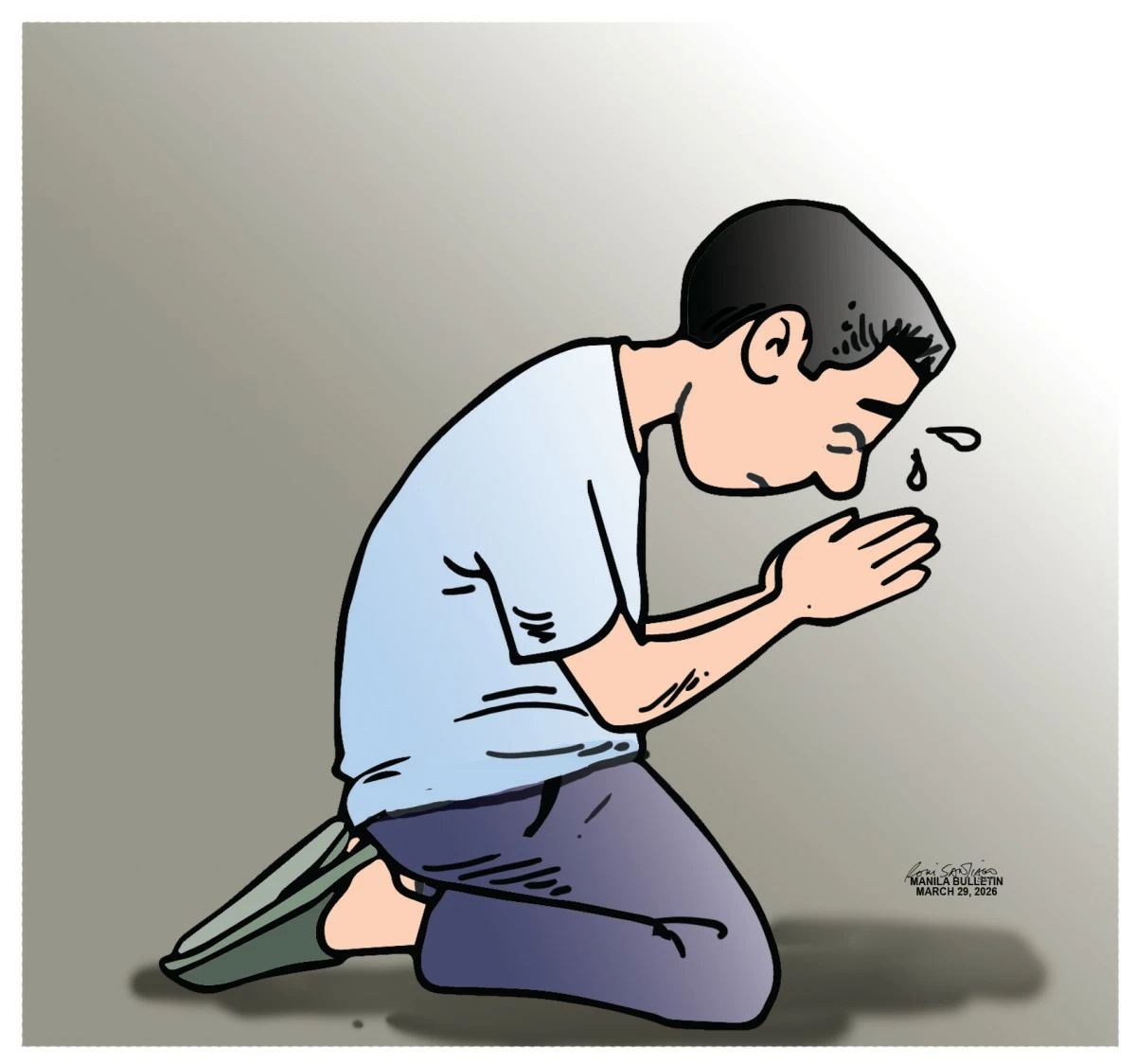
Faith in God in times of crisis


Published Mar 29, 2026 12:05 am | Updated Mar 28, 2026 04:09 pm
The Middle East conflict reminds us how fragile human systems can be. As oil prices surge by double digits, fuel costs rise, transport fares increase, and the prices of basic goods—fish, vegetables, and other staples—follow. This left Filipino households struggling to keep food on the table.
And this points to a deeper question: Where does true provision come from when everything else proves uncertain?
Keep in mind, fuel price shocks are not confined solely to energy markets. They spread swiftly into the cost structures of our daily life. Transport operators adjust fares to offset rising diesel prices. Agricultural producers face increased expenses in cultivation, storage, and distribution. Fisherfolk, already vulnerable, must contend with higher operational costs simply to sustain their livelihoods. Inevitably, these pressures converge in the marketplace, where the prices of essential goods rise beyond the reach of many households.
The result is economic strain, and erosion of food security and household stability.
Government interventions, including cash assistance and targeted subsidies, represent necessary responses to immediate hardship. Yet their impact is often constrained by scale, timing, and sustainability. They address symptoms rather than causes, offering temporary relief without fully arresting the broader, systemic cascade. In this context, reliance on purely human solutions exposes the fragility of systems upon which modern societies have come to depend.
Indeed, the present crisis underscores the uncertainty of material wealth and institutional assurances. Markets fluctuate, supply chains falter, and policies, however well-conceived, remain subject to forces beyond human control.
It is precisely within this uncertainty that a more enduring foundation is revealed. The Bible offers not an escape from economic realities, but a reorientation of trust. Philippians 4:19 affirms, “And my God shall supply all your needs according to the riches of his glory in Christ Jesus.” This declaration does not dismiss the existence of scarcity; rather, it points to a source of provision that transcends it.
Biblical testimony consistently illustrates that divine provision is neither constrained by nor dependent upon conventional systems. In 1 Kings 17, sustenance is delivered through unexpected means during a time of drought, demonstrating that when established channels fail, God delivers provision in a way we do not expect. Similarly, Psalm 37:19 assures that “in times of disaster they will not wither; in days of famine they will enjoy plenty.” Such passages articulate a principle often overlooked in modern discourse: that spiritual fidelity constitutes a form of capital more resilient than material accumulation.
This perspective, however, does not advocate passivity. The exhortation to “be still, and know that I am God” in Psalm 46:10 calls not for disengagement, but for composure anchored in divine sovereignty. It is an invitation to resist fear-driven responses while maintaining clarity of purpose. Complementing this trust is the imperative of stewardship—prudence in the management of resources, discernment in consumption, and, critically, generosity toward others.
In periods of scarcity, the instinct toward self-preservation can overshadow communal responsibility. Yet it is precisely through acts of shared provision that communities endure. The discipline of giving, even when resources appear limited, reflects a confidence in a supply that exceeds visible means.
As Daniel 2:21 reminds us, it is God who “changes times and seasons”. Stability, therefore, cannot be grounded solely in policy or economic design, but must ultimately rest in the sovereignty of God, the one who governs both.
The chain of consequences—from distant conflict to local deprivation—may continue to unfold. Yet it does not possess ultimate authority. Beyond the volatility of markets and the uncertainty of riches stands the enduring certainty of God, our Greatest Provider. And it is in this certainty that both resilience and hope are most securely found.

Davao City celebrates FPRRD's 81st birth anniversary


Published Mar 28, 2026 10:25 pm
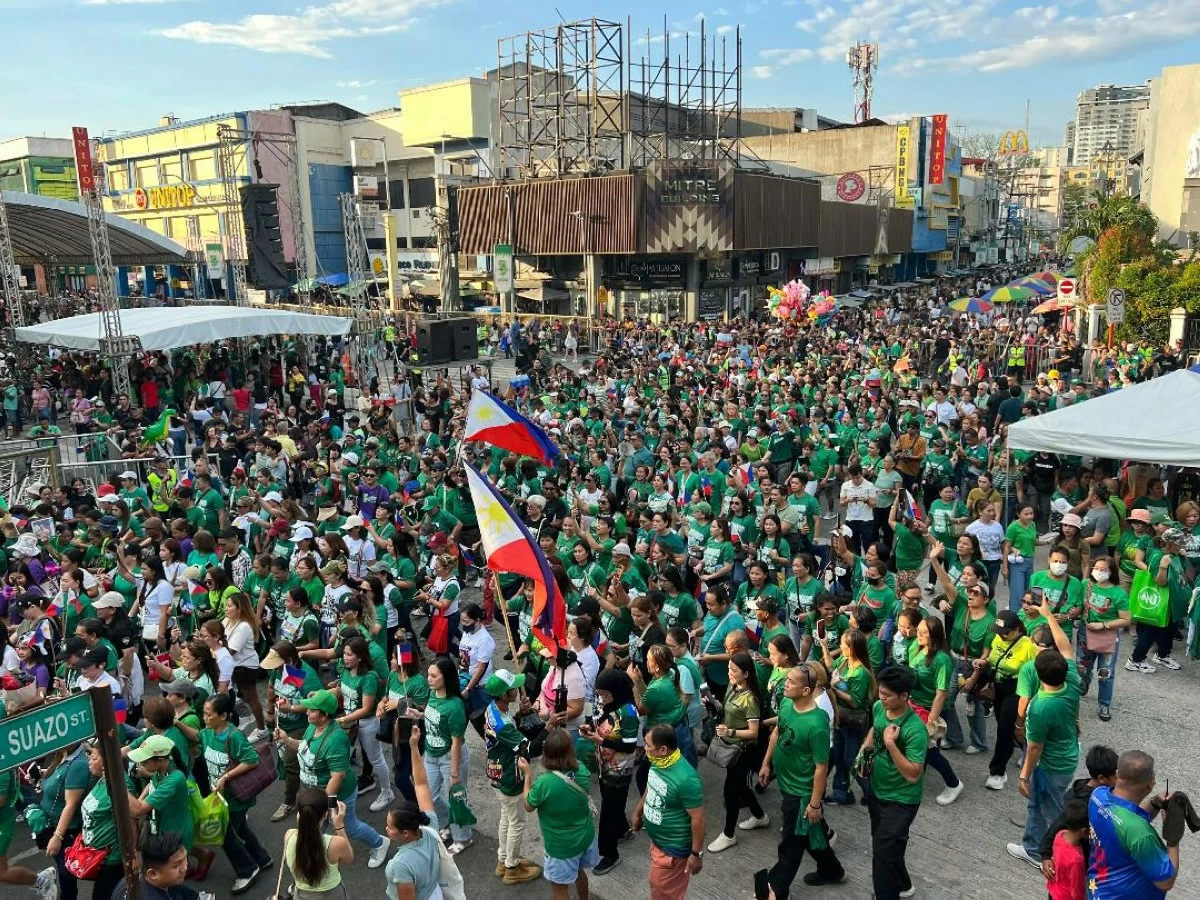
THE crowd at former President Rodrigo Duterte's 81st birthday in Davao City. (Photo via Ivy Tejano)
DAVAO CITY – Thousands of supporters joined a Solidarity Walk on Saturday afternoon, March 28, to celebrate the 81st birth anniversary of former President Rodrigo Duterte, who is detained overseas for alleged crimes against humanity.
Participants from the public and private sectors began marching around 4 p.m., wearing green shirts and carrying small and large Philippine, Japanese, and United States flags, as they moved from Roxas Ave. to San Pedro Square for a program.
Supporters holding candles and singing Happy Birthday to the former Chief Executive said the activity aimed to convey their greetings and prayers for the patriarch and expressed hope that he would soon return to Davao City.
In a video message, Davao City first district Rep. Paolo Duterte, who is in The Hague for his father, thanked Filipinos worldwide for celebrating the former Chief Executive's birthday and their continued prayers for his health.
"To my fellow Filipinos in different parts of the world who are celebrating the 81st birthday of President Rodrigo Roa Duterte, thank you very, very much! Thank you for your continued prayers for his health," Rep. Duterte said.
Rep. Duterte thanked thousands of people who sent letters of support to former President Duterte and noted that their messages conveyed encouragement, prayers, and solidarity during a challenging time.
The lawmaker’s siblings, Vice President Sara Duterte, Davao City Mayor Sebastian Duterte, and Veronica Duterte, extended warm greetings and messages, thanking supporters across the country and abroad for celebrating former President Duterte’s birthday.
Vice President Duterte stressed the importance of defending her father’s rights and described it as a matter of national sovereignty and called on the public to remain vigilant against what she called weaponization of the law and foreign interference in the country’s judicial processes.
Sen. Christopher Lawrence Go, a longtime aide of the former President, described the occasion as "the saddest birthday" the patriarch experienced and noted his preference for simple, private celebrations focused on helping people in poverty.
Go recalled his years of service with former President Duterte and described him as more than a father to him. He urged supporters to continue praying for the former President's safety, health, and freedom.
Davao City Councilor Luna Maria Dominique Acosta conveyed birthday wishes, saying that while former President Duterte was not present, his supporters gathered to celebrate on his behalf, emphasizing the widespread support he continues to receive.
"I wish you were here with us today. But since you are not, we will celebrate on your behalf. We are all here –Davao City and the entire nation – so many people love you, Tay! Happy, happy birthday! We love you!" Acosta said.
Former Budget Secretary Wendel Avisado delivered the opening remarks at the program and referred to former President Duterte as "a living hero," drawing applause from the crowd.
Other officials and close associates who attended and delivered messages include former Executive Secretary Salvador Medialdea and Duterte Youth party-list chairman Ronald Gian Carlo Cardema. Medialdea, however, was assisted offstage after appearing unwell during his speech.
Medialdea is a close friend of the former President and accompanied him as his legal representative when he was brought to The Hague on March 12, 2025, in connection with proceedings before the International Criminal Court.
Also present during the activity were former Presidential Legal Counsel and Spokesperson Salvador Panelo, Atty. Jimmy Bondoc, members of the Davao City Council, and local and national government officials.
Thousands of Davaoeños lined up to receive free food and water distributed during the event. Several groups distributed roasted pig, packed lunch, and bottled water to thank attendees.

Easter from Culture to Culture


Easter always falls on a Sunday. Many churches will offer worship services on Good Friday (the Friday just before Easter) along with one or more services on Easter Sunday itself. Easter Sunday marks the end of the 46-day preparatory season of Lent, which is significant in cultures around the world.

The exact date of Easter varies from year to year, but it typically falls during the month of April or sometimes late March. This seasonal timing gives the holiday its strong associations with springtime and rebirth in the natural world. Easter icons such as eggs, baby chicks, bunnies and tulips symbolize new life and renewed hope. Those are powerful ideas to embrace whether you celebrate Easter for religious reasons or simply because you enjoy the vibrant traditions that go along with the holiday.

The Resurrection Sunday church service is at the heart of African-American Easter traditions. Everyone dresses up in their best—new suits, shined shoes, bright dresses, hats, gloves. The worship services feature prayer, singing, Easter pageants, parades and speeches or recitations. Afterwards, the day focuses on family and togetherness, including a big dinner and often an egg hunt for the kids. Hiding a special empty golden egg that represents Jesus’ empty tomb is a time-honored Easter tradition for many African-American families.

Pascha” is the term for Easter used in the Eastern Orthodox Church (also known as the Greek Orthodox Church). The date of Orthodox Easter is reckoned according to a different calendar, so it usually falls a few weeks later than Easter in Western Christian traditions. The word “Pascha” is familiar both within and beyond the Orthodox Church because of the traditional “Paschal Greeting” (also called the Easter Acclamation). In this celebratory exchange, one believer proclaims “He is risen!” and a fellow believer responds with either “Truly He is risen!” or “He is risen indeed!”

Easter is a very important religious holiday for Latinx people. The celebration is an entire week of events that begins with Palm Sunday (“Día de Ramos” in Spanish) and ends with the celebration of Jesus’ Resurrection. During the Holy Week (“Semana Santa” in Spanish), masses and prayer services are held on Thursday, Friday and Saturday, and it’s common to see processions through towns and cities and people carrying crucifixes or statues of Jesus. Most of those events involve the entire family because they explore the biblical ideas of sacrifice, giving and forgiveness.

A simple “Happy Easter” wish can be a great option, especially when the card itself has already said a lot or when keeping it short simply feels right for your relationship with your recipient.

If you belong to a Christian faith tradition, then sharing the hope and joy of Christ’s Resurrection may be the key message you want to send in an Easter card. And there are lots of great ways to do that.

Celebrating the miracle of Easter, the beauty of God’s creation and the blessing of having you in my life.