You plan to move to the Philippines? Wollen Sie auf den Philippinen leben?

There are REALLY TONS of websites telling us how, why, maybe why not and when you'll be able to move to the Philippines. I only love to tell and explain some things "between the lines". Enjoy reading, be informed, have fun and be entertained too!

Ja, es gibt tonnenweise Webseiten, die Ihnen sagen wie, warum, vielleicht warum nicht und wann Sie am besten auf die Philippinen auswandern könnten. Ich möchte Ihnen in Zukunft "zwischen den Zeilen" einige zusätzlichen Dinge berichten und erzählen. Viel Spass beim Lesen und Gute Unterhaltung!


Visitors of germanexpatinthephilippines/Besucher dieser Webseite.Ich liebe meine Flaggensammlung!

free counters

Total Pageviews

Wednesday, April 1, 2026

50 Golden Rules For Life


  1. Never shake hands at anyone without standing up.
  2. In a negotiation, never make the first offer.
  3. If they trust you a secret, keep it.
  4. If they lend you a car, return it with a full tank.
  5. Do things with passion or don't do it at all.
  6. When you shake your hand make it firm and look that person in the eye.
  7. Live the experience of traveling alone.
  8. Never turn down a peppermint pill, the reasons are obvious.
  9. Take advice if you want to grow old.
  10. Come eat with the new person at school/office.
  11. When you text someone and you're angry; finish, read it, delete it, and rewrite the message.
  12. At the table you don't talk about work, politics, or religion.
  13. Write your goals, and work on them.
  14. Defend your point of view but be tolerant and respectful to others.
  15. Call and visit your relatives.
  16. Never regret anything, learn from everything.
  17. Honor and loyalty must be present in your personality.
  18. Don't lend money to someone you know won't pay you back.
  19. Believe in something.
  20. Tend your bed when you wake up in the mornings.
  21. Sing in the shower.
  22. Care for a plant or a garden.
  23. Keep an eye on the sky every chance you get.
  24. Discover your skills and exploit them.
  25. Love your job or leave it.
  26. Ask for help when you need it.
  27. Teach someone a value, preferably a small one.
  28. Appreciate and thank the one who extends your hand.
  29. Be kind to your neighbors.
  30. Make someone's day happier, it will make you happier too.
  31. Compete with yourself.
  32. Treat yourself at least once a year.
  33. Take care of your health.
  34. Always greet with a smile.
  35. Think fast but speak slow.
  36. Don't talk with a mouth full.
  37. Polish your shoes, cut your nails, and always keep a good look.
  38. Don't put your opinion on issues you don't know.
  39. Never mistreat anyone.
  40. Live your life as if it were the last day of it.
  41. Never miss a wonderful opportunity to remain quiet.
  42. Recognize someone for their effort.
  43. Be humble, even though not all the time.
  44. Never forget your roots.
  45. Travel when you can.
  46. Give up the step.
  47. Dance in the rain.
  48. Seek your success without giving up.
  49. Be fair, stand up for those who need you.
  50. Learn to enjoy moments of loneliness.

HAPPY EASTER!


HAPPY EASTER!

0
121


Each year, Easter falls on a different day – and this year it’s coming a little early. In 2024, Easter falls on Sunday, March 31. But why is the holiday coming earlier than usual, and how is it determined? According to experts, it has to do with a full moon.

Easter Monday is a Christian holiday celebrated the day after Easter Sunday.

In many countries in Europe and South America, this day is known as “Little Easter”. The Catholic Church calls it “Monday of the Angel”.

Formerly, it was celebrated as Easter Week in many places but this was reduced to a one-day celebration in the 19th century.

Emperor Constantine (272-337 AD) imposed eight consecutive public holidays in Rome, a period called the “Octave of Easter”. Monday, like other days, was a public holiday. Masses were held every day to celebrate the Easter feast. During this period, pilgrims could also take the opportunity to travel to Rome. This Easter octave, however, came to an end under Napoleon Bonaparte.

From 1801 and the signing of the Concordat with the Pope, the then-First Consul undertook to reorganize the practices of the Catholic Church of France. He also removed public holidays, which numbered 50 at the time. Napoleon chose to keep Assumption, Ascension, Christmas and All Saints. On the other hand, it abolished the public holiday week following Easter, keeping only one day exempt from work: Monday. 

To die is to live! We are always shocked when in the middle of our surroundings, somebody passes away. Our usual questions are: “Why die so young? Why he, why she? A natural reaction, indeed.

When Jesus finally gave up His spirit on the cross after three hours of bitter agony, the Pharisees said: “Finally, that impostor has gone. He deserved to die that kind of death!”

Let’s remember: After the waving of the tree branches by the Jewish crowd and Hosannas of Palm Sunday, the arrest of Jesus betrayed by Judas in the Garden of Olives, the imprisonment and humiliation of Holy Thursday night, the carrying of the cross, crucifixion, and death at Good Friday, – Jesus Christ rose from the tomb on Easter Sunday – glorious and will never and die again!

For Jesus, dying was not the end of everything. It was the beginning of a new life. Symbolically we see the Easter Resurrection of our Lord depicted in various ways, which always point to life after death. Especially in parts of the world where deep winter lets all plants and trees “sleep” for a couple of months, people enjoy the spirit of the new shoots that come out of a big trunk of a tree.

Eggs were usually symbols used in springtime long before Christianity came into existence. The eggs symbolize life, which is causing it to grow. Since Easter usually occurs at spring time (March or April), which is already summer in the Philippines, this egg-symbol was still in use among the pagans of early times when Christian were celebrating Easter.

A blessed Easter to all of you, my dear readers. Walk this day with great confidence in your heart, mind and soul.

And, enjoy your egg hunting with your loved ones…!


 Maria Luisa Diente


May be an image of trolley and text
DC BUS SERVICE SUSPENDS TRIPS FOR HOLY WEEK
DC Bus announced that trips on Wednesday will end earlier than usual, with the final trips scheduled at 9 p.m.
There will be no bus operations on Maundy Thursday, Good Friday, and Black Saturday. Regular service will resume on Monday, April 6, as buses also do not operate on Sundays.
At present, the system operates 10 bus units, providing free rides during peak hours—from 6 a.m. to 10 a.m. and 4 p.m. to 9 p.m.
Meanwhile, the Land Transportation Franchising and Regulatory Board Region XI clarified that there is no advisory suspending the operations of Love Bus units serving the Lasang via Sasa and Mintal routes.

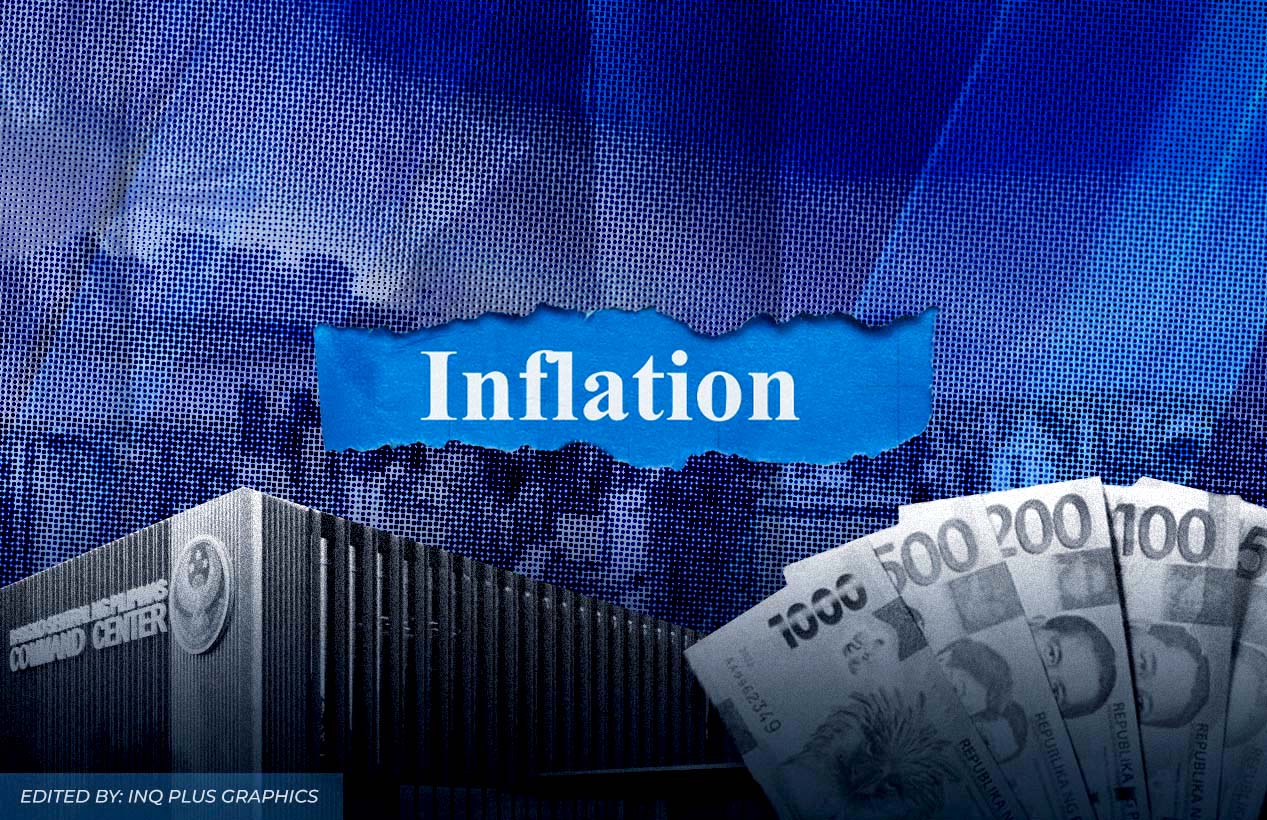
March inflation seen accelerating to 3.9%


Ian Nicolas P. Cigaral

Inflation likely accelerated in March and may have nearly overshot the upper end of the official target range, the Bangko Sentral ng Pilipinas (BSP) said, citing a surge in energy costs and the pass-through effects of a weakening currency that has fallen to record lows amid tensions in the Middle East.

In a statement on Tuesday, the central bank said it expected consumer prices to have risen between 3.1 percent and 3.9 percent last month.

If the forecast holds, the figure to be released by the Philippine Statistics Authority on April 7 would mark a pickup from the 2.4-percent pace in February and signal that inflation came close to breaching the central bank’s 2-percent to 4-percent target band.

“Inflation risks have intensified with upward price pressures arising from the significant increase in domestic petroleum prices, higher rice prices, increased electricity charges in Meralco-serviced areas, and depreciation of the peso,” the BSP said.

“The anticipated lower prices of vegetables, fish, and meat may help temper inflation, but upside pressures continue to warrant close monitoring,” it added.

The war, which has entered its fifth week, broke out after the United States and Israel launched joint attacks against Iran. The conflict has disrupted traffic in the Strait of Hormuz, a narrow shipping lane where 20 percent of global oil supply passes.

The turmoil has ignited fears for oil-importing countries like the Philippines, which became the first nation to declare a state of national energy emergency. Data from the Department of Energy show local gasoline prices have risen a net P45.30 per liter so far this year, while diesel has climbed P76.05 and kerosene P75.60.

This, as global crude prices have soared to $100 per barrel while fears of a drawn-out regional upheaval have boosted the US dollar, wreaking havoc on Asian currencies like the Philippine peso, which has weakened past the 60-per-dollar level.

SEE ALSO

The oil shock has already shaped the central bank’s policy stance ahead of its scheduled April 23 meeting. Officials opted for an off-cycle decision last week to keep the policy rate unchanged at 4.25 percent, even as they raised their average inflation forecast for 2026 to 5.1 percent—with price gains likely to hit as high as 5 percent in April and breach the official target band.

Governor Eli Remolona Jr. has said that raising borrowing costs to fight inflation could delay the economy’s rebound from a confidence shock triggered by a major corruption scandal. He added that higher interest rates—typically used to curb demand-driven inflation—would do little to counter supply-side price pressures stemming from the Iran conflict.

Overall, Remolona said policymakers do not expect a buildup in demand-side inflation, pointing instead to weak growth that could temper consumer spending.

“The BSP will remain vigilant and guided by incoming data, specifically on inflation and growth prospects,” the central bank said. “We will continue to monitor recent developments in the Middle East for their implications on inflation and economic activity.”

Penance of resting


Mark Lawrence Marquez


The text from my mother pops up above all the other notifications: “Uuwi ka ba sa Mahal na Araw? (Are you coming home for Holy Week?)”


I stare at my phone, the glaring white text stark against the dimming light outside. I type, backspace, and type again. “Hindi muna, Ma. Dami ko pa need tapusin. Bawi ako sa susunod. (I can’t go home, Ma. I have a lot of things to do. I’ll make it up next time.)” I hit send before I can change my mind. My chest sighs with relief, but tightens as I feel a familiar, sullen guilt.


I am sitting in the freezing corner of the university library, wrapping my jacket on top of my head. On my laptop screen, a Facebook post announces the upcoming Holy Week break. Soon, the panting of the morning joggers and the deafening honk of the cars in Katipunan will fade. The campus will empty out, and the city will be told to pause, reflect, and rest. But I cannot rest.


For most students, a long weekend is a hard-earned breath. I hear my blockmates casually talking about their upcoming family trip to Siargao or to Thailand. I don’t resent them for it. Many of them are simply pausing a life of quality education and comfort they have known since childhood. And there is a specific kind of exhaustion that comes from being a novice trying to master that prestigious education that was not built for people like me. Their downtime is my only window to close that gap. While they have the luxury to briefly forget about academics, I feel the crushing need to study more, to read more, to practice more, to prove that I am not just a lucky admission mistake. I have to prove I deserve the space I take up in this university.


When Maundy Thursday rolls down the calendar, I know exactly what my day will look like. I will be sitting alone in my dorm, having a month’s worth of reading laid on my table. But to observe the “no-meat” rule, I will most likely eat a sad, plain boiled egg. Back home, Holy Week has a specific scent—the sweet, earthy aroma of biko simmering on the stove, its sounds crackling as the low murmur of the neighbors’ pabasa fills the air. Here, my true penance is being paralyzed with the guilt of unproductivity. The salt in my egg is the only flavor I can taste. It is the taste of choice: to prioritize the “scholar” over the “son,” and to let the food prepared by my mother go cold in a kitchen hundreds of miles away.


There is a heavy cross that you carry when you are a scholar after all, compounded by the reality of being gay, and a first-year student. You constantly feel that your presence comes with conditions. Society—and sometimes, yourself—tells you that you have to be “beyond” to be accepted. You feel the drowning rush to build a CV, to master readings, to be well-versed, to be flawless. On most days, being “ordinary” feels way too close to being unworthy of existing. If I close my laptop on Good Friday, I am not just resting; I am intentionally falling behind.


Usually, “home” is a two-hour cardio—fighting for a space in the jeep, the long bridge from LRT 1 to LRT 2, and the slow creep of traffic that defines what it is like to journey all the way to the south. It is a commute that drains the battery of my phone and the soul from my eyes, yet I crave it. I miss the transition from the quietness of my dorm to the noisier, encouraging voices of my family. By choosing to stay, I reclaim those two hours of travel back into my laptop. But sitting in my dorm silently, the time I saved feels empty. I have traded the warmth of my family for a desk lamp, and now I wonder if the bargain was worth it.


But as the library closes and the cold aircon hums its final drone for the day, something changes. I look at my Google Docs, the cursor blinks endlessly, demanding me to do more. Then, I look at the text message from my mother that I was not able to see due to my phone being on no-disturb mode. “Padalhan na lang kita pagkain. (I’ll just send you some food.)” A simple, absolute provision.


Maybe the holiest thing I can do for the week is not to punish myself with another 100 pages of history readings. Jesus did not die just so I could hustle myself into an early grave just to prove that I have the right to exist. I am realizing that my obsession with catching up is making me miss the life I am already living.


I am a scholar. I am gay. I am here. That in itself is already a miracle I seldom give myself credit for.


This Holy Week, I will not go home, but I need to find a way to come home to myself. The hardest resurrection is not about saving my soul from transgressions. It is about closing my laptop, eating my boiled egg quietly in my dorm, taking a deep breath, and seeing that I am enough—even if I am doing absolutely nothing.


Tuesday, March 31, 2026

Remove excise tax, VAT on oil products and essentials


Published Mar 31, 2026 12:05 am | Updated Mar 30, 2026 06:21 pm
UNDER THE MICROSCOPE
With the bill granting the president emergency powers regarding the energy crisis already passed, the president should not just reduce the excise tax on fuels. Rather, he should totally remove it, even temporarily, to give the people some breathing space amid the tightening fuel supply and soaring fuel prices.
He should also suspend the value-added tax, not only on fuels but on all necessities. Although VAT is levied on all purchases, its effects are far greater on those who are on the fringes (laylayan) who can barely keep body and soul together. It is a regressive tax, taking a larger percentage of income from low-income households compared to higher income households. The poverty incidence in the Philippines (those unable to buy both basic food and non-food needs) was 22.4 percent, or three million families. On the individual level, it was 15.5 percent, or 17.54 million individuals in 2023. These rates are higher in Mindanao and the Cordilleras. Those three million families reported experiencing involuntary hunger. They may not have anything to eat at all soon.
The middle-income earners are not exempt from the effects of VAT. The more you consume, the higher the amount of VAT you pay. With the oil crisis, we can expect more middle-income earners at the lower level to join the impoverished. Although the middle class are 39.8 percent of the population, those earning ₱24,000 and even a little higher will be in danger of joining the poor. They are also be vulnerable to economic shocks, such as a serious illness in the family, or losing their jobs.
Subsidies are generally limited in amounts. The transport sector will be given subsidies, but these are more often one-time dole-outs and have no lasting effects. They are also very limited in scope. More often than not, politicians make a big show out of handing out subsidies, in aid of re-election.
At the country level, a one percentage point increase in the VAT rate is associated with a 2.802 percent decline in average nominal wages. The same increase will produce a 1.444 percent decline in employment. So, while the government enjoys a windfall with VAT collection, the people, especially the great majority of Filipinos, will suffer more.
We are not in the critical phase of this war-induced economic downturn yet but it will definitely get a lot worse before it gets better. Already, we are feeling the inflationary effects of the oil price increases in terms of higher prices on practically everything that needs to be imported or transported to the point of sale.
The mass transport sector was the first to be affected, with jeepney drivers and operators staging strikes. They were the first to clamor for removing excise taxes and VAT. But the inflationary price spiral will surely hit the average consumer hard. Daily wages which are hardly enough to keep body and soul together, will be even more inadequate in the face of price increases on all necessities-food, clothing and shelter.
As the inflationary effects of the Mid-East crisis accelerate, many more will sink into poverty. The divide between the haves and the have-nots will widen. People will be driven to commit crime to make ends meet in desperation. Parents cannot stand seeing their children starve. There will be social unrest which fringe elements will make the most of and agitate for regime change. This nation, already divided, will face even more fragmentation. The administration, already besieged by multiple crises, should act to ameliorate the effects of this crisis, or it will face challenges to its authority and possibly, destabilization efforts by its enemies, including its former partners. This does not augur well for the Marcos Jr. administration.
The government is set to have a revenue shortfall of ₱121.4 billion with a suspension of the excise tax. Definitely, suspending the VAT on fuel and necessities will cost the government more. The total revenue losses will be around ₱330 billion. It will result in a fiscal deficit, increase national debt, reduce spending on essential social services and development projects, and further reduce government income due to reduced indirect taxation. But we should weigh the costs of lost government revenue with the cushioning of the crisis-induced inflation that will hit every Filipino hard, more so the daily income earner. It’s time to reduce spending on other services. Development projects can wait. Everyone should tighten their belts.
Besides, the revenue shortfall will primarily affect the provision of unprogrammed funds, which are the primary target of corrupt government officials. For the year’s budget, unprogrammed funds have been trimmed to ₱150.9 billion. Without any unprogrammed funds to tinker with, politicians will have less opportunities for dipping their dirty fingers into government coffers. That may well be the silver lining in this scenario.