

We tend to explain today’s instability in geopolitical terms—conflict zones, trade routes, shifting alliances. But beneath all of that runs a deeper strain: trust.
When trust breaks at the level of nations and institutions, the consequences don’t stay abstract. They show up in higher fuel costs, tighter margins and consumers whose purchasing power steadily erodes.
We are, in many ways, downstream of that collapse.
What we are witnessing globally is not simply a failure of diplomacy or policy. It is the erosion of the basic conditions that makes cooperation possible.
When trust collapses, negotiation gives way to force—and the cost doesn’t stay with leaders. It moves outward into markets, into systems, into everyday life.
This is not new. It is a pattern as old as exchange itself.
Trust: Original infrastructure
Long before contracts and currencies existed, exchange had depended on credibility.
Early communities traded out of necessity, but survival rested on something deeper than the goods themselves. You had fish. I had rice. We made a deal.
But the real transaction was never just about goods—it was about belief. Will you cheat me?
If you gave me bad fish today, I might not live through tomorrow. If I cannot trust you, I cannot trade with you. And if I cannot trade, neither of us survives.
Trust was not the soft side of early commerce. It was the entire infrastructure.
This held not only between individuals but across communities with every reason to distrust one another. The groups that found a way to build trust—despite risk, despite difference—were the ones that grew. The rest disappeared.
The question “Can I trust you?” has never left commerce. It has only grown more complex.
The same question, digitized
In the Philippines, that ancient logic persisted in everyday life. The sari-sari store was not merely a retail model—it was a trust system.
When the lola said “utang muna, babayaran ko sa Biyernes ( Put it on my tab, I will pay on Friday)” and the manang said yes, there was no paperwork, no formal enforcement mechanism beyond reputation and relational accountability.
Trust functioned as currency. Relationships acted as collateral. Consistency became credit.
Today, we operate in a digital marketplace defined by speed and scale. Yet behavior tells a different story. We spend disproportionate time validating sellers, choosing payment methods and documenting proof of transactions.
In a market where online scams are prevalent, the caution is justified. And yet, participation continues—because consumers are not necessarily naive. They engage because they are still willing to believe that someone, somewhere, is worth trusting.
That willingness is not a weakness. It is latent demand.
And that hunger to trust is the biggest business opportunity in the room today.
The market is not asking organizations to be perfect. It is asking them to be predictable.
Trust is not built through messaging. It is built through repeated, consistent delivery—especially when it is inconvenient.
Culture starts it. Systems sustain it.
Filipino culture provides a strong foundation: kapwa, loob and malasakit (shared identity, mutual trust and care). These values shape what people believe is right. But under pressure —when incentives shift, when costs rise, when no one is watching—belief alone is not enough.
Systems determine behavior
Organizations consistently overestimate the power of culture and underestimate the power of governance.
Values statements are easy to articulate. Designing structures where honesty is safe, accountability is enforced and the right action is also the easiest one—that is far harder.

Consider Toyota’s production system, where any worker can stop the assembly line without penalty. That andon cord makes honesty safer than silence and quality a shared responsibility. Consider Grab’s localized platform decisions—cash payments, transparent pricing, safety features—which are designed around real user constraints, lowering the barriers to participation and trust.
Consider Singapore’s institutional discipline, where accountability is not selective but systemic and integrity is predictable rather than optional.
In each case, trust is not assumed. It is deliberately engineered.
From virtue to advantage
This is the shift leaders must make.
Stop treating trust as a communications strategy. Trust is not what organizations say—it is what their systems do when commitments are tested.
Stop assuming that culture alone will sustain it. Culture is where trust begins; systems are where it is proven.
And start measuring trust with the same rigor as financial performance. In markets where consumers demand proof before belief, trust is not a soft metric. It is a driver of growth.
The question that governed early barter still governs today’s most advanced transactions. It determines whether customers convert, whether partners stay, whether institutions endure.
The world has not run out of resources. It has run out of trust.
Rebuilding it will not happen through declarations at the top. It will happen through decisions on the ground—in the way organizations design their systems, enforce their standards and behave when tradeoffs become real.
It grows the way it always has: between two people trading fish and rice, between a manang and a lola at the sari-sari store, between an online seller and a buyer with screenshots as their only assurance.
Organizations that get this right will not just grow. They will be the ones still standing when others are not.
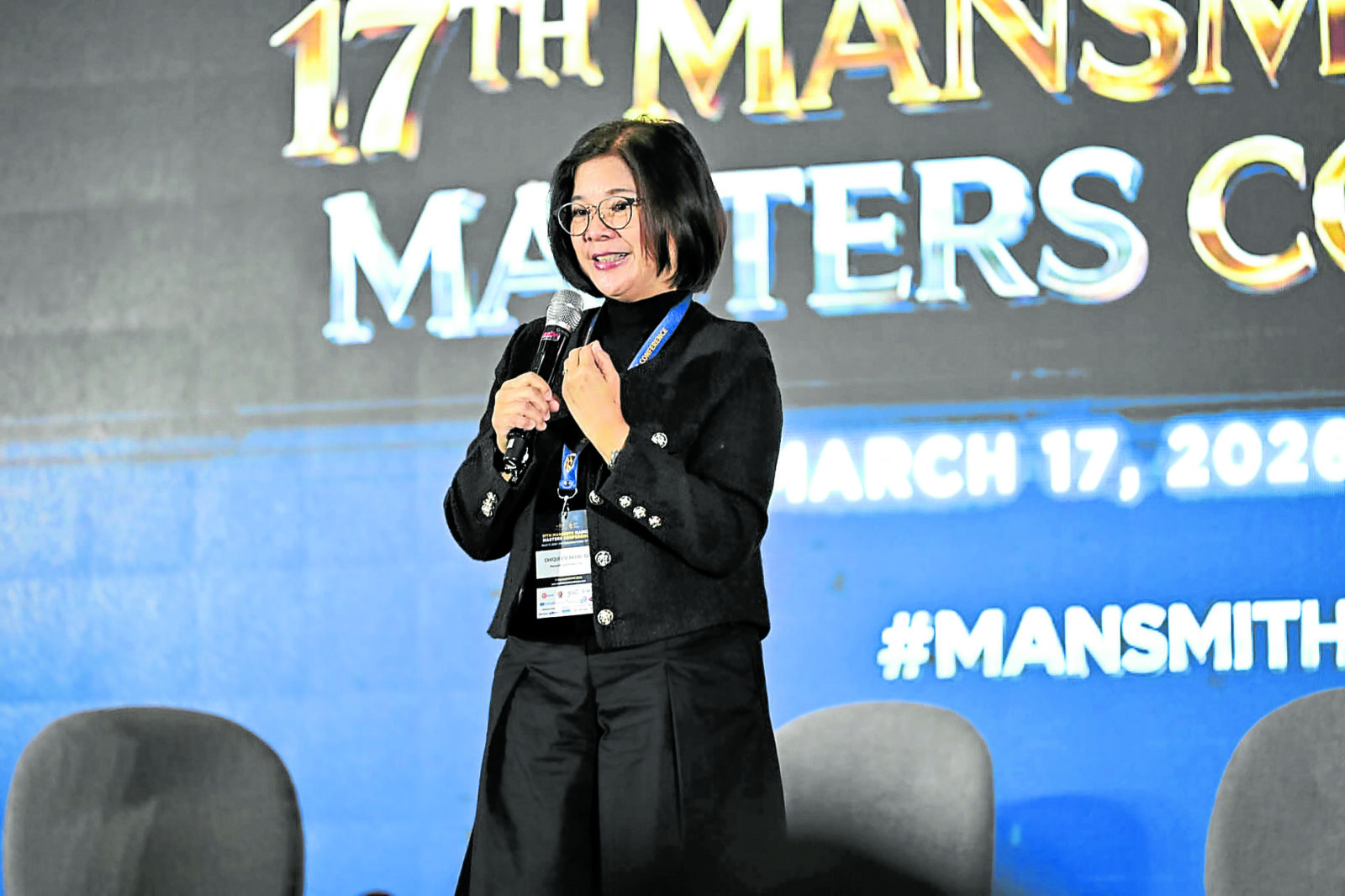
Chiqui Escareal-Go is a marketing anthropologist and CEO of Mansmith and Fielders Inc. This piece was delivered at the opening of the 17th Mansmith Market Masters Conference. For in-house invitations or inquiries, please email info@mansmith.net.

No comments:
Post a Comment