You plan to move to the Philippines? Wollen Sie auf den Philippinen leben?

There are REALLY TONS of websites telling us how, why, maybe why not and when you'll be able to move to the Philippines. I only love to tell and explain some things "between the lines". Enjoy reading, be informed, have fun and be entertained too!

Ja, es gibt tonnenweise Webseiten, die Ihnen sagen wie, warum, vielleicht warum nicht und wann Sie am besten auf die Philippinen auswandern könnten. Ich möchte Ihnen in Zukunft "zwischen den Zeilen" einige zusätzlichen Dinge berichten und erzählen. Viel Spass beim Lesen und Gute Unterhaltung!


Visitors of germanexpatinthephilippines/Besucher dieser Webseite.Ich liebe meine Flaggensammlung!

free counters

Total Pageviews

Saturday, April 11, 2026

Ancient seafarers' story of love, identity, and belonging takes center stage in this ballet


Ballet Philippines to close its 56th season with 'Paglalakbay: 

The Journey of the Sea People'

Published Apr 9, 2026 10:54 pm
Ballet Philippines successfully concluded the world premiere run of "Paglalakbay: The Journey of the Sea People," a full-length original Filipino ballet that captivated audiences from April 10 to 12, 2026, at The Theatre at Solaire. The production marked a defining close to the company’s 56th season and a bold step in championing Filipino narratives on the classical stage.
Inspired by the Austronesian Migration, “Paglalakbay” tells an epic yet intimate story of movement, identity, and belonging. It follows ancient seafarers in search of a new home, centering on Ama and Kaman in Batanes, whose love endures trials of loss, transformation, and renewal, reflecting a timeless search for home across generations.
Choreographed by artistic director Mikhail Martynyuk, with a libretto by Sheree Chua and music by Ronald Vincenzo Khaw de Leon, the ballet reimagines classical technique through a distinctly Filipino lens.
“Academic technique is a form, not a style,” Mikhail shared. “In ‘Paglalakbay,’ choreographic language becomes the main narrator,” grounding movement in the forces of wind, land, and sea.
For Sheree, the work is both cultural and deeply personal. “Migration is often framed as displacement, but it can also be expansion,” she said. “This ballet becomes both historical and intimate.”
The production’s immersive design, led by Leeroy New, brought Batanes to life onstage, drawing from the team’s firsthand cultural immersion with local communities. This experience stemmed from Ballet Philippines’ Ballet Brigade outreach in Batanes, where artists engaged with over 200 locals.
“‘Paglalakbay’ was a bold investment for the company,” said Ballet Philippines president Kathleen Liechtenstein. “It reflects our belief that local indigenous stories deserve the grand scale and artistic rigor of the classical stage.”
Praised for its powerful storytelling and cultural resonance, “Paglalakbay” reinforces Ballet Philippines’ continuing mission: to bring Filipino stories to the forefront—epic, resilient, and universally human.
For more information on Ballet Philippines and its upcoming productions, visit www.ballet.ph
.

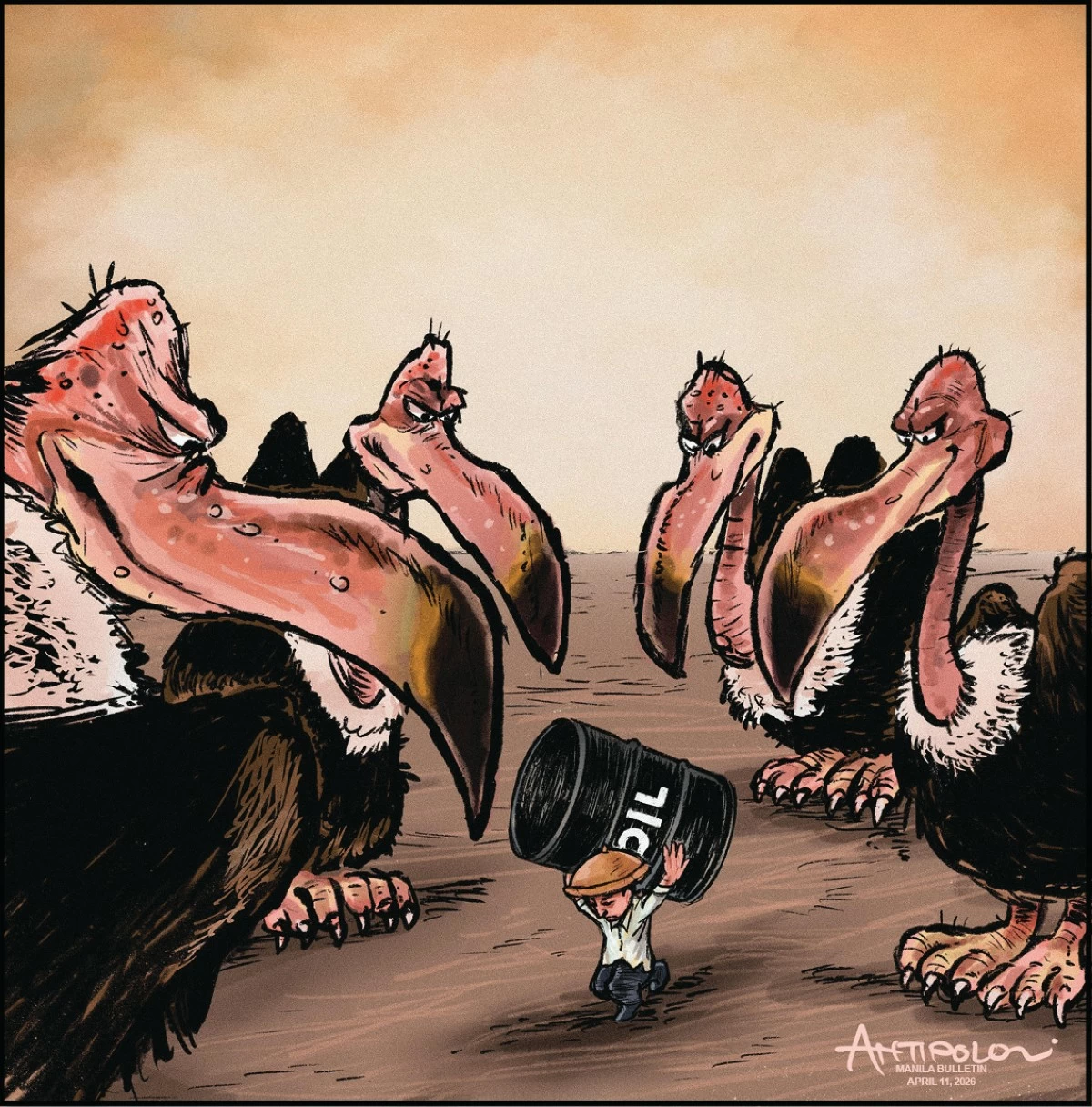
The hard truth about oil


Published Apr 11, 2026 12:05 am | Updated Apr 10, 2026 06:07 pm
The headlines might suggest that the worst of the Middle East conflict is over, but for the Filipino consumer, the relief is likely to be an illusion. While a pause in hostilities between the United States (US), Israel, and Iran is always welcome, the Department of Energy’s (DOE) latest assessment showed that the damage to the global oil market is serious and, in many ways, permanent.
President Marcos’ energy chief did not sugarcoat the situation this week, saying fuel prices are not going back to where they were before the fighting started. We are no longer just dealing with a “war premium” or temporary market jitters. The infrastructure that moves oil from the Middle East to the rest of the world has been physically battered. Even if every shipping lane stayed open tomorrow, the refineries and storage hubs needed to fill those ships would take years to rebuild.
For the average motorist, this is a bitter pill. We have seen fuel prices jump by 100 percent in a single month—the fastest spike on record. While there is talk of a slight “U-turn” in the coming days, the floor has moved. We are now looking at a world where 20 percent of the global supply is effectively offline. In the Philippines, where we rely on these imports, the reality is that diesel could soon hit over ₱175 per liter.
The economic fallout is already showing up in the numbers. Inflation hit 4.1 percent in March, but the real story is the month-on-month jump. Prices for basic goods are rising at their fastest pace in years because everything we eat or use has to be transported. When the peso’s purchasing power drops to ₱0.75, it is not just a technicality; it’s a direct hit to every family’s ability to put food on the table.
But there is some good news on the government side, though it offers cold comfort at the pump. The country’s fiscal health is actually holding up. The Department of Finance (DOF) has noted that tax collections are up and the budget deficit is narrowing. This gives the Marcos administration the “safety net” it needs to fund subsidies for the most affected sectors without going into a debt spiral. The early remittance of dividends from government-owned corporations has also provided a much-needed cash buffer at exactly the right time.
However, the Bangko Sentral ng Pilipinas (BSP) is in a difficult position. If inflation continues to bleed into every other part of the economy, the central bank’s Monetary Board will likely have to raise interest rates again. Higher rates might help control prices, but they also make it more expensive for businesses to grow and for families to take out loans. It’s a delicate balancing act with no easy exits for the BSP.
The reality is that we are in a state of national energy emergency, and there is no quick fix. The government’s plan to diversify where we buy our oil—bringing in shipments from places like India and Oman—is a necessary step, but it will not lower energy prices overnight.
We have to face the fact that the global energy landscape has changed after the conflict. The “structural change” the DOE mentioned means that the era of cheap and predictable fuel is over for now.
As a nation, we have to move past the hope of a quick rollback and focus on how to manage an economy where high energy costs are the new baseline. Relief will be slow, and the path back to stability will likely be measured in years, not just months.