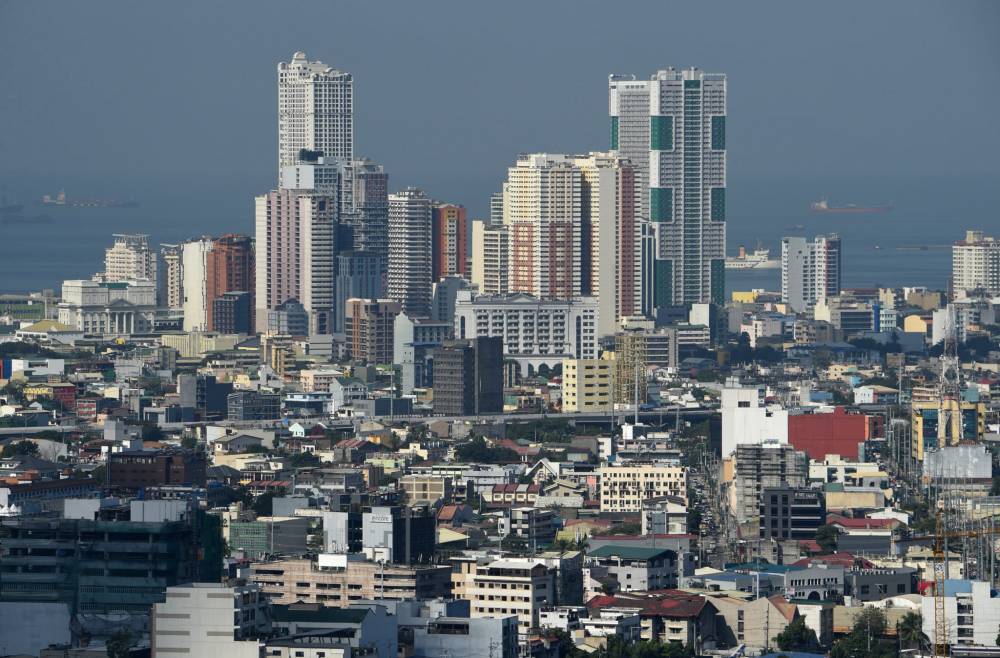
March 20th was the United Nations’ annual International Day of Happiness, which stemmed from a 2012 UN Resolution initiated by Bhutan, the famed originator of the Gross National Happiness (GNH) concept. It explains the timing of the release of: (a) the Social Weather Stations (SWS) report, “Fourth Quarter 2025 Social Weather Survey: 33% of Pinoys are ‘very happy’ with life; 23% are ‘very satisfied’ with life” (www.sws.org.ph, 3/19/26), and (b) the 2026 World Happiness Report (WHR), published by the Wellbeing Research Group of the University of Oxford in partnership with Gallup, the UN Sustainable Development Solutions Network, and the WHR’s editorial board.
Happiness of Filipinos according to SWS. The SWS report discloses its two survey questions for monitoring happiness, one with the adjective “happy” (masaya) and another with the adjective “satisfied” (nasisiyahan), and both describing the respondent’s present life as a whole. Each option has a four-point scale: Very Happy/Fairly Happy/Not Very Happy/Not At All Happy and Very Satisfied/Fairly Satisfied/Not Very Satisfied/Not At All Satisfied. SWS has asked the “happy-life” question 49 times since 1991, and the satisfied-life question 57 times since 2002; see the report’s charts and tables.
Personally, I think the happy-life option goes straight to the point; I also like to focus more on downside rather than the upside. In 2025, SWS used both options in two surveys, with these average results (in percentages): 32 Very Happy, 52 Fairly Happy, 14 Not Very Happy, and 2 Not At All Happy; and 29 Very Satisfied, 51 Fairly Satisfied, 14 Not Very Satisfied, and 6 Not At All Satisfied. For me, these may be simplified into 16 percent “unhappy” and 20 percent “dissatisfied.”
Back in 2021, when SWS did four surveys, the average unhappy was 17 percent and the average dissatisfied was 21 percent, i.e., 2025 showed a tiny improvement in subjective well-being. (I cite 2021 at this point, for comparability with the WHR which uses a three-year rolling average—last year’s WHR involves data as far back as 2022.)
Happiness according to the World Happiness Report. The WHR’s data are from the annual Gallup World Poll, which asks about life-satisfaction, by likening it to being somewhere on a 10-step ladder (from the ground numbered 0 to the top numbered 10, thus 11 points in all), where 10 is the best life, and 0 is the worst life that the respondent thinks could possibly happen to him/her. This is asked with regard to one’s present life, and also with regard to one’s expected life in five years’ time, and then the two are averaged. The WHR uses rolling averages: its 2026 figure combines 2023 to 2025, and its 2025 figure combines 2022 to 2024.
Personally, I prefer questions answerable by choosing words rather than by choosing a number. The only thing definite about a 0-10 scale is that five is the middle, and therefore, all steps of six upward are satisfactory, while all steps of four downward are unsatisfactory.
In the WHR of 2026, Finland at 7.76 is No. 1 again, while Afghanistan at 1.45 is No. 147 and last (the published figures have three decimal places but here I round to two places). At just over 5.00 is South Africa, No. 101; therefore 101/147 or 68.7 percent of the “peoples” (not identical to “countries”) are, on average, satisfied with their lives to some extent, while 31.3 percent of them are not.
The Philippine score is 6.21, up a little bit from 6.11 in WHR 2025. Its rank is 56th versus 57th last year. Here are the current WHR scores and ranks of our Asean neighbors: 36th Singapore, 6.58; 45th Vietnam, 6.43; 52nd Thailand, 6.30; 71st Malaysia, 6.00; 87th Indonesia, 5.62; 92nd Laos, 5.52; 121st Cambodia, 4.46; and 129th Myanmar, 4.29. I see no figures for Brunei and Timor Leste.
We should not envy any other peoples that have higher scores, nor feel superior to those with lower ones. Happiness is not an international sport; it is no basis for national pride or shame. Other peoples’ achievements do not lessen us; their failings do not enhance us. What happens abroad can teach us what to imitate and what to avoid.
And Bhutan? There’s no WHR data for the country that officially eschews the gross national product. As of a decade ago, its GNH had only two data points (see “Gross National Happiness,” 11/28/15). In 2022, its GNH index was reportedly at .781, with 9.5 percent “deeply happy,” 38.6 percent “extensively happy,” 45.5 percent “narrowly happy,” and 6.4 percent “unhappy.” (investopedia.com)
—————-
mahar.mangahas@sws.org.ph


'/%3E%3Cpath d='M16.0001 7.9996c0 4.418-3.5815 7.9996-7.9995 7.9996S.001 12.4176.001 7.9996 3.5825 0 8.0006 0C12.4186 0 16 3.5815 16 7.9996Z' fill='url(%23paint1_radial_15251_63610)'/%3E%3Cpath d='M16.0001 7.9996c0 4.418-3.5815 7.9996-7.9995 7.9996S.001 12.4176.001 7.9996 3.5825 0 8.0006 0C12.4186 0 16 3.5815 16 7.9996Z' fill='url(%23paint2_radial_15251_63610)' fill-opacity='.5'/%3E%3Cpath d='M7.3014 3.8662a.6974.6974 0 0 1 .6974-.6977c.6742 0 1.2207.5465 1.2207 1.2206v1.7464a.101.101 0 0 0 .101.101h1.7953c.992 0 1.7232.9273 1.4917 1.892l-.4572 1.9047a2.301 2.301 0 0 1-2.2374 1.764H6.9185a.5752.5752 0 0 1-.5752-.5752V7.7384c0-.4168.097-.8278.2834-1.2005l.2856-.5712a3.6878 3.6878 0 0 0 .3893-1.6509l-.0002-.4496ZM4.367 7a.767.767 0 0 0-.7669.767v3.2598a.767.767 0 0 0 .767.767h.767a.3835.3835 0 0 0 .3835-.3835V7.3835A.3835.3835 0 0 0 5.134 7h-.767Z' fill='%23fff'/%3E%3Cdefs%3E%3CradialGradient id='paint1_radial_15251_63610' cx='0' cy='0' r='1' gradientUnits='userSpaceOnUse' gradientTransform='rotate(90 .0005 8) scale(7.99958)'%3E%3Cstop offset='.5618' stop-color='%230866FF' stop-opacity='0'/%3E%3Cstop offset='1' stop-color='%230866FF' stop-opacity='.1'/%3E%3C/radialGradient%3E%3CradialGradient id='paint2_radial_15251_63610' cx='0' cy='0' r='1' gradientUnits='userSpaceOnUse' gradientTransform='rotate(45 -4.5257 10.9237) scale(10.1818)'%3E%3Cstop offset='.3143' stop-color='%2302ADFC'/%3E%3Cstop offset='1' stop-color='%2302ADFC' stop-opacity='0'/%3E%3C/radialGradient%3E%3ClinearGradient id='paint0_linear_15251_63610' x1='2.3989' y1='2.3999' x2='13.5983' y2='13.5993' gradientUnits='userSpaceOnUse'%3E%3Cstop stop-color='%2302ADFC'/%3E%3Cstop offset='.5' stop-color='%230866FF'/%3E%3Cstop offset='1' stop-color='%232B7EFF'/%3E%3C/linearGradient%3E%3C/defs%3E%3C/svg%3E)
'%3E%3Cpath d='M15.9963 8c0 4.4179-3.5811 7.9993-7.9986 7.9993-4.4176 0-7.9987-3.5814-7.9987-7.9992 0-4.4179 3.5811-7.9992 7.9987-7.9992 4.4175 0 7.9986 3.5813 7.9986 7.9992Z' fill='url(%23paint0_linear_15251_63610)'/%3E%3Cpath d='M15.9973 7.9992c0 4.4178-3.5811 7.9992-7.9987 7.9992C3.5811 15.9984 0 12.417 0 7.9992S3.5811 0 7.9986 0c4.4176 0 7.9987 3.5814 7.9987 7.9992Z' fill='url(%23paint1_radial_15251_63610)'/%3E%3Cpath d='M7.9996 5.9081c-.3528-.8845-1.1936-1.507-2.1748-1.507-1.4323 0-2.4254 1.328-2.4254 2.6797 0 2.2718 2.3938 4.0094 4.0816 5.1589.3168.2157.7205.2157 1.0373 0 1.6878-1.1495 4.0815-2.8871 4.0815-5.159 0-1.3517-.993-2.6796-2.4254-2.6796-.9811 0-1.822.6225-2.1748 1.507Z' fill='%23fff'/%3E%3C/g%3E%3Cdefs%3E%3CradialGradient id='paint1_radial_15251_63610' cx='0' cy='0' r='1' gradientUnits='userSpaceOnUse' gradientTransform='matrix(0 7.9992 -7.99863 0 7.9986 7.9992)'%3E%3Cstop offset='.5637' stop-color='%23E11731' stop-opacity='0'/%3E%3Cstop offset='1' stop-color='%23E11731' stop-opacity='.1'/%3E%3C/radialGradient%3E%3ClinearGradient id='paint0_linear_15251_63610' x1='2.3986' y1='2.4007' x2='13.5975' y2='13.5993' gradientUnits='userSpaceOnUse'%3E%3Cstop stop-color='%23FF74AE'/%3E%3Cstop offset='.5001' stop-color='%23FA2E3E'/%3E%3Cstop offset='1' stop-color='%23FF5758'/%3E%3C/linearGradient%3E%3CclipPath id='clip0_15251_63610'%3E%3Cpath fill='%23fff' d='M-.001.0009h15.9992v15.9984H-.001z'/%3E%3C/clipPath%3E%3C/defs%3E%3C/svg%3E)