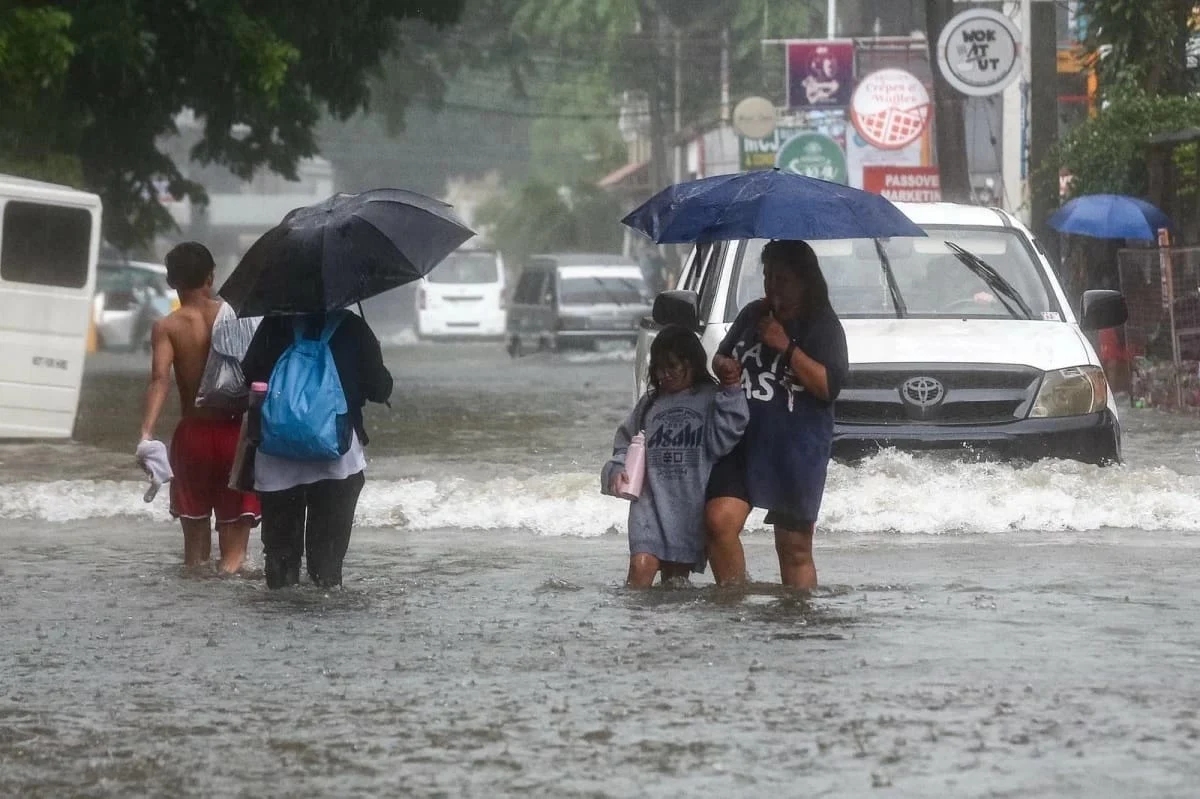
LOOK: Several major streets in Manila continue to experience flooding on Tuesday morning, July 22 amid the heavy rainfall caused by #HabagatPH.
Visitors of germanexpatinthephilippines/Besucher dieser Webseite.Ich liebe meine Flaggensammlung!

Tuesday, July 22, 2025


Classes, gov't work in Metro Manila
Classes, gov't work in Metro Manila, other areas suspended on July 22—Malacañang | ||
| ||
Presidential Communications Office (PCO) Secretary Dave Gomez confirmed that President Marcos has approved the recommendation of the National Disaster Risk Reduction and Management Council (NDRRMC) to suspend work in government offices and classes on July 22 due to the continuous rain brought by "habagat" or southwest monsoon. Read more |
What I cherish the most these days?

It’s been almost a year since I quietly stepped away from public service and returned home, to stillness, simplicity, and the people who matter most.
What I cherish the most these days?
The silence of my phone, no more urgent midnight calls, no more messages demanding instant action.
Now, I wake up to the sound of birds, not notifications.
Gone are the 16-hour days and working weekends. I finally get to enjoy 8 hours of uninterrupted sleep, luxury I used to dream about. Coffee now comes with peace, not pressure.
I drive at Davao’s calm and steady pace, far from the gridlock stress of EDSA.
But above all, it’s the time that matters most now. Time spent laughing with family, bonding with my son, and watching my grandson grow. Moments I once missed, I now fully live.
The little things I once overlooked now bring the deepest joy.
Mind calm. Body rested. Heart full.
This season of quiet and connection, truly priceless.
Monday, July 21, 2025
Renten-Finanzierung unsicher – rätselhafte Entwicklung bringt Entlastung
Die Finanzierung der Rente ist ein brisantes Thema, besonders angesichts teurer Reformen der Merz-Regierung. Eine überraschende Entwicklung dürfte aber die Geldbeutel der Versicherten entlasten.
Berlin – Die Finanzierung der gesetzlichen Rentenversicherung ist prekär. Angesichts der steigenden Ausgaben über die Rentenzahlungen an immer mehr Rentnerinnen und Rentner aus der geburtenstarken Boomer-Generation dürfte sich die Lage in den kommenden Jahren verschärfen. Zum Jahresende hatte die Deutsche Rentenversicherung (DRV) selbst die Warnung ausgesprochen, schon 2027 im Herbst die Renten vorübergehend nicht aus eigenen Mitteln zahlen zu können. Dann würden die Beiträge steigen.
Einnahmen der Rente steigen – Merz-Regierung plant Zuschüsse für teure Projekte
Die Rente bleibt damit eine Baustelle, bei der die Zeit drängt. Die Koalition aus Union und SPD will ihre Projekte, konkret die Sicherung des Rentenniveaus bei 48 Prozent und die Mütterrente 3, laut Regierungsentwurf aus dem Bundeshaushalt finanzieren. Ein Schritt, den die DRV angesichts der als unzureichend kritisierten Steuerzuschüsse für versicherungsfremde Leistungen begrüßt.

Entscheidend bei der Finanzierung der Rente sind jedoch nicht allein die Steuerzuschüsse. Kern der Finanzierung im sogenannten Umlageverfahren sind die Beiträge der Versicherten, also der Arbeitnehmer und Arbeitgeber. Hier kann die DRV im ersten Halbjahr 2025 eine positive Entwicklung vermelden: Die Einnahmen aus Pflichtbeiträgen sind von Januar bis Juni im Vergleich zum Vorjahreszeitraum um etwa 6,5 Milliarden Euro oder 4,9 Prozent gestiegen. Insgesamt lagen sie bei rund 138 Milliarden Euro.
Neben Pflichtbeiträgen: Einnahmen der Rentenversicherung steigen trotz schwacher Wirtschaft
Insgesamt sind die Zuflüsse in die Rentenkassen im Vergleich zum ersten Halbjahr 2024 um 5,3 Prozent auf rund 155,8 Milliarden Euro gestiegen. Neben den Beiträgen umfasst das etwa auch die Zahlungen der Bundesagentur für Arbeit (BA) zugunsten von Erwerbslosen, die Arbeitslosengeld beziehen. Dabei seien die Beiträge um 411 Millionen Euro gewachsen, berichtete das Portal Ihre-Vorsorge.de mit Verweis auf das Bundesamt für Soziale Sicherung.
| Monat | Einnahmen 2024 | Einnahmen 2025 |
|---|---|---|
| Januar | 23,7 Mrd. Euro | 25,3 Mrd. Euro |
| Februar | 24,0 Mrd. Euro | 25,5 Mrd. Euro |
| März | 24,1 Mrd. Euro | 25,3 Mrd. Euro |
| April | 25,0 Mrd. Euro | 26,3 Mrd. Euro |
| Mai | 25,3 Mrd. Euro | 26,4 Mrd. Euro |
| Juni | 25,6 Mrd. Euro | 26,9 Mrd. Euro |
Die Einnahmen der Rentenversicherung sind damit trotz der anhaltenden schwachen Konjunktur gestiegen. Das ist insofern überraschend, als durch Stellenabbau und weniger Neubesetzungen die Zahl der Beitragszahler beeinflusst wird. Die Steigerung der sozialversicherungspflichtig Beschäftigten ist dagegen ein Schlüssel, mit dem die Politik die Finanzierung der Rente sichern will.
Finanzpuffer der Rentenversicherung geht zurück – höhere Beiträge jedoch nicht nötig
Zurückgegangen ist dagegen der Finanzpuffer der Rentenversicherung, was laut Ihre-Vorsorge.de jedoch saisonüblich ist. Konkret ist die Nachhaltigkeitrücklage von rund 43,85 Milliarden Euro im Dezember 2024 auf etwas mehr als 41,4 Milliarden Euro gefallen. Das entsprach 1,38 Monatsausgaben.
Bis zum Jahresende werde die Rücklage auf rund 1,3 Monatsausgaben zurückgehen, prognostizierte DRV-Bundesvorstandsvorsitzende Anja Piel, die auch im Bundesvorstand des Deutschen Gewerkschaftsbunds (DGB) ist. Die Rücklage werde damit „am Jahresende noch gut gefüllt“ sein. Damit bleibe auch der Beitragssatz im kommenden Jahr stabil.
10 SIGNS YOU'RE DOING WELL IN LIFE
1. You have a roof over your head.
2. You ate today.
3. You have a good heart.
4. You wish good for others.
5. You have clean water.
6. Someone cares for you.
7. You strive to be better.
8. You have clean clothes.
9. You have a dream.
10.You're breathing.
Sunday, July 20, 2025
To help end flooding, let us stop our addiction to plastics

By Manila Bulletin
The weather forecast for this weekend is heavy rains in many parts of the country. And with rains, we see the same heartbreaking images – streets flooded, rivers clogged, homes submerged, and livelihoods ruined.
We also see images of the common culprit behind many of these floods—plastic waste. Plastic bags, sachets, straws, and packaging waste that are improperly disposed of find their way into our drainage systems, esteros, and rivers. Over time, they block waterways, prevent water from flowing freely, and turn even a short downpour into a disaster.
The Philippines is already among the world’s worst contributors to ocean plastic pollution. But this isn’t just an environmental issue—it’s a direct threat to our safety, our health, and our future.
We have enough laws on paper to address this problem. Republic Act 9003 or the Ecological Solid Waste Management Act has been around since 2000. More recently, the Extended Producer Responsibility (EPR) Act of 2022 compels big companies to take responsibility for their plastic packaging. Across the country, many local governments have passed ordinances banning single-use plastics such as plastic bags, straws, and styrofoam.
Yet flooding persists, plastic pollution continues, and garbage remains a common sight in our rivers and estuaries. Why? Because laws alone cannot solve this crisis. Real change demands action from everyone: individuals, businesses, and government.
If we want to stop plastics from choking our waterways and worsening floods, we need to begin with ourselves. We can no longer hide behind excuses of convenience or habit. Refusing single-use plastics is one of the most basic yet powerful actions we can take. Bringing our own eco-bags, reusable containers, utensils, and tumblers might seem small, but multiplied across millions of Filipinos, it becomes transformative.
Consumers wield enormous influence. By supporting brands that offer sustainable alternatives and shunning those still wrapped in layers of unnecessary plastic, we send a strong message. Businesses listen to where we spend our money.
We must also educate those around us. In our homes, schools, and workplaces, let’s talk about the link between plastic waste and flooding. Teach children the value of refusing, reducing, reusing, and recycling. Speak up in stores and restaurants when unnecessary plastic is offered.
Plastic bans often fail because businesses—especially small vendors—continue using plastic out of habit or perceived necessity. But change is possible. As customers, we can ask store staff to offer alternatives like paper bags, banana leaves, or reusable containers. We can support local governments by reporting violations and pushing for better enforcement.
Businesses must also understand that they have a role to play. Those who refuse to adapt to the plastics ban should face penalties, while those who innovate and embrace circular economy solutions should be rewarded. The government, for its part, must ensure that the rules are not just written, but followed.
Ending our addiction to plastic isn’t just about carrying our own bags—it’s about changing the system. A true circular economy—where products are reused, refilled, and repurposed—must be the goal. Government policies should encourage and support businesses shifting to sustainable practices. Infrastructure such as recycling plants and composting facilities must be built to handle waste more effectively. Local ordinances should be standardized to avoid confusion and loopholes.
The challenge is clear. The choice is ours. Will we continue to let plastic waste choke our rivers and flood our streets? Or will we take responsibility, change our habits, and demand accountability from those around us?
Do Germans, Austrians and German-speaking Swiss people all understand each other?

Jens Böttiger
I'm German
Normally they wouldn’t, but they do anyway because of training.
This is because all of us learn to speak Standard German and are exposed to other dialects at an early age, we learn to pick up on and track the grammatical changes that occur between these dialects.
This means that, when faced with a new dialect that we don’t understand, we can often listen to it, discern patterns in their grammar that are similar to another variation that we have heard before, and figure out what they are doing.
Natural German dialects also all have a kind of lyrical lilt that varies enormously between regions and even within regions. You have to hear your way into the song to parse where words end and begin. As far as I can tell, the only German dialect I’ve heard with no music in it is the artificially constructed, prescriptivist, academic, Standard German.
Once you figure out a few of those features, you can begin to follow what they are saying, because despite these obfuscations, you will usually recognize the roots portions of the words they are using, even if they are very archaic in your own dialect, or familiar from a completely different Germanic language.
For example, in Swiss German they say “Widder Luaga!” which is their equivalent of “Auf wiedersehen”.
Cognates of “luaga”, like the English word “look”, are not common in other German dialects, though you do have “lugen” (to take a peek) in Standard German, but I still instantly understood what they meant without having to think about it because my mind is trained to be flexible enough to accept a guess based on my knowledge of the related Germanic language: English.
Using this skill, speakers of significantly different dialects can learn to understand each other moderately well with a few hours or days of heavy exposure to the other dialect. That’s not the competence to speak it, mind you. That would be way more difficult.
It also helps to speak French because of all the loanwords in the Southern dialects.
Subscribe to:
Posts (Atom)