You plan to move to the Philippines? Wollen Sie auf den Philippinen leben?

There are REALLY TONS of websites telling us how, why, maybe why not and when you'll be able to move to the Philippines. I only love to tell and explain some things "between the lines". Enjoy reading, be informed, have fun and be entertained too!

Ja, es gibt tonnenweise Webseiten, die Ihnen sagen wie, warum, vielleicht warum nicht und wann Sie am besten auf die Philippinen auswandern könnten. Ich möchte Ihnen in Zukunft "zwischen den Zeilen" einige zusätzlichen Dinge berichten und erzählen. Viel Spass beim Lesen und Gute Unterhaltung!


Visitors of germanexpatinthephilippines/Besucher dieser Webseite.Ich liebe meine Flaggensammlung!

free counters

Total Pageviews

Sunday, April 26, 2026

Whose voice do you follow?


By Fr. Rolando V. De La Rosa, OP

Published Apr 26, 2026 12:05 am | Updated Apr 25, 2026 03:41 pm
THROUGH UNTRUE
“Whose voice do you follow?” This is not just a theoretical question but a deeply personal one. Our lives are shaped by the voices we listen to. Every day, journalists, advertisers, bloggers, influencers, celebrities, politicians, as well as business and technology guruscompete for our attention and allegiance. We must learn to distinguish between voices that lead us astray and those that lead to truth and goodness.
In today’s Gospel reading, Jesus likens us Christians to sheep (John 10:1–10). This may seem unflattering. To be compared to sheep might suggest that Christians are afflicted with a “herd mentality,” following any voice they hear and going through life without conviction or purpose.
However, researchers have shown that the so-called “herd mentality” of sheep is not a sign of weakness but a necessary strategy for survival. Unlike many animals that can fend for themselves, sheep are inherently defenseless against predators. When threatened, they instinctively move toward the center of the herd, where they are least exposed to danger. Those that stray to the edges become more vulnerable. Sheep must remain close to one another and, above all, listen to and respond to the voice of the shepherd whom they recognize.
Sheep do not follow just any voice; they are discerning in the way that matters most. A stranger’s call sends them fleeing, but the familiar voice of their shepherd draws them near. In the same way, being a Christian requires that we become deeply attuned to the voice of Christ.
Jesus likens us to sheep to remind us that, in a world that has become hostile to His teachings, we are vulnerable and in need of guidance. He teaches us that the distinguishing mark of a Christian is not passivity or mindless conformity, but a strong sense of belonging and the ability to recognize the shepherd’s voice. As Jesus declares, “My sheep hear my voice; I know them, and they follow me” (John 10:27).
This raises a crucial question: Do we still recognize the voice of Jesus, the Good Shepherd? In a world convulsed with noise, this is no small challenge. We are surrounded by persistent and often deceptive voices that blare through smartphones, social media, television, and the internet. We are constantly told, “Do what you want. Follow your desires. Be who you want to be.”
These messages, when repeated endlessly, can dull our spiritual and moral sensibilities. They promise freedom but often lead to a subtle form of slavery. Jesus warned us about such voices: “Beware of false prophets, who come to you in sheep’s clothing but inwardly are ravenous wolves” (Matthew 7:15). They mimic the tone of the Good Shepherd but lack His integrity and compassion.
The Bible is commonly referred to as the Word of God. Today, it is more accessible than ever, but also increasingly ignored and neglected. A well-known talk show host once asked a guest to name one of the Ten Commandments. The person replied, “Thou shalt not covet your neighbor’s goose.” The host then asked another person to complete this biblical phrase: “Let him who is without sin…” The reply was, “have a good time.” These responses may provoke laughter, but they also reveal a troubling reality: our lack of familiarity with the Scriptures.
The Bible is not merely a book; it is the living Word through which God speaks. If we often feel lost or directionless, or if many suffer from a mental health crisis, it may be because we have allowed other voices to drown out the voice of Jesus. When was the last time you opened your Bible to seek guidance?
Our noisy world drives us to fear, restlessness, and endless craving. But the voice of the Good Shepherd challenges us to seek that kind of contentment that is deeper than success, stronger than suffering, and more enduring than death.
Only Jesus calls us by name, seeks us when we are lost, and lays down His life for us (John 10:11). His voice does not enslave; it sets us free. It does not confuse; it brings clarity. It does not scatter; it gathers and leads us safely home.

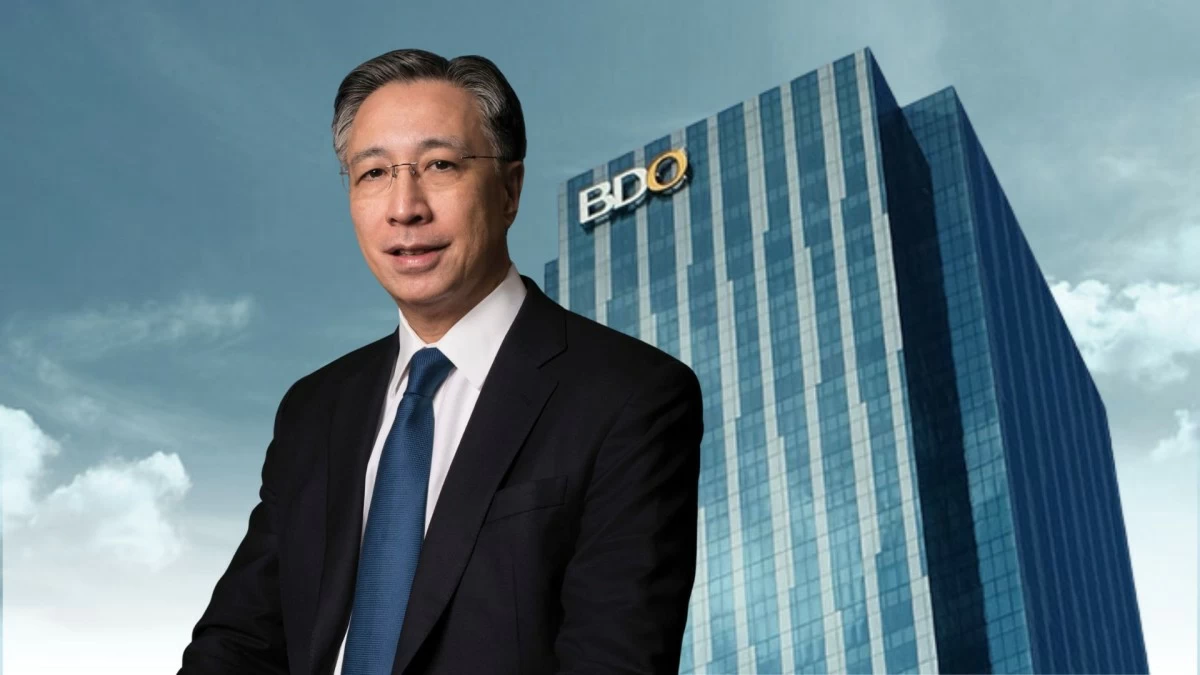
BDO profit hits ₱20 billion even as bank builds rainy-day fund


By James A. Loyola
Published Apr 25, 2026 03:26 pm
Nestor V. Tan, President and CEO of BDO Unibank, Inc.
BDO Unibank Inc., the country’s largest lender by assets, reported a two percent increase in first-quarter net income as double-digit loan growth across all market segments offset a decision to bolster its rainy-day reserves.
Net income for the Sy family-led bank rose to ₱20.1 billion in the three months ended March 31 from ₱19.7 billion a year earlier, according to a filing with the Philippine Stock Exchange on Friday, April 24.
The modest bottom-line growth reflects a more cautious stance by the lender, which increased its provisions as a preemptive measure against what it described as evolving geopolitical risks.
Despite the heightened provisioning, the bank’s core operations showed significant momentum. Net interest income climbed 11 percent during the period, underpinned by a 16 percent surge in gross customer loans, which reached ₱3.8 trillion. This expansion was broad-based, with the bank reporting double-digit growth in its corporate, middle-market, and consumer portfolios.
BDO’s deposit base remains a primary engine for its lending activities. Total deposits expanded 15 percent year-on-year, while the growth of low-cost current account and savings account (CASA) balances accelerated to seven percent.
The bank’s ability to maintain a steady flow of cheap funding has been critical in navigating a high-interest-rate environment that has pressured margins across the Southeast Asian banking sector.
Non-interest income, which includes fees and trading gains, rose six percent. A standout performer within this segment was the bank’s insurance operations, which saw a 27 percent jump in income. This diversified revenue stream helped propel the bank’s pre-provision operating profit to mid-teens growth, according to the disclosure.
Asset quality, a key metric for investors monitoring the health of the Philippine economy, continued to trend favorably. BDO’s non-performing loan (NPL) ratio improved to 1.68 percent from 1.77 percent in the same period last year. To insulate itself from potential defaults, the lender maintained an NPL coverage ratio of 132 percent.
The bank reported a return on average common equity (ROCE) of 12.8 percent for the quarter. Shareholders’ equity rose nine percent on the back of consistent earnings, pushing the book value per share up eight to ₱119.36. The bank’s Common Equity Tier 1 (CET1) ratio, a measure of financial strength, stood at 13.3 percent.
BDO management stated that the bank’s dominant market position and diversified franchise provide a buffer against a dynamic operating environment.

Saturday, April 25, 2026

EACH FOR HIMSELF


By
 Mindanao Daily News
 -

0
6

“Every man for himself” (or “each for themselves”) describes a chaotic situation where individuals, in a crisis or competition, act only in their own self-interest without helping others. This idiom highlights a total lack of cooperation, forcing everyone to rely entirely on their own survival skills
 It’s used for saying that everyone needs to look after themselves and not worry about anyone else. Everyone looks out for his or her best interest. Originally this phrase expressed approval. It appeared in Chaucer’s The Knight’s Tale (“Ech man for him-self, ther is non other”), implying that if one did not look out for oneself no one else would.

Yes, each person does what is best for himself or herself. Yes, times are getting tougher. I think you, my dear readers, know what I am talking about. No reason to list everything again. Sometimes, there is no team spirit in this office; it’s definitely every man for himself. Neighbors would tell each other: mind your own business. The tone between us humans is becoming more and more harsher.

Some people live alone because friends and families have abandoned them. Important helpline is Psalm 27:10 for them. “When my father and my mother forsake me, then the LORD will take care of me.”

And solitary survivors like Robinson Crusoe, or the hero in the movie Castaway, fascinate. But the loner is someone who purposely holds himself aloof, like the Unabomber, Mathematician Ted Kaczynski. People doggedly moving ever farther away from one another constitute hell in C.S. Lewis’ book, The Great Divorce.

Fact is  –  Proverbs 18:1 says:  A man who isolates himself seeks his own desires; he rages against all wise judgment.

Living in community and helping one another is foundational for all who wish to follow Christ. We know from Acts 2 that the early church took this seriously, seeing many examples of believers helping one another, including materially, so that there would be no one in need within their group.

Much has been written about the benefits of strong relationships. I wrote about it at this corner several years ago. People are healthier, live longer, and are generally happier if they have strong friendships beneficial for helping and encouraging each other. And let me repeat it – especially during these tough times.

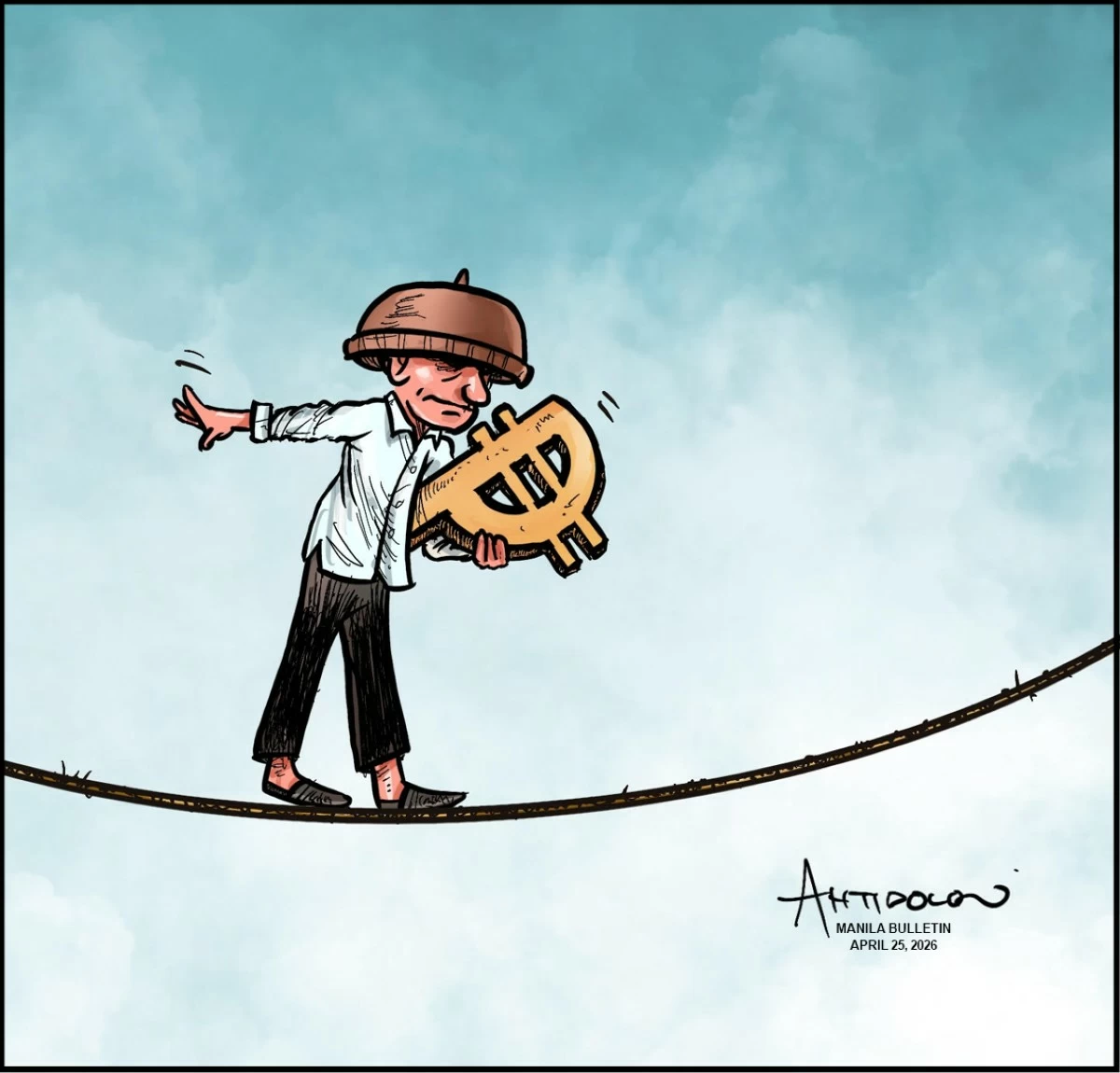
Philippines' fragile balancing act


By Manila Bulletin Newsroom
Published Apr 25, 2026 12:05 am | Updated Apr 24, 2026 05:12 pm
For years, the Philippine economic narrative was one of resilient, if unremarkable, stability. But as 2026 unfolds, that script is being rewritten by volatile cocktail of geopolitical friction, stalled infrastructure, and a central bank forced to abandon its post-pandemic crouch.
The Bangko Sentral ng Pilipinas’ (BSP) recent signal of a definitive shift toward tightening cycle marks the end of an era of easy money, ushering in a period of “measured” but persistent hikes to combat an inflation outlook that is rapidly souring.
The challenge facing the BSP’s Monetary Board is twofold: it must anchor inflation expectations that have drifted toward a projected 6.3 percent for 2026, while ensuring it does not choke off the recovery that remains more fragile than the headline figures suggest. By opting for a “measured cadence” of rate hikes rather than aggressive shocks, the BSP is attempting a surgical strike against price pressures. Yet, with real interest rates sitting in negative territory at -1.5 percent, the central bank is effectively running to stand still.
The urgency of this tightening is underscored by the deteriorating global landscape. The Middle East conflict has evolved from a distant geopolitical concern into a direct hit on the Philippine kitchen table, driving up the costs of oil and fertilizer. For a nation that relies almost entirely on energy imports, these supply shocks are not merely transitory blips; they are systemic threats that Fitch Ratings has cited in its decision to downgrade the Philippines’ outlook to “negative.”
This outlook revision by Fitch is a sobering wake-up call. It threatens to interrupt a 20-year streak of credit resilience, dating back to the fiscal malaise of the mid-2000s. The crux of the problem lies in the stalling of the ”Build, Better, More” engine. A collapse in infrastructure spending in late 2025—born of necessary but disruptive graft probes—has robbed the economy of its traditional growth multipliers. When public investment falters just as energy costs spike, the result is a pincer movement that squeezes both the government’s fiscal space and the consumer’s wallet.
Amid these gathering clouds, however, there is a significant silver lining: the institutional “vote of confidence” from JPMorgan Chase & Co. The inclusion of Philippine sovereign debt in its flagship emerging-market bond index by January 2027 is a landmark event. It promises a ₱240 billion windfall of foreign capital, potentially compressing yields and lowering the long-term cost of debt exactly when the Bureau of the Treasury needs it most.
This inclusion creates a fascinating paradox. While Fitch warns of a potential downgrade due to governance and energy risks, the world’s largest index provider is preparing to pull the Philippines deeper into the global financial fold. It suggests that while the country’s short-term “outlook” is clouded by the Marcos-Duterte political rift and impeachment dramas, its long-term “infrastructure” as a credible borrower remains attractive to passive global capital.
The path forward requires a delicate calibration of policy. The government must expedite the cleanup of its infrastructure bureaucracy to restart the growth engine, while the BSP must remain the “adult in the room,” raising rates enough to defend the peso and tame prices without tipping a cooling economy into a freeze.
The Philippines is currently a tale of two trajectories. One leads toward the prestige of global index inclusion and a broader investor base; the other toward a credit downgrade and a return to the fiscal instability of the past. For the Marcos administration, the “smart risk management” praised by analysts must now transition from rhetoric to results. In a world of six percent inflation and negative real rates, there is no longer any margin for error.

Why is everyone leaving their K-pop groups?


The K-pop industry ended 2025 with the news that Danielle would be leaving NewJeans and Ador after a year-long dispute between the group and Hybe’s sublabel. Fast forward to April 2026, and more members of globally recognized idol groups have been announcing their departures.

Mid-March saw Enhypen part ways with Heeseung, and Zerobaseone split in half as members Zhang Hao, Ricky, Kim Gyuvin, and Han Yujin left the group to prepare for a redebut under home agency YH Entertainment. And right at the start of this month, SM Entertainment announced that Mark Lee would no longer be part of NCT, NCT 127, and NCT Dream—as his contract with the label came to an end. Fellow NCT/WayV member Ten also recently announced that he will no longer renew his exclusive contract with SM Entertainment but will remain in his groups.

Speculations have also arisen that Katseye’s Manon would be leaving her group after Hybe and Geffen announced that she would be going on hiatus. It’s noted that the Swiss Ghanaian member did not perform with the global girl group for their Coachella set.


12 LIFE LESSONS


 · 

1. Wake up early and always see the beautiful rising sun.

2. Meditate to enjoy the essence of enjoying the present.

3. Don't overthink about the future. Everything happens for a reason.

4. Never fear, because there is nothing to fear.

5. Visualize your dream lifestyle every day.

6. Strongly believe you will live that lifestyle for sure.

7. Listen more and speak less.

8. The pain and worry you are facing now will fade away.

9. Be you. Live by your values.

10. Never expect anything. It's the gateway for a happy life.

11. Be bold to stay alone.

12. Always set your heart on the divine.

Friday, April 24, 2026

Travel expo slated in Davao City


Travel expo slated in Davao City

Published Apr 23, 2026 10:53 pm
THE World Travel Expo 2026 from May 15 to 17 in Davao City is launched on Thursday, April 23, at Grand Regal Hotel. (Photo via Ivy Tejano)
DAVAO CITY – The Davao leg of the World Travel Expo 2026 will be held from May 15 to 17 at Ayala Abreeza Mall here.
WTE Managing Director Miles Caballero said 25 exhibitors from Visayas and Mindanao are participating and is part of their ongoing efforts to promote local and domestic destinations amid the crisis.
Caballero said the expo remains relevant despite the rise of online booking platforms as many properties reserve their best deals for face-to-face events and limited three-day sale periods.
She warned travelers to be cautious of online scams and check the Department of Tourism for accredited agencies.
Caballero said Davao City continues to draw visitors because many people see this city as one of the safest cities in the country.
"This sense of security helps offset the negative impact of broader political and economic concerns on travel demand," Caballero said.
Representatives of participating hotels pitched travel offers during the conference.
Domini Sebastian del Rosario of Grand Regal Hotel highlighted this city's diverse offerings, from urban scenery to islands and highland destinations.
Liza Gamo, president of the Davao Hotels and Resorts Sales and Marketing Association, said tourism is often one of the first sectors hit during crises. But Gamo said hotels here maintain stable occupancy driven by conventions and business trips and major pre-booked conventions remain on schedule.
Gamo said that Davao hotels continue to respond creatively to current challenges by offering competitive packages, flexible deals, and value-added promotions to attract more travelers.
Organizers expect the event to generate bookings, strengthen partnerships, and help sustain tourism activity in Davao and neighboring destinations.

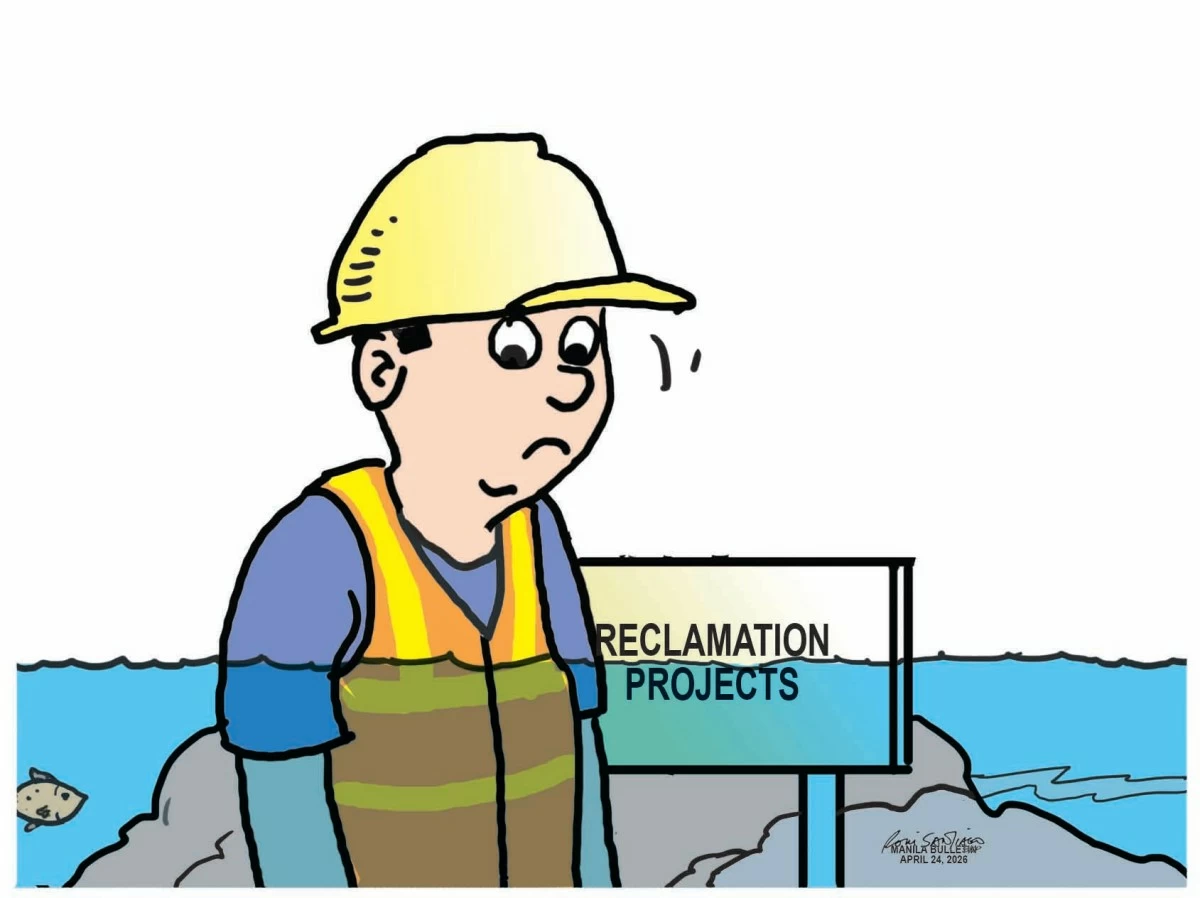
With rising seas, Manila Bay reclamation projects may be risky


Published Apr 24, 2026 12:05 am | Updated Apr 23, 2026 05:58 pm
The warning signs are here, measurable, and accelerating. New studies highlighted in an article published at the Yale School of the Environment reveal an alarming reality. Sea-level trends indicate that oceans are rising at a pace exceeding earlier projections, while the land beneath many coastal communities is sinking even faster. This convergence significantly alters flood-risk assessments, rendering traditional models increasingly unreliable. For an archipelagic nation such as the Philippines, where coastlines are lifelines, the implications are both immediate and profound. It is an urgent call to act.
Nowhere is this urgency more evident than in Manila Bay, where large-scale reclamation projects continue to advance. Marketed as engines of economic growth, these developments promise to generate commercial opportunities, attract investments, and support urban development. However, such potential benefits must be carefully weighed against the environmental and societal risks they may intensify.
Coastal reclamation inevitably disrupts fragile ecosystems. Mangrove forests, which serve as natural buffers against storm surges and coastal erosion, are frequently removed or degraded in the process. Beyond their protective function, these ecosystems sustain marine biodiversity and support fisheries that are vital to national food security. Their loss diminishes ecological resilience at a time when environmental pressures are rapidly intensifying.
In this context, it is crucial for the Department of Environment and Natural Resources (DENR) to expedite its Cumulative Impact Assessment (CIA) and undertake a comprehensive compliance review of all reclamation initiatives within Manila Bay. Such an undertaking should extend beyond verifying adherence to existing regulatory frameworks. It must critically evaluate whether these frameworks remain adequate in light of emerging scientific insights on sea-level rise and accelerated subsidence.
A rigorous and forward-looking assessment should consider the aggregate effects of multiple reclamation projects, rather than evaluating them singlehandedly. The interaction of these developments may alter hydrodynamic patterns, exacerbate flooding, and further contribute to land instability. Incorporating updated scientific data into planning and decision-making processes is essential to ensure that policies reflect current conditions rather than outdated assumptions.
While the economic rationale for reclamation is valuable, it cannot supersede considerations of long-term safety and sustainability. The expansion of commercial districts may offer immediate financial returns, but such gains become questionable if these areas are exposed to increasing flood risks or structural instability. Development that compromises resilience ultimately undermines the very economic objectives it seeks to achieve.
The private sector, as a principal driver of these projects, must also assume a greater degree of responsibility. Sustainable development practices should be integrated into project design and implementation. This includes investing in nature-based solutions, supporting the preservation and restoration of coastal ecosystems, and maintaining transparency in environmental risk assessments. Economic participation should be accompanied by a clear commitment to environmental stewardship.
Nevertheless, the primary obligation rests with the government. As both regulator and custodian of public welfare, it must ensure that development initiatives are aligned with the broader interests of society. This requires a deliberate and evidence-based approach to decision-making, where thorough evaluation takes precedence over expediency. The consequences of insufficient scrutiny are far-reaching and, in some cases, irreversible.
Public engagement is equally vital. Citizens must remain informed and actively participate in discussions surrounding environmental governance. Advocacy for sustainable practices, support for conservation initiatives, and vigilance in holding institutions accountable contribute to a more resilient and responsive policy environment.
The Philippines now faces a critical juncture. The realities of rising seas and subsiding land demand a reassessment of how coastal development is pursued. Progress must be defined not solely by economic expansion, but by the capacity to safeguard communities and ecosystems against emerging threats.
The challenge is clear. Scientific evidence has advanced, and the risks are better understood. The responsibility now lies in ensuring that policy, practice, and public awareness advance accordingly.

Eala, Sonmez advance in Madrid Open doubles

Ralph Edwin Villanueva - Philstar.com

Eala, Sonmez advance in Madrid Open doubles
Alex Eala
(Alex Eala via Instagram)


MANILA, Philippines — On to the next. 

Alex Eala and Zeynep Sonmez are off to the second round of the Mutua Madrid Open doubles’ action after sweeping the pair of Hao-ching Chan and Fanny Stollar, 6-2, 6-2, Thursday afternoon (Manila time) in Spain. 

The Filipino-Turkish pair had a slow start, trailing 0-2 in the first set. 

But they strung together game after game, taking the first set 6-2.   

They continued on in the second set, going up 4-0, before Chan and Stollar held their serve and finally put themselves on the board, 1-4. 

Eala and Sonmez, though, held their serve, pushing themselves to the match point, 5-1. 

But Chan and Stollar kept themselves afloat with a crucial win in the seventh game, 2-5. 

The Filipina and Turkish tennisters, however, iced the match as they won the rally.    

Eala and Sonmez will face either the pair of Lyudmyla Kichenok and Desirae Kwarczyk, or the second-seeded team of Katerina Siniakova and Taylor Townsend. 

The Filipina also barged into the next round of singles’ play after demolishing Anastasia Pavlyuchenkova in the first round. In the Round of 64, she will face Elise Mertens, who had a first-round bye.    

Does a car use more fuel when the air conditioner is on?


 · 

Yes and no. And the full answer is more interesting than most people expect. The AC compressor is connected to the engine with the help of a belt, which means AC works only if the engine is running. When you switch on the AC, the compressor loads the engine significantly, and in order to compensate for the increase in load, the ECU orders the fuel injectors to spray more fuel, hence there is an increase in fuel consumption.

The compressor can require as much as 4 horsepower to power the AC system, which doesn't seem like much in normal driving conditions, but becomes an issue if you have a small engine or if you're towing a large load or accelerating fast. The smaller the engine in the car, the higher the fuel economy hit will be, as well as a noticeable loss of performance.

Here is where it gets more complicated though. The correct answer is really "it depends," because if you don't run the AC, are you driving with the windows down? Driving with the windows down creates turbulence and drag, and that uses more gas too, especially at highway speeds. At low speeds, around 50 km/h or less, there is not too much wind resistance, so having the AC on will use more fuel than simply opening a window. But once travelling at highway speeds, the wind resistance increases exponentially, and having a window open creates a lot more wind resistance than at lower speeds. At that point the extra wind resistance has a much more noticeable effect on economy, and it becomes more efficient to have the AC on.

In cars built in the last 15 years or so, the AC compressors are much more efficient than older cars. Around town, there will still be a little drop in mpg, but out on a steady highway drive, the aerodynamic drag of having open windows will cause a greater drop in mpg than having the AC on. Modern AC compressors are designed to get the system up to the correct pressure, then disengage so as not to waste fuel, so the pump will be running less often than most people assume. Keeping the windows closed when using air conditioning also reduces fuel consumption further.

The bottom line is that yes, the AC uses more fuel than driving with everything off and windows up. But if the choice is between AC with windows up versus no AC with windows down at highway speed, the AC is actually the more fuel efficient option. Keeping the AC off and the windows rolled up is most efficient, but since modern ACs use such little additional gas, most find the AC worth a slight decrease in range.