You plan to move to the Philippines? Wollen Sie auf den Philippinen leben?

There are REALLY TONS of websites telling us how, why, maybe why not and when you'll be able to move to the Philippines. I only love to tell and explain some things "between the lines". Enjoy reading, be informed, have fun and be entertained too!

Ja, es gibt tonnenweise Webseiten, die Ihnen sagen wie, warum, vielleicht warum nicht und wann Sie am besten auf die Philippinen auswandern könnten. Ich möchte Ihnen in Zukunft "zwischen den Zeilen" einige zusätzlichen Dinge berichten und erzählen. Viel Spass beim Lesen und Gute Unterhaltung!


Visitors of germanexpatinthephilippines/Besucher dieser Webseite.Ich liebe meine Flaggensammlung!

free counters

Total Pageviews

Saturday, April 18, 2026

As crucial as can be


Lance Agcaoili

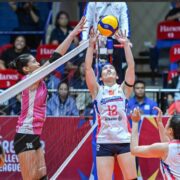
The sophomore duo of Shaina Nitura and Fhei Sagaysay will be spearheading the Adamson charge against Far Eastern on Saturday as the Soaring Falcons try to seal a place in postelimination round play in Season 88 of the UAAP women’s volleyball tournament at UST Quadricentennial Pavilion.

Teammates since high school and the big reasons why the Baby Falcons won the girls’ crown two seasons ago, Nitura and Sagaysay are hoping to weave their magic once again as this team, which they now headline, will try to make it back to the semifinals for the first time in three seasons.

“I think if you really want something, you’ll find ways to go after it,” Nitura, last season’s top rookie, said in Filipino in the lead-up to their 5 p.m. clash with the Lady Tamaraws. “With the guidance of my coaches, the people around me and God, I’ve learned that if things don’t go my way, maybe there’s a better plan.

“So I just respond well and trust God’s will. That’s what our team believes in,” she added. “If it’s not meant to happen now, then we just have to be patient and wait for the right time.”

The Falcons were in the semifinals the last time in 2023, when Trisha Tubu, now a bona fide PVL star, played her only year in the UAAP.

Running third with an 8-5 record, the Falcons can also push the 7-5 Tamaraws closer to elimination with a win. Far Eastern is tied with idle University of Santo Tomas for fourth spot, with the Growling Tigresses seeing action on Sunday against depleted University of the Philippines.

“It really comes down to who wants it more and who responds better in (pressure) situations,” Nitura added. “For us, what matters is how we respond as a team. We set aside individual goals and focus on helping the team reach the Final Four.”

Sagaysay has been very much a part of Nitura’s dominant UAAP career, being the prolific spiker’s setter since their girls’ division days.

“I’m grateful because we’ve been together since high school. Of course, no relationship is perfect. We’ve had misunderstandings, too,” Sagaysay said. “But we always try to fix things and keep fighting, not just for ourselves but for Adamson and for everyone who supports us.”

To clinch a sweep

Far Eastern, on the other hand, can secure at least a playoff for a semifinals berth with a win, even if the format for the semifinals lies on unbeaten La Salle’s final elimination game on Sunday at the Mall of Asia Arena.

The Lady Spikers seek to complete a 14-match sweep for an outright Finals berth against the National University Lady Bulldogs (9-3), which would trigger a step-ladder format.

The Lady Tamaraws need to win their last two matches, including their final match against the also-ran Ateneo Blue Eagles on Wednesday, to secure a Final Four berth. A split in those games would most likely push FEU into a playoff for the No. 4 spot.

Coach Tina Salak tries to steer her Tamaraws to a third straight Final Four berth with a squad built around Faida Bakanke, Gerz Petallo, Tin Ubaldo and Cla Loresco, who is set to face her Alas teammate Nitura.
SEE ALSO

“I feel like in our past games, I wasn’t really at my best yet,” said Loresco after scoring a personal season-high 17 points in the Tamaraws’ 25-21, 22-25, 25-19, 25-22 win over the University of the Philippines last Sunday. “I even watched my old games. How I timed my hits, how I served and how I blocked.

“Now, I just need to keep asking guidance from God because He’s always there,” she went on. “But at the same time, I also need to do my part so we can meet halfway.”

“It really comes down to who wants it more and who responds better in those situations. For us, what matters is how we respond as a team. We set aside individual goals and focus on helping the team reach the Final Four, same with the coaching staff,” she said.

Meanwhile, Ateneo and the University of the East clash in a duel of also-ran squads at 11 a.m.

Olive May reflects on body image and finding balance beyond P-pop


Allan Policarpio

In one particularly telling scene in “Born to Shine,” a musical drama series that explores the realities of the idol industry, an aspiring girl group member is asked to lose six pounds and is put on a strict diet plan if she’s to secure her spot in the lineup.

That hits close to home for Olive May, a former member of the P-pop group Calista. While she didn’t face the same direct expectations, the beauty standards and the inherent pressure to always look her best inevitably got to her. Before she knew it, the chicken inasal-loving, “extra-rice-kind of girl” had become overly mindful of her eating habits.

“Umabot sa point na na-co-conscious na ‘ko sa mga photo shoots. Or kapag masikip ang damit, parang ‘di ako makahinga, or naiisip ko baka may makitang kung ano. So, nag-diet ako,” she tells Lifestyle Inquirer.

Olive May | Photo from Olive May/Facebook

Not about being skinny

At one point, she limited herself to one meal a day. And some days would pass—after rigorous rehearsals and juggling her studies—only for her to realize it was already 10 p.m., and she had only had coffee. “It was unhealthy,” Olive admits. That became more apparent during the group’s workout sessions, where she would often end up completely spent.

Yes, she did lose weight, but the result wasn’t quite what she had envisioned for herself. The people around her couldn’t help but notice. “Pinagsabihan rin ako na, ‘Huy, tama na,’” says Olive, who was then also pursuing pageantry—yet another field where appearance is constantly judged.

It was one of the moments that made her realize that things didn’t have to be that way. While she believes that an idol must always look “presentable,” it shouldn’t come at the cost of health. “Being an idol isn’t about being skinny. Kailangan ding makita ng tao na healthy ka, or else, susundan ka nila.”

Olive didn’t want to set that kind of example. “Just appreciate kung paano ‘yung body mo,” she says, adding that she’s thankful that P-pop isn’t as rigid about body image as other counterparts abroad. “And if you must go on a diet and work out, do it with proper guidance. Most importantly, it should never reach the point where it starts making you feel sad or burned out.”

That’s exactly her outlook these days toward health and fitness. “Na-e-enjoy ko na mag-workout. Dapat hindi burden ‘yun; it should be something na excited kang gawin,” she says. “Sa food, ‘di naman kailangan na hindian mo lahat. In moderation lang talaga dapat.”

Olive May | Photo courtesy of GMA Entertainment

No regrets

Now, two years after her departure from Calista to pursue a solo career, she couldn’t be happier to be fulfilling her original dream of acting. On top of that, she gets to be part of a GMA 7 afternoon series that allows her to continue showcasing her singing and dancing talents. “Ayokong pabayaan ang performing,” she says.

As Megan Halari, an idol hopeful determined to prove her worth while living in the shadow of her superstar mother, all her extensive P-pop training came into full play. Scenes that required performance numbers felt second nature. The way you move onstage, the facial expressions, the aura you project—she already had them down pat.

SEE ALSO

“You need stamina for it. Hindi madali kumanta at sayaw nang sabay,” says the 21-year-old singer-actress, who has also appeared in such shows as “Maka” and “Forever Young.” “But thanks to my training, it’s now more manageable.”

In fact, her knowledge comes in handy when working with creative staff or co-stars who aren’t as well-versed in pop group dynamics. “I get to help them with execution and blocking,” says Olive. “I’m aware of other genres like hip-hop and dancehall, too.”

Clearly, her idol career, however short-lived it was, has been an instructive and foundational part of her career. And while she’s incredibly grateful for it, she has no regrets about going solo—as it has blown the doors wide open for her career. “Ang daming opportunities at ang dami kong nakilala,” she says. “I’m happier now because I get to do the three things I love most.”

And this time, without the pressure to be anything other than the well-rounded artist she wants to become.

Gets mo ba?—How we Filipinos talk to each other


People communicate in so many different ways. Words are one way. We can say things or write them down. If we are not that close with someone, we have to be clear and direct about what we want. But we still want to be polite, so we will say “please” or “po.” For example: “Makikiraan po!” “Paki-pasa po ng tubig.” “Pabili po ng tatlong kendi.”

A lot of miscommunication happens when expectations do not match or when communication is not as clear as we want it to be. This is why we have “mixed signals” with other people. They say one thing, but they do another. For example: “Sabi niya mahal niya ako, pero bakit may kausap siyang iba?”

There are also things that we say can “remain unsaid.” Of course, we cannot read minds as they do in the movies, but we can “feel” what other people need. This is the dynamic of pakikiramdam. In our culture, a lot of things are “hindi na kailangang sabihin.”

So, now we see that there is another kind of communication: a communication that does not involve words. It is more about reading behaviors and being sensitive to the moods of others.

Filipino forms of communication

In Filipino culture, communication is not just verbal. As writer and social anthropologist Melba Maggay points out, there are multiple forms of Filipino social communication, each showing various degrees of care and self-expression.

The most indirect form of communication is pahiwatig, which is used to express a hidden desire. This is usually only applicable when people are close enough to be aware of each other’s needs. Tampo is a kind of pahiwatig. For example: “Uy, ang sarap ng kinakain mo ah…” or “Aba, ang ganda ng damit na ito. At saka malapit na birthday ko…”

Pasabi involves an intermediary who can act as a neutral ground for people separated by distance or interpersonal conflict. A parent might also leave advice (bilin) for their child through another relative. For example: “Pakisabi naman sa kapatid mo na miss na miss ko na siya at sana naman magparamdam na siya” or “Alam kong galit siya sa iyo, kaya ako na magsasabi sa kaniya at baka mag-away na naman kayo.”

The direct expression of one’s true feelings is pagtapat, which is the revelation of a truth—usually prefaced with “Sa totoo lang…” (In truth…). The word “tapat” refers to something in front of you, but it also means “honest.” A secret admirer admits their love, or a guilty person admits their crime. “May ipagtatapat sana ako…”

And the most open form of communication is pangangalandakan, which is to spread information without care, like scattering trash (pagkalat). A frequent topic of conversation is “bukambibig,” which literally refers to something that comes out every time a person’s mouth opens up.

Why do we communicate?

The point of communication is to convey ideas and influence perceptions, and we cannot limit that to just words, whether said or written down. There are other ways people “talk” to each other—even just through their eyes! Only a few of us still remember that powerful movie scene between Vilma Santos and Nora Aunor, as they communicated just by looking at each other.

SEE ALSO

In mind science, there is a theory that says we developed consciousness and awareness because we had to learn how to communicate with each other. Our earliest ancestors had to collaborate with fellow humans to survive harsh conditions. They had to talk to each other. They had to learn who is the “I” and “me” and who is the “you” and “we” so that we can give directions to each other and take care of each other.

It is poetic, even, to think that the reason we know who we are as individuals can be traced all the way back to our ancestors, who sought ways to connect with their kapwa in order to thrive in a chaotic world.