
By James A. Loyola
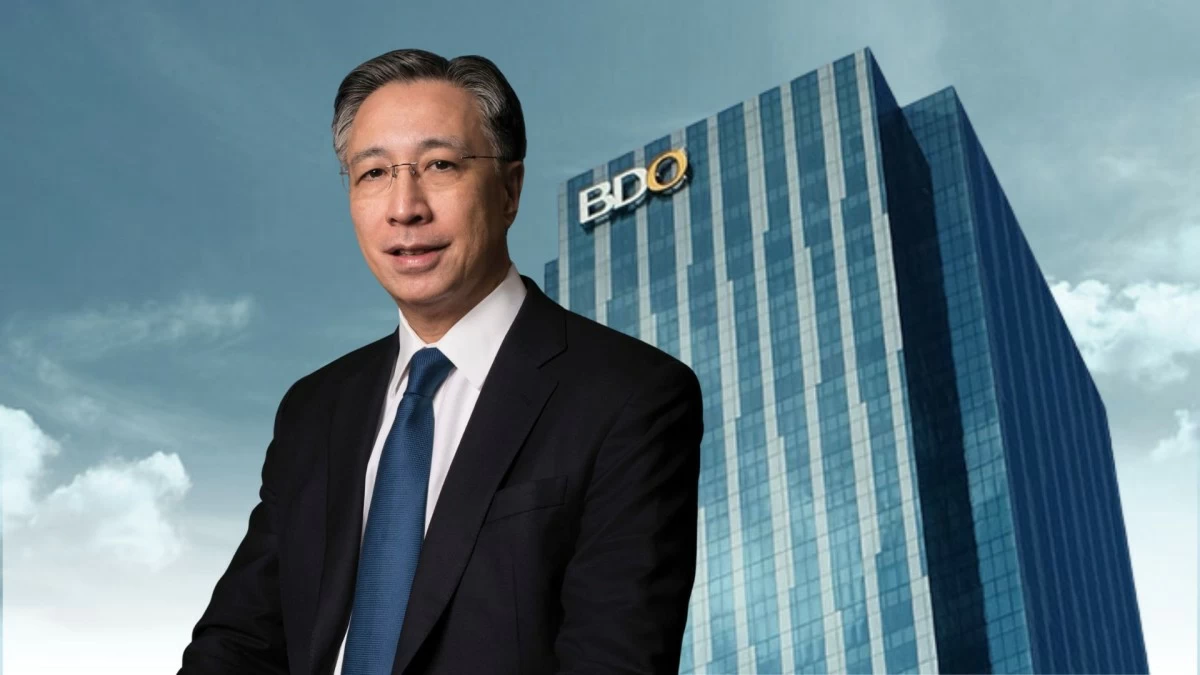
Nestor V. Tan, President and CEO of BDO Unibank, Inc.
BDO Unibank Inc., the country’s largest lender by assets, reported a two percent increase in first-quarter net income as double-digit loan growth across all market segments offset a decision to bolster its rainy-day reserves.
Net income for the Sy family-led bank rose to ₱20.1 billion in the three months ended March 31 from ₱19.7 billion a year earlier, according to a filing with the Philippine Stock Exchange on Friday, April 24.
The modest bottom-line growth reflects a more cautious stance by the lender, which increased its provisions as a preemptive measure against what it described as evolving geopolitical risks.
Despite the heightened provisioning, the bank’s core operations showed significant momentum. Net interest income climbed 11 percent during the period, underpinned by a 16 percent surge in gross customer loans, which reached ₱3.8 trillion. This expansion was broad-based, with the bank reporting double-digit growth in its corporate, middle-market, and consumer portfolios.
BDO’s deposit base remains a primary engine for its lending activities. Total deposits expanded 15 percent year-on-year, while the growth of low-cost current account and savings account (CASA) balances accelerated to seven percent.
The bank’s ability to maintain a steady flow of cheap funding has been critical in navigating a high-interest-rate environment that has pressured margins across the Southeast Asian banking sector.
Non-interest income, which includes fees and trading gains, rose six percent. A standout performer within this segment was the bank’s insurance operations, which saw a 27 percent jump in income. This diversified revenue stream helped propel the bank’s pre-provision operating profit to mid-teens growth, according to the disclosure.
Asset quality, a key metric for investors monitoring the health of the Philippine economy, continued to trend favorably. BDO’s non-performing loan (NPL) ratio improved to 1.68 percent from 1.77 percent in the same period last year. To insulate itself from potential defaults, the lender maintained an NPL coverage ratio of 132 percent.
The bank reported a return on average common equity (ROCE) of 12.8 percent for the quarter. Shareholders’ equity rose nine percent on the back of consistent earnings, pushing the book value per share up eight to ₱119.36. The bank’s Common Equity Tier 1 (CET1) ratio, a measure of financial strength, stood at 13.3 percent.
BDO management stated that the bank’s dominant market position and diversified franchise provide a buffer against a dynamic operating environment.
