You plan to move to the Philippines? Wollen Sie auf den Philippinen leben?

There are REALLY TONS of websites telling us how, why, maybe why not and when you'll be able to move to the Philippines. I only love to tell and explain some things "between the lines". Enjoy reading, be informed, have fun and be entertained too!

Ja, es gibt tonnenweise Webseiten, die Ihnen sagen wie, warum, vielleicht warum nicht und wann Sie am besten auf die Philippinen auswandern könnten. Ich möchte Ihnen in Zukunft "zwischen den Zeilen" einige zusätzlichen Dinge berichten und erzählen. Viel Spass beim Lesen und Gute Unterhaltung!


Visitors of germanexpatinthephilippines/Besucher dieser Webseite.Ich liebe meine Flaggensammlung!

free counters

Total Pageviews

Wednesday, March 4, 2026

Step back, sit down, and talk to avert war from escalating


By Manila Bulletin

Published Mar 4, 2026 12:05 am


The widening conflict in the Middle East has already demonstrated how swiftly a regional confrontation can assume global dimensions. Missiles have pierced skies once thought secure. Commercial aviation has been disrupted on an extraordinary scale, stranding hundreds of thousands of passengers across continents. Oil prices have surged, unsettling fragile markets. Civilian casualties continue to mount on all sides. What is unfolding is not merely a clash of states. A shock wave is now reverberating through an already strained international order.

The world cannot afford another protracted war.

Beyond the immediate human tragedy lies a deeper danger—escalation driven by pride, retaliation, and the pursuit of strategic advantage without regard to long-term consequences. History offers lessons about conflicts that begin with promises of swift resolution yet evolve into enduring cycles of violence. Military action may yield temporary tactical gains, but it rarely secures lasting peace. Instead, it entrenches hostility, multiplies grievances, and destabilizes entire regions.

The responsibility to halt this descent rests not solely with the principal combatants, but with the international community at large. Foremost among its institutions is the United Nations. At this critical juncture, the UN must move beyond expressions of concern and act with urgency and resolve. An immediate ceasefire resolution should be pursued without delay. Even if political divisions complicate enforcement, a formal and unified call for cessation of hostilities establishes a moral and diplomatic baseline from which further negotiations can proceed.

The Secretary-General should appoint a high-level envoy with a clear mandate to engage directly and persistently with the leadership of the United States, Israel, and Iran. Discreet diplomacy—often conducted away from public scrutiny—has historically prevented miscalculations from spiraling into catastrophe. Channels of communication must remain open, particularly in moments of heightened tension when misinterpretation can prove disastrous.

Simultaneously, the UN must prioritize humanitarian access. Civilian populations must not bear the brunt of geopolitical rivalry. Safe corridors for medical aid, food, and essential supplies are not concessions; they are obligations under international law. Preserving human life must supersede all strategic considerations.

Yet the United Nations cannot succeed alone. Peace-loving nations with diplomatic credibility and established relationships across the divide must assume an active mediating role. A contact group composed of such states could provide a platform for structured dialogue, reduce mutual suspicion, and create conditions conducive to negotiation. Their efforts should be guided by a singular objective: to bring all parties to the negotiating table without humiliation or precondition.

Diplomacy requires space for dignity. Leaders are more likely to compromise when doing so does not appear as capitulation. Each of the principal actors must be afforded a pathway to de-escalation that preserves domestic legitimacy while advancing collective security. The language of vengeance must give way to the language of responsibility.

Economic considerations further underscore the urgency of peace. The global economy is already contending with inflationary pressures, debt vulnerabilities, and uneven recovery. Disruptions to energy supplies threaten to exacerbate hardship, particularly in developing nations least equipped to absorb such shocks. A prolonged conflict would deepen inequality and divert resources from pressing global priorities, including development and climate resilience.

Ultimately, the choice confronting the parties is stark. Continued escalation risks a wider regional conflagration with unpredictable consequences. Negotiation, though arduous and imperfect, offers the only sustainable path forward. The courage required today is not the courage to strike, but the courage to restrain; not the resolve to retaliate, but the resolve to reconcile.

In moments such as this, the measure of leadership is not gauged in displays of brute force, but in the wisdom to prevent further loss. The world stands at a precarious threshold. It must choose dialogue over destruction, and peace over pride.

BSP eases rules on large cash withdrawals


BSP eases rules on large cash withdrawals

The Bangko Sentral ng Pilipinas (BSP) has doubled the threshold for cash withdrawals, from ₱500,000 to ₱1 million, to ease the regulatory burden on legitimate business operations while maintaining the focus on high-risk financial activity. Read more

Economic team seeks emergency power for PBBM to cut oil taxes


A gas station attendant fills up a motorcycle in Quezon City on Tuesday, March 3.

Economic managers are seeking authority to allow President Marcos Jr. to lower excise taxes on petroleum products if oil prices surge to around $80 per barrel or beyond. Read more

Meanwhile, senators on Tuesday, March 3 supported the proposal to give the President the authority to reduce or suspend fuel excise taxes as global oil markets react to the escalating conflict in the Middle EastRead more

Oil price rise might push peso back to 59:$1


Ian Nicolas P. Cigaral

The Philippine peso could slide back past the 59-per-dollar mark if oil prices climb and stay elevated amid the war in the Middle East, a development that would strain energy-importing economies such as the Philippines.

In a note to clients, MUFG Global Markets Research said the local currency might trade between 58.50 and 59.50 against the US dollar should crude prices hold at around $90 a barrel.

Sustained gains in global energy costs, it said, would swell the country’s already heavy import bill, adding pressure on the peso.


Tuesday, March 3, 2026

Philippine Book Festival returns for fourth year with 'Gubat ng Karunungan'

 By Manila Bulletin Newsroom


By Manila Bulletin Newsroom   Since its launch in 2023, the Philippine Book Festival (PBF), led by the National Book Development Board, has helped bring Filipino-authored books, educational materials, and creative works closer to the masses. The festival has drawn more than 120,000 visitors and, through its partnership with the Department of Education (DepEd), helped generate P946 million in institutional book sales in 2024 alone. Its mission of creating a shared third place for readers, writers, teachers, illustrators, publishers, students, families, and literary enthusiasts continues with its 2026 edition.

On Feb. 26, 2026, at the JRich Corporate Center in Quezon City, the NBDB officially announced the return of the PBF. Now in its fourth year, the festival is slated to run from March 12 to 15, 2026, at the Megatrade Hall of SM Megamall.
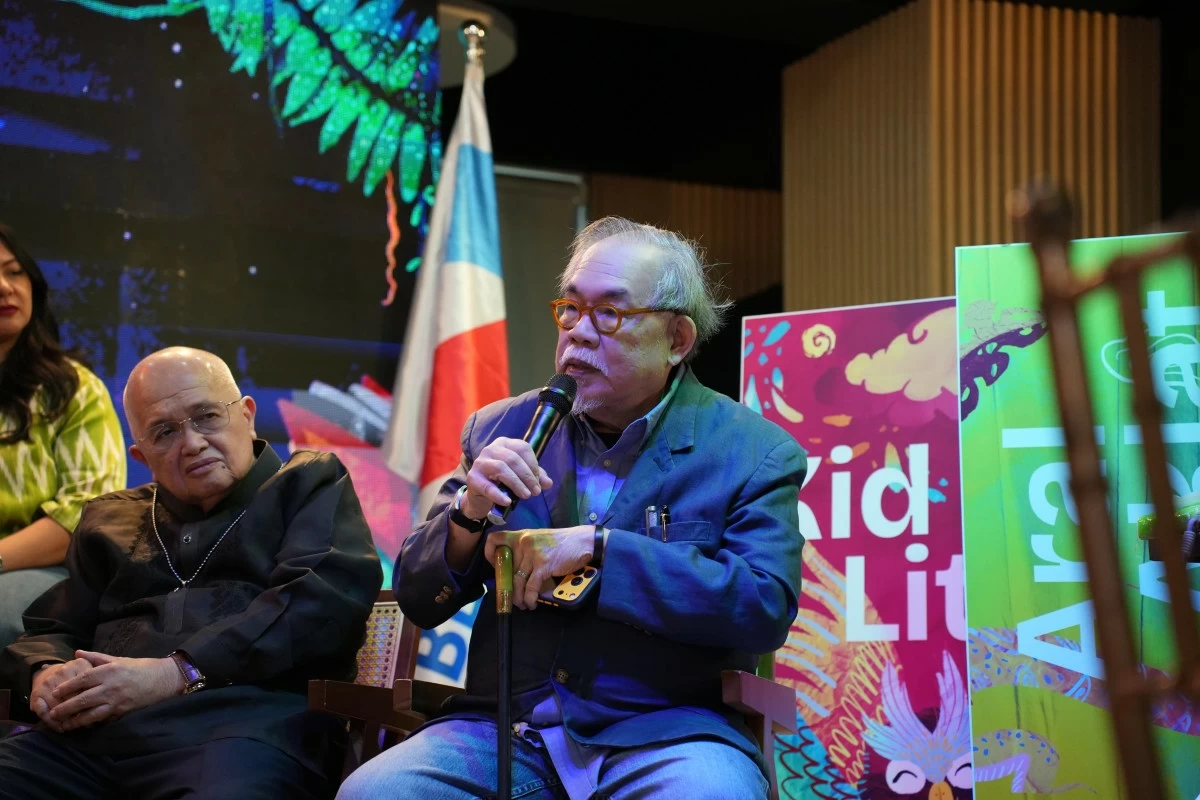
This year, the PBF adopts the theme “Gubat ng Karunungan,” or “The Rainforest of Knowledge,” with artist and designer Joffrey “Pepot” Atienza leading the festival’s key visuals. The festival’s rainforest-inspired setting will spotlight its signature sections, or realms: Kid Lit, Komiks, Booktopia, and Aral Aklat. Rounding out this year’s festival experience are five activation spaces: Lugar Lagdaan, Bahay Ilustrador, Gubat ng Karunungan, Fiesta Stage, and Umpukan.
Charisse Aquino-Tugade
(Standing from left) Nelson Canlas, Segundo Matias, Ronaldo Vivo, Charmaine Capuchino, (seated from left) Yasmien Kurdi, CJ Reynaldo, Carol Tapia, and Virgie Nicodemus
Joffrey ‘Pepot’ Atienza
Jose ‘Butch’Dalisay
Jose ‘Butch’Dalisay
 Atty. Dominador Buhain
Atty. Dominador Buhain
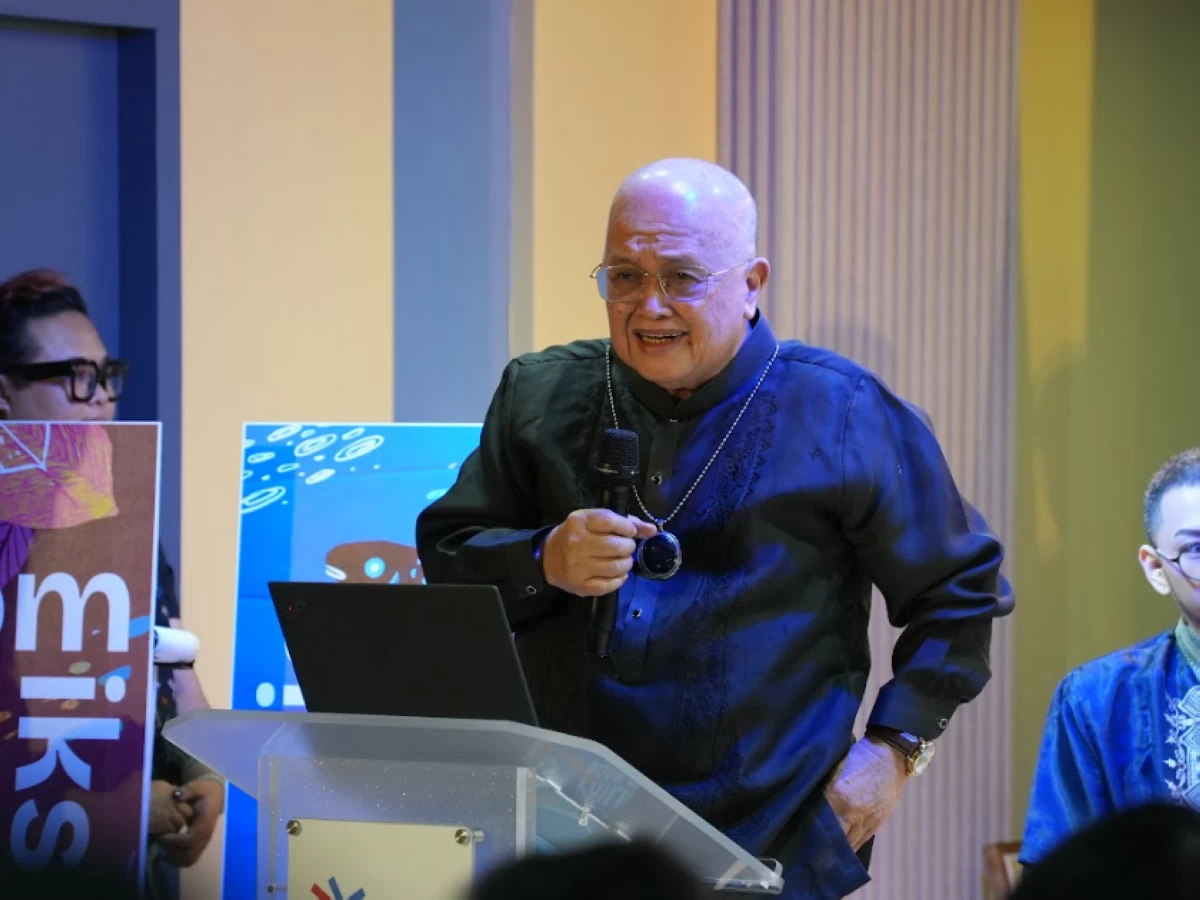
Present during the launch were Palanca Award–winning author Joxe “Butch” Dalisay and the “Godfather of the Philippine Book Industry,” Atty. Dominador Buhain. Also present at the kick-off were some of the festival’s featured authors, including Segundo Matias, CJ Reynaldo, Ronaldo Vivo Jr., Nelson Canlas, and Yasmien Kurdi.
On March 14, the Fiesta Stage will host the 43rd National Book Awards (NBA), honoring the authors, illustrators, editors, translators, and publishers whose work has shaped and sustained Philippine literature.
“With the continued interest we’ve seen over the past few years, we are encouraged by the growing appreciation for Filipino stories and content,” said NBDB executive director Charisse Aquino-Tugade. “The strong public response affirms that there is a meaningful demand for books that reflect our culture, languages, and lived experiences.”

Monday, March 2, 2026


Published Mar 1, 2026 12:05 am | Updated Feb 28, 2026 04:25 pm
HEARD IT THROUGH THE GRIPE-VINE
The University of Santo Tomas Conservatory of Music celebrated it’s 80th Founding Anniversary in a wonderful manner the other weekend. Founded in 1946, right after World War II, the Conservatory’s current Dean, Professor Maria Alexandra Iñigo-Chua, PhD., was proud to open the evening with a few words on the first night of its staging of Rodgers & Hammerstein’s South Pacific at the Proscenium Theater, Rockwell Center. My most important takeaway from her speech was about the transformative and healing power of music - and that just as it was so important in 1946, as our country was in rehabilitation mode from the war, so it was important to have music in our lives today, during these troubled times that we face.
Directed by Paolo O’Hara, with musical direction by Daniel Bartolome; the cast was led by a vivacious Ciara Sotto as US Navy nurse Nellie Forbush. Jose Vera Perez took on the role of middle-aged French expatriate plantation owner Emile de Becque. The story takes place on an unidentified Polynesian island occupied by US forces during World War II. Besides the love story that develops between Forbush and widower de Becque, who has two children from a previous marriage to a Polynesian woman; there’s the other love angle between US Lieutenant Cable, and Liat, a native islander.
Curtain call of South Pacific, as presented by the UST Conservatory of Music, with Ciara Sotto leading the cast as US Navy nurse, Nellie Forbush, along with Jose Vera Perez, as Emile de Becque.
The reason I give that brief synopsis is quite simple. While most people of a certain generation, and those into musical comedy and Broadway shows will be very familiar with the songs of South Pacific; they may have forgotten how in 1949, when it opened on Broadway, it was considered highly controversial for directly confronting racism. The songs we all know include Some Enchanted Evening, Happy Talk, I’m Gonna Wash That Man Right Outa My Hair, Bali Hai, and Younger Than Springtime. Besides the two romantic narrative strands I mentioned, it was a lesser known song, Carefully Taught, that caught the ire of the conservatives and Southern states. That song’s lyrics basically said one wasn’t born ‘racist’, but it’s hard-wired into Americans as they grow up.
The Southern states voiced their opposition to the musical as Nellie Forbush proudly states that she is from Little Rock, Arkansas; and by the end of the musical, is ready to assume the role of stepmother to two Polynesian-French children. Their objections had to do with children of a interracial marriage now being mothered by a Southern belle. And of course, there was the issue of Liat becoming pregnant with Lt. Cable’s child.
Family support, from Ciara’s sister, MTRCB Chair Diorella Sotto-Antonio, and her father Senate President Tito Sotto.
And don’t laugh saying this is all ancient history, and merely reflects poorly in 1949. What’s happening in Trump America today with ICE, and even the social media furor over Bad Bunny performing at this year’s Super Bowl half time, shows us that today isn’t so far from 1949. That’s as sad an indictment of attitudes on race that prevail up to today.
Based on a James Michener book, South Pacific won 10 Tony Awards the following year of it’s debut on Broadway. So it’s definitely a wise choice by the Conservatory to stage it, as there is a relevance that’s hard to deny or ignore. While I’m certain the choice was made way before Bad Bunny performed on Super Bowl Sunday, it just goes to show how choices made can often be serendipitous, and end up looking like fate.
While this was my first time to watch Jose Vera Perez perform, I’ve watched Ciara Sotto in productions of Rent and Grease. To say she was a revelation here would be an understatement. I’m guessing she had a diction coach, as a Southern accent sprung out of nowhere; and I was not ready for a singing voice that would charm you out of your seat. More a member of an ensemble cast in the likes of Rent, it was great to watch her dedicated attack to this centel role of Nellie. Perez sounded to me like he specializes in light opera and Broadway songs, so he was a wonderful fit as well.
Thanks to the UST Office of Public Affairs, and to Micha Lagniton. She helped me secure seats for the performance, and was the first to greet me at the Proscenium Theater that Saturday evening. UST holds a very special place in my heart, as it’s been the site of two of our MB Sustainability Forum events. We began the Forum series four years ago, and thanks to the great work that the UST Office of Public Affairs does in terms of coordination and securing attendance for the Forum sessions, UST is one of the academic partner institutions that we at the Manila Bulletin are happy to call ‘home to the Forum’.
In fact, this April 30, our first Sustainability-related event for the year will be happening at the UST. Exploring and educating the youth on Sustainable Development has been so fulfilling with partners such as UST by our side.

More airlines join NAIA's self-check-in and automated gates


More passengers can now use NAIA’s Self Check-in kiosks, automated Pre-Security screening gates, and Self-Boarding gates at Terminals 1, 2, and 3, as additional airlines complete system integration and join the airport’s automated passenger processing program.
The system, which has been progressively implemented across the airport, allows eligible passengers to check in, print boarding passes, tag their bags, clear initial security, and board flights through automated lanes, helping reduce queuing times and ease congestion at traditional counters. A phased activation of automated Bag Drop features is also ongoing.
The services are currently enabled for the following airlines and passenger categories:
Terminal 1
-Philippine Airlines: International destinations, excluding Middle East and Japan routes
-Asiana Airlines: Korean nationals and foreign passengers with no visa requirements
Terminal 2
-Philippine Airlines: All domestic destinations
-Cebu Pacific: All domestic destinations
-AirAsia: All domestic destinations
Terminal 3 
-Cebu Pacific: All domestic and international destinations
-AirAsia: All international destinations
-United Airlines: Foreign passengers with no visa requirements
-Qatar Airways: All passengers
-Air Canada: All passengers
“These systems are already operational, and we are seeing more airlines come on board as integration is completed,” New NAIA Infra Corp. (NNIC), the airport’s private operator, said. “As participation expands, more passengers will be able to move through check-in, security, and boarding more efficiently.”
The automated processing systems form part of NAIA’s broader efforts to improve passenger flow and align airport operations with biometric-enabled standards used at major international hubs across Asia, the Middle East, and North America.
Passengers on eligible flights are encouraged to use the Self Check-in kiosks located near the check-in areas of each terminal. After printing boarding passes and bag tags, they may proceed to Bag Drop counters or automated lanes before continuing through the Pre-Security and Self-Boarding gates. Additional airlines and routes will be enabled in the coming months as integration work continues.

Sarah Engels fährt für Deutschland zum ESC!

 „Eurovision Song Contest – Das Deutsche Finale“

:Sarah Engels fährt für Deutschland zum ESC!

Sarah Engels (33) performte vor lodernden Flammen – und fährt für Deutschland zum ESC nach Wien

Sarah Engels (33) performte vor lodernden Flammen – und fährt für Deutschland zum ESC nach Wien

Foto: Getty Images

Bis in den späten Abend bleibt es spannend. Zuerst wählt die Jury ihre drei Favoriten aus: Molly Sue (25), Wavyboi (27) und Sarah Engels (33) können jubeln. Nur sie sind noch im Rennen um die ESC-Teilnahme. Aus diesen drei entscheiden kurz darauf die Zuschauer per Telefonvoting, wer nach Wien fahren darf.

Molly Sue (25) stand bereits 2015 bei „The Voice Kids“ auf der Bühne. Am Samstagabend verzauberte sie die deutschen ESC-Fans

Molly Sue (25) stand bereits 2015 bei „The Voice Kids“ auf der Bühne. Am Samstagabend verzauberte sie die deutschen ESC-Fans

Foto: Getty Images
Windmaschine und Glitzer-Make-up:

Windmaschine und Glitzer-Make-up: Wavyboi (27) ist ein echter Hingucker

Foto: Getty Images

Die strahlende Siegerin: Sarah Engels. Sie nimmt freudestrahlend ihren Pokal entgegen und performt ihren Song „Fire“ zum dritten Mal an diesem Abend. Zwischendurch kann sie ihr Glück kaum fassen, jubelt immer wieder los und umarmt die anderen Kandidaten.

Heißer Auftritt: Sarah Engels lieferte ab

Heißer Auftritt: Sarah Engels lieferte ab

Foto: Britta Pedersen/dpa

Gute Stimmung von Anfang an

Die Moderatorinnen Barbara Schöneberger und Hazel Brugger sind schon zur Begrüßung bester Stimmung und geben diverse ESC-Gewinnersongs zum Besten – Hazel trällert „Ein bisschen Frieden“, Barbara schmettert „Dschinghis Khan“. Die Hauptpersonen sind aber natürlich die Acts, die mit ihren Hits auftreten.

Sunday, March 1, 2026

The grace of a quiet Sunday: A reminder that we are more than our inboxes


Published Mar 1, 2026 12:05 am | Updated Feb 28, 2026 04:02 pm
There was a time when Sundays felt different.
Shops opened later. Music played softer. The pace of conversation was slow. Whether one walked to Mass, gathered for a simple meal, or rested for an afternoon nap, Sunday carried a quiet permission to pause.
Today, that stillness competes with notifications, deadlines, and the hum of a world that no longer sleeps. Even on the Lord’s Day, emails demand replies and social media timelines scroll without mercy. Rest has become something we schedule.
Yet perhaps Sunday remains an invitation, not merely to ritual, but to renewal.
Today, think of having nothing to do as space. It is the deliberate choice to step back long enough to remember who we are beyond our roles and responsibilities. In the Filipino tradition, Sunday is for renewing faith. But faith is most alive not in habit alone, but in action.
Faith is not only about attending a service, it is a practice we carry all week –patience in traffic, and extending forgiveness to a neighbor. If Sunday reminds us of anything, it should be that devotion finds its truest expression in kindness—the everyday, unannounced gestures that ask for nothing in return.
A helping hand to an elderly stranger crossing the street. A respectful word in a heated online exchange. A pause to allow a motorist to cut your lane. These are not grand acts, yet they quietly shape the moral character of a community. In a time when public discourse often feels sharp and impatient, gentleness may be the most radical act of faith.
Sunday would be a good time to sow kindness through small talk to strangers. In a world where people are engrossed in their lives – and mobile gadgets – small talk can break the isolation many people feel. A study related to an upcoming book says small talk “can increase your well-being, improve your social skills, reduce anxiety and social biases and make you feel more connected.” The “chance exchanges” also add novelty, learning opportunities and different perspectives that can enrich one’s day
Perhaps what we miss in our restless age is also perspective. The perspective that life’s worth is not measured by productivity alone; and that success without peace is hollow.
Take a Sunday pause, that deep breath before we step again into the week’s demands. It is the reminder that we are more than our inboxes, more than our arguments, more than our anxieties.
To be still—even briefly—is to reclaim balance.
And to translate faith into action—through kindness, patience, generosity—is to ensure that what we profess on Sunday endures until the next.
The world will not grow quieter on its own. But within our homes, at our tables, and in our hearts, we can choose a different rhythm. We can choose to speak more gently, complain less, and notice the blessings that we already have.
Perhaps that is the true grace of a quiet Sunday – not merely rest for the body, but renewal for the spirit—and a renewed commitment to live our faith, simply and sincerely, in the ordinary days that follow.

A reflection on God’s invitation to live a life according to His design


In today’s Second Reading (2 Tim. 1: 8b-10), St. Paul wrote to the disciple Timothy: “Beloved, bear your share of hardship for the gospel with the strength that comes from God. He saved us and called us to a holy life, not according to our works but according to his own design…”

Reading this passage brings comfort and strength knowing that God always calls us to a lead a life that is pleasing to His eyes — a life that is selfless and more focused on serving others and glorifying God. We may get dismayed and discouraged by the people or things around us, as they may not always work in the way we wanted them to be. But we take courage at the truth that God has his own plan for us and invites us to take part in his grand design, regardless of our weaknesses or abilities. —SL