You plan to move to the Philippines? Wollen Sie auf den Philippinen leben?

There are REALLY TONS of websites telling us how, why, maybe why not and when you'll be able to move to the Philippines. I only love to tell and explain some things "between the lines". Enjoy reading, be informed, have fun and be entertained too!

Ja, es gibt tonnenweise Webseiten, die Ihnen sagen wie, warum, vielleicht warum nicht und wann Sie am besten auf die Philippinen auswandern könnten. Ich möchte Ihnen in Zukunft "zwischen den Zeilen" einige zusätzlichen Dinge berichten und erzählen. Viel Spass beim Lesen und Gute Unterhaltung!


Visitors of germanexpatinthephilippines/Besucher dieser Webseite.Ich liebe meine Flaggensammlung!

free counters

Total Pageviews

Monday, April 27, 2026

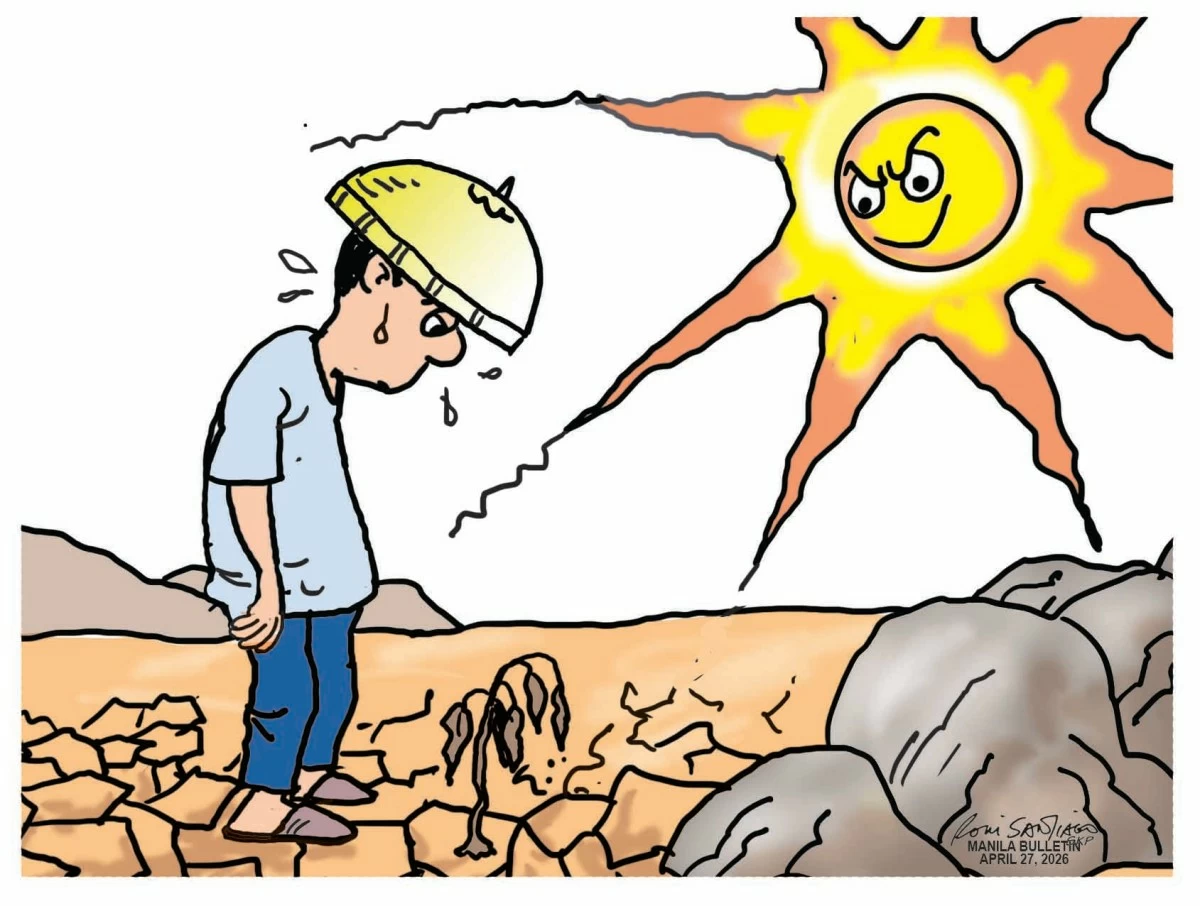
PAGASA warns of dangerous heat index levels in 14 areas

FOURTEEN areas in the country will experience sweltering temperatures due to a danger-level heat index, the weather bureau said Saturday.
Heat index is what the temperature feels like to the human body when relative humidity combines with air.
A peak heat index of 45°C is forecast in Dumangas, Iloilo and Butuan City, Agusan del Norte, according to the Philippine Atmospheric, Geophysical and Astronomical Services Administration (PAGASA).
The following areas will also see danger-level heat indices:
San Ildefonso, Bulacan - 43°C
�Sangley Point, Cavite - 42°C
�Aborlan, Palawan - 44°C�Roxas City, Capiz - 42°C�Mamburao, Capiz - 42°C�Iloilo City, Iloilo - 43°C�La Granja, La Carlota,
Negros Occidental - 44°C�Catbalogan, Western Samar - 43°C
�VSU Baybay, Leyte - 42°C�Borongan, Eastern Samar - 44°C
�Guiuan, Eastern Samar - 42°C
�Cotabato City, Maguindanao del Norte - 43°C
Heat cramps and heat exhaustion are likely under a danger-level heat index of 42°C to 51°C.
Meanwhile, the heat index may reach 41°C in Aparri, Cagayan; San Jose, Occidental Mindoro; Puerto Princesa City and Cuyo in Palawan; Legazpi City, Albay; Catarman. Northern Samar; Tacloban City, Leyte; Dipolog, Zamboanga del Norte; Zamboanga City, Zamboanga del Sur; and Davao City, Davao del Sur.
A heat index of 40°C is forecast over Dagupan City, Pangasinan; Tuguegarao City, Cagayan; ISU Echague, Isabela; Baler and Casiguran in Aurora; CLSU Muñoz, Nueva Ecija; TAU Camiling, Tarlac; Ambulong, Tanauan, Batangas; Romblon, Romblon; Daet, Camarines Norte; Siquijor, Siquijor; Mactan, Cebu; Maasin, Southern, Leyte; Surigao City, Surigao del Norte; and Hinatuan, Surigao del Sur.
Meanwhile, cloudy skies with scattered rains and thunderstorms are expected over Batanes due to the frontal system.
The rest of the country will experience partly cloudy to cloudy skies with isolated rain showers or thunderstorms due to the easterlies and localized thunderstorms.
Light to moderate winds and slight to moderate seas will prevail across the archipelago. (PNA)
May be an image of text
All reactions:
Klaus Doring

Don't let the fear of wearing a swimsuit take away your summer fun

 By John Legaspi

Published Apr 22, 2026 03:21 pm

Fashion is something that goes beyond just covering the body. It is a tool for self-expression, enhancing one’s natural features, and giving someone a boost of confidence. In some cases, however, it becomes something many dread—and it is not just about the pieces, but also the pressure to conform to certain standards that not everyone can or wants to meet.
Iza Calzado (middle) headlines the unveiling of SM Woman Active's latest swimsuit line. (Photo: SM Woman Active)
If there is one piece that scares many the most, it would be the swimsuit. Unlike other pieces, the swimsuit is a call to shed layers, where the body becomes part of the overall look. For many, shedding layers means vulnerability—being seen as they are, without the usual protection of clothing that can hide insecurities.
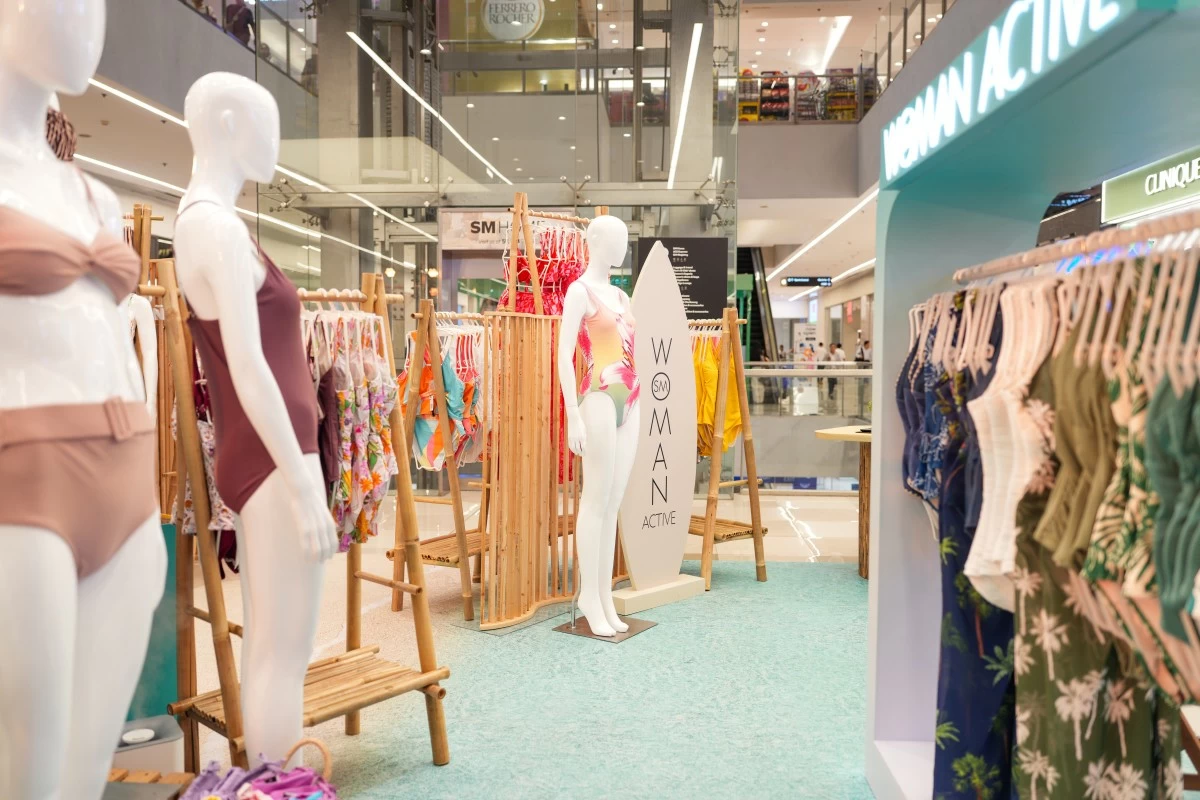
That is something SM Woman Active aims to champion this season: the fun that comes with wearing a swimsuit. On April 20, 2026, at SM Makati Concourse, it unveiled its latest collection of swimsuits, all designed for comfort and confidence.
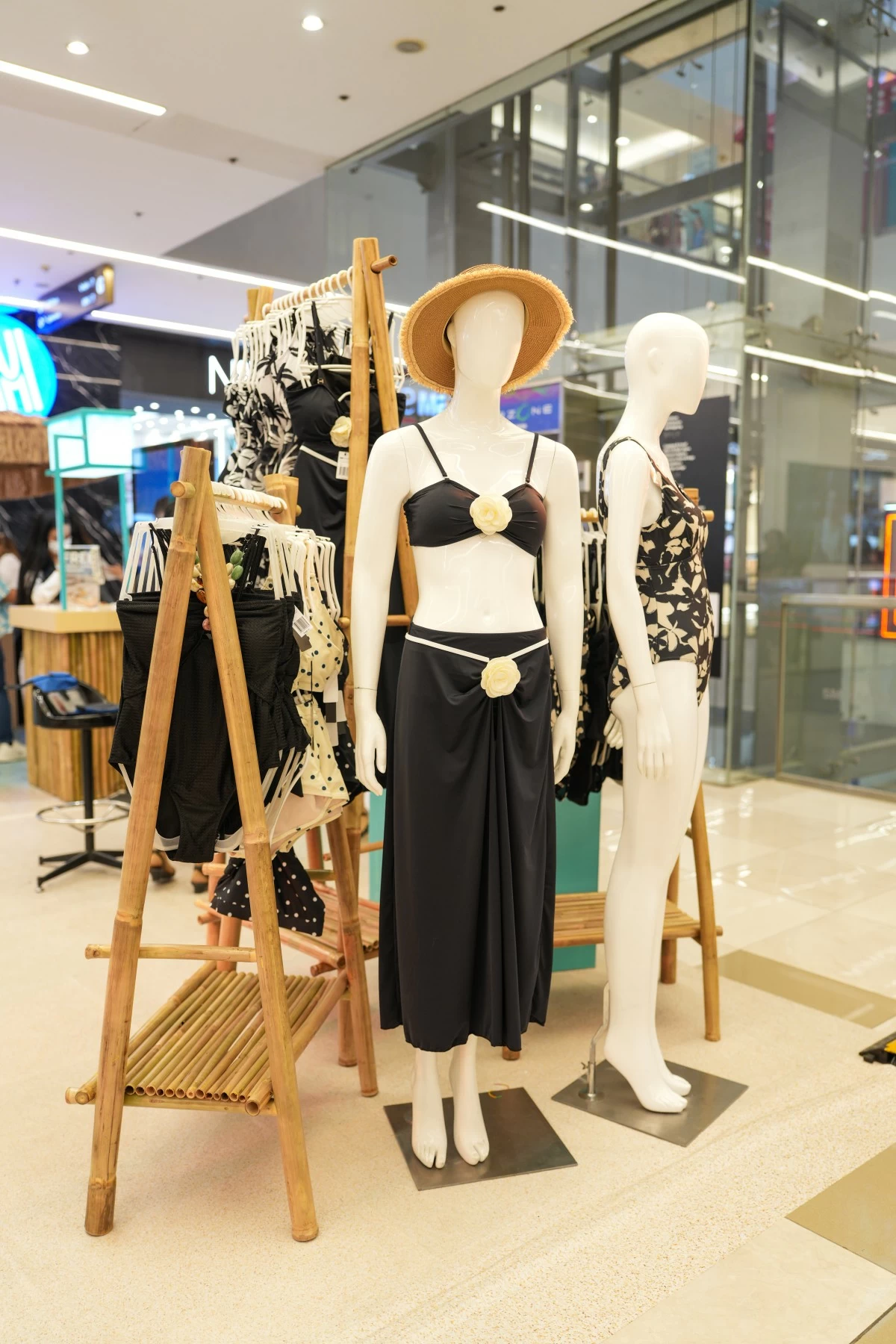
The new SM Woman Active swimwear collection features various styles that capture the essence of summer. (Photo: SM Woman Active)
The new swimwear collection of SM Woman Active features solid, sun‑washed hues, playful polka dots, and vibrant, summery prints. (Photo: SM Woman Active)
Choose your style adventure
For the season, SM Woman Active’s swimsuit line is imbued with a variety of colors and prints that are perfect for beach getaways, resort weekends, and spontaneous tropical adventures. The designs alone are an invitation to have fun—in both style and spirit.
The runway show featured pieces in solid, sun-washed hues, playful polka dots, and vibrant tropical prints. The collection also showcased cover-ups, from sarongs and palazzo pants to kimonos and skirts, elevating the swimsuit when the occasion calls for it.
With silhouettes that flatter different body types and thoughtfully designed details, each piece encourages confidence and ease. Whether lounging by the shore or diving into the waves, the collection proves that swimwear can be both stylish and empowering—celebrating individuality while embracing the carefree spirit of the season.
Wearing this beachy sundress is perfect for watching the sunset by the beach. (Photo: SM Woman Active)
An elegant and refined look designed to take you from the city to your next summer adventure. (Photo: SM Woman Active)
This understated taupe one-piece swimsuit exudes effortless elegance. (Photo: SM Woman Active)
Should you wear it or not?
There to celebrate the unveiling of the collection was actress Iza Calzado, who headlined the fashion presentation. When it comes to her relationship with her body, Iza confessed that the journey wasn’t easy. She faced pressure, intense expectations, and went through unhealthy extremes to fit the mold set by others. Over time, she also prioritized her mental health, recognizing that confidence isn’t just physical, but emotional and psychological as well. That kind of glow is what she brought to the SM Woman Active event.
“I have never envisioned that I’ll be part of an event centered on swimwear because of my insecurities and my story—my ‘truth’ back then,” the actress told Manila Bulletin Lifestyle. “But my story now fully embraces all of myself.”
What she loves about the swimwear collection is its range of silhouettes. Every woman can find a piece that matches her personality, style, and body. For Iza, scars and imperfections should not get in the way of anyone doing what they want and feeling free to explore.
“I used to be fearful about wearing a swimsuit as well. Sometimes, I still am, because I often think about what others might say about my body. I just want you to know that you are worthy,” Iza advised women who are finding their confidence. “If you are shy about your body and want to wear a swimsuit, just think this: 10 or 20 years from now, what would you regret more—not wearing that swimsuit or wearing it?”

PH women's relay team runs away with silver at Beach Games


 SANYA, China — The Philippine Athletics team closed out strong on the sands, claiming a silver medal in the women's 4x60 meters relay in beach athletics in the 6th Asian Beach Games on the Phoenix Island on Sunday, April 26.

By Reynald I. Magallon

Published Apr 26, 2026 11:06 am


Olympian Kristina Knott, running for the first time on the beach, bolted out of the starting line and gave the Filipinas an early advantage against their competitors in the heat 2 final.

Shane Joy Ponce and Lianne Pama sustained the run in their turns before anchor Jessica Laurance came out strong to bag the PH Athletics’ third medal in as many games.

“It's so different. There's no baton. The exchange zone is 3 metres versus 30 metres. So I think that our only enemy in the race was the zone.” said Knott.

Laurance, on the other hand, is now the only multi-medalist for Team PH so far after adding the silver to the bronze she won in the women’s 60m race.

Confronting the expanding drought crisis in Luzon


Published Apr 27, 2026 12:05 am | Updated Apr 26, 2026 03:59 pm
The latest report from Philippine Atmospheric, Geophysical and Astronomical Services Administration that drought conditions now grip 25 provinces across Luzon should sound a resounding alarm far beyond the agricultural sector. It is not merely a matter of failed rains or depleted reservoirs. It is a deepening crisis that cuts into the very fabric of Filipino life, threatening food security, livelihood, and the fragile resilience of communities already burdened by a national energy emergency.
For farmers, drought is an unforgiving adversary. Crops wither before harvest, irrigation systems run dry, and debts mount as yields diminish. In provinces dependent on rice and corn production, the lack of water translates directly into lost income and heightened food prices. The ripple effects are swift. Reduced water supply drives inflation, placing further strain on households already grappling with elevated electricity and transport costs.
Fisherfolk, too, are not spared. Prolonged dry spells alter water salinity and temperature in inland and coastal ecosystems, disrupting fish breeding cycles and reducing catch volumes. As fuel prices remain volatile due to global uncertainties, fewer fish in the nets mean deeper losses for small-scale operators who can ill afford another economic shock.
At the center of this unfolding hardship is the “common tao” — families who must stretch limited incomes to cover rising food and energy expenses. The convergence of drought and energy constraints forms a perfect storm, eroding purchasing power and amplifying vulnerabilities, particularly in rural and peri-urban communities.
Government response must therefore be both immediate and strategic. Emergency measures should prioritize the delivery of water through mobile tankers and the rehabilitation of critical irrigation systems in affected provinces. The National Irrigation Administration must accelerate desilting operations and repair damaged canals to maximize whatever limited water supply remains.
Equally urgent is the expansion of targeted financial assistance. Rather than broad, unfocused subsidies, support must be calibrated. Crop insurance payouts should be expedited, and concessional credit must be extended to farmers and fisherfolk to enable replanting and recovery. The Department of Agriculture can lead in distributing drought-resistant seed varieties and promoting climate-resilient farming techniques such as drip irrigation and crop diversification.
Water management, however, cannot remain reactive. The present crisis underscores the need for a more integrated, forward-looking approach. Investments in rainwater harvesting, small farm reservoirs, and watershed rehabilitation must be scaled up. Local government units, working alongside national agencies, should institutionalize water conservation measures and community-based resource management systems.
At the household level, practical coping mechanisms can make a difference. Families can adopt water-saving practices, shift to less water-intensive food consumption where feasible, and participate in community efforts to safeguard local water sources. These small but collective actions help build resilience from the ground up.
Beyond immediate relief, this drought episode is a stark reminder of the accelerating impact of climate variability. It calls for stronger alignment between climate adaptation policies and economic planning. The integration of renewable energy solutions in rural areas, for instance, can ease dependence on strained power systems while supporting agricultural productivity.
Ultimately, the challenge demands a whole-of-society response. National government, local units, the private sector, and communities must act in concert, guided by both urgency and foresight. The cost of inaction — or delayed action — will not only be measured in economic losses but in the diminished well-being of millions of Filipinos.
The fields may be parched today, but with decisive and coordinated effort, the nation can still weather this dry spell and emerge more resilient in the face of future crises.

Sunday, April 26, 2026

Whose voice do you follow?


By Fr. Rolando V. De La Rosa, OP
Published Apr 26, 2026 12:05 am | Updated Apr 25, 2026 03:41 pm
THROUGH UNTRUE
“Whose voice do you follow?” This is not just a theoretical question but a deeply personal one. Our lives are shaped by the voices we listen to. Every day, journalists, advertisers, bloggers, influencers, celebrities, politicians, as well as business and technology guruscompete for our attention and allegiance. We must learn to distinguish between voices that lead us astray and those that lead to truth and goodness.
In today’s Gospel reading, Jesus likens us Christians to sheep (John 10:1–10). This may seem unflattering. To be compared to sheep might suggest that Christians are afflicted with a “herd mentality,” following any voice they hear and going through life without conviction or purpose.
However, researchers have shown that the so-called “herd mentality” of sheep is not a sign of weakness but a necessary strategy for survival. Unlike many animals that can fend for themselves, sheep are inherently defenseless against predators. When threatened, they instinctively move toward the center of the herd, where they are least exposed to danger. Those that stray to the edges become more vulnerable. Sheep must remain close to one another and, above all, listen to and respond to the voice of the shepherd whom they recognize.
Sheep do not follow just any voice; they are discerning in the way that matters most. A stranger’s call sends them fleeing, but the familiar voice of their shepherd draws them near. In the same way, being a Christian requires that we become deeply attuned to the voice of Christ.
Jesus likens us to sheep to remind us that, in a world that has become hostile to His teachings, we are vulnerable and in need of guidance. He teaches us that the distinguishing mark of a Christian is not passivity or mindless conformity, but a strong sense of belonging and the ability to recognize the shepherd’s voice. As Jesus declares, “My sheep hear my voice; I know them, and they follow me” (John 10:27).
This raises a crucial question: Do we still recognize the voice of Jesus, the Good Shepherd? In a world convulsed with noise, this is no small challenge. We are surrounded by persistent and often deceptive voices that blare through smartphones, social media, television, and the internet. We are constantly told, “Do what you want. Follow your desires. Be who you want to be.”
These messages, when repeated endlessly, can dull our spiritual and moral sensibilities. They promise freedom but often lead to a subtle form of slavery. Jesus warned us about such voices: “Beware of false prophets, who come to you in sheep’s clothing but inwardly are ravenous wolves” (Matthew 7:15). They mimic the tone of the Good Shepherd but lack His integrity and compassion.
The Bible is commonly referred to as the Word of God. Today, it is more accessible than ever, but also increasingly ignored and neglected. A well-known talk show host once asked a guest to name one of the Ten Commandments. The person replied, “Thou shalt not covet your neighbor’s goose.” The host then asked another person to complete this biblical phrase: “Let him who is without sin…” The reply was, “have a good time.” These responses may provoke laughter, but they also reveal a troubling reality: our lack of familiarity with the Scriptures.
The Bible is not merely a book; it is the living Word through which God speaks. If we often feel lost or directionless, or if many suffer from a mental health crisis, it may be because we have allowed other voices to drown out the voice of Jesus. When was the last time you opened your Bible to seek guidance?
Our noisy world drives us to fear, restlessness, and endless craving. But the voice of the Good Shepherd challenges us to seek that kind of contentment that is deeper than success, stronger than suffering, and more enduring than death.
Only Jesus calls us by name, seeks us when we are lost, and lays down His life for us (John 10:11). His voice does not enslave; it sets us free. It does not confuse; it brings clarity. It does not scatter; it gathers and leads us safely home.

BDO profit hits ₱20 billion even as bank builds rainy-day fund


By James A. Loyola
Published Apr 25, 2026 03:26 pm
Nestor V. Tan, President and CEO of BDO Unibank, Inc.
BDO Unibank Inc., the country’s largest lender by assets, reported a two percent increase in first-quarter net income as double-digit loan growth across all market segments offset a decision to bolster its rainy-day reserves.
Net income for the Sy family-led bank rose to ₱20.1 billion in the three months ended March 31 from ₱19.7 billion a year earlier, according to a filing with the Philippine Stock Exchange on Friday, April 24.
The modest bottom-line growth reflects a more cautious stance by the lender, which increased its provisions as a preemptive measure against what it described as evolving geopolitical risks.
Despite the heightened provisioning, the bank’s core operations showed significant momentum. Net interest income climbed 11 percent during the period, underpinned by a 16 percent surge in gross customer loans, which reached ₱3.8 trillion. This expansion was broad-based, with the bank reporting double-digit growth in its corporate, middle-market, and consumer portfolios.
BDO’s deposit base remains a primary engine for its lending activities. Total deposits expanded 15 percent year-on-year, while the growth of low-cost current account and savings account (CASA) balances accelerated to seven percent.
The bank’s ability to maintain a steady flow of cheap funding has been critical in navigating a high-interest-rate environment that has pressured margins across the Southeast Asian banking sector.
Non-interest income, which includes fees and trading gains, rose six percent. A standout performer within this segment was the bank’s insurance operations, which saw a 27 percent jump in income. This diversified revenue stream helped propel the bank’s pre-provision operating profit to mid-teens growth, according to the disclosure.
Asset quality, a key metric for investors monitoring the health of the Philippine economy, continued to trend favorably. BDO’s non-performing loan (NPL) ratio improved to 1.68 percent from 1.77 percent in the same period last year. To insulate itself from potential defaults, the lender maintained an NPL coverage ratio of 132 percent.
The bank reported a return on average common equity (ROCE) of 12.8 percent for the quarter. Shareholders’ equity rose nine percent on the back of consistent earnings, pushing the book value per share up eight to ₱119.36. The bank’s Common Equity Tier 1 (CET1) ratio, a measure of financial strength, stood at 13.3 percent.
BDO management stated that the bank’s dominant market position and diversified franchise provide a buffer against a dynamic operating environment.

Saturday, April 25, 2026

EACH FOR HIMSELF


By
 Mindanao Daily News
 -

0
6

“Every man for himself” (or “each for themselves”) describes a chaotic situation where individuals, in a crisis or competition, act only in their own self-interest without helping others. This idiom highlights a total lack of cooperation, forcing everyone to rely entirely on their own survival skills
 It’s used for saying that everyone needs to look after themselves and not worry about anyone else. Everyone looks out for his or her best interest. Originally this phrase expressed approval. It appeared in Chaucer’s The Knight’s Tale (“Ech man for him-self, ther is non other”), implying that if one did not look out for oneself no one else would.

Yes, each person does what is best for himself or herself. Yes, times are getting tougher. I think you, my dear readers, know what I am talking about. No reason to list everything again. Sometimes, there is no team spirit in this office; it’s definitely every man for himself. Neighbors would tell each other: mind your own business. The tone between us humans is becoming more and more harsher.

Some people live alone because friends and families have abandoned them. Important helpline is Psalm 27:10 for them. “When my father and my mother forsake me, then the LORD will take care of me.”

And solitary survivors like Robinson Crusoe, or the hero in the movie Castaway, fascinate. But the loner is someone who purposely holds himself aloof, like the Unabomber, Mathematician Ted Kaczynski. People doggedly moving ever farther away from one another constitute hell in C.S. Lewis’ book, The Great Divorce.

Fact is  –  Proverbs 18:1 says:  A man who isolates himself seeks his own desires; he rages against all wise judgment.

Living in community and helping one another is foundational for all who wish to follow Christ. We know from Acts 2 that the early church took this seriously, seeing many examples of believers helping one another, including materially, so that there would be no one in need within their group.

Much has been written about the benefits of strong relationships. I wrote about it at this corner several years ago. People are healthier, live longer, and are generally happier if they have strong friendships beneficial for helping and encouraging each other. And let me repeat it – especially during these tough times.

Philippines' fragile balancing act


By Manila Bulletin Newsroom
Published Apr 25, 2026 12:05 am | Updated Apr 24, 2026 05:12 pm
For years, the Philippine economic narrative was one of resilient, if unremarkable, stability. But as 2026 unfolds, that script is being rewritten by volatile cocktail of geopolitical friction, stalled infrastructure, and a central bank forced to abandon its post-pandemic crouch.
The Bangko Sentral ng Pilipinas’ (BSP) recent signal of a definitive shift toward tightening cycle marks the end of an era of easy money, ushering in a period of “measured” but persistent hikes to combat an inflation outlook that is rapidly souring.
The challenge facing the BSP’s Monetary Board is twofold: it must anchor inflation expectations that have drifted toward a projected 6.3 percent for 2026, while ensuring it does not choke off the recovery that remains more fragile than the headline figures suggest. By opting for a “measured cadence” of rate hikes rather than aggressive shocks, the BSP is attempting a surgical strike against price pressures. Yet, with real interest rates sitting in negative territory at -1.5 percent, the central bank is effectively running to stand still.
The urgency of this tightening is underscored by the deteriorating global landscape. The Middle East conflict has evolved from a distant geopolitical concern into a direct hit on the Philippine kitchen table, driving up the costs of oil and fertilizer. For a nation that relies almost entirely on energy imports, these supply shocks are not merely transitory blips; they are systemic threats that Fitch Ratings has cited in its decision to downgrade the Philippines’ outlook to “negative.”
This outlook revision by Fitch is a sobering wake-up call. It threatens to interrupt a 20-year streak of credit resilience, dating back to the fiscal malaise of the mid-2000s. The crux of the problem lies in the stalling of the ”Build, Better, More” engine. A collapse in infrastructure spending in late 2025—born of necessary but disruptive graft probes—has robbed the economy of its traditional growth multipliers. When public investment falters just as energy costs spike, the result is a pincer movement that squeezes both the government’s fiscal space and the consumer’s wallet.
Amid these gathering clouds, however, there is a significant silver lining: the institutional “vote of confidence” from JPMorgan Chase & Co. The inclusion of Philippine sovereign debt in its flagship emerging-market bond index by January 2027 is a landmark event. It promises a ₱240 billion windfall of foreign capital, potentially compressing yields and lowering the long-term cost of debt exactly when the Bureau of the Treasury needs it most.
This inclusion creates a fascinating paradox. While Fitch warns of a potential downgrade due to governance and energy risks, the world’s largest index provider is preparing to pull the Philippines deeper into the global financial fold. It suggests that while the country’s short-term “outlook” is clouded by the Marcos-Duterte political rift and impeachment dramas, its long-term “infrastructure” as a credible borrower remains attractive to passive global capital.
The path forward requires a delicate calibration of policy. The government must expedite the cleanup of its infrastructure bureaucracy to restart the growth engine, while the BSP must remain the “adult in the room,” raising rates enough to defend the peso and tame prices without tipping a cooling economy into a freeze.
The Philippines is currently a tale of two trajectories. One leads toward the prestige of global index inclusion and a broader investor base; the other toward a credit downgrade and a return to the fiscal instability of the past. For the Marcos administration, the “smart risk management” praised by analysts must now transition from rhetoric to results. In a world of six percent inflation and negative real rates, there is no longer any margin for error.

Why is everyone leaving their K-pop groups?


The K-pop industry ended 2025 with the news that Danielle would be leaving NewJeans and Ador after a year-long dispute between the group and Hybe’s sublabel. Fast forward to April 2026, and more members of globally recognized idol groups have been announcing their departures.

Mid-March saw Enhypen part ways with Heeseung, and Zerobaseone split in half as members Zhang Hao, Ricky, Kim Gyuvin, and Han Yujin left the group to prepare for a redebut under home agency YH Entertainment. And right at the start of this month, SM Entertainment announced that Mark Lee would no longer be part of NCT, NCT 127, and NCT Dream—as his contract with the label came to an end. Fellow NCT/WayV member Ten also recently announced that he will no longer renew his exclusive contract with SM Entertainment but will remain in his groups.

Speculations have also arisen that Katseye’s Manon would be leaving her group after Hybe and Geffen announced that she would be going on hiatus. It’s noted that the Swiss Ghanaian member did not perform with the global girl group for their Coachella set.