You plan to move to the Philippines? Wollen Sie auf den Philippinen leben?

There are REALLY TONS of websites telling us how, why, maybe why not and when you'll be able to move to the Philippines. I only love to tell and explain some things "between the lines". Enjoy reading, be informed, have fun and be entertained too!

Ja, es gibt tonnenweise Webseiten, die Ihnen sagen wie, warum, vielleicht warum nicht und wann Sie am besten auf die Philippinen auswandern könnten. Ich möchte Ihnen in Zukunft "zwischen den Zeilen" einige zusätzlichen Dinge berichten und erzählen. Viel Spass beim Lesen und Gute Unterhaltung!


Visitors of germanexpatinthephilippines/Besucher dieser Webseite.Ich liebe meine Flaggensammlung!

free counters

Total Pageviews

Saturday, March 14, 2026

Some disadvantages of women


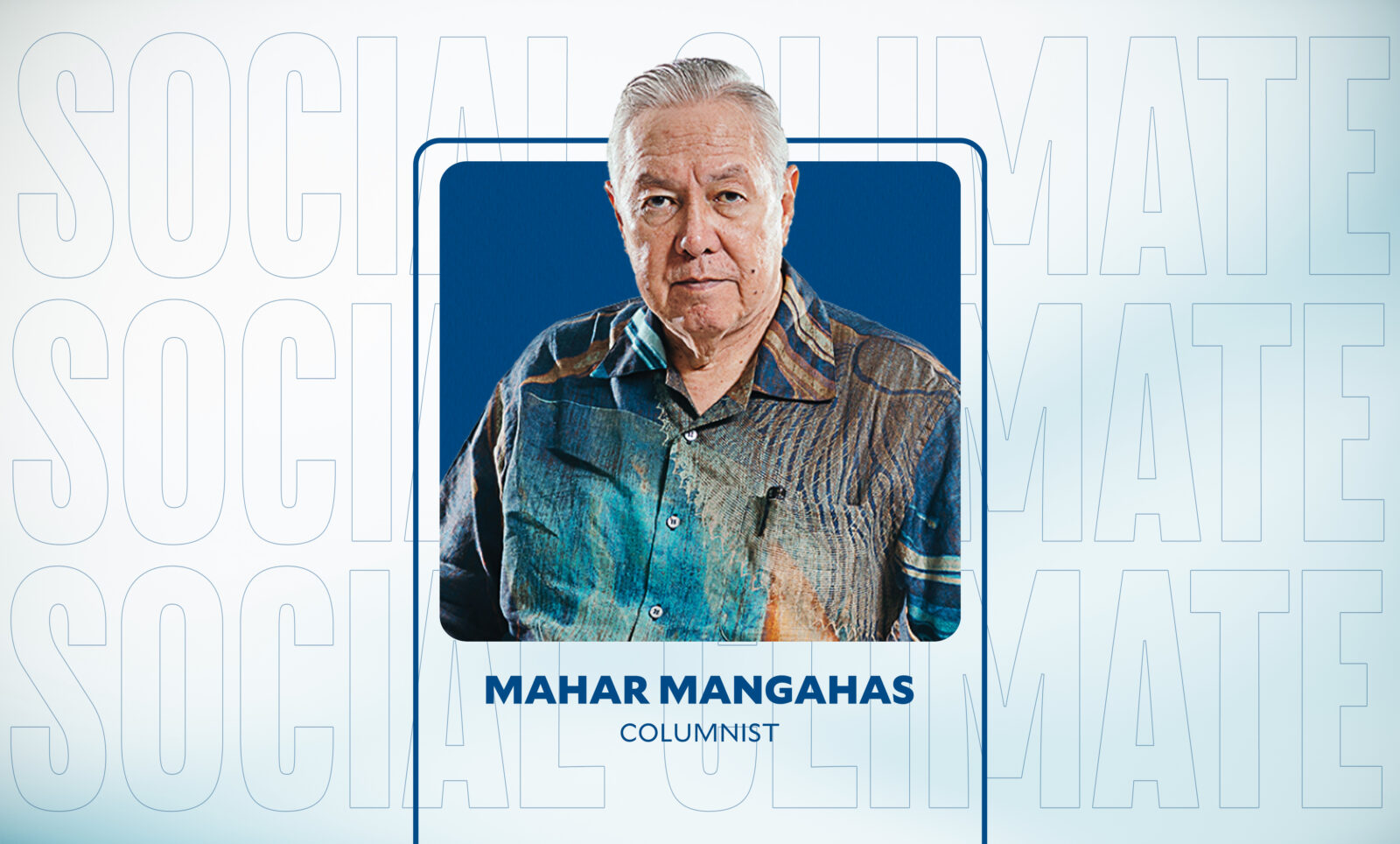
Mahar Mangahas

In line with National Women’s Month, let me recall some experiences that most impressed me about the disadvantages of being a woman.

In some countries, the women may not eat until the men are finished. Long ago, at an international meeting in Bangkok, probably at lunchtime, I was surprised when a South Asian lady asked me, “Mahar, is it true that, in the Philippines, the women have their meals together with the men?” This lady was newly arrived, from either India or Bangladesh, on her very first posting abroad. She explained that in her country, the men and boys are served first, and only after they are through eating do the women and girls take their meal.

What shocked me was her saying that, furthermore, all the food cooked for the family’s meal must be placed on the dining table together, with nothing reserved in the kitchen. This means that the womenfolk depend on what food the menfolk remember to leave behind for them when it’s their turn to eat. (How hard it is to be a male guest for a meal, and not knowing how many women are waiting to eat! I suppose the guest should eat as little as good manners allow.)

A woman is a riskier investment for advanced training abroad. When I was a very young and single economics faculty member at the University of the Philippines Diliman (UPD), I was once with our dean, José “Pepe” Encarnación Jr., having coffee in the lounge, where he was brooding over whether to allot a foreign scholarship grant to a woman. I myself was in line for such a grant, but he said he wasn’t worried about me, whatever my plans about getting married (which I did, just before leaving for foreign studies).

It takes four to five years to do an economics Ph.D. abroad, which is quite expensive in terms of both time and money. In such a long absence, there’s no guarantee that a scholar won’t get married, and perhaps get married to a foreigner! (Pepe himself had returned with an American wife from his studies at Princeton University.) If she gets married, he pointed out, that brings the husband—possibly a foreigner—into the decision-making process about the wife’s finishing the designated study program successfully and then coming back to render the agreed service of two years on the UP faculty for every one year abroad. Even though the money comes from an American foundation, UP needs a good track record to maintain its scholarship program.

I don’t know if Pepe had to refuse a foreign scholarship to any women candidates, but in my time—I got my Ph.D. in 1970, and stayed with the UP faculty until 1981—there were many more men than women who got them. Thanks to its faculty buildup, UP began producing its own economics PhDs in 1975 (the first graduate was a woman, by the way). Brain drain doesn’t seem to be as big an issue as before. The main economics building in UPD is named after Pepe; there’s no doubt he did an outstanding job as its dean for nine years.

Women’s natural disadvantage is in their participation in the labor force. Women naturally take time off for childbearing, and then for child-raising. In the Social Weather Surveys, the joblessness rate among female adults can easily be double that of male adults. Joblessness in Social Weather Stations (SWS) surveys literally means having no job (“walang trabaho”) but at the same time looking for one; those not looking for work are not part of the labor force.

The mere fact of having a job or being at work is not an indicator of women’s well-being; it’s just part of life. How much one’s work is enjoyed for its own sake is another matter, that is researchable and measurable.

In the Philippines, the state of women’s well-being is not far from that of men. As of last November, the percentage of women saying their personal quality of life (QOL) got better from the year before was 31, while that saying it got worse was 36, or a net-gainers score of -5. For men, the corresponding percentages were 28 and 36, or net -8, or slightly less than that for women.

The percentage of women expecting their personal QOL to get better in the next year (optimists) was 45, while the percentage expecting it to get worse (pessimists) was only 6, or a net-optimists score of +39. For men, the corresponding percentages were 44 and 10, or net +34, or slightly less than that for women.

SEE ALSO

The SWS surveys also track expectations about the progress of the economy as a whole. When sorted by gender, the women’s scores are likewise a little better than those of men.

—————-

mahar.mangahas@sws.org.ph.

Senior citizens' pension payouts to require National ID starting April 1


Published Mar 14, 2026 10:23 am
DSWD PHOTO
DSWD PHOTO
The Department of Social Welfare and Development (DSWD) will start using the Philippine Identification System (PhilSys), or National ID, as the primary identification for the Social Pension for Indigent Senior Citizens beginning April 1.
Senior citizens who have not yet registered with PhilSys are encouraged to sign up at the nearest office of the Philippine Statistics Authority (PSA).
To make the process easier for beneficiaries, PhilSys registration will also be conducted during scheduled pension payout activities.
For bedridden senior citizens who are unable to travel, PSA personnel will conduct home visits to facilitate their registration.
The SocPen program provides a monthly stipend of P1,000 to indigent Filipinos aged 60 and above who are frail, sickly, or living with disabilities, and who have no regular income, pension, or financial support from their families.
Under Republic Act No. 11916, or the law increasing the social pension of senior citizens, the monthly stipend for indigent elderly beneficiaries was doubled from P500 to P1,000.
The law lapsed into effect in July 2022, with the increased pension implemented starting January 2024.
Qualified beneficiaries receive their stipend on a quarterly basis.
In 2025, a total of 4,113,050 indigent senior citizens received their social pension from the DSWD, exceeding the original target of 4,085,066 beneficiaries.

Peso nears ₱60:$1; Maynilad, Manila Water to raise rates due to weak peso


Peso nears ₱60:$1; Maynilad, Manila Water to raise rates due to weak peso

Surging oil prices stemming from the ongoing war in the Middle East continued to injure the peso, causing it to shed 35 centavos against the United States (US) dollar on Friday, March 13, ending the week at a new record-low close of ₱59.735. Read more

Meanwhile, millions of residents in Metro Manila face higher water costs starting next month as the industry regulator approved tariff hikes for both of the region’s main concessionaires to account for fluctuations in foreign exchange. Read more

Do German-speaking Swiss people consume standard German media (TV, books, films, internet forums, etc.) often?


 · 

Sure.

Swiss German isn’t a written language. It is oral only, and although some people do write in Swiss German in Whatsapp messages and on Reddit, they are simply typing phonetically, and I find it tiring to read. Books written by Swiss German writers, news articles and so on are written in what passes for German German”. The only difference is that we don’t use “ß” Like in “Straße”, but we use a double “s”, as in “Strasse”. And we use different vocabulary for certain things. We would say “Trottoir” instead of “Gehsteig” (=pavement), “Billet” instead of “Fahrkarte” (=public transport ticket), and so on. But a German would have no trouble reading it. They might just find some terms quirky.

Does anybody actually watch TV nowadays? I thought it was all streaming… And yes, we watch German films, and can communicate perfectly normally with Germans on social media platforms.

Senator Bong Go urges traders to uphold bayanihan as food prices climb amid looming fuel hikes, warns against burdening ordinary Filipinos

 Senator Bong Go urges traders to uphold bayanihan as food prices climb amid looming fuel hikes, warns against burdening ordinary Filipinos

Food prices have begun climbing in several markets even before major fuel price adjustments take effect, prompting Senator Christopher "Bong" Go to call on traders and suppliers to refrain from exploiting the situation through hoarding, overpricing, and other practices that place additional strain on consumers, particularly low-income households, on Monday, March 9.
The senator noted that the looming fuel price hikes are partly driven by global tensions and disruptions in oil supply following ongoing missile attacks in West Asia, which have added pressure to markets and contributed to rising transportation and logistics costs.
Reports monitored over the weekend indicated that prices of several food items have already started increasing. At the Bulungan Seafood Market in Parañaque City, the per-kilo price of lapu-lapu rose from PhP300 to PhP400, while bakoko increased from PhP250 to PhP400 per kilo. Similar developments were observed in other areas, including Balintawak Market in Quezon City, where a container of fish reportedly became PhP500 more expensive.
Go emphasized that while rising fuel costs may affect the movement of goods, some traders may take advantage of the situation by prematurely increasing prices or manipulating supply, actions that ultimately hurt ordinary consumers.
"Sa ganitong panahon, kailangang magtulungan tayo. Huwag nating samantalahin ang sitwasyon para kumita nang sobra habang nahihirapan ang ating mga kababayan," Go said. "Bawat piso, bawat sentimo, mahalaga lalo na sa mga pamilyang kapos ang kinikita."
He also reiterated his long-standing position against hoarding and supply manipulation that worsen price instability.
“As a member of the Committee on Agriculture, two things ang dapat nating gawin. Unang-una, dapat po ay labanan natin, go against hoarders and smugglers. Dapat po ay walang makinabang na mga smugglers dito,” the senator said in a previous interview.
According to reports, some vendors have begun selling fish in bundles instead of by the kilo so customers can still afford them. In other markets, the prices of vegetables have also gone up, including eggplant, which increased from PhP250 to PhP400 per pack, squash from PhP27 to PhP35 per kilo, and calamansi from PhP100 to PhP120 per kilo.
Traders said some produce comes from the Ilocos Region, and transportation costs could rise further if fuel prices continue to increase.
Transport groups have warned that shipping fees may also rise as much as 20% to 30%, citing the heavy reliance of trucking operations on petroleum products.
Despite these developments, Go appealed to traders, suppliers, and other stakeholders in the food supply chain to exercise fairness and responsibility.
"Hindi naman natin maiiwasan ang paggalaw ng presyo ng langis, pero sana huwag itong gawing dahilan para manamantala," the senator pointed out. "Kung may kakayahan tayong magpigil at maging patas sa presyo, malaking tulong na 'yan sa ating kapwa Pilipino."
Go stressed that responsible pricing and ethical trading practices are especially important during periods of economic pressure, when many households are already struggling to stretch their daily budgets.
"Maraming pamilya ang nagtitipid na lang. May mga bumibili na lang ng kalahating kilo o kaya ay kaunting piraso para lang magkasya ang pera," he noted. "Kaya sana isipin din natin ang kalagayan ng ordinaryong mamamayan."
He also reminded traders that food and basic goods are necessities, making fairness in pricing a matter that directly affects people's daily survival.
"Huwag nating kalimutan na ang mga bumibili sa palengke ay mga kapwa natin Pilipino na nagsisikap ding itaguyod ang kanilang pamilya," Go said. "Kung magtutulungan tayo at paiiralin ang malasakit sa isa't isa, mas malalampasan natin ang mga ganitong pagsubok."
The senator encouraged the public to remain mindful of their spending and to support responsible vendors who continue to keep prices reasonable despite market pressures.
"Ang tunay na lakas ng bansa ay nasa pagkakaisa ng mga mamamayan. Kung may malasakit tayo sa isa't isa, makakahanap tayo ng paraan para magtulungan sa gitna ng anumang hamon," Go said. "Sa huli, ang mahalaga ay walang maiiwan at sama-sama nating malalampasan ang mga pagsubok na ito."
May be an image of text that says 'DURIAN Op POST Regerikantana RagerikantanaBalan Salanza BONG GO APEALS TO TRADERS Amidst US vs. IRAN WAR food crisis "Don't burden ordinary Pinoys as high price zoom up."'

Friday, March 13, 2026

Human thinks ...


Believing that God leads involves surrendering personal control, trusting in divine guidance, and finding purpose through faith rather than self-reliance. It requires a willing attitude to follow, even when the path is unknown or challenging, aiming for spiritual growth over personal comfort.

God guides us along the path in ways which are quite beyond our understanding. He uses anything and everything to achieve his plans for us, even turning our hearts and minds to follow his course (Prov 16:9; 21:1). Moreover, he doesn’t need our conscious co-operation to do this. Nothing can thwart his plans.   

God gives his guidance one day at a time to prevent our becoming proud. God also wants us to learn to trust him. He wants to make it clear to others that the wonderful plan came not from human forethought, but from God himself

I am happy! Yes, I am! I found joy, freedom, and peace of mind, when I discovered what I believe is the secret of a happy life – as an expatriate living in the Philippines for more than 28  years now. 

I was brought up in a religious family and lived in a parish house up to my 10th birthday. Our Christian life was a fantastic style of religion. Though I was used to it, my attitudes have been really very ungodly. Many times, I was prone to anger and did all possible unpleasant things to others. I gave more attention to worldly things until such time I was deeply immersed in what we call “worldly trend”. I did those things simply to enjoy life without caring for other people around me.

But then, suddenly, “someone” (let’s call him GOD) interfered. He directed my way. I received plenty of different challenges and tasks – especially, when I decided to stay in the Philippines for good.

Sure, I have always been able to travel around the globe. But, believe me, not every trip or even a single day became a satisfying success or event.

Today I am no more surprised at the painful trials I suffered in the past. Instead of being surprised I tried to rejoice, because I learned that trials are meant to test your faith! 

When I got the idea to write this piece, I rummaged through some very old books of my late “Lola” (born in 1899!) and found a faded and more or less crumbled-to-dust document. It was a handwritten piece by an unknown Dutch soldier, who must have written  this in mortal agony during his last battle in World War II, dated November 1944. I like to share it with you, my dear reader, because it also reflected my past – and, maybe also yours:

“When I stopped my ungodly attitudes, I learned to pray. But when I prayed, I asked for power to become popular, and He made me weak and taught me how to be obedient. When I prayed, I asked for health to be able to do great things, and He gave me afflictions, to do better things. When I prayed, I asked for riches and abundance, and He gave me poverty to become wise instead. When I prayed, I asked for strength to receive people’s glory and fame, and He gave me weakness to let me feel how much I need Him. When I prayed, I asked everything for a wonderful life without problems and trials, living like a king, and He gave me LIFE!”

I didn’t receive anything about which I prayed since living in the Philippines as an expatriate. But, I received everything in time and I didn’t expect it anymore. More or less against my own free will, all unspeakable and unpronounceable prayers have been answered. I am really very much blessed.

That’s what I also feel right now at this moment. I am what I am right now, NOT BECAUSE I PRAYED FOR IT, but, because all unspeakable prayers have been answered.

Psalm 37:23-24: “The Lord directs the steps of the godly. He delights in every detail of their lives. Though they stumble, they will never fall, for the Lord holds them by the hand.” Proverbs 16:9: “We can make our plans, but the Lord determines our steps.”

Human thoughts – God leads!

Davao bird sanctuary produces new Philippine eagle chick


DAVAO CITY—The National Bird Breeding Sanctuary (NBBS) in Barangay Eden here has produced another eaglet, marking a breakthrough for the conservation of the critically endangered Philippine eagle (Pithecophaga jefferyi).

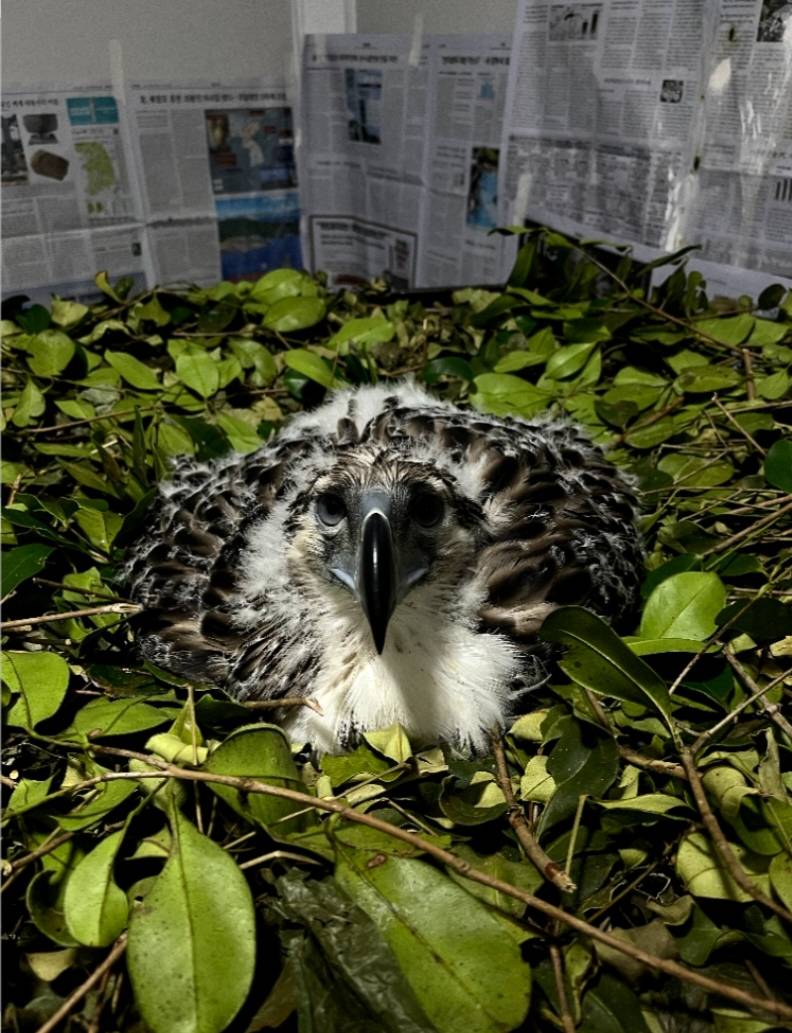
The Philippine Eagle Foundation (PEF) on Tuesday presented to the public 3-month-old Philippine eagle called “Chick 32,” produced through cooperative artificial insemination. It is the offspring of female eagle “Dakila” and male eagle “Sinag.”

“Chick 32 is a product of grit, patience and learning by doing,” Dennis Salvador, PEF executive director, told the Inquirer.

It is the third eaglet produced at the secluded NBBS, a facility off-limits to humans except for a few animal keepers. PEF transferred its captive breeding operations there in 2023, while keeping the Philippine Eagle Center in Malagos district for its educational programs on wildlife conservation.

The first eaglet produced at NBBS, “Chick 30,” died in November 2024 while only 17 days old due to complications from a retained yolk sac.

The second, “Chick 31,” came out through natural hatching and was named “Riley,” but it died in April last year while only three months old due to a metabolic bone disease.

“Those difficult experiences taught us lessons that helped us succeed this time,” said Salvador.

PEF improved its newborn screening procedures for every eaglet hatched after what happened to Chick 30 and Chick 31.

Dr. Jayson Ibañez, PEF director for operations, told the Inquirer that they now have tight biosecurity, improved husbandry techniques and diet planning for Chick 32.

BREEDING SUCCESS Philippine eagle “Bayani,” in this photo showing the chick at 11 weeks last month, rests on a nest at the National Bird Breeding Sanctuary in Davao City. —PHOTO COURTESY OF PHILIPPINE EAGLE FOUNDATION

Collaboration

The eaglet came out on Dec. 5, 2025, through the “help out” method in which NBBS facility manager Domingo Tadena assisted in pipping its eggshell.

“This hatch is also a testament to the spirit of international collaboration and the collective support of many partners—from funders to technical experts—who stood with us along the way,” Salvador said.

“But special credit goes to our breeding teams: the dedicated staff at the Philippine Eagle Center caring for the male eagle, and the team at the National Bird Breeding Sanctuary where the female is housed. Their precision, timing and unwavering commitment made this breakthrough possible,” he added.

SEE ALSO

PEF had said that Chick 32 was adopted by Nico Herth, owner and chief executive officer of Procon-Grumbach, a German manufacturer of high-precision electronics systems, who vowed to provide for the rearing of the raptor whom he named “Bayani,” a Filipino term for hero.

PEF relies heavily on donations, corporate partnerships and private groups to fund its conservation, breeding and education programs.

According to Salvador, Bayani’s name is apt as it celebrates the courage and hope carried by every young Philippine eagle which is facing extinction due to massive loss of natural habitat and human persecution.

The first captive-bred eagle was Pag-asa, born on Jan. 23, 1992. He died in 2021 at age 28.

In 1995, then President Fidel Ramos declared the Philippine eagle as the country’s national bird. Today, there are only about 392 pairs of Philippine eagles remaining in the wild.