You plan to move to the Philippines? Wollen Sie auf den Philippinen leben?

There are REALLY TONS of websites telling us how, why, maybe why not and when you'll be able to move to the Philippines. I only love to tell and explain some things "between the lines". Enjoy reading, be informed, have fun and be entertained too!

Ja, es gibt tonnenweise Webseiten, die Ihnen sagen wie, warum, vielleicht warum nicht und wann Sie am besten auf die Philippinen auswandern könnten. Ich möchte Ihnen in Zukunft "zwischen den Zeilen" einige zusätzlichen Dinge berichten und erzählen. Viel Spass beim Lesen und Gute Unterhaltung!


Visitors of germanexpatinthephilippines/Besucher dieser Webseite.Ich liebe meine Flaggensammlung!

free counters

Total Pageviews

Friday, March 6, 2026

WhatsApp will jetzt Geld von Nutzern – doch nicht jeder wird zur Kasse gebeten


Meta bestätigt offiziell ein Premium-Modell für WhatsApp. Welche Funktionen dazugehören sollen, wird nun immer konkreter.

WhatsApp ist seit Jahren eine der meistgenutzten Apps mit allein rund 60 Millionen Nutzern in Deutschland – und war für Privatnutzer stets kostenlos. Doch das Geschäftsmodell des Messenger-Dienstes verändert sich: Meta, der Mutterkonzern hinter WhatsApp, Instagram und Facebook, bereitet ein kostenpflichtiges Premium-Abonnement vor. Gegenüber dem Technologieportal TechCrunch bestätigte das Unternehmen die Pläne und verwies dabei auf ein Angebot, das auf mehr Produktivität, Kreativität und KI-Funktionen setzen soll.   

Unbekannte Whatsapp-Anrufe: DAS sollte man tun
WhatsApp-Nutzer erhalten vermehrt Anrufe von unbekannten, ausländischen Nummern. © IMAGO

Erste konkrete Hinweise auf die Umsetzung lieferte Ende Januar 2026 der auf WhatsApp-Leaks spezialisierte Blog WABetaInfo. In einer Android-Betaversion des Messengers tauchten Hinweisfenster auf, die auf eine Warteliste für das Premium-Abonnement hindeuten. Beta-Nutzer können sich dort bereits eintragen, um rechtzeitig zum Start des Dienstes benachrichtigt zu werden. Das Beitreten und Verlassen der Warteliste ist laut den Berichten jederzeit möglich.   

Diese Funktionen soll „WhatsApp Premium“ bieten

Der Kern des geplanten Abonnements dreht sich zunächst um Personalisierung und erweiterte Komfortfunktionen. Konkret geplant sind exklusive Themes und Sticker sowie anpassbare Signaltöne. Weiterhin soll die Zahl der anpinnbaren Chats deutlich steigen – derzeit ist diese auf drei begrenzt. Premium-Abonnenten würden demnach deutlich mehr Inhalte für den Schnellzugriff zur Verfügung haben, was besonders bei der Verwaltung größerer Gruppen praktisch sein dürfte. Weitere Funktionen sollen zu einem späteren Zeitpunkt folgen.

Ein weiterer Aspekt betrifft Werbung: Seit dem Sommer 2025 erscheinen im Tab „Aktuelles“ gesponserte Beiträge. Wer diese Anzeigen künftig nicht sehen möchte, könnte laut übereinstimmenden Berichten über ein Abo die werbefreie Nutzung erkaufen. Der Preis dafür wird in Beta-Quellen mit rund vier Euro pro Monat angegeben – offizielle Bestätigung von Meta steht allerdings noch aus.   

WhatsApp bleibt kostenlos – für alle anderen

Wer kein Premium-Abo abschließen möchte, muss keine Einschränkungen beim Kern des Messengers befürchten. Alle grundlegenden Funktionen – Chatten, Telefonieren, Sprachnachrichten, Gruppenunterhaltungen – bleiben nach aktuellem Stand kostenlos und ohne Einschränkungen nutzbar. Meta selbst hat wiederholt betont, dass das klassische Messaging-Angebot nicht hinter einer Bezahlschranke verschwinden soll. Ein verpflichtendes Abo für alle Nutzer gilt Experten zufolge als sehr unwahrscheinlich.

Rente: Ab wann brauchen man eine Steuererklärung?


Ein Rentner steht an einer Wand und schaut auf ein Dokument
Wann müssen Rentner und Rentnerinnen eine Steuererklärung abgeben? © IMAGO Images/Westend61/Uwe Umstätter & Ippen.Media

Bis zum Grundfreibetrag von 12.096 Euro müssen Rentner keine Steuererklärung abgeben. Viele bleiben aber in der Praxis deutlich länger steuerfrei.

Welche sind die wichtigsten Grenzwerte für 2025? Entscheidend für eine Steuerpflicht in Deutschland ist der sogenannte Grundfreibetrag. Für das Steuerjahr 2025 gelten hier folgende Grenzwerte – natürlich auch für Rentner:

  • Alleinstehende: Alleinstehende Rentner bleiben bis zu einem jährlichen Bruttoeinkommen von 12.096 Euro grundsätzlich steuerfrei.
  • Verheiratete und eingetragene Lebenspartner (Zusammenveranlagung): Sind Sie als Renter zusammenveranlagt, verdoppelt sich der jährliche Grundfreibetrag auf 24.192 Euro brutto.

Rentenbesteuerung 2025: Ab welcher Bruttorente wird es relevant?

Da von Ihrer Bruttorente noch der individuelle Rentenfreibetrag (16,5 Prozent der Altersrente bleiben bei Rentenbeginn 2025 lebenslang steuerfrei) sowie Pauschbeträge und Krankenkassenbeiträge abgezogen werden, müssen Sie in der Praxis erst bei höheren Summen mit einer Steuerpflicht rechnen – also faktisch eine Steuererklärung abgeben.   

Als grobe Orientierung: Rentnerinnen und Rentner, die keine weiteren Einkünfte (etwa Mieteinnahmen) haben und deren Rente im Jahr 2025 begann, können durchschnittlich mit folgenden steuerfreien Jahreseinkünften rechnen:

  • Alleinstehende: Für alleinstehende Renter kann eine Bruttojahresrente von bis zu 16.853 Euro (ca. 1.404 Euro pro Monat) steuerfrei bleiben.
  • Verheiratete und eingetragene Lebenspartner: Bei zusammenveranlagten Rentnern verdoppelt sich die mögliche steuerfreie Bruttorente entsprechend auf bis zu 33.706 Euro pro Jahr. 
Sie interessieren sich für Spartipps und Produktrückrufe?
Melden Sie sich für den Newsletter an, damit Sie montags und donnerstags informiert werden. Eine kurze Registrierung genügt.

Tipp: Der Rentenfreibetrag ist kein Prozentsatz, sondern eine feste Summe. Diese hängt davon ab, ab welchem Jahr man die Altersrente bezieht und wie hoch die Jahresbruttorente im Folgejahr ist. Daraus berechnet sich der individuelle Betrag, der jedes Jahr steuerfrei ist. Dieser Betrag bleibt für die gesamte Rentendauer gleich.

Ratgeber Steuertipps – so sparen Sie im Alter richtig Geld

Unser kompakter Ratgeber bietet Ihnen die wichtigsten Tipps, wie Sie als Rentner Steuern sparen können. Von Steuerfreibetrag bis zu Besteuerung im Ausland: Klicken Sie rein, dann haben Sie mehr auf Ihrem Konto.

HIER können Sie das PDF herunterladen

Die erste Seite des Magazins „Steuertipps für Rentner“
Steuertipps für Rentnerinnen und Rentner: Alle wichtigen Infos finden Sie im Ratgeber. © Ippen.Media & Yay Images/Imago

Wichtige Fristen für die Steuererklärung 2025

Auch für Rentnerinnen und Rentner gelten zur Abgabe der jährlichen Steuererklärung gewisse Fristen – sofern Sie dazu verpflichtet sind. Für das aktuelle Steuerjahr 2025 muss die Erklärung bis zum 31. Juli 2026 beim Finanzamt eingegangen sein. Sofern eine steuerliche Beratung in Anspruch genommen wird, verlängert sich diese bis zum 30. April 2027.

Rentenbesteuerung 2025: Was genau beeinflusst Ihre Steuerpflicht?

Ab wann Sie im Rentenalter tatsächlich steuerpflichtig werden, kann von einer Reihe von Faktoren abhängen. Zu den wichtigsten zählen:

Der Rentenbeginn: Je später Sie in Rente gegangen sind, desto höher ist der steuerpflichtige Anteil. Wer 2025 in den verdienten Ruhestand gestartet ist, muss 83,5 Prozent seiner Rente versteuern – 16,5 Prozent bleiben dann lebenslang steuerfrei. Der steuerpflichtige Anteil steigt dabei jährlich um 0,5 Prozent an (2024: 83 % / 17 %, 2026: 84 % / 16 %).

Mögliche Zusatzeinkommen: Haben Sie Mieteinnahmen, beziehen Sie zusätzliche Betriebsrenten oder haben Sie Einkünfte aus Minijobs über der Geringfügigkeitsgrenze (2025: 556 Euro monatlich), zählen diese zum Einkommen dazu. Dadurch kann rasch eine mögliche Steuerpflicht entstehen.

Steuerlich absetzbare Kosten: Hingegen können Sie Beiträge zur Kranken- und Pflegeversicherung, Werbungskosten (Pauschale: 102 Euro), Sonderausgaben (Spenden, haushaltsnahe Dienste etc.) und weitere außergewöhnliche Belastungen (hohe Krankheitskosten, Beerdigung etc.) direkt absetzen und so Ihre Steuerlast mindern.

Tipp: Sind Sie sich unsicher, ob Sie die steuerpflichtige Grenze überschreiten, können Sie beim Finanzamt eine sogenannte Nichtveranlagungs-Bescheinigung (NV-Bescheinigung) beantragen. Dies ist insbesondere sinnvoll, wenn absehbar ist, dass für das zurückliegende Jahr keine Steuer anfällt. 

Einen Überblick zum Thema Rente gibt es im Renten-Ratgeber, den Sie kostenlos herunterladen können.

Thursday, March 5, 2026

When thoughts and imagination cause harm


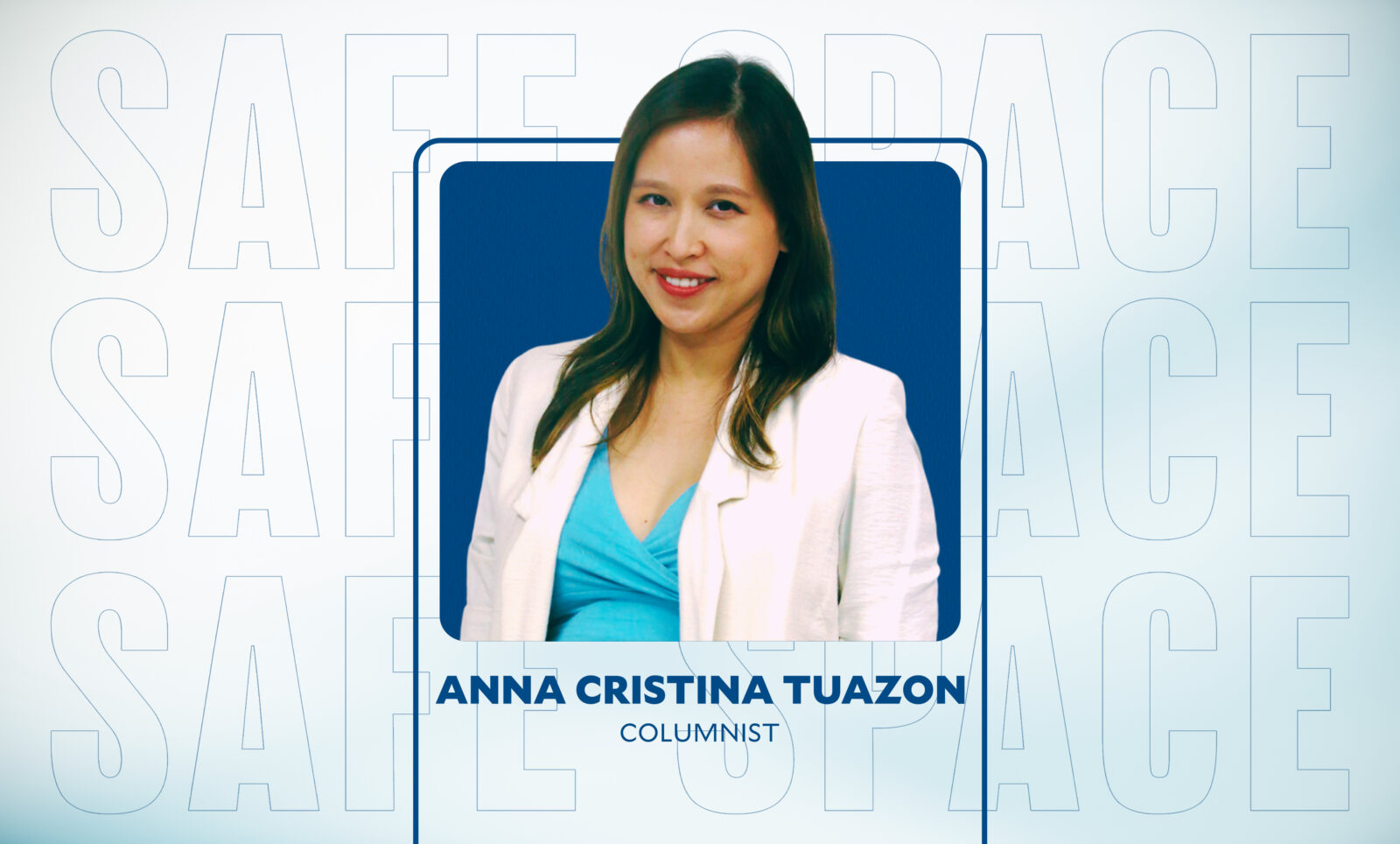
Anna Cristina Tuazon

Quezon City Rep. Bong Suntay, in defending Vice President Sara Duterte’s public threats against President Marcos, made a shockingly inappropriate analogy. During a hearing on the impeachment complaint against the VP, Suntay used himself as an example, “Alam mo, minsan, nasa Shangri-la ako, nakita ko si Anne Curtis, ang ganda-ganda pala niya. You know, may desire sa loob ko na nag-init talaga. Na-imagine ko na lang kung ano ang pwedeng mangyari. Pero syempre, hanggang imagination na lang ‘yon. Hindi naman siguro ako pwedeng kasuhan dahil kung anu-ano ‘yong na-imagine ko.”

Members of the House of Representatives quickly asked that his statements be stricken from the record, given their impropriety. He doubled down and said there was nothing sexual and immoral about his statements. Even after the subsequent public outcry, he gave the standard non-apology: “I stand by that analogy that I made, but if some people were offended, lalo na Women’s Month, I’m sorry for those who were offended, but if you read the context talaga, there was nothing malicious in it.” His conduct is a prime example of, at its mildest, a reckless and irresponsible argument, and at its worst, the exercise of political power to condone and support the use of violent rhetoric.

The question of whether one should be responsible for their rhetoric, especially when it inspires physical violence, is playing out in different political arenas. This is at the heart of the arguments laid out in former President Rodrigo Duterte’s confirmation of charges hearing at the International Criminal Court (ICC). Violent rhetoric also plays a pivotal role in the naked aggression of countries, such as the United States, toward other sovereign nations, as well as against their own immigrants and citizens.


To Norlie: A tribute


Published Mar 5, 2026 12:01 am | Updated Mar 4, 2026 04:33 pm
Norlita Ma. B. Agrazada – we called her Norlie – was a radio-TV journalist affiliated with the old KBS (Kanlaon Broadcasting Studios) whose operations included what was simply known then as Channel 9, “The Leader.” As executive producer, writer and director working behind the cameras, she was high-strung, a chain smoker forever chasing after reporters and deadlines.
Back in those days, journalists — reporters, editors, producers —like her who were not on-air personalities were not famous for their fashion sense but for their do-or-die attitude where getting the scoop was all that mattered.
If I am sounding nostalgic, it is because Norlie is no longer with us, having joined her Creator last Monday, the second day of March. But even before that happened, she had quit the game one or two generations of broadcasters ago. Back then, she was a news writer who later became executive producer of the TV show that I hosted for many years. Her colleagues at the time are no longer around, either, having preceded her to the Great Beyond, including Jun Medina, Frank Abao, Edwin Fargas. TV has changed in many ways, though not so much the news as it is now presented.
To miss Norlie, then, is to miss the good and the bad old days. After she fell gravely ill some days ago and the hospital advised her daughter to take Norlie home for palliative care, the unspoken words said enough.
For Jennifer A. Schreiner, Norlie’s daughter (only child of an only child) who works in logistics for an IT company in Germany and whose family includes a dog and a cat, tying up the loose ends after her mother’s demise is a lonely job, with no siblings on her nor her mother’s side to help her. After many years abroad, coming back to the land of her mother’s birth to wind down her affairs has been a strange experience, no siblings, no cousins, aunts or uncles to help her navigate such a lonely and lonesome landscape. Foremost among Jenn’s self-imposed assignments is to find a buyer for her mother’s house, located somewhere between Quezon City and Mandaluyong.
“Then it would be great if I could return to Germany right away,” she sighed. I can sympathize with her.

Suntay remark may violate Safe Spaces Act — Castro


Suntay remark may violate Safe Spaces Act — Castro

(L-R) Communications Undersecretary Claire Castro, Quezon City 4th District Rep. Bong Suntay, and actress Anne Curtis (Photos from FB)

Palace Press Officer Claire Castro said the controversial remark made by Quezon City 4th District Rep. Jesus “Bong” Suntay about actress Anne Curtis could fall under the Safe Spaces Act, stressing that publicly expressing sexual fantasies about a particular woman may constitute a sexual innuendo punishable under the law. Read more

Former Bagong Henerasyon (BH) Party-list Rep. Bernadette Herrera, author of the Safe Spaces Act said the law was enacted precisely to help cultivate a culture of respect, particularly toward women, in both public and professional spaces. Read more

Meanwhile, Suntay has apologized to showbiz personality Anne Curtis over an inappropriate comment that caught the ire of many of his House colleagues. Read more

Wednesday, March 4, 2026

The unseen child


Norrainne Orlin

“Healing my inner child” is a phrase that floats casually on the internet, wrapped in aesthetics and soft music. But for some of us, it is not an aesthetic. It is survival.


I learned to be strong before I even understood what strength meant. My father died of cancer when I was still young enough to believe that parents were permanent. My mother worked far away in Manila to provide for us. My grandmother cared for another family’s child in Saudi Arabia. My grandfather stayed behind, driving for a living while raising my older sister and me. I was known as “Lolo’s girl,” his favorite “apo” (grandchild). Yet even as the favorite, I often felt invisible.


My mornings were simple—fried egg, hotdog, garlic rice. I watched my sister prepare for school, her uniform crisp, her bag full of books. I envied her. She had somewhere to belong. When she and my grandfather left—one for school, one for work—the house would fall into a silence so loud it pressed against my chest. I filled it with dancing to music from an old phone, with Barbie dolls arranged in imaginary conversations, with television voices pretending to keep me company. It was a small world, but it was the only one I had.


At six years old, I carried questions too heavy for a child. Was I left behind because earning money mattered more than staying? Why did my grandmother raise another child while I longed for her touch? Where was my mother when I was burning with fever at night? I began shrinking my needs, convincing myself that my loneliness was less urgent than the adults’ responsibilities. I learned to be quiet. I learned not to complain. I learned to survive on my own.


When I entered Grade 1, something shifted. The first time I read the vowels aloud—A, E, I, O, U—my teacher praised me. The room felt brighter. For the first time, I felt seen. I discovered that excellence brought attention. At home, when they said, “Ang galing naman! Nakakapagbasa na pala si Chin” (Isn’t it great! Chin can already read), it felt like sunlight breaking through clouds. So I chased that feeling. I joined competitions. I collected medals. I memorized lines for recitations as if they were spells that could summon love. Each ribbon around my neck felt like proof that I mattered.


But even medals could not protect me from loss. In March 2013, my father passed away. I had so few memories of him that I feared forgetting his voice entirely. My grandmother finally came home, and for a while, her presence softened the emptiness. I felt like a child again—cared for, held, important. But life shifted once more. Supertyphoon “Yolanda” displaced relatives and our home grew crowded. Later, when my grandmother fell ill and had to leave to recover, my sister went with her. I stayed behind.


At 12, I carried responsibilities heavier than my body. I scrubbed floors, washed clothes larger than my arms, cooked meals, and stayed up late finishing schoolwork. I tried to remain the achiever everyone praised, even as exhaustion blurred my vision. When I finally gathered the courage to say I was tired, I was told, “You’re a girl. You should be the one doing those things.” My feelings dissolved in that sentence. Once again, I became invisible.


For years, I believed love had conditions. That I had to excel to earn it. That I had to endure quietly to deserve it. That being a girl meant carrying more than I could hold.


Looking back, I see the ethical questions hidden inside my childhood: Should financial survival silence a child’s emotional needs? Should gender dictate sacrifice? Is a child only worthy when she performs well?


Healing my inner child has meant confronting those questions with compassion. It has meant telling that six-year-old girl that she was never too needy, never too dramatic, never too much. It has meant unlearning the belief that medals measure worth.


I am 18 now. I still carry the echoes of that unseen child. But I no longer chase validation the way I used to. I am learning to sit with my younger self, to honor her loneliness, to give her the love she waited for.

And slowly, gently, the void she once carried is no longer empty. It is being filled—not by applause, not by ribbons, but by the quiet, radical act of loving herself.

Global airspace shutdown hits Philippines' mail to 35 countries


Ian Laqui - Philstar.com
Global airspace shutdown hits Philippines' mail to 35 countries
Undated file photo shows artist's perspective of the Manila Post Office building.  

MANILA, Philippines — The Philippine Postal Corp. has temporarily suspended all international outbound mail services to 35 countries due to escalating military conflict in the Middle East.

In an advisory on Tuesday, March 3, PHLPost said the suspension takes effect immediately and covers all classes of mail, including standard letters, parcels and Express Mail Service shipments.

The disruption affects destinations across Europe, the Middle East, Africa, Asia and South America.

PHLPost said the suspension is due to airspace closures in key transit hubs, particularly Dubai in the United Arab Emirates and Doha in Qatar.

"These closures have disrupted primary air transport routes used by PHLPost, its international and airline partners," the agency said.

PHLPost assured the public it is prioritizing the security of mail items while taking steps to prevent major service backlogs.

"The Philippine Postal Corporation assures the public that it continues to prioritize the security of customers’ mail while implementing necessary measures to prevent significant service delays at this point in time," it said.

Affected destinations

The suspension covers the following countries:

  • Middle East and Africa: Bahrain, Egypt, Israel, Iran, Jordan, Kuwait, Lebanon, Morocco, Nigeria, Oman, Qatar, Saudi Arabia (Dammam, Jeddah, Riyadh), South Africa and the UAE (Dubai).
  • Europe: Austria, Belgium, Cyprus, Denmark, Finland, France, Germany, Great Britain, Greece, Ireland, Italy, Netherlands, Spain and Switzerland.
  • Asia: Bangladesh, India, Maldives, Pakistan and Sri Lanka.
  • South America: Brazil and Colombia.

PHLPost said it will issue further updates once international transit routes stabilize.