This might not be the typical expat blog, written by a German expat, living in the Philippines since 1999. It's different. In English and in German. Check it out! Enjoy reading! Dies mag' nun wirklich nicht der typische Auswandererblog eines Deutschen auf den Philippinen sein. Er soll etwas anders sein. In Englisch und in Deutsch! Viel Spass beim Lesen!


DONNY PANGILINAN CALLS FOR FUEL CUT

Philippine stocks slipped further on Monday as investors remained cautious over geopolitical conflicts in the Middle East and their impact on the domestic economy.
The Philippine Stock Exchange Index (PSEi) closed at 6,006.55, down 0.86 percent or 52.39 points, marking its third straight day of decline since last week.
Luis Limlingan, head of sales at stock brokerage house Regina Capital Development Corp., said the PSEi ended barely above the 6,000 mark, extending last week’s selloff amid cautious sentiment, driven by elevated oil prices and ongoing Middle East war.
Stand:
Von: Teresa Toth, Sandra Sporer
Aufgrund eines Warnstreiks sieht sich der Flughafen BER gezwungen, den Passagier-Flugverkehr komplett einzustellen. Über 400 Flüge sind betroffen.
Berlin – Passagiere, die für Mittwoch (18. März) einen Flug ab dem Hauptstadt-Flughafen BER gebucht haben, müssen viel Geduld und starke Nerven mitbringen. Denn wie der Flughafen-Betreiber auf seiner Webseite informiert, wird der Personen-Flugverkehr an diesem Tag komplett eingestellt. Der Grund: „Die Vereinte Dienstleistungsgewerkschaft ver.di hat die Beschäftigten der Flughafen Berlin Brandenburg GmbH (FBB) zu einem Warnstreik aufgerufen.“

Insgesamt 445 Starts und Landungen und 57.000 Passagiere sind laut der Flughafengesellschaft Berlin-Brandenburg vom Betriebsstopp durch den Warnstreik betroffen. Betroffene sollten sich an ihre Airline oder den Reiseveranstalter wenden, um sich über eine mögliche Umbuchung oder Alternativen zu informieren. Erst kürzlich kam es am Hauptstadt-Flughafen BER zu Ausfällen, da ein unbekanntes Flugobjekt gesichtet
Der Streik läuft ganztägig von 5:00 Uhr bis 23:59 Uhr. Verdi verhandelt derzeit mit der FBB über mehr Geld für rund 2.000 Beschäftigte – darunter Mitarbeiterinnen und Mitarbeiter bei der Feuerwehr, der Verkehrsleitung und dem Terminalmanagement. Die Aufrechterhaltung des Flugbetriebs gilt deshalb als nicht möglich, auch wenn Bereiche wie die Bodenverkehrsdienste oder Sicherheitskontrollen von nicht bestreikten Dienstleistern erfüllt werden, berichtet Reisereporter.
Die Gewerkschaft fordert sechs Prozent mehr Lohn, mindestens jedoch 250 Euro zusätzlich pro Monat, sowie einen zusätzlichen freien Tag für Gewerkschaftsmitglieder bei einer Laufzeit von 12 Monaten. Das bisherige Arbeitgeberangebot sieht laut Verdi lediglich Erhöhungen von rund 1 Prozent jährlich bis Ende 2028 vor. „Das ist kein ernsthaftes Angebot, sondern eine Provokation am Verhandlungstisch“, sagte Verdi-Verhandlungsführer Holger Rößler gegenüber der MAZ.
______________________________
CONFIDENTIALITY/PRIVILEGE NOTICE:
The Philippine Statistics Authority in compliance with Republic Act No. 10173 or the Data Privacy Act of 2012 emphasizes that this communication may contain confidential and/or privileged information. If you are not the intended recipient, be advised that any unauthorized disclosure, copying, distribution, or use of the contents of this message is prohibited by the law. If you received this message in error, please delete this email including its attachments and notify the sender immediately.
Monday, March 16, 2026
Reference Number :
PR-261182-006
The Philippine Statistics Authority (PSA) – Davao de Oro Provincial Statistical Office reminds the public that the Digital National ID must not be printed on Polyvinyl Chloride (PVC) or plastic cards.
The PSA clarified that while the Digital National ID is a valid proof of identity, it should only be accessed through the official eGovPH mobile application. Any Digital National ID reproduced or printed on PVC or plastic cards is not authorized and is not considered a valid form of identification, even if presented in establishments or institutions. Only the PSA is authorized to print and issue the official National ID.
Moreover, the Bangko Sentral ng Pilipinas (BSP) has issued memoranda directing banks and financial institutions to accept the National ID in its official formats, including the Digital National ID, as a valid and primary proof of identity.
The PSA reminds the public that the recognized formats of the National ID include the physical National ID card, the National ID in Paper, and the Digital National ID accessed through official platforms. Any reproduction of the Digital National ID on PVC or plastic cards is not authorized. Under Republic Act No. 11055, any individual or group found guilty of unauthorized printing, preparation, or issuance of a National ID may face imprisonment of three (3) to six (6) years and a fine ranging from Php1,000,000 to Php 3,000,000.
The agency also cautions residents of Davao de Oro against misleading posts circulating on social media, particularly on Facebook, claiming that the Digital National ID can be printed on plastic cards. These posts are misleading and considered fake news, and may encourage individuals to avail unauthorized services offering such prints.
The PSA Davao de Oro calls on the public not to believe or share such posts and to rely only on official announcements from the PSA.
Residents are encouraged to report individuals, establishments, or online pages offering such unauthorized services to help prevent the spread of misinformation.
For inquiries on the Digital National ID, please contact the National Identification System Section of PSA Davao de Oro at telephone number (084) 817-0347 or via email at davaodeoro@psa.gov.ph.

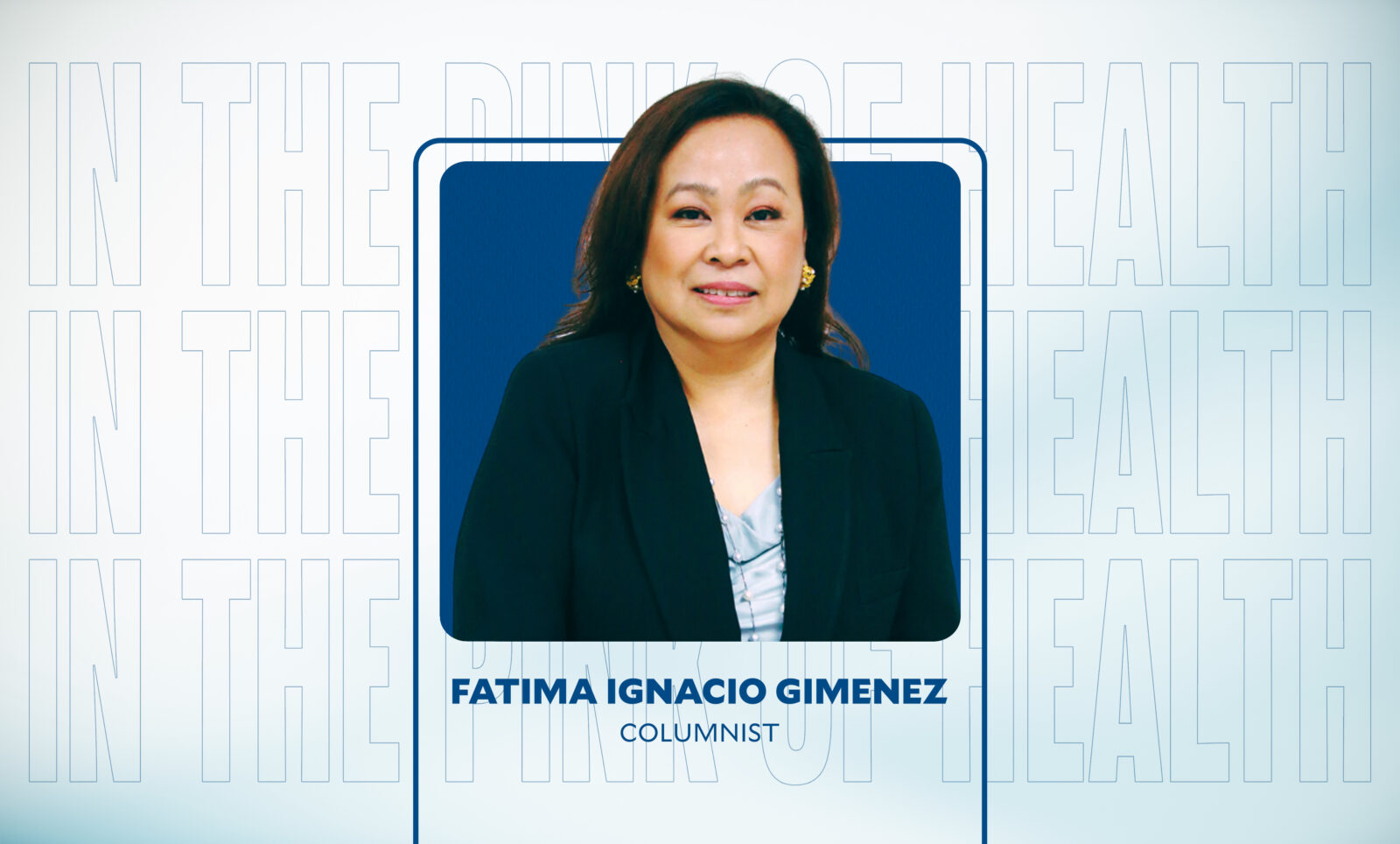
One of the best memories will always be from traveling as a family. I have learned that the key person to lead should always be the one who has the most patience to deal with all the requirements and a keen attention to detail. Usually, the younger members are given the responsibility as they are more well-versed in technology, have near-infinite energy, and are more flexible. The older ones are less resilient and usually hand the reins over to whoever makes their lives more comfortable. Therefore, the person in charge should be battle-ready to meet the possible needs that arise from traveling with the more senior members, especially those with mobility problems. The latter shouldn’t be a deterrent, as long as they are healthy enough and willing to be persuaded to travel. My 93-year-old mother has always been content with staying at home, but she enjoys the occasional trip when we force her to go. One of her greatest joys, and ours as well, is when we are together and complete as a family.
To make the experience enjoyable for everyone, the number one lesson is to always come prepared. What follows is a checklist that most of you may be aware of, including some additional tips that can be taken into consideration.
Number one. Get clearance from your physician. Bring all needed medications with you, as checked-in luggage might easily be lost, misplaced, or, worse, stolen. Have another member keep another set as an emergency supply. Always keep the prescription on hand just in case you are asked for it. In your first aid kit, include medications for fever, pain, allergy, motion sickness, hyperacidity, oral rehydration solutions, and topical preparations for superficial wounds, diaper rash, including an antifungal, alcohol swabs, and eye drops. As a doctor, I have also learned to bring a whole course of antibiotics just in case the need arises. On occasion, the contents of this mobile pharmacy have been shared with fellow passengers. If possible, check their immunization records and administer them way ahead of your trip. It would also be helpful to know where hospitals are located and if there are facilities for emergencies. Obtain travel insurance for everyone.
Number two. While you may ask for wheelchair assistance, there may be some instances where there aren’t enough to go around. Always bring a wheelchair of your own that is sturdy and light enough to carry, and have a member of the family take responsibility for it. While on a cruise, it was painful to see an 88-year-old lady asked to stand in line after being wheeled in, as she had no prior advice that a request had to be made before boarding the ship. She was traveling alone and had been separated from her tour group. It was a good thing that she had her foldable walking cane to enable her to go around, and that she was agile enough. Lesson learned: Ask your tour agent for all these requirements.
Number three. Stock up on your supplies. On one foreign trip, we assumed that we wouldn’t have trouble getting adult diapers as we were in a tourist-friendly area. We were wrong. Learning from this experience, we brought extra pieces of luggage for our next trip that contained this number one essential, together with antibacterial wipes to clean not only toilet seats but also to make quick swipes on surfaces that are frequently touched. A friend takes it a step further and always brings a handy sponge and a pouch of dishwashing liquid for cleaning and rinsing utensils. Bring enough face masks, especially if you find yourself in crowded or confined spaces.
In your carry-on, pack an extra set of clothes, a foldable umbrella, a lightweight coat that is suitable for both cold and rainy weather, headgear, gloves, and socks. Ensure that your elders are wearing comfortable and reliable shoes that can easily be slipped on or off. There are plenty of podiatrist-approved footwear options available.
Number four. Plan your schedule as much as you can around the needs of the more senior people in your group. Do not overfill your schedule. As much as possible, ensure that their routine is not disrupted, allowing enough time for them to rest and recharge. Curate the places you would want to see and check if these are senior-friendly.
Number five. Bring snacks and scour the area for places where there are hot meals or, at the very least, hot soup. Avoid using ice for drinks whenever you travel or consuming raw or half-cooked food.
Last but not least, in case you forget essentials, provide solutions before they come to know of the problem. At their advanced age, don’t you agree that they deserve royal treatment?
—————-
timgim_67@yahoo.com
Spotify is my best friend. We have been best friends since grade school. Do not be surprised if you receive a wedding invitation from me and a listening platform.
However, our relationship experienced a rocky phase. It was during my eighth-grade days. It was 2016, the pinnacle of the music industry. Let’s just say, we found ourselves drowning in cold water.
I wanted Spotify to stay, but I was confronted with a subscription plan. A monthly fee that gives unlimited access to its services. I just wanted to download Kendrick Lamar’s “Money Trees” so I can go crazy during my jeepney rides.
It is more forgiving for passengers to see me go crazy with my earphones on than to look aimlessly and bother them out of boredom, so I took the bait and sacrificed some lunch meals to afford the monthly subscription.
Subscribing to unlimited music was the highlight of my 2016. However, I did not feel that I owned anything. Even until now.
Access does not automatically mean ownership. The only thing I own on Spotify is my account. Once I stop paying for Spotify, I will lose access to its services.
However, if I actually buy a song on iTunes or a physical CD, it seems I am paying way more than just a subscription. I will always choose the P128 (pre-pandemic) monthly Spotify subscription over the P2,000 M.A.A.d. City physical album.
How on earth did I end up running up against the end-of-the-month deadline for renewing my subscription just to access Ariana Grande’s songs, back when Spotify was still free to use? I do get it, artists deserve to get paid for their artistic work, but seeing myself running out of money is a different story.
This financial decision creates the illusion that I am saving a heck of a lot of money. However, I was just paying so much because access to listening is for life, and so is the payment. An Illusion that I am not even using other features I am paying for. Yes, I am still in the loop for Spotify.
Not only Spotify, but also almost every digital platform has this kind of scheme. Every time I watch YouTube, I cannot watch a full vlog without an advertisement. Even worse, I have to skip several ads to continue the vlog, which can take more than a minute while I wait for the skip ad button to appear.
Thanks to those ads, I was saved from the apparent jump scare in the video that my classmate had pranked me into watching. Although I am still mad for that 20-second Jollibee ad squeezed between the scene when Yaya Dub was about to meet Alden along the hallway, and a plywood was about to separate them.
In response to the subscription craze, the charm of pirated media glowed even brighter. As more platforms gatekeep their “original” goods, such as Netflix’s “Stranger Things,” illegal websites sprang up to give free access to everyone.
Illegal by law, but I have no reason to sue everyone who streams illegally. What else can be used by a Filipino as a pastime if expensive things surround her? Where do they go if there are barely any public spaces for everyone?
Bango, a research institute, reported that 43 percent of Filipinos cannot track their subscriptions. 2nd Opinion, on the other hand, revealed that 85 percent of Filipinos subscribe to many services due to the variety of services they offer. This just proves that we are living under debt under the guise of subscriptions.
We all owe money to companies until we choose to cancel. Well, I do not want to cancel my Spotify subscription because where else should I subscribe? Spotify might get jealous and accuse me of cheating.
Companies have found a way to make us pay them regularly in exchange for fake ownership. They either give us an eye-catching preview of the premium features or force us to do it by stripping down the convenience of accessing media.
Is it still correct to say “Like and Subscribe” if subscribing is the ultimate key to accessing the services I like? To set me free from the cheating charges against me?
As they say, loving is free. Loving what you do must be free, or at least, affordable. I do not want Spotify and I to end up like Marvin and Jolina or Yaya Dub and Alden. Yearning will be a result of expensive expectations of keeping in touch.
If there are public spaces where I can be productive in doing other hobbies, I might not find myself digging another stash of cash to pay for my Spotify subscription. Just a casual rotation of listening to music might suffice for my day.
Even just an initiative for the government to remove the added tax for such subscriptions is a big help. In this, my and Spotify’s married life will continue its happy run and inspire others to pursue their love of music without hurting their pockets.
Fnally, we can now live together, happily ever after.
Share
Tweet
addiction budget David Bobier
By John Legaspi
Published Mar 14, 2026 09:15 am
What do Filipinos like to do in their free time? Finding the answer to that question can be a daunting task and will likely produce a lot of different results. To simplify it, the National Book Development Board (NBDB), the country’s agency in charge of developing and supporting the Philippine book publishing industry, asked 300 librarians and learning area coordinators. Their response, according to NBDB Executive Director Charisse Aquino-Tugade, is somewhat reflective of many Filipinos today.
At the top of the list is social media. Second and third are bonding with family and watching movies or shows. Reading comes in fourth, while going to the mall rounds out the top five.
“We all know that the apple doesn’t fall far from the tree,” Charisse said. “We all know that kids will be similar to us, and there’s a high chance that children will be this way.”
As the country’s publishing authority, the NBDB is tasked with promoting the growth of Filipino books and reading culture. Based on the data they have collected, the challenge today is to move family bonding to the top of the list, with reading coming in second as a family’s way of spending time together.
That is something they hope to address through the annual Philippine Book Festival (PBF). Now in its fourth year, the festival is the biggest gathering of Filipino-authored books. But it is not just about showcasing Filipino voices, nor is it merely a marketplace for publishing companies. For the 2026 edition of the festival, the NBDB is once again highlighting the importance of a “third place”—a space with no entry requirement other than showing up, where people mix across usual boundaries and stay because something about the place earns their loyalty.
“A Filipino reader who has never thought of themselves as a reader is more likely to become one in a space that feels alive, that feels like it was made with care and imagination, than in one that simply stocks titles,” Charisse explained during the opening of the fourth PBF on March 12, 2026. “The argument the PBF keeps making, year after year, is that Filipino creative work deserves exactly that kind of space. Not a corner. Not a footnote. A room of its own, for a few days at a time, for as long as it takes for that to stop being something we have to fight for.”
This year, the PBF plays with the theme “Gubat ng Karunungan,” or “Rainforest of Knowledge.” Together with artist and designer Joffrey “Pepot” Atienza, the organizers have transformed the vast venue into a forest filled with Filipino books, reading areas, and cozy nooks where readers can meet their literary heroes.
The festival features its signature areas. Aral Aklat highlights books as tools for learning and discovery, featuring textbooks and teaching guides. Booktopia invites visitors to explore the breadth of Filipino fiction and nonfiction. Kid Lit nurtures early readers through interactive, child-friendly experiences. Komiks celebrates the visual richness of Filipino comics and graphic storytelling.
To elevate the experience this year, the PBF also introduces five new activations. Lugar Lagdaan is the go-to spot for book signings, where readers can meet the people behind the stories they love. Bahay Ilustrador is where illustrators, comic artists, and graphic storytellers demonstrate how images can speak louder than words. Gubat ng Karunungan offers workshops, masterclasses, and learning sessions for curious minds of all ages. Fiesta Stage serves as the main stage—the heartbeat of PBF—where grand performances and panel discussions unfold. Umpukan is the chill zone for intimate talks and idea-sharing sessions where conversations flow freely.
All these efforts aim to ensure that the festival’s mission of creating a third space achieves its goals: to make reading a habit for every member of the family, to bring Filipino literature closer to the masses, and to help the local publishing industry thrive.
“The Philippine Book Festival is positioned not only as a literary event but also as a third place that connects key players in the publishing and education sectors,” Charisse said. “By convening publishers, institutional buyers, educators, and readers in a single venue, the festival supports broader efforts to improve access to quality Philippine books and sustain the local publishing industry.”
The 2026 Philippine Book Festival runs until March 15, 2026, at the Megatrade Hall of SM Megamall in Mandaluyong City.