You plan to move to the Philippines? Wollen Sie auf den Philippinen leben?

There are REALLY TONS of websites telling us how, why, maybe why not and when you'll be able to move to the Philippines. I only love to tell and explain some things "between the lines". Enjoy reading, be informed, have fun and be entertained too!

Ja, es gibt tonnenweise Webseiten, die Ihnen sagen wie, warum, vielleicht warum nicht und wann Sie am besten auf die Philippinen auswandern könnten. Ich möchte Ihnen in Zukunft "zwischen den Zeilen" einige zusätzlichen Dinge berichten und erzählen. Viel Spass beim Lesen und Gute Unterhaltung!


Visitors of germanexpatinthephilippines/Besucher dieser Webseite.Ich liebe meine Flaggensammlung!

free counters

Total Pageviews

Tuesday, May 19, 2026

PH mass transport projects: Governance tracks the future


Published May 19, 2026 12:05 am | Updated May 18, 2026 05:50 pm
The fate of major mass transport projects in the Philippines is shaped not only by engineering expertise or access to foreign financing. More fundamentally, it is determined by the quality of governance that guides these undertakings from conception to completion.
The contrasting experiences of the Cebu Bus Rapid Transit (BRT) project and the North-South Commuter Railway linking Clark to Laguna provide a telling lesson for policymakers and the public alike.
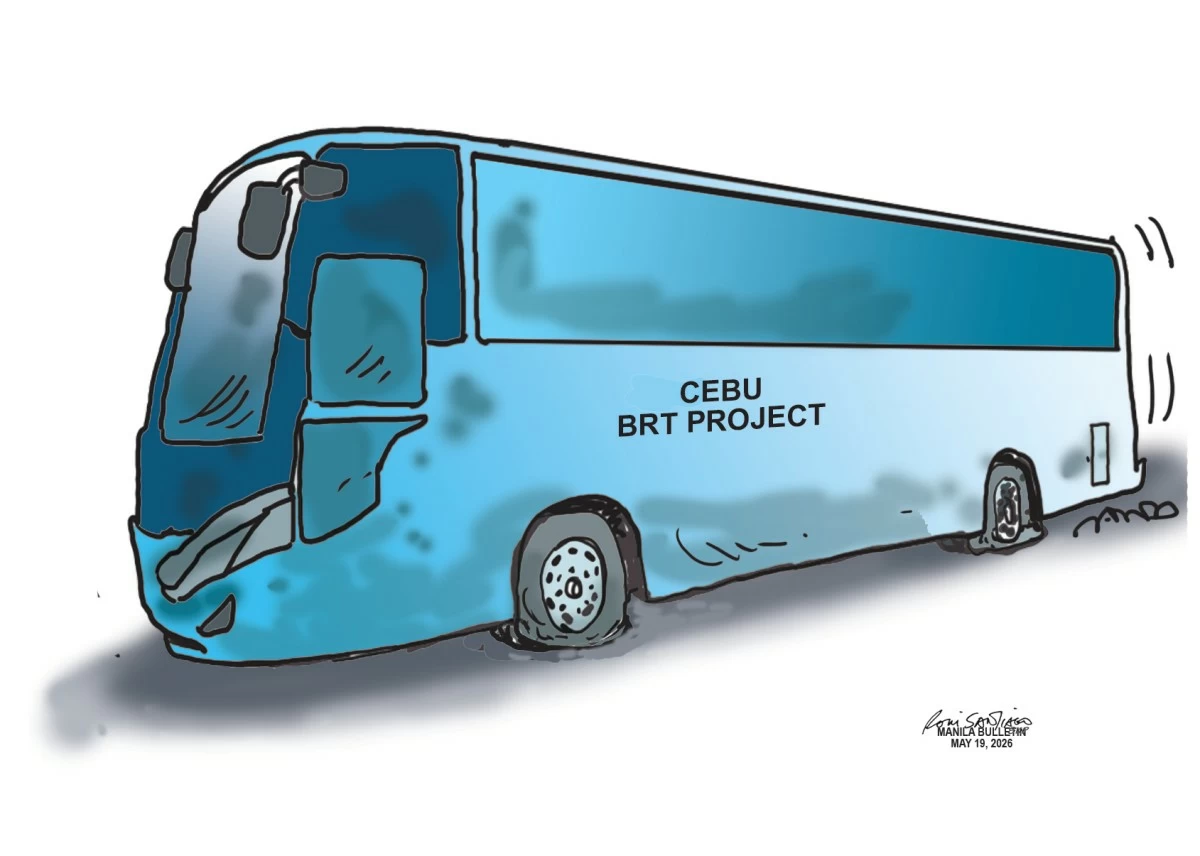
The Cebu BRT project, financed largely by the World Bank and its partner institutions, was envisioned more than a decade ago as the country’s first modern BRT system. It promised to ease congestion in Metro Cebu, reduce travel time, and modernize urban mobility. Yet today, after years of delays, restructuring, and ballooning frustrations, only a small portion of the project has been substantially completed. Loan proceeds have been partially canceled, targets drastically reduced, and the project itself rated “unsatisfactory” by its principal lender.
The reasons are painfully familiar: procurement bottlenecks, right-of-way disputes, leadership turnover, weak institutional coordination, insufficient staffing, shifting political priorities, and prolonged vacancies in critical technical positions. The result is a cautionary tale of how even well-funded infrastructure programs can stall when governance systems are fragile and inconsistent.
By contrast, the Clark-to-Laguna commuter railway project under the broader North-South Commuter Railway program, supported heavily by the Japan International Cooperation Agency, has demonstrated far stronger implementation momentum. Despite the immense scale and complexity of the undertaking, construction has steadily advanced through disciplined project management, continuity of technical planning, close inter-agency coordination, and sustained political commitment across administrations.
The difference is not merely financial. It is institutional.
Japan-funded infrastructure projects have long emphasized rigorous preparation, strict timetables, technical continuity, and professionalized project management structures. These reduce opportunities for policy drift and bureaucratic paralysis. In many cases, project implementation offices are staffed by technically competent personnel insulated from excessive political interference.
The lesson is clear: infrastructure success depends less on groundbreaking ceremonies and more on governance discipline.
Major transport systems are multi-year, even multi-decade commitments. They cannot survive if priorities shift every election cycle or if project leadership changes repeatedly. The Philippines must therefore institutionalize continuity mechanisms that protect flagship infrastructure projects from political disruption.
First, project management offices must be professionalized and insulated from frequent leadership turnover. Technical expertise, not political accommodation, should guide appointments.
Second, procurement systems must be streamlined while preserving transparency and accountability. Delays caused by overlapping approvals and weak coordination exact enormous economic costs on commuters and taxpayers alike.
Third, right-of-way acquisition and resettlement programs must be addressed early and decisively. Infrastructure cannot move forward if land acquisition remains hostage to indecision and fragmented authority.
Fourth, long-term infrastructure planning must transcend partisan politics. Every incoming administration should refine and improve viable projects—not suspend or reinvent them for political branding purposes.
Finally, governance must prioritize public interest over bureaucratic convenience. Mass transport projects are not monuments to politicians. They are lifelines for workers, students, entrepreneurs, and ordinary citizens seeking a more productive and dignified daily life.
The tracks toward national progress are already visible. Onward progress depends importantly on the firm exercise of political will that supports effective governance of projects and insulates these from the known pitfalls that have derailed previous initiatives.

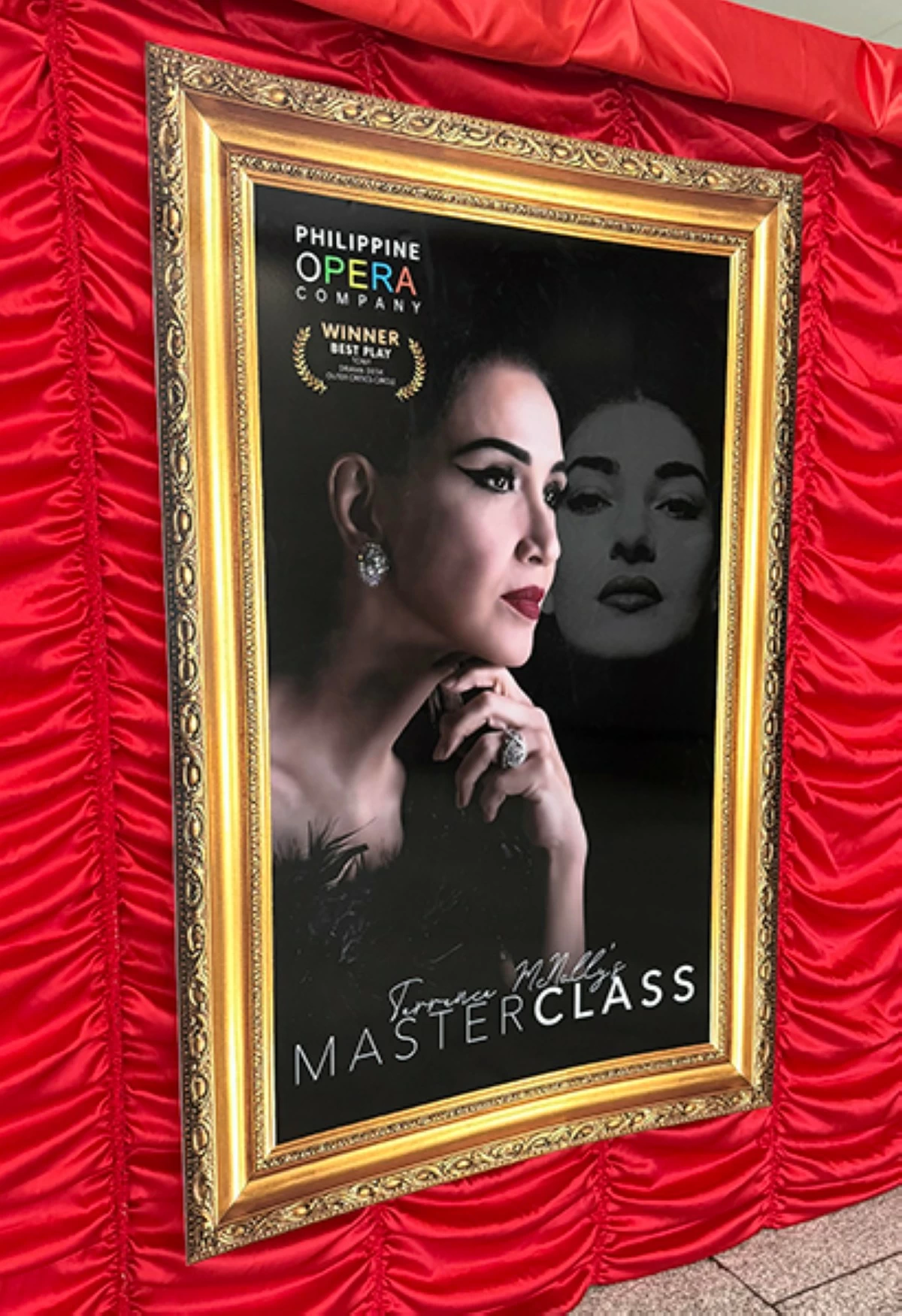
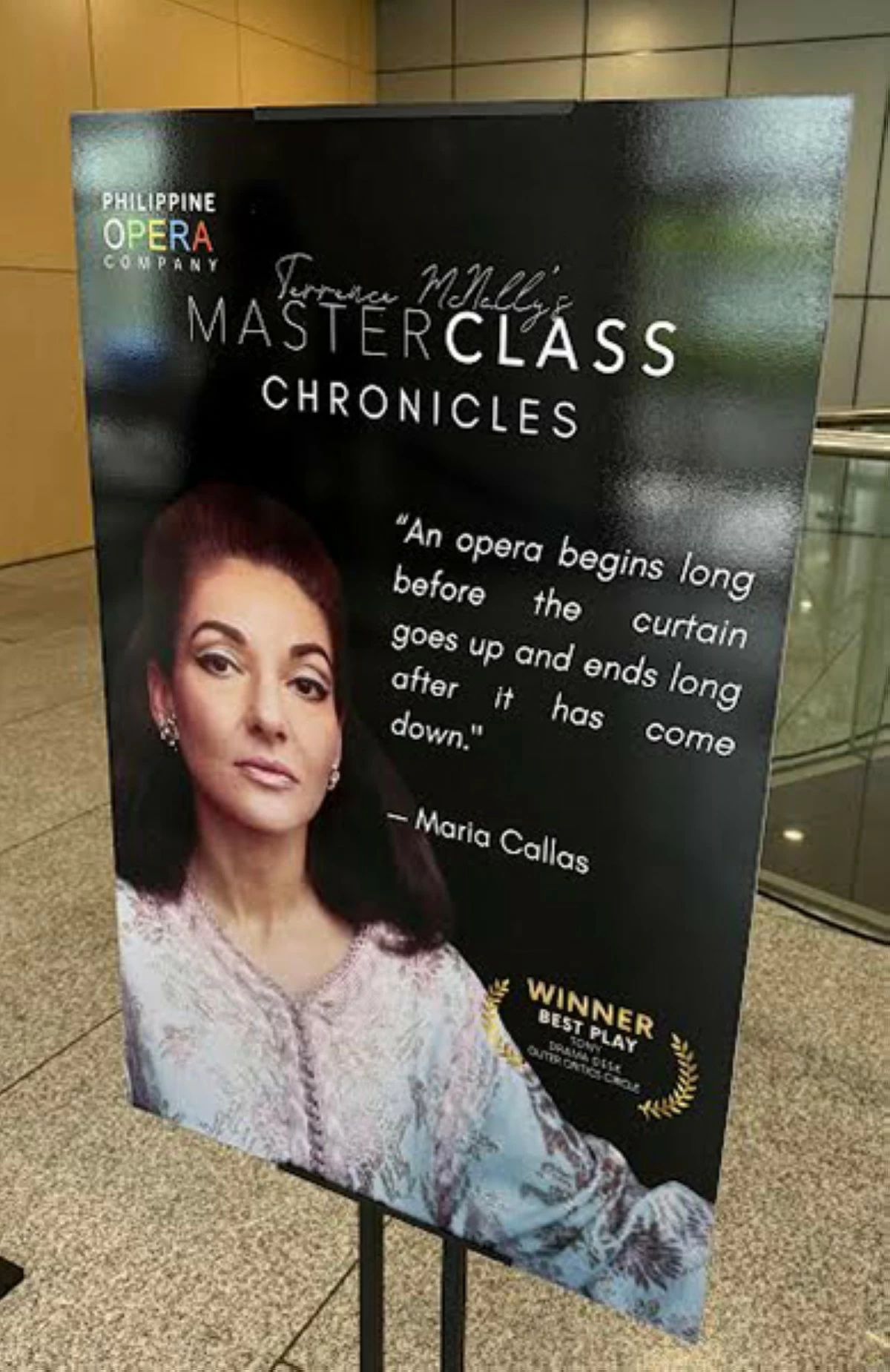
Of pencils and oranges: A review of Terence McNally's 'Master Class'


Published May 19, 2026 10:55 am   


Maria Callas was one of those larger than life figures who made an impact beyond the world of Opera, where the Greek-American first made a name for herself.
In today’s world of social media, La Divina, as Callas was known in music circles, would be famous for being shipping magnate Aristotle Onassis’ girlfriend right before he pursued (and married) Jacqueline Kennedy.
Callas passed away in 1977 in Paris, as a virtual recluse. But in 1971, with her voice practically gone, and in the twilight of her professional career, she gave a series of Master Classes at the Juilliard School of Music in New York City. The fact that she was conducting these Master Classes served as the inspiration for playwright Terrence McNally to write "Master Class," as a ‘what if we were a fly on the wall during these Juilliard sessions’?
Callas was notorious for being a diva, she was mercurial, imperious, and what we would call today, a ‘terror’. Could we match that image while showcasing her vulnerability, her life story, and the anguish and pain she would be experiencing at that stage in her life? 
The character study, "Master Class," premiered in 1995; and won the Tony Award for Best Play. It’s admired for its theatricality, and how it addresses themes of Art with the concomitant sacrifice and discipline; and chronicles the steep, uphill road to greatness - that many can aspire for, but only very few can attain. So, it was welcome news to have our Philippine Opera Company stage this very well-pedigreed drama once again. 
Directed by Jaime Del Mundo, and with Menchu Lauchengco-Yulo in the lead role of Maria Callas, the drama runs until May 30 at the Carlos P. Romulo Auditorium.
Supporting Menchu are Alexandra Bernas as Sophie, Arman Ferrer as Tony, Angeli Benipayo as Sharon, Nelsito Gomez as the Stage Hand, and Louie Oca as Manny.
Sophie, Tony and Sharon are the students who join the "Master Class," while Manny is the resident pianist who accompanies the students. 
The first Act is virtually a one-woman show, with Menchu firmly placing the audience - and the rest of the cast - in the palm of her hand. It’s masterful, it’s domineering, it’s subjugation; and we are willing, compliant acolytes. And I use the term acolyte because we literally enter this ‘Maria Callas Church’, and come out believers. That’s how entertaining, engrossing, and compelling this drama is. The lines are just wonderful, McNally has done his job, and its up to the cast to make the magic happen. 
Menchu interacts with the audience from the moment she makes her entrance. The ‘pencils and oranges’ phrase refers to when she was a 15 year old student of opera, and would always have a pencil on her for note-taking, and never have an orange because they couldn't afford it. So the pencil was an essential tool on her journey to artistic greatness, while the orange became a symbol for future success and financial stability. 
"Master Class" is a wonderful play to enter blind, as I did. I’ve read about it, but had never watched it, and the lines are magnificent. The interplay between her conducting a class and triggered memories are priceless, and presented with much drama. The shafts of humor are so engaging, like when she says, “When you’re fat and ugly, and I’m not saying you are…” Or when a student refers to contemporary Joan Sutherland, and gets a frosty reaction from Callas. And unlike other plays where so much is expended in the first act, then there’s a letdown in the second; this one kicks off on a sustained high note, and the second act only gets better. Book your seat, and be charmed by this production!  

CHANGES AND CHALLENGES


TO KEEP pace with a rapidly changing world, businesses continuously undergo organizational changes to outperform competitors, innovate, improve productivity, and drive revenue. Yet despite the increasing volume and complexity of these changes, only one in three change management initiatives succeeds.

Why do many of these initiatives fail? Often, organizations neglect the human aspect of change management.

It is important to humanize change. Many organizations underestimate the power dynamics within their structures and fail to consider the broader context in which change occurs. They also tend to downplay internal resistance, relying too heavily on a top-down approach and forgetting that imposed change is often met with pushback.

ComScore Observer

To minimize resistance, leaders must first conduct baseline assessments to identify barriers to change and address them effectively to ensure successful implementation.

Among the most common barriers to change are:

* Lack of clarity

* Ineffective communication

* Strategic shortcomings

* A culture resistant to change

* Lack of organizational buy-in

* Change fatigue

* Weak governance

“I have nothing to offer but blood, toil, tears and sweat.” Former British statesman Sir Winston L. Churchill (1874–1965) uttered these famous words in 1940 during the dark days of World War II.

Blood, tears, and sweat are also part of the changes and challenges we encounter in everyday life. How often does life challenge us to a duel? I am not referring to the provocative or defiant people around us who seem to enjoy obstructing progress or pushing our lives toward negativity. Such people often make “much ado about nothing” — to borrow the words of William Shakespeare. They wear polite but insincere smiles, yet rarely take even a single step toward meaningful change or genuine growth.

The rest is silence. And allow me to quote Shakespeare once more: “There are more things in heaven and earth, Horatio, than are dreamt of in your philosophy.”

Every change brings a challenge. Changes in life are both important and necessary. Let us alter, improve, and make a difference. Let us move from one state to another, embrace fresh beginnings, and welcome transformation. Change means moving from the old to the new, from negativity to positivity, from ignorance to knowledge, from doubt and worry to understanding and awareness, from fear to faith, from stagnation to growth, from sadness to happiness, and from “I cannot” to “I can.”

Nothing is permanent except change. Change cannot be avoided, even if we choose to close our eyes to it. At best, it can only be delayed. Let us therefore open our eyes and embrace the challenge of becoming successful in life. Those who fail to change are eventually left behind by history. We cannot expect new results if we continue relying on old ways.

Burn the “lock fat” away, and perhaps one day we will wake up happier after enduring times of blood, tears, and sweat. After all, nothing comes from nothing.

***

Email: doringklaus@gmail.com or follow me on Facebook, LinkedIn or X – Twitter or visit www.germanexpatinthephilippines.blogspot.com or www.klausdoringsclassicalmusic.blogspot.com/PN

The breath in Pentecost


By Fr. Roy Cimagala

Chaplain

Center for Industrial Technology and Enterprise (CITE)

Talamban, Cebu City

Email: roycimagala@gmail.com


THE gospel of the Mass on the Solemnity of Pentecost reminds us of that part where Christ breathed on the apostles and gave them the breath of God in a way that was new and was greater than the breath God gave Adam during the Creation.


“Peace be to you,” Christ told the apostles. ‘As the Father has sent me, I also send you.’ When he said this, he breathed on them, and he said to them: ‘Receive the Holy Spirit. Whose sins you shall forgive, they are forgiven; and whose sins you shall retain, they are retained.’” (Jn 20,21-23)


This breath in Pentecost signifies the Holy Spirit, making us have the very life of God. It surpasses the breath in Creation that simply makes us a living being that came from dust. In other words, the breath in Creation gives us a biological and rational life, while the breath in Pentecost gives us sanctifying grace, making us adopted children of God.


We have to feel very much at home with this very wonderful reality and start to correspond to it as we ought. We have to go beyond our earthly dimensions and enter into the more fascinating world of the spiritual and the supernatural life of God and with God.


This does not mean that we escape from our earthly reality to be in the spiritual and supernatural reality. No. It means that while deeply immersed in our mundane conditions, we also have to learn to go beyond them to be with God. This is what the word ‘transcendence’ means.


To be sure, we are enabled to do that, because of our intelligence and will. These are powerful faculties that would enable us to know and to love, and eventually to enter in the lives of others and ultimately to be with God.


But more importantly, we are always given the grace so that our capacity to be with God is actualized. It’s not enough that we are enabled to know and love God. That potency has to be put into act with the grace of God who gives it to us in abundance.


We have to do our part, of course. And the first thing to do is to be aware that there is such a reality as developing a life in the Spirit, and from there start cultivating the proper attitudes, skills and virtues.


This may look like a daunting, overwhelming task, but it can always be done. Sure, there will be difficult, awkward moments, but those usually happen in the beginning of the learning curve. As long as we persist, time will come when living in intimate relationship with the Spirit becomes second nature to us.


We need to spread this Good News more widely, because many of us are still completely ignorant of it. And of those who may already know about it, a lot of confusion, doubts and misunderstanding abound. 


So more than spreading the Good News, we need a lot of teachers and models who can clearly show how this life in the Spirit can be achieved. Let’s hope that we can count on many people, especially those who are already active in the Church, to serve as teachers and models for this purpose.


Of special interest in this regard is the crucial role of parents. They should be the first teachers and models of their children in living the life in the Spirit. That’s why parents should do their best to be very consistent with their faith, because the most important duty they have toward their children is to make their offspring children of God, living the life in the Spirit!


How to Be Happy in Life?

1. Remember, everyone has problems. You’re not alone in facing challenges.

2. Life has ups and downs. Only someone who isn’t alive doesn’t have challenges.

3. Every problem has a solution. You can find answers to the difficulties you're facing.

4. How you see yourself matters. Think of yourself as valuable and special. Don’t let low self-esteem bring you down.

5. Don’t worry about what others say. Some people say mean things to make others feel bad.

6. Make friends with kind people who uplift you. Avoid those who tease or make fun of you.

7. When you have free time, enjoy your favorite hobbies like sports, movies, or games.

8. Don’t let anyone scare you with their money or things. A poor person today can be rich tomorrow. Change happens.

9. No matter how tough things get, don’t give up. As long as you are alive, there is still hope.

10. Pray often. Prayer can help bring good things into your life more quickly.

11. Be brave and go after what you want. Life involves taking chances. If you don’t try, you won’t reach your dreams.

Stay true to yourself because nobody can be you better than you. You are wonderful just as you are!

Peso extends decline, hits new record low of 61.75:$1


Peso extends decline, hits new record low of 61.75:$1

Ian Nicolas P. Cigaral

The Philippine peso slid to a new record low against the dollar on the first trading day of the week, as rising US Treasury yields amid mounting expectations of interest-rate increases from global central banks drive the greenback’s strength.

The local currency fell 2.9 centavos to close at 61.75 per dollar, matching the day’s intraday low and surpassing the previous record-low finish of 61.721 set in the prior session, data from the Bankers Association of the Philippines showed.