You plan to move to the Philippines? Wollen Sie auf den Philippinen leben?

There are REALLY TONS of websites telling us how, why, maybe why not and when you'll be able to move to the Philippines. I only love to tell and explain some things "between the lines". Enjoy reading, be informed, have fun and be entertained too!

Ja, es gibt tonnenweise Webseiten, die Ihnen sagen wie, warum, vielleicht warum nicht und wann Sie am besten auf die Philippinen auswandern könnten. Ich möchte Ihnen in Zukunft "zwischen den Zeilen" einige zusätzlichen Dinge berichten und erzählen. Viel Spass beim Lesen und Gute Unterhaltung!


Visitors of germanexpatinthephilippines/Besucher dieser Webseite.Ich liebe meine Flaggensammlung!

free counters

Total Pageviews

Friday, March 13, 2026

Davao bird sanctuary produces new Philippine eagle chick


DAVAO CITY—The National Bird Breeding Sanctuary (NBBS) in Barangay Eden here has produced another eaglet, marking a breakthrough for the conservation of the critically endangered Philippine eagle (Pithecophaga jefferyi).

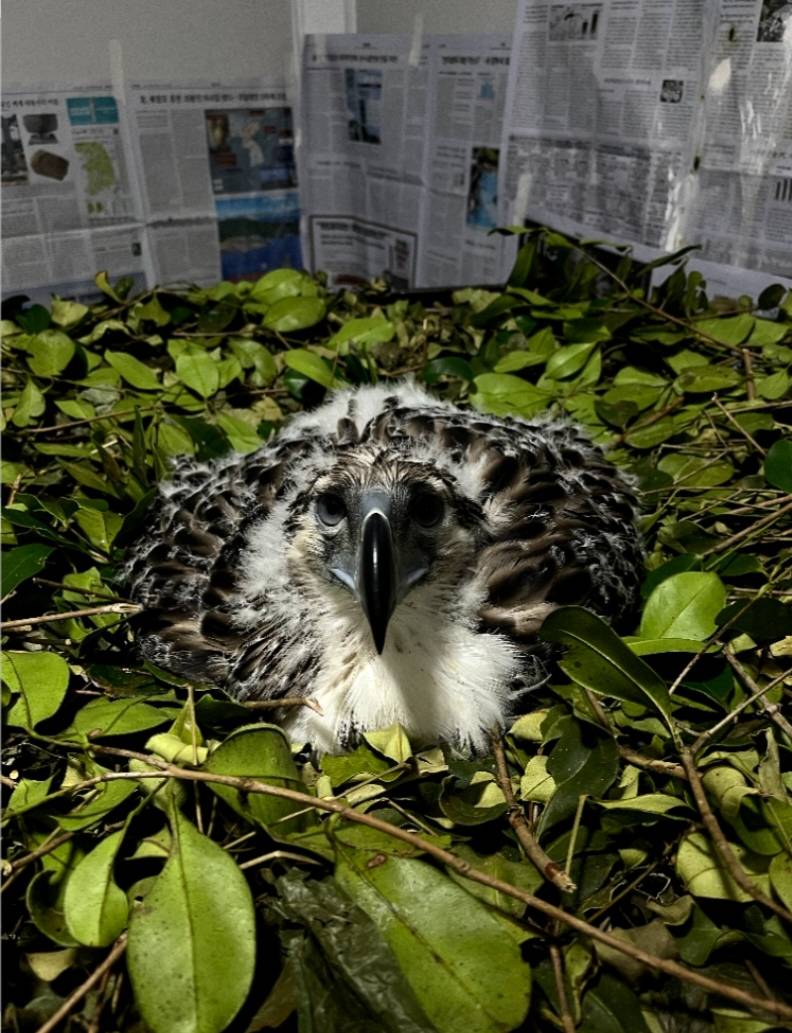
The Philippine Eagle Foundation (PEF) on Tuesday presented to the public 3-month-old Philippine eagle called “Chick 32,” produced through cooperative artificial insemination. It is the offspring of female eagle “Dakila” and male eagle “Sinag.”

“Chick 32 is a product of grit, patience and learning by doing,” Dennis Salvador, PEF executive director, told the Inquirer.

It is the third eaglet produced at the secluded NBBS, a facility off-limits to humans except for a few animal keepers. PEF transferred its captive breeding operations there in 2023, while keeping the Philippine Eagle Center in Malagos district for its educational programs on wildlife conservation.

The first eaglet produced at NBBS, “Chick 30,” died in November 2024 while only 17 days old due to complications from a retained yolk sac.

The second, “Chick 31,” came out through natural hatching and was named “Riley,” but it died in April last year while only three months old due to a metabolic bone disease.

“Those difficult experiences taught us lessons that helped us succeed this time,” said Salvador.

PEF improved its newborn screening procedures for every eaglet hatched after what happened to Chick 30 and Chick 31.

Dr. Jayson Ibañez, PEF director for operations, told the Inquirer that they now have tight biosecurity, improved husbandry techniques and diet planning for Chick 32.

BREEDING SUCCESS Philippine eagle “Bayani,” in this photo showing the chick at 11 weeks last month, rests on a nest at the National Bird Breeding Sanctuary in Davao City. —PHOTO COURTESY OF PHILIPPINE EAGLE FOUNDATION

Collaboration

The eaglet came out on Dec. 5, 2025, through the “help out” method in which NBBS facility manager Domingo Tadena assisted in pipping its eggshell.

“This hatch is also a testament to the spirit of international collaboration and the collective support of many partners—from funders to technical experts—who stood with us along the way,” Salvador said.

“But special credit goes to our breeding teams: the dedicated staff at the Philippine Eagle Center caring for the male eagle, and the team at the National Bird Breeding Sanctuary where the female is housed. Their precision, timing and unwavering commitment made this breakthrough possible,” he added.
SEE ALSO

PEF had said that Chick 32 was adopted by Nico Herth, owner and chief executive officer of Procon-Grumbach, a German manufacturer of high-precision electronics systems, who vowed to provide for the rearing of the raptor whom he named “Bayani,” a Filipino term for hero.

PEF relies heavily on donations, corporate partnerships and private groups to fund its conservation, breeding and education programs.

According to Salvador, Bayani’s name is apt as it celebrates the courage and hope carried by every young Philippine eagle which is facing extinction due to massive loss of natural habitat and human persecution.

The first captive-bred eagle was Pag-asa, born on Jan. 23, 1992. He died in 2021 at age 28.

In 1995, then President Fidel Ramos declared the Philippine eagle as the country’s national bird. Today, there are only about 392 pairs of Philippine eagles remaining in the wild.

Shared sacrifice crucial in time of crisis


By Manila Bulletin

Published Mar 13, 2026 12:05 am | Updated Mar 12, 2026 05:50 pm
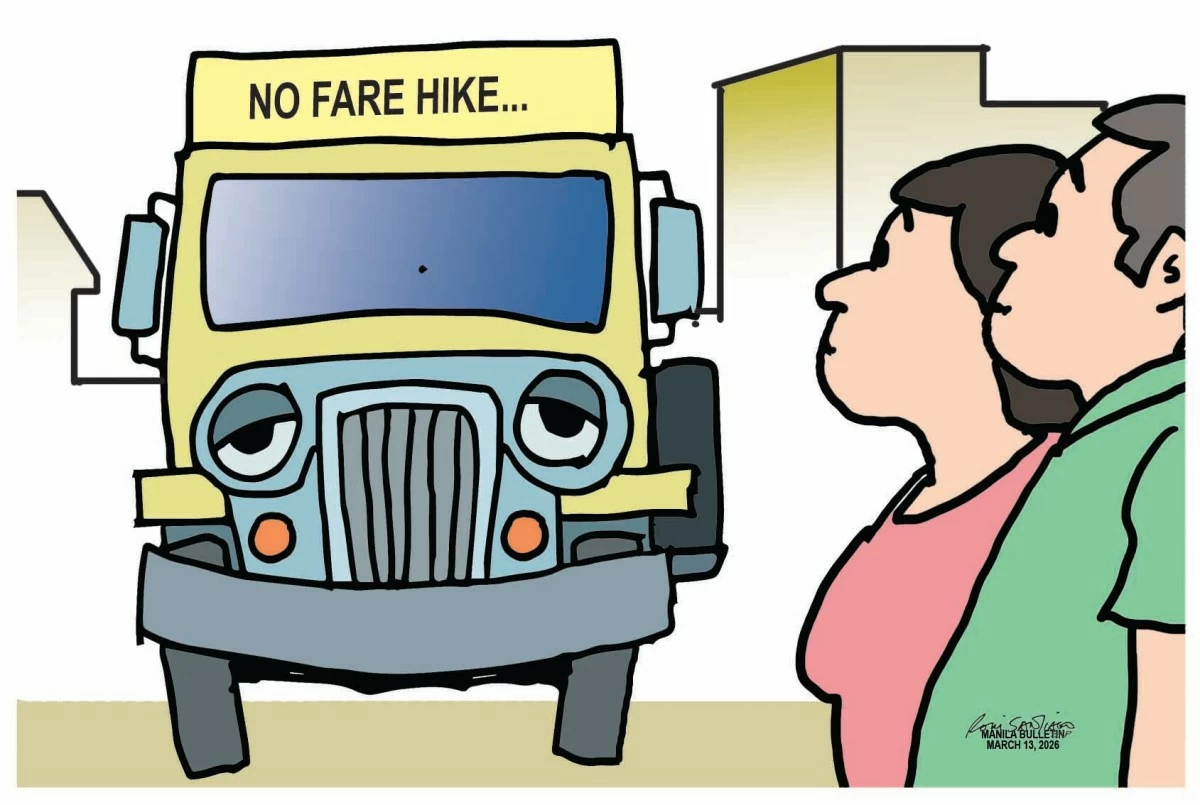
The assurance from transport groups that they will refrain from seeking a fare increase—at least for now—deserves both recognition and reflection. It comes at a time when every peso counts and the price of fuel threatens to ripple across the entire economy,
The commitment made by Samahang Manibela, Mananakay at Nagkakaisang Terminal ng Transportation (Manibela) and the Liga ng Transportasyon at Operators (LTOP) not to push for higher jeepney fares, provided the government delivers meaningful support, is a welcome development in an otherwise troubling economic moment. It is a gesture that reveals both restraint and responsibility from a sector that itself is struggling to stay afloat.
Jeepney drivers are not insulated from the relentless surge in fuel prices. In fact, they are among the most vulnerable to it. As Manibela president Mar Valbuena pointed out, many drivers are already losing at least ₱400 from their average ₱800 daily earnings due to soaring diesel costs. That is a stark portrait of livelihoods slowly eroding under the weight of circumstances beyond their control.
Under such conditions, asking for a fare hike would have been understandable. Yet transport leaders have chosen to treat it as a last resort rather than an immediate demand. Their message is clear. If the government steps in with support—through fuel subsidies and the suspension or reduction of excise taxes—drivers are willing to hold the line on fares.
This posture reflects an important principle often forgotten during economic strain: shared sacrifice.
The government, for its part, appears to be moving in the right direction. The planned ₱5,000 fuel subsidy for public utility vehicle and tricycle drivers offers immediate relief, even if temporary. Meanwhile, the proposed suspension or reduction of excise taxes on fuel products—already approved on second reading in the House of Representatives—could significantly lower pump prices by as much as ₱6 per liter for diesel and ₱10 for gasoline.
These measures, if implemented swiftly and efficiently, would not only ease the burden on transport workers but also help protect commuters from additional financial strain.
But the responsibility of cushioning the impact of the oil crisis should not fall solely on the government and the transport sector.
Other sectors must also recognize the moment and act with the same spirit of restraint and solidarity. Businesses dealing with electricity generation, food distribution, and other essential goods and services should resist the reflex to immediately pass rising operational costs to consumers. While economic realities cannot be ignored, timing and moderation matter, especially when millions of households are already stretching thin their budgets just to meet daily needs.
The oil crisis, after all, triggers widespread ripple effects. When fuel prices climb, transportation costs increase, electricity prices feel pressure, and the cost of delivering food and basic commodities rises. Without coordinated efforts, the result is a chain reaction of price hikes that ultimately punishes the most vulnerable members of society.
That is why the example set by the transport groups is worth amplifying. Their willingness to delay a fare increase—despite the hardship they face—demonstrates a recognition that economic crises demand cooperation rather than unilateral action.
Now is the moment for the government and the private sector to deepen that cooperation. Policymakers must ensure that assistance programs are delivered quickly and transparently. Businesses must show prudence and social responsibility. And regulators must remain vigilant in preventing opportunistic price increases.
Economic storms test the character of institutions and industries alike. The decision of jeepney drivers and operators to hold off on fare hikes, while seeking fair support, shows that compassion and practicality can coexist.
If other sectors follow that example, the burden of the oil crisis will not disappear—but it will be shared more fairly by all.

Women's hybrid trade fair kicks off in Davao City


Published Mar 12, 2026 09:27 pm
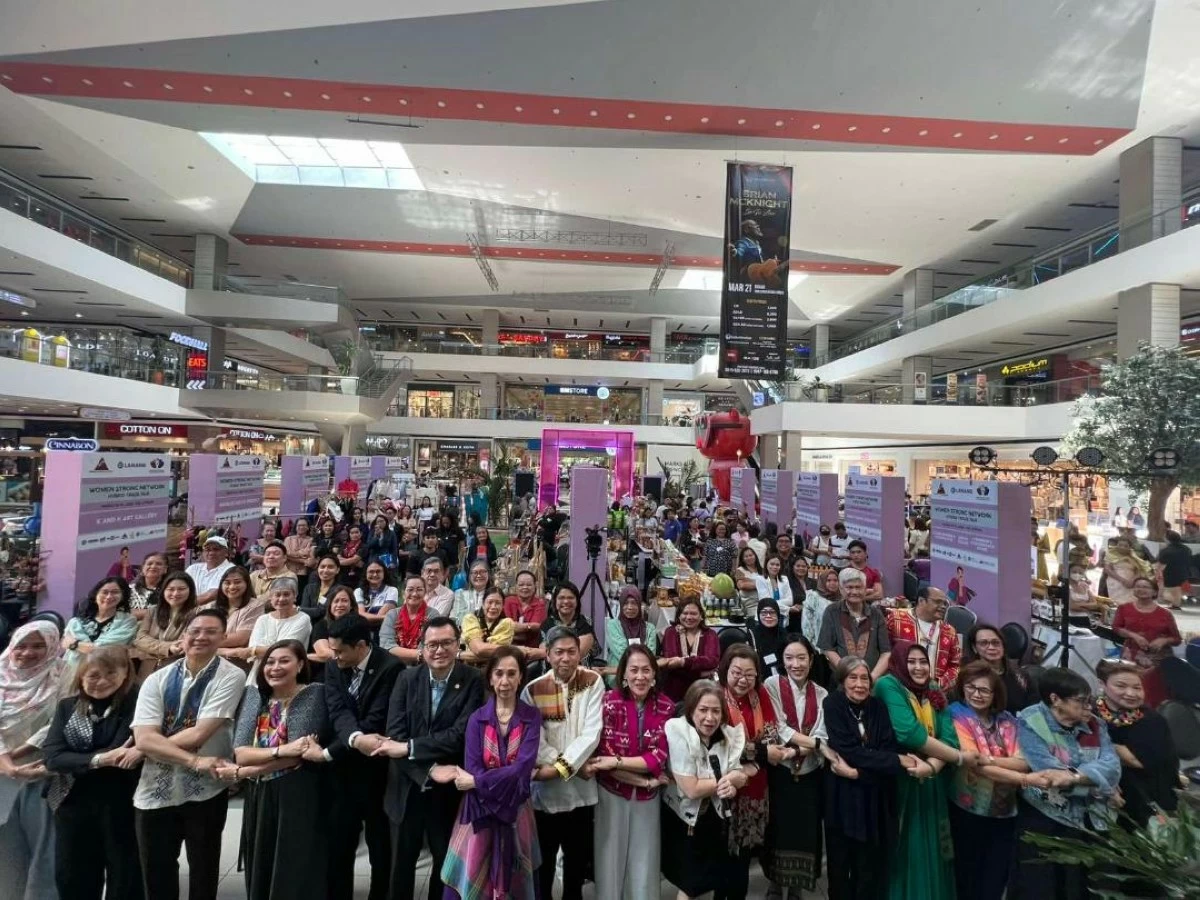
WOMEN entrepreneurs gathered at SM Lanang Premier in Davao City as the Women’s Business Council Philippines, in partnership with the Department of Trade and Industry and SM Supermalls, kicked off the Women’s Strong Network Hybrid Trade Fair on Thursday, March 12. (Photo via Ivy Tejano)
DAVAO CITY – Women entrepreneurs gathered at SM Lanang Premier here as the Women’s Business Council Philippines opened the Women’s Strong Network Hybrid Trade Fair, the first in the Davao region, on Thursday, March 12.
The three-day trade fair, organized by WomenBizPH with the Department of Trade and Industry and SM Supermalls, showcases women-led small businesses and offers opportunities for promotion, learning, and networking.
Rhoda Castro-Caliwara, chairwoman of WomenBizPH, said the Women’s Strong Network Hybrid Trade Fair marks a significant milestone for the initiative that began four years ago in Metro Manila.
Caliwara said the event expanded to Mindanao in its fifth year and the timing is meaningful as it coincides with the celebration of Women’s Month and the 89th Araw ng Dabaw.
“It took time and effort to bring this trade fair here in Mindanao, but with the encouragement of our partners, especially the Department of Trade and Industry, we made it happen,” Caliwara said.
She added that the event aims to celebrate the achievements of women entrepreneurs while encouraging collaboration and mutual support among them. “When women support women, great things happen.”
Mary Ann Montemayor, focal person of WomenBizPH, described the Davao staging as a milestone event and part of their flagship initiative series, which serves as a marketplace and a venue showcasing the creativity and resilience of Filipina entrepreneurs.
She highlighted the role of the Women’s Business Council of the Philippines in advancing women’s economic participation and promoting initiatives aligned with regional economic cooperation.
Founded in 1997, Montemayor said the organization has advocated for women’s participation in business and served as a private sector partner of the government in promoting women’s economic empowerment through regional platforms such as the Asia-Pacific Economic Cooperation and the Association of Southeast Asian Nations.
“The Davao event expands the initiative’s reach to Mindanao and strengthens regional economic participation,” Montamayor said. “This marks an important landmark as WomenBiz expands its reach to Mindanao.”
Montemayor said that the Women’s Strong Network Hybrid Trade Fair is here to expand market access, strengthen business resilience, foster collaboration, and advance women’s economic empowerment.
Department of Trade and Industry-11 Regional Director Romeo Castañaga said the DTI supports the initiative, citing their role in promoting inclusive economic growth. He said the trade fair brings together women-led MSMEs under one platform.
“This initiative reflects the growing strength and influence of women entrepreneurs in our region and nationwide,” Castañaga said, adding that the event provides market opportunities for MSMEs, builds networks, and strengthens business capacities.
Castañaga said that the trade fair is a platform for empowerment, innovation, and inclusive growth, ensuring that women entrepreneurs are not only participants in development but also leaders of development.
The trade fair will be held from March 12 to 14, featuring product exhibits, learning sessions, and talks to help entrepreneurs gain new skills and expand their businesses. Outstanding participants will receive a laptop at the end of the event.

Palace declares March 20 a regular holiday for Eid'l Fitr


Palace declares March 20 a regular holiday for Eid'l Fitr

Muslims in prayer during Ramadan (MB file photo)

Malacañang has declared March 20, 2026, Friday, a regular holiday throughout the country in observance of Eid’l Fitr. The declaration recognizes the significance of Eid’l Fitr, which marks the end of the holy month of Ramadan in the Islamic calendarRead more

Rules of life


1. Be Direct:

People love boldness. You will be respected when you become a straight talker.

Example:

If you can’t provide a favour, say no instead of trying to please them.

2. Love yourself:

If you don’t like yourself, no one else will. You must change what you don’t like about yourself and accept what you can’t change.

Example:

You can change your weight, but you can only accept your background.

3. Enjoy solitude:

You don’t always need to be around people. People will want to be with you when you are happy by yourself.

4. Admit your mistakes:

Swallow your pride and always accept your mistake. Deflecting blame is always seen as a weakness.

5. Listen more:

When you listen more instead of talking, people feel special. In return, they will make you feel special.

Example:

If let someone vent by being a good listener, they will return the favour.

6. Reveal some insecurities:

When you share a few uncomfortable truths about yourself, people will feel comfortable and reciprocate.

Example:

When talking to someone new, share the truth about your nervousness.

Thursday, March 12, 2026

Climate effects could shave 5-20% of PH GDP by 2070


Nyah Genelle C. De Leon

The Philippines could lose as much as one-fifth of its economic output within the next five decades if climate change effects continue unchecked, undermining long-term growth and fiscal stability.

According to the Organisation for Economic Co-operation and Development (OECD), a high-emissions scenario could shrink gross domestic product (GDP) by about 5 percent as early as 2040, with losses accelerating to 20 percent by 2070.

“As a tropical island nation, the Philippines is projected to remain severely impacted by climate change, with more intense and more frequent typhoons, accelerated sea-level rise, and more extreme rainfall events—all posing grave risks to businesses, communities, infrastructure, and ecosystems,” the OECD said in its first Economic Survey of the Philippines.

Further, extreme weather events can cut local economic activity by up to 2.2 percent on impact, with about 1.7 percentage points of that contraction persisting even five years later despite post-disaster adaptation, relief, and reconstruction efforts.

Direct fiscal cost

Separate data from the World Bank show that the direct fiscal cost of natural hazards amounts to about 0.5 percent of GDP annually. The OECD said this underscores the need to integrate climate change and its consequences into economic activity, employment, inflation, fiscal space, and public indebtedness.

The Paris-based organization also flagged the lack of projections of the future fiscal change of climate change in the country’s Medium-Term Fiscal Framework (MTFF) and Debt Sustainability Analyses (DSA).

“Effective fiscal policy is crucial for enhancing a country’s resilience to climate change. A regular assessment of government climate actions is essential—in particular those to protect vulnerable groups, strengthen infrastructure resiliency, and reform agriculture—in the context of medium-term budget planning and debt sustainability analyses,” the OECD said.

The country is already ranked first among 193 countries in the World Risk Index due to high exposure to hazards, compounded by an average of 20 typhoons annually, frequent earthquakes, volcanic activity, flooding, and sea-level rise.

Beyond science, societal vulnerability among the poor is heightened by fragile infrastructure and limited adaptive systems.

Calls for insurance

Despite the mounting risks, the OECD said most households remain uninsured, leaving millions vulnerable to climate-related losses.

As of 2025, the country’s insurance penetration rate reached only 1.79 percent, still behind regional peers and short of the Insurance Commission’s 2-percent target.

But this coverage is largely dominated by life insurance, the OECD noted. Property insurance, which could cover natural hazards, is optional and mostly limited to mortgage or commercial requirements.

SEE ALSO

“Low-income communities are typically uninsured in many parts of the world, despite being the most exposed to losses when a large weather disaster occurs,” the OECD said.

“Low demand for insurance coverage stems from financial illiteracy, weak financial inclusion, insufficient income to afford insurance premiums in many segments of the population, and the fact that property insurance is typically not mandatory,” it added.

Although the Philippine government has dedicated funds for calamities and disasters, the OECD said these efforts are insufficient.

“While these initiatives have improved the country’s protection against climate risks, much remains to be done to broaden insurance coverage for extreme weather events. Further initiatives to expand insurance coverage are urgent to help low-income groups better protect themselves from escalating climate risks,” the OECD said.

As an alternative, the organization suggested microinsurance as a low-cost option for low-income and informal sector households.

“Microinsurance has generally been successful in the Philippines, with 27 percent of the population covered by at least one microinsurance product (mostly health-care insurance), with policy holders generally low-income, informal sector, or those without access to conventional insurance,” it added.

Right in the Middle of Full Life


WITH BEETHOVEN UNDER PALMS (XXIII): Right in the Middle of Full Life


Chapter XXIII:  Right in the Middle of Full Life


A big hello sounded. GMA-TV director Bam Salavani recognized Rossana immediately. Then schoolmate and host Onnie Alfaro. "What are you doing here in Davao? Are you on vacation?" Questions about questions from all sides stormed us. "After the short commercial break, you are part of the show", called Bam Salvani. And so we were German guests on this TV show for the first time. During the following years we became an integral part of the show.

 "Testigo" and "Singgit Davao" were re-launched and were taken under the wing of GMA News & Public Affairs and GMA Entertainment TV Group respectively. In August of the same year, "Singgit Davao" was relaunched as "Kuyaw!" in time for the Kadayawan Festival.  Just to mention some: other hosts were Eureka, Emily Urgino and Al Ryan Alejandre - later City Councilor of Davao City.

I felt very much at home with the radio, newspapers and television. Mindanao Times Lifestyle writer Josie San Pedro had mentioned my mother, Rossana and me in her column "passages" during the great event "Singgit Davao at two"  - the stepping stone for our future. I must confess, not all expats in the Philippines went the same or similar path as me.

IMG20210710104224.jpg

For the first years I liked to take a jeepney. I found it interesting to get to know a lot of people while driving. And, step by step, I learned Bisaya. Nevertheless, one day a VW-beetle from the Archdiocese parked in our garden. A little old but he drove. We called him affectionalle "Knatterton". But it really never cracked.

IMG_20210710_104136.jpg

I started writing lifestyle columns. The International Harvardian University (IHU) Grand Alumni Homecoming was a special event. It was at the same time the rebirth of the IHU - Manisan Dancegroup. The dream of the old and new lead dancer Rossana had come true. It was at the event that I met Rodrigo Duterte for the first time - then Vice Mayor of Davao City.

IMG20210710104030.jpg
IMG20210710104008.jpg

The month of October approached. It was the time when Rossana and I stayed regularly in Manila: October 3 - the German National Day - or the Day of Unity, and -of course- Oktoberfest. This time everything was different. The then General Manager of the Apo View Hotel, my friend Wolfgang and I did it: the Bavarian Sound Express from Germany was on stage in Davao City too. Unfortunately only once and never again. 

Oktoberfest, an annual festival in Munich, Germany, held over a two-week period and ending on the first Sunday in October. The festival originated on October 12, 1810, in celebration of the marriage of the crown prince of Bavaria, who later became King Louis I, to Princess Therese von Sachsen-Hildburghausen. The festival concluded five days later with a horse race held in an open area that came to be called Theresienwiese (“Therese’s green”). The following year the race was combined with a state agricultural fair, and in 1818 booths serving food and drink were introduced. By the late 20th century the booths had developed into large beer halls made of plywood, with interior balconies and bandstands. Each of the Munich brewers erects one of the temporary structures, with seating capacities of some 6,000. The mayor of Munich taps the first keg to open the festival. Total beer consumption during Oktoberfest is upwards of 75,800 hectolitres (about 2 million gallons). The breweries are also represented in parades that feature beer wagons and floats along with people in folk costumes. Other entertainment includes games, amusement rides, music, and dancing. Oktoberfest draws more than six million people each year, many of them tourists.

Rossana  was meanwhile working as supervisor at  Merco-Mercantile Corporation Of Davao, with different branches all over Davao City. Merco has become a household name, Since 1946, it has continued to serve the growing city of Davao. At the helm of running things is Johnny Ferrazzini, president of the Mercantile Corp.of Davao or Merco. During that time he ran the family-owned business with his son Anton, who was the general manager, and heir apparent. One day, Johnny asked me, "Klaus, do you want to do your radio show at a bigger radio station? I can introduce you to Mr. Willie Torres, the president and top gun of UMBN - University of Mindanao Broadcasting Network!"

IMG_20210710_103552.jpg

IMG20210710103702.jpg

IMG_20160823_123608.jpg
Well, I jumped into the deep end, after all, I had brought my large CD collection from Germany with me. My first time slot was Sundays from 10 pm - midnight. "Let's find out the feedback of our listeners", Willie Torres told me. "Classics at Night with Klaus Döring"  has started.

And then came the big surprise that really nobody had expected, least of all me.