You plan to move to the Philippines? Wollen Sie auf den Philippinen leben?

There are REALLY TONS of websites telling us how, why, maybe why not and when you'll be able to move to the Philippines. I only love to tell and explain some things "between the lines". Enjoy reading, be informed, have fun and be entertained too!

Ja, es gibt tonnenweise Webseiten, die Ihnen sagen wie, warum, vielleicht warum nicht und wann Sie am besten auf die Philippinen auswandern könnten. Ich möchte Ihnen in Zukunft "zwischen den Zeilen" einige zusätzlichen Dinge berichten und erzählen. Viel Spass beim Lesen und Gute Unterhaltung!


Visitors of germanexpatinthephilippines/Besucher dieser Webseite.Ich liebe meine Flaggensammlung!

free counters

Total Pageviews

Sunday, May 17, 2026

Continuing Jesus' mission


Published May 17, 2026 12:05 am | Updated May 16, 2026 04:23 pm
REFLECTIONS TODAY
After bringing salvation to humanity by offering his life on the cross, Jesus ascends into heaven to share in the glory of the Father. His mission successfully accomplished, he was lifted up, and a cloud took him from the disciples’ sight (First Reading). Did he leave them to manage on their own? Does he tell the Holy Spirit, the Advocate, “Now, you take charge”?
Today’s Gospel shows us that Jesus does not sever his involvement with humanity when he ascends into heaven. In fact, Matthew, even if he knows that Jesus has gone to the sphere and glory of God, does not describe the actual, visible event. Rather, he emphasizes the presence of Jesus, albeit no longer in a spatial and temporal order, as when he was preaching the Gospel.
The risen Savior opens a new chapter when he commissions the eleven apostles to “make disciples of all nations” (v 19). In effect, he calls on each one of us to baptize and teach those who will believe in him through our word. He counts on us all to continue the evangelization that he himself began. This is confirmed by his final words of assurance to his disciples: “And behold, I am with you always, until the end of the age” (v 20).
The mission is not to be narrowly interpreted in terms of proselytizing or catechetical work. While these are important, Jesus puts more emphasis on observing “all that I have commanded you” (v 20). He refers to his teaching when he walked among us, which can be summed up as love of God and love of neighbor.
Sadly, Jesus’ teaching is slowly being forgotten in this highly consumeristic age. One’s innate goodness now matters less than one’s possessions. In their desire for upward mobility, both the young and the old gladly step over others to get to where they want to be. The popular notion of success is dictated to a large extent by a consumeristic culture that puts a premium on material possessions rather than on spiritual values.
Jesus’ teachings must be restored to its rightful place in the hearts of men and women if we do not want to be ruled by consumer monsters. Three revered institutions—the Church, the school, and the family—should seize the initiative and reassert their primacy over the digital media which now dictate what people think, believe, and feel.
In celebrating World Communications Day, the Church acknowledges the role that modern technology plays in spreading the Good News. At the same time, the Church enjoins the faithful to be vigilant against the misuse of technology by forces of evil. Amid confusion and temptation, may the words of Jesus strengthen us: “And behold, I am with you always, until the end of the age” (v 20).
Gospel • Mt 28:16:20
The Eleven disciples went to Galilee, to the mountain to which Jesus had ordered them. When they saw him, they worshiped, but they doubted. Then Jesus approached and said to them, “All power in heaven and on earth has been given to me. Go, therefore, and make disciples of all nations, baptizing them in the name of the Father, and of the Son, and of the Holy Spirit, teaching them to observe all that I have commanded you. And behold, I am with you always, until the end of the age.”
Source: “365 Days with the Lord 2026,” St. Paul’s, 7708 St. Paul Rd., SAV, Makati City (Phils.); Tel.: 632-895-9701; E-mail: publishing@stpauls.ph; Website: http://www.stpauls.ph.

When a house is a home


Published May 15, 2026 11:43 pm
As this is the third in the concert series of Ryan Cayabyab’s MaestroClass at the Proscenium Theater; it’s no stretch of the imagination to dub the Theater as Ryan’s house.
It all started last November, we had the second in February, and the third is ongoing, from May 15 to 17. And just trust me, if you still have a chance to catch the May 17th leg, don’t let the opportunity pass by. It’s like entering a house of music, and discovering you’re home.
Titled, "What’s It All About," the concert celebrates the music and songs of the late Burt Bacharach, who passed away in 2023. Special guests of National Artist Ryan Cayabyab for this concert are Bituin Escalante, Gigi de Lana, Jett Pangan, and Sofronio Vasquez. Not only are they all powerhouse voices, but they interpret the songs of Burt, and the lyrics of Hal David, with such emotion, texture, and depth.
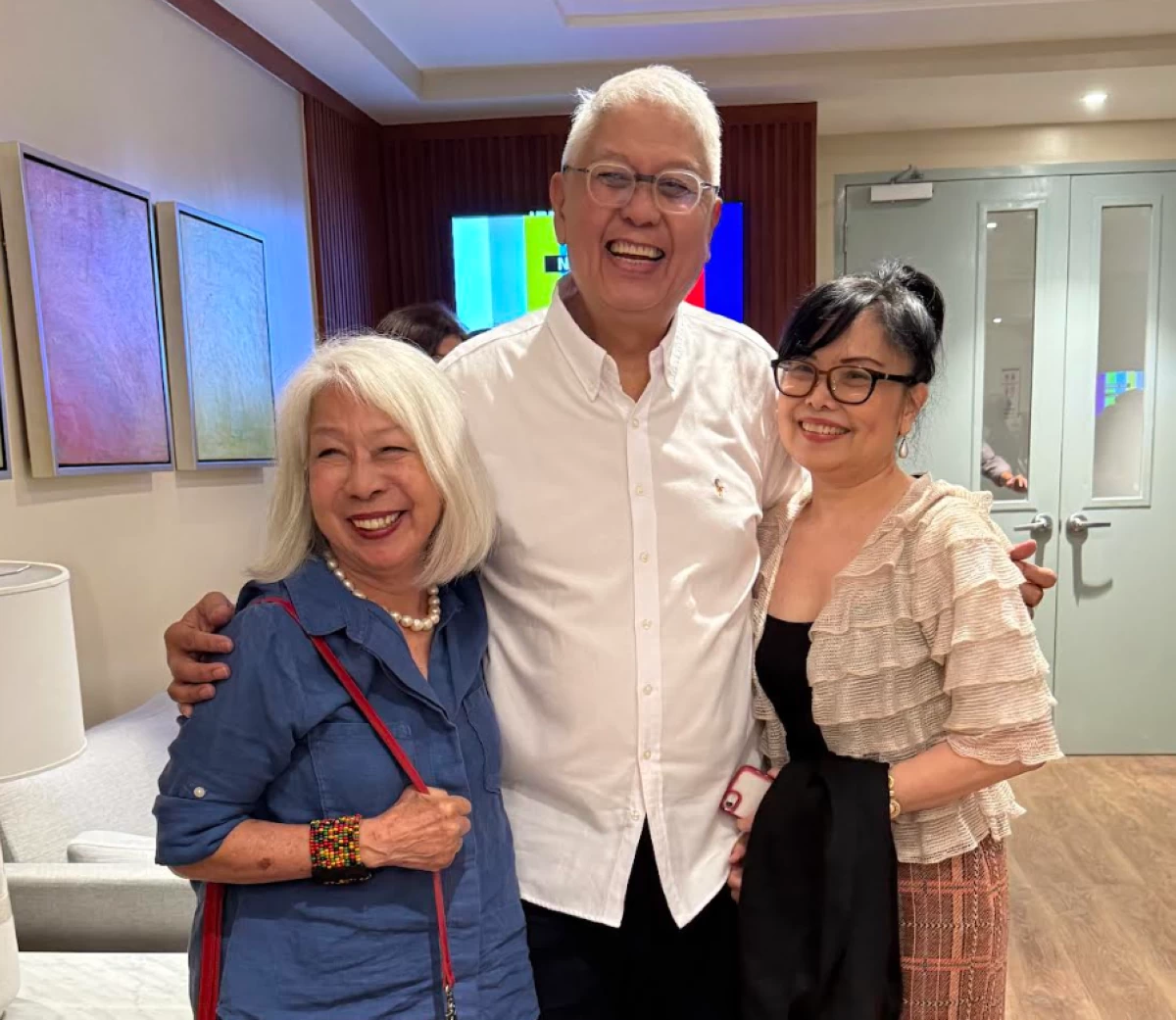
National Artist Ryan Cayabyab after the concert, with his sister-in-law, Bella, and wife, Emmy.
And you don’t have to be my age to know and love the songs of Burt Bacharach. They’re played to this day, young artists have their own cover versions, they’re revived in the soundtracks of today’s films, and they just hang around in the ether - with those of a younger generation just knowing the tunes, often times without realizing they were penned by Bacharach.
The movie themes of Bacharach include those of "Butch Cassisdy & the Sundance Kid," and "Arthur"; and then you have his eternal muse, Dionne Warwick, and the songs we associate with her. A wonderful selection of these tunes became part of the evening’s playlist. The audience loved the songs, singing along without a need for the lyrics to be flashed on a screen.
Gigi de Lana
Gigi de Lana
One suite of songs, Ryan introduced as the neurotic love songs that Burt popularized and these interpretation brought the house down. There was Bito’s "One Less Bell to Answer," Gigi and her "A House Is Not A Home," Sofronio’s "The Look Of Love" - also a theme song as it comes from the James Bond film, "Casino Royale." And then there was Jett with his rendition of "God Give Me Strength," the famous ballad that was written by Bacharach with Elvis Costello; and was covered by Bette Midler.
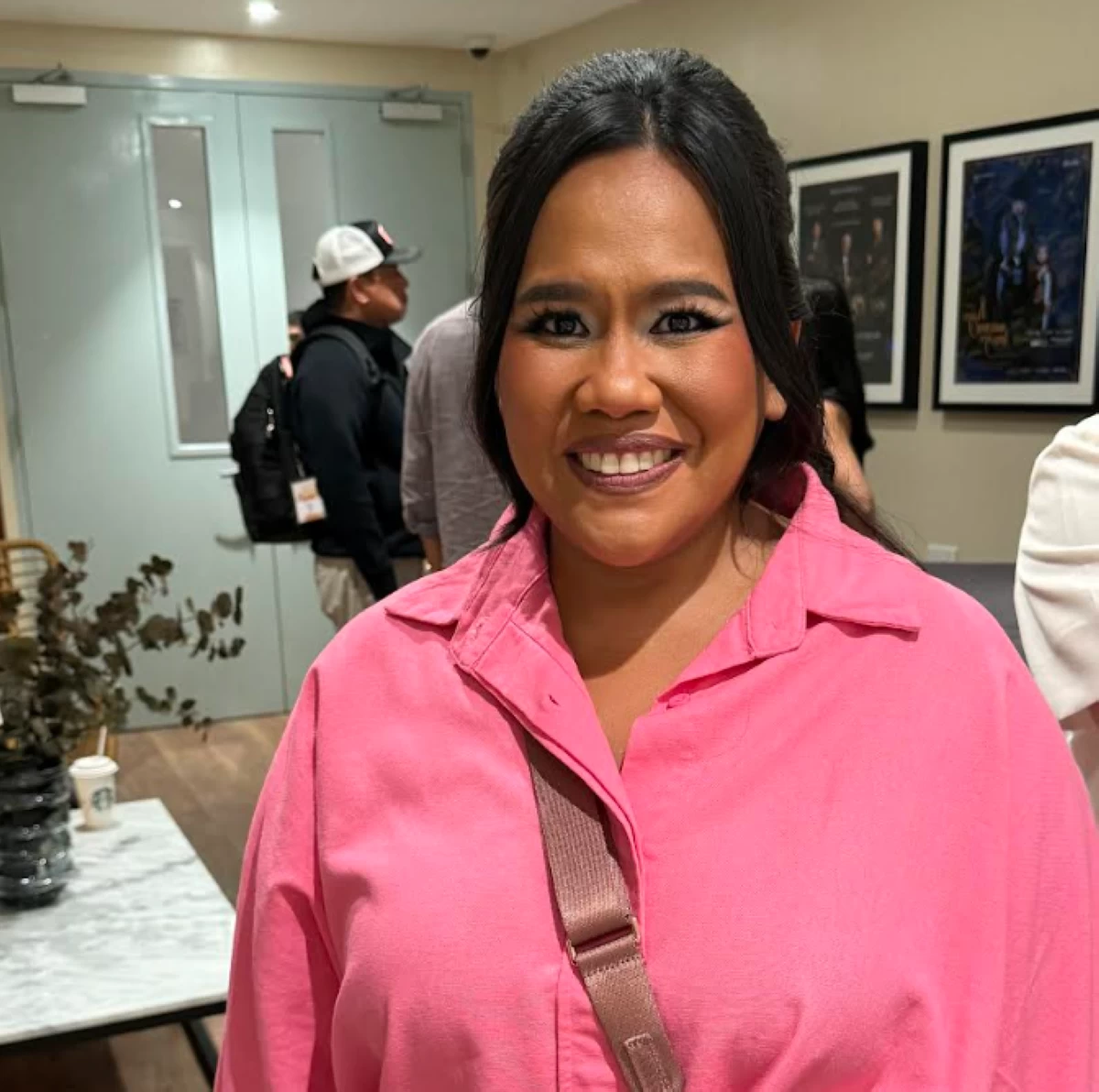
Bituin Escalante
Bituin Escalante
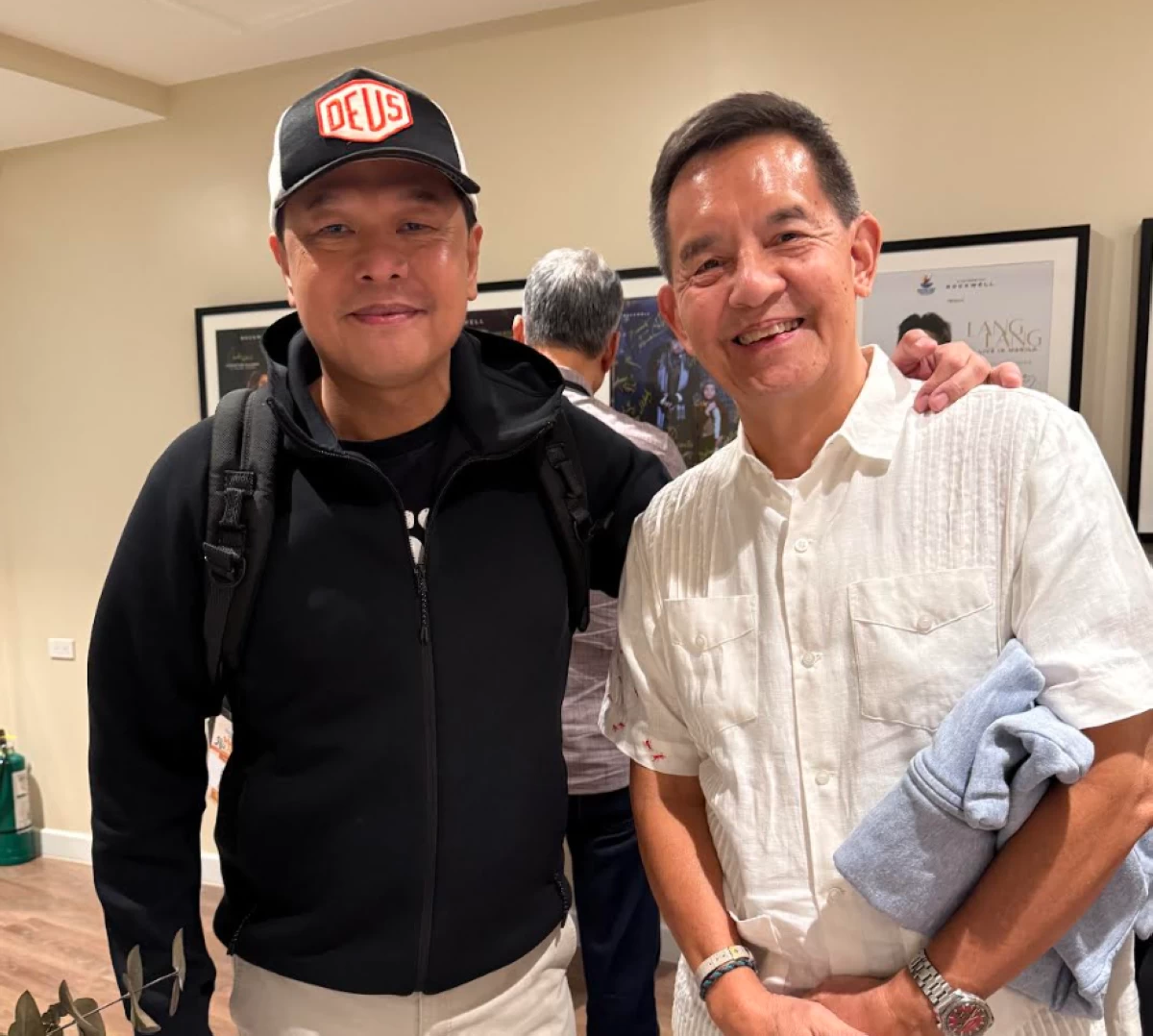
Jett Pangan with your author
Other highlights for me include the duet of Gigi and Jett of "I’ll Never Fall in Love Again," and Gigi’s solo version of "This Guy’s In Love With You." Jett’s "Alfie" was a stand out, and the four on "What The World Needs Now," and "That’s What Friends Are For," will echo through the night as you leave the theater.
This concert series has been about creating a string sense of community, with the performers on the stage and the audience bonding, and making the theater a virtual home for everyone. Don’t miss out!

Despite the heavy drama of our life


 By Fr. Roy Cimagala

Chaplain

Center for Industrial Technology and Enterprise (CITE)

Talamban, Cebu City

Email: roycimagala@gmail.com


WE should stick firmly to what Christ assured his disciples, and now us. Considering that our life here on earth is often referred to as a “vale of tears,” let’s avoid over-reacting to the heavy drama that we can expect in this life.


Let’s relish these words of our Lord: “In the world you shall have distress: but have confidence, I have overcome the world.” (Jn 16,33) Yes, our life here on earth is actually just transitory. It is a difficult journey toward our definitive destination. But there is always hope of reaching a better place, that is heaven, in the end.


We have to learn to have confidence in God’s loving providence over us by always strengthening our faith and referring everything in our life to him who knows how to derive good from evil.


Our sense of confidence should spring from a faith that gives us the ultimate meaning and proper direction to all our human knowledge and endeavors. It is what gives the original perspective to all events, good or bad, in our life. Otherwise, we would end up confused and lost.


We also need to make our faith grow to cope with the multiplying infranatural consequences of our human condition that is weakened by sin. There’s no other way to manage and survive the consequences of sin, ours and those of others, personal as well as the collective and structural, than by relying first of all on our faith. Without faith, we will find no exit, no relief from this wounded status of ours.


That’s why St. Paul said: “Above all, take the shield of faith, wherewith you shall be able to quench all the fiery darts of the wicked.” (Eph 6,16) Faith holds pride of place in our armory to wage that lifelong battle with our wounded flesh, the temptations of the world, and the tricks of the devil.


Without faith, we would be easy prey to these enemies of our soul. Without it, we most likely would be filled with fear and anxiety, if not sadness and desperation. Faith unites us to the tremendous power of God over any kind of evil, self-inflicted or caused by others.


There’s no way we can achieve our ultimate goal without faith. With God, we have everything. As St. Teresa de Avila would put it: “Solo Dios basta!” (God alone is enough!)


And so, there’s really no reason to be too worried and anxious when we encounter some difficulty in our life. In fact, we have every reason to be confident and at peace, focused on what we are supposed to do. And that’s because we are always in God’s hands.


Whatever situation we may be in, we can be sure that God will always provide for what is truly needed by us, and it may not be what we want. We just have to trust him completely for he knows better than we do, and what we want may not be what we need. It may not even be what is good for us.


Yes, there will always be challenges, problems, difficulties that humanly speaking may be impossible for us to tackle. But as long as we have trust in God, we can sincerely echo St. Paul’s words: “I can do all things in him who strengthens me.” (Phil 4,13) These words have been verified to be true in the lives of all the saints, especially the martyrs.


It’s important that we be confident and at peace always, because that would put us in the proper condition to do the things we are supposed to do. It will make us bold and courageous, fruitful and productive.


OUR BREAKING POINT IN LIFE

By

 Mindanao Daily News

 -
0
161

A breaking point is the critical threshold where prolonged stress, emotional strain, or exhaustion outpaces your ability to cope. It is not a failure, but rather a warning sign from your mind and body that your current situation or way of carrying the load is no longer sustainable.

A breaking point is a moment of greatest strain. Interestingly enough, the breaking points are the moments in which we need to stay calmer. Research shows that trying to control every event increases our stress.

A breaking point is a moment of stress in which we break down — it feels like you are never going to get back up again. We are more than under pressure — the situation becomes critical for our survival. Everyone faces a breaking point — we all get there in distinct ways.

A breakeven point is when total costs and total revenue are equal. It’s the sales level you need to reach to cover all of your costs. Your business cannot be profitable until it has reached this point.

When I hear the word breaking point I usually think that it’s like a bomb that could explode. For me, to be in my breaking point is the state of being exhausted in everything. Thinking that it’s time to end something… Most people think that when we say we are in our breaking point it’s easy to come up with a negative idea yet sometimes breaking point is not only to end something because you are exhausted, we can revise it in a positive thinking like breaking point can be a new beginning for us to be able to begin a new life with a weapon and that is our learning from our breaking point.

In human psychology, the breaking point is a moment of stress at which a person breaks down and is unable to cope with it. This obviously varies from individual to individual.

I got my first breaking point as a German expatriate in the Philippines as a result of culture shocks. This was a long time ago and very much different from today’s situation.  Meanwhile I have been living here smooth and sound for several years.

Nowadays, many people are  experiencing mood changes. Indeed, the emotional effects of stress can have a serious impact on your day-to-day mood and mental health. Firstly, you may find that you’re feeling more irritated or pessimistic than usual. This mood change can then begin to affect your motivation to work, socialise with your loved ones or complete the things on your to-do list. If left unchecked, these feelings can threaten to completely overwhelm you, leaving you feeling apathetic, depressed, frustrated, panicky or trapped.

If you’ve been asking yourself, “How do I fix my relationship?,” you may already be at a breaking point. A breaking point is when an argument or disagreement starts to become invasive in your life. Is it impacting your other relationships? Is it impacting your work? Is it impacting your health?

A lot of people around me can’t seem to focus or concentrate properly. If you’re battling to concentrate, keep focused or remember certain things, this is a good indication that you’re feeling the effects of anxiety. These changes in thinking and memory (also known as “brain fog”) can occur when you’re trying to manage several stressful situations at once, which can make you confused and forgetful. These situations may include demanding jobs or emotionally-taxing tasks. Unregulated emotional exhaustion can really impact your attention, executive functioning (organizing and planning), and memory.

A lot of people are expressing  difficulty with personal relationships. You’ll often notice emotional exhaustion from prolonged stress manifesting in your relationship and your capacity to connect with your family on a meaningful emotional level. You may find yourself picking fights over small things, feeling angry at or unsatisfied with your partner or being overly judgemental. Tension in your close relationships can cause you to feel anxious, detached, and withdrawn which can make it difficult to ask for emotional support when you need it or be there for those you love.

Low self-esteem is being reported a lot these days. If lately you’ve found your mind overwhelmed with negative thoughts, you’ve probably also noticed their impact on how you view yourself. Perhaps you’re feeling more cynical and hopeless than usual? Or maybe you’ve lacked confidence in situations where you would normally speak up. At times, you may even have found yourself wondering if what you’re doing even matters anymore. It is important to recognise these changes. If left unchecked, these feelings may progress into symptoms of depression.

To stay in balance you need to turn these behaviors around. The smallest changes make a difference, but pay attention to changes that aren’t so small, like getting enough sleep (without drugs), dealing with your anger and anxiety before they erupt, moving around during the day, making time to play, eating sensibly and simply being with yourself.

I learned that prevention is the best medicine. Reaching your breaking point means that you’ve crossed into the red zone, from which it’s hard to return. You won’t get to your red zone if you apply the habits of self-care I’ve just listed. The choice is really yours. Medical research has abundantly validated that being in balance is the healthiest way to live. Spend the next two weeks getting back into balance. You’ll be amazed and pleased with the results. I adopted a certain “Bahala-na”-emotion especially when it comes to “bad news”. I enjoy playing my piano and listening to wonderful relaxing music. I enjoy staying together with my family. I talked to God… .


Saturday, May 16, 2026

FILIPINOS LOVE FIESTAS

 IMG_20220629_134849.jpg


By Klaus Döring

The word "fiesta" will bring a smile to the face of almost any Filipino. To my face too, because I lived here for good for more than 25 years.

After all, a fiesta is a special time with friends, a time for fellowship, food, and lots of activities. Each year brings numerous fiestas. Sometimes people are busy for weeks preparing for them. It is surprising how even those facing many problems in their day-to-day life set them aside and participate in the festivities.

What actually are fiestas and why do these celebrations occur? The fiesta is of Spanish origin (the reason for the Spanish term). Spain, being a Roman Catholic country, set aside certain days to remember particular saints with processions and celebrations. When Spanish missionaries entered the Philippines during the mid-1500s, they found that the fiesta was a convenient tool to help teach Filipinos the Roman Catholic faith.

Did you know the culturally rich Philippines has over 100 Fiestas (Festivals) annually? Each city or province has a local fiesta. Being a very religious centered country, a fiesta is usually about the celebration of that city or province’s patron saint. While “fiesta season” spans throughout the year, it’s safe to say that there is at least one major festival happening throughout the country at any given week. With the majority of those festivals originating from pre-colonial traditions in local cities and communities or rooted in Christianity from the Spanish Colonial Era.

The Philippine fiesta is a lot more than it seems on the service. It is the tie that binds Filipinos from a region or an area together, a time to reunite with your extended family and you kababayans (countrymen/women.) No matter where you are, you are expected to attend.

Sense of Identity: Festivals provide an opportunity for Filipinos to celebrate their cultural identity and heritage, contributing to a strong sense of pride in their cultural heritage. This sense of identity is an important factor in shaping the Filipino workforce and promoting a positive work culture.

Traditionally, the fiesta is a time of joyful celebration for Filipinos, who cook heaps of hearty food, throw open their doors to visitors, and parade in the streets. Some Filipino fiestas have evolved into elaborate, multi-day festivals, while others have kept their community roots.

In my own words, a Philippine festival is a vibrant celebration that brings communities together to showcase their cultural identity through colorful parades, music, dance, and food, highlighting the creativity and talents of Filipinos.

images.jpg


10363724_582025058561527_2071315746462731902_n.jpg

HOW TO BE ALWAYS HAPPY IN LIFE?


1. Everyone has problems. You are not alone.

2. Everyone faces tough times. Only people who aren’t alive don’t have challenges.

3. Every problem can be fixed. There are ways to feel better.

4. How you think about yourself affects your happiness. Believe you are special and important. Don’t let negative thoughts win.

5. Don’t stress about what others say. Some people say mean things to hurt you.

6. Spend time with positive people who make you happy. Avoid those who laugh at you or your struggles.

7. Use your free time to enjoy hobbies like sports, games, movies, or browsing online.

8. Don’t let money or fancy things scare you. Someone who is poor today can be rich tomorrow. Change happens all the time.

9. No matter how tough it gets, don’t give up. While you’re alive, there is hope.

10. Pray often. Praying a lot can help bring good things to you faster.

11. Be brave and chase what you want. Life is about taking risks. If you don’t take chances, you won’t get what you really want. Stay true to yourself. Nobody can do what you do better than you. You’re awesome! So just be yourself. Have a great life!

Seeing life through kinder lens


 By Shaina Marie C. Salvador

Have you ever looked into someone’s eyes and wondered what goes through their thoughts? Or have you ever peeked through the windows of a jeep and watched children playing by the side of the highway? Or have you ever smiled at the breeze through the trees and the sunlight after a long day at work?


I have, and I have always wondered about the things we so easily take for granted. The light that seeps through our windows. The plates in the dishwasher meant we had enough food to eat. The piles of clothes meant we had enough to wear. The clang of the church bell that, in my mind, carries prayers for those who need them most. Small, ordinary things that quietly tell stories about the lives we are living.


There, I believe, lies the quiet beauty of noticing life. We now live in a fast-paced world where deadlines pile up, where people walk faster just to catch the next train on a Monday morning, and where our minds are often somewhere else even when our bodies are present. In the rush of it all, we forget to pause and breathe, forgetting that not everything around us is burning.


But when you take a more intentional look at life, you begin to realize that the world continues moving regardless of our personal struggles. A dream may quietly break, a friendship may fade, or a message may remain unread, yet life carries on. Perhaps noticing life also means learning to accept that movement, transforming defeat into lessons that slowly shape us into kinder and more understanding people.


And when you begin to notice more carefully, you also start to see the people around you differently. Even from a distance, when you look at them long enough, you realize that street vendors, children in their uniforms, and strangers passing by are living full lives, too. Someone’s mother. Someone’s daughter. Someone deeply loved. A human being with a world of their own, carrying stories we may never fully understand.


With that thought constantly in mind—that people struggle as I do—I started to perceive them as reflections of myself, someone simply trying to get through the day. Someone who just wants to go home early so they can sit down and enjoy dinner with the people they love. Someone who might be tired, worried, hopeful, or quietly holding on.


I also started to look at life, struggles, and regrets with a kinder outlook and as things that simply pass on. And since they pass, I try to live life as fully as I can. Who knows when the next time you will eat your favorite breakfast meal? Or when will you get to share a conversation with someone important to you? Sometimes the most ordinary moments end up becoming the ones we remember the most.


Life keeps moving, reminding us of the quiet value of living even the most ordinary days. Our work may be exhausting, inconveniences may happen, but life continues to move just the same for everyone else around us. While we are busy with our own struggles, countless others are also trying to survive their own versions of the day.


I believe that looking at people with kindness we wish for ourselves goes a long way. Being gentle to the waiter who serves your food is like wishing for the same gentleness when we ourselves are tired at work. Picking up your litter so someone sleeping on the street does not have to lie beside trash that night is a small way of offering the same comfort we hope to have when we rest. Kindness may not instantly change a person’s life, but it can still bring a small light to someone who might be going home with very little hope. Maybe the vendor you passed by is struggling to send their child to school. Maybe someone you see today just got rejected from a job they badly needed. Maybe someone is simply hoping that tomorrow will feel a little kinder than today.


Sometimes all it takes is a small act of kindness to remind people that the world, despite its cruelty, still has warmth left in it.


The secret to living a rich and beautiful life that costs nothing is this: to see people as people. To remember that every stranger you pass is someone’s someone. Someone who is loved, someone who has dreams, someone who once imagined a future for themselves.


The world can be harsh enough to make us forget the beauty of wondering about other lives and what surrounds us. But when we pause and look, truly look, we realize that the person selling food on the corner once had dreams, too. Even the small things around us begin to feel meaningful when we pay attention. The sunlight passing by is giving us vitamins we didn’t know we needed. The barkers calling passengers into jeepneys once imagined journeys of their own.


And perhaps the beauty of being human is simply this: noticing each other, and every little thing in between, even in passing.


Share

Tweet

Aeisha Shaina Marie C. Salvador

Friday, May 15, 2026

What freedom means to me


Published May 15, 2026 12:05 am | Updated May 14, 2026 05:42 pm
NIGHT OWL
A lot of people have asked me what I learned most during the time I decided to study in London. My answer has surprised some of them. It was not a new theory, a prestigious institution, or even the thrill of living in a global city. It was freedom.
Not the grand, abstract kind we often invoke in speeches and essays. I mean a quieter, more intimate freedom: the freedom to free yourself from the baggage of societal expectation. The freedom to stop performing a version of yourself that others find acceptable. The freedom to pursue your work, your research, and your questions on your own terms, by your own methodology, with the dignity to reason, to disagree, and to be taken seriously.
As a woman who has led a career, I have long understood that success is rarely just about competence. It is also about navigation.
You learn how to read a room before you enter it. You learn when to speak with conviction and when to soften your voice so your certainty does not threaten anyone. You learn that ambition in a woman is often admired only when it is dressed as sacrifice, humility, or service. Even when you are accomplished, there is a subtle but constant pressure to remain palatable.
That is why freedom felt so profound to me in London. It was different to see it, to feel it, to inhabit it. For perhaps the first time in a long time, I felt released from the burden of explanation. I was not being measured against a script of what a woman at my stage in life ought to want, ought to prioritize, ought to become. I was simply allowed to think.
That may sound ordinary, but it is not. For many women, the right to think freely is still negotiated, not granted. We are encouraged to achieve, certainly, but often within approved boundaries. Be accomplished, but not intimidating. Be opinionated, but not difficult. Be independent, but not so independent that you become unreadable to the world around you. Freedom, then, is not merely the ability to move. It is the ability to exist without being constantly interpreted.
In London, I experienced the joy of intellectual space. I could pursue my research not as a performance, but as a practice. I could follow a question where it led, rather than where convention suggested it should go. I could test my own methodology, refine my own arguments, and enter into discourse with the confidence that rigorous reasoning was enough. That dignity matters. To be able to reason without apology is one of the purest forms of freedom I have known.
What I discovered is that freedom is not irresponsibility, nor is it rebellion for its own sake. It is clarity. It is the moment you realize that a life can be authored, not inherited. It is choosing what to carry and what to set down. It is understanding that expectations, however deeply rooted, are not destiny.
As women, many of us spend years becoming legible to others: reliable, respectable, admirable. Freedom begins when we become legible to ourselves. When we can say, without guilt, this is what I think, this is what I value, this is the work I want to do, and this is the life I want to build.
That is what London gave me. Not a new identity, but permission to return to my own mind. And once you have felt that kind of freedom, it becomes impossible to settle for anything less.

Davao City Council OKs electric vehicle incentive ordinance


Published May 15, 2026 09:32 pm
OCAMPO (FB)
OCAMPO (FB)
DAVAO CITY – The Davao City Council approved on Tuesday, May 12, the ordinance establishing a comprehensive incentives framework for the electric vehicle (EV) sector, marking a major local push toward sustainable transport development in the city.
The measure provides fiscal and regulatory incentives to EV manufacturers, dealers, users, public transport operators, charging station developers, spare parts suppliers, and facilities involved in battery recycling and environmentally safe disposal.
Authored by Councilor Temujin Ocampo, chairman of the Committee on Environment and Natural Resources, the ordinance aligns local policies with Republic Act No. 11697 or the Electric Vehicle Industry Development Act (EVIDA), as well as the city’s existing Local Incentive Code.
Under the ordinance, Ocampo said qualified enterprises may be granted incentives, including tax holidays of up to six years, subject to compliance with the ordinance’s requirements and investment thresholds.
The measure introduced streamlined processing procedures for EV-related businesses under an “ease of doing business” approach.
While certain non-regulatory fees, such as mayor’s permit charges, may be waived, companies will still be required to settle regulatory fees, including building permits and waste management charges.
For EV users, the ordinance grants free parking in designated city-managed areas, including sites on San Pedro and C.M. Recto Streets, for up to three hours.
Ocampo said the time limit was set to prevent misuse of parking spaces while still encouraging EV adoption.
Although the ordinance cannot compel private establishments, the city government encouraged malls and other commercial operators to adopt similar incentives for EV users.
On infrastructure readiness, the council reported consultations with Davao Light and Power Co., which assured sufficient electricity supply to support the expected expansion of charging stations and related facilities.
Industry interest has been noted, with companies such as BYD and VinFast reportedly exploring investment opportunities in Davao City’s EV infrastructure, including installing hundreds of charging stations.
The ordinance set specific eligibility requirements for businesses seeking incentives.
Domestic-oriented manufacturers must have at least P100 million in capital, employ a minimum of 20 workers, and be registered with the Board of Investments or Philippine Economic Zone Authority.
Export-oriented manufacturers must have at least P200 million in paid-up capital, at least 25 employees, BOI or PEZA registration, and export at least 60 percent of their production.
Distributors and dealers must invest at least P10 million and employ at least five workers, with at least 70 percent of the employees residing in Davao City.
Charging station operators and enterprises involved in EV battery recycling or e-waste processing must invest at least P2 million or operate at least two charging stations, whichever is higher.
City officials said all investment proposals will undergo evaluation by the appropriate investment review body before qualification for incentives.

What are the high-end subdivisions in Davao City?

Davao City’s high-end residential subdivisions concentrate in areas with gated security, large lot sizes, mature landscaping, and proximity to prime amenities (business districts, international school campuses, golf courses, hospitals). Notable upscale subdivisions and exclusive villages:

  • Matina Enclaves / Matina Village subdivisions
    • Matina Enclaves (private gated pockets within Matina)
    • Matina Town Square–adjacent upscale clusters
    • Features: mature trees, proximity to shops and schools
  • Talomo / Davao Golf and Country Club vicinity
    • Davao Golf & Country Club subdivision pockets (private estates around the golf course)
    • Nearby high-value enclaves along Quimpo Boulevard and Garden Park
    • Features: large lots, golf course views, established affluent community
  • Maa / J.P. Laurel Avenue luxury pockets
    • Gated communities and high-end custom homes along Maa Road and J.P. Laurel
    • Features: quick access to downtown, private compounds
  • Lanang high-end subdivisions
    • Areas along Lanang Road toward SM Lanang Premier and nearby beachfront resorts
    • Features: newer gated developments, condos and exclusive houses
  • Buhangin / Catalunan Grande exclusive villages
    • Upscale gated villages and hillside estates in Buhangin and Catalunan Grande
    • Features: larger parcels, rising luxury developments, improved road links to city center
  • Sasa Bay / Toril upscale estates
    • Waterfront and peri-urban estates with higher-end custom homes
    • Features: larger lots, quieter coastal living
  • Eden Nature Park adjacent estates (high-value rural-luxe)
    • Mountain/forest estates and vacation homes near Eden Nature Park (Bajada–Toril corridor)
    • Features: resort-style living, cooler climate, privacy

Developments and developers associated with higher-end projects:

  • Santa Ana Village (private, low-density estates)
  • Acacia Estates–type gated enclaves by local developers
  • Boutique, developer-brand luxury gated communities (small-lot exclusive schemes by local builders)

Practical notes for buyers:

  • Lot sizes and security determine “high-end” more than gate names; expect 500–2,000+ sqm parcels in the most exclusive pockets.
  • Proximity to Davao International Airport, SM Lanang, Ateneo/Son of Mary schools, major hospitals and golf course drives demand premium prices.
  • Newer vertical luxury (serviced condos) in Lanang and downtown offer alternative upscale living with less land maintenance.
  • Verify subdivision HOAs, road titles (alienable and disposable vs. private roads), water and power reliability, and flood/landslide history before purchase.

Market context (as of May 2024): price premiums concentrate in Lanang (coastal/Lifestyle district), golf-course corridors, and mature Matina/Talomo enclaves; peri-urban hillside and beachfront estates command premium for privacy and views.